








PROMISE
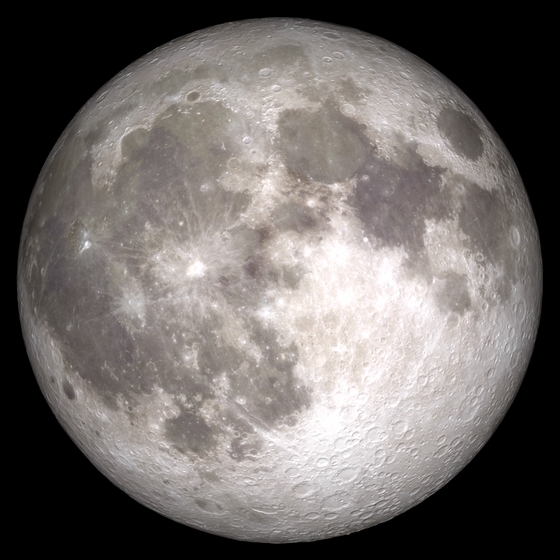
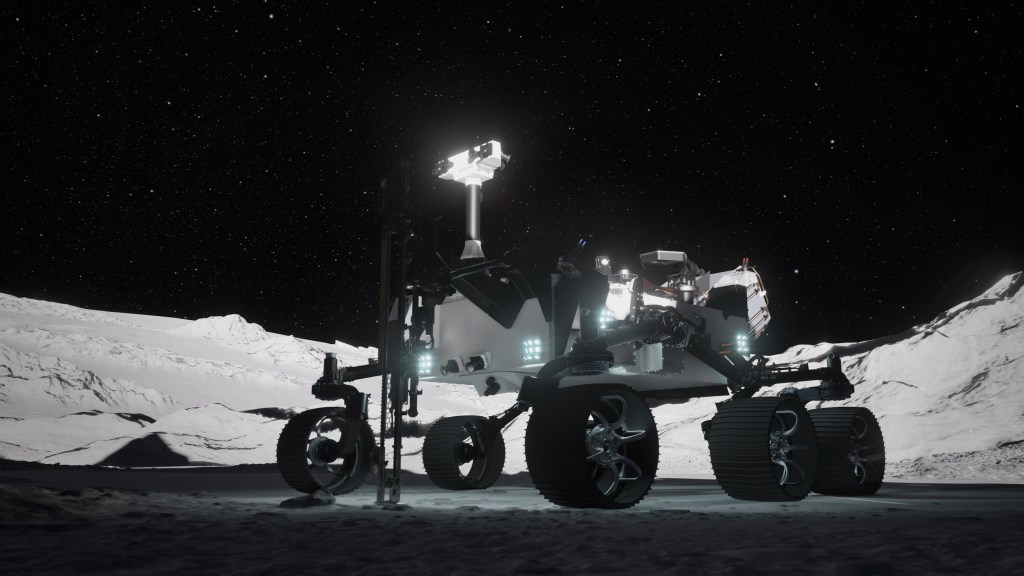
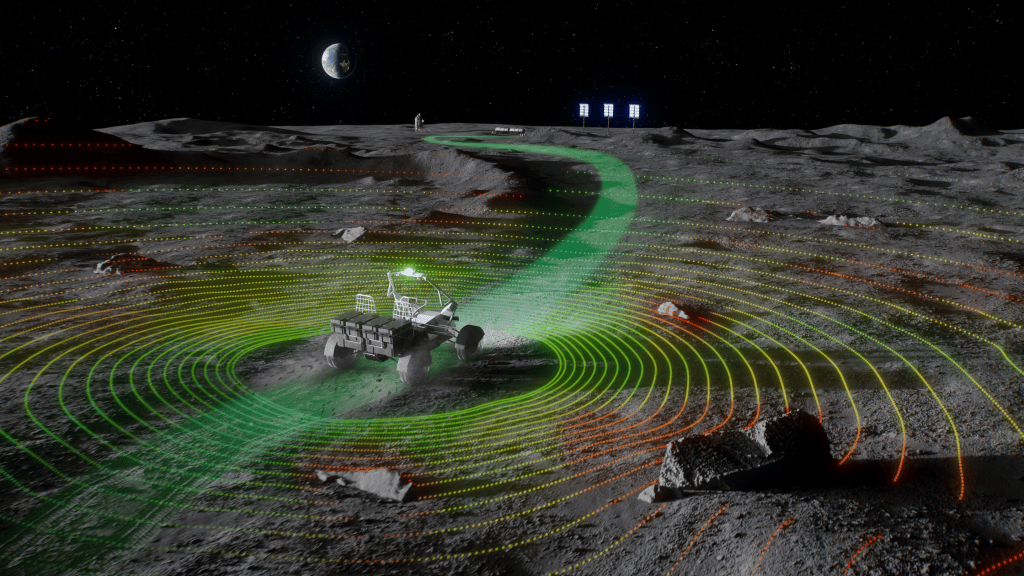
NASA’s Polar Rover for Observation, Mapping, and In-Situ Exploration (PROMISE), will serve as a scout for Moon Base operations and prospect for resources near the lunar South Pole.
PROMISE: NASA’s Nuclear-Powered Lunar Rover
From the Mars Yard at NASA’s Jet Propulsion Laboratory to the Moon, the agency’s PROMISE rover mission will transform existing hardware into a vehicle loaded with science instruments and technology demonstrations that will help NASA prepare for humanity’s first lunar outpost.
Watch on YouTubeExplore the PROMISE Lunar Rover’s Payload
From Mars to the Moon
Built on Proven Rover Technology
NASA’s Jet Propulsion Laboratory in Southern California, a division of Caltech, will deliver the PROMISE vehicle for a late 2028 launch and an 18-month primary mission, capitalizing on over three decades of expertise building and operating Mars rovers.
The lunar rover will combine proven hardware that has supported NASA’s Curiosity and Perseverance Mars rover missions with a flight-spare multi-mission radioisotope thermoelectric generator, essentially a nuclear generator, for power.
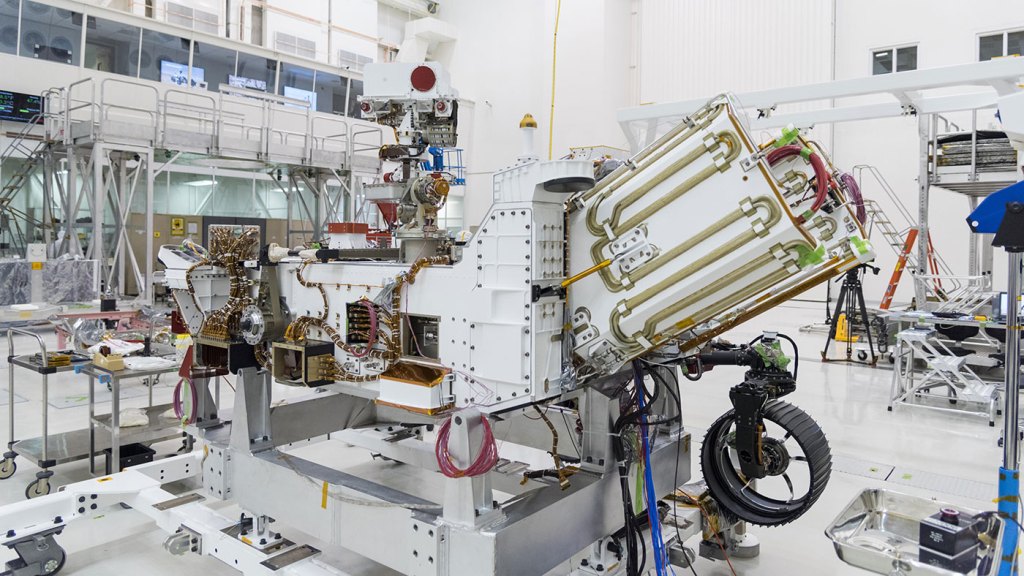
To build the PROMISE rover, engineers at NASA JPL are transforming the electronics, body structure, and mobility system from the duplicate version of Curiosity that has served as the vehicle system test bed for the Mars mission. They will integrate additional electronics, flight-spare, and test-bed parts built for the Curiosity and Perseverance missions into the PROMISE rover.
Equipped to Explore
Ready to Investigate
The new, SUV-size vehicle will host a suite of science instruments and technology demonstrations that will enable it to characterize the lunar surface and subsurface, assess resource potential, and provide critical data in support of future infrastructure and exploration activities.
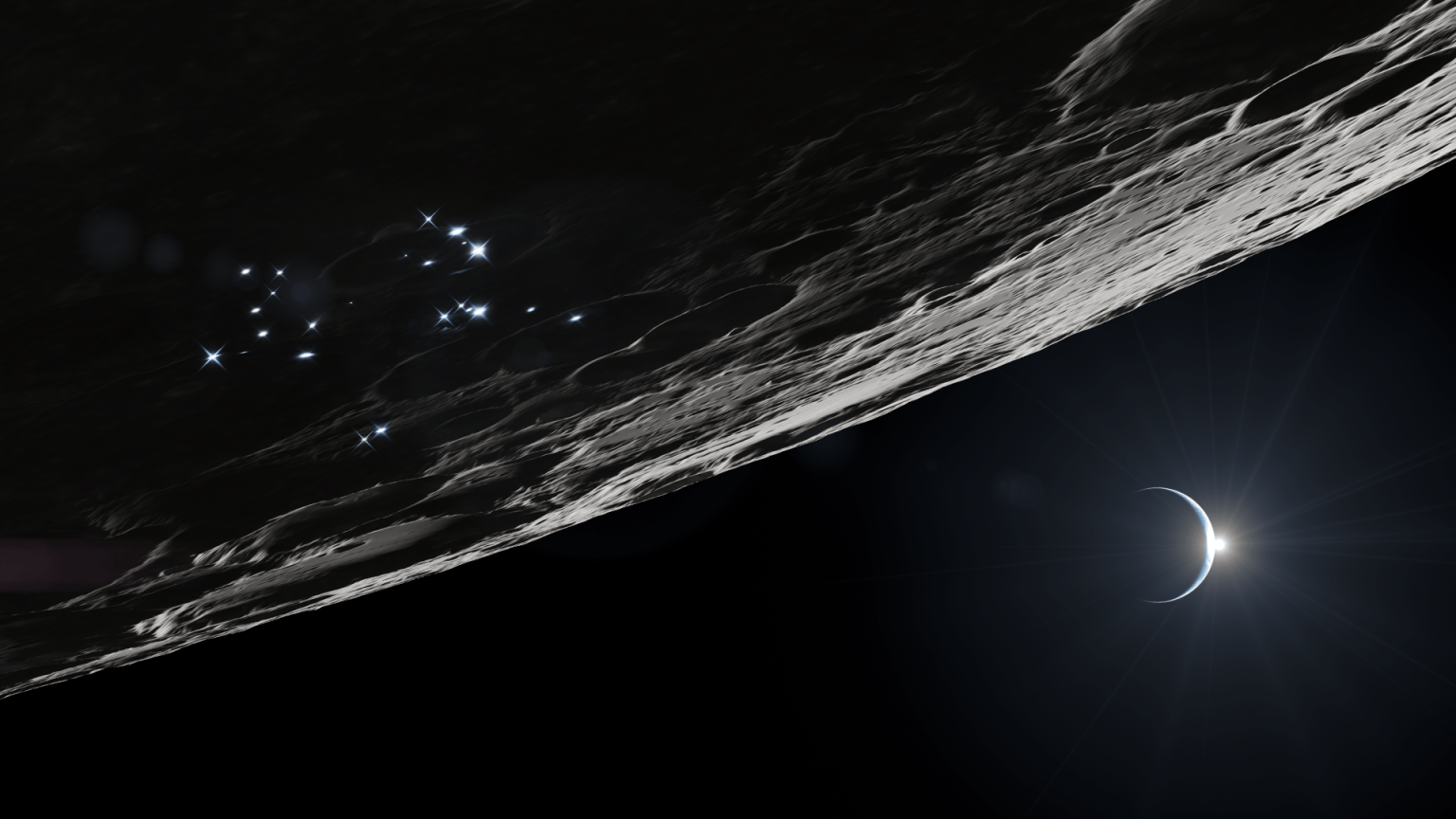
A commercial cargo lander will deliver PROMISE to the Moon’s South Pole, where the rover will rely on its nuclear generator to operate during lunar nights and in frigid craters and depressions known as permanently shadowed regions.
Scientists believe ice — and other valuable resources essential for sustainable exploration — may be preserved within some of these regions.

Preparing the Way for the Moon Base
Building Toward a Lunar Outpost
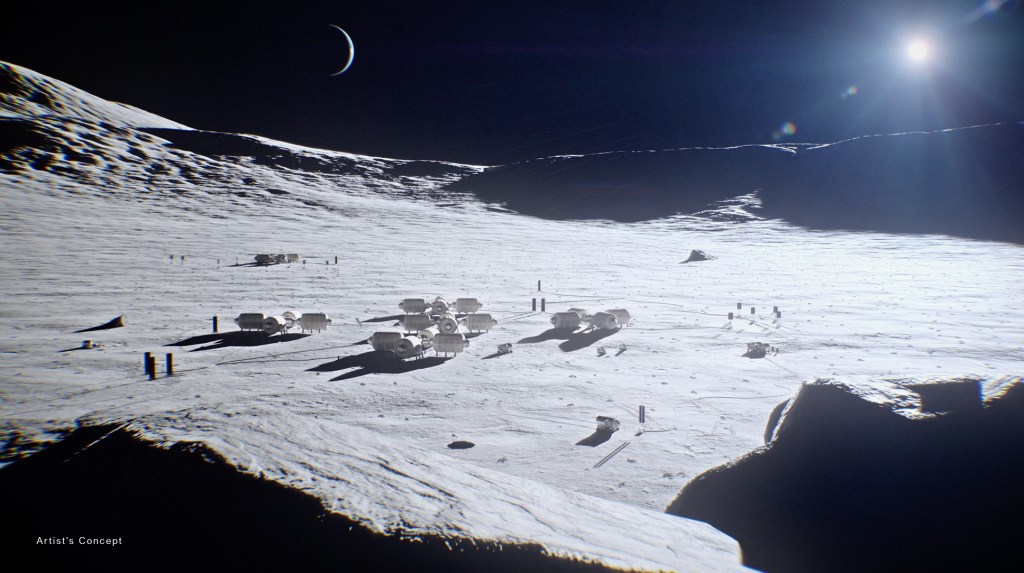
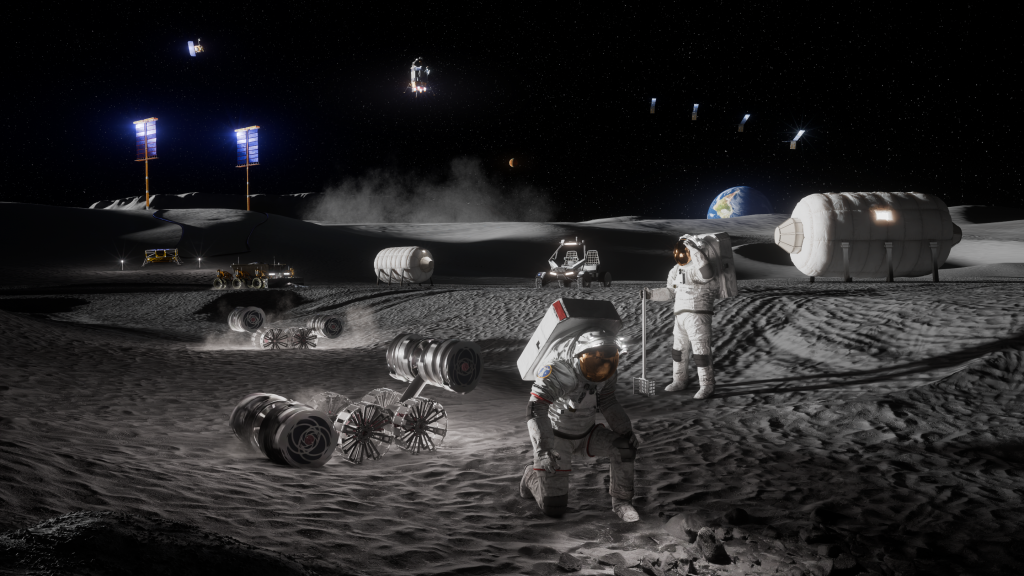
NASA is embarking on one of its most ambitious endeavors: building humanity’s first outpost on another celestial body, a place where astronauts will live, work, and explore near the Moon’s South Pole.
PROMISE is part of the initial phase of the Moon Base, which includes a rapid series of robotic missions to scout, experiment, and prepare for astronaut surface operations.
A division of Caltech, NASA JPL manages the PROMISE rover on behalf of the agency’s Human Spaceflight Mission Directorate.
The PROMISE Payload
The PROMISE rover will carry an extensive payload of science instruments and technology demonstrations sponsored by NASA’s Science Mission Directorate, Research and Technology Mission Directorate, and Human Spaceflight Mission Directorate. Data provided by the rover mobility system’s interaction with the Moon’s surface will complement science instrument data on volatiles, together providing a glimpse into locations where no human (or robot) has gone before.
The payload includes a drill to extract regolith to characterize water ice and other volatiles from 3.3 feet (1 meter) below the surface, spectrometers for analyzing the chemical composition of regolith, temperature and radiation sensors, and visible-light cameras. The mission will demonstrate a next-generation, radiation-tolerant computing system along with advanced autonomy sensors and algorithms designed to support onboard capabilities.
Science Instruments
-
The PROMISE rover carries the science instruments described below. The TRIDENT, MSOLO, NIRVSS, and NSS instruments are also flying on NASA’s Volatiles Investigating Polar Exploration Rover (VIPER) mission. Together, VIPER and PROMISE will provide complementary data sets from two different areas of the South Pole, informing future Moon Base developments.
The Regolith and Ice Drill for Exploring New Terrain (TRIDENT) is a rotary percussive drill that will extract regolith (the fine dust and rocky material covering the Moon’s surface) from up to 3.3 feet (1 meter) below the surface in 4-inch (10-centimeter) increments, depositing it on the surface for analysis. The drill will measure the strength and compactness of the regolith as well as its temperature. It will be stowed on the rover’s top deck and deployed to the surface for drilling operations. It is designed and led by Honeybee Robotics, a subsidiary of Blue Origin.
A commercial mass spectrometer modified to withstand the lunar environment, Mass Spectrometer Observing Lunar Operations (MSOLO) will analyze the chemical makeup of the volatiles released by the subsurface regolith brought up by TRIDENT. It is led by NASA’s Kennedy Space Center in Florida.
The Near-Infrared Volatiles Spectrometer System (NIRVSS) is designed to detect which, if any, ices are present in the lunar regolith and to characterize the mineralogy of the surface. It is led by NASA’s Ames Research Center in California’s Silicon Valley.
The Neutron Spectrometer System (NSS) will help locate water under the surface by detecting the abundance of hydrogen. NSS is built by Lockheed Martin and led by NASA Ames.
The Lunar Advanced Filter Observing Radiometer for Geologic Exploration (LAFORGE) will measure the frigid temperatures — potentially as cold at minus 400 degrees Fahrenheit (minus 242 degrees Celsius) — in permanently shadowed regions of the South Pole, finding cold traps where water ice may be discovered. The data from this multispectral imaging infrared radiometer, which uses sensor technology developed for the Diviner instrument on NASA’s Lunar Reconnaissance Orbiter, will also help determine the composition of lunar regolith. LAFORGE is led by the Johns Hopkins University Applied Physics Laboratory in Laurel, Maryland.
The Radiation Assessment Detector (RAD) will measure the radiation environment on the lunar surface, gathering data to help protect Artemis astronauts on future missions. It monitors high-energy atomic and subatomic particles from the Sun and deep space — natural radiation that could be harmful to astronauts. Led by Southwest Research Institute in Boulder, Colorado, an earlier version of RAD has been operating for 15 years aboard NASA’s Curiosity Mars rover.
The Laser Retroreflector Array (LRA) is a simple, inexpensive, and effective technology that can provide the location of the rover on the Moon’s surface within centimeters. The passive, 2-inch (5-centimeter) device does this by reflecting laser light directly back to its origin on an orbiting spacecraft. Laser retroflectors have flown since Apollo 11. NASA’s Goddard Space Flight Center in Greenbelt, Maryland, leads the LRA.
Lunar Dashcam is a new camera suite designed to capture continuous stereo panoramas as the rover moves across the lunar terrain. Multiple cameras mounted on the rover’s mast will acquire images during rover drives — data that will be sent to Earth to create immersive 3D terrain maps. In dark areas of the Moon, illuminators mounted on the rover will provide lighting. The Lunar Dashcam system is based on the entry, descent, and landing camera system that captured Perseverance’s arrival at Mars. Lunar Dashcam is led by NASA JPL.
Technology Demonstrations
-
PROMISE will also test an advanced technology demonstration package with three elements that aim together to enable the rover to drive farther within the dark conditions of permanently shadowed regions on the Moon.
The HPSC will process SCAN-3D sensor data and enable real-time autonomous driving using the HI-RATE algorithms, with acceleration from a powerful commercial graphics processing unit (GPU) co-processor. These technology demonstrations may enable the next generation of planetary science rovers.
High Performance Spaceflight Computing (HPSC), NASA’s next-generation, radiation-tolerant computing system, enables the advanced autonomy and intelligence needed to navigate challenging terrain. The HPSC project is managed by NASA JPL.
Surface Characterization and Autonomous Navigation in 3D (SCAN-3D) uses a commercial lidar — a type of remote sensing system that emits laser light toward surface features and detects its return bounce to create a real-time 3D map of the surrounding environment. The SCAN-3D payload is led by NASA’s Marshall Space Flight Center in Huntsville, Alabama.
High-speed Intelligent Robust Autonomous Terrain Exploration (HI-RATE) is developing autonomous navigation software with advanced algorithms like those on self-driving cars that will enable a rover to drive farther in both sunlit and dark conditions, with less need for human operator intervention. It uses data from the rover’s mobility sensors and the lidar, processed by the HPSC. HI-RATE is led by NASA Ames and supported by NASA JPL and NASA’s Johnson Spaceflight Center in Houston.
Mobility System Investigation
-
The PROMISE mission will use the six-wheeled rover’s mobility system to assess the properties of lunar regolith to aid future missions. Engineering data from the rover’s interactions with the surface, including in permanently shadowed regions, may reveal how firm, loose, or uneven the regolith is. For example, the rover might use one of its wheels to dig a trench and document the process and results. This knowledge of the properties of lunar regolith will support landing-site selection and the development of future lunar infrastructure and vehicles.
NASA Awards Moon Base Transportation, Technology, Science Projects
NASA announced a suite of awards and mission updates on Saturday to expand the agency’s Moon Base exploration, science, and…
Read the Story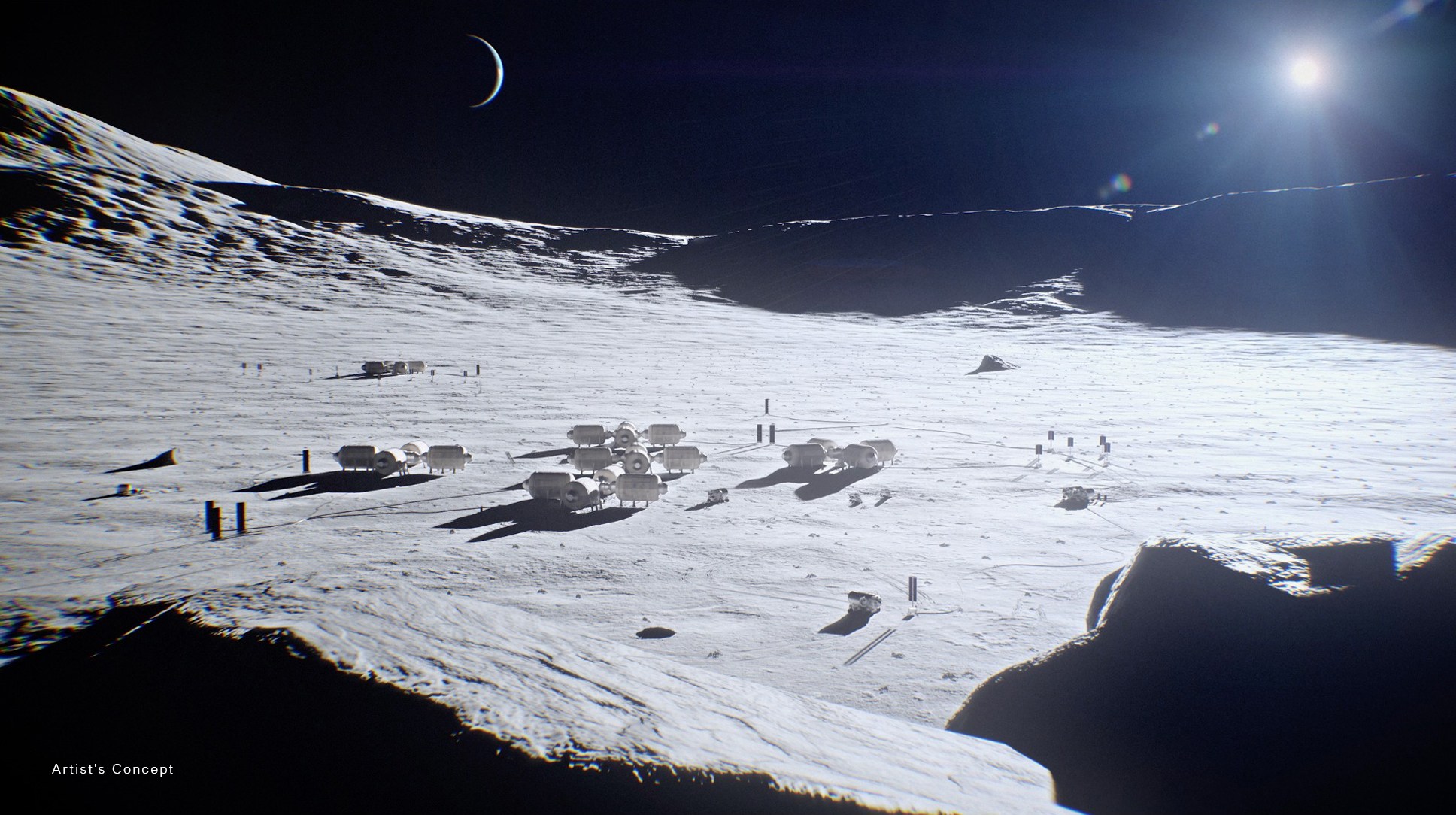
PROMISE Media Contacts
| James Gannon Headquarters, Human Spaceflight Mission Directorate 202-664-7828 james.h.gannon@nasa.gov | Kenna Pell Johnson Space Center, Moon Base Program 281-483-5111 kenna.m.pell@nasa.gov |
| Molly Wasser Headquarters, Science Mission Directorate 240-419-1732 molly.l.wasser@nasa.gov | Melissa Pamer Jet Propulsion Laboratory 626-314-4928 melissa.pamer@jpl.nasa.gov |
| Rob Margetta Headquarters, Research and Technology Mission Directorate 202-358-0918 robert.j.margetta@nasa.gov |