
















A Step-by-Step Approach
Moon Base Development
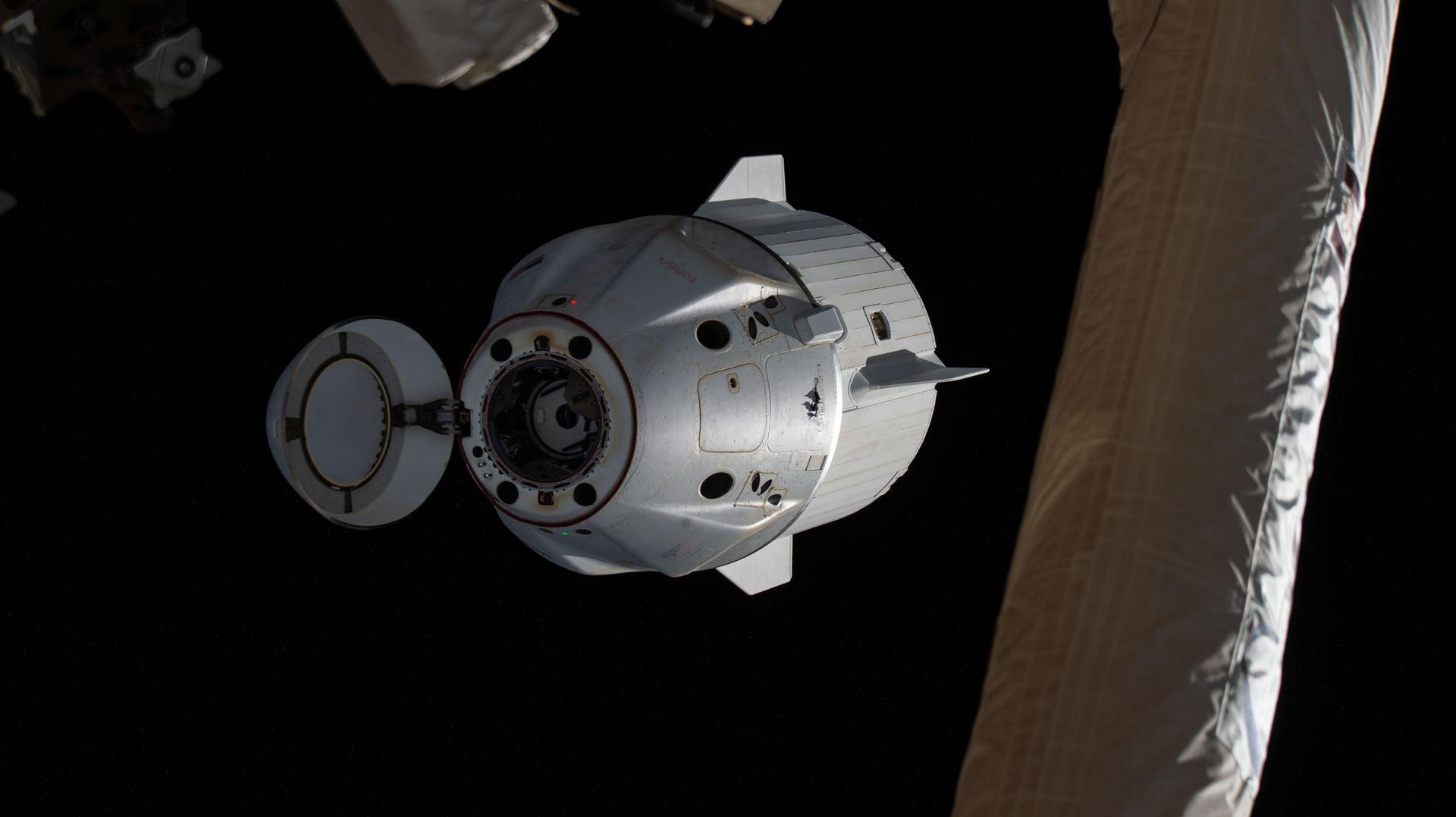
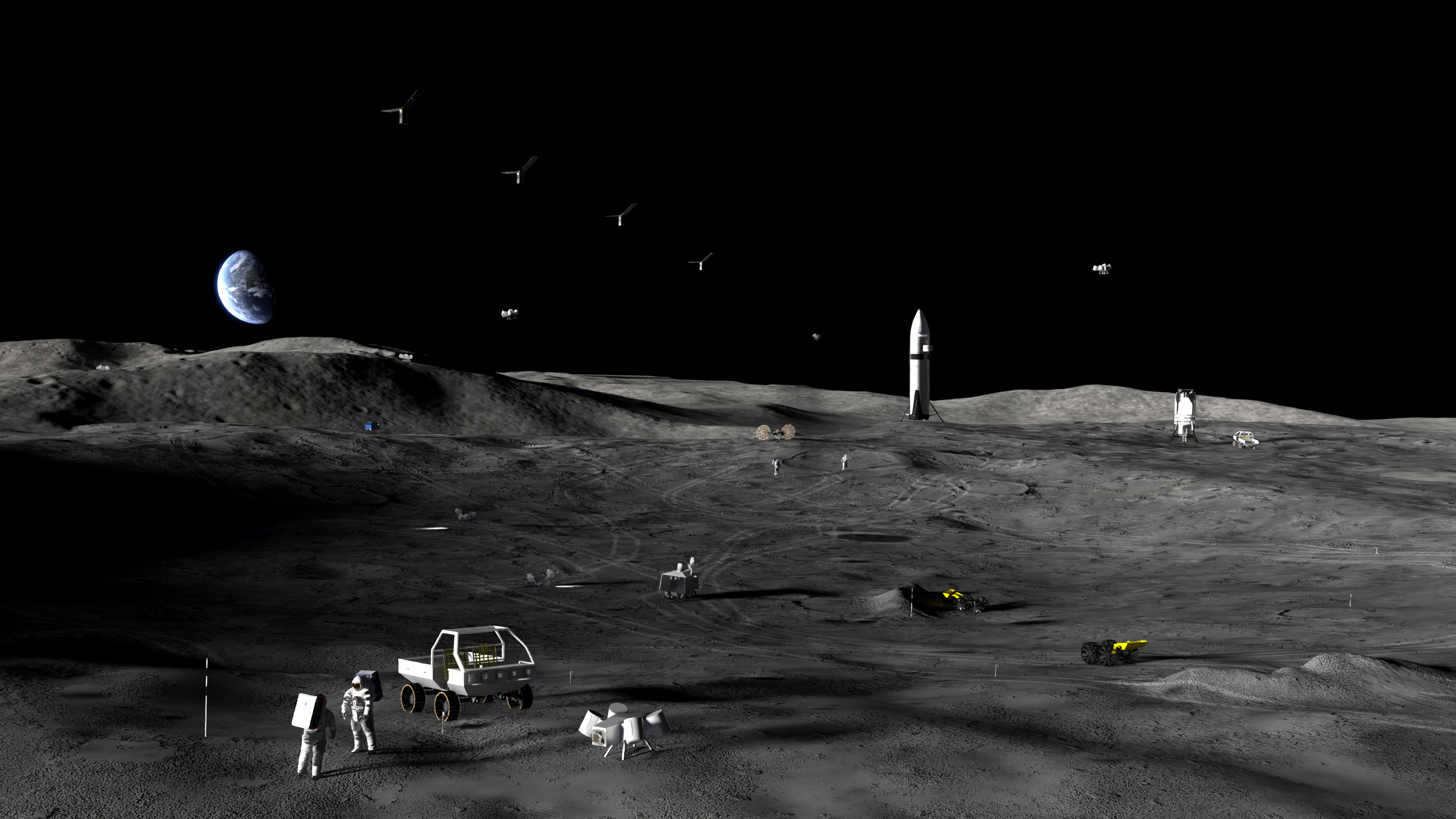
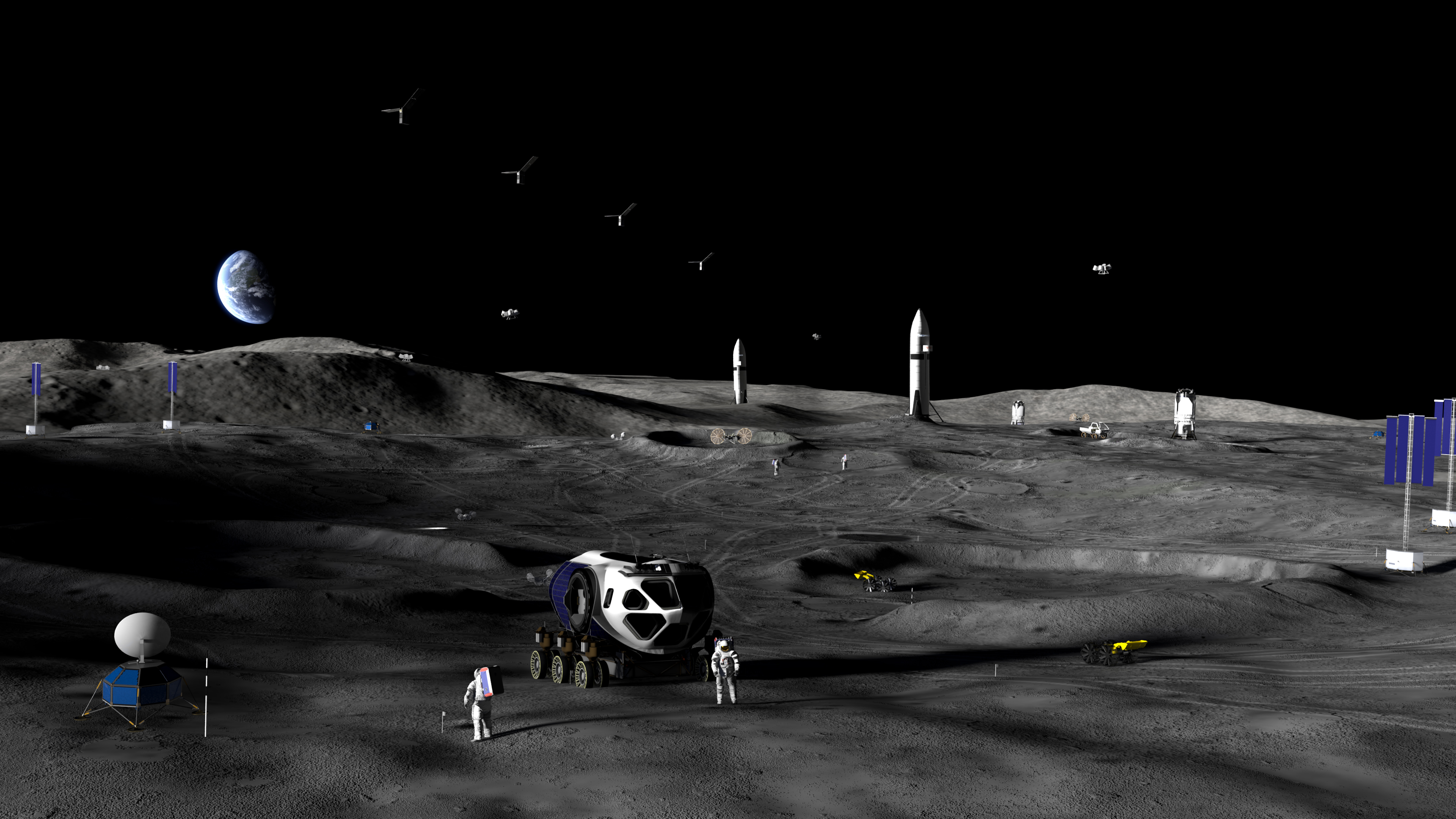
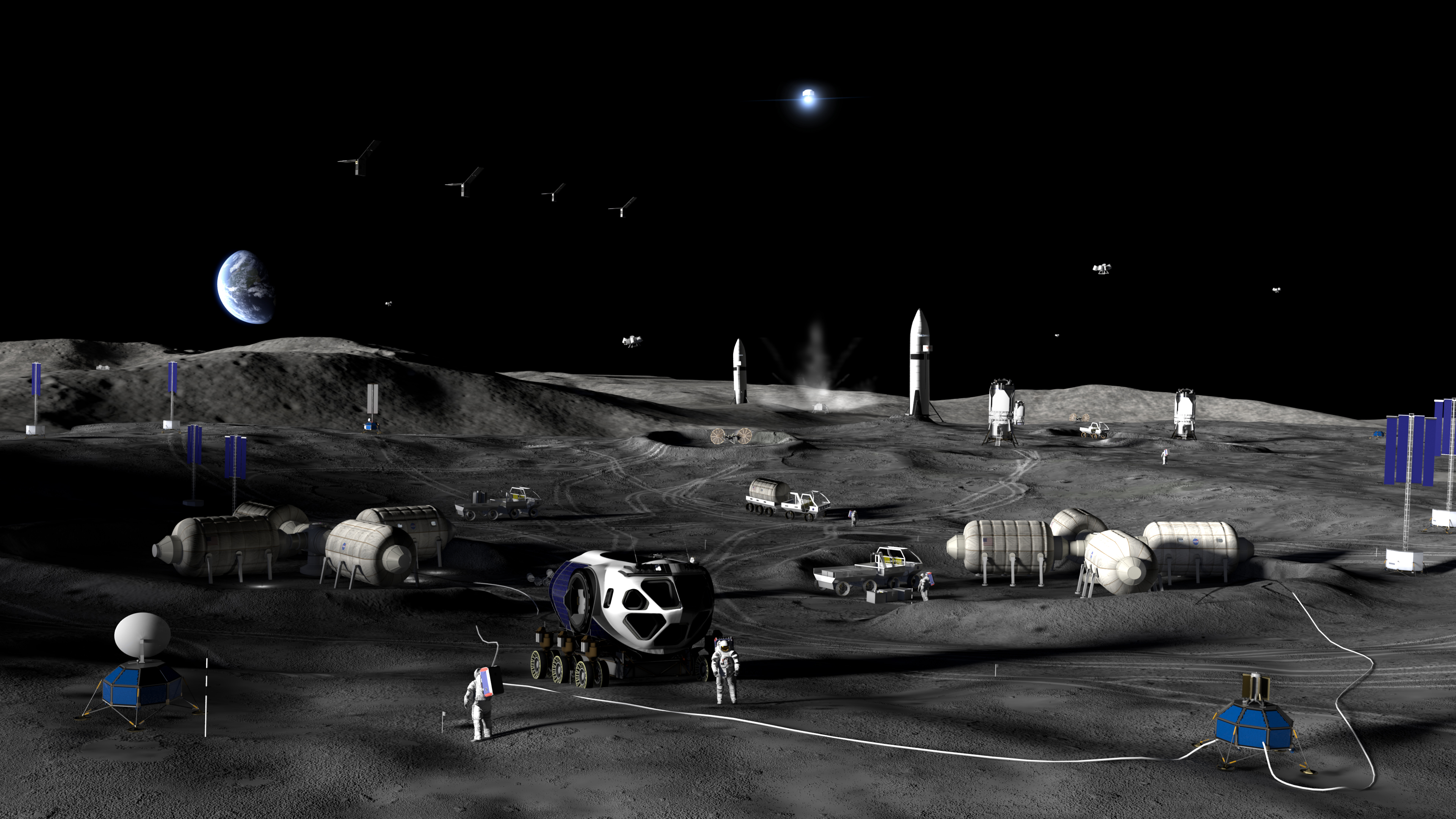
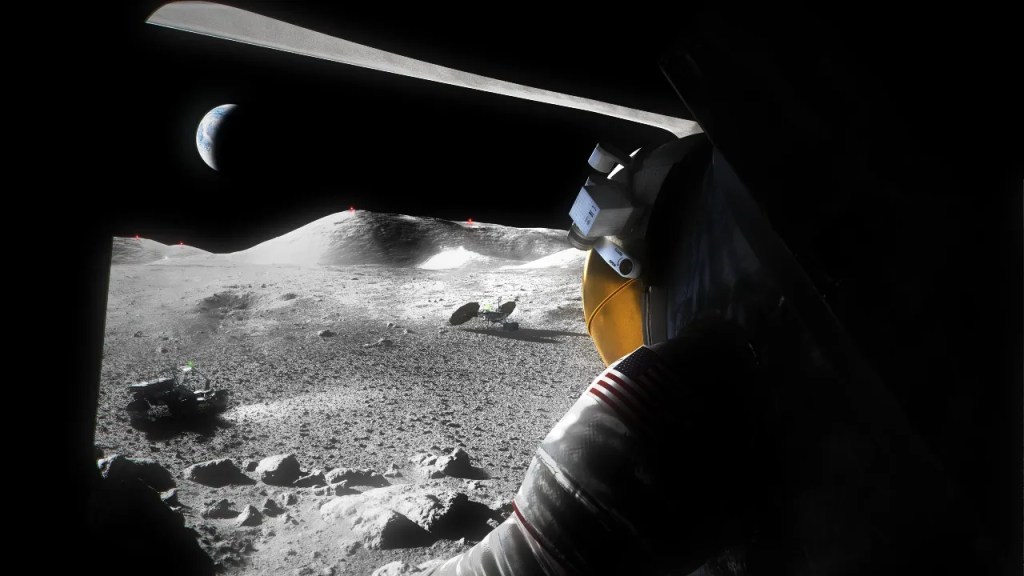
The Moon Base will be built step by step using a phased approach. NASA will begin with robotic missions that explore the lunar environment and test new technologies, then gradually establish the systems and infrastructure needed for astronauts to live and work on the Moon. Each phase builds on the knowledge and capabilities gained in the last, allowing the Moon Base to grow into a flexible, expandable outpost that can sustain an enduring human presence.
Now–2029
Phase One
Gain Reliable Access , Experiment, and Learn
The first phase focuses on gaining reliable access to the lunar surface and building a deeper understanding of the environment. Robotic missions will explore the lunar South Pole, demonstrate new technologies, and gather the knowledge needed to guide future development. By expanding experience landing and operating on the Moon, NASA will identify promising locations for future infrastructure, improve mission capabilities, and reduce risk before astronauts arrive.
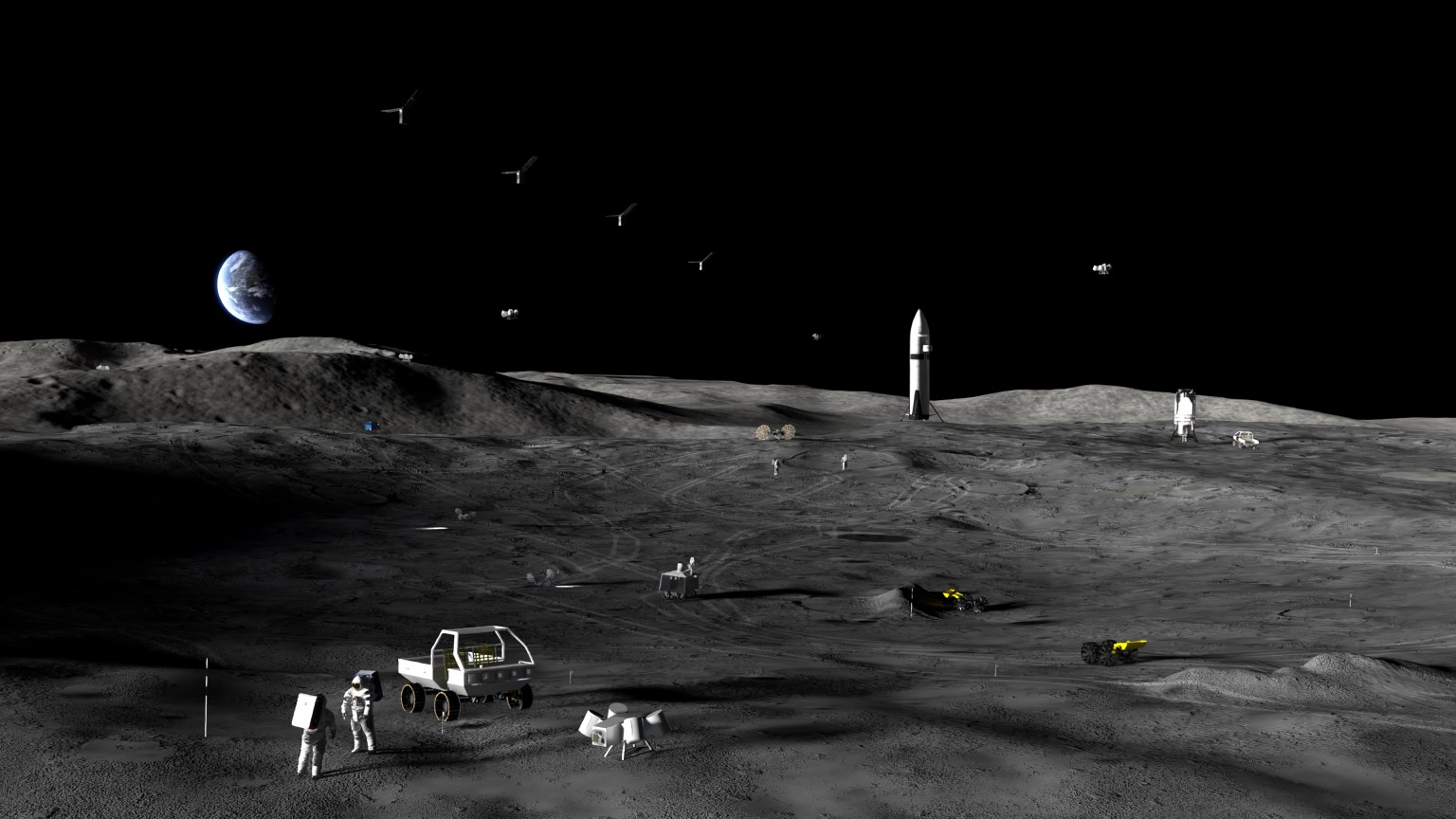
Scroll below to learn more about some of the key assets, demonstrations, and activities planned for Phase One of Moon Base development.
| Blue Origin’s Blue Moon Mark 1 | Voyager Technologies’ Griffin‑1 |
| Intuitive Machines’ IM‑3 | VIPER |
| CAPSTONE 02 | Firefly’s Blue Ghost Mission 2 |
| MoonFall | Lunar Terrain Vehicles |
More to come: Additional missions, assets, and activities will be added as plans for this phase continue to develop.
Blue Origin’s Blue Moon Mark 1
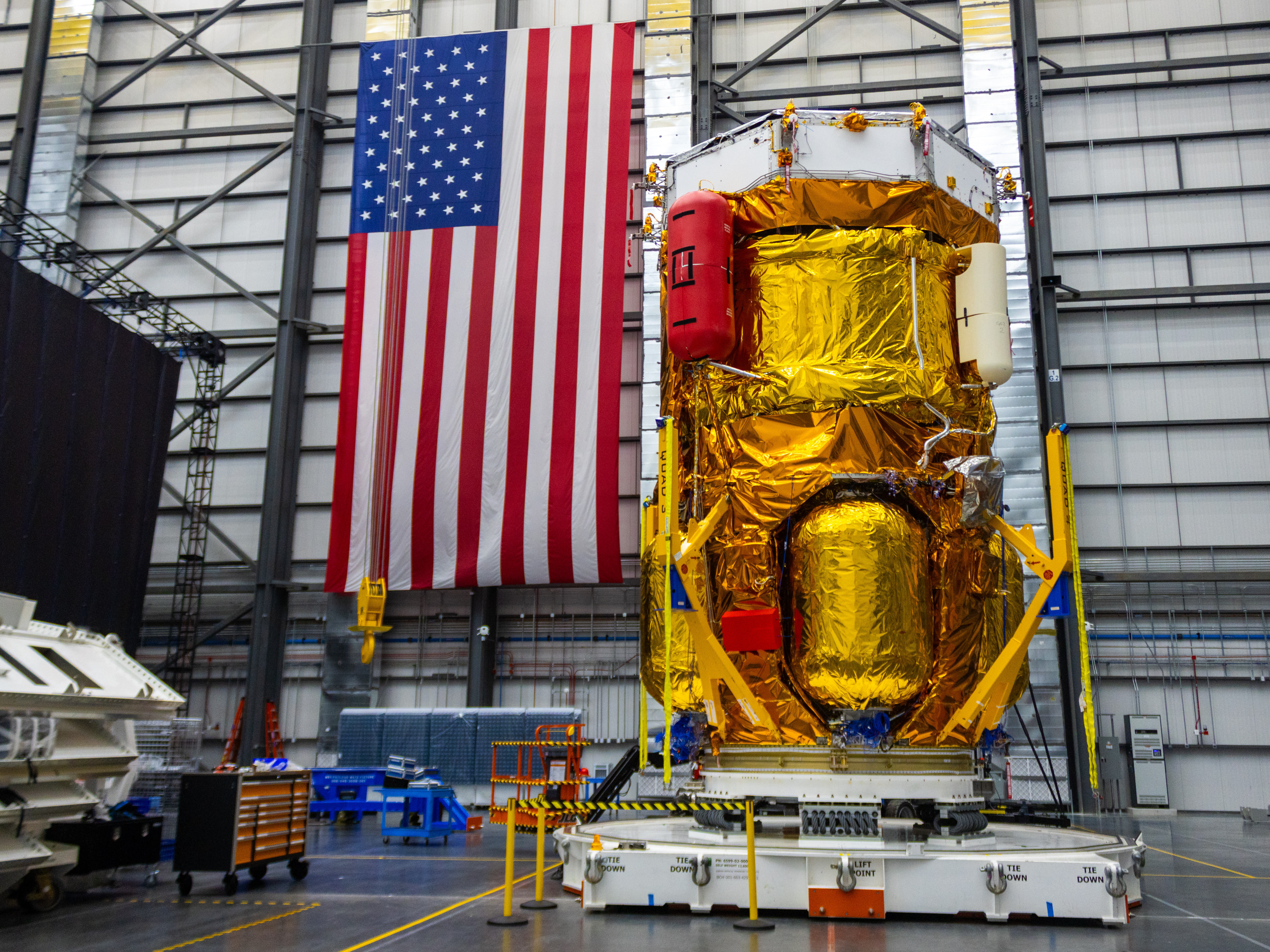
What can an uncrewed lunar landing teach us about future crewed missions? Blue Origin’s Blue Moon Mark 1 lunar lander Endurance will travel to the Moon’s South Pole to demonstrate precision landing technologies. During the mission, Endurance will attempt a landing on the Shackleton Connecting Ridge while demonstrating autonomous guidance, navigation, and control, as well as cryogenic propulsion capabilities. These demonstrations will provide valuable operational experience and data to help reduce risk for future crewed missions to the Moon.
- Endurance will deliver two NASA science payloads to the lunar South Pole.
- The Stereo Cameras for Lunar Plume-Surface Studies (SCALPSS) investigation, developed at NASA’s Langley Research Center, will capture high-resolution imagery before, during, and after landing to study how rocket engine plumes interact with the lunar surface. The observations will help engineers better understand how future landings could affect nearby spacecraft, equipment, and infrastructure.
- The Laser Retroreflector Array (LRA), developed at NASA’s Goddard Space Flight Center, will provide a precise reference point on the lunar surface, allowing scientists to accurately locate and track the lander.
- As NASA works toward establishing the Moon Base, commercial partners will play an essential role in delivering science, infrastructure, equipment, and crews to the lunar surface. Organized through NASA’s CLPS (Commercial Lunar Payload Services) initiative, this mission represents an important step toward building a reliable commercial lunar transportation network while maturing the landing technologies needed to support future lunar exploration.
Voyager Technologies’ Griffin‑1
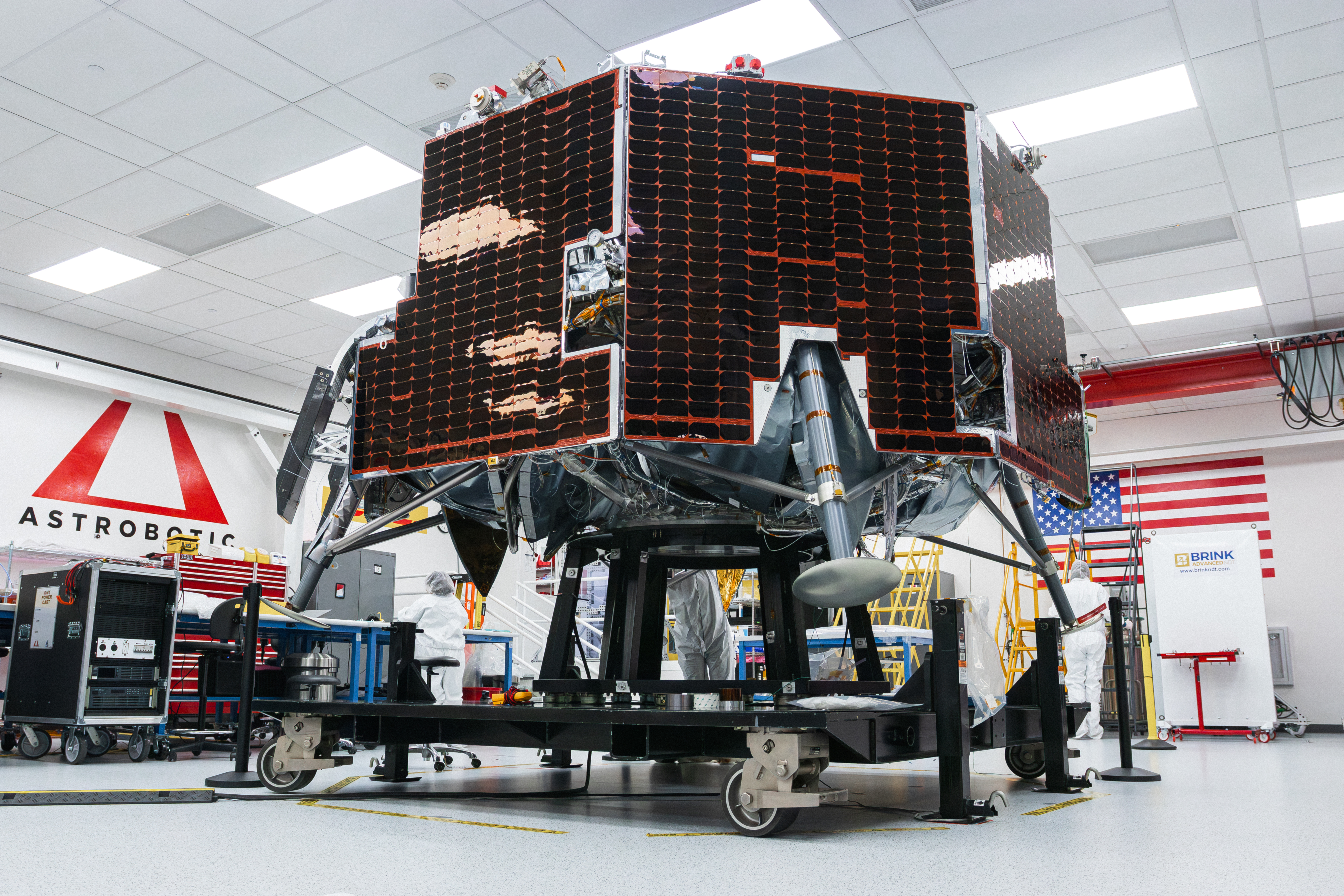
What do we need to learn before we can live and work on the Moon? Voyager Technologies’ Griffin-1 lunar lander will deliver NASA science and technology to the Moon’s South Pole region to help answer that question. Together, these investigations will study the lunar environment and resources while testing technologies that could help future explorers navigate and operate on the Moon.
- Voyager Technologies’ Griffin‑1 lunar lander will deliver several NASA payloads to the Moon’s South Pole region.
- The Lunar Dust Level Sensor and Effects on Surfaces (LDES), developed by NASA’s Johnson Space Center, will measure how lunar dust accumulates on spacecraft and surface systems. The data will help engineers better understand one of the Moon’s most persistent challenges and design future hardware that can withstand the harsh lunar environment.
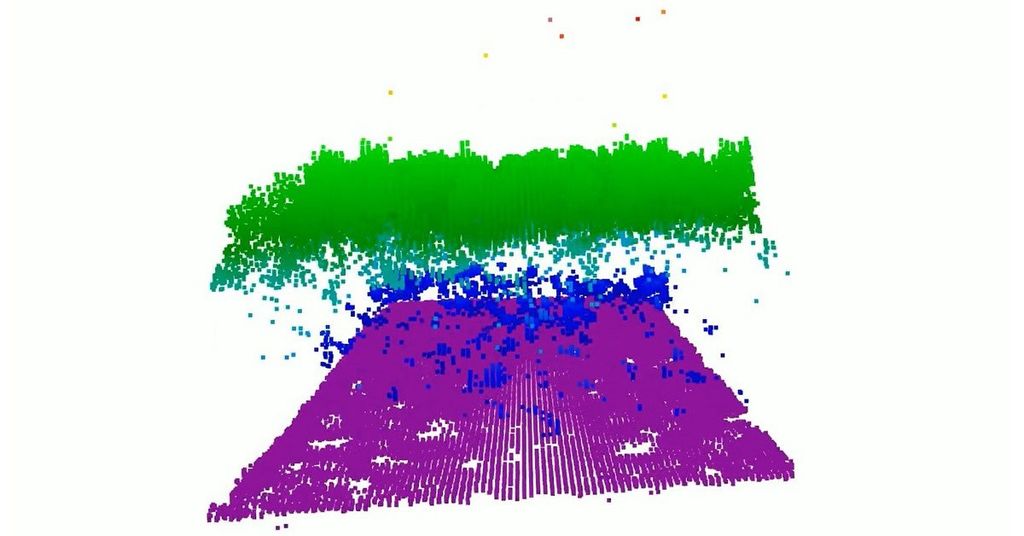
- The Lunar LiDAR Demonstration, developed by NASA’s Marshall Space Flight Center, will test a laser-based mapping system capable of creating detailed three-dimensional maps of the surrounding landscape. By measuring the time it takes laser pulses to reflect back from the surface, the instrument will help demonstrate new ways to map and navigate the Moon.
- Additional NASA payloads include two Laser Retroreflector Arrays (LRA), developed by NASA’s Goddard Space Flight Center, which will provide precise reference points for tracking and navigation, and the Moon Exploration for Titanium with Active Lighting (METAL) investigation, developed by NASA’s Ames Research Center in partnership with Interlune. METAL will study the abundance of helium-3 in the lunar regolith, helping scientists better understand the Moon’s resources and informing future in-situ resource utilization efforts.
- As NASA works toward establishing the Moon Base, commercial partners will play an essential role in delivering science, infrastructure, equipment, and crews to the lunar surface. Organized through NASA’s CLPS (Commercial Lunar Payload Services) initiative, this mission enables the agency to gather critical data, test new technologies, and advance scientific discovery while supporting development of a reliable commercial lunar transportation network.
Intuitive Machines’ IM‑3
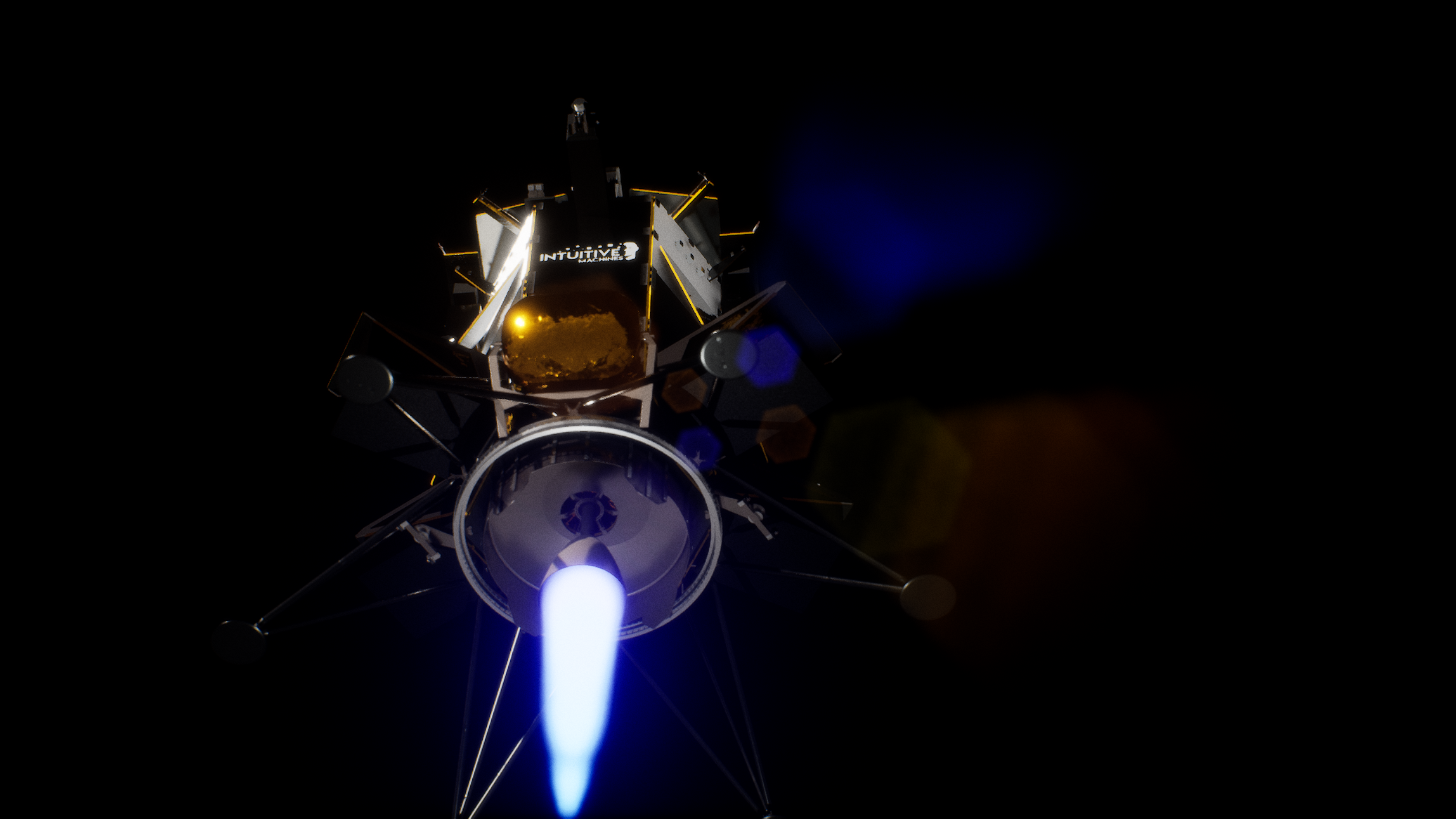
What can Reiner Gamma reveal about the Moon? Intuitive Machines’ IM‑3 mission will become the first mission to land at Reiner Gamma, one of the Moon’s most striking and enigmatic lunar swirls. Intuitive Machines’ Nova-C Trinity lunar lander will deliver NASA-sponsored science and technology to this unique region, which coincides with one of the strongest magnetic anomalies ever discovered on the Moon.
- Trinity will deliver NASA payloads to the Moon, including:
- Lunar Vertex is the mission’s primary NASA-sponsored investigation. Managed by the Johns Hopkins Applied Physics Laboratory and selected through NASA’s PRISM initiative, the investigation will help scientists answer longstanding questions about lunar swirls.
- The Lunar Dust Level Sensor and Effects on Surfaces (LDES), developed by NASA’s Johnson Space Center, will measure how lunar dust accumulates on spacecraft and surface systems. The data will help engineers better understand one of the Moon’s most persistent challenges and design future hardware that can withstand the harsh lunar environment.
- IM-3 also will introduce Altus-1, Intuitive Machines’ first lunar data-relay satellite, which will launch to the Moon alongside Trinity and deploy into lunar orbit carrying three payloads. The satellite will add an orbital communications element to the mission, demonstrating capabilities that could contribute to the communications infrastructure needed for increasingly complex operations on and around the Moon.
- Altus-1 is the first satellite in a planned lunar relay network being developed under Intuitive Machines’ Near Space Network Services contract with NASA. The network will provide communications and navigation services for missions at the Moon, including in the challenging lunar South Pole region, where direct communications with Earth can be difficult. By expanding communications coverage and navigation capabilities, the network will help support NASA’s vision for a sustained human presence on the lunar surface.
- Altus-1 will carry NavCube3-mini, a NASA technology demonstration developed at NASA’s Goddard Space Flight Center. About half the size of a shoebox and weighing just 3.5 pounds, the compact receiver is smaller, lighter, and uses less power than its predecessors. NavCube3-mini will test whether signals from GPS and Galileo satellites orbiting Earth can be used to determine a spacecraft’s position near the Moon.
- As NASA works toward establishing the Moon Base, commercial partners will play an essential role in delivering science, infrastructure, equipment, and crews to the lunar surface. Organized through NASA’s NASA’s CLPS (Commercial Lunar Payload Services) initiative, this mission enables the agency to gather critical data, test new technologies, and advance scientific discovery while supporting development of a reliable commercial lunar transportation network.
VIPER
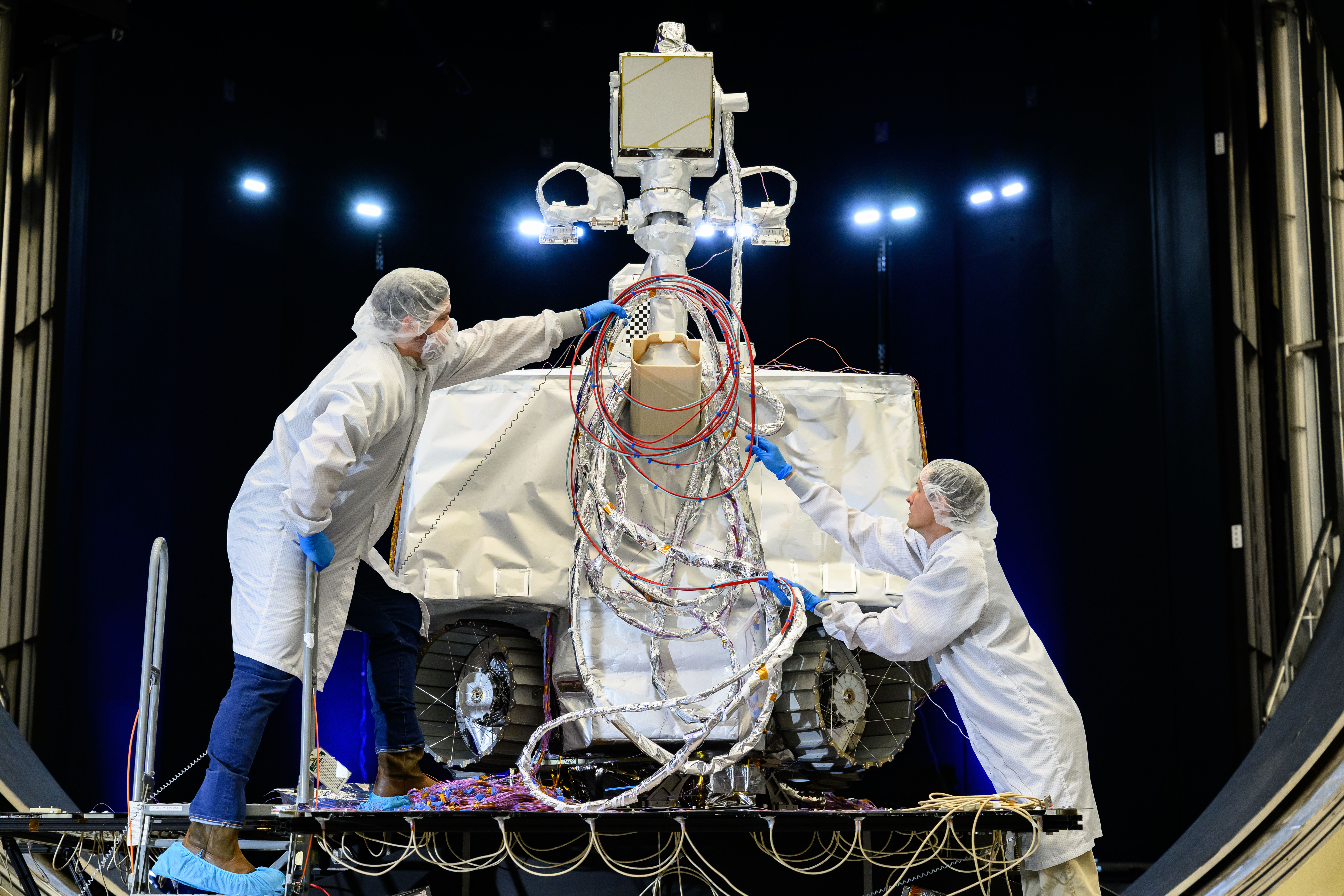
Where is the Moon’s water hiding? NASA’s VIPER (Volatiles Investigating Polar Exploration Rover) will explore the lunar South Pole to help answer that question, searching for and mapping water ice and other volatiles.
- Scheduled to arrive at the lunar South Pole in late 2027 through NASA’s CLPS (Commercial Lunar Payload Services) initiative, VIPER will ride to the Moon aboard Blue Origin’s second Blue Moon MK1 lander currently in production. The mission highlights NASA’s approach of partnering with commercial industry to help accelerate exploration and expand our understanding of the Moon.
- Built to navigate the challenging terrain of the lunar South Pole, VIPER is a robotic explorer equipped with a suite of science instruments and a 3.28-foot (1-meter) drill. As it travels across the surface, the rover will sample lunar soil at different depths and temperatures, searching for water ice and other volatiles hidden beneath the surface.
- VIPER is designed to venture into permanently shadowed craters—regions so cold they have remained untouched by sunlight for billions of years. Scientists believe these icy pockets may preserve valuable clues about the Moon’s history and contain resources that could support future exploration. By mapping where these resources exist, what they’re made of, and how accessible they are, VIPER will become the first mission to create a resource map of another world.
- The data gathered by VIPER will help NASA determine how lunar resources could support future explorers while also advancing scientific understanding of how water and other volatiles were distributed across the solar system. VIPER’s discoveries will help inform site planning, resource strategies, and the long-term sustainability of the Moon Base.
CAPSTONE 02
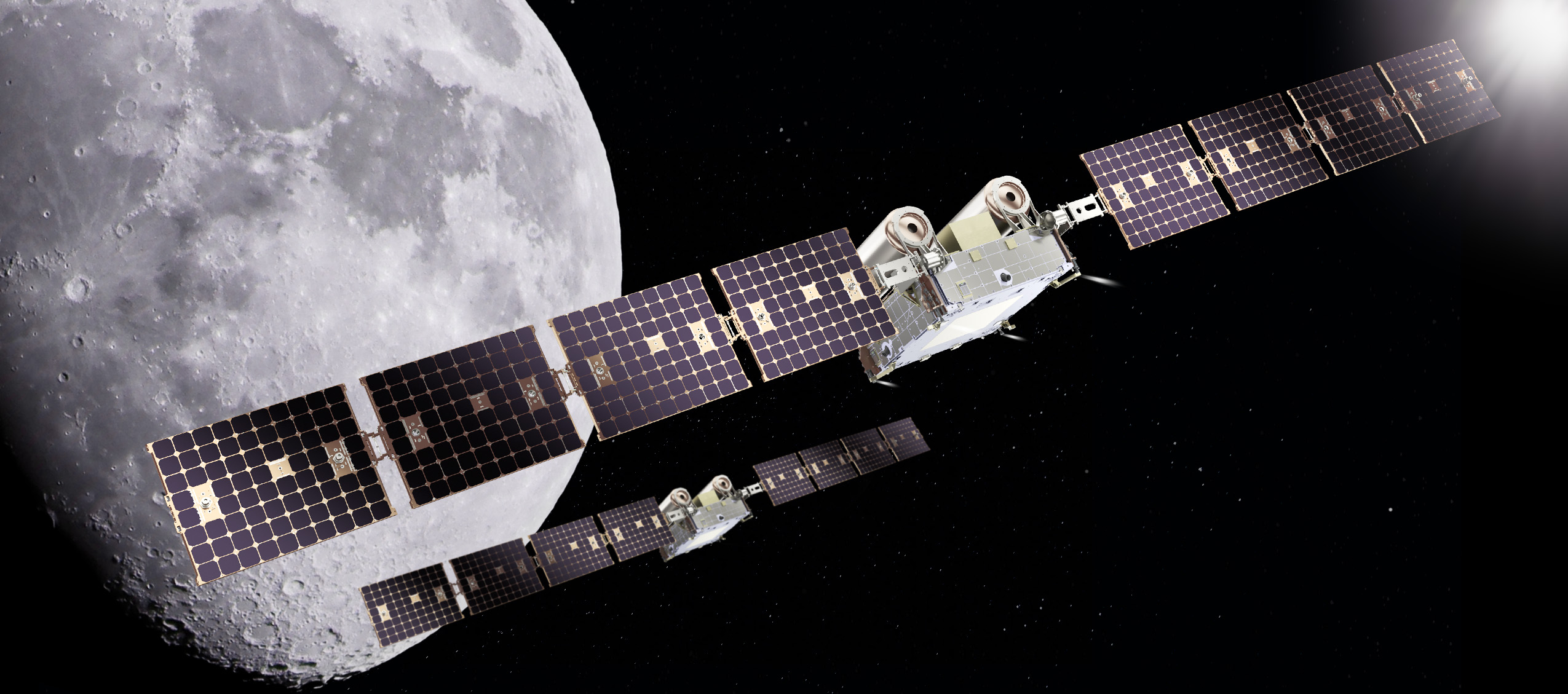
How will spacecraft navigate and work together around the Moon? NASA’s CAPSTONE 02 mission will test technologies that could help spacecraft navigate, communicate, and safely operate together in lunar orbit—capabilities that will support future missions to the Moon and development of Moon Base.
- Targeted for launch in 2027, CAPSTONE 02 will send two small spacecraft into lunar orbit to demonstrate rendezvous and proximity operations, autonomous navigation, and cislunar communications while continuing to characterize the radiation environment around the Moon. The mission builds on NASA’s original CAPSTONE mission, which successfully tested communications, navigation, and operations in cislunar space.
- The two CAPSTONE 02 spacecraft will practice finding, approaching, and flying in formation with one another in the complex gravitational environment around the Moon. Each spacecraft will be able to alternate between “chaser” and “target” roles, allowing NASA to test a variety of scenarios and better understand how spacecraft behave while operating together in lunar orbit.
- CAPSTONE 02 also will test advanced navigation technologies designed to help spacecraft determine where they are and where other spacecraft are with less reliance on tracking from Earth. Using ground measurements, optical sensors, celestial bodies, and NASA-developed navigation software, the spacecraft will demonstrate techniques similar to those planned to help astronauts safely rendezvous and dock with lunar landers in cislunar space.
- By testing these technologies in the environment where they will ultimately be used, CAPSTONE 02 will help NASA mature the capabilities needed for increasingly complex operations around the Moon. The mission will help inform future cislunar infrastructure and services that could support crew transportation, lunar surface missions, and the long-term development of Moon Base.
Firefly’s Blue Ghost Mission 2
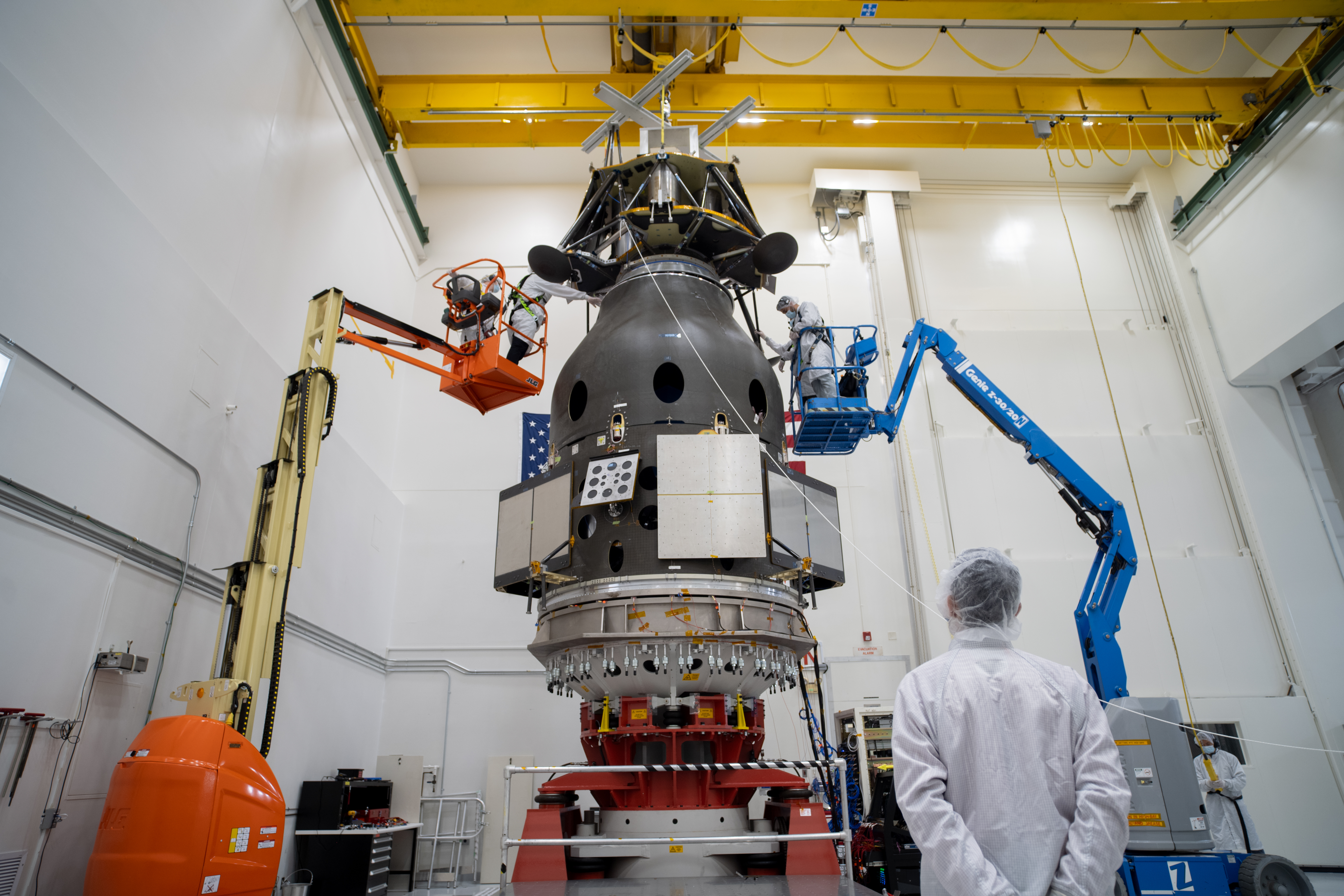
What can we discover on the far side of the Moon? Firefly Aerospace’s Blue Ghost Mission 2, named Riders on the Dark, will deliver science and technology to lunar orbit and the Moon’s far side, demonstrating capabilities that could help enable increasingly complex lunar missions.
- Blue Ghost Mission 2 will use two spacecraft working together: Firefly’s Elytra orbital vehicle and Blue Ghost lunar lander. Blue Ghost will launch stacked atop Elytra, creating a 22-foot-tall spacecraft system capable of delivering payloads both to lunar orbit and the surface. This dual-spacecraft approach will demonstrate greater flexibility for delivering science, technology, and other cargo as lunar operations expand.
- Planned to be the first American landing on the Moon’s far side, the mission will explore a region shielded from much of the radio interference generated on Earth. NASA’s LuSEE-Night (Lunar Surface Electromagnetics Experiment-Night) will use this uniquely quiet environment to listen for faint radio signals from the early universe, helping scientists investigate a period of cosmic history before the first stars fully illuminated the universe.
- Because the Moon itself blocks direct communication between Earth and its far side, missions there require new ways to stay connected. Blue Ghost will carry a NASA-developed User Terminal that will communicate through the Lunar Pathfinder satellite, demonstrating relay communications that could help provide reliable connections for future spacecraft operating around and on the Moon.
- Building on Firefly’s first Blue Ghost lunar landing in 2025, Mission 2 will reuse proven systems while expanding to a more capable mission architecture. Demonstrating repeatable commercial lunar deliveries, orbital and surface operations, and communications capabilities will help NASA advance the infrastructure and services needed for Moon Base and sustained exploration of the Moon.
- As NASA works toward establishing the Moon Base, commercial partners will play an essential role in delivering science, infrastructure, equipment, and crews to the lunar surface. Organized through NASA’s CLPS (Commercial Lunar Payload Services) initiative, this mission enables the agency to gather critical data, test new technologies, and advance scientific discovery while supporting development of a reliable commercial lunar transportation network.
MoonFall
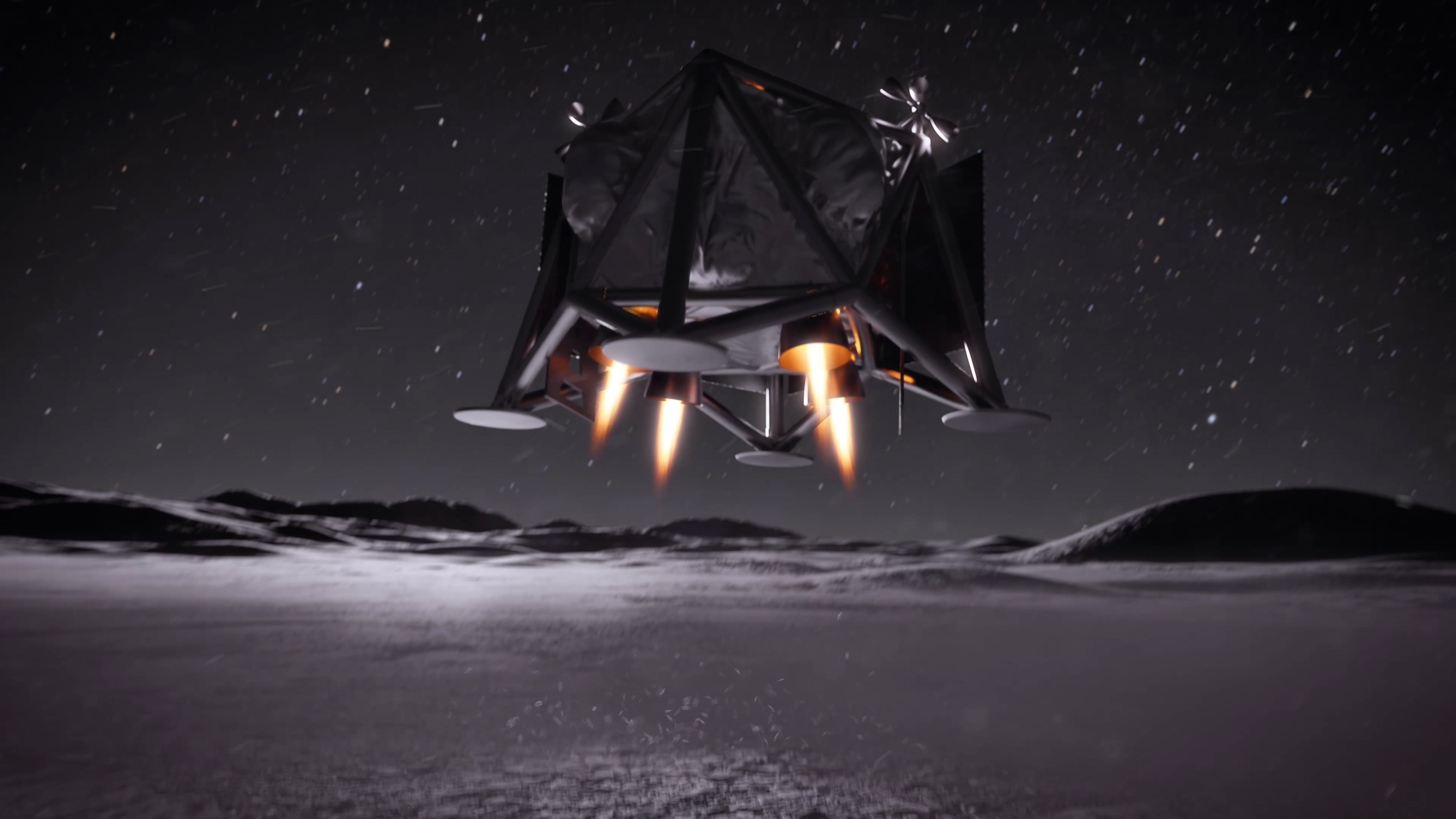
Every great expedition begins with a map. NASA’s MoonFall mission will send four propulsive drones to survey the Moon’s South Pole region in unprecedented detail, creating terrain maps of potential landing sites.
- Managed by NASA’s Jet Propulsion Laboratory, MoonFall is targeted to arrive at the lunar South Pole in 2028. The drones will travel to the Moon aboard Firefly Aerospace’s Elytra spacecraft, which will deploy the four drones during descent to the surface. Building on the legacy of NASA’s Ingenuity Mars Helicopter, MoonFall will demonstrate a new way to explore the Moon from above.
- After landing, each drone will operate independently, making multiple flights over the course of a single lunar day—about 14 Earth days. Equipped with high-definition cameras, the drones will capture detailed imagery and video of potential Artemis landing sites and other areas of interest, revealing the lunar South Pole landscape with a level of detail never before possible.
- MoonFall’s Lunar Dashcam imaging system will create some of the highest-resolution digital terrain maps ever produced of the lunar South Pole. Additional science instruments will measure radiation levels, search for water ice beneath the surface, and provide precise positioning data to help scientists better understand one of the Moon’s most important regions.
- Every flight will provide new information about the lunar South Pole, helping NASA reduce risk for future missions while refining the technologies, operations, and site planning needed to support future lunar exploration. The mission’s discoveries will help inform the long-term development of the Moon Base.
Lunar Terrain Vehicles
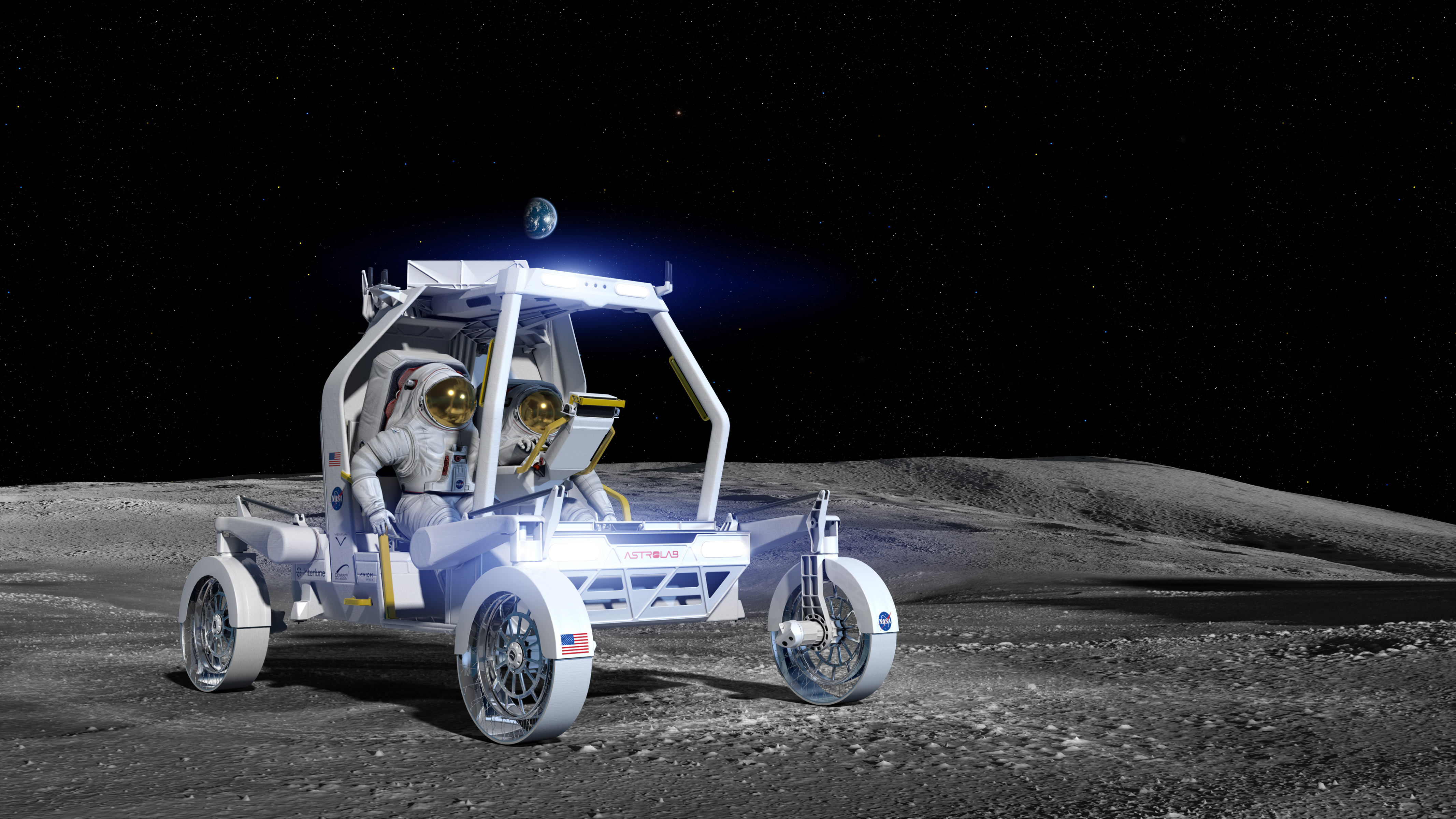
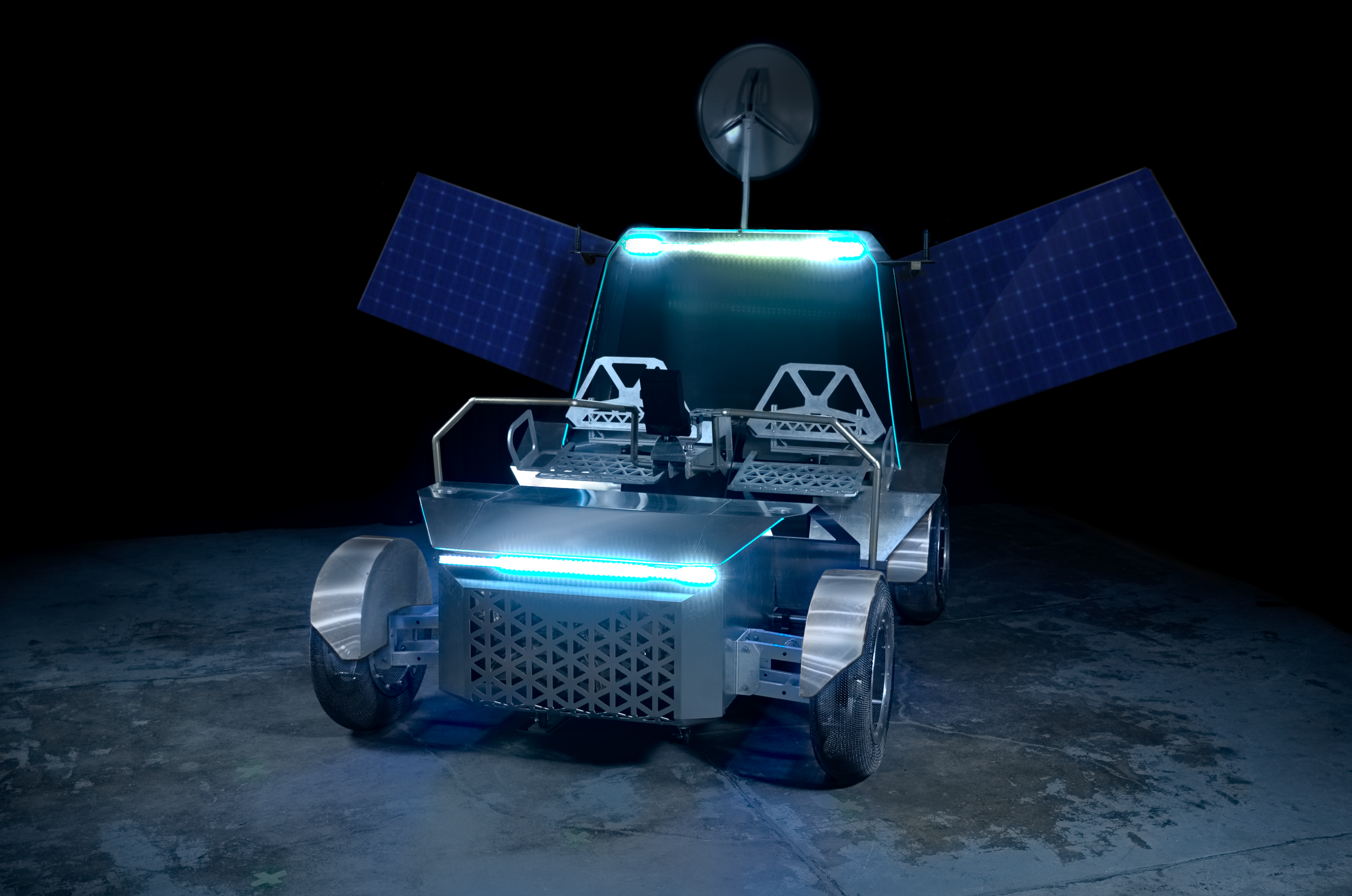
Moon joy(rides), anyone? NASA has selected Astrolab and Lunar Outpost to provide the first fleet of lunar terrain vehicles that will help Artemis astronauts explore the Moon. Built for the rugged landscape of the lunar South Pole, these advanced rovers will help astronauts travel farther, explore longer, and expand what is possible during every surface mission.
- Lunar terrain vehicles are unpressurized rovers capable of transporting crew and cargo across the lunar surface. They will provide reliable and safe transportation between waypoints for two suited crewmembers and cargo. Cargo can include various payloads, work packages, logistics supplies, science tools, samples, and associated stowage containers.
- The vehicles can be operated autonomously, by teleoperators, or by a single suited crewmember.
- NASA selected Blue Origin to deliver Astrolab’s Crewed Lunar Vehicle (CLV-1) and Lunar Outpost’s Pegasus LTV to the Moon in 2028 under two task orders, with options for future payload deliveries based on mission performance.
- Future lunar mobility capabilities will continue to build on what these vehicles help demonstrate.
2029-2032
Phase Two
Build and Expand
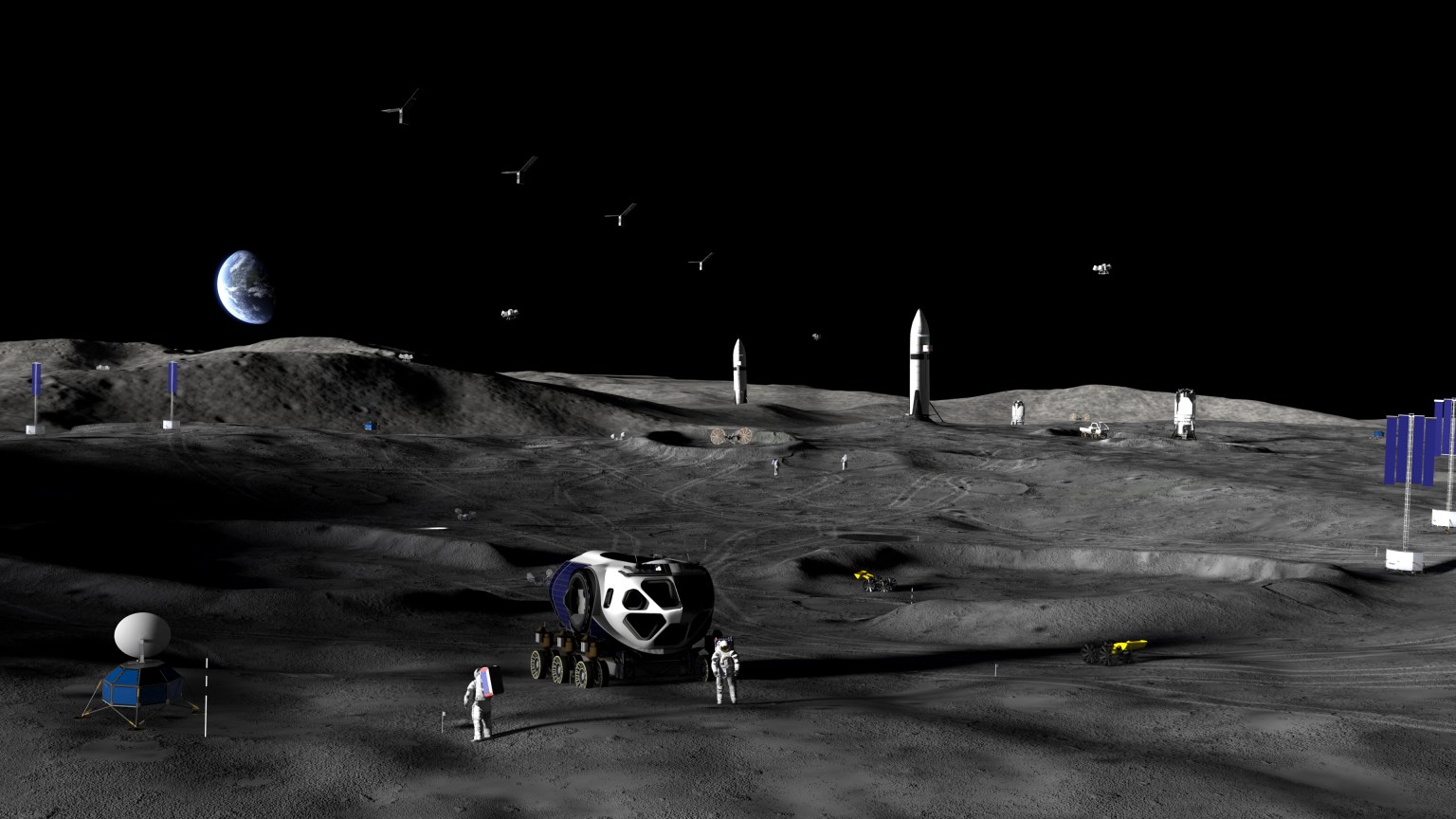
Building on what is learned during Phase One, NASA will begin deploying the first infrastructure needed to support long-term operations on the Moon. Early power systems, cargo transportation, logistics, and communications capabilities will expand humanity’s footprint on the Moon and enable increasingly complex missions. By establishing infrastructure across multiple locations, NASA will create a flexible and resilient foundation that can support continued exploration and future expansion of the Moon Base.
More to come: Additional missions, assets, and activities will be added as plans for this phase continue to develop.
Pressurized Rover

What if astronauts could bring their habitat on the road with them? A pressurized rover, supplied by JAXA (Japan Aerospace Exploration Agency), is expected to be deployed during Phase Two of Moon Base development. Serving as a mobile habitat and laboratory, the pressurized rover will allow astronauts to travel farther across the lunar South Pole region, reaching areas well beyond the immediate vicinity of landing sites.
- Designed to support astronauts for extended journeys across the lunar surface, the pressurized rover will provide a safe, pressurized environment where crews can live, work, conduct research, and prepare for moonwalks. Inside, astronauts will be able to work without spacesuits, making longer expeditions more comfortable and efficient.
- The pressurized rover can be operated manually by a single crew member from the cabin, remotely by teleoperators on Earth, or via some autonomous operations. The rover can support extended exploration missions lasting up to 28 days with up to 14 days between cargo resupplies.
2032-Beyond
Phase Three
Live and Work on the Moon
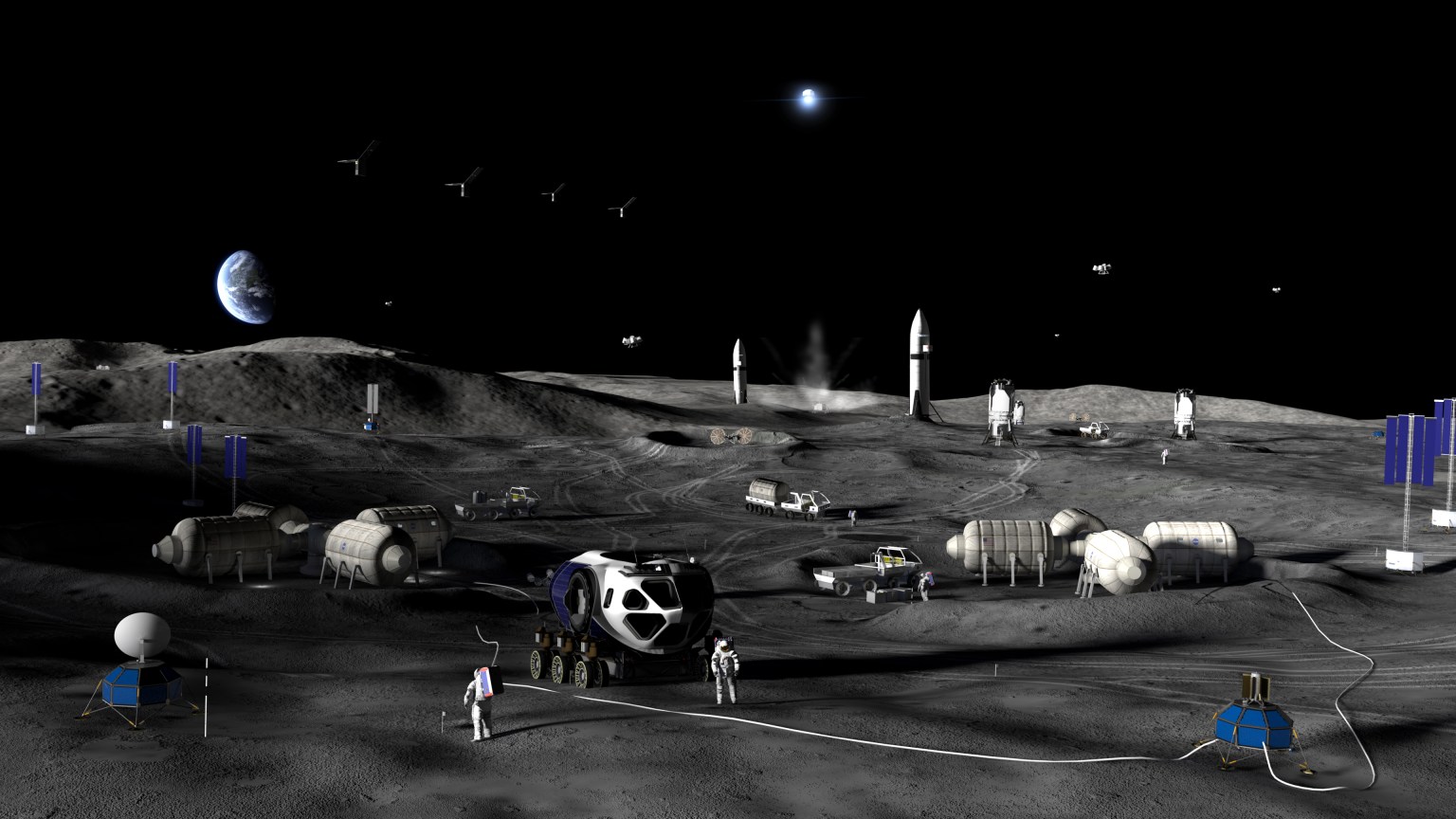
With the Moon Base’s foundational infrastructure in place, NASA will begin assembling a permanent lunar outpost where astronauts can live and work for extended periods. Habitats, power systems, communications, transportation, and other critical capabilities will come together to support an enduring human presence near the Moon’s South Pole. As the Moon Base grows and evolves, it will enable increasingly ambitious scientific research, technology demonstrations, and exploration, while helping prepare humanity for future journeys deeper into the solar system.
More to come: Additional missions, assets, and activities will be added as plans for this phase continue to develop.