













Lunar Surface Technology
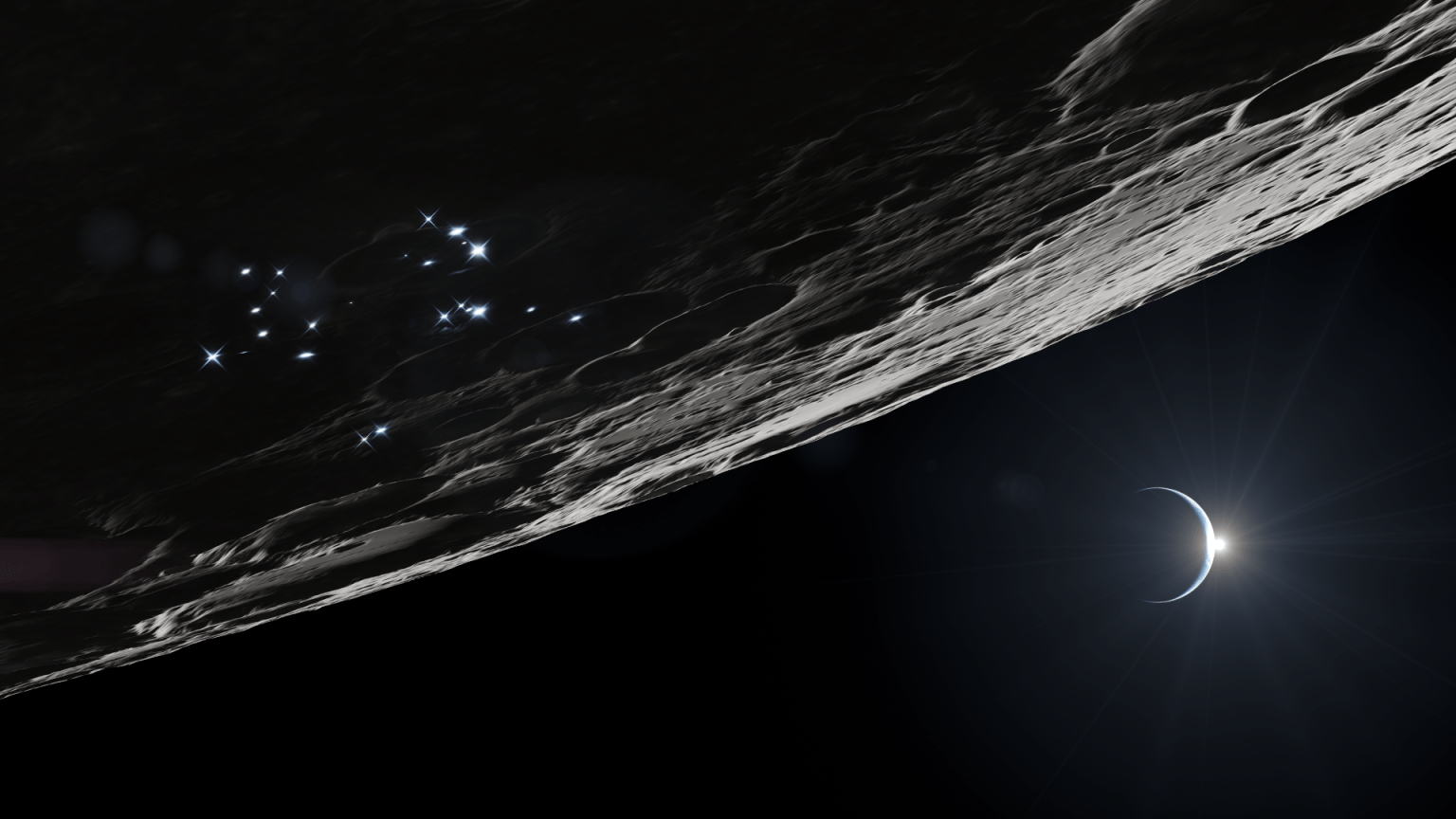
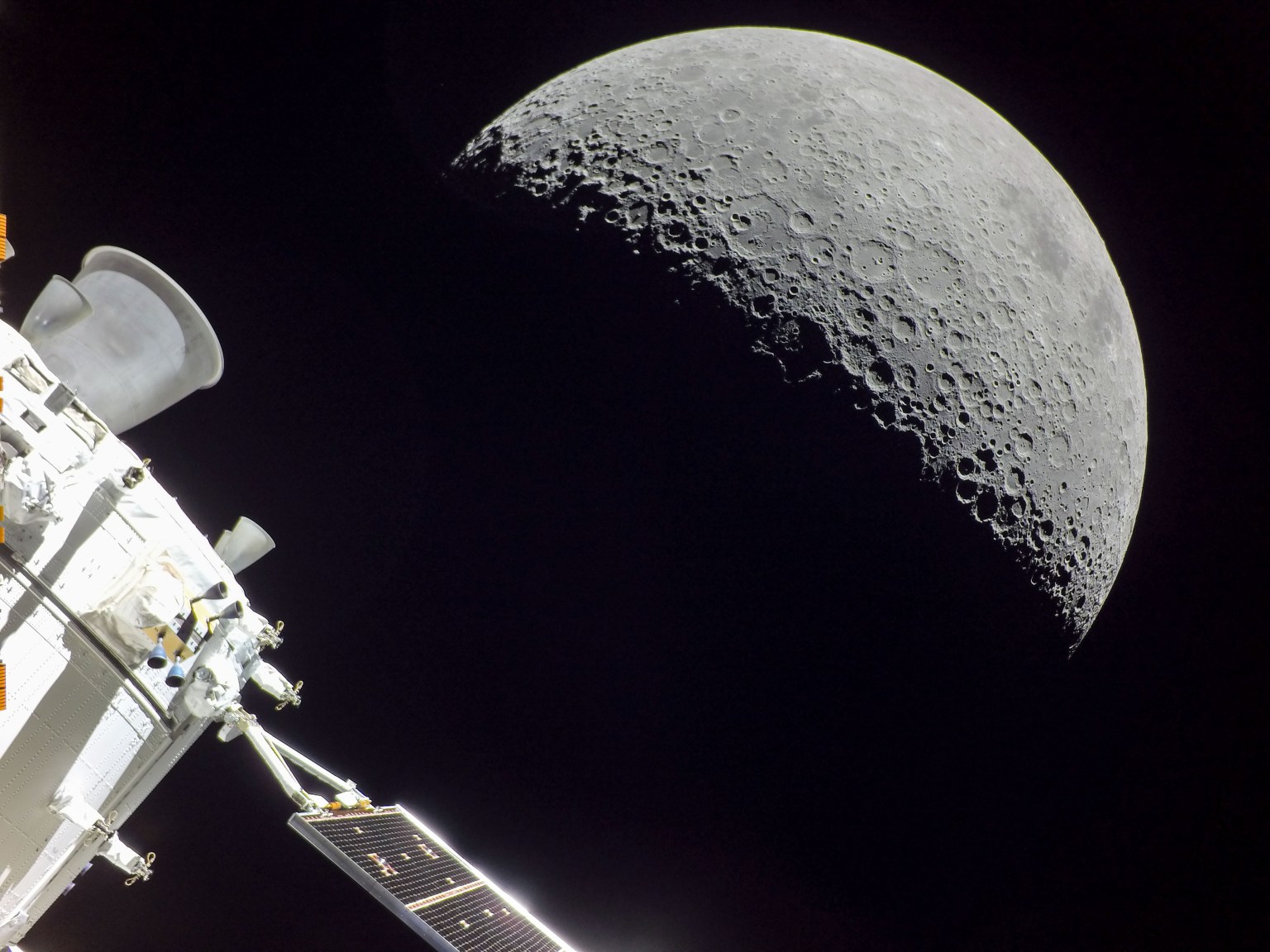
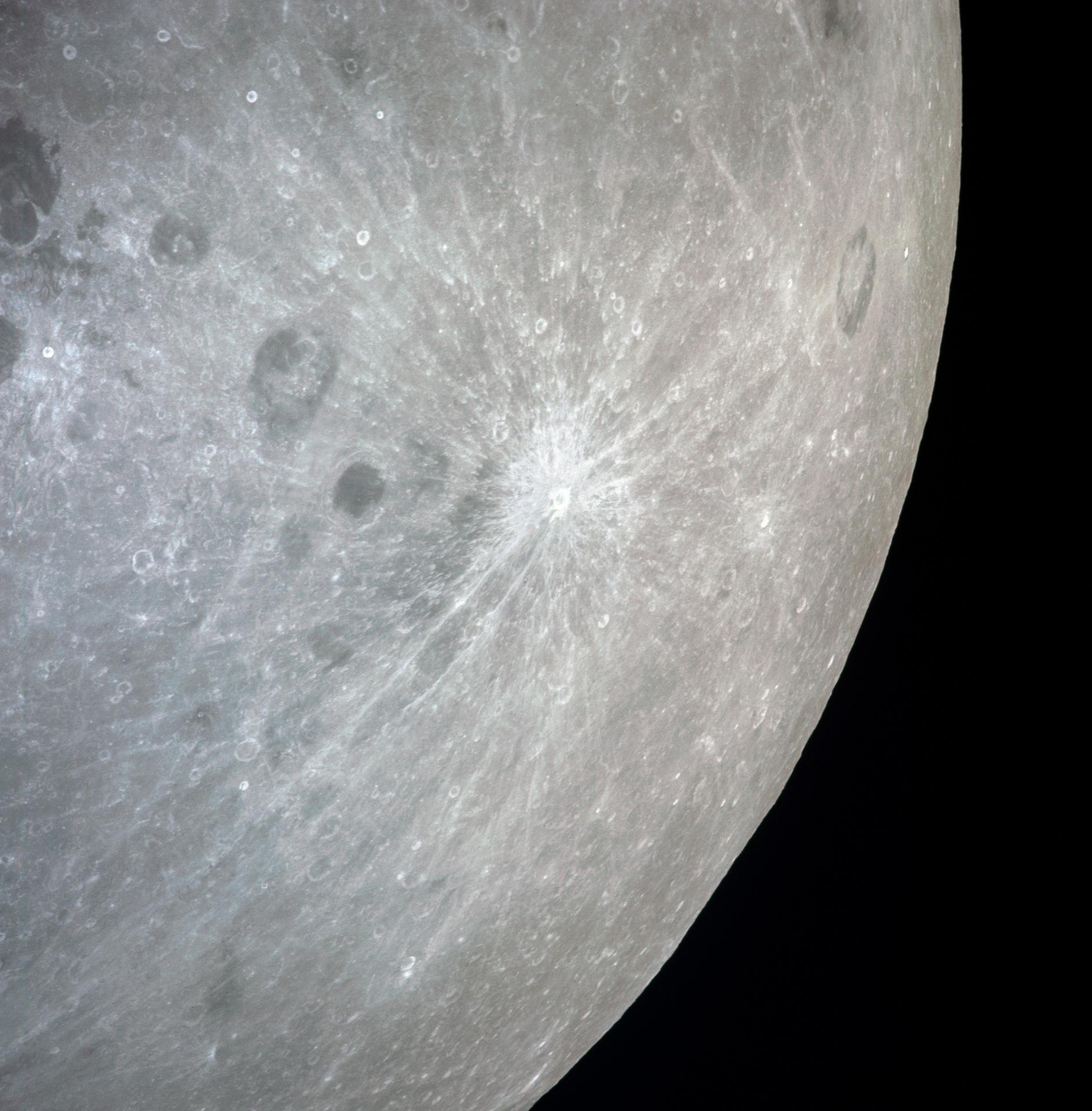
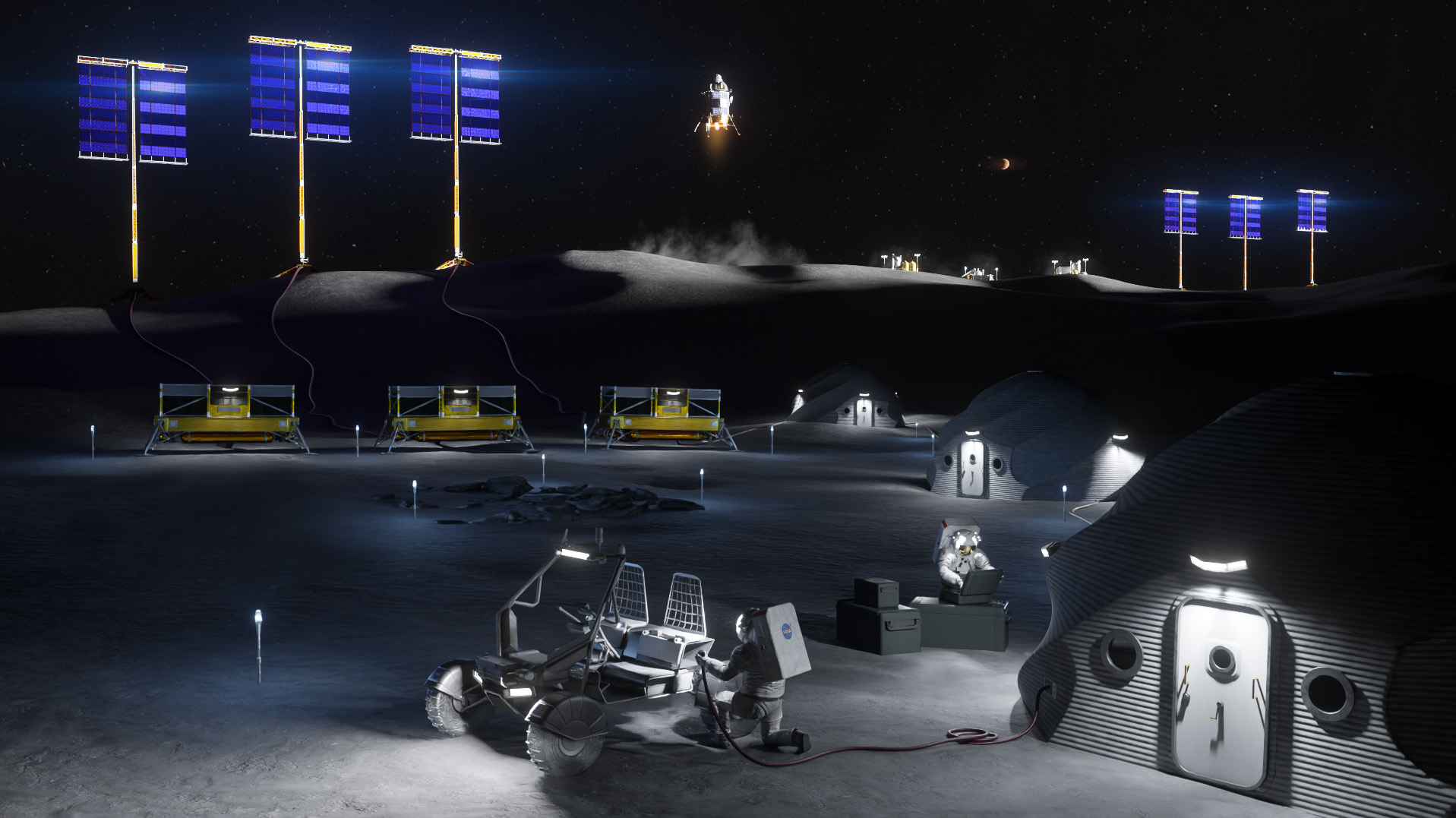
NASA’s lunar surface infrastructure technologies will enable long-duration exploration and science missions for the Moon Base at the lunar South Pole with Artemis. Similar to when we build a new neighborhood here on Earth, we’ll need abundant power, water, landing pads and roads, and other foundational elements to support America’s long-term presence on the Moon. To support this, we are building technologies for generating and storing reliable power, extracting local resources that could be converted into drinkable water and oxygen, manufacturing and construction of landing pads and berms, and mitigation of abrasive lunar dust from critical systems. These technology advancements – tested on Earth, in simulated lunar gravity, and on the Moon – will enable long-term exploration and operations in the extreme environments of the lunar surface and pave the way for future human exploration of Mars.
Quick Facts
NASA’s Electrodynamic Dust Shield (EDS) successfully demonstrated its ability to remove regolith from its various surfaces on the Moon during Firefly Aerospace’s Blue Ghost Mission 1 in 2025.

Digital Twins and Artificial Intelligence such as tools used in the Lunar Autonomy Challenge demonstrate how more than 50% of physical resources could be replaced with virtual tools.
NASA Space Tech flew five payloads to the Moon in 2025 as part of NASA’s Commercial Lunar Payload Services initiative, showing operational capability and returning valuable data addressing dust mitigation, environments, and communications capabilities.
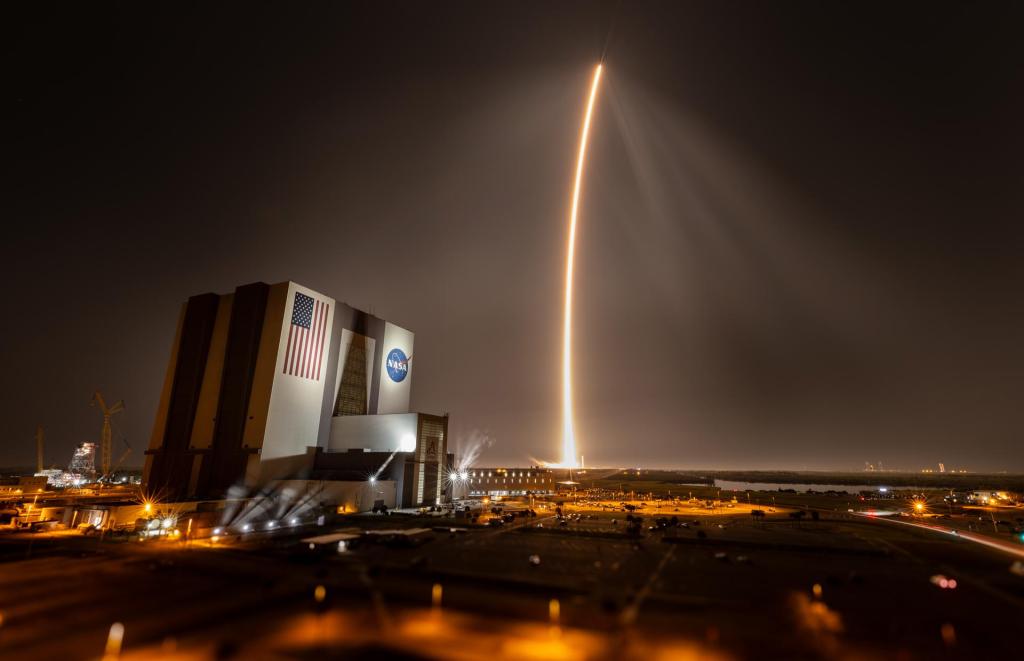
During a Lunar Gravity flight test with Blue Origin in 2025, seven surface infrastructure technologies studied regolith mechanics and lunar dust transport in a simulated lunar gravity environment.

Artificial intelligence and machine learning techniques could help determine relative positioning on the lunar surface, allowing systems to efficiently access, navigate, and explore previously inaccessible surface or subsurface areas.
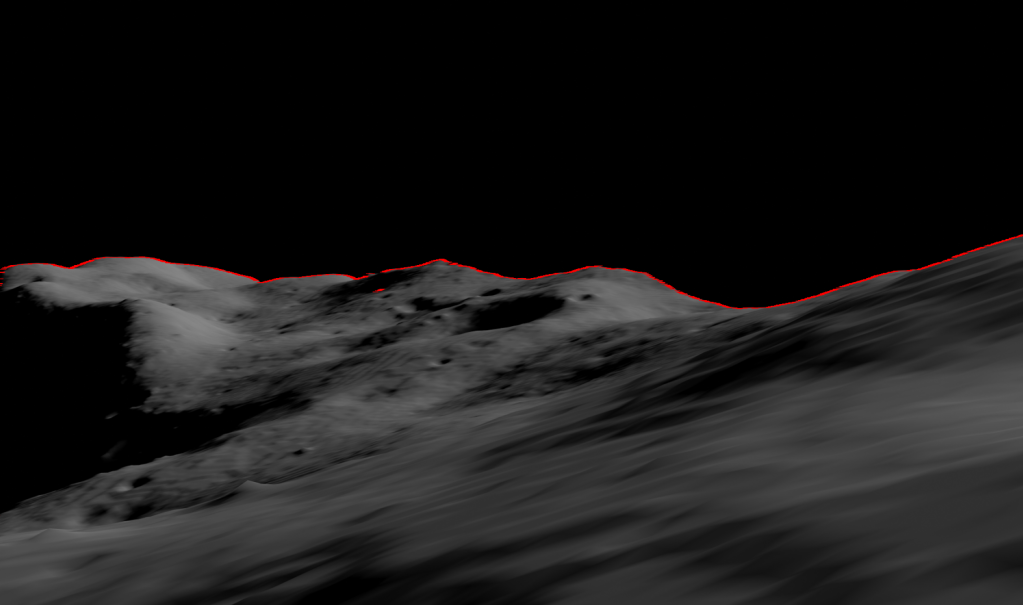
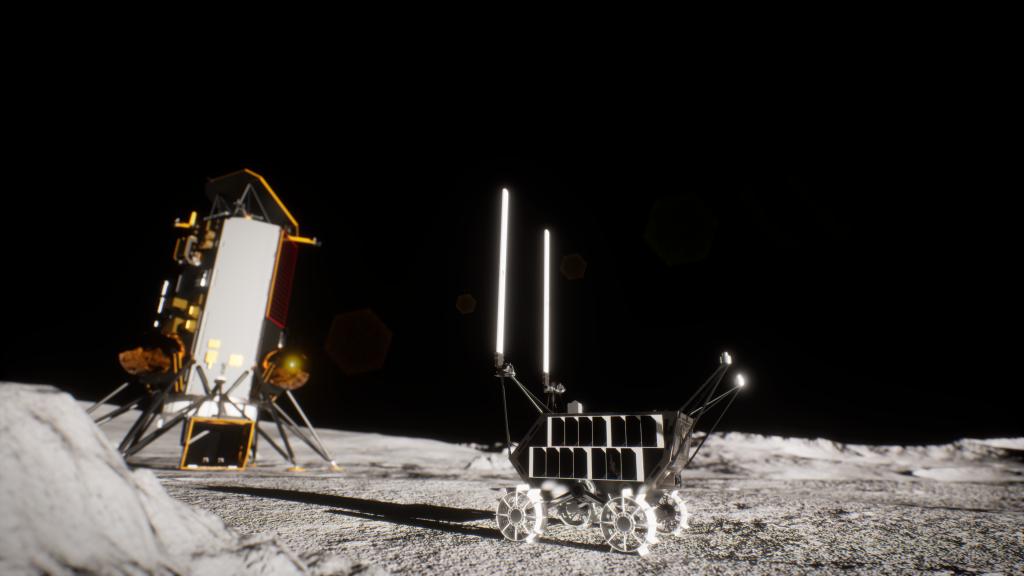
Nokia’s 4G/LTE Lunar Surface Communications System, a NASA Tipping Point investment, landed on the Moon in 2025, successfully powering up and transmitting operational data back to Earth, validating key operational aspects of the network.
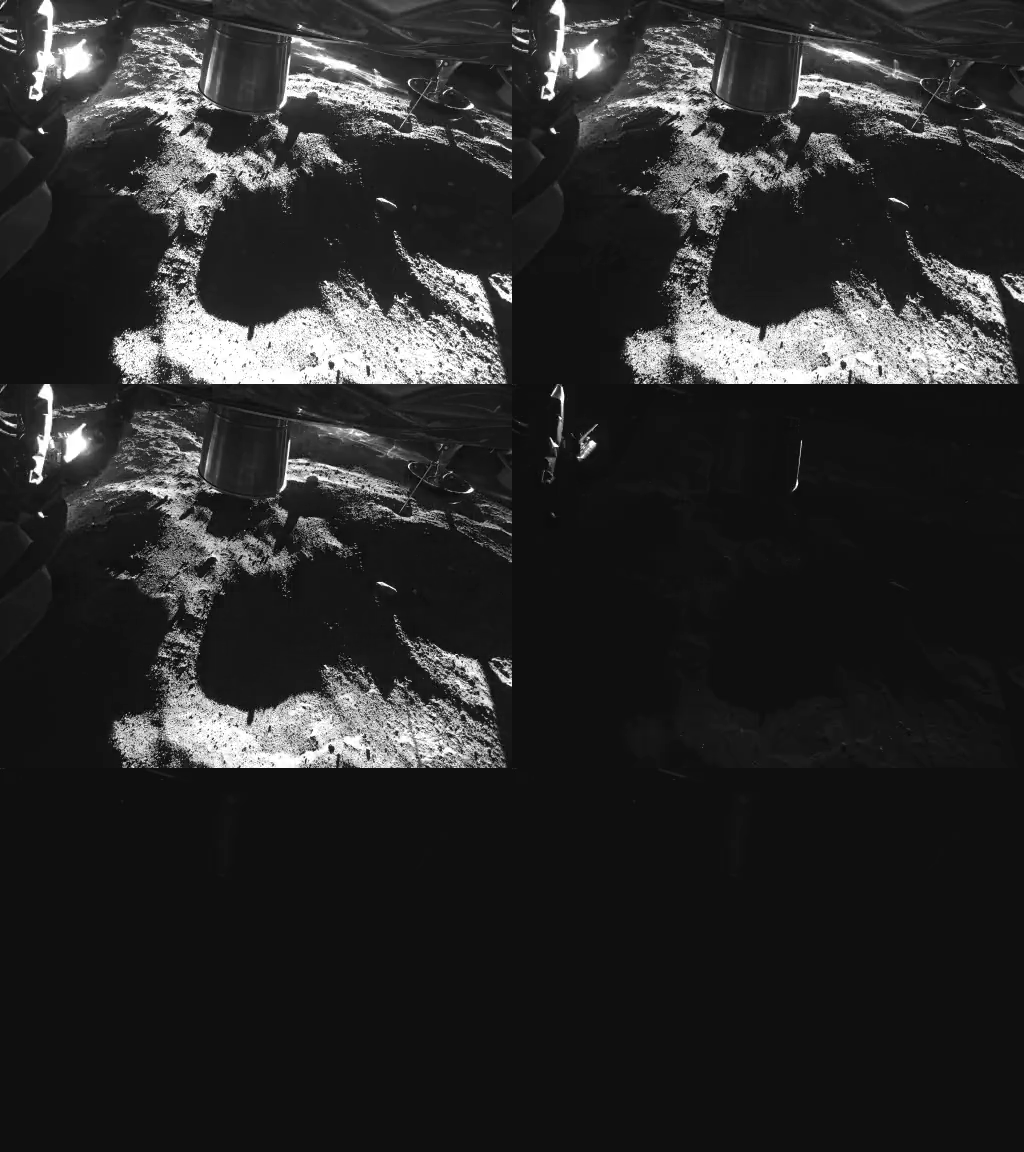
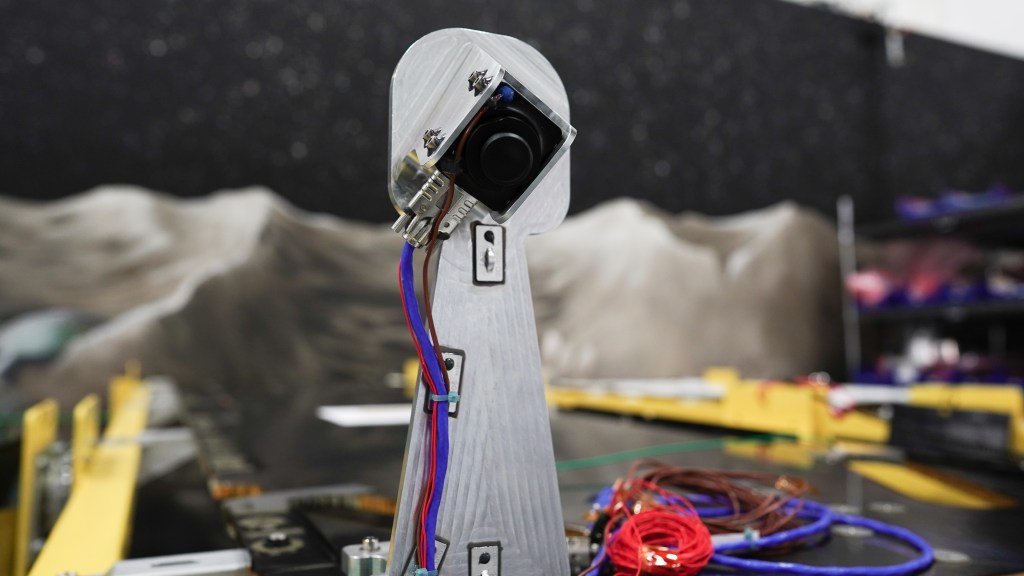
NASA’s Stereo Cameras for Lunar Plume Surface Studies, or SCALPSS, collects imagery of the interaction between lunar lander systems and regolith on the Moon’s surface.
Regenerative (continuously rechargeable) Fuel Cells convert hydrogen and oxygen into electrical energy. The system is “recharged” with power from solar arrays.
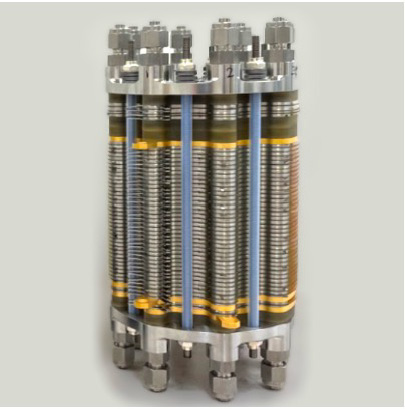
Combining Regenerative Fuel Cells with a Vertical Solar Array Technology enables supply and recharge of 10KW of power to permanently shadowed regions
on the Moon.
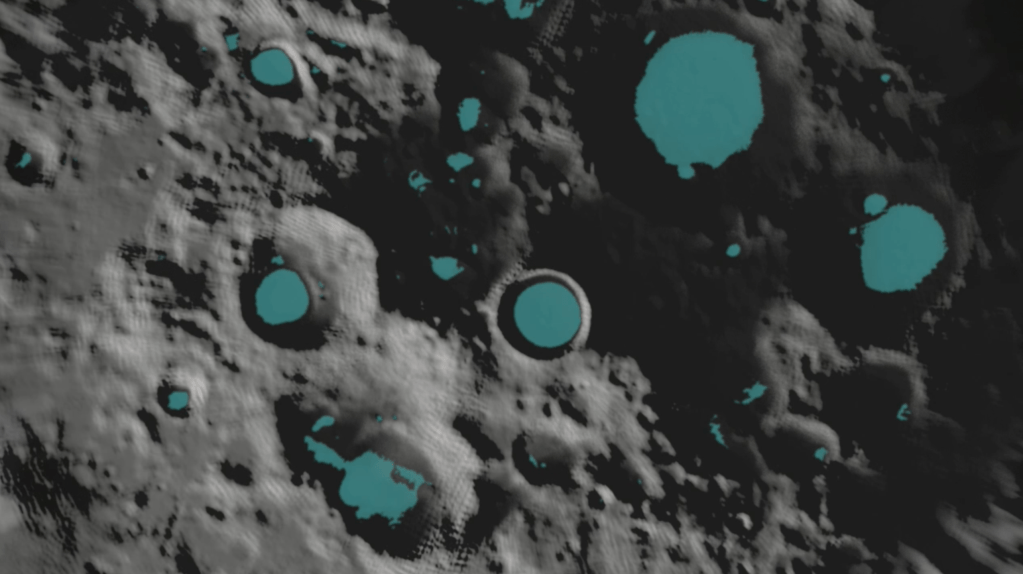
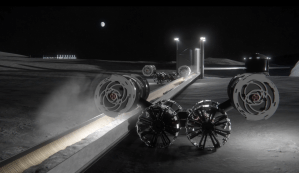
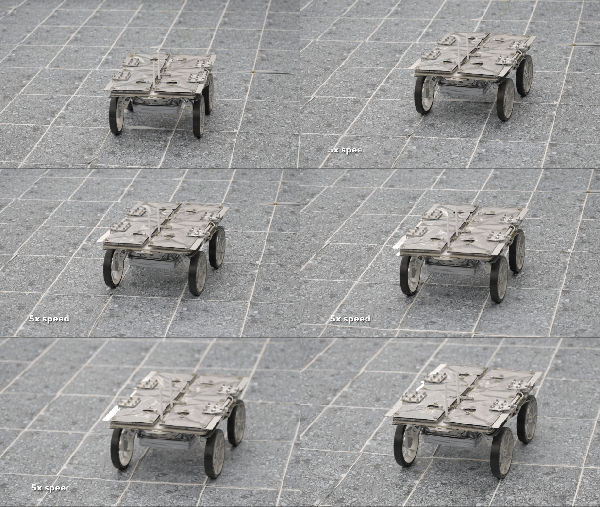
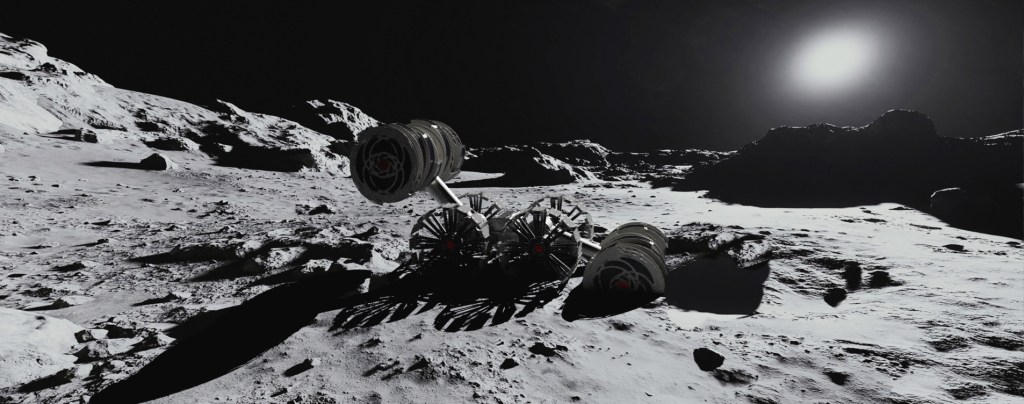
The Infrastructure Pilot Excavator (IPEx) is designed to reliably excavate and deliver a total of 10 metric tons of lunar regolith over the course of 100 meters and 11 days (200 times more than the state of art.)
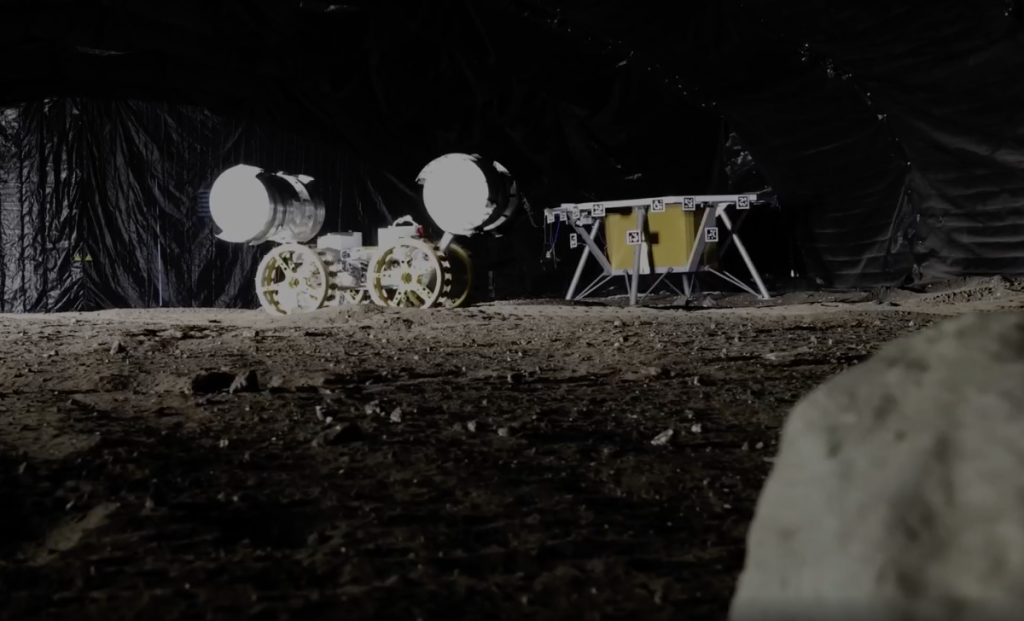
NASA’s Bulk Metallic Glass Gear project developed special gearboxes to operate despite low temperatures in extreme environments — from the Moon to Mars to icy worlds such as Jupiter’s moon, Europa.
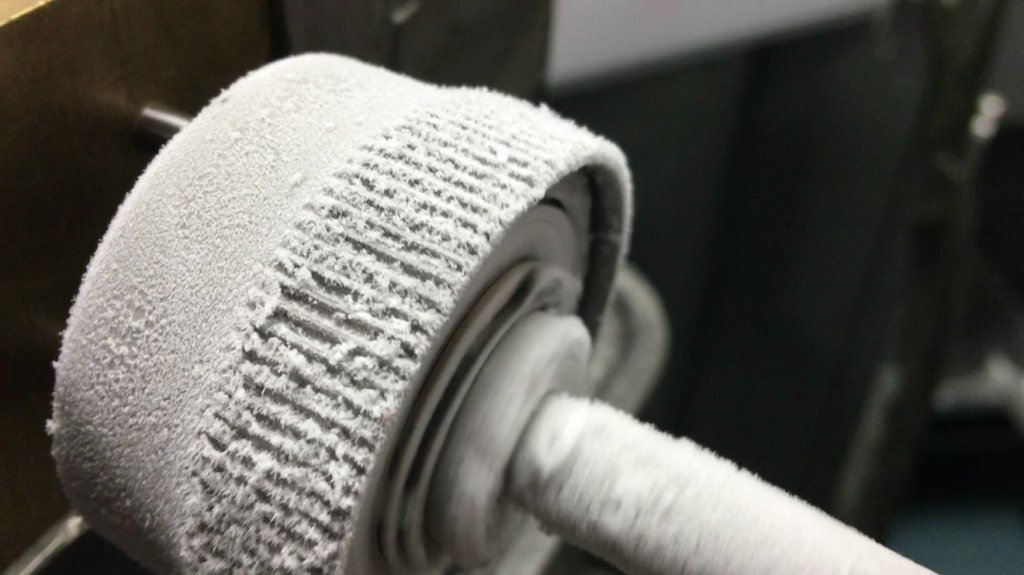
Lunar rovers, manipulators, and other systems must be equipped to operate throughout the full range of lunar surface conditions including lunar noon (up to 302 °F at the equator), night (down to -292 °F at the equator), multiple day/night cycles, and in permanently shadowed regions (down to -418 °F).
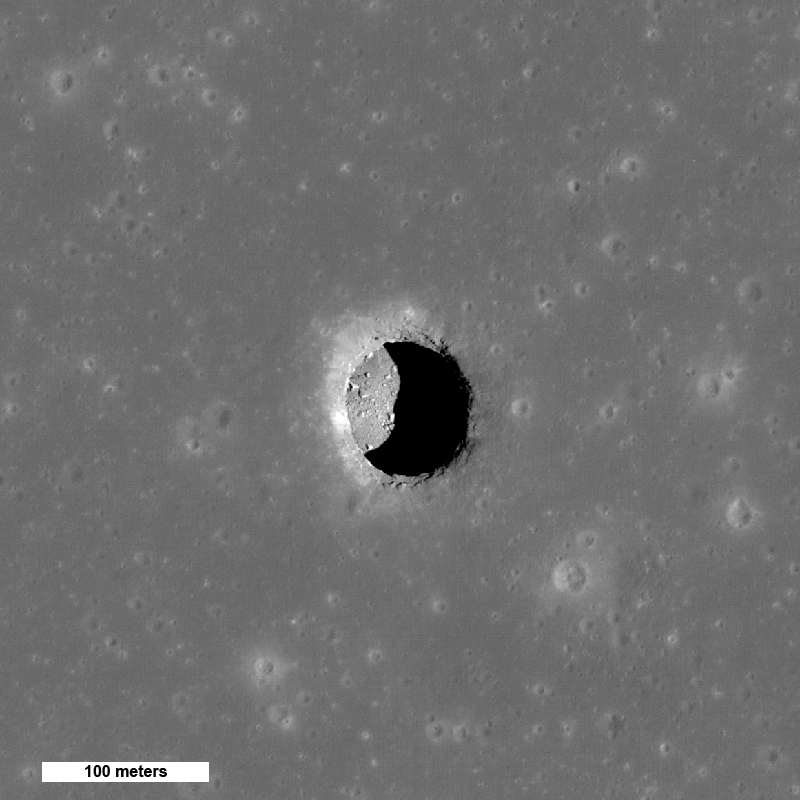
Explore the technology capability areas on this page that NASA is advancing for the Moon at the links below:
Learn more about how NASA is partnering with industry, academia, and other government agencies to advance critical lunar surface technologies.
Surface Power
Access to continuous, localized power throughout the lunar day and night is essential for sustained human and robotic missions on the lunar surface and in harsh space environments beyond the Moon. The technologies required include power generation, power management and distribution, and energy storage.
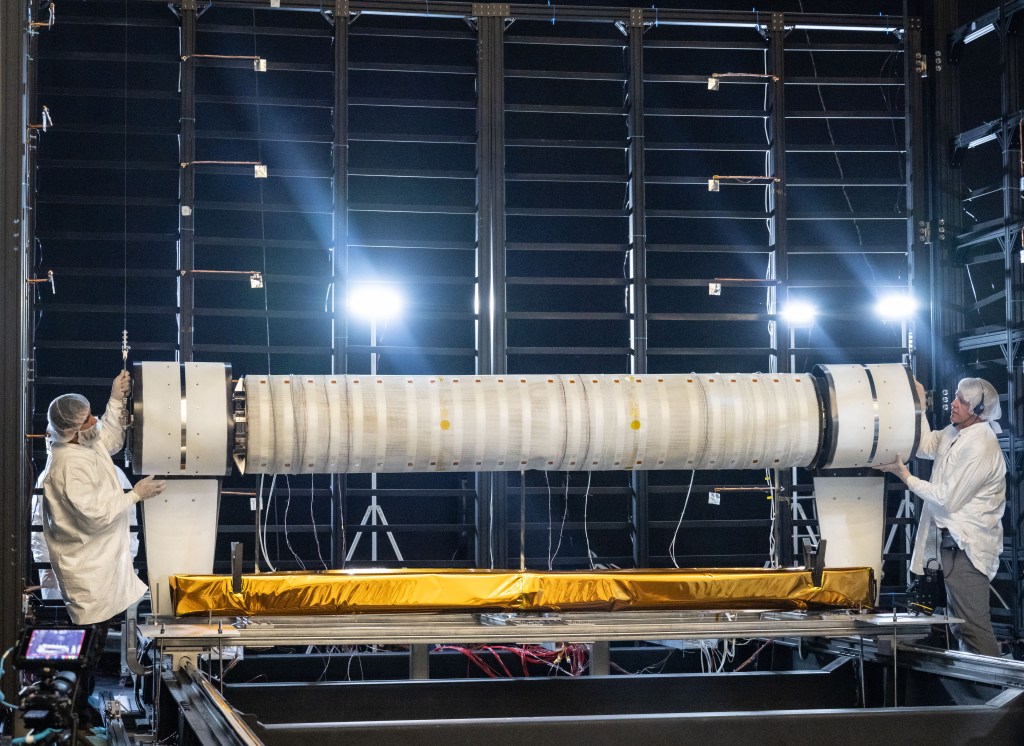
Vertical Solar Array Technology (VSAT)
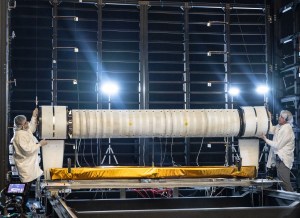
An autonomous system designed for reliable deployment and retraction and system mobility on uneven terrain with minimal mass and packing volume. Its aim is to provide continuous, reliable power for long-duration human and robotic lunar surface missions, providing sustainable, continuous solar power by deploying vertical arrays on masts of up to 20 meters in length. NASA has worked with several partners to mature designs.
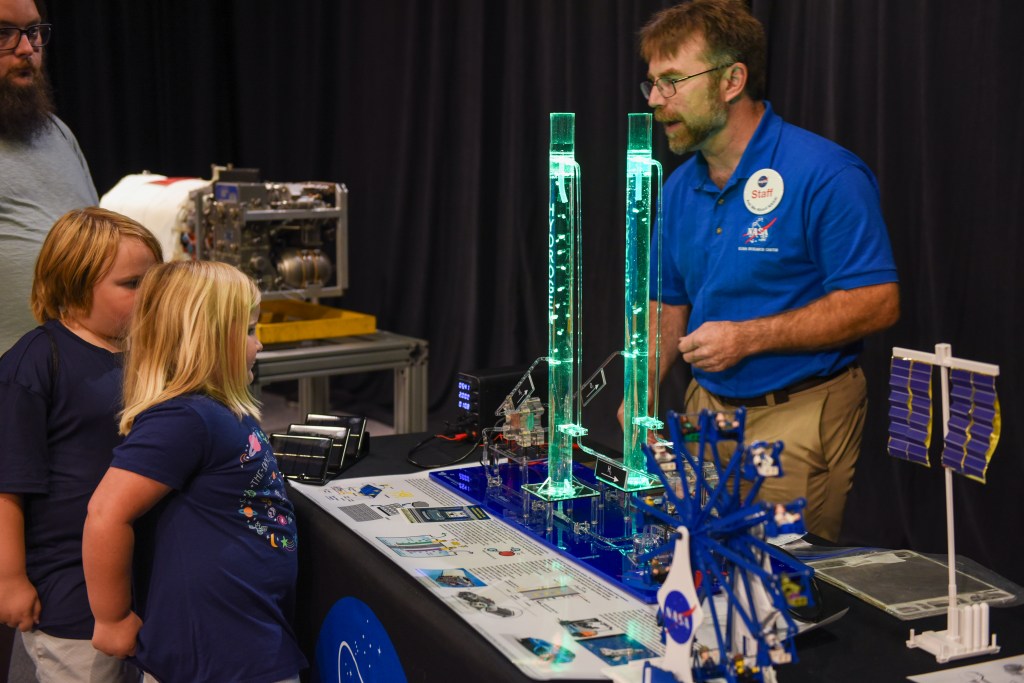
Regenerative Fuel Cell (RFC)
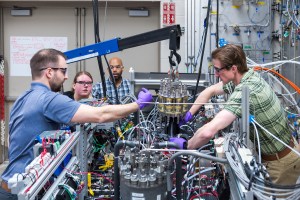
NASA’s RFC energy storage system will have a higher energy density than modern state-of-the-art batteries, helping missions to the lunar surface carry significantly less weight for the same amount of stored energy required to meet objectives for sustained operations. Specific functions of the RFC system include chemical energy storage, fuel cell discharge, and electrolysis re-charge, all of which are scalable and can be optimized for specific mission objectives.
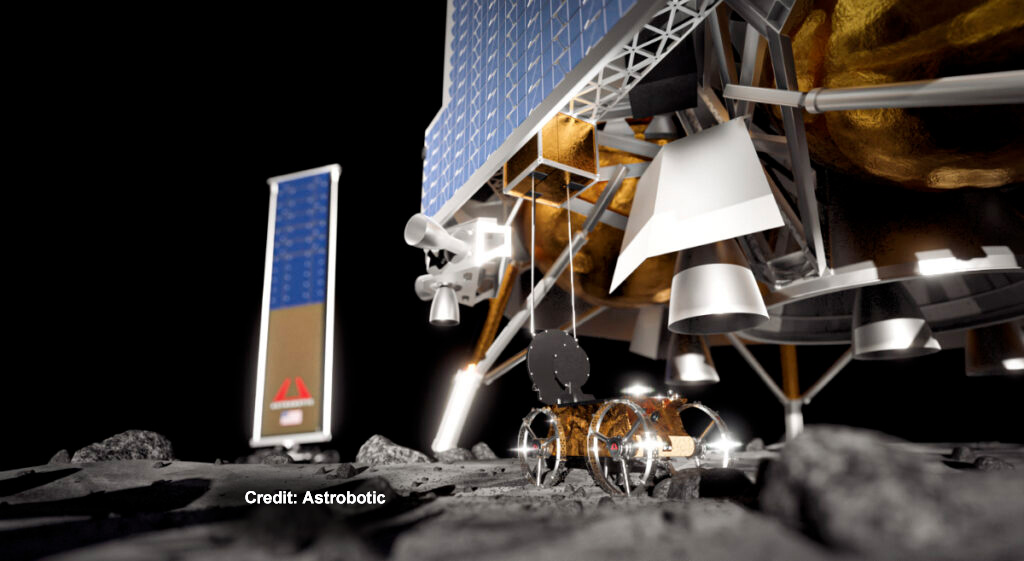
LunaGrid-Lite
LunaGrid-Lite – a Tipping Point with Astrobotic – is a scalable, tethered, surface-based power distribution demonstration designed to operate at the lunar poles by deploying a cable between an Astrobotic lander and a CubeRover, demonstrating the first-ever tethered, high-voltage power transmission on the lunar surface.

Harmonia-Radioisotope Power Supply
Harmonia, a Tipping Point with Zeno Power, will develop a radioisotope power system that provides heat and power to sustain surface operations throughout the 14-day lunar night and in permanently shadowed regions on the Moon. Harmonia will establish an affordable private-sector radioisotope capability, supporting new government and commercial applications.
Fission Surface Power
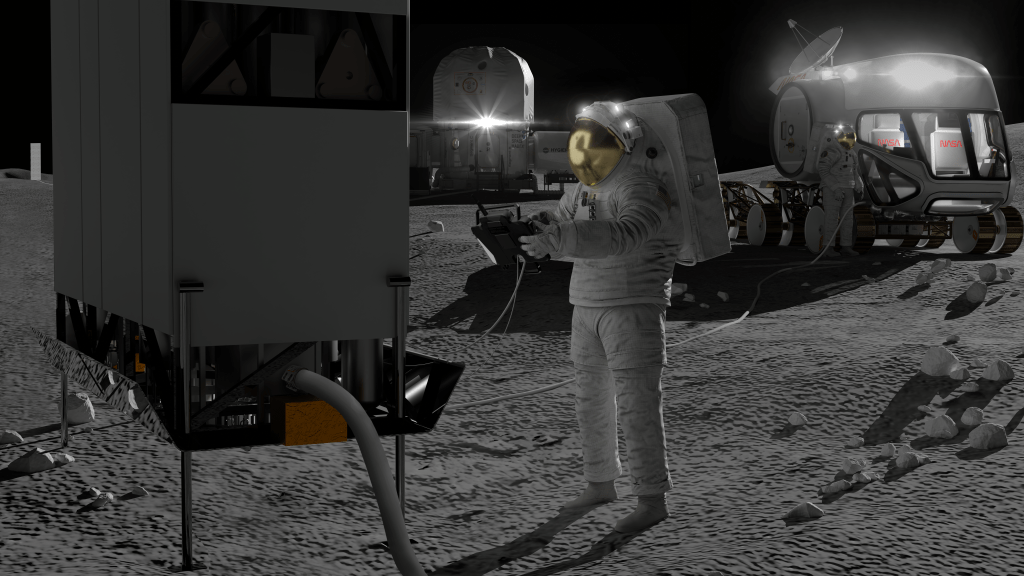
Building on more than 60 years of agency experience in exploration technology, Nuclear power is a key capability for sustained operations on the lunar and Martian surfaces. Fission surface power will provide a long-lasting, continuous power source regardless of sunlight or temperature. In response to the National Space Policy, NASA announced Lunar Reactor-1, the first fission nuclear reactor on the Moon, will land on the lunar surface in 2030.
Autonomous Systems and Robotics
Robotic technologies will need to efficiently access, navigate, and explore previously inaccessible lunar surface or subsurface areas to further our understanding of what it takes to explore on the Moon and on other planetary surfaces. Some key development areas include autonomous operations for long‑duration missions, exploration of subsurface voids such as lava tubes, hazard detection and avoidance, and bulk transport of regolith to enable in‑situ resource utilization and construction.
Cooperative Autonomous Distributed Robotic Exploration (CADRE)
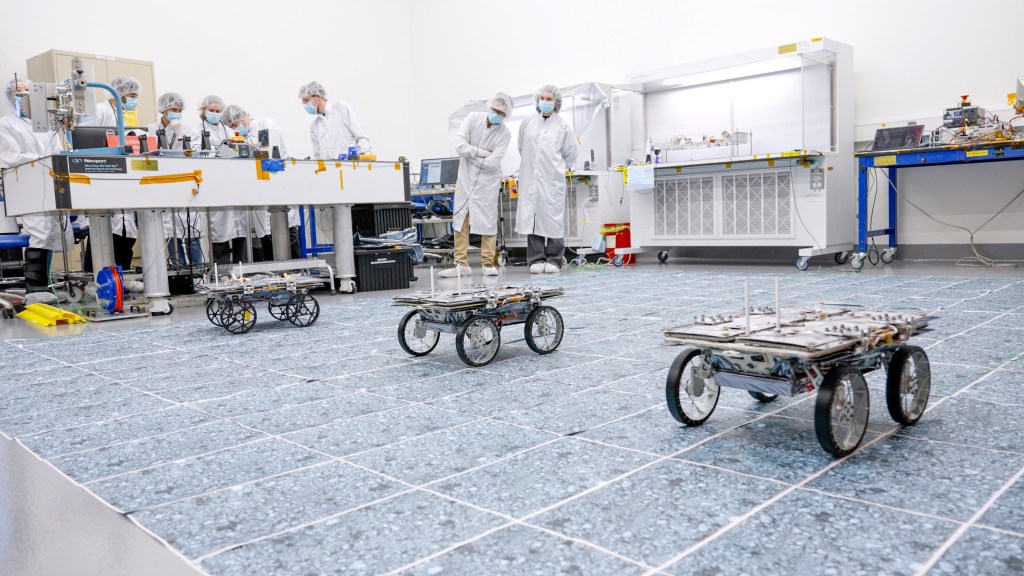
NASA's CADRE is a flight demonstration led by the agency’s Jet Propulsion Laboratory to validate cooperative autonomous surface mobility for lunar exploration. CADRE consists of a base station and three small, suitcase-sized rovers that use multiagent autonomy to traverse, sense, and map the lunar surface and subsurface, demonstrating networked operations including cooperative mapping, obstacle avoidance, and ground penetrating radar surveys.
High‑speed Intelligent Robust Autonomous Terrain Exploration (HI‑RATE)
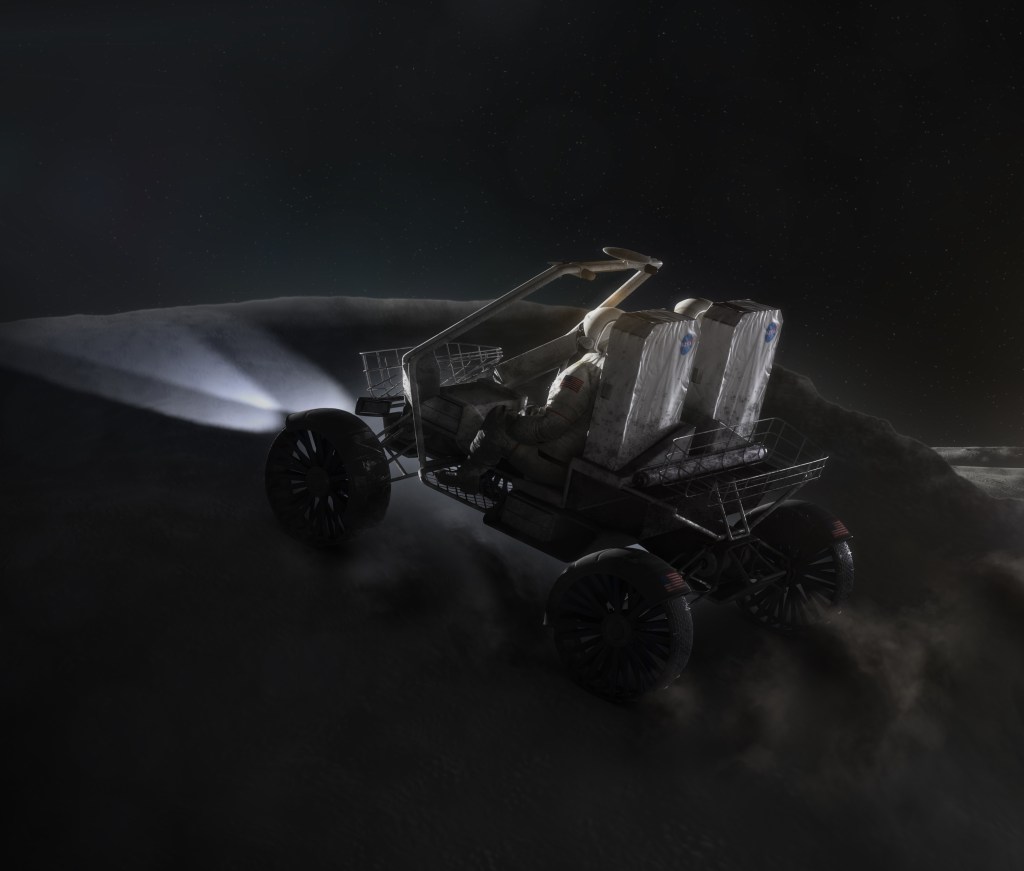
The HI‑RATE project will demonstrate robust, high‑rate autonomous surface mobility for future planetary missions. It develops onboard navigation software that uses advanced perception sensors and high‑performance space computing so rovers can drive farther and faster with less reliance on human operators. By combining rover‑capable LIDAR and next‑generation spaceflight processors, HI‑RATE adapts self‑driving car technologies to the rugged, dusty terrain of the Moon and Mars. Using existing robotic platforms as testbeds, the project integrates perception, planning, and control into a complete system for long‑range demonstrations in realistic proving grounds.
Cold Operable Lunar Deployable Arm (COLDArm)
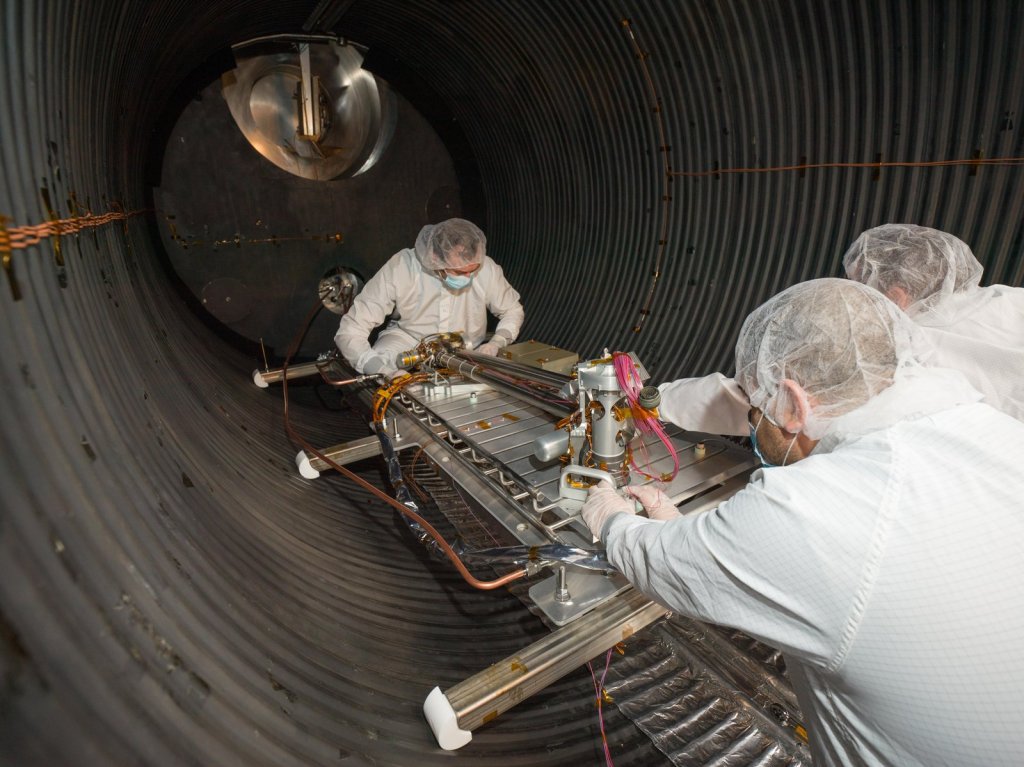
NASA's COLDArm is a cryogenic robotic arm system developed by the agency's Jet Propulsion Laboratory to enable manipulation, sampling, and instrument deployment on the lunar surface throughout the full temperature range, including extended lunar night, without survival heaters. It matured bulk metallic glass actuators, cold motor controllers, and force-torque sensing to Technology Readiness Level (TRL 6) in relevant thermal-vacuum, vibration, dust, and regolith-simulant environments, resulting in flight-ready parts and interface documentation compatible with CLPS landers and future mobility and ISRU systems.
Infrastructure Pilot Excavator (IPEx) Animation
IPEx is NASA’s small but powerful lunar excavator, engineered to dig and haul Moon dirt efficiently using lightweight counter‑rotating bucket drums.
Learn More About IPExExcavation and Construction
Technologies that enable reliable, affordable autonomous manufacturing and construction provide the infrastructure backbone for a sustained human and robotic presence on the lunar surface. Priority development areas include manipulation of large quantities of lunar regolith for mining and site preparation, structural assembly, and integrated system outfitting that connects surface power, communications, and mobility systems into a cohesive Moon base.
Infrastructure Pilot Excavator (IPEx)
NASA’s IPEx is a small robotic excavator designed to significantly advance the state of the art for lunar regolith excavation. Using lightweight counter‑rotating bucket drums instead of traditional heavy blades, IPEx functioning as both a bulldozer and a dump truck by digging, collecting, and transporting large amounts of regolith allowing efficient operation in the Moon’s reduced gravity without relying on high vehicle mass. IPEx is engineered to excavate and deliver on the order of 20 metric tons of lunar regolith over a single mission. Its versatile design supports both bulk material movement and precision terrain shaping for landing pad preparation, berm building, and construction sites, enabling emerging mission needs.
In‑Situ Resource Utilization (ISRU)
NASA's ISRU efforts encompasses collecting, processing, storing, and using materials found and/or manufactured on the lunar surface, such as extracting water ice to convert to breathable oxygen or metal to use for building infrastructure. ISRU can increase safety for crew and enhance mission capabilities, allowing us to explore farther from Earth with more independence.
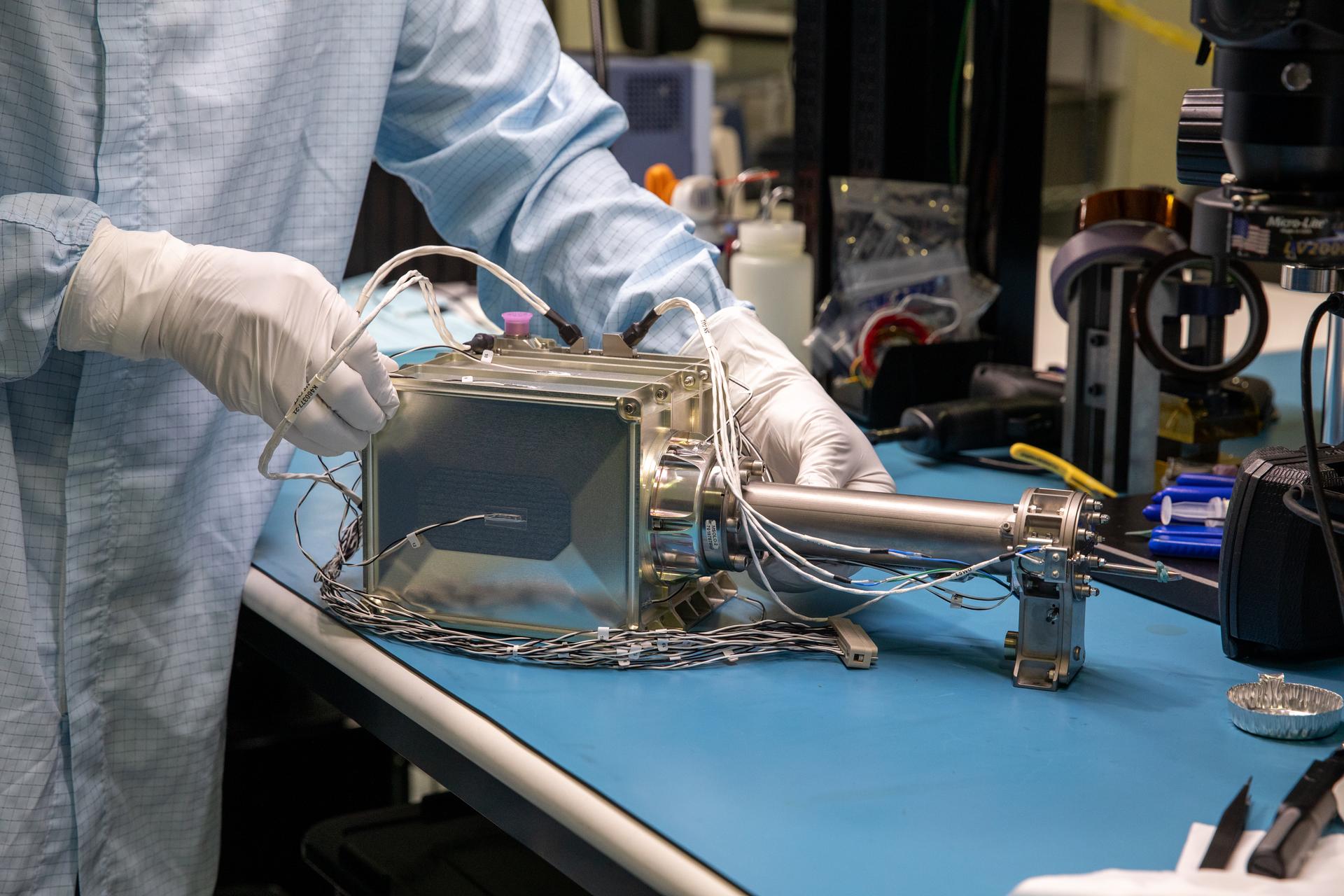
Mass Spectrometer Observing Lunar Operations (MSOLO)
NASA's MSOLO is a modified commercial off the shelf (COTS) instrument based on a gas analyzer from INFICON. The unit is highly automated, provides fast-scan capabilities with high sensitivity as demanded by terrestrial end-users, and is now ruggedized for spaceflight. The COTS instrument was tested in various space environments and both structural and electrical modifications were made to improve the instrument’s performance, robustness, and spaceflight readiness. The instrument successfully operated on the lunar surface during the Intuitive Machines’ second mission, IM-2.
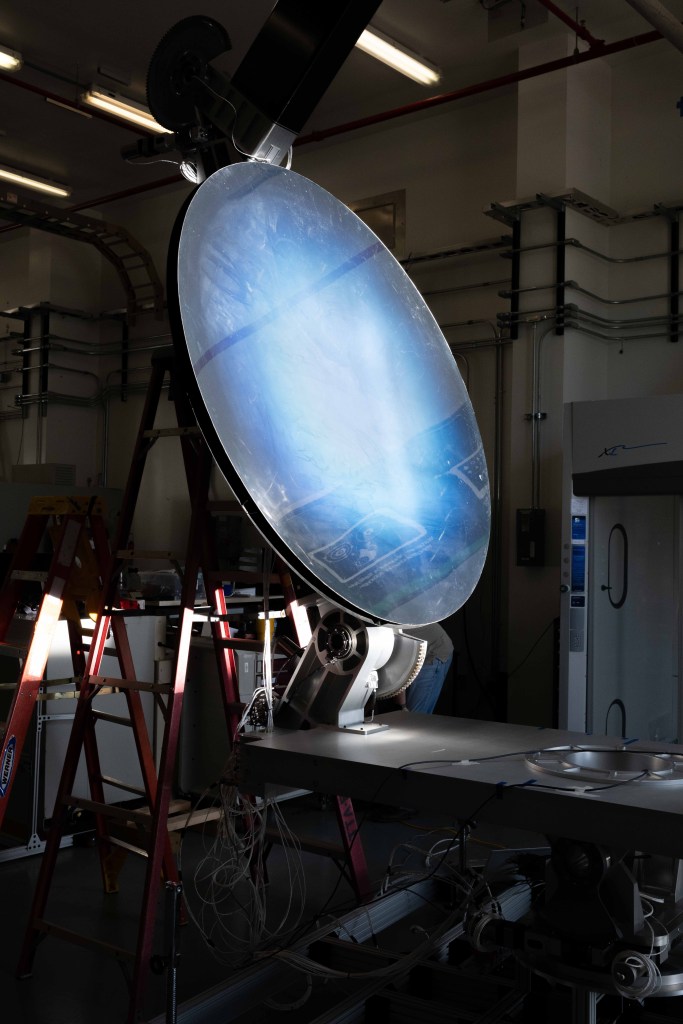
Carbothermal Reduction Demonstration (CaRD)
NASA's CaRD project uses a carbothermal reactor from Sierra Space that is designed to leverage concentrated solar energy to heat regolith within the reactor. In 2026, the CaRD team in partnership with Sierra Space, performed integrated prototype testing that used concentrated solar energy to extract carbon monoxide from simulated lunar regolith, while confirming the production of oxygen through a solar-driven chemical reaction. In 2025, the project successfully demonstrated the Carbothermal reactor in a thermal vacuum environment. These tests are important steps towards using local resources (regolith) to support human exploration on the Moon. Carbothermal reduction is a process to extract oxygen from lunar regolith.
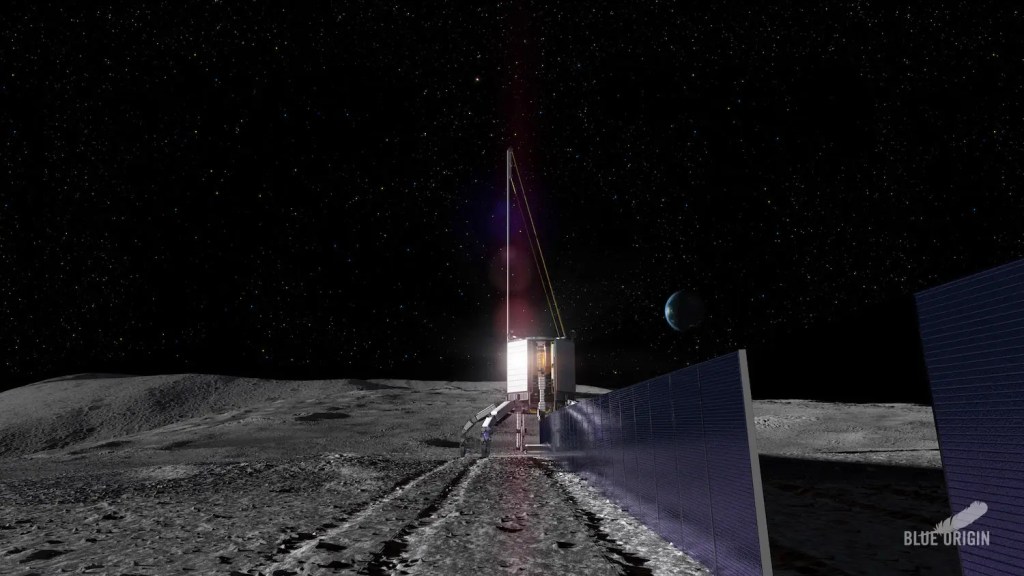
ISRU-Based Power on the Moon
Blue Origin’s Blue Alchemist, a NASA Tipping Point investment, is a commercial, end-to-end system that produces scalable solar power from lunar regolith using molten regolith electrolysis and other associated technologies. Blue Alchemist demonstrates integrated, autonomous operation of eight essential technologies by ingesting regolith simulants and producing silicon solar cells, aluminum wires, oxygen, iron, and slag in lunar environmental conditions.
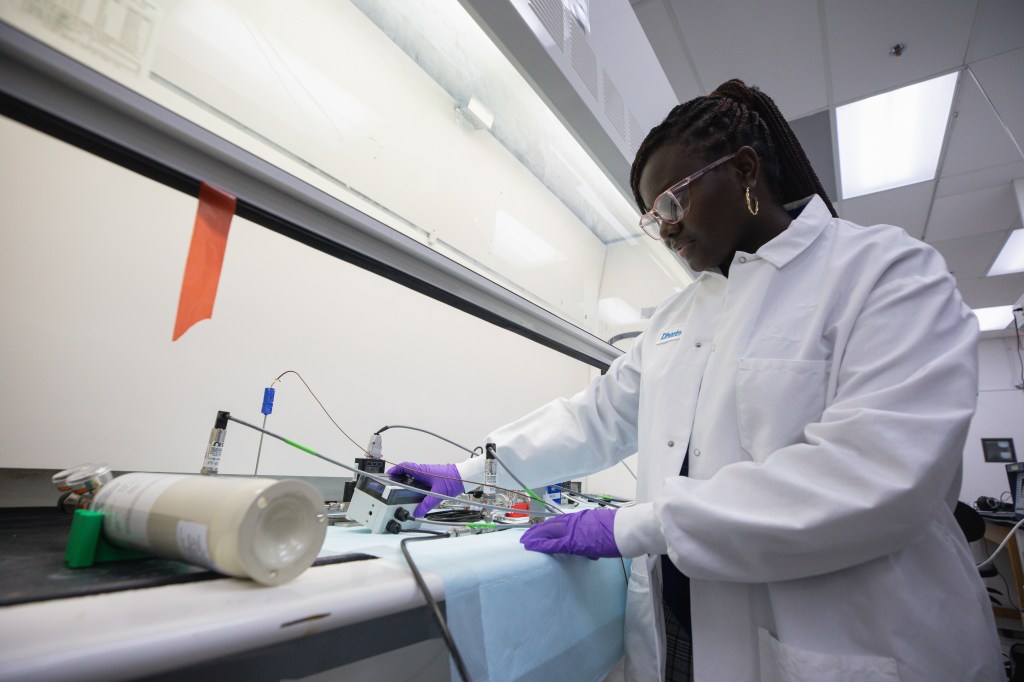
Molten Regolith Electrolysis Tech Maturation (MRE)
NASA's MRE is a technology developed to extract oxygen and metals from minerals in lunar regolith. The MRE project, completed in 2025, advanced the Technology Readiness Level (TRL) of the Lunar Resources MRE reactor in partnership with NASA. The reactor was tested in a vacuum environment with a NASA supplied gas analysis system, successful demonstrating the extraction of oxygen from lunar regolith simulant. The byproduct of the oxygen process is metal-rich slag that can be processed for use in manufacturing. This project represents an increase in TRL of the MRE reactor and marks another step for Lunar Resources toward a fully integrated system that would be capable of a lunar surface demonstration.
Environments
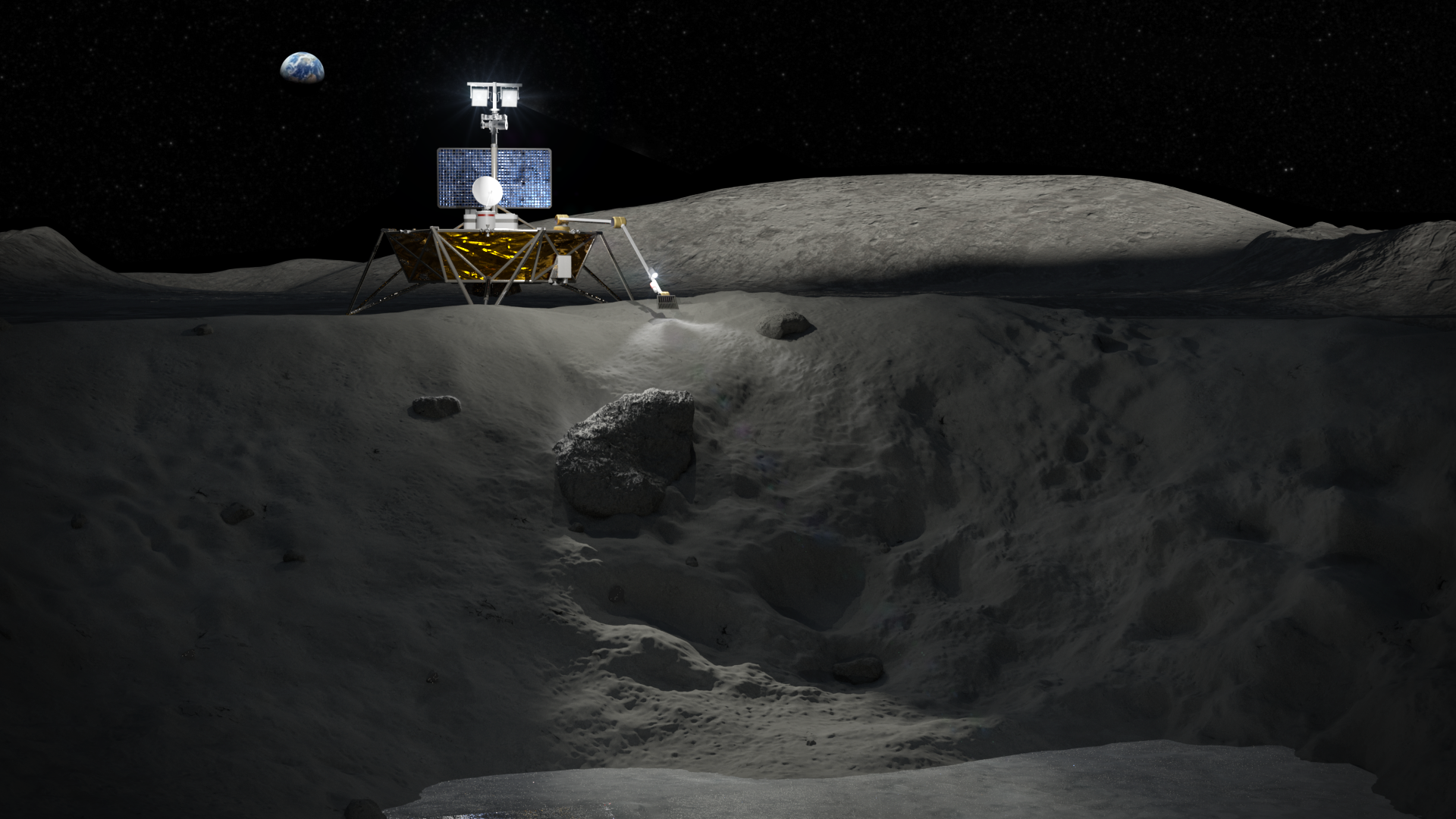
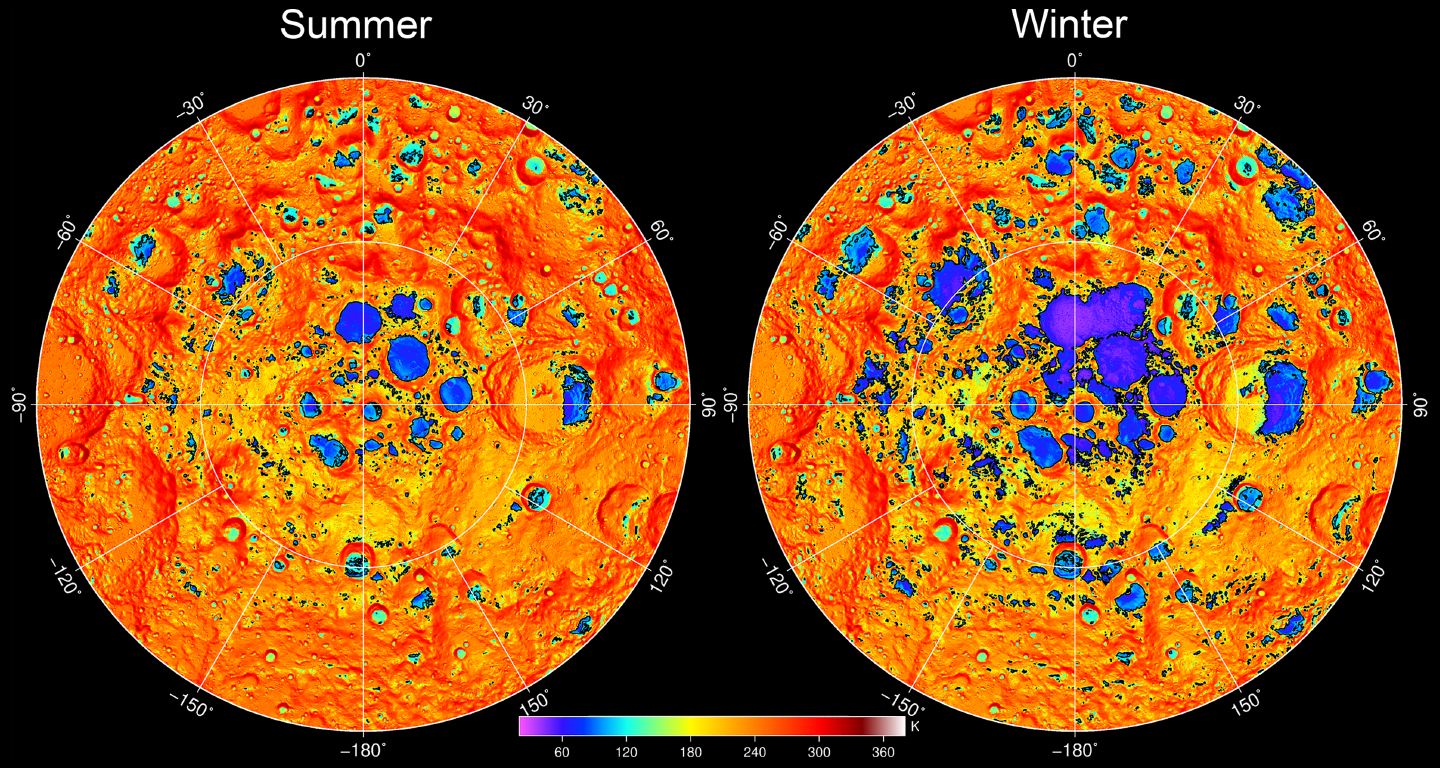
Extreme environments on the Moon drive technology development to enable robotic and human operations across the full range of surface conditions and environments through cross-cutting technologies, materials, processes, test environments, and modeling to protect equipment and personnel from abrasive dust and allow operations in extreme planetary environments. Lunar rovers, manipulators, and other systems must be equipped to operate throughout the full range of lunar surface conditions including lunar noon (up to 302 °F at the equator), night (down to -292 °F at the equator), multiple day/night cycles, and in permanently shadowed regions (down to -418 °F). Cross-cutting technologies built to withstand rapid temperature changes and permanently shadowed regions are essential for safe and successful crew and robotic operations.
Thermal Technology
Thermal technologies are the first line of defense for lunar rovers, manipulators, and other systems to be able to survive the lunar night. These technologies include insulation materials, heat-rejection systems, and heat distribution methods that enable robotic and human explorers to access hard to reach places and operate in harsh, rapidly changing lunar conditions. Lunar days and nights are each nearly 15 Earth days long with day temperatures near 130 °C, night temperatures near –130 °C, and temperatures in permanently shadowed regions near -250°C. This is why lunar night survival and even lunar day survival at low latitude sites is so challenging.
Planetary and Lunar Environment Thermal Toolbox Elements (PALETTE)
NASA’s PALETTE’s “toolbox” of elements provides engineers with the ability to create thermal designs for science instruments that use common interfaces to fit a variety of carriers destined for the Moon and other extreme planetary environments. These thermal elements provide highly effective insulation to minimize heat leak during the cold lunar night while allowing for increased heat rejection during the hot lunar day. Some of the projects and missions that PALETTE has benefited or will benefit include LuSEE-Night which will fly on Blue Ghost Mission 2, the Endurance Lunar Rover, Fusion-1 Lunar Rover commercial project, and several others.
Dust Mitigation
Diminishing dust hazards on lunar surface systems, including cameras, solar panels, space suits, habitats, and instrumentation will allow astronauts and robotics to fulfill mission objectives safely, efficiently, and productively. Surface stabilization, filtration, and dust tolerant textiles are among several active, passive, and operational technologies currently in development.
Electrodynamic Dust Shield (EDS)
A dust‑mitigation technology that lifts and removes abrasive lunar regolith using electric fields—protecting equipment, extending mission life, and already licensed by multiple commercial partners.
Stereo Cameras for Lunar-Plume Surface Studies (SCALPSS)
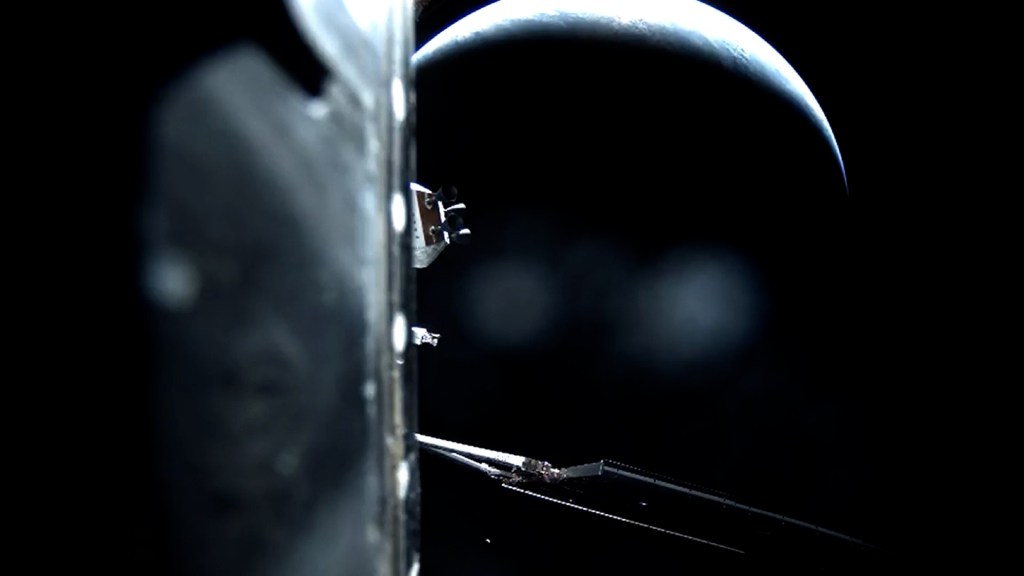
NASA's SCALPSS is an array of specialized cameras placed around the base of a lunar lander that collects imagery during and after descent, enabling NASA researchers to produce a 3D view of the surface. The SCALPSS technology captures the interaction between a lander's engine plume and lunar terrain to measure surface erosion and dust distribution caused by landing plumes, ensuring safer landing systems for future Artemis missions.
Communications, Position, Navigation, and Timing
As NASA and its partners prepare for long-term exploration at the Moon, advanced communications, position, navigation, and timing technologies are foundational to every mission. Reliable, high‑bandwidth links keep crews and robots connected across challenging terrain. Precision position, navigation, and timing empower explorers to traverse the lunar surface safely, extend their range, and coordinate complex activities—from science operations to construction and mobility. Emerging lunar communication and navigation architectures will provide continuous coverage, stronger data rates, and services for assets on the surface and in orbit to support both initial missions and the long‑term vision of a thriving lunar base.
Advanced Avionics
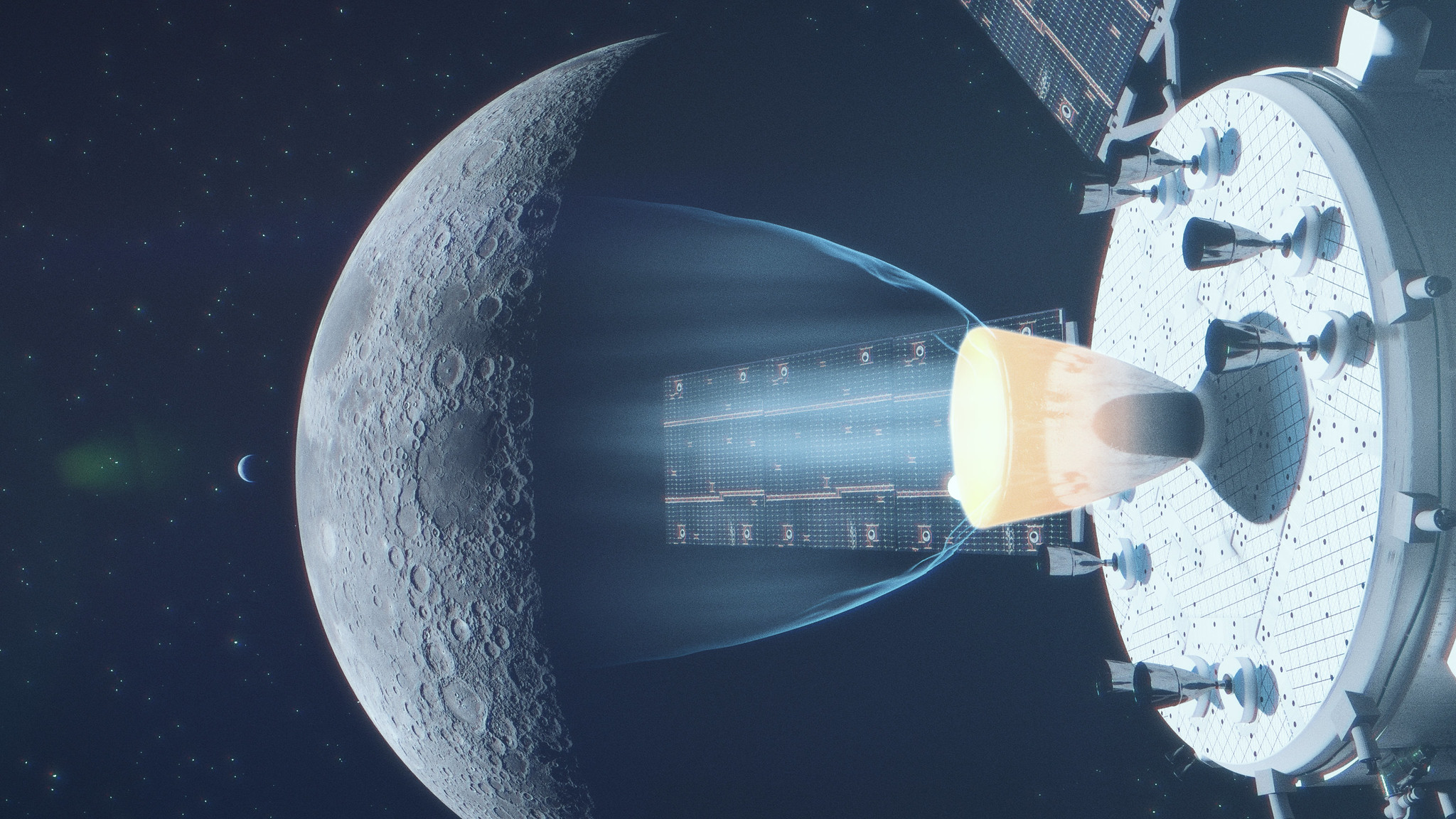
Advanced avionics provide the intelligent control, fault management, and timing infrastructure needed to integrate diverse surface systems into a safe, resilient lunar operating environment. These technologies include radiation‑hardened flight computers, memory, data storage, advanced co-processing, sensor interfaces, and time‑synchronized networks enabling environmentally resilient autonomous robots, habitats, power systems, and exploration vehicles distributed across low Earth orbit, the lunar surface, and further into the solar system.
By enabling deterministic, high‑bandwidth communication and robust on‑board decision making, advanced avionics allow in-space and surface assets to coordinate complex tasks such as precision landing near existing infrastructure, cooperative construction operations, and adaptive response to off‑nominal events. These capabilities are foundational for scaling from early demonstration missions to sustained, crew‑tended lunar surface operations and, ultimately, human exploration of Mars.
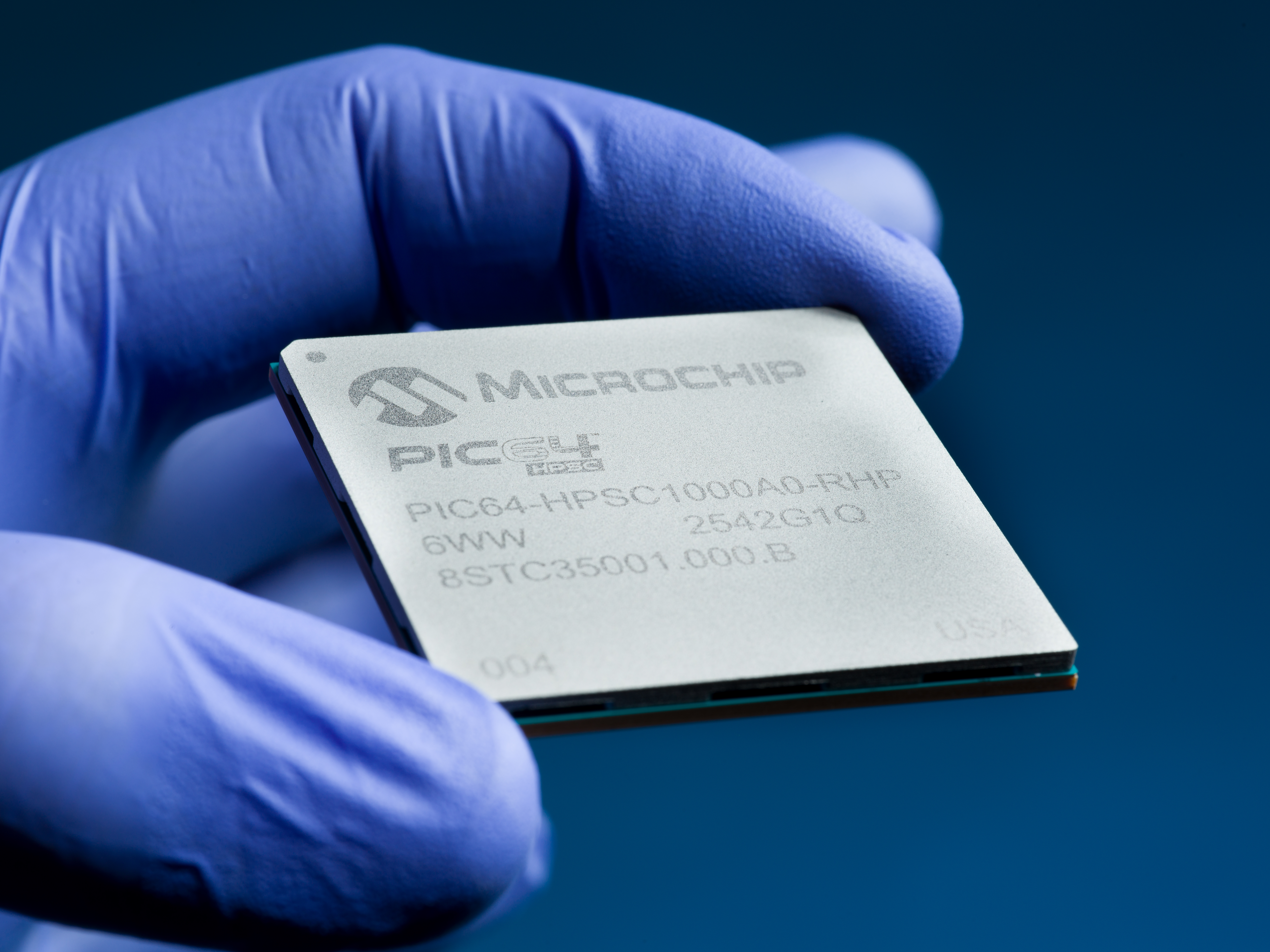
High Performance Spaceflight Computing (HPSC)
NASA’s HPSC project has developed the next‑generation radiation‑hardened multicore processor that will provide at least 100 times the computational capacity of today’s spaceflight computers while dramatically improving power efficiency and fault tolerance. For lunar surface infrastructure, HPSC will enable advanced autonomous operations, high‑fidelity hazard detection and path planning, real‑time data fusion, and robust onboard health management for assets such as excavators, rovers, and surface power stations. Developed in partnership with industry HPSC is intended to meet the demanding computational needs of NASA missions through 2040 and beyond.
Moon Base
The Moon Base is home base for Artemis astronauts who will live and work at humanity’s first lunar outpost. NASA is leading global teams of innovators across international space agencies, industry, and academia to build the Moon Base and establish an enduring human presence near the lunar South Pole for the benefit of all.
Learn About Moon Base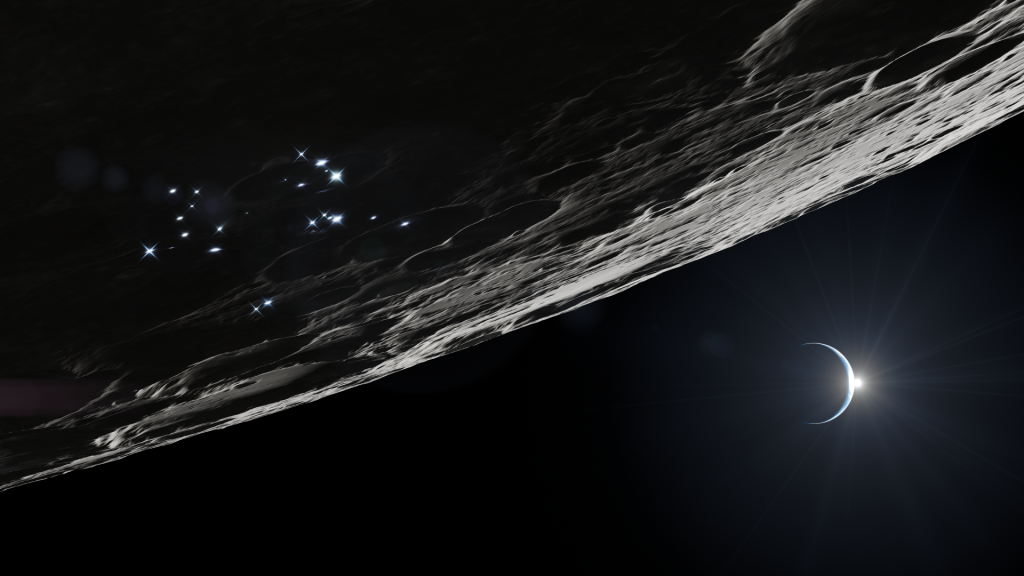
Driving American Leadership in Space Through Commercial Partnerships
NASA partners with industry, government, academia, and other organizations to rapidly develop, demonstrate, and deliver the cutting-edge technology that enables future lunar missions and defines American leadership in space exploration.
- Mason, a NASA Tipping Point investment with Redwire Space, is regolith manufacturing technology designed to develop a grader, compactor, and microwave emitter into a scalable platform that removes rocks, compacts loose regolith, and melts or sinters regolith into a solid surface. This technology could enable dust mitigation areas, habitat foundations, roads, and landing pads.
Visit TechPort to Discover More
- To advance ISRU technologies, NASA’s Space Technology Mission Directorate has awarded a firm‑fixed‑price contract of $6.9 million over the next year and a half to Interlune, a company focused on developing natural resources beyond Earth. Funded through a Small Business Innovation Research (SBIR) Phase III award, the company will pursue validation of critical resource‑prospecting tools for resources such as hydrogen and Helium-3 to make future lunar missions more self‑sufficient, reducing the need to transport all supplies from Earth.
- NASA Front Door represents our commitment to making collaboration more accessible and more intentional. This is where you can bring forward your ideas, share your expertise, and connect with the NASA teams best positioned to engage with you.
- The Moon Base is a home away from Earth for Artemis astronauts who will live and work at humanity’s first lunar outpost. NASA is leading global teams of innovators across international space agencies, industry, and academia to build the Moon Base and establish an enduring human presence near the lunar South Pole for the benefit of all.
How NASA Partners with Industry
Learn more about the various partnership mechanisms NASA utilizes to meet the agency’s strategic goals and industry needs.
Fostering a Nationwide Network
NASA keeps the United States at the forefront of lunar exploration working with the leaders in lunar surface technology development through the Lunar Surface Innovation Consortium (LSIC).
NextSTEP Opportunity
NextSTEP seeks commercial development of new capabilities for human missions in deep space. Visit SAM.gov for more details.


faces of technology videos
Lindsay Kaldon
Fission Surface Power, Project Manager at NASA's Glenn Research Center
Jason Frieman
Research Electrical Engineer at NASA's Glenn Research Center
Beau Compton
Aerospace Engineer at NASA’s Glenn Research Center

Wanessa Priesmeyer
Flight Test Campaign Manager for NASA’s Flight Opportunities program
Lauren Best Ameen
Deputy Manager for the Cryogenic Fluid Management Portfolio Project Office at NASA

Paromita Mitra
Avionics Systems Manager at NASA

Women of Technology
Celebrating the Women who Bring NASA Technology to Life

Angela Herblet
Manager for NASA’s Prize Competitions

Kellin Slater
Project Manager at Colorado State University

Amber Soja
Program Manager at NASA's Langley Research Center
Emily Gargulinski
NASA Research Engineer at the National Institute of Aerospace

Ali Guarneros Luna
Aerospace Engineer at NASA's Ames Research Center
Anjie Emmett
Mechanical Engineer at NASA's Langley Research Center

Prital Johnson
Mechanical Engineer at NASA's Kennedy Space Center
Kevin Grossman
Materials Scientist at NASA's Kennedy Space Center

Bob Carter
Materials Engineer at NASA's Glenn Research Center



Media