








NIAC Symposium
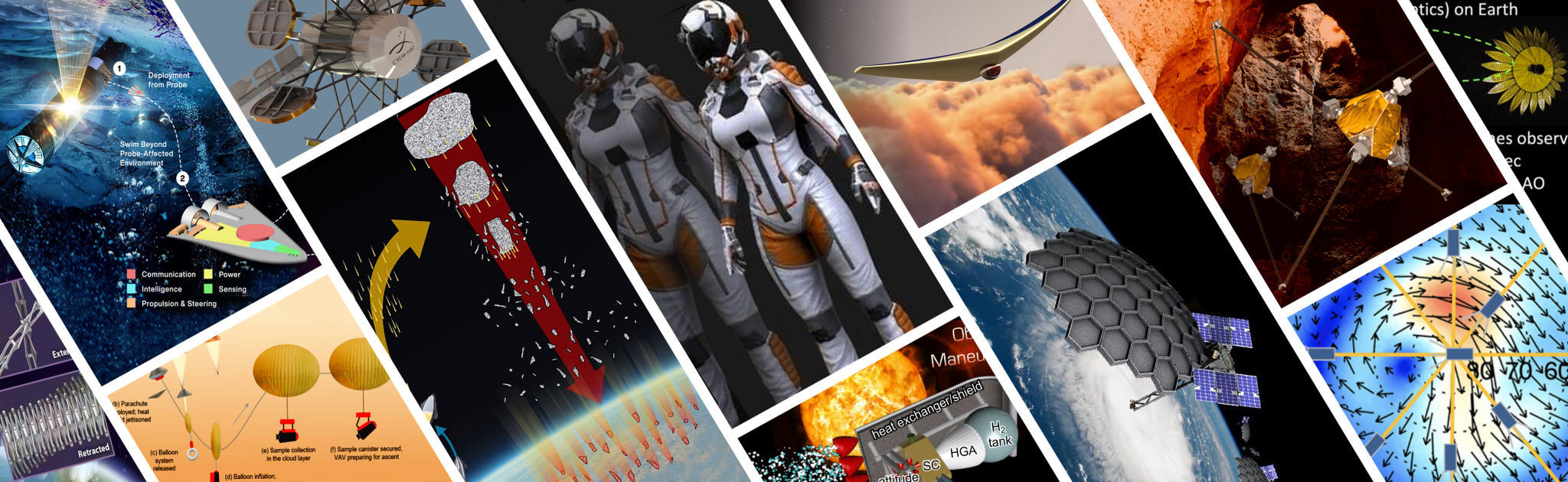
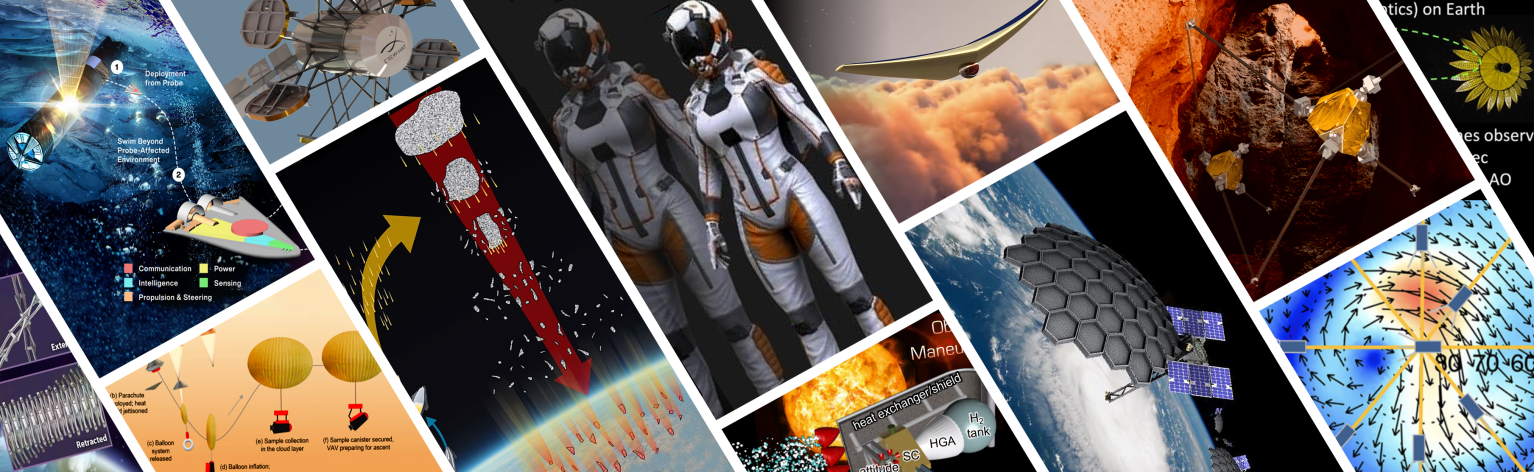
The NASA Innovative Advanced Concepts (NIAC) Program seeks innovative, technically credible, advanced concepts that could one day change the possible in aeronautics and space. The NIAC Symposium is an annual programmatic meeting featuring progress presentations from our currently funded Phase I, Phase II, and Phase III Fellows. This year’s portfolio of NIAC studies addresses critical research areas including- Revolutionary Exploration Systems, Novel Propulsion, Human Systems & Architectures for Extreme Environments, Sensors, and Imaging for deep space exploration.
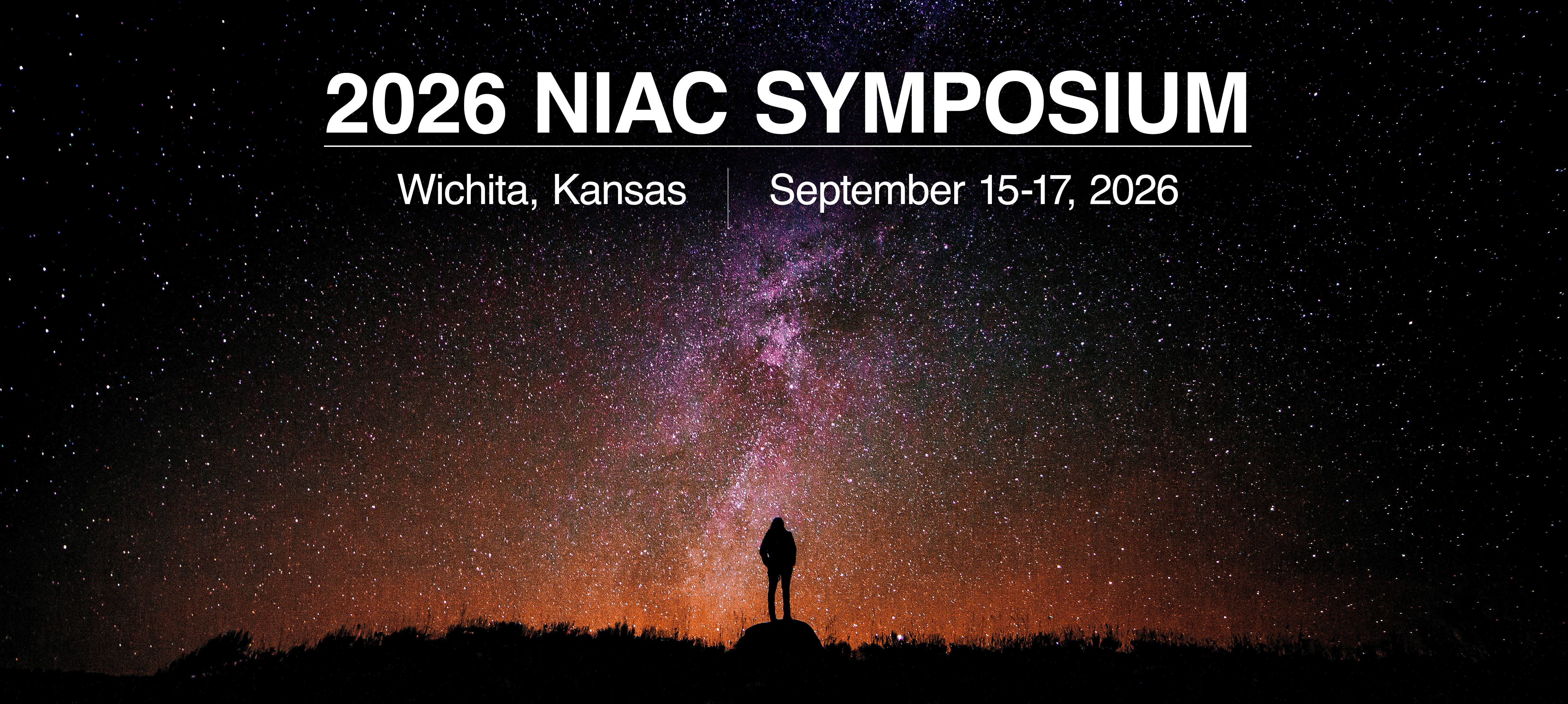
Join us at Wichita State University – September 15-17, 2026
We are excited to announce that this year’s event will be held at Wichita State University in Wichita, Kansas. Known as the “Air Capital of the World,” Wichita provides a fitting backdrop, bringing our community of innovators to a city with a deep-rooted heritage in aeronautics and aviation research.
Virtual Audience Information
Can’t attend in person? The NIAC Symposium remains free and open to the public virtually. We invite students, scientists, creators, and enthusiasts from around the globe to join us online.
- Livestream: The full three-day event will be livestreaming, allowing you to watch presentations in real-time. Watch the livestream here.
- Interactive Q&A: Virtual attendees can participate in live Q&A sessions with NASA researchers and NIAC Fellows.
- On-Demand: Session recordings will be available on nasa.gov following the conclusion of the event.
Event Details
- Location: Eugene M. Hughes Metropolitan Complex (the Metroplex) at Wichita State University, 5015 E. 29th Street N., Wichita, KS 67220. The venue is located about one mile north of the main university campus.
- Format: Hybrid (in-person and virtual)
- Cost: Free and open to the public
| DAY 1: TUESDAY, SEPTEMBER 15 | ||
| Time (CDT) | Event | Speaker |
| 9 a.m. | Special Address | John Cavolowsky NASA, Director, Innovation Program Office |
| 9:10 a.m. | Welcome | Richard Muma President, Wichita State University |
| 9:20 a.m. | Welcome & Overview | Phillip Williams NIAC Program Executive |
| 9:30 a.m. | Keynote | Nickolas Solomey Wichita State University, NIAC Ph III Fellow |
| 10:30 a.m. | BREAK and Planetary Radio Interviews | |
| 10:50 a.m. | 2026 Phase I | Gilly Elor Stone Aerospace, Inc. Power-over-Fiber to Enable a Lunar Underground eXplorer (LUX) |
| 11:10 a.m. | 2026 Phase I | Daniel Drew University of Hawaii Solid-state Propulsion for Autonomous Reconnaissance of Karst (SPARK) |
| 11:30 p.m. | 2026 Phase I | Artur Davoyan University of California, Los Angeles Coilable Stacked Solar Sails for Very High delta-V Missions |
| 11:50 p.m. | 2026 Phase I | Benjamin Schafer Rarefied Technologies Inc. Photophoretic Tracers for Near-Space Remote Sensing at 30-100 km Altitudes |
| 12:10 p.m. | LUNCH and Planetary Radio Interviews | |
| 1:30 p.m. | 2025 Phase II | Igor Bargatin University of Pennsylvania Photophoretic Propulsion Enabling Mesosphere Exploration |
| 1:50 p.m. | 2025 Phase II | Benjamin Hockman NASA Jet Propulsion Laboratory Gravity Poppers: Hopping Probes for the Interior Mapping of Small Solar system Bodies |
| 2:10 p.m. | 2025 Phase II | Christine Hartzell University of Maryland, College Park Addressing Key Challenges To Mapping Sub-cm Orbital Debris in LEO via Plasma Soliton Detection |
| 2:30 p.m. | BREAK and Planetary Radio Interviews | |
| 2:50 p.m. | 2026 Phase I | A.C. Charania Zeno Power Systems, Inc. EARENDIL: Extended Astronaut Radioisotope-EVA in Nighttime and Deep-space Icy Landscapes |
| 3:10 p.m. | 2026 Phase I | Austin Phoenix Virginia Polytechnic Institute & State University ECLIPSE – Efficient variable Conductivity Lunar Insulator for Passive Surveyor Environmental Control |
| 3:30 p.m | Poster Session Group A | |
| 4:30 p.m. | ADJOURN | |
| 6:30 to 7:30 p.m. | Informal NIAC Fellows’ Meet & Greet Event (Poster Room) | |
| DAY 2: WEDNESDAY, SEPTEMBER 16 | ||
| Time (CDT) | Event | Speaker |
| 9 a.m. | Welcome and NIAC Plans | Vianni Ricano Cadenas Deputy NIAC Program Manager Ron Turner NIAC Senior Science Advisor |
| 9:30 a.m. | Keynote Panel | National Institute for Aviation Research (NIAR) |
| 10:30 a.m. | BREAK and Planetary Radio Interviews | |
| 10:50 a.m. | 2026 Phase I | David Bugby NASA Jet Propulsion Laboratory Combinatory Architecture offering Neomobility, on-Venus Adaptability, and Survivability (CANVAS) |
| 11:10 a.m. | 2026 Phase I | David Smith Duke University Robotically Assembled Electromagnetic Metamaterials for Long-Range Space Situational Awareness |
| 11:30 a.m. | 2026 Phase I | Anish Damodaran University of Central Florida PS21: Transforming Submillimeter Space Interferometry with Photonic Technologies |
| 11:50 a.m. | 2026 Phase I | Keunhan (Kay) Park University of Utah Plasmon-Enhanced Radioisotope Thermophotovoltaic (PRTPV) Power Generation for Interstellar Missions |
| 12:10 p.m. | LUNCH and Planetary Radio Interviews | |
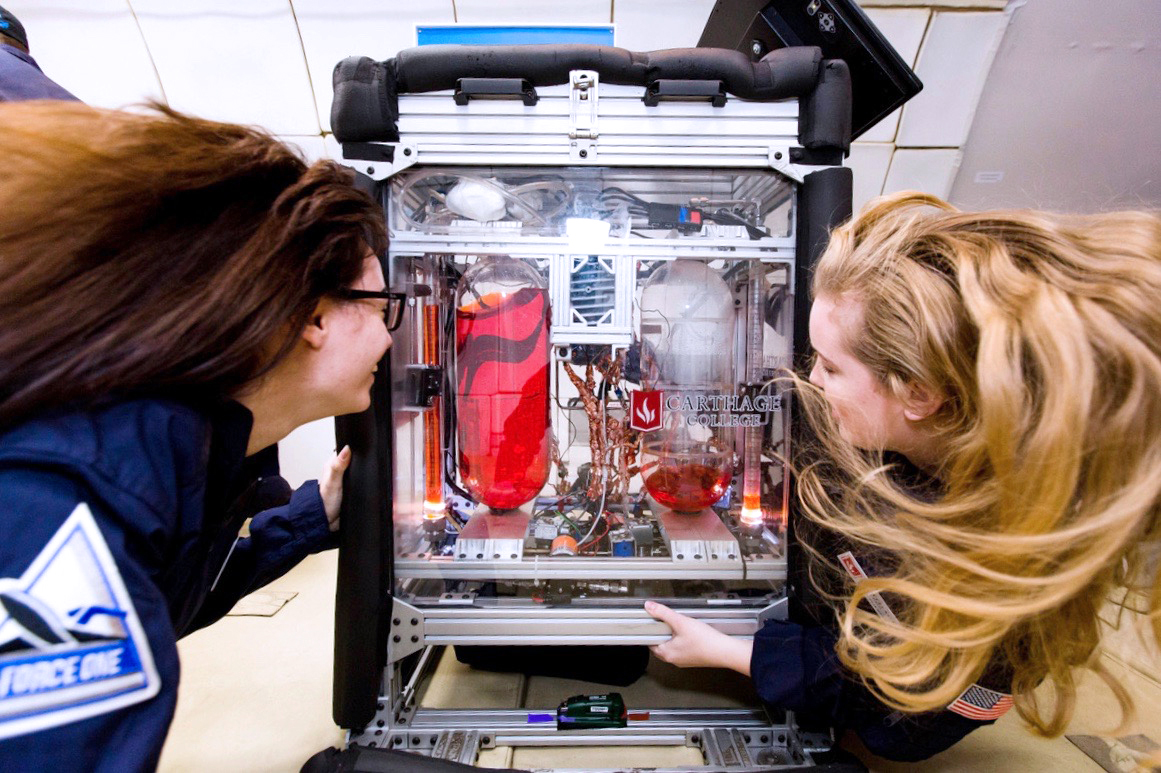
| 1:30 p.m. | 2025 Phase II | Alvaro Romero-Calvo Georgia Tech Research Corporation Breathing Beyond Earth: A Reliable Oxygen Production Architecture for Human Space Exploration |
| 1:50 p.m. | 2025 Phase II | Aaswath Pattabhi Raman University of California, Los Angeles Mars Roundtrip Success enabled by Integrated Cooling through Inductively Coupled LED Emission (MaRS ICICLE) |
| 2:10 p.m. | 2026 Phase I | Pablo Sobron Sanchez SETI Institute Interworld Slingshot Resource Surveys |
| 2:30 p.m. | BREAK and Planetary Radio Interviews | |
| 2:50 p.m. | Special Address | Mae Jemison NIAC External Council |
| 3:30 p.m. | Poster Session Group B | |
| 4:30 p.m. | ADJOURN | |
| 6:30 p.m. | Free Evening for Fellows’ Networking and Collaboration; Women of Science | |
| DAY 3: THURSDAY, SEPTEMBER 17 | ||
| Time (CDT) | Event | Speaker |
| 9 a.m. | NIAC Q&A | NIAC Staff |
| 9:30 a.m. | VC Panel Discussion | Betsy Arce Earthrise Ventures Scott Livingston Livingston Securities |
| 10:30 a.m. | BREAK and Planetary Radio Interviews | |
| 10:50 a.m. | 2026 Phase I | Jeff Nosanov Orbital Velocity, LLC OBLIVION: Observing Black hole LIght Via Intensity cOrrelatioN |
| 11:10 a.m. | 2026 Phase I | Paul Stankus Brookhaven Science Associates Mapping Alien Continents: Achieving Optical VLBI for Exoplanet Imaging |
| 11:30 a.m. | 2026 Phase I | Marco Quadrelli NASA Jet Propulsion Laboratory PRAXIS: Planetary Rings Autonomous EXploration with In-situ Sampling |
| 11:50 a.m. | 2026 Phase I | Michael Rubenstein Northwestern University Actively Steerable Femtosat Constellations for In-situ Exploration of Saturn’s Rings, Atmosphere, and Magnetosphere |
| 12:10 p.m. | LUNCH and Planetary Radio Interviews | |
| 1:30 p.m. | 2025 Phase II | James Bickford Charles Stark Draper Laboratory, Inc. TFINER – Thin Film Isotope Nuclear Engine Rocket |
| 1:50 p.m. | 2025 Phase II | Peter Cabauy City Labs, Inc. Autonomous Tritium Micropowered Sensors |
| 2:10 p.m. | 2026 Phase I | Paul Stankus Brookhaven Science Associates Precision Astrometry Using Optically Independent Spacecraft for Gravitational Wave Detection |
| 2:30 p.m. | BREAK and Planetary Radio Interviews | |
| 2:50 p.m. | Keynote | Danica Vallone Making Space Agency |
| 3:50 p.m. | 2026 Phase I | Saptarshi Bandyopadhyay NASA Jet Propulsion Laboratory Dimming the Sun (DimSun) Using Controllable Dust Cloud to Reduce Solar Insolation |
| 4:10 p.m. | 2026 Phase I | Zhaoyan Liu NASA Ames Research Center Quantum Wind Lidar Applications for Planetary and Earth Science Missions |
| 4:30 p.m. | Fellows’ Group Photo | |
| 4:30 p.m. | ADJOURN |
For more information, contact hq-niac@mail.nasa.gov.
NIAC is a component of the Research Technology Mission Directorate at NASA Headquarters in Washington, D.C.