












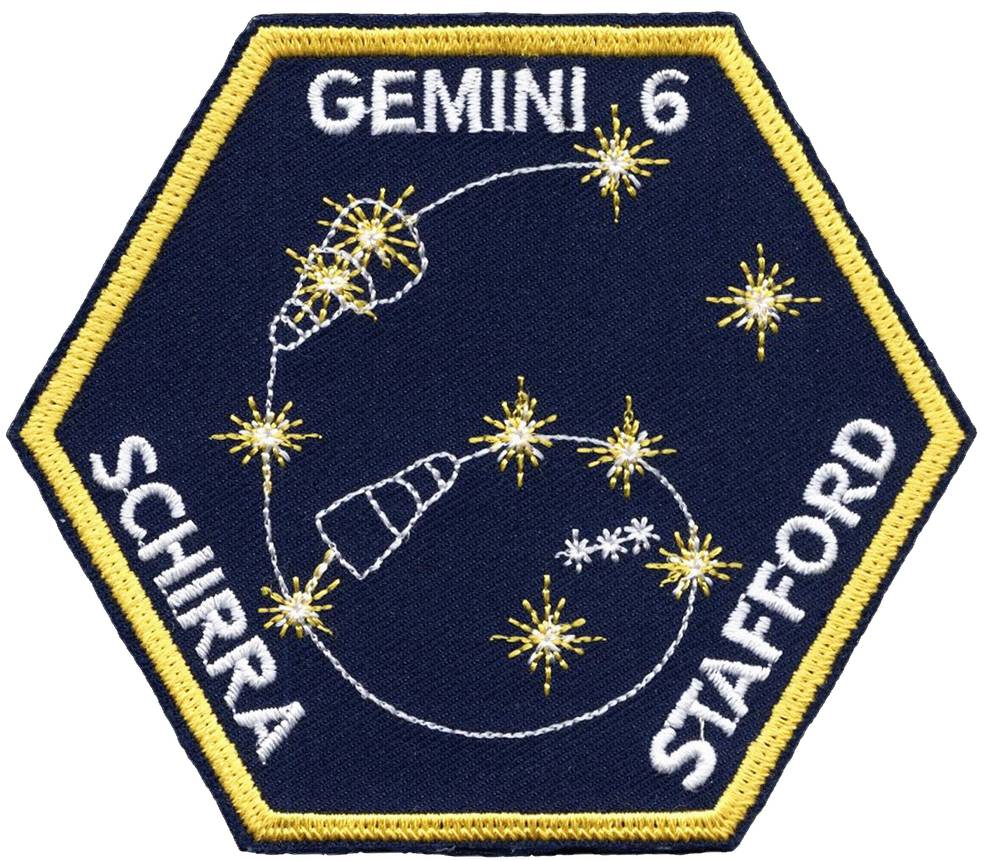
Gemini VI
Gemini VI-A was the fifth crewed Earth-orbiting spacecraft of the Gemini series, having been launched after Gemini VII, with the intent of making rendezvous with Gemini VII in Earth orbit.
Mission Type
mission duration
Launch
Landing

Objectives
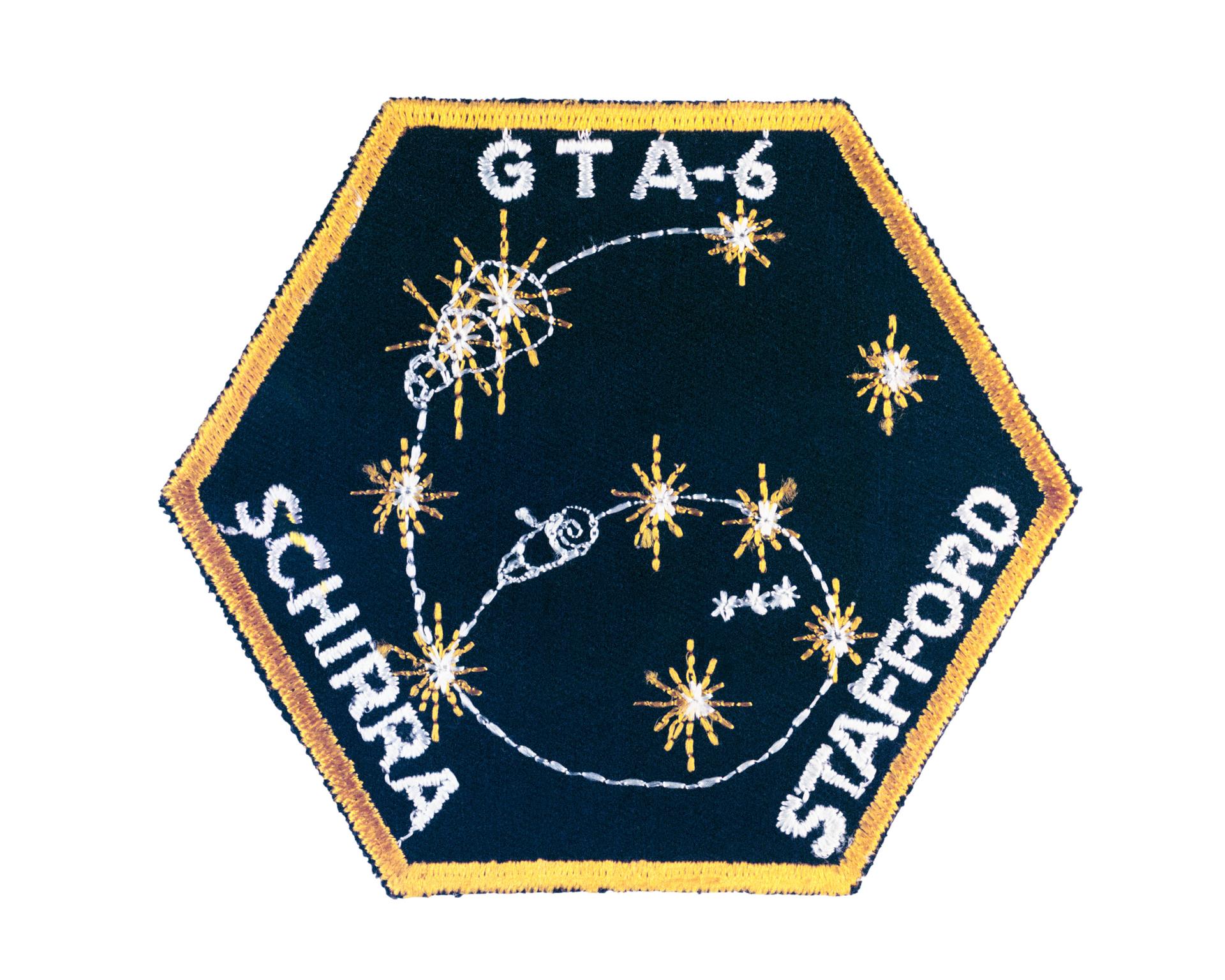
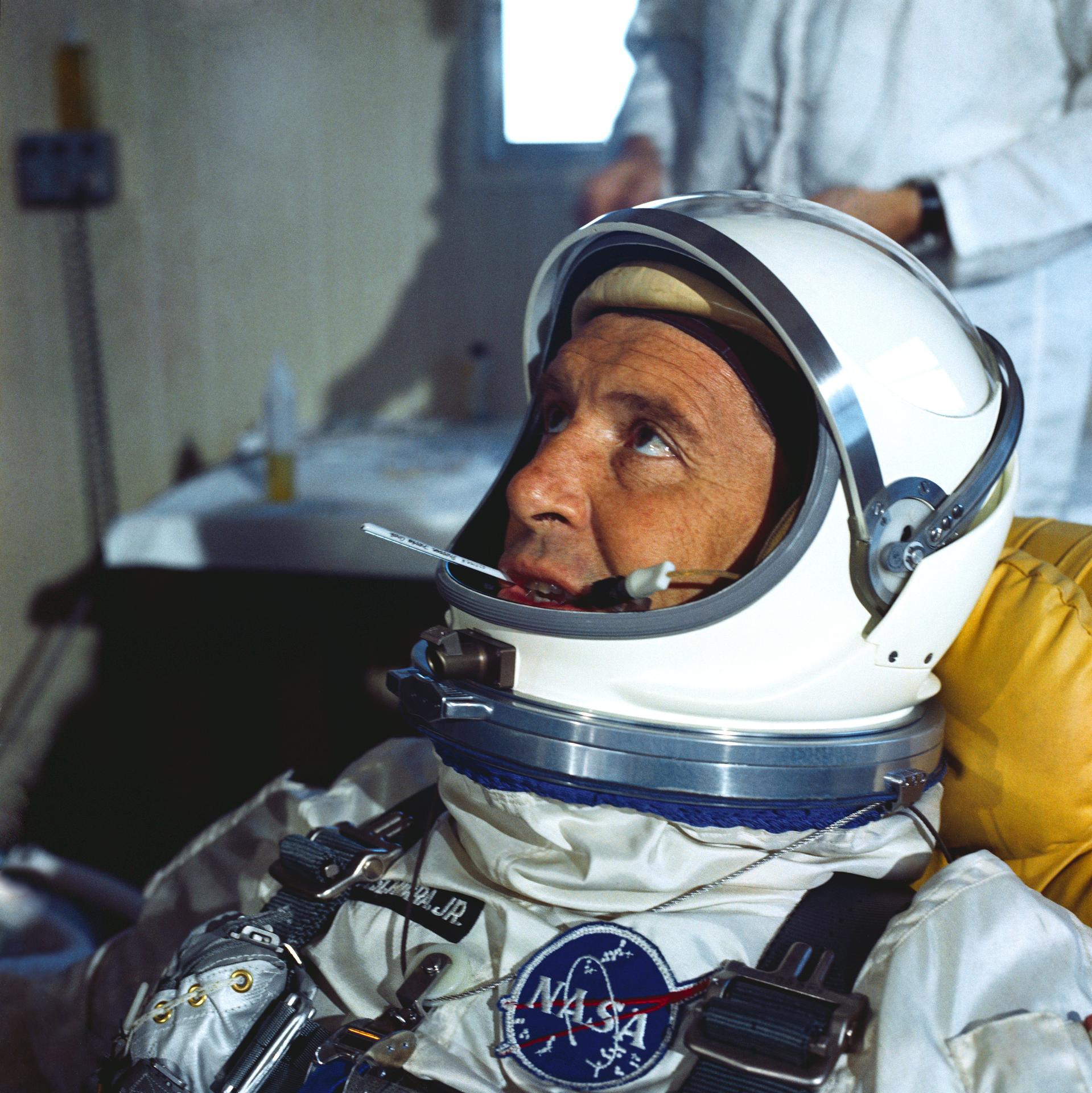
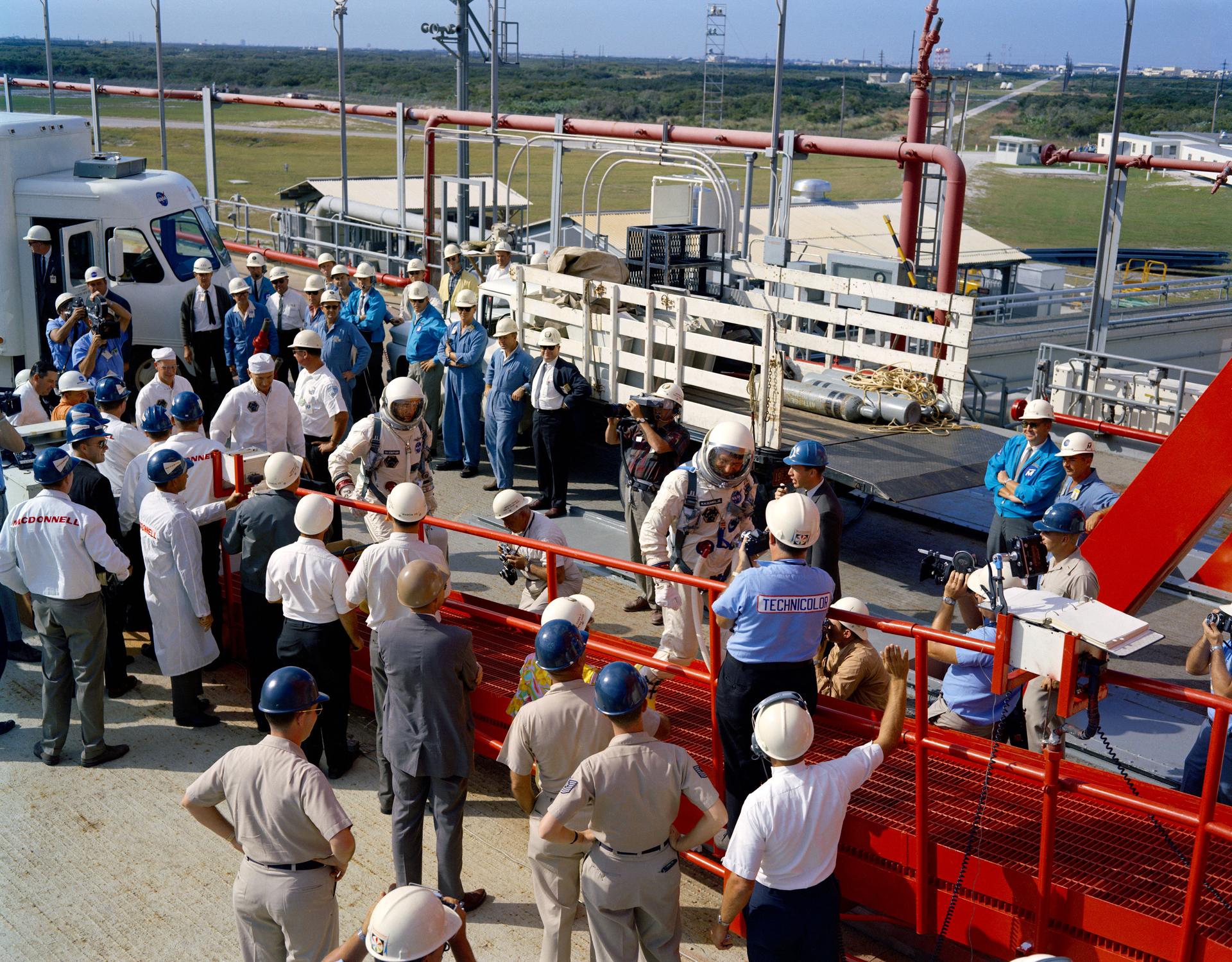
Gemini VI-A was the fifth crewed Earth-orbiting spacecraft of the Gemini series, having been launched after Gemini VII, with the intent of making rendezvous with Gemini VII in Earth orbit. The astronauts on the 26-hour mission were Walter M. Schirra and Thomas P. Stafford. The mission priorities were to demonstrate on-time launch procedures, closed-loop rendezvous capabilities, and stationkeeping techniques with Gemini VII. Other objectives were to evaluate the spacecraft reentry guidance capabilities, and conduct spacecraft systems tests and four experiments. This mission was originally designated Gemini VI and scheduled for launch on Oct. 25, 1965, but was cancelled when the Agena target vehicle failed to go into orbit.
The Spirit of 76 – The First Rendezvous in Space
The primary goals of Project Gemini included proving the techniques required for the Apollo Program to fulfill President John F.…
Read the Story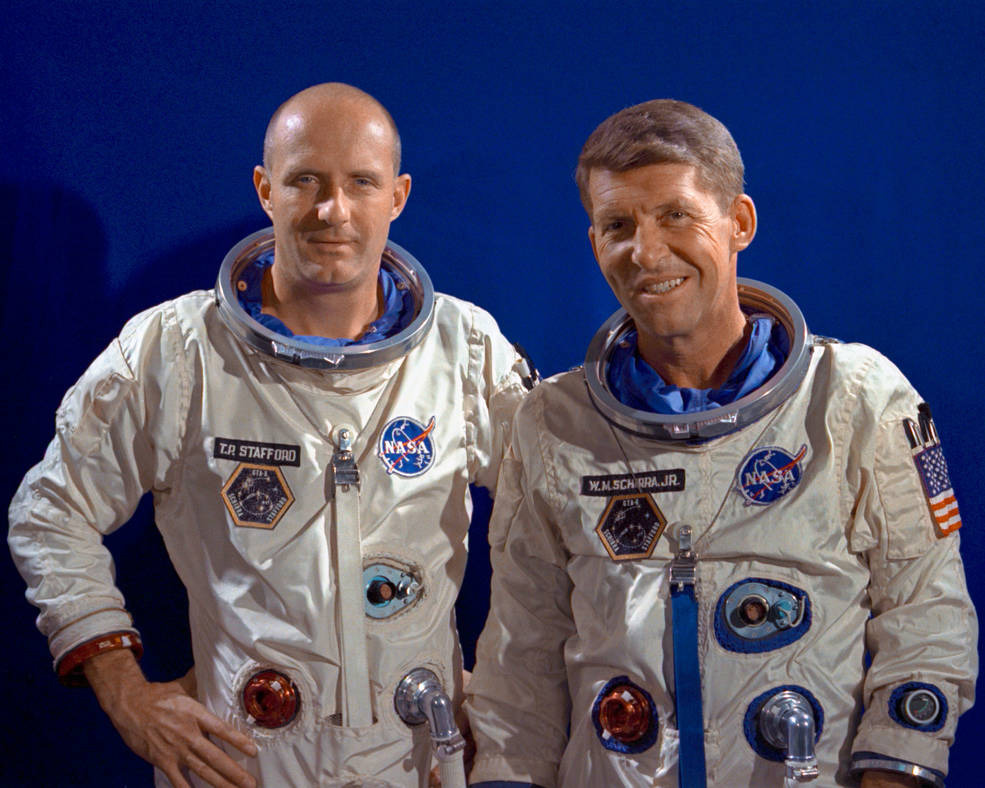
Milestones
Oct. 25, 1965: Original scheduled launch date. Canceled after the explosion of the Agena target vehicle six minutes after launch. Mission was subsequently revised and renamed Gemini VI-A.
Dec. 12, 1965: Launch abort one second after engine ignition.
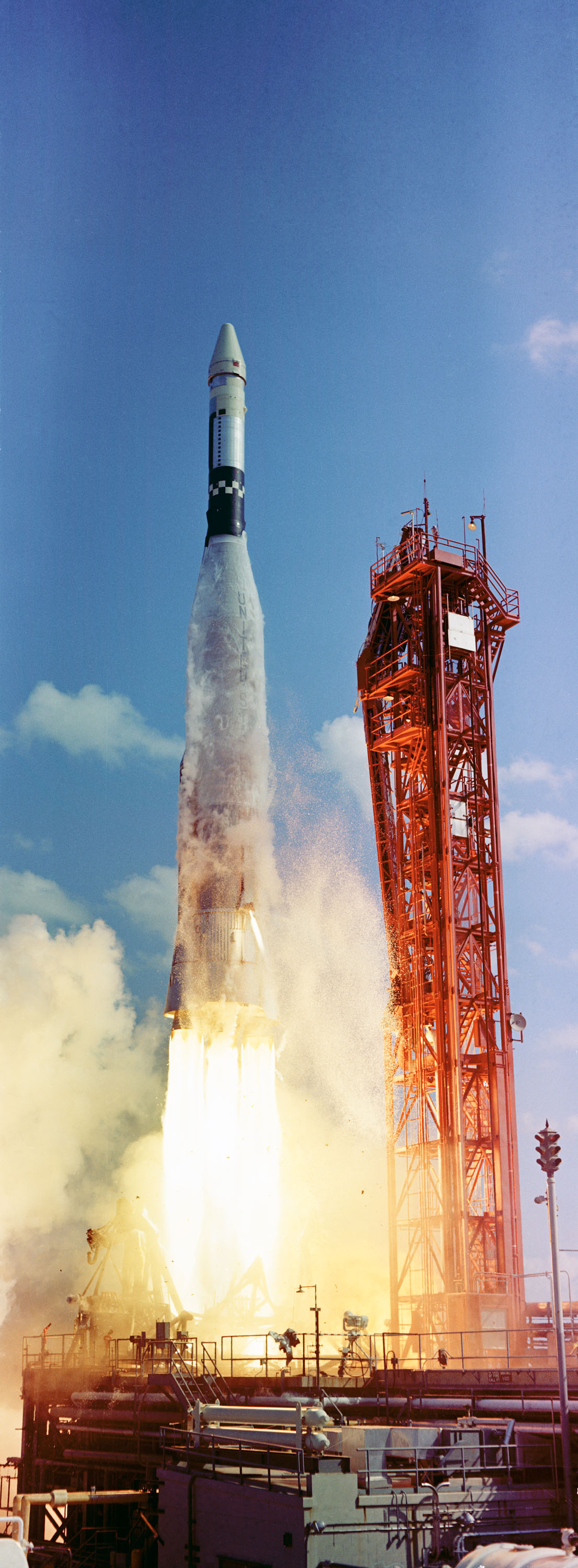
Dec. 15, 1965: Launch and rendezvous with Gemini VII.
Dec. 16, 1965: Landing in the Western Atlantic Ocean.
Mission Facts
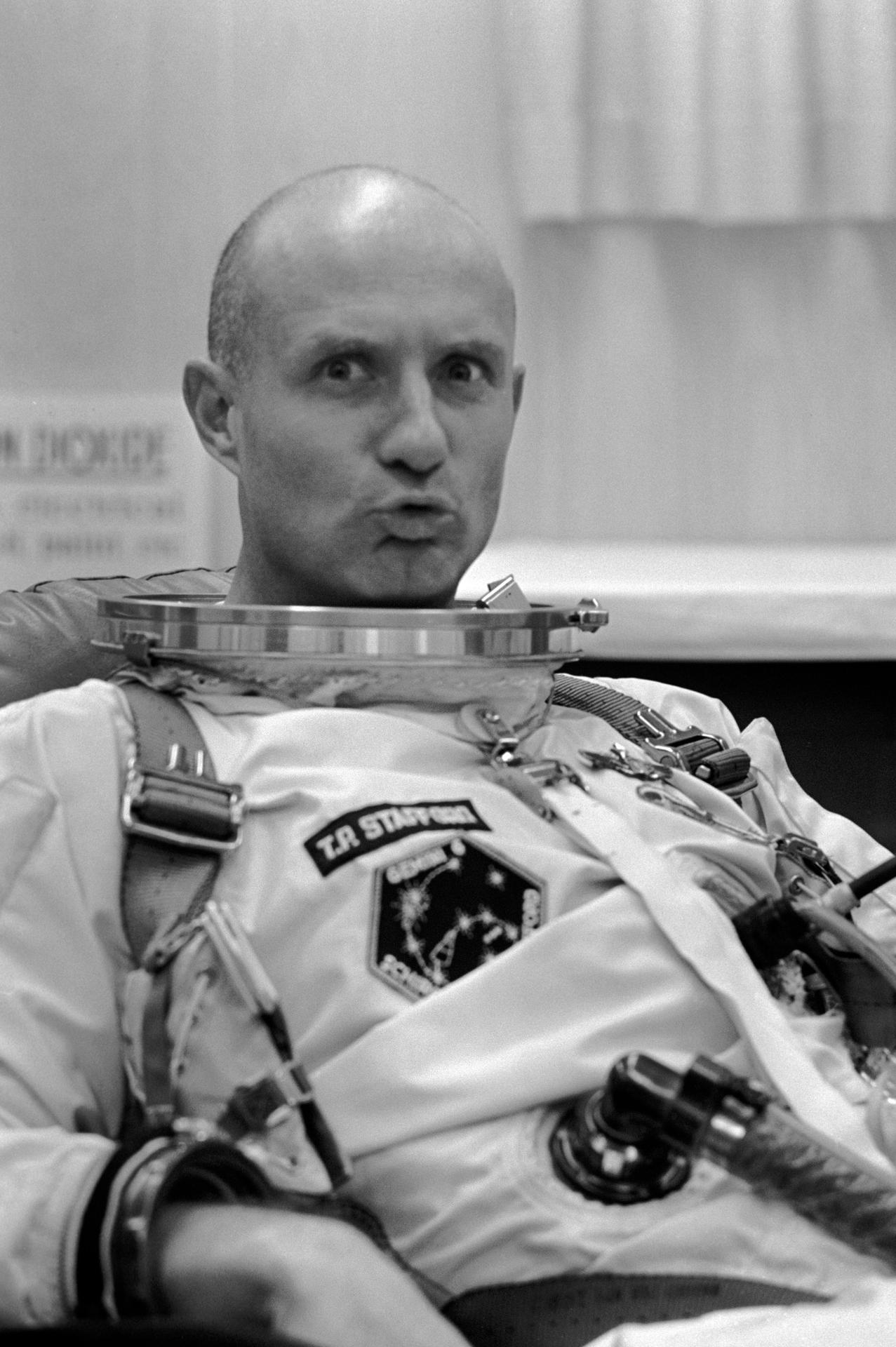
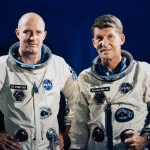
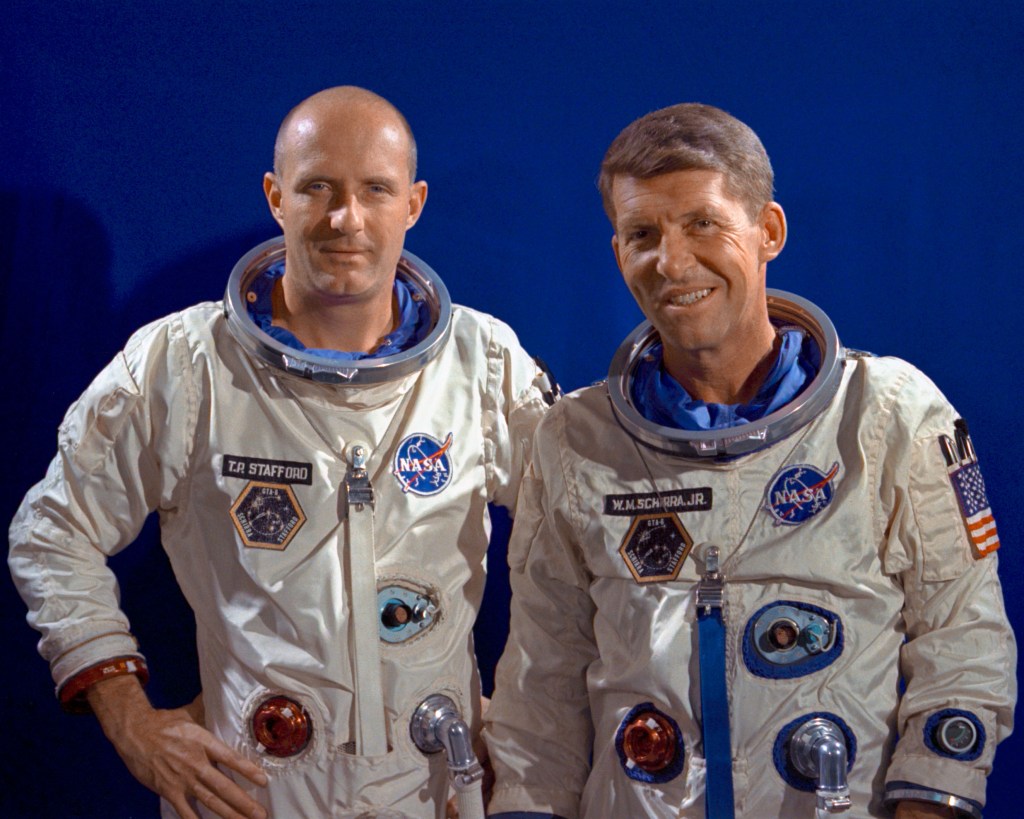
Crew: Walter M. Schirra Jr. (Command Pilot) and Thomas P. Stafford (Pilot)
Backup Crew: Virgil I. “Gus” Grissom and John W. Young
Payload: Gemini 6
Mass at launch: 3,546 kg
Launch Date: Dec. 15, 1965, 8:37:26 a.m. EST (13:37:26 UT)
Launch Site: Complex 19, Cape Canaveral, United States
Launch Vehicle: Titan II
Revolutions Completed: 16
Duration: 25 hours, 51 minutes, 24 seconds (1 day, 1 hour, 51 minutes, 24 seconds)
Landing Date: Dec. 16, 1965, 10:28:50 a.m. EST (15:28:50 UT)
Landing Site: Western Atlantic, 23.58° N, 67.83° W
Recovery Ship: U.S.S. Wasp
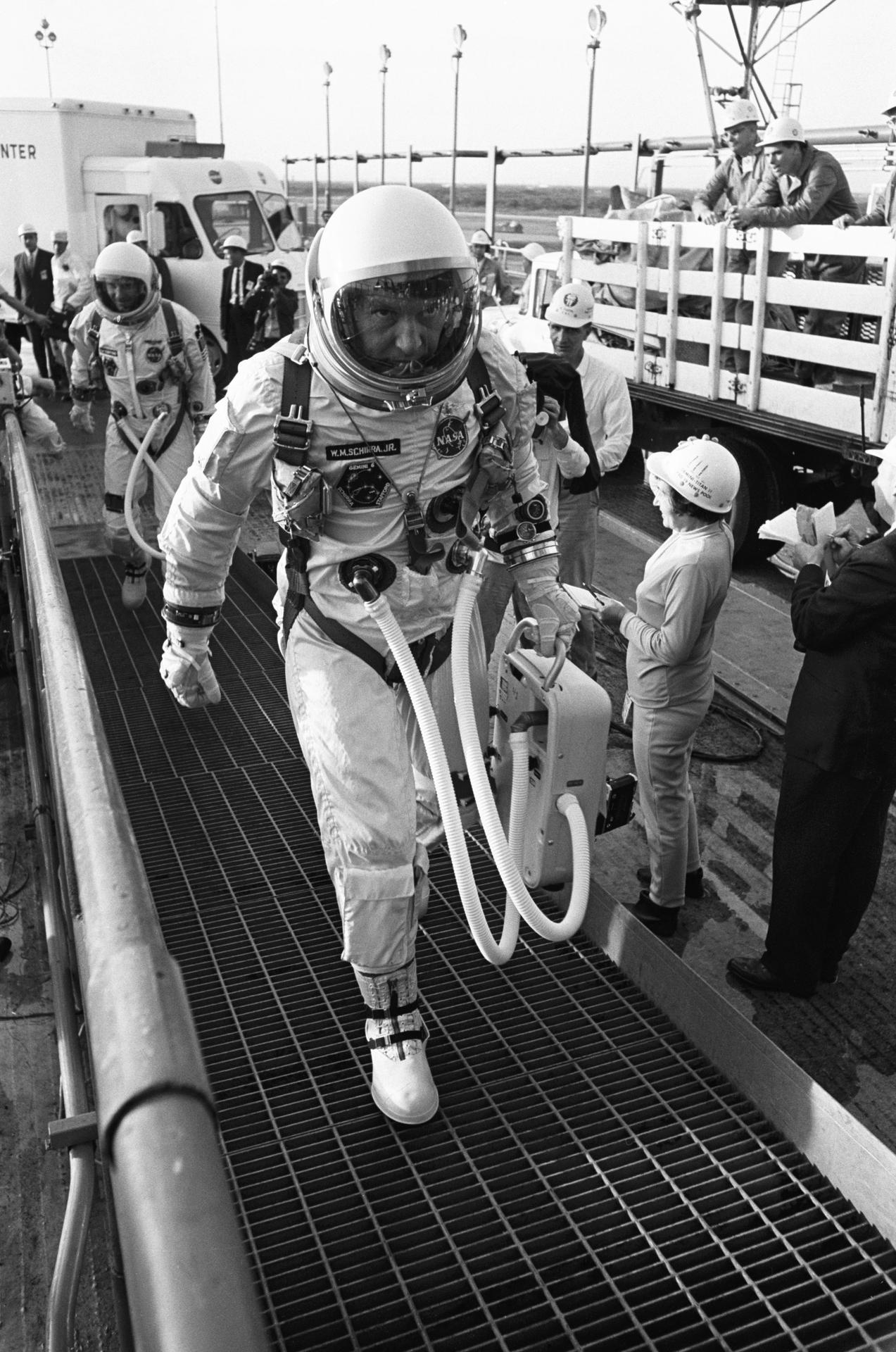
Walter M. Schirra Jr.
Command Pilot
One of NASA’s first seven Mercury astronauts selected by NASA in April 1959, Schirra piloted the Sigma 7 spacecraft on October 3, 1962, becoming the third American to orbit Earth. He was the only astronaut to fly to space on Mercury, Gemini, and Apollo missions.
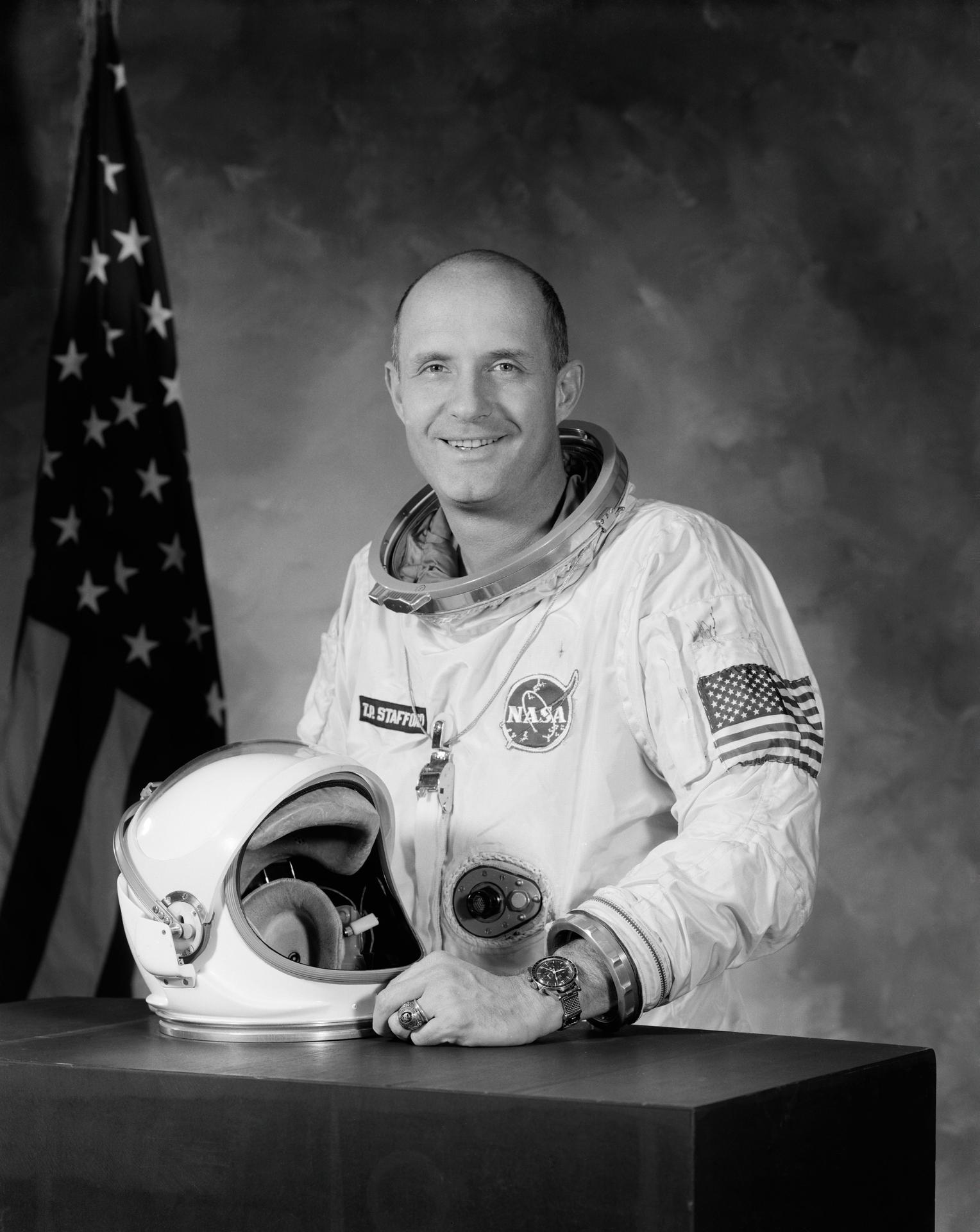
Thomas P. Stafford
Pilot
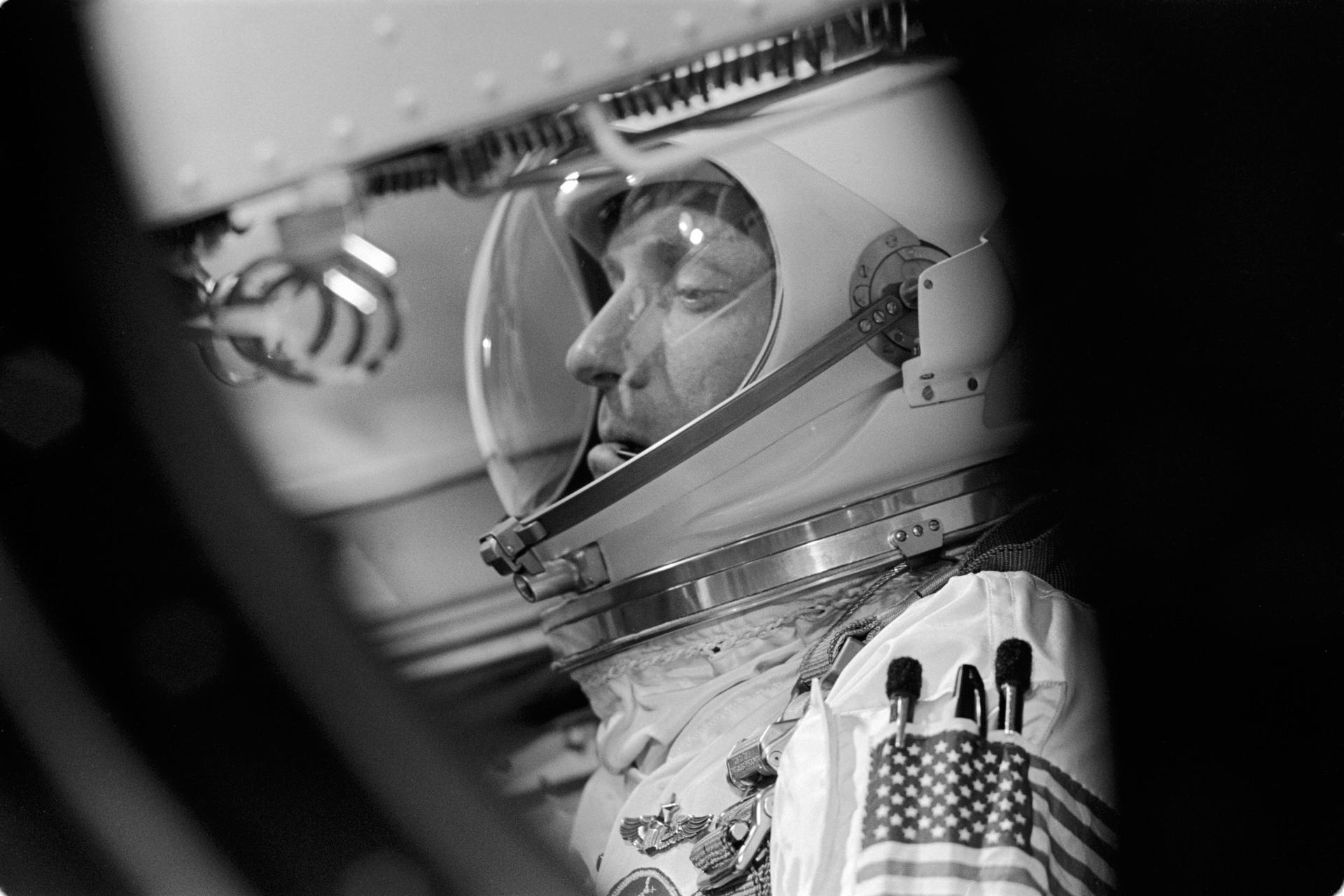
In September 1962, Thomas P. Stafford was selected as an astronaut in NASA’s second astronaut group. Gemini VI-A was his first of four spaceflights, resulting in a total of 507 hours and 43 minutes in space.
Mission Overview
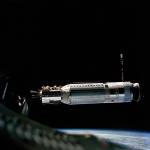
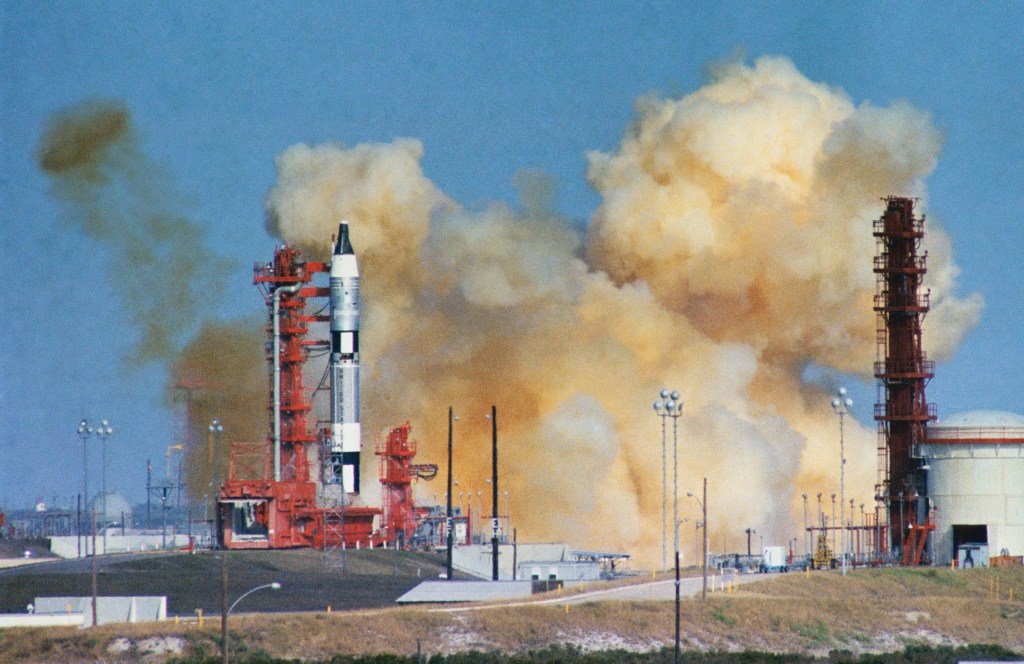
Gemini VI-A was scheduled to launch on Dec. 12, 1965, but the launch was aborted one second after engine ignition because an electrical umbilical separated prematurely. This was the first time an astronaut mission was aborted after ignition start. The mission launched successfully from Complex 19 on Dec. 15 at 8:37:26 a.m. EST (13:37:26.471 UT) and was inserted into a 161.0 x 259.4 km orbit at 8:43:25. At this point Gemini VI-A trailed Gemini VII by about 1,900 km. Four major thruster burns were performed starting at 9:11 to catch up to Gemini VII. First radar lock indicated a distance of 396 km. Two more major thruster burns preceded the final braking maneuver at 2:27 p.m. EST. Rendezvous was technically achieved and stationkeeping begun at 2:33 with the two Gemini spacecraft in zero relative motion at a distance of 110 meters. Stationkeeping maneuvers involving the spacecraft circling each other and approaching and backing off continued for 5 hours 19 minutes over three and a half orbits. During the maneuvers, all four astronauts on both spacecraft took turns in the formation flying activities and photographs were taken from both spacecraft. This marked the first time two spacecraft were maneuvered with respect to each other by their crews. At the end of stationkeeping Gemini VI-A fired thrusters to move to a position roughly 50 km away from Gemini VII for drifting flight during the sleep period.
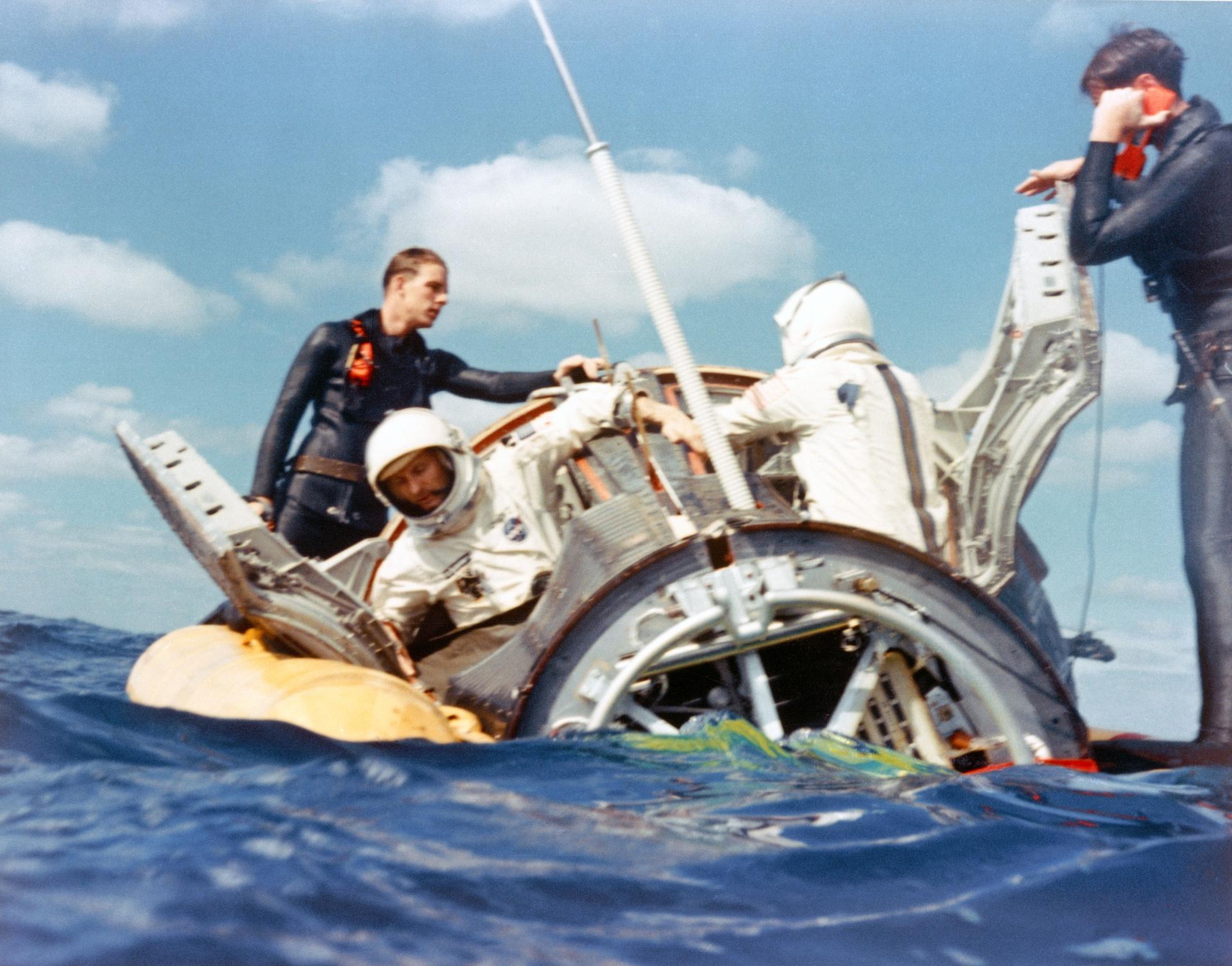
Near the end of the 15th revolution, the retrorockets were fired at 9:53:24 a.m. EST on Dec. 16 and splashdown occurred at 10:28:50 at 23.58° N, 67.83° W only 13 km from the target. This was the first successful controlled reentry to a predetermined point in the U.S. manned spaceflight program. The spacecraft and crew were brought aboard the aircraft carrier U.S.S. Wasp at 11:32 a.m. The recovery and rendezvous section of the spacecraft splashed down in the same area and was retrieved, this was the first time the service section was recovered. Total mission elapsed time was 25:51:24.
All primary mission objectives were achieved. The only major malfunction was the failure of the delayed time telemetry tape recorder at 20 hours 55 minutes into the mission, resulting in loss of the last 4:20 of delayed time telemetry. The crew conducted three scientific experiments: (1) synoptic terrain photography, (2) synoptic weather photography, and (3) dim light photography. The fourth experiment, measurement of radiation in spacecraft, was only partly completed.
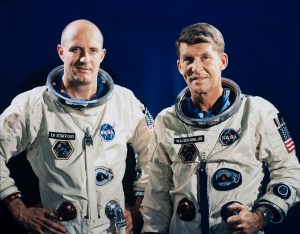
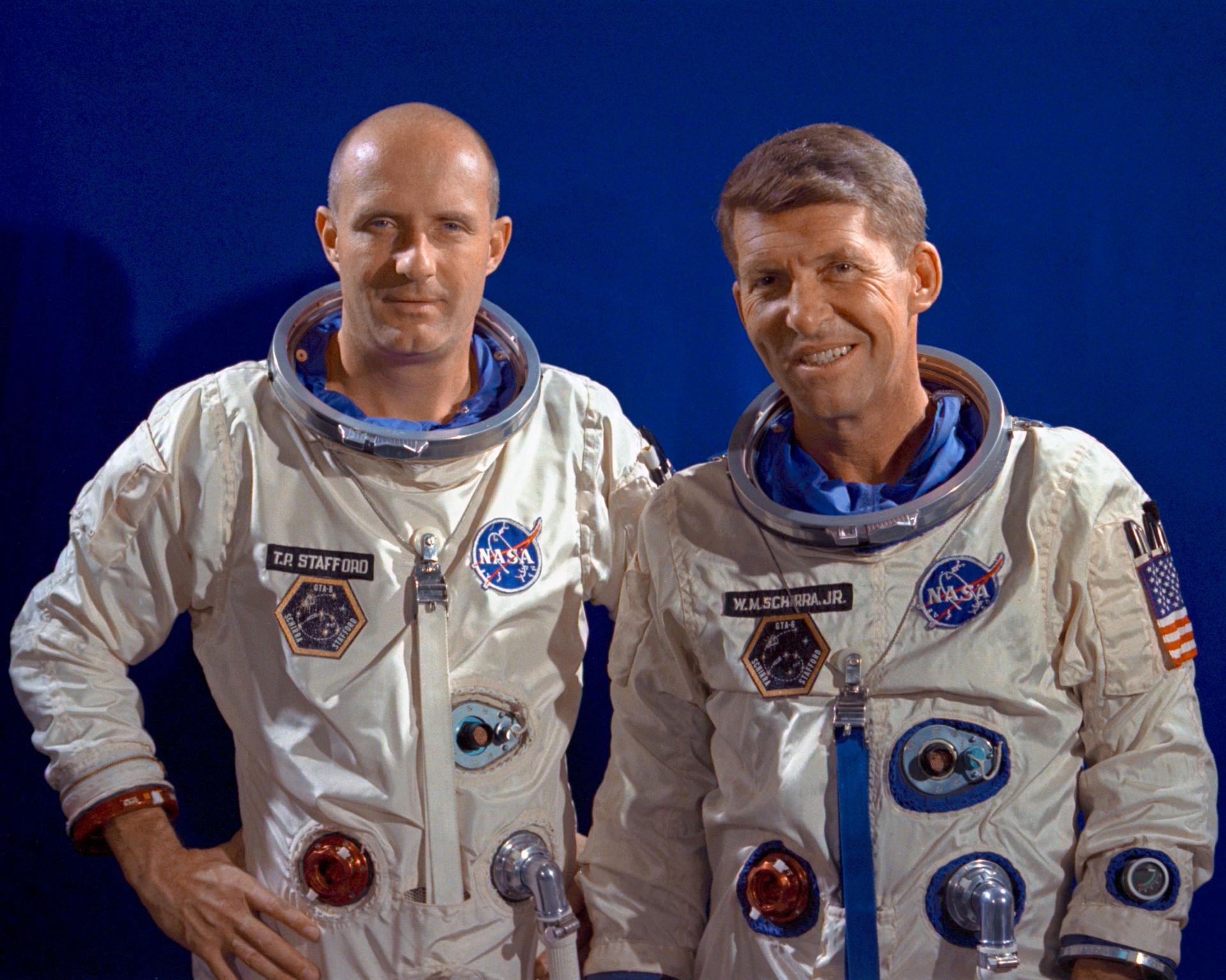
Astronauts Thomas P. Stafford (left), and Walter M. Schirra Jr., pose for the camera during suiting up exercises on Oct. 22, 1965. Stafford was selected among the second group of astronauts in September 1962 by NASA to participate in Projects…
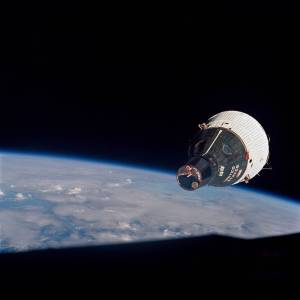
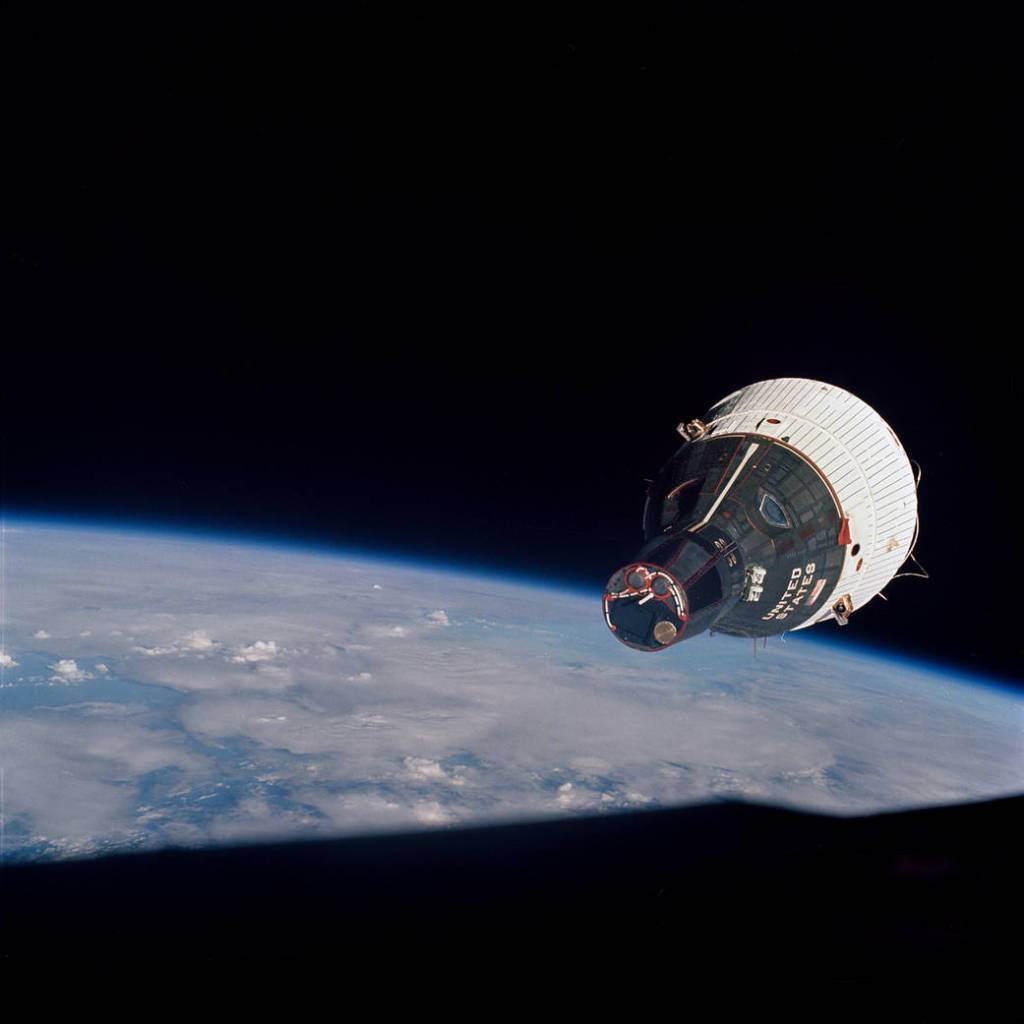
In this photo from Dec. 15, 1965, the Gemini-VII spacecraft is seen from the Gemini-VI-A spacecraft during their rendezvous mission in space.
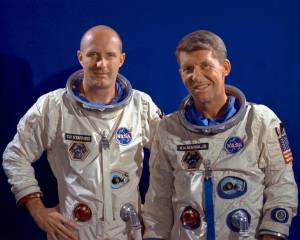
The primary goals of Project Gemini included proving the techniques required for the Apollo Program to fulfill President John F. Kennedy’s goal of landing a man on the Moon and returning him safely to Earth before the end of the…
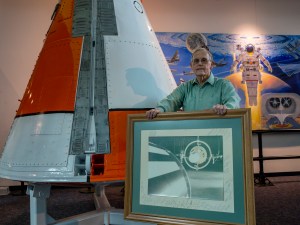
Fifty years ago, the two-tiered NASA mission Gemini VII/VI-A made history by proving that two independently launched spacecraft — piloted by astronauts — could meet up while orbiting Earth. Humankind’s first rendezvous in space happened Dec. 15, 1965. While circling the…