






Human Vibration Laboratory
Mission Statement
The mission of the Human Vibration Laboratory (HVL) was to assess and understand effects of whole-body vibration on passenger comfort and on their visual, cognitive, and manual task performance.
Lab Overview
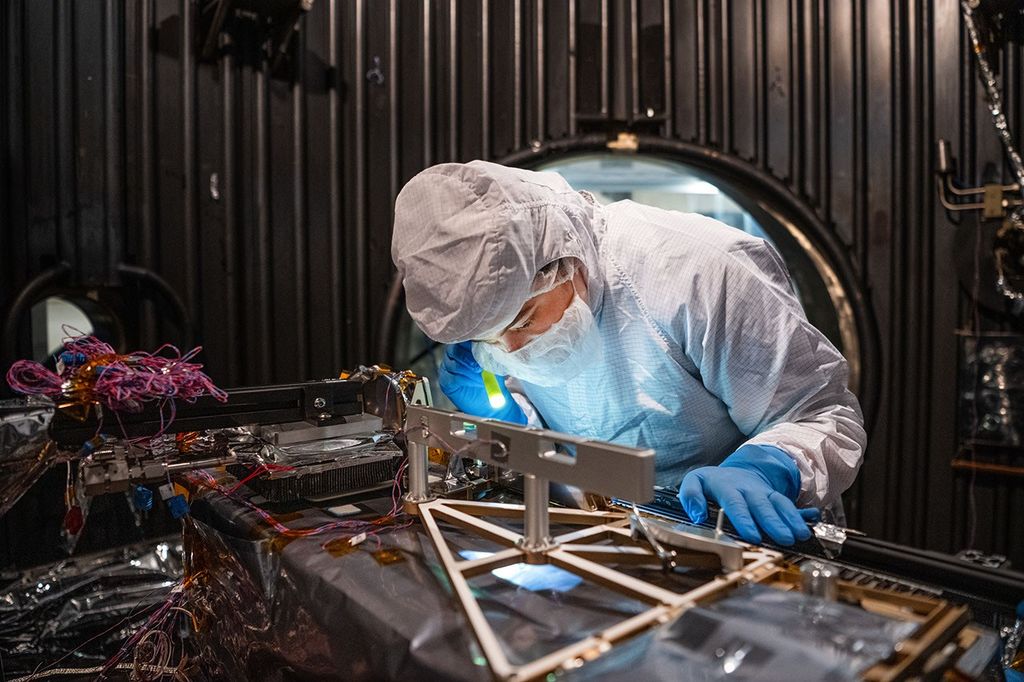
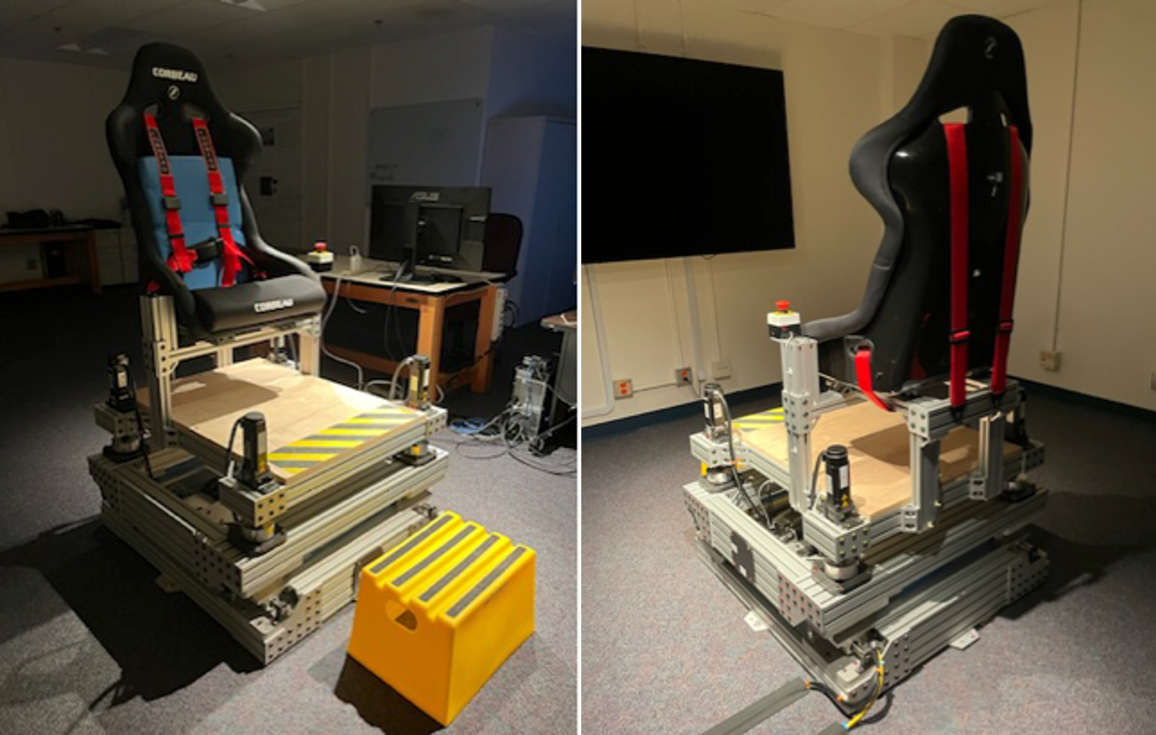
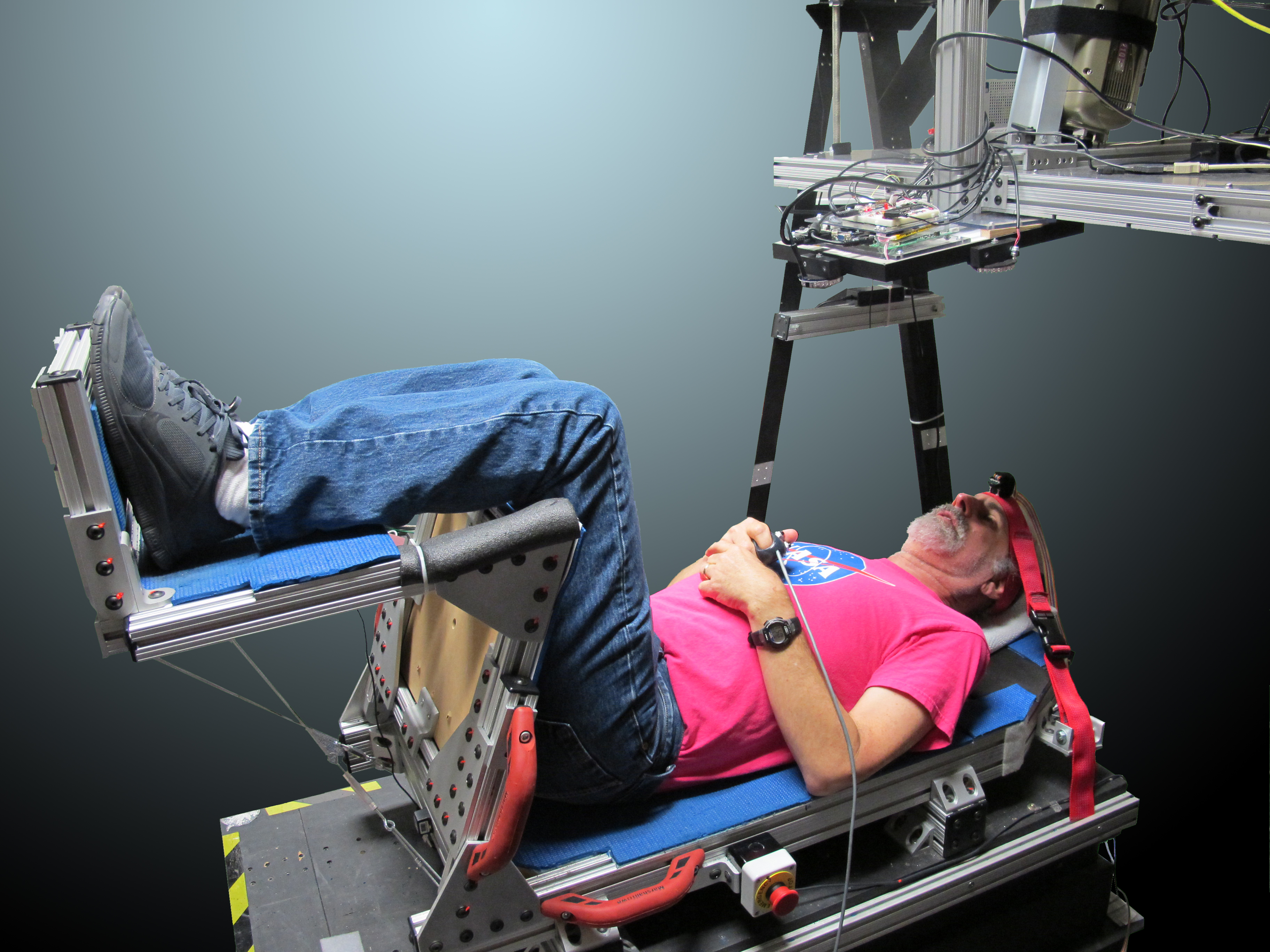
The laboratory centerpiece was a five degree-of-freedom vibration platform (pictured below) that could be commanded to deliver single-frequency and complex broadband motion to seat occupants in the vertical, fore-aft, and side-side directions, as well as in pitch and roll rotation. The platform could be configured with an upright seat representative of air, land, and water vehicles or with a (horizontal) seating surface for studying space-launch vibration. This chair could be fitted with a variety of manual input devices. The lab was also equipped with wall-mounted and handheld visual display interfaces.
In past studies, we have also augmented the Ames 20-G Centrifuge (https://www.nasa.gov/wp-content/uploads/2021/12/lsarf-fs-29sep2020.pdf?emrc=7a31f9) to emulate the concurrent G-loading and vibration of a rocket launch and the subsequent effects on human performance.
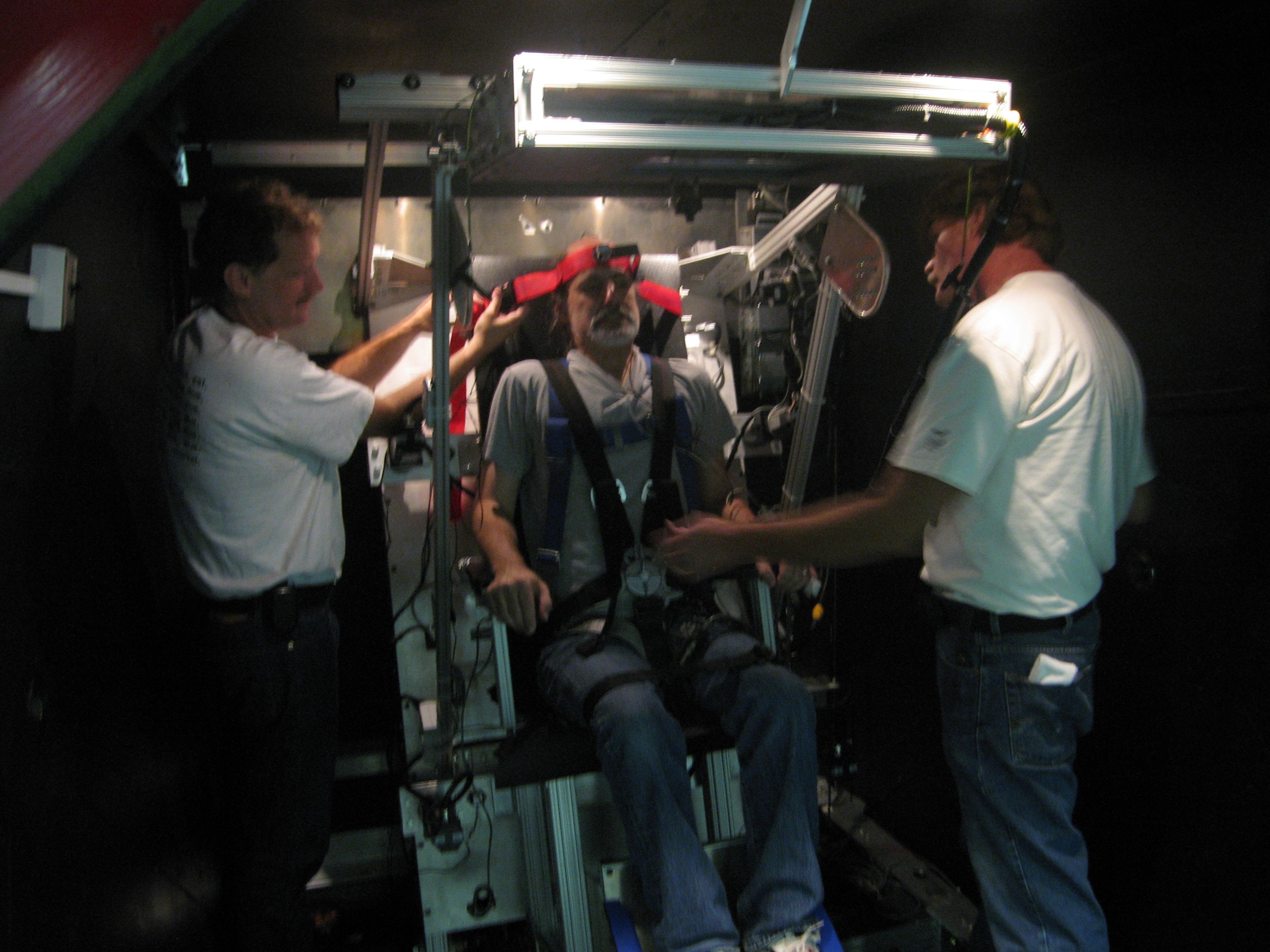
In our work, we were able to characterize human vibration response via a variety of objective and subjective metrics. Objective metrics could include error rate and reaction times during visual-manual task performance or those that are derived from the heart and breathing rate or galvanic skin response of research subjects. Such physiological data, which are indicators of parasympathetic nervous system stress and recovery, was collected and analyzed in collaboration with our colleagues in the Ames Psychophysiological Research Laboratory. The data we collected was utilized to help understand mechanisms contributing to vibration-induced performance deficits and to develop countermeasures to mitigate these deficits.
Research Area/Projects
Urban Air Mobility (UAM) Passenger Ride Comfort and Ride Quality Acceptance
We supported the NASA Revolutionary Vertical Lift Technologies Project (https://www.nasa.gov/directorates/armd/aavp/rvlt/) by helping understand the effects of whole-body vibration produced by Urban Air Mobility (UAM) electrical vertical takeoff and landing (eVTOL) aircraft on passenger comfort and performance. The acceptance by passengers of the vehicle ride quality experienced on board this brand-new category of commuter “air taxis” will be essential for growing and maintaining a broad UAM customer base. Industrywide guidance encompassing passenger comfort/productivity factors including vibration, noise, and large motion patterns unique to UAM (and eVTOL in particular), however, is yet to be established.

Crew Visual Performance under Orion Launch Vibration
Previously, the HVL designed and executed a series of ground-based studies of display readability and interface usability under launch-like vibration. The data we collected from astronauts and general population test subjects in the lab and on the ARC 20-G Centrifuge underpinned performance-based requirements that limit Orion crew vibration for NASA’s Artemis Program. This work culminated in a patented display-strobing countermeasure that minimizes the visual blur caused by whole-body vibration induced head and eye motion. Lab personnel also led the processing and analysis of inflight crew vibration data in support of the Commercial Crew Program as part of NASA’s ongoing Integrated Verification and Validation activities.
Noteworthy Publications
Adelstein, B.D., Beutter, B.R., Kaiser, M.K., McCann, R.S., Stone, L.S. (2009). Effects of Transverse Seat Vibration on Near-Viewing Readability of Alphanumeric Symbology, NASA Technical Memorandum 2009-215385.
Adelstein, B.D., Beutter, B.R., Kaiser, M.K., McCann, R.S., Stone, L.S. (2009). Influence of Combined Whole-Body Vibration Plus G-Loading on Visual Performance, NASA Technical Memorandum 2009-215386.
Adelstein, B.D., Kaiser, M.K., Beutter, B.R., McCann, R.S., Anderson, M.R. (2013). Display strobing: An Effective Countermeasure Against Visual Blur from Whole-Body Vibration, Acta Austronatica, 92, 53-64.
* Please note, this webpage is not actively maintained and is for historical reference only.