


















Fatigue Countermeasures Laboratory
Mission Statement
The mission of the Fatigue Countermeasures Laboratory is to provide a better understanding of sleep and circadian rhythm-related issues as they affect human performance and safety, and to develop countermeasures to improve safety, alertness, performance, and aid in overall mission success.
Lab Overview
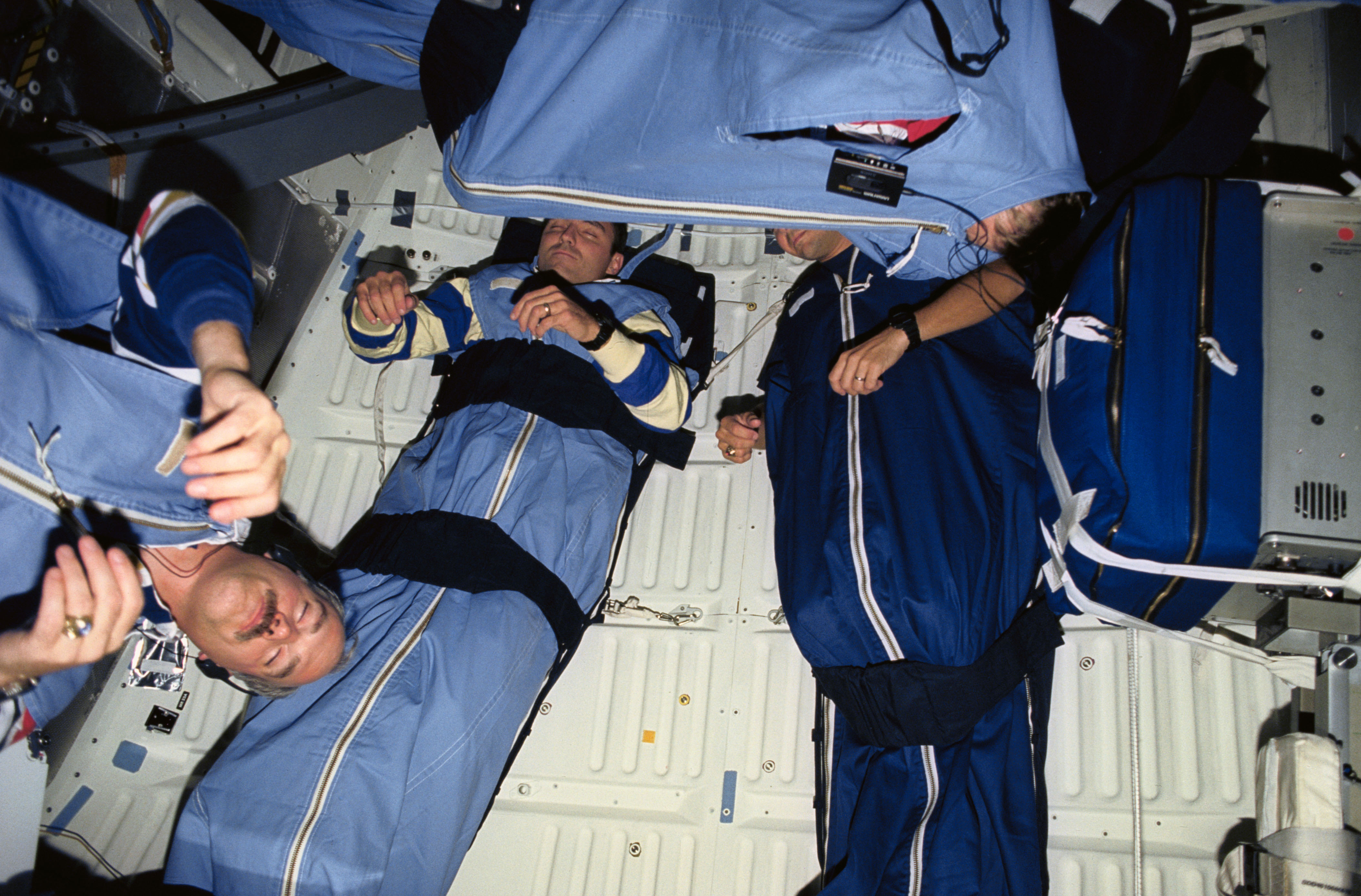
Alertness and performance are negatively impacted by circadian misalignment (being out of sync with one’s internal body clock), acute sleep loss (insufficient sleep over a short period of time), chronic sleep loss (insufficient sleep over a long period of time), and sleep inertia (grogginess following sleep).
The Fatigue Countermeasures Laboratory at NASA Ames Research Center studies the relationship between these factors and assesses countermeasures to improve safety, alertness, performance, and aid in the overall success of a mission’s goal. The primary populations of interest are aviation pilots and astronauts; however, the Fatigue Countermeasures Laboratory lends its expertise to diverse populations.
Recruiting Participants for Studies
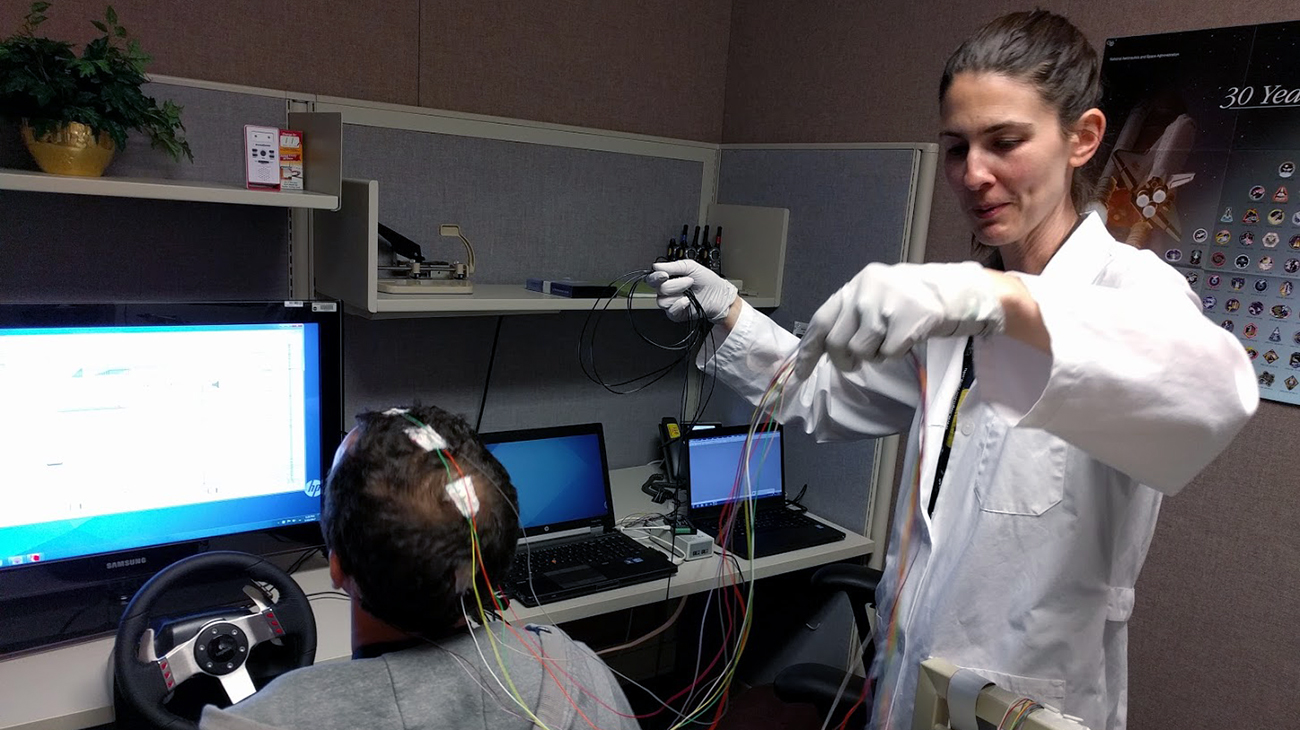
If you are interested in participating in a NASA Fatigue research study, or would like to be notified when we publish the results of studies, please click on the links below:
Laboratory Research
Spaceflight Countermeasures
Spaceflight missions often involve operational constraints that require astronauts to work during the biological night and to sleep during the biological day. This circadian misalignment can cause reductions in alertness and performance and sleep disruption. There are countermeasures, such as caffeine and hypnotics that can be used to mitigate some of these challenges, but they come with consequences that make them unsuitable for many situations. Our laboratory is testing novel, non-pharmacological countermeasures that can be used during spaceflight missions.
Sleep Inertia Studies
Sleep inertia refers to the grogginess and impaired performance experienced immediately after waking. This transitory period can have significant consequences for occupations in which optimal readiness is required immediately after waking (e.g., aviation, spaceflight, emergency services, and health care). We are investigating countermeasures that can be applied after waking to restore alertness and performance as quickly as possible. Our studies have identified blue-enriched light as a possible reactive countermeasure both in the laboratory and in a translational study conducted in an at-home setting. We are continuing to explore the effectiveness of light under different conditions, as well as other interventions to mitigate sleep inertia.
- C. J. Hilditch, S. K. Pradhan, G. Costedoat, N. G. Bathurst, Z. L. Glaros, K. B. Gregory, N. L. Shattuck, & E. E. Flynn-Evans (2023) An at-home evaluation of a light intervention to mitigate sleep inertia symptoms, 36th Annual SLEEP Conference. https://doi.org/10.1016/j.sleh.2023.07.015
- C.J. Hilditch, K. Bansal, R. Chachad, L.R. Wong, N.G. Bathurst, N.H. Feick, A,Santamaria, N.L. Shattuck, J.O. Garcia, E.E. Flynn-Evans (2023) Reconfigurations in brain networks upon awakening from slow wave sleep: Interventions and implications in neural communication. Network Neuroscience 2023; 7 (1): 102–121. doi: https://doi.org/10.1162/netn_a_00272
- C. J. Hilditch, S. K. Pradhan, G. Costedoat, N. G. Bathurst, Z. L. Glaros, K. B. Gregory, N. L. Shattuck, & E. E. Flynn-Evans (2022) Sex differences in perceptions of sleep inertia following nighttime awakenings, SLEEP Advances, zpac043; https://doi.org/10.1093/sleepadvances/zpac043
- C. J. Hilditch, L. Wong, N. G. Bathurst, N. H. Feick, S. K. Pradhan, A. Santamaria, N. L. Shattuck, & E. E. Flynn-Evans (2022) Rise and shine: The use of polychromatic short wavelength-enriched light to mitigate sleep inertia at night following awakening from slow wave sleep, Journal of Sleep Research, e13558: https://doi.org/10.1111/jsr.13558
Changes in Eye Movements During Sleep Loss and Circadian Misalignment – COBRA
In recent years, our studies, in collaboration with the Visuomotor Control Laboratory, investigated the effects of sleep loss on cognitive functioning and the visual motor system to support the development of NASA’s Comprehensive Oculomotor Behavioral Response Assessment (COBRA). COBRA is a behavioral oculomotor tracking task that assesses various oculometrics (e.g., pursuit and saccade behavior, pupillometry). More information on COBRA can be found here: >> (link to COBRA/Vision Group). <<
- E.E. Flynn-Evans, T.L. Tyson, G. Costedoat, S. Pradhan, L.S. Stone, (2026) Chronic Sleep Restriction Induces Oculomotor Impairment with Inadequate Compensation, SLEEP Advances, 2026;, zpaf095, https://doi.org/10.1093/sleepadvances/zpaf095
- L. Stone, T.L. Tyson, P.F. Cravalho, N.H. Feick, and E.E. Flynn-Evans. (2019) Distinct Pattern of Oculomotor Impairment Associated with Acute Sleep Loss and Circadian Misalignment. J. Physiology, 2019; 0:1-18.
- Comprehensive Oculomotor Behavioral Response Assessment (COBRA) Patent
Chronic Sleep Restrictions
Chronic Sleep Restriction (CSR) occurs when an individual obtains less sleep than they need over several consecutive days. CSR results in cognitive impairment, including reduced alertness, attention, memory, executive functioning, and a contributing factor to many chronic health issues (e.g., heart disease, obesity, diabetes, anxiety/depression). In occupations that require optimal alertness and attention, such as aviation, spaceflight, and military operations, it is important to understand the consequences of CSR so that we can predict and mitigate those consequences through various techniques and countermeasures. In our CSR studies, participants followed a strict 5-hour time in bed schedule every night for one week concluding with a 13-hour day-time lab visit. Participants then completed a 9-hour time in bed schedule every night for one week concluding with a second 13-hour day-time lab visit.
Acute Sleep Deprivation
Acute sleep loss is a form of sleep deprivation that occurs when an individual experiences loss of sleep over a short period (often over 24-48 hours). Like CSR, acute sleep loss can result in cognitive impairment and health issues. Many shiftwork occupations are often susceptible to periods of acute sleep loss. Our lab seeks to better understand the effects of acute sleep loss to develop countermeasures and techniques to mitigate such effects. In our acute sleep loss studies, participants remain awake in the lab for a 24-hour period during which they undergo a constant routine protocol (e.g., controlled temperature and lighting, limited physical activity, small isocaloric meals) to measure their circadian rhythm.
Autonomous Vehicles
Human error has been implicated as a causal factor in a large proportion of road accidents. Automated driving systems purport to mitigate this risk, but self-driving systems that allow a driver to entirely disengage from the driving task also require the driver to monitor the environment and take control when necessary. Given that sleep loss impairs monitoring performance and there is a high prevalence of sleep deficiency in modern society, we hypothesized that supervising a self-driving vehicle would unmask latent sleepiness compared to manually controlled driving among individuals following their typical sleep schedules. We found that participants felt sleepier, had more involuntary transitions to sleep, had slower reaction times and more attentional failures, and showed substantial modifications in brain synchronization during and following an autonomous drive compared to a manually controlled drive. Our findings suggest that the introduction of partial self-driving capabilities in vehicles has thepotential to paradoxically increase accident risk.
- E.E. Flynn-Evans, L.R. Wong, Y. Kuriyagawa, et al. (2021) Supervision of a self-driving vehicle unmasks latent sleepiness relative to manually controlled driving. Sci Rep 11, 18530 (2021). https://doi.org/10.1038/s41598-021-92914-5
Aviation Research
Air traffic controllers have demanding, safety-critical jobs that require complex cognitive capabilities, including tracking, switching attention, communication, and calculating, among others. Fatigue, in the form of sleep loss and circadian misalignment, has the potential to introduce lapses of attention and increase errors. In order to better understand the causes and consequences of fatigue among air traffic controllers, Dr. Flynn-Evans was appointed to an FAA panel to investigate these issues. The report identified 58 opportunities for improvement that were summarized in a report published in 2024. The lab continues to support air traffic operations through a combination of research, technology development, and fatigue risk management support.
- FAA report- Assessing Fatigue Risk in FAA Air Traffic Operations
- M.R. Rosekind, E.E. Flynn-Evans, C.A.Czeisler. (2024) Fatigue in Air Traffic Operations—Opportunities to Enhance Safety. JAMA. 2025;333(3):197–198. doi:10.1001/jama.2024.21057
Long-Haul Flight Operations
Long-haul flight operations involve a number of fatigue-related challenges, including circadian disruption from crossing multiple time zones, long flights, different layover patterns, and the effects of jet lag on alertness, performance, sleep, and recovery. Understanding how time zone transitions, sleep opportunities during in-flight rest, and layover influence alertness and cognitive performance is essential for developing effective fatigue mitigation strategies. Our lab has conducted several studies examining flight crew alertness and sleep during long-haul flights, including inflight controlled rest, layover start timing and duration. Currently, we are investigating the use of the Large Language Model to analyze pilot narrative reports in order to identify factors that contribute to fatigue in short- and long-haul aviation.
- M.J. Rempe, I. Rasmussen, K.B. Gregory, C. Johnson, M. Hsin, E.E. Flynn-Evans, A. Lamp, C.J. Hilditch. (2025) Layover start timing predicts layover sleep quantity and timing on long-range and ultra-long-range trips, SLEEP Advances, 6(1), zpaf002. https://doi.org/10.1093/sleepadvances/zpaf002
- C. J. Hilditch, L. Arsintescu, S. K. Pradhan, K. B. Gregory, & E. E. Flynn-Evans (2024) Investigating the Causes and Consequences of Controlled Rest on the Flight Deck, Frontiers in Environmental Health (Occupational Safety and Health Interventions special edition), 3, e1368628. https://doi.org/10.3389/fenvh.2024.1368628
- K. B. Gregory, R. N. Soriano-Smith, A. Lamp, C. J. Hilditch, M. J. Rempe, E. E. Flynn-Evans, & G. L. Belenky (2021) Flight Crew Alertness and Sleep Relative to Timing of In-Flight Rest Periods in Long-Haul Flights, Aerospace Medicine and Human Performance, Volume 92, Number 2, February 2021, pp. 83-91(9): https://doi.org/10.3357/AMHP.5672.2021
- C. J. Hilditch, L. Arsintescu, K. B. Gregory, & E. E. Flynn-Evans (2020) Mitigating fatigue on the flight deck: how is controlled rest used in practice?, Chronobiology International, Selected Proceedings of Shiftwork 2019, 1-9.
- Controlled Rest on the Flight Deck: A Resource for Operators. Flight Safety Foundation.
Short-Haul Flight Operations
Short-haul flight operations (flight segments <6 hours) face a unique set of fatigue challenges such as early starts, late finishes, and overnight flying (“redeyes”), as well as high workload due to multiple take-offs and landings within a duty period. Understanding these factors is critical for developing countermeasures that can be implemented within the constraints of these operations. Our lab has conducted a number of studies to better understand the impacts of schedules, workload, and light interventions. We also conducted a comprehensive in-flight study of circadian disrupted schedules (i.e., redeyes and “swaps”) informed by focus groups of short-haul pilots to assess the impact on sleep, sleepiness, fatigue, workload, and performance.
- Flynn-Evans, E. E., Bathurst, N., Pradhan, S., Gregory, K. B., Barger, L. K., Lamp, A. C., … & Hilditch, C. J. (2026). Characterizing Pilot Fatigue During Circadian-Disrupted Short-Haul Aviation Operations. Aerospace Medicine and Human Performance, 97(8), 607-617
- C. J. Hilditch, K. B. Gregory, L. Arsintescu, N. G. Bathurst, T. E. Nesthus, H. M. Baumgartner, A. Lamp, L. K. Barger, & E. E. Flynn-Evans (2023) Perspectives on fatigue in short-haul flight operations from US pilots: A focus group study, Transport Policy, 136: 11-20. https://doi.org/10.1016/j.tranpol.2023.03.004
- L. Arsintescu, S. K. Pradhan, R. G. Chachad, K. B. Gregory, J. B. Mulligan, & E. E. Flynn-Evans (2021) Early starts and late finishes both reduce alertness and performance among short-haul airline pilots, Journal of sleep research, 31(3), p.e13521: https://doi.org/10.1111/jsr.13521
- L. Arsintescu, R. G. Chachad, K. B. Gregory, J. B. Mulligan, & E. E. Flynn-Evans (2020) The relationship between workload, performance and fatigue in a short-haul airline, Chronobiology International, 9 Sept 2020, 1-3: https://doi.org/10.1080/07420528.2020.1804924
- L. Arsintescu, K. H. Kato, C. J. Hilditch, K. B. Gregory, & E. E. Flynn-Evans (2019) Collecting Sleep, Circadian, Fatigue, and Performance Data in Complex Operational Environments, Journal of Visual Experiments, 150, e59851, DOI:10.3791/59851
- E. E. Flynn-Evans, L. Arsintescu, K. B. Gregory, J. B. Mulligan, J. L. Nowinski, & M. S. Feary (2018) Sleep and neurobehavioral performance vary by work start time during non-traditional day shifts, Sleep health, 4(5), 476-484: https://doi.org/10.1016/j.sleh.2018.08.002
Spaceflight/Analog Habitat Research
Spaceflight Standard Measures
The Spaceflight Standard Measures project is a large, cross-cutting project that involves the collection of a set of core measurements to inform many human spaceflight risks. Sleep is measured via wrist-worn accelerometer devices (actigraphy) and questionnaires. This study allows for regular surveillance of sleep to understand the factors that influence crewmembers’ ability to obtain adequate quality and quantity of sleep in space.
Volatiles Investigating Polar Exploration Rover (VIPER)
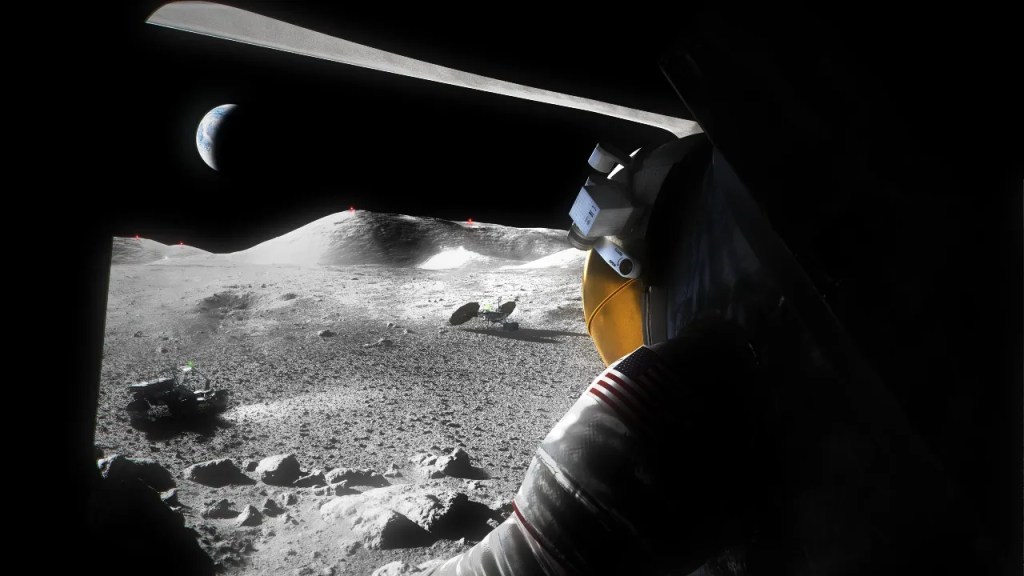
VIPER is a robotic exploration mission that will require teams of human operators to control a lunar rover remotely from an Earth-based mission control center. Due to the lack of prior research on sustained real-time reactive mission control operations, we evaluated sleepiness, performance, and workload during a simulated operation to better inform scheduling and staffing requirements in preparation for the mission. Assessing individuals trained to operate the simulation, our findings indicated that participants’ performance worsened over time when operating in the middle of the night with greater errors made in the early hours of the morning. We continue to work with the VIPER team to provide recommendations for scheduling, fatigue risk management, and countermeasures, including modifications to lighting in the mission control center.
- Z. L. Glaros, P. Cravalho, & E. E. Flynn-Evans (2021) An evaluation of sleepiness, performance, and workload among operators during a real-time reactive telerobotic lunar mission simulation, Human Factors, p.00187208211056756: https://doi.org/10.1177/00187208211056756
Crew Health and Performance Exploration Analog (CHAPEA)
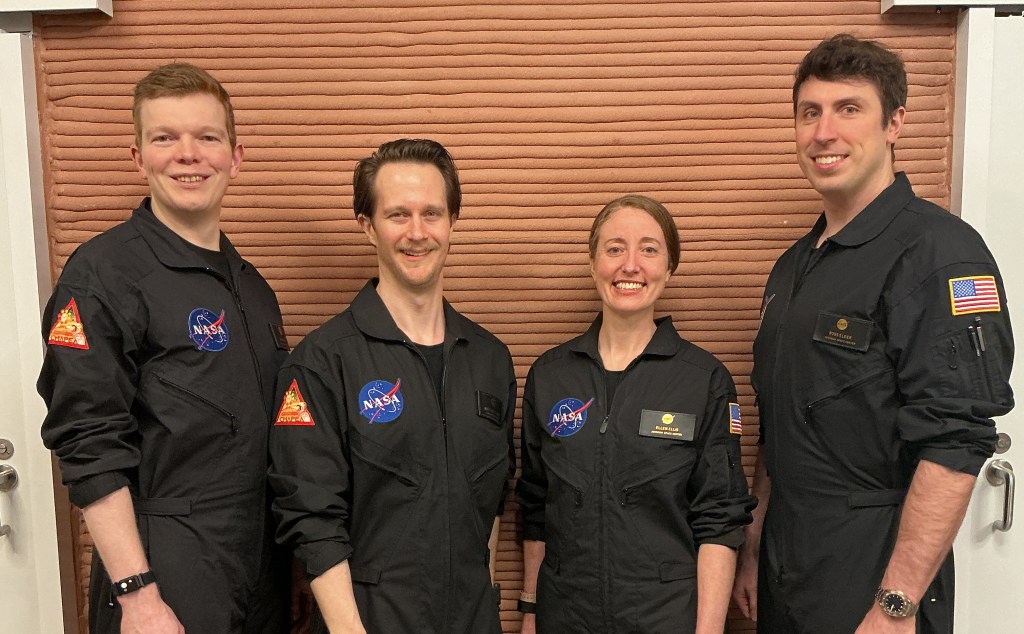
Crew Health and Performance Exploration Analog (CHAPEA) is a research analog study where 4-member crews simulate year-long studies on Mars. We work with the CHAPEA science team to monitor sleep throughout the mission.
Human Exploration Research Analog (HERA)
Human Exploration Research Analog (HERA) is a research analog environment where 4-member crews simulate a variety of mission scenarios. We have conducted studies in the HERA habitat to evaluate the impact of chronic sleep restriction on crew alertness and performance. We have also evaluated the validity and reliability of biomathematical performance models and lighting countermeasures in this operational setting.
- L.K. Grant, B.A. Kent, S. A. Rahman, M.A. St. Hilaire, C.L. Kirkley, K.B. Gregory, T. Clark, J.P Hanifin, L.K. Barger, C.A. Czeisler, G.C. Brainard, S.W. Lockley, E.E. Flynn-Evans, (2024) The effect of a dynamic lighting schedule on neurobehavioral performance during a 45-day simulated space mission, SLEEP Advances, Volume 5, Issue 1, 2024, zpae032, https://doi.org/10.1093/sleepadvances/zpae032
- E.E. Flynn-Evans, C. Kirkley, M. Young, et al. (2020) Changes in performance and bio-mathematical model performance predictions during 45 days of sleep restriction in a simulated space mission. Sci Rep 10, 15594 (2020). https://doi.org/10.1038/s41598-020-71929-4
NASA PVT+ App
The NASA PVT+ App is a validated iOS mobile application developed for use in field settings. The NASA PVT+ app includes a version of the psychomotor vigilance task (PVT) based on the PVT-192. The app also includes a number of questionnaires and surveys in order to capture sleep, alertness, and operational outcomes in research studies. There are three, free publicly available versions of the app in the Apple App Store: Simple PVT (just the PVT), Basic Study (single or multiday pre-set framework including sleep logs, PVT and sleepiness questionnaires), and Aviation Study (multiday pre-set framework for collecting aviation data).
- NASA PVT+ App (Apple App Store)
- L. Arsintescu, K.H. Kato, P.F. Cravalho, N.H. Feick, L.S. Stone & E. E. Flynn-Evans (2019) Validation of a touchscreen psychomotor vigilance task, Accident Analysis & Prevention, Volume 126, May 2019, Pages 173-176; https://doi.org/10.1016/j.aap.2017.11.041
- L. Arsintescu, J. B. Mulligan, & E. E. Flynn-Evans (2017) Evaluation of a Psychomotor Vigilance Task for Touch Screen Devices, Human Factors, 2017; 59(4):661-670: https://doi.org/10.1177/0018720816688394
Lab Personnel
Lab Director
Lab Members
Jason Sullivan
Student Researchers
Michelle Tripp
Summer Internship Program
The Fatigue Countermeasures Laboratory provides a unique opportunity for undergraduate and graduate students to engage in a variety of research projects. These summer internships last 10-12 weeks beginning in June and ending in August. No prior experience is necessary; however, the best candidates will be open to new experiences and learning new things, able to work independently and with a team, punctual, and reliable.
If you are interested in an internship with the Fatigue Countermeasures Laboratory, please use the online application form below. * NOTE- This online application is administered by San Jose State University (San Jose State University Privacy Policy).
* We are unlikely to have a full internship in summer 2026, but feel free to fill out the application so that we have your information for the future.