














Gemini VII
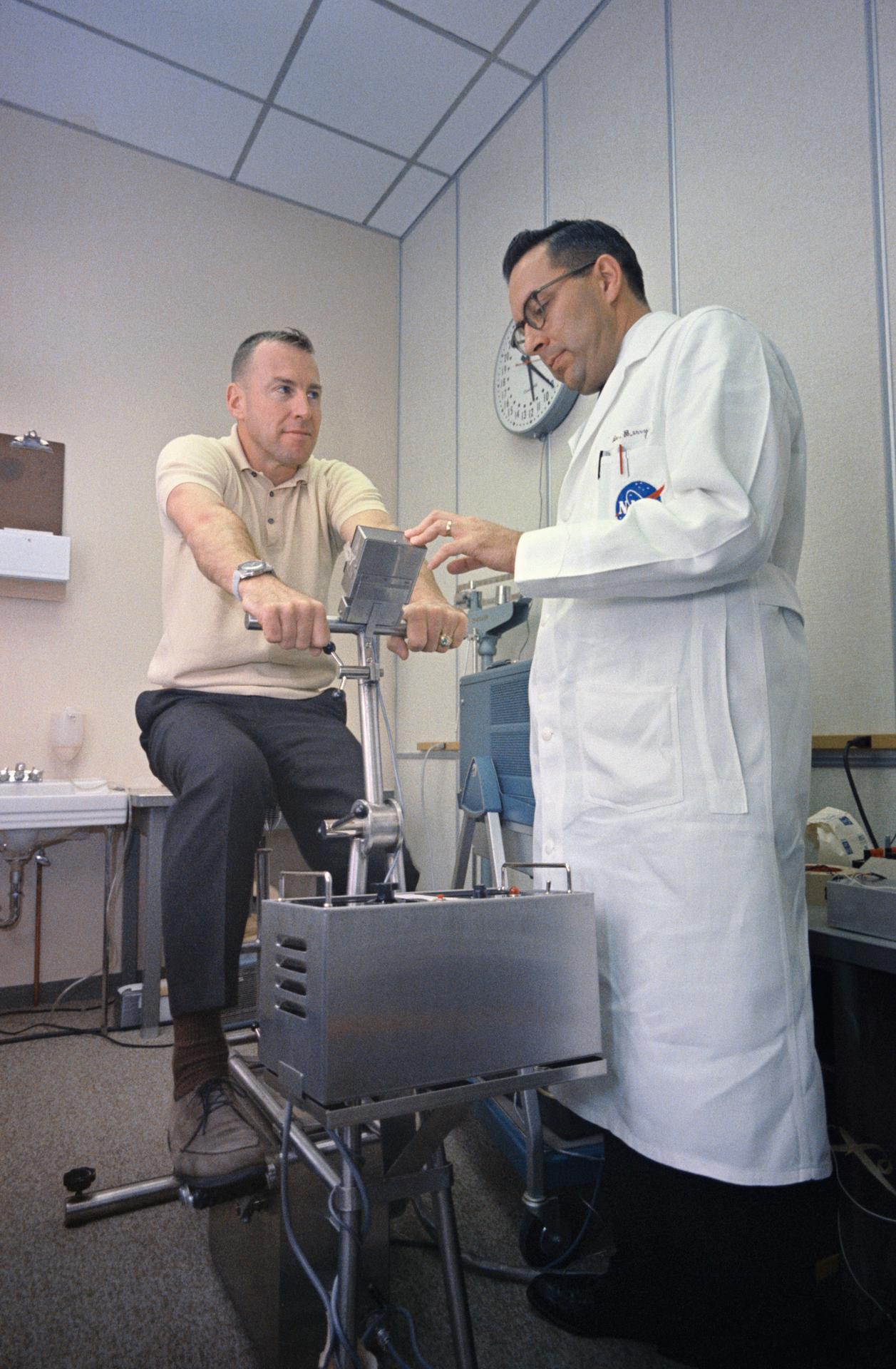
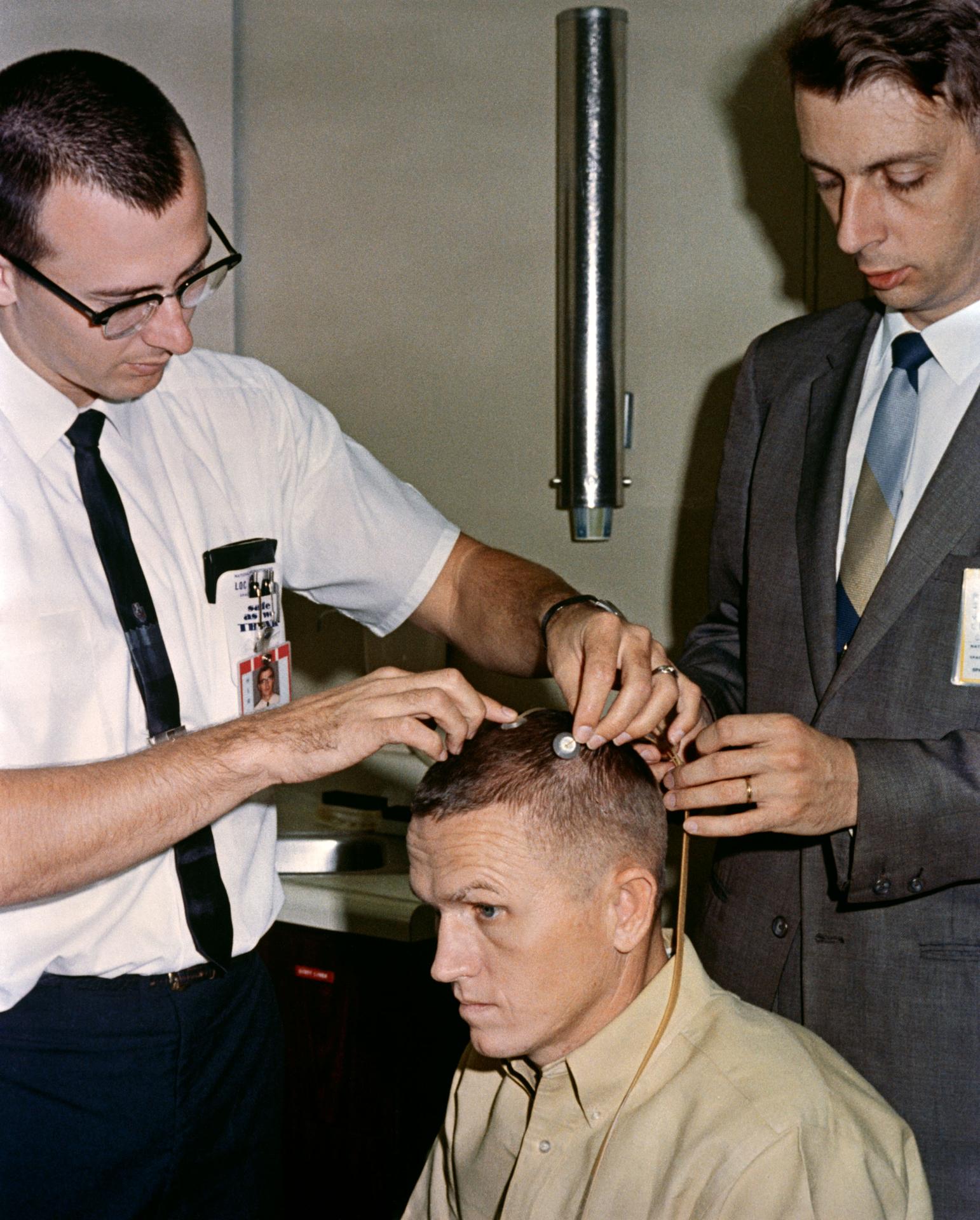
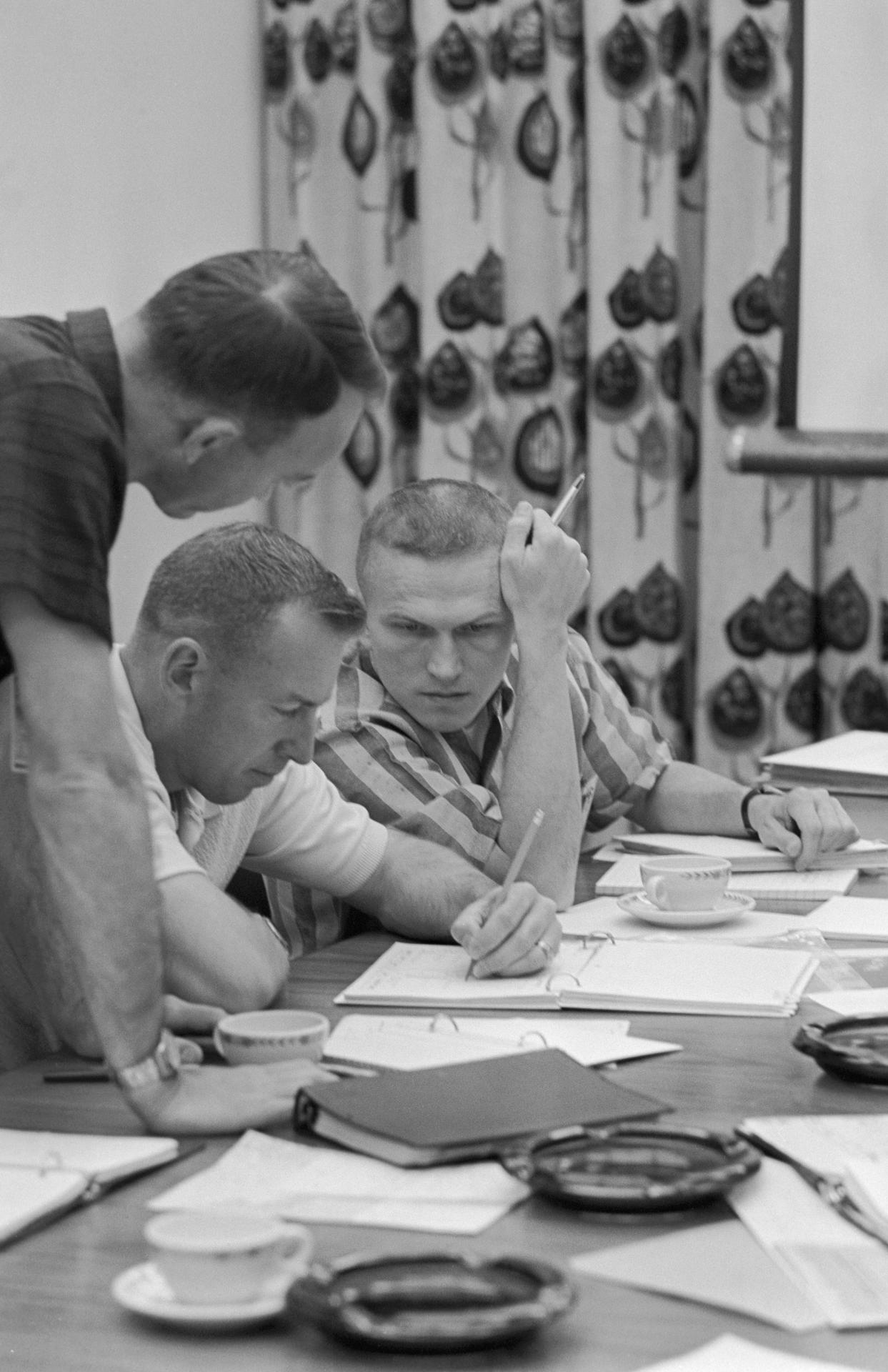
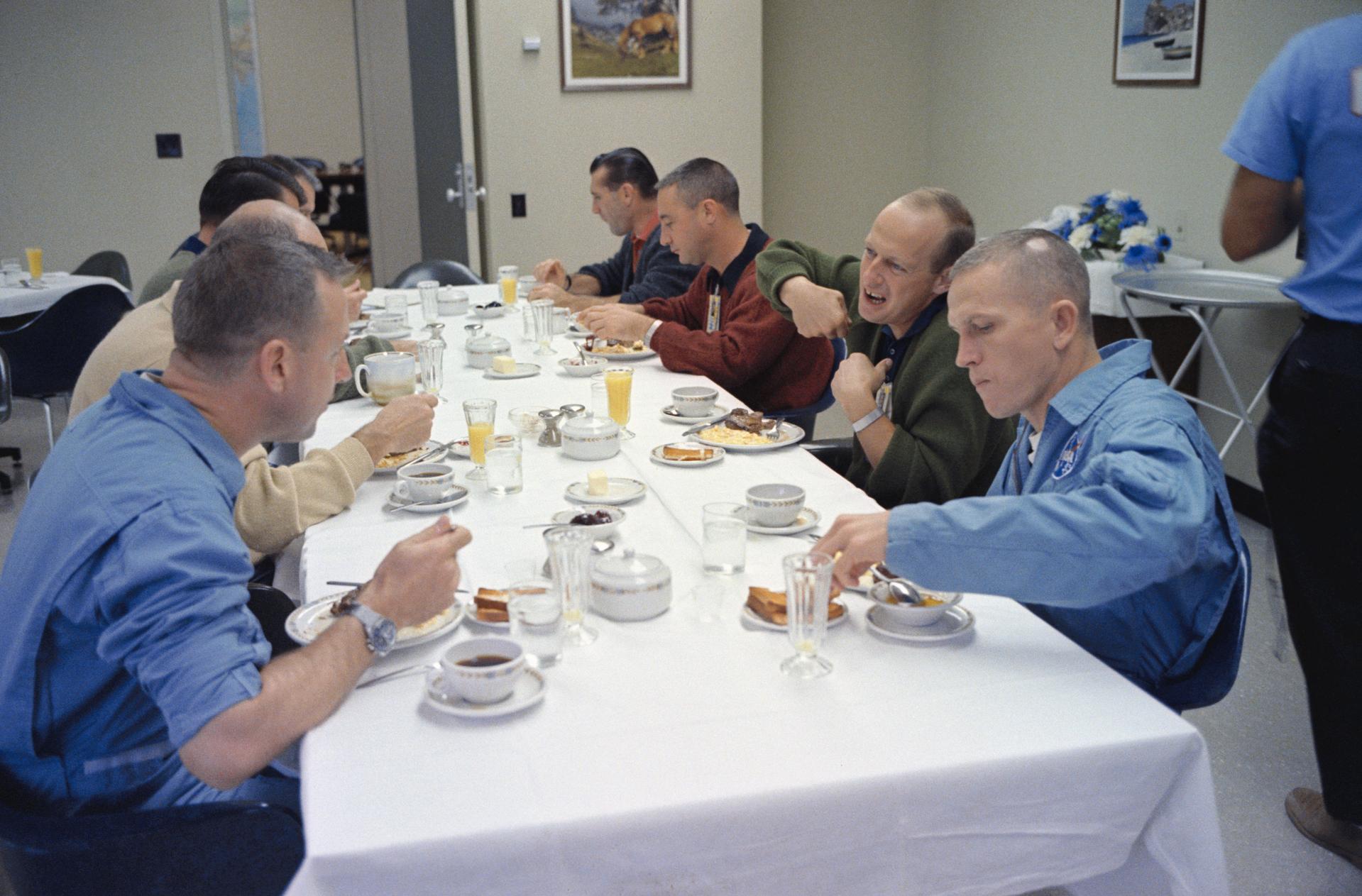
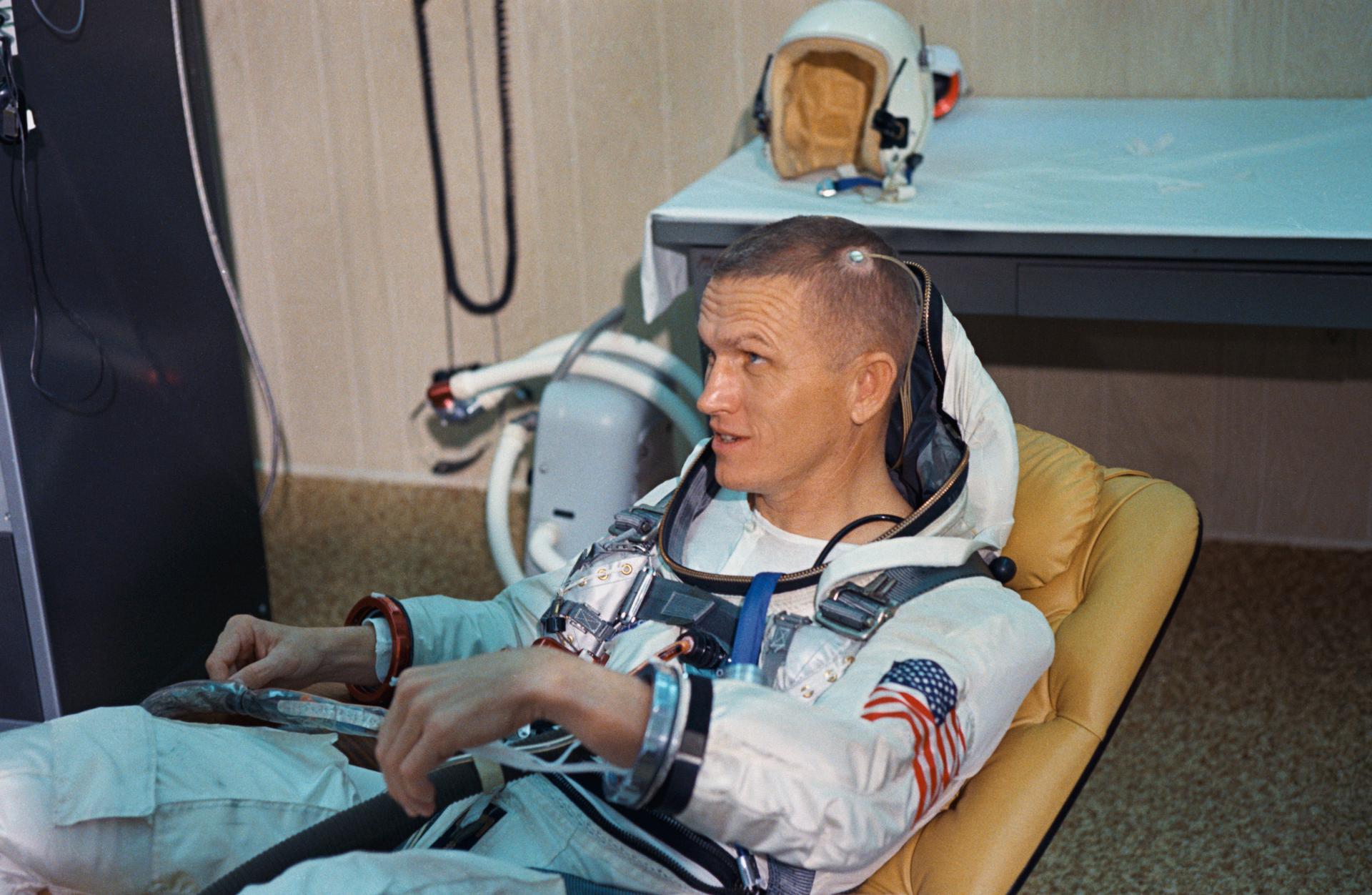
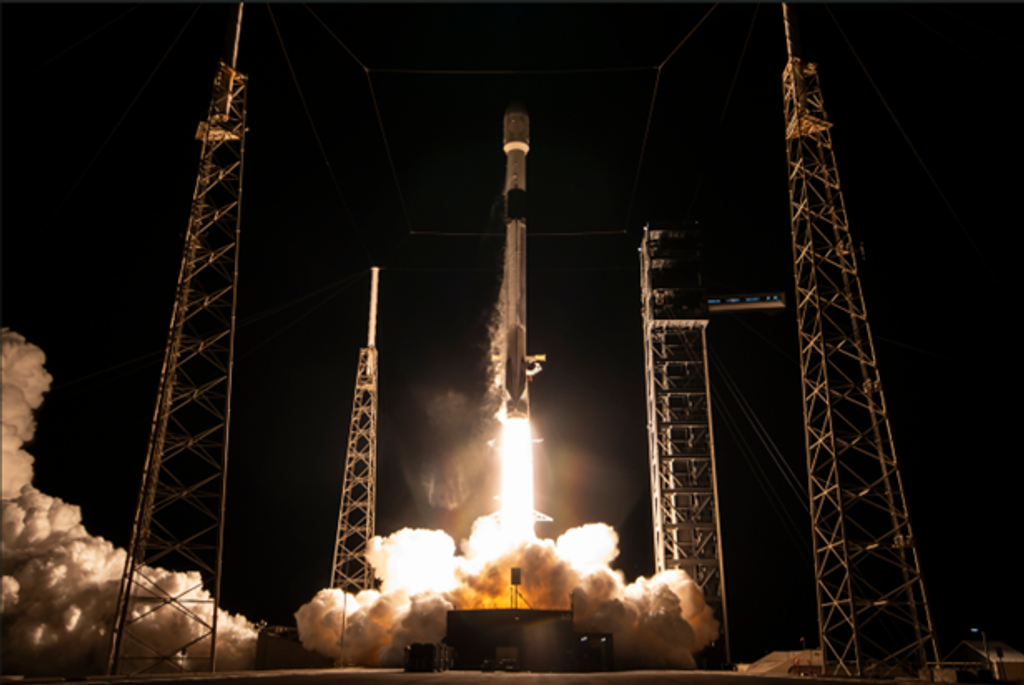
Gemini VII, launched before the Gemini VI-A mission, was the fourth crewed mission of the Gemini series. Frank F. Borman and James A. Lovell completed a record-breaking 14-day mission to evaluate how astronauts would endure long-duration space flight and participated in the world’s first rendezvous of two crewed spacecraft.
Mission Type
mission duration
Launch
Landing
Objectives
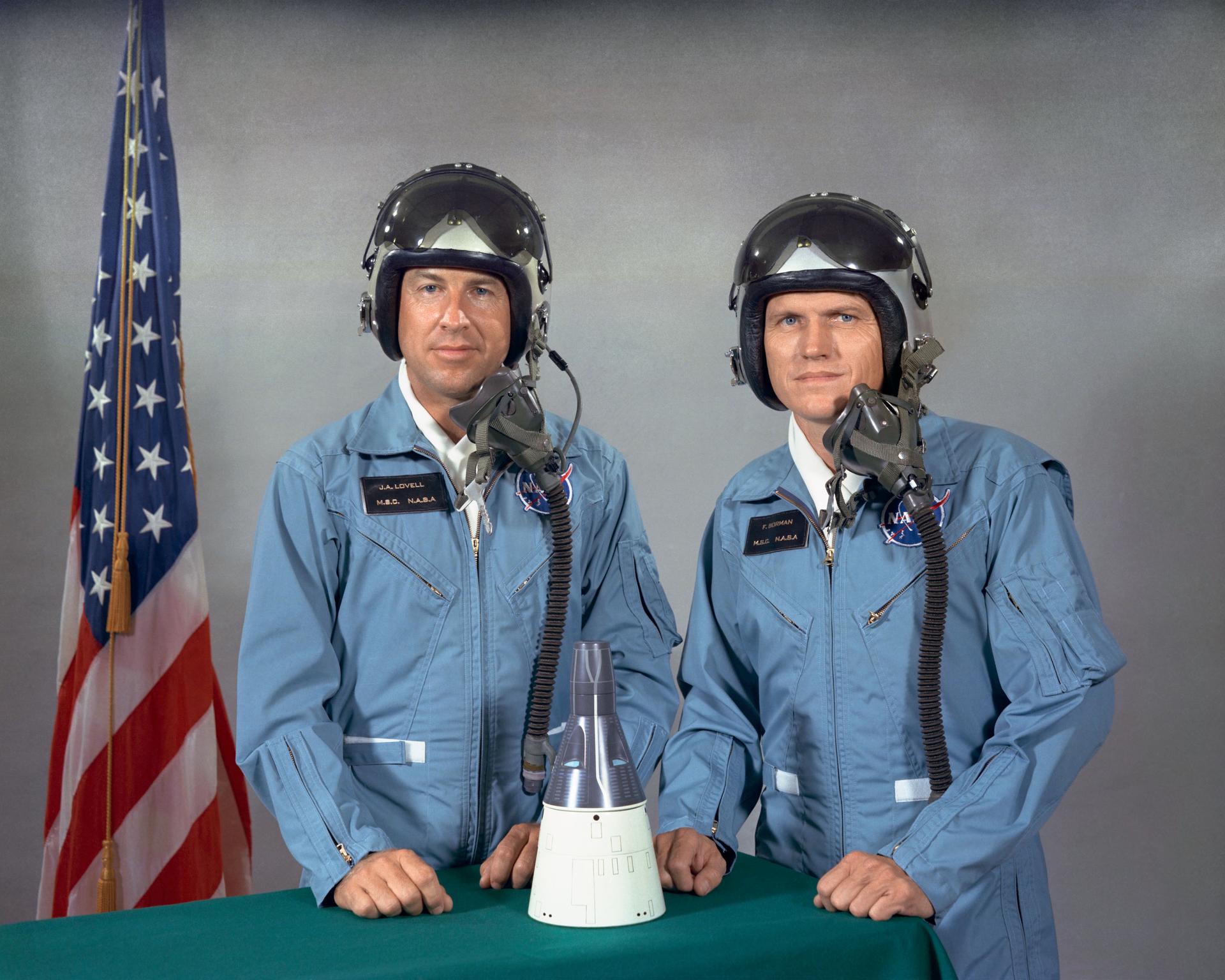
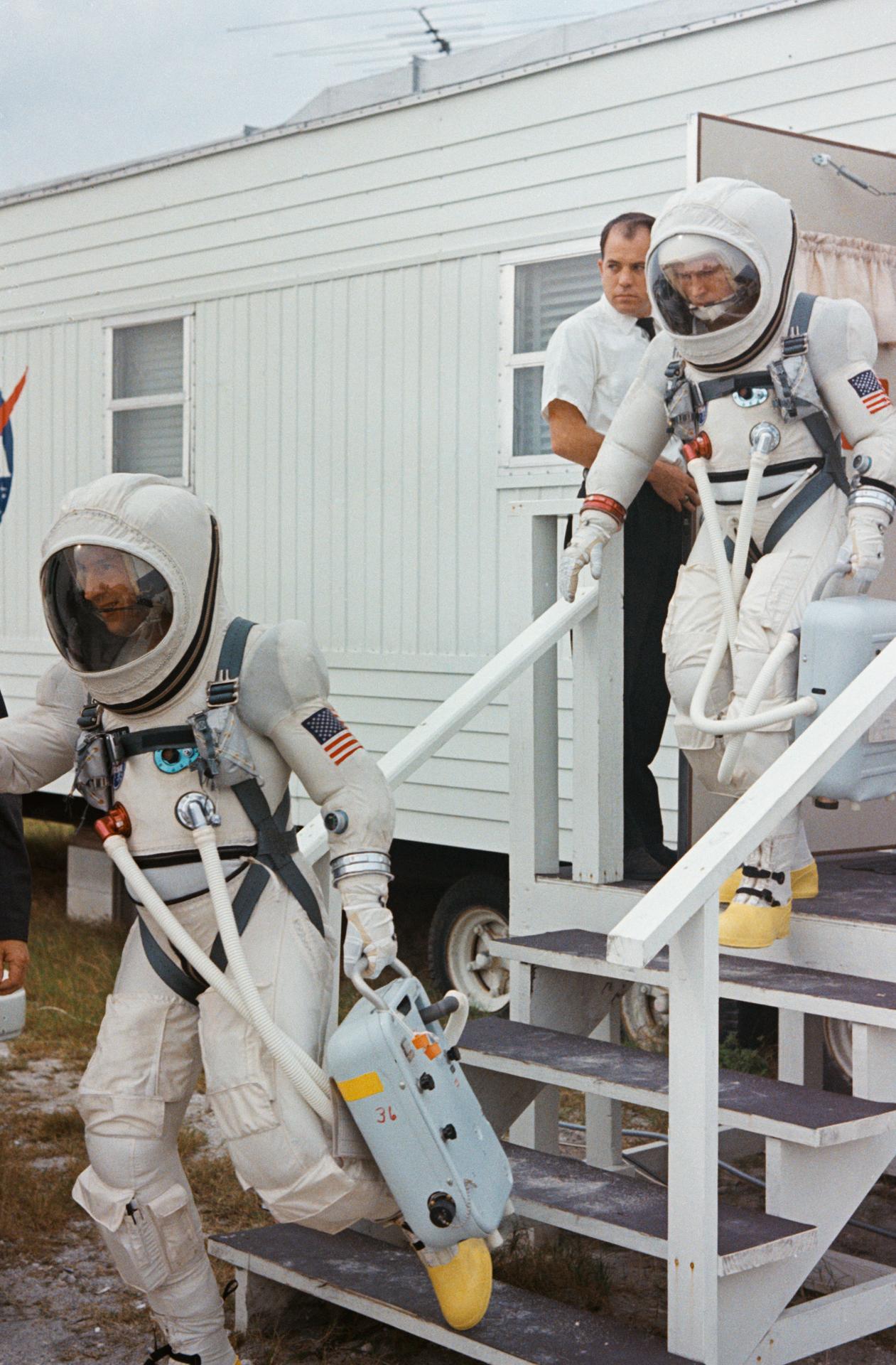
Gemini VII was the fourth crewed Earth-orbiting spacecraft of the Gemini series, having been launched before Gemini VI-A. It carried astronauts Frank Borman and James Lovell on the 14-day mission. Its mission priorities were (1) to demonstrate a 2-week flight, (2) to perform stationkeeping with the Gemini launch vehicle stage 2, (3) to evaluate the ‘shirt sleeve’ environment and the lightweight pressure suit, (4) to act as a rendezvous target for Gemini VI-A, and (5) to demonstrate controlled reentry close to the target landing point. The crew members had three scientific, four technological, four spacecraft, and eight medical experiments to perform.
Dual Gemini Flights Achieved Crucial Spaceflight Milestones
The flights of two piloted spacecraft during December 1965 were major strides forward in advancing NASA’s capabilities in human spaceflight.…
Read the Story
Milestones
Dec. 4, 1965: Launch from Cape Canaveral.
Dec. 15, 1965: Rendezvous with Gemini VI-A.
Dec. 18, 1965: Splashdown in the Western Atlantic Ocean.
Mission Facts
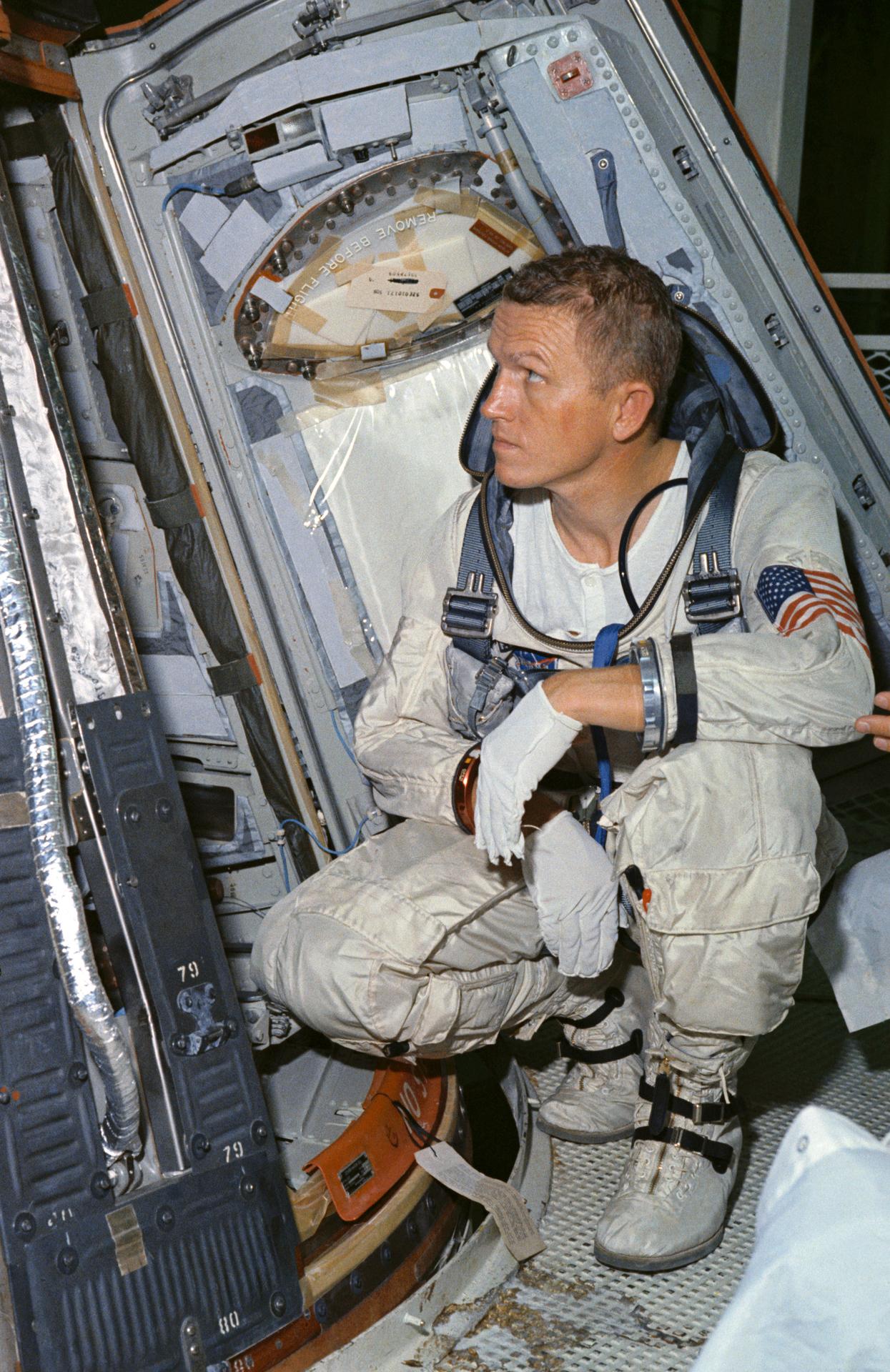
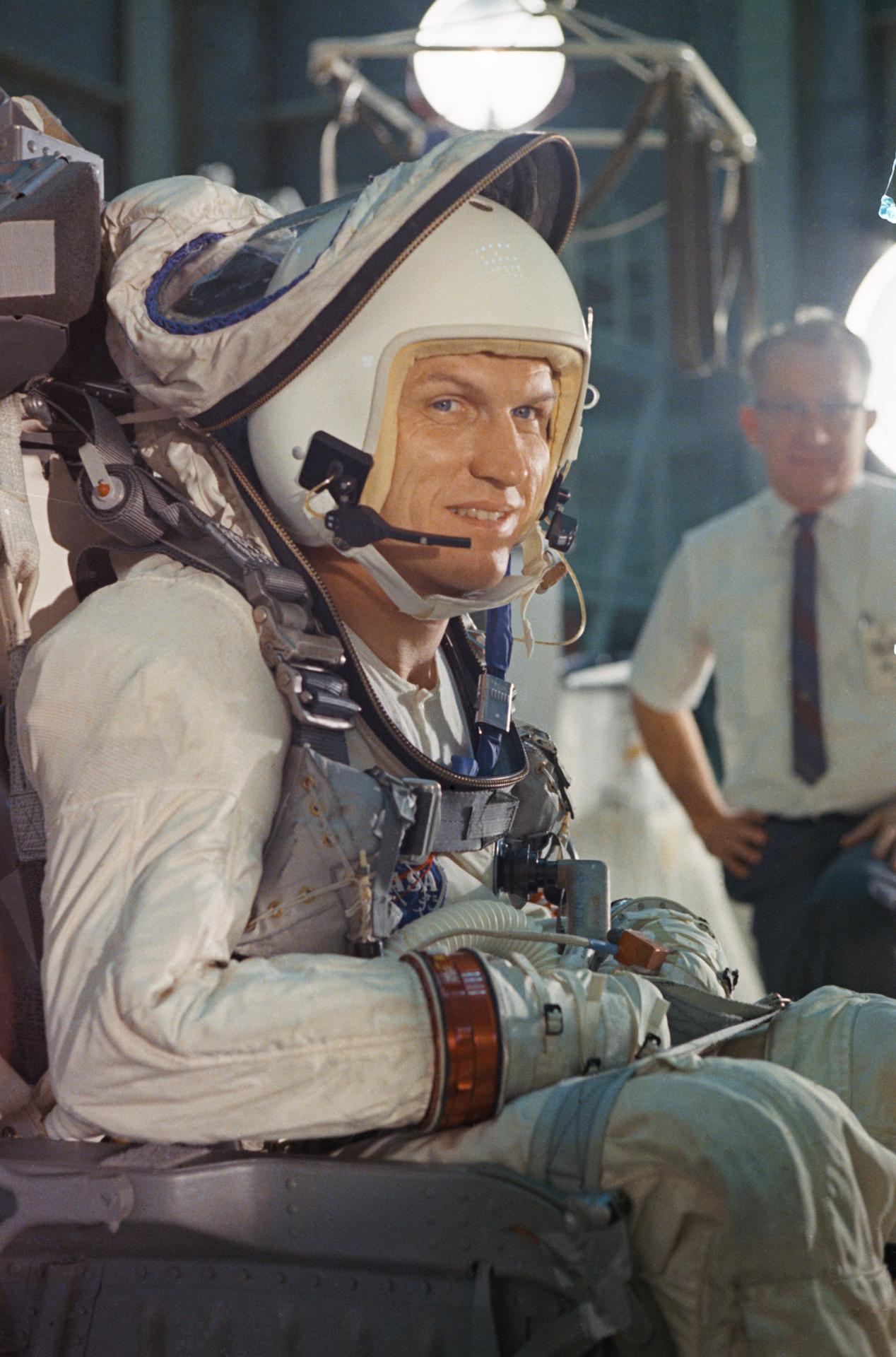
Crew: Frank F. Borman II (Command Pilot) and James A. Lovell Jr. (Pilot)
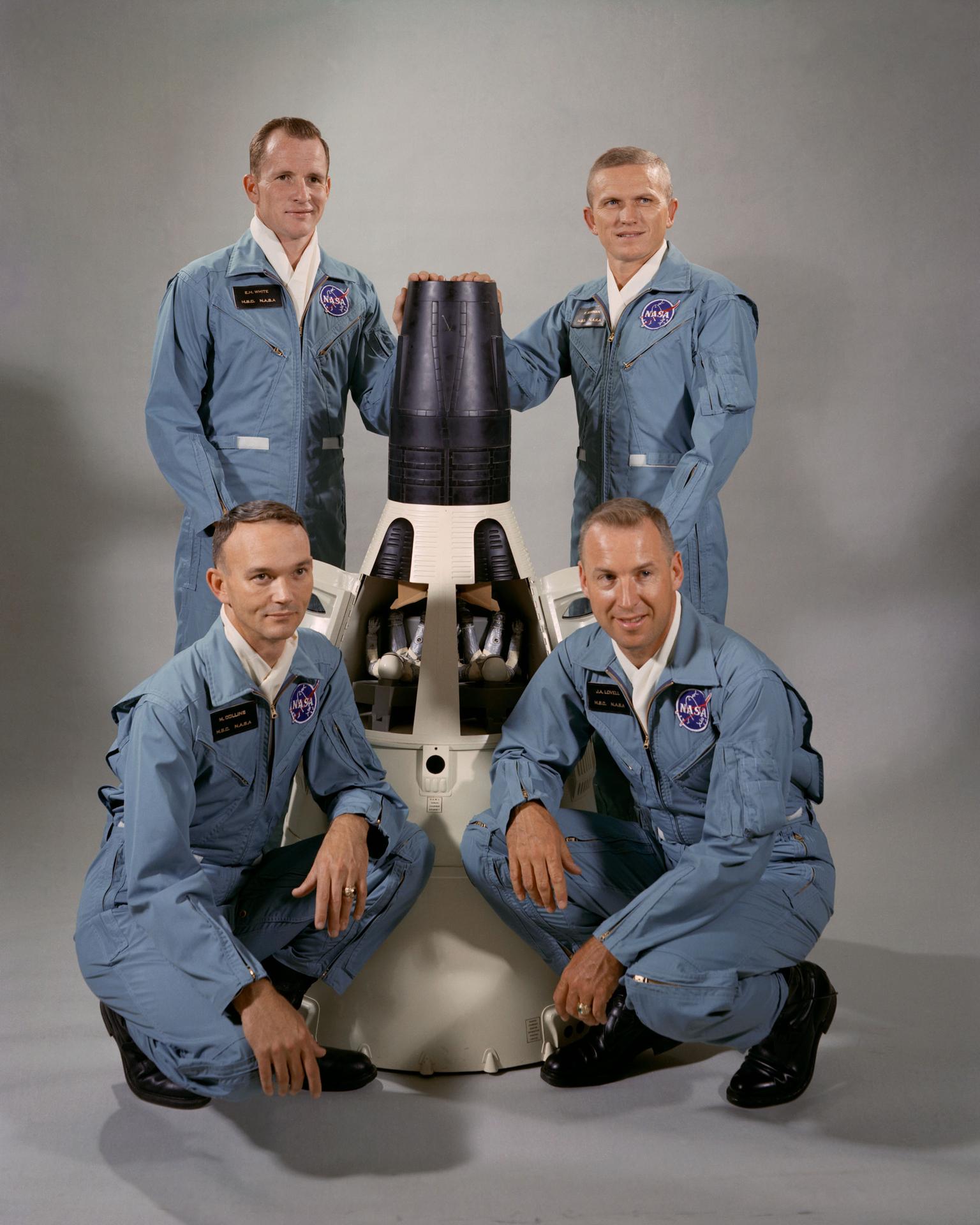
Backup Crew: Edward H. White II and Michael Collins
Payload: Gemini 7
Mass at launch: 3,663 kg
Launch Date: Dec. 4, 1965, 2:30:03 p.m. EST (19:30:03 UT)
Launch Site: Complex 19, Cape Canaveral, United States
Launch Vehicle: Titan II
Revolutions Completed: 206
Duration: 330 hours, 35 minutes, 1 second (13 days, 18 hours, 35 minutes, 1 second)
Landing Date: Dec. 18, 1965, 9:05:04 a.m. EST (14:05:04 UT)
Landing Site: Western Atlantic, 25.42° N, 70.10° W
Recovery Ship: U.S.S. Wasp
Frank F. Borman II
Command Pilot
In September 1962, Frank F. Borman II was selected as an astronaut in NASA’s second astronaut group. The 14-day Gemini VII mission was his first spaceflight. Three years later, he led the Apollo 8 mission, becoming one of the first people to circle the Moon.
James A. Lovell Jr.
Pilot
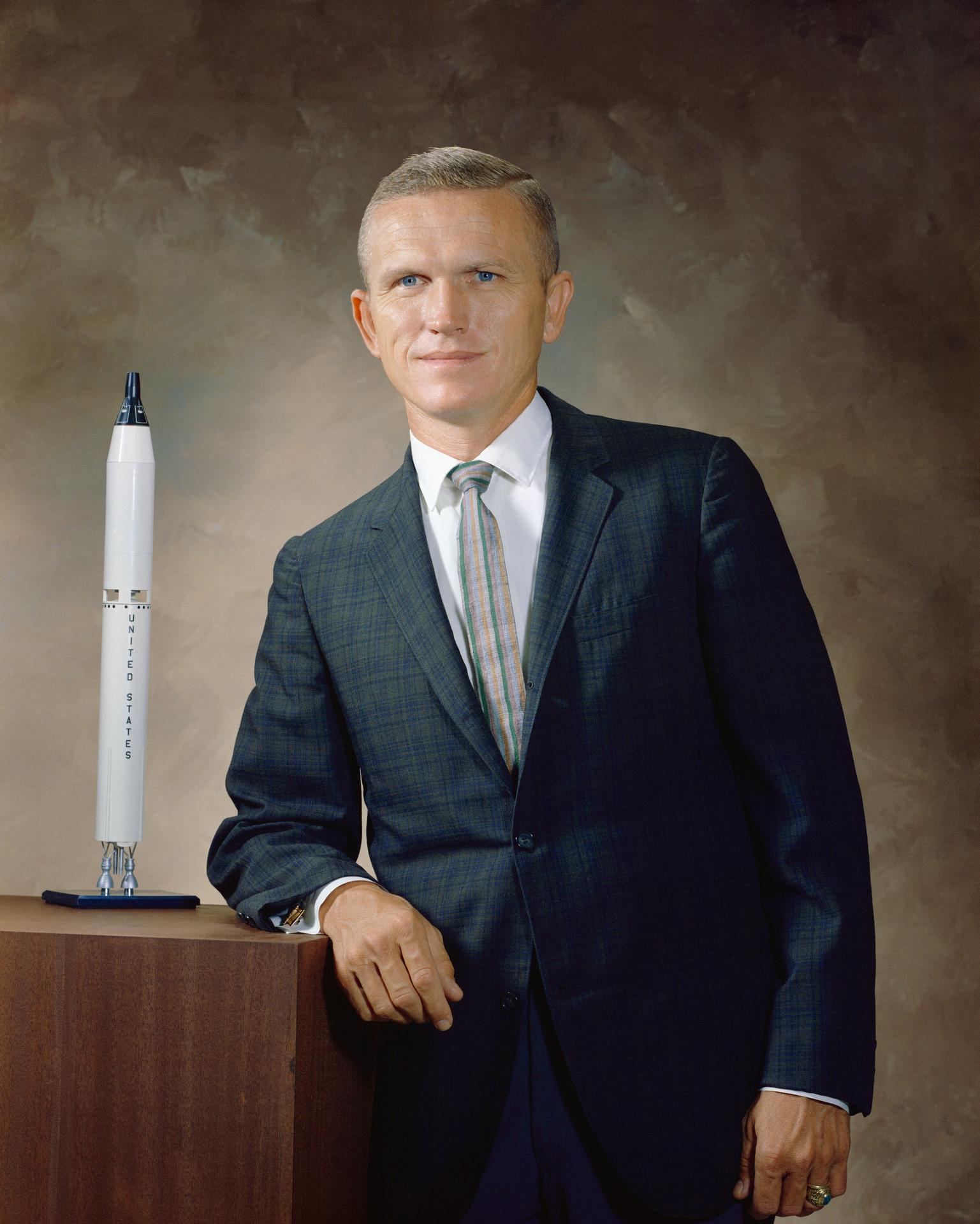
James A. Lovell was selected in NASA’s second astronaut group in 1962. His first of four spaceflights was the record-breaking 14-day Gemini VII mission. In 1968, he was one of the three first people to orbit the Moon during the Apollo 8 mission. Then in April 1970, he led the ill-fated Apollo 13 mission which returned to Earth safely after a life-threatening explosion aboard the spacecraft.
Mission Overview
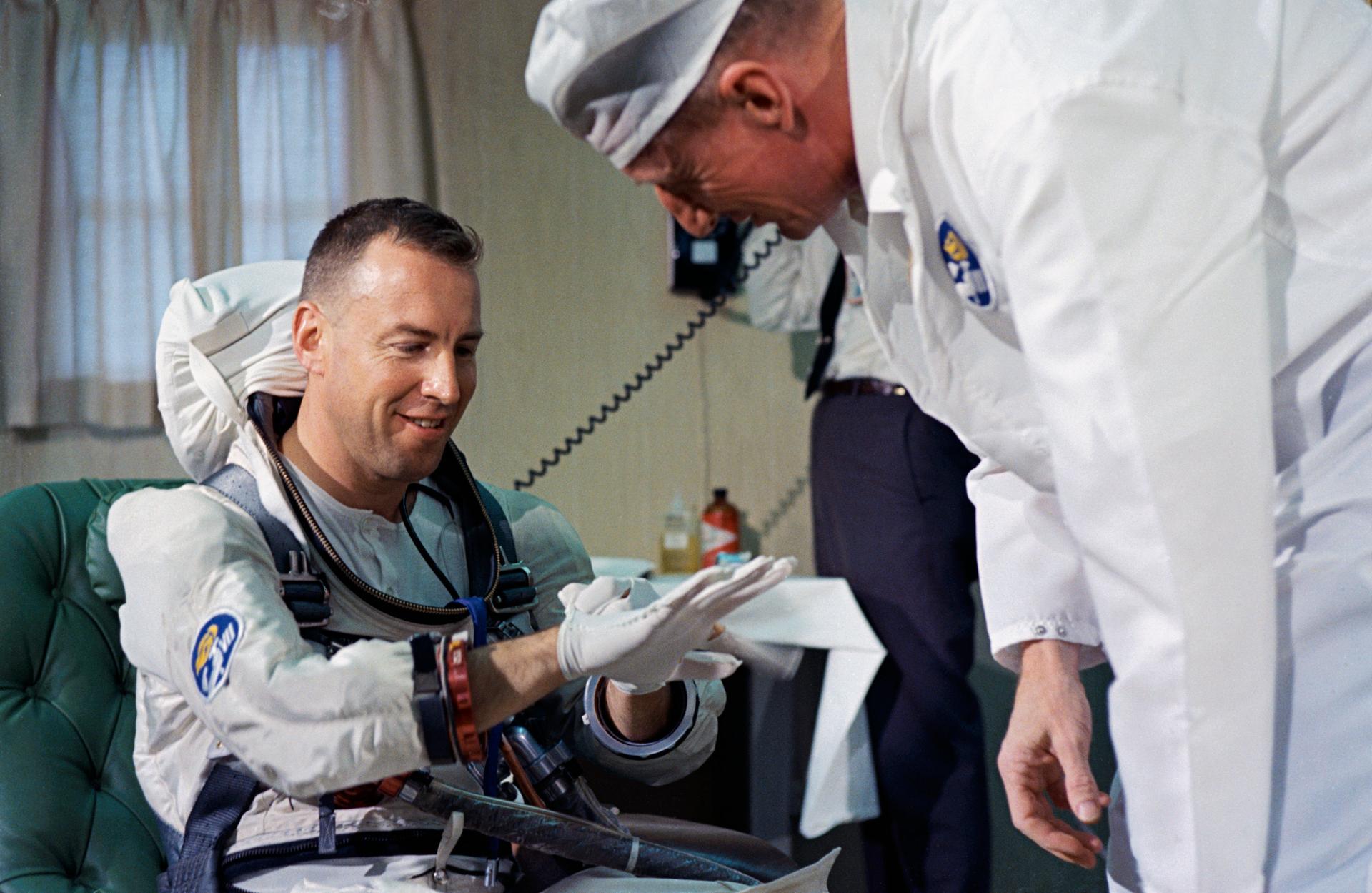
Gemini VII was launched from Complex 19 at 2:30:03 p.m. EST (19:30:03.702 UT) on Dec. 4, 1965, and inserted into a 161.6 x 328.2 km orbit at 2:36:11. Immediately after separation, Gemini VII began stationkeeping operations with the Titan II second stage at distances from 6 meters to 80 km over a period of 17 minutes. On the third revolution, the perigee was raised to 230 km to ensure an orbital lifetime of 15 days. On Dec. 6, 45 hours into the mission, Lovell removed his spacesuit to evaluate the shirtsleeve environment. The first five days were spent conducting experiments and spacecraft tests. On Dec. 9, the orbit was circularized to 299.7 km x 303.7 km to prepare for the rendezvous exercise with Gemini VI-A. On Dec. 10, 140 hours into the mission, Lovell put his suit back on and Borman removed his. Some 20 hours later Lovell removed his suit as well and both astronauts operated without suits for the remainder of the mission except for the rendezvous with Gemini VI-A and reentry.
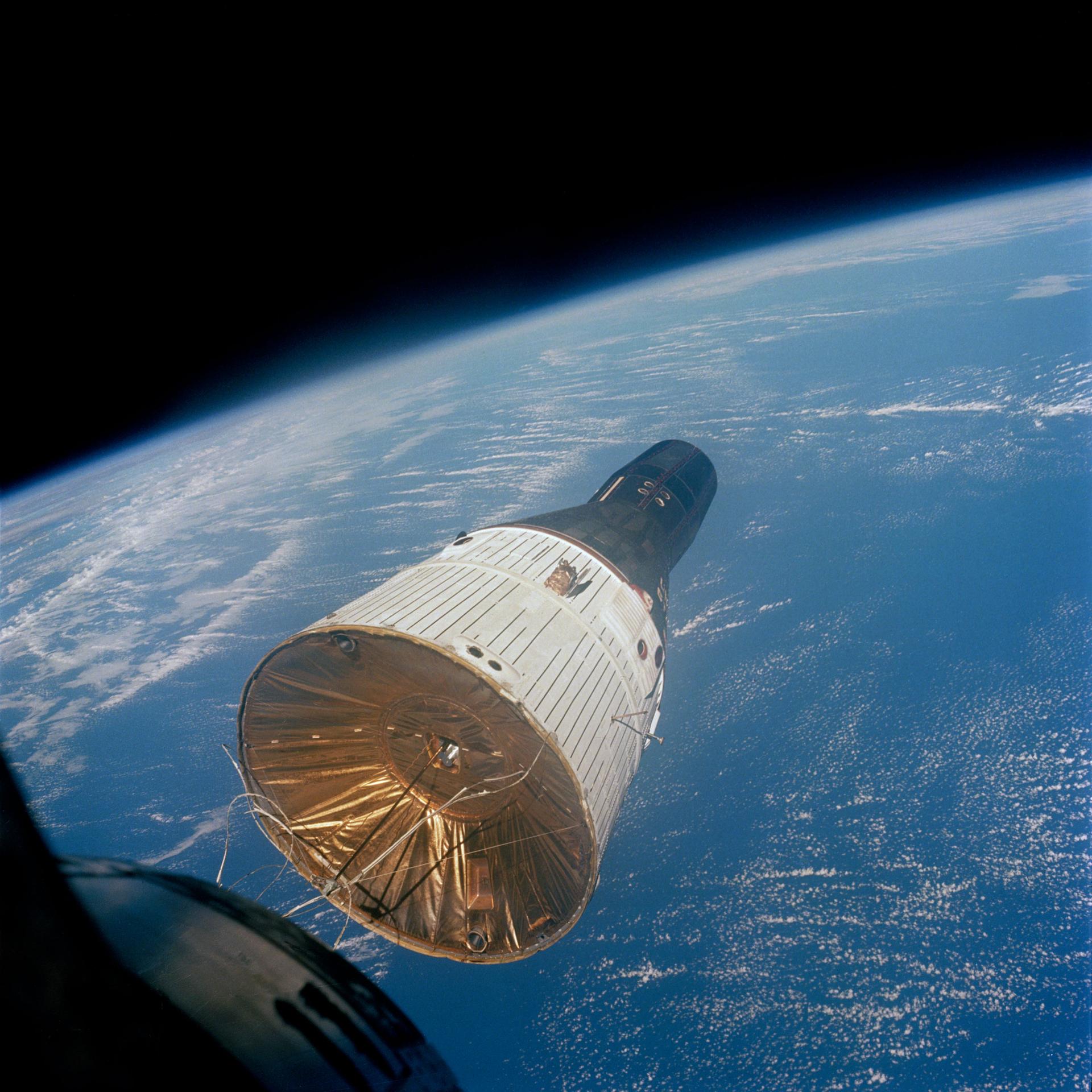
Experiments were conducted over the next few days and on Dec. 15, Gemini VI-A was launched. Gemini VI-A caught up to Gemini VII and rendezvous was technically achieved and stationkeeping begun at 2:33 p.m. EST with the two Gemini spacecraft in zero relative motion at a distance of 110 meters. Stationkeeping maneuvers involving the spacecraft circling each other and approaching and backing off continued for 5 hours 19 minutes over three and a half orbits. During the maneuvers, all four astronauts on both spacecraft took turns in the formation flying activities and photographs were taken from both spacecraft. This marked the first time two spacecraft were maneuvered with respect to each other by their crews. At the end of stationkeeping, Gemini VI-A fired thrusters to move to a position roughly 50 km away from Gemini VII for drifting flight during the sleep period. Gemini VI-A returned to Earth on Dec. 16. Gemini VII remained in Earth orbit and reentered two days later.
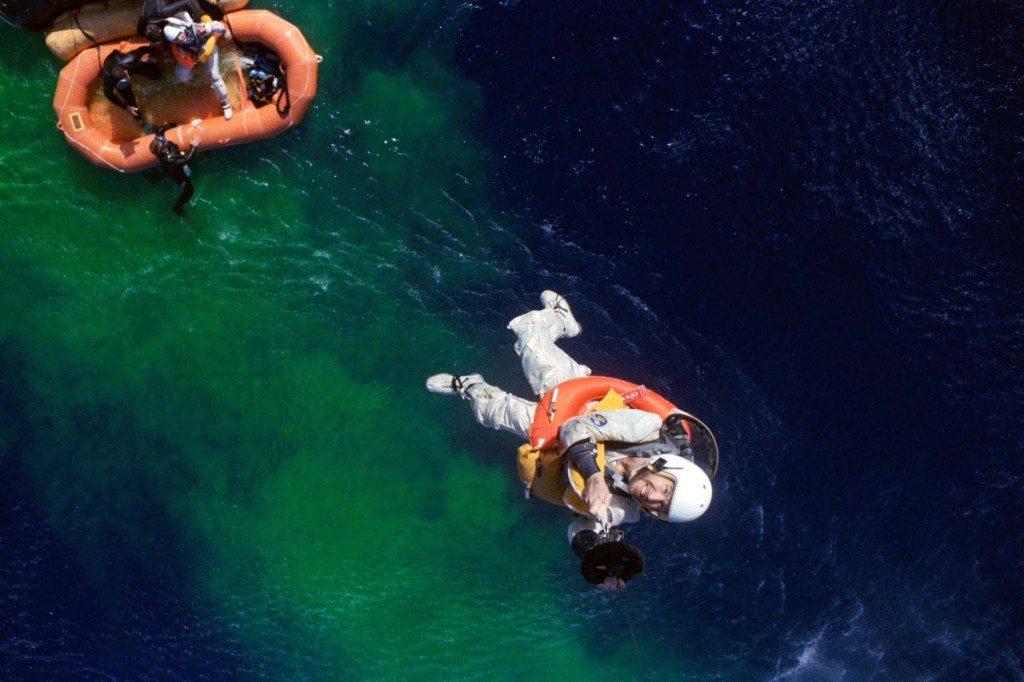
Retrorockets were fired at the end of revolution 206 on Dec. 18 at 8:28:07 a.m. to begin the reentry sequence. Splashdown followed at 9:05:04 in the western Atlantic southwest of Bermuda at 25.42° N, 70.10° W, only 12.2 km from the target point. The astronauts were recovered by helicopter and brought aboard the aircraft carrier U.S.S. Wasp at 9:37. The spacecraft was recovered at 10:08 a.m. Total mission elapsed time was 330 hours, 35 minutes, and 1 second, making this the longest anyone had ever stayed in space. The astronauts were pronounced in “better than expected” physical condition after their two-week flight.
All primary mission objectives were successfully completed. The three scientific experiments: synoptic terrain photography, synoptic weather photography, and visual acuity in the space environment were all completed successfully. All other onboard experiments were performed except landmark contrast measurement and star occultation navigation, due to equipment failure. Only partially completed were in-flight sleep analysis, proton-electron spectrometer, and optical communication. Minor malfunctions related to fuel cells and attitude control thruster occurred but did not hamper the mission.
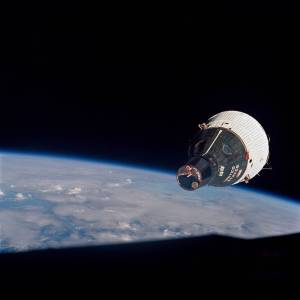
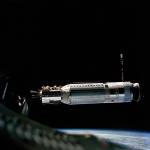
In this photo from Dec. 15, 1965, the Gemini-VII spacecraft is seen from the Gemini-VI-A spacecraft during their rendezvous mission in space.
The primary goals of Project Gemini included proving the techniques required for the Apollo Program to fulfill President John F. Kennedy’s goal of landing a man on the Moon and returning him safely to Earth before the end of the…
Fifty years ago, the two-tiered NASA mission Gemini VII/VI-A made history by proving that two independently launched spacecraft — piloted by astronauts — could meet up while orbiting Earth. Humankind’s first rendezvous in space happened Dec. 15, 1965. While circling the…
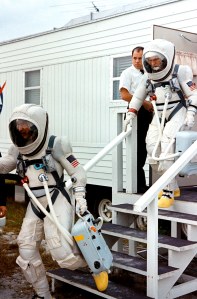
The flights of two piloted spacecraft during December 1965 were major strides forward in advancing NASA’s capabilities in human spaceflight. They also marked the point in which the United States clearly pulled ahead in the space race with the Soviet…