



















Unmanned Aircraft System (UAS) Traffic Management (UTM)
In collaboration with industry leaders, academia, and government groups, the AOL, responsible for the simulations and human/system integration research focus areas, played a vital role in developing requirements needed to safely and efficiently integrate low-altitude UAS operations into the NAS. Various extensions of the AOL’s UTM work are currently being pursued in other projects such as Scalable Traffic Management for Emergency Response Operations (STEReO) and Federal UAS Service Supplier (FUSS).
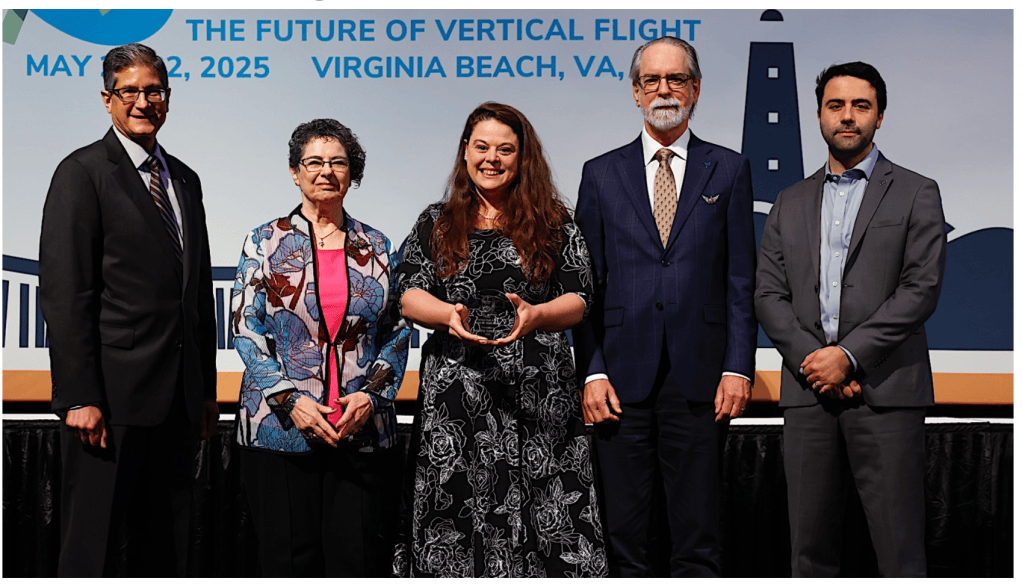
The following paper by members of the Airspace Operations Lab was awarded Best Paper of Track, Session, and Conference at the 39th Digital Avionics Systems Conference.
Wolter, C., Martin, L., & Jobe, K., 2020, Human-system Interaction Issues and Proposed Solutions To Promote Successful Maturation of the UTM System, Proceedings of the 39th Digital Avionics Systems Conference (DASC). October 13-16, 2020, San Antonio, TX
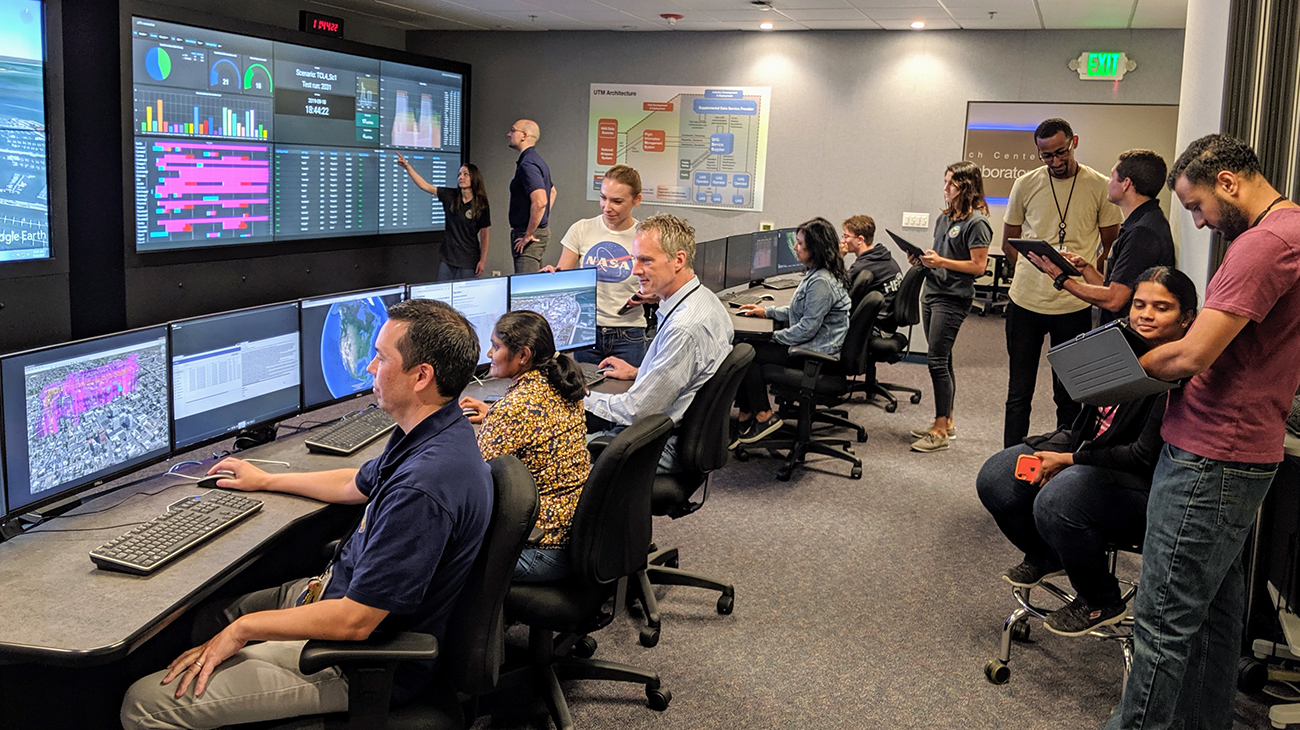
Long before stories of Unmanned Aircraft Systems (UAS), commonly known as “drones,” were frequent in the news, NASA and the Federal Aviation Administration (FAA) recognized the need for a way to safely manage UAS flying at low altitudes in airspace not currently managed by the Federal Aviation Administration (FAA).
With innovators constantly identifying new, beneficial applications for UAS – goods delivery, infrastructure inspection, search and rescue, agricultural monitoring – a set of robust procedures and increasingly automated services was required, that provided an effective and efficient operational environment for UAS, maintained an adequate level of safety for the flying and non-flying public, and did not require a high degree of human oversight or interaction.
Building on its legacy of work in air traffic management for crewed aircraft, NASA researched prototype technologies such as airspace design, dynamic geofencing, congestion management and terrain avoidance for a UAS Traffic Management (UTM) system that could enable safe, efficient low-altitude operations.

For more than 25 years, NASA AOL has conducted air traffic management system research, often collaborating with the FAA, providing a variety of computer-based tools that helped improve flight efficiency, reduce delays, and reduce fuel use and emissions all while maintaining safety in increasingly crowded skies.
NASA’s Ames Research Center, with its extensive experience in autonomous systems and air traffic management, led the UTM research in close collaboration with NASA’s Armstrong Flight Research Center, NASA’s Glenn Research Center and NASA’s Langley Research Center. Ames has a history of conducting research in autonomy-related topics, and is experienced at developing systems that can adapt their behavior to environments that are complex, rapidly changing and incompletely understood.
UTM Technical Reports
TCL4 UTM (UAS Traffic Management) Texas 2019 Flight Tests, Airspace Operations Laboratory (AOL) Report
TCL4 UTM (UAS Traffic Management) Nevada 2019 Flight Tests, Airspace Operations Laboratory (AOL) Report