






















Scalable Traffic Management for Emergency Response Operations (STEReO)
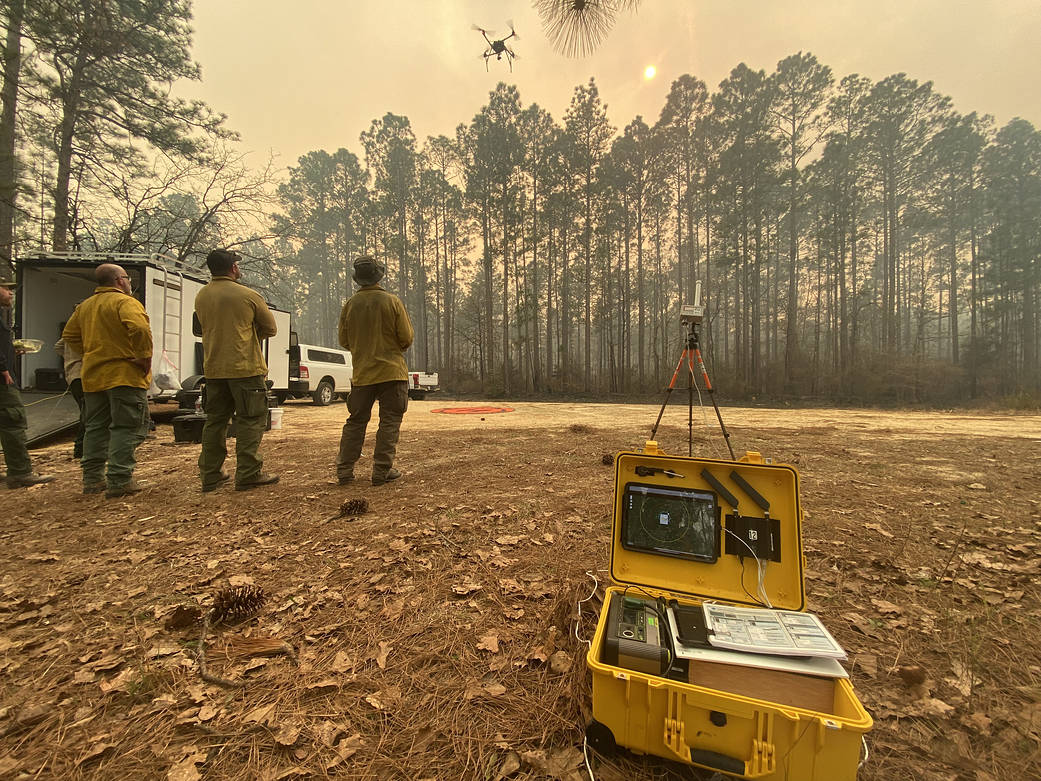
The STEReO project, a Convergent Aeronautics Solutions (CAS) execution activity under the Transformative Aeronautics Concepts Program (TACP), combined NASA technologies and partnerships to transform current-day emergency response operations.
Why STEReO?
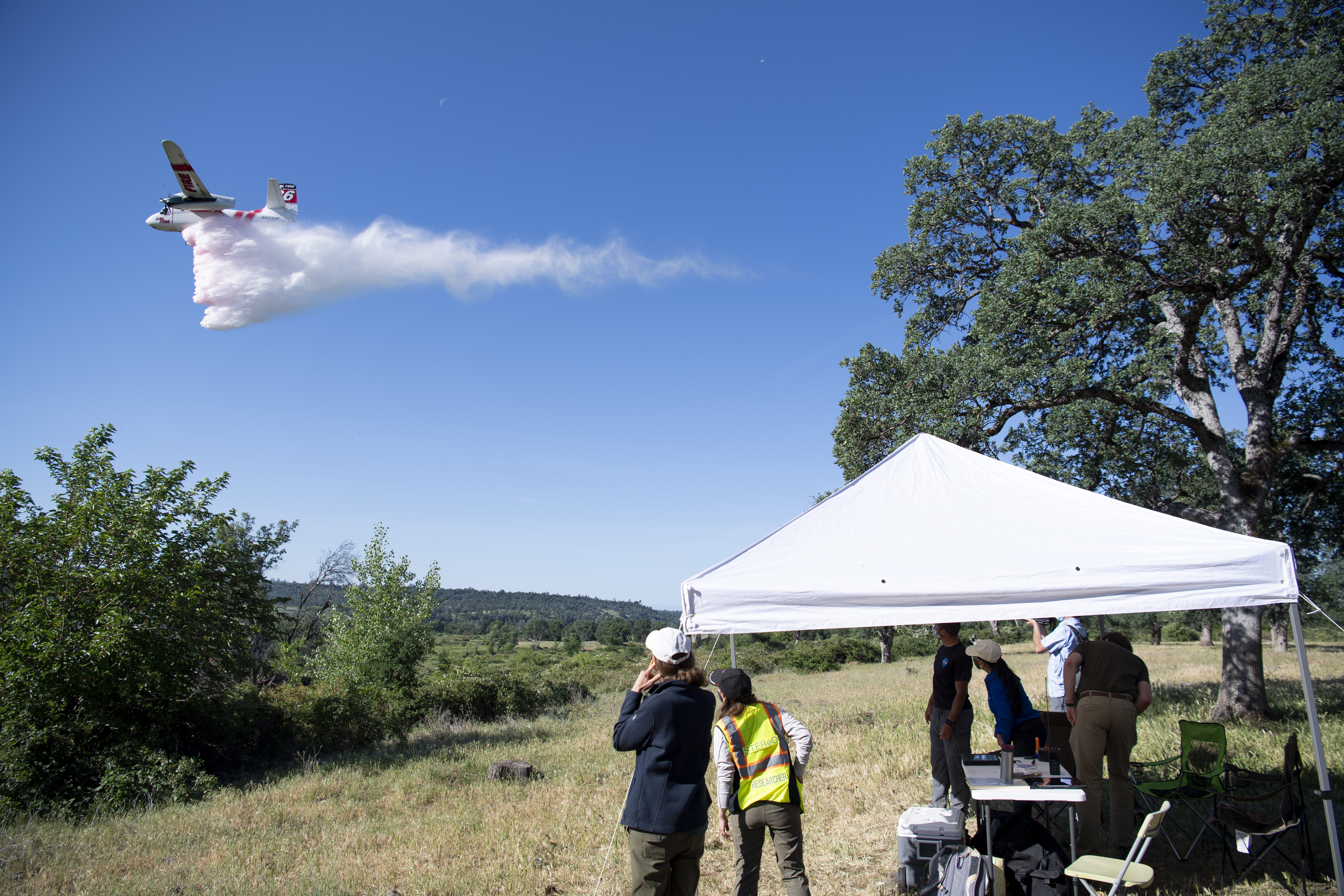
Natural Disasters cost the US billions annually and have resulted in substantial loss of life. Before STEReO, disaster response required extensive manual collaboration and cooperation from a wide coalition of agencies and companies, which was challenging in a limited communication infrastructure. As emergency responders started adopting beneficial technology, they were faced with new challenges on top of existing ones. Ultimately, the timely relay of data into the hands of decision makers enabled an efficient and effective response, scaled to the size and nature of the situation. By leveraging and building on existing NASA technologies alongside government, industry, and academic partners, STEReO improved efficiency and timeliness of the response, mitigation, and recovery phases of a disaster, ultimately saving lives and minimizing the cost to taxpayers.
What is STEReO?
STEReO brought together several technologies in Unmanned Aircraft Systems (UAS) Traffic Management (UTM), Autonomy, Communications, Human Factors, and Domain Expertise & Tools, aimed at providing scalability and flexibility, as well as operational resiliency to dynamic changes during a disaster event. Some of the concepts STEReO explored were:
- Collaborative tools to ingest remote sensing information and distribute a common mission operating picture
- Apply ad-hoc communication networks to facilitate timely information sharing and communication of changes
- Vehicle-to-vehicle and onboard autonomy technologies ensure the safety and resiliency of operations
- Apply NASA’s UAS traffic management system (UTM) as a public safety UAS Service Supplier (USS) to access and coordinate use of the airspace by both manned and unmanned operations
Benefits of STEReO
- Standardized, cross-platform communication means increased interoperability and ease of cooperation/collaboration
- Increased situation awareness and common operating picture allow for earlier detection and decision making
- Scalable to size and complexity of environment, operations, and mission objective
STEReO Publications
L. H. Martin, Y. Arbab, & J. Mercer (2021) Initial exploration of STEReO (Scalable Traffic Management for Emergency Response Operations) System User Requirements for Safe Integration of Small UAS, In Proceedings of the 40th Digital Avionics Systems Conference (DASC), October 3-7, 2021, San Antonio, TX. eCF Paper Id: DASC2021.3055
J. Mercer, L. Roberts, Y. Arbab, G. Harbert, M. Huynh, & M. Leitzel (2021) Scalable traffic management for emergency response operations, Presented at the Transformative Aeronautics Concepts Program (TACP) Showcase (Virtual), February 4, 2021
J. Mercer, R. Mcswain, & C. Ippolito (2020) Scalable Traffic Management for Emergency Response Operations (STEReO), Proceedings of the AIAA Aviation Conference, June 15-19, 2020
J. Mercer (2020) STEReO: Combining NASA Technologies and Partnerships to Transform Current-Day Emergency Response Operations, TFRSAC 2020 Fall Workshop, November, 19, 2020