






















IT Talk
This quarterly publication highlights the best IT innovations, initiatives,
and programs the OCIO offices across NASA have to offer.
Happy 15th Birthday IT Talk!
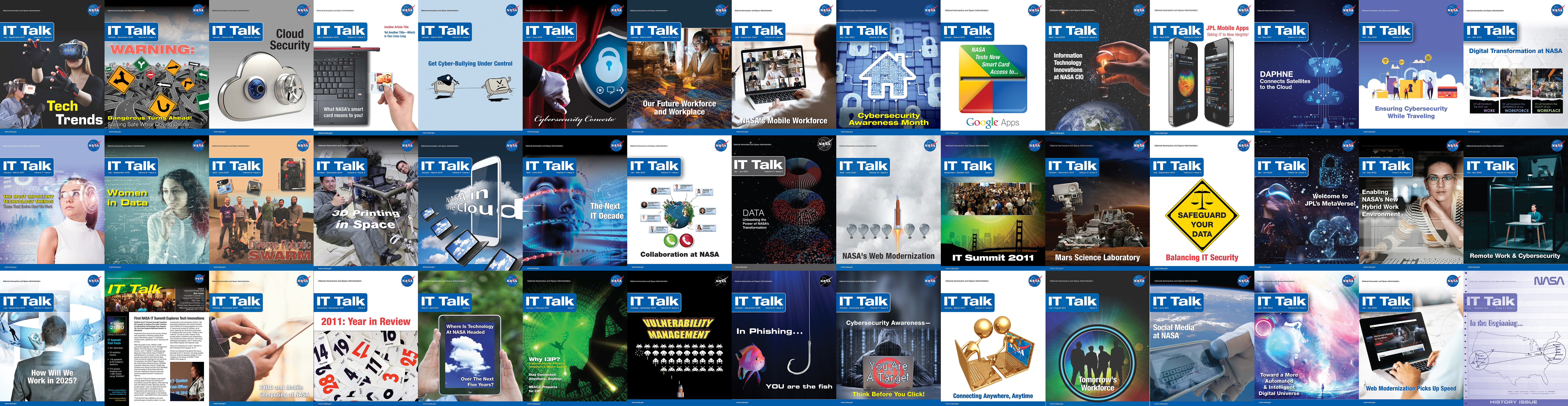
NASA's OCIO invites you to celebrate 15 years of IT Talk. Over the last decade and a half, IT Talk has served as the platform where NASA’s IT leaders and staff could collaborate, stay connected, and keep each other updated about the ever-changing trends of the IT world.
Learn More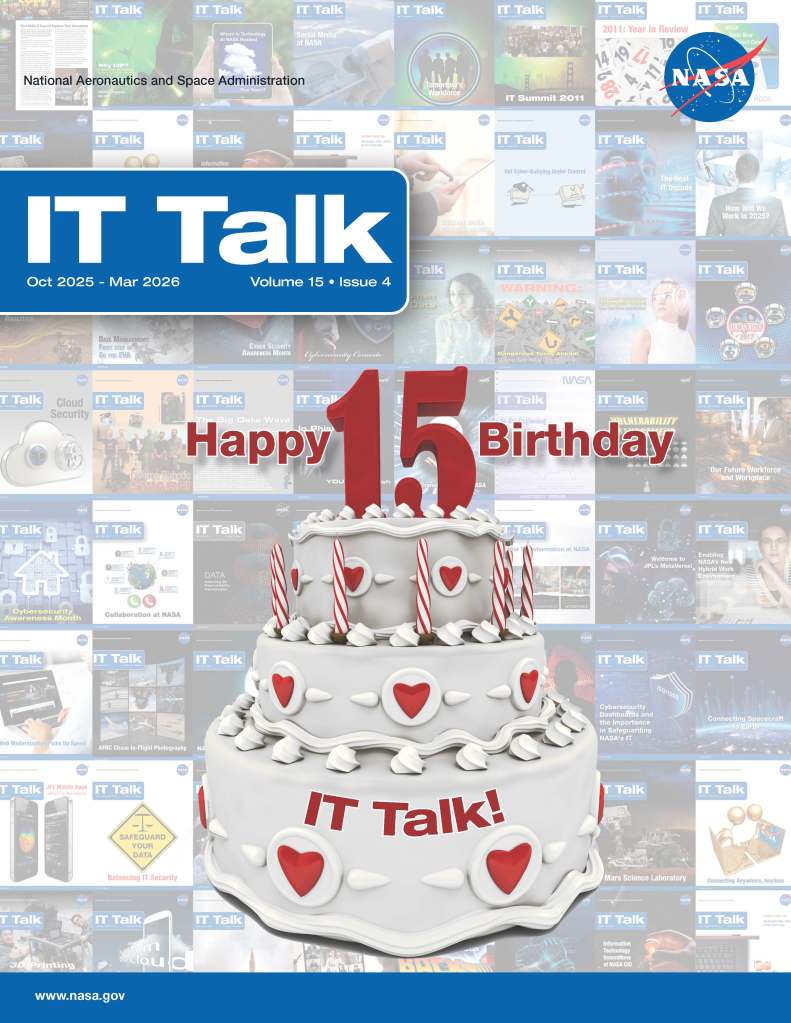
Recent Issues (2023-Present)
Unifying the Data that Power NASA
From Earth orbit to interplanetary space, NASA missions generate a universe of data. But in an agency as vast and diverse as NASA, finding the right dataset, or even knowing it exists, can be a mission of its own. That’s changing.

NASA in the 1980s: Back to the Future of AI
The field of artificial intelligence (AI) has undergone multiple “hype cycles,” alternating between stagnation and progress, disillusionment and renewed interest. Currently, we find ourselves in an AI renaissance, largely due to the public release of generative AI models like ChatGPT. Despite the recent hype, NASA has a long history with AI dating back to the 1960s and ’70s. However, most scientific literature—including a 1983 NASA technical memorandum and a 1992 NASA-related article in AI Magazine—marks the 1980s as the first cycle of AI progress, when previously theoretical work found practical applications. NASA’s AI milestones during the 1980s boom can help us understand and contextualize today’s resurgence.

Connecting Spacecraft to Earth
The Network and Telecommunications Services (NaTS) Service Line provides NASCOM services to customers under the agency’s Office of the Chief Information Officer (OCIO). NASCOM, which stands for NASA Communications, is NASA’s worldwide real-time mission-critical network enabling spacecraft operations. It was formally established in 1964, combining the NASA ground communications system into one central program. NASCOM was the central nervous system that connected all the communications circuits (voice, television, commands, and data) of all three major NASA networks—the Satellite Tracking and Data Acquisition Network (STADAN), Mercury Space Flight Network, (MSFN) and Deep Space Network, which fed into NASA’s Goddard Space Flight Center (GSFC), where it was managed. With each mission, the networks would call NASCOM to get the appropriate communications for the mission and then return the communication infrastructure when the mission was done.

Cybersecurity Dashboards and the Importance in Safeguarding NASA’s IT
NASA’s mission of advancing science, technology, and space exploration relies heavily on the ability to protect data and maintain secure systems. In today’s digital age, cyber threats and vulnerabilities have become a primary concern for organizations managing critical and sensitive data. In recognition of these challenges, the Cybersecurity and Privacy Division (CSPD), in collaboration with the Cybersecurity Service Line, has developed a SharePoint Information System Owner/Information Systems Security Officer (ISO/ISSO) Resource website.

Past, Present, and Future Perceptions of Artificial Intelligence at NASA
Although the topic of artificial intelligence (AI) has recently surged in public consciousness, we are no newcomers to an AI-enabled world, especially at NASA. Some of the earliest AI tools in use at NASA supported mission operations in the 1980s and ’90s.

Intelligent Automation at NASA
April – June 2024
Catch up on Intelligent Automation at NASA, a leader in the Federal Government: Robotic Process Automation to the NSSC Intelligent Automation Services Program.

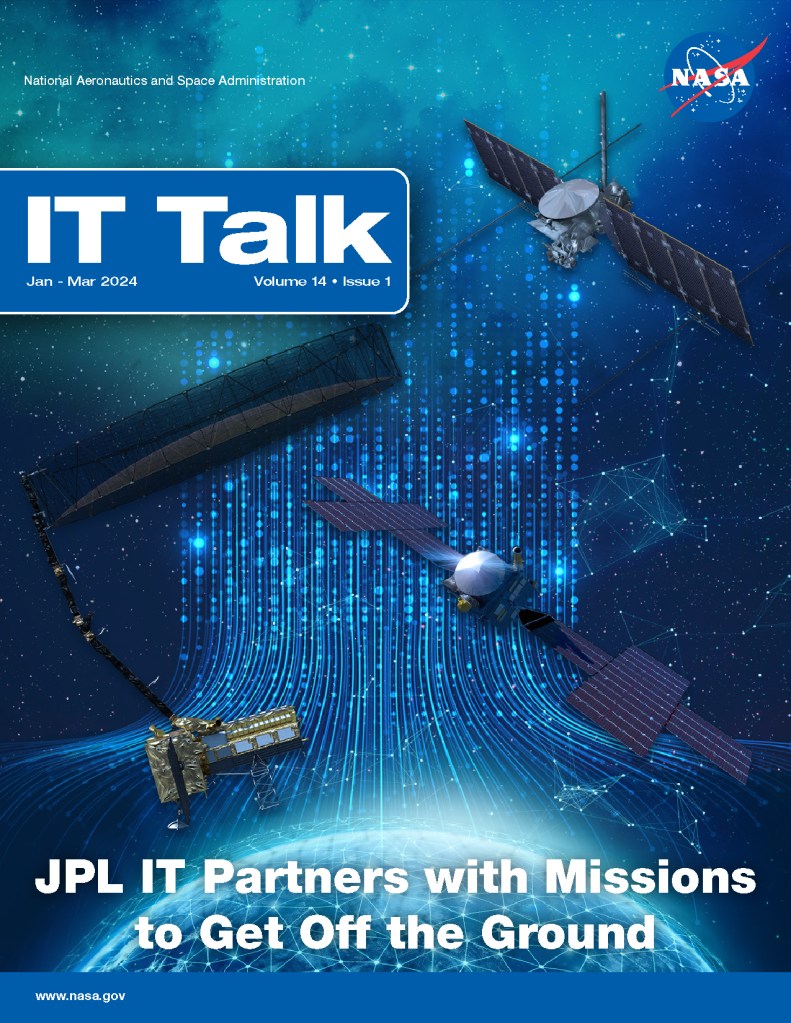
JPL IT Partners with Missions to Get Off the Ground
January – March 2024
Uncover IT innovations for mission success, starting with Jet Propulsion Laboratory IT’s contributions to the Psyche and NASA–Indian Space Research Organisation (ISRO) Synthetic Aperture Radar (NISAR) missions.
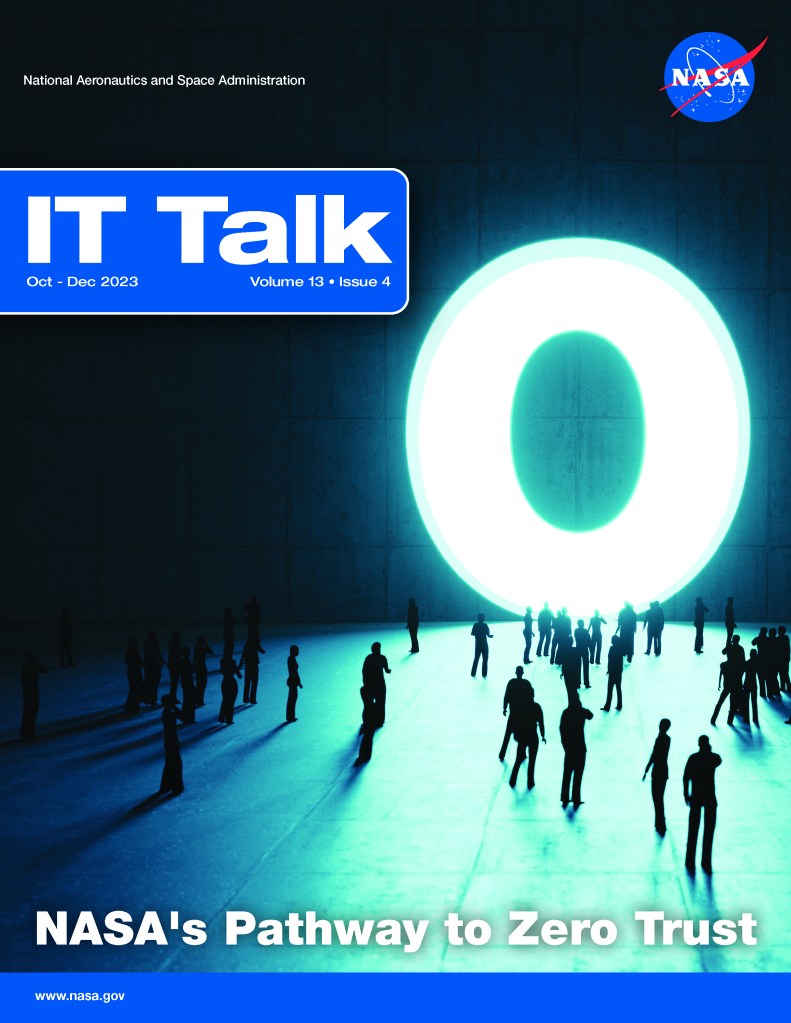
NASA’s Pathway to Zero Trust
October – December 2023
Follow along with NASA’s journey towards a Zero Trust Architecture model for cybersecurity to protect the agency’s critical data and assets, reduce risks, and align with Federal mandates.
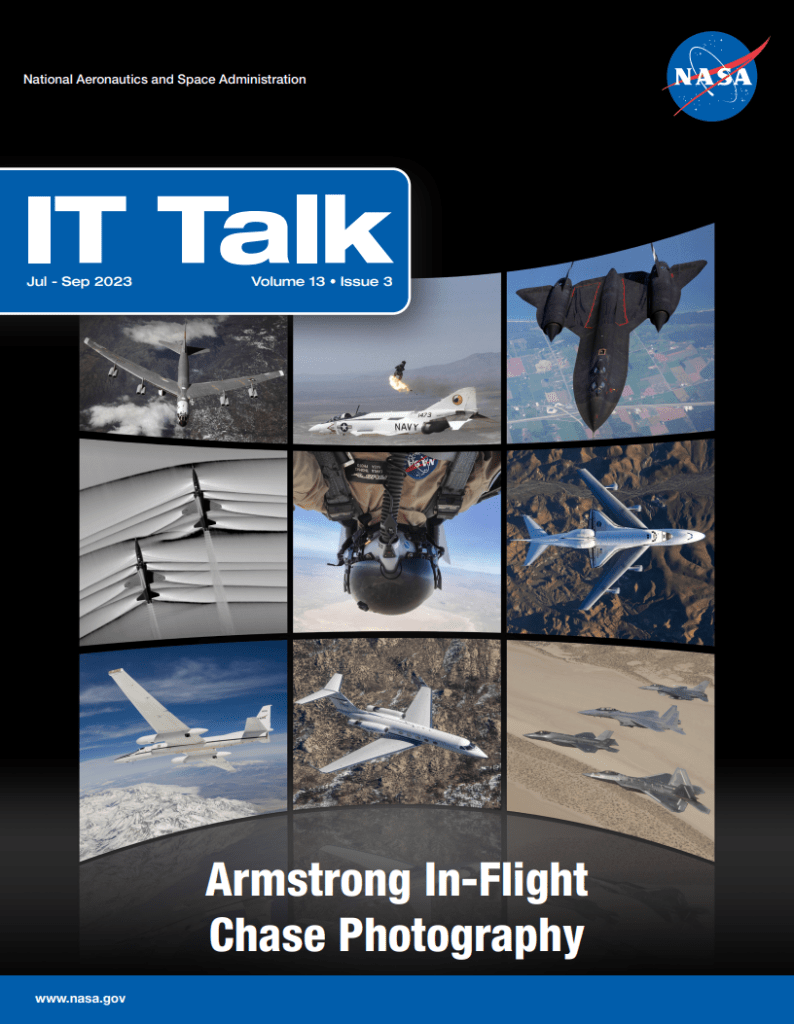
Armstrong In-Flight Chase Photography
July – September 2023
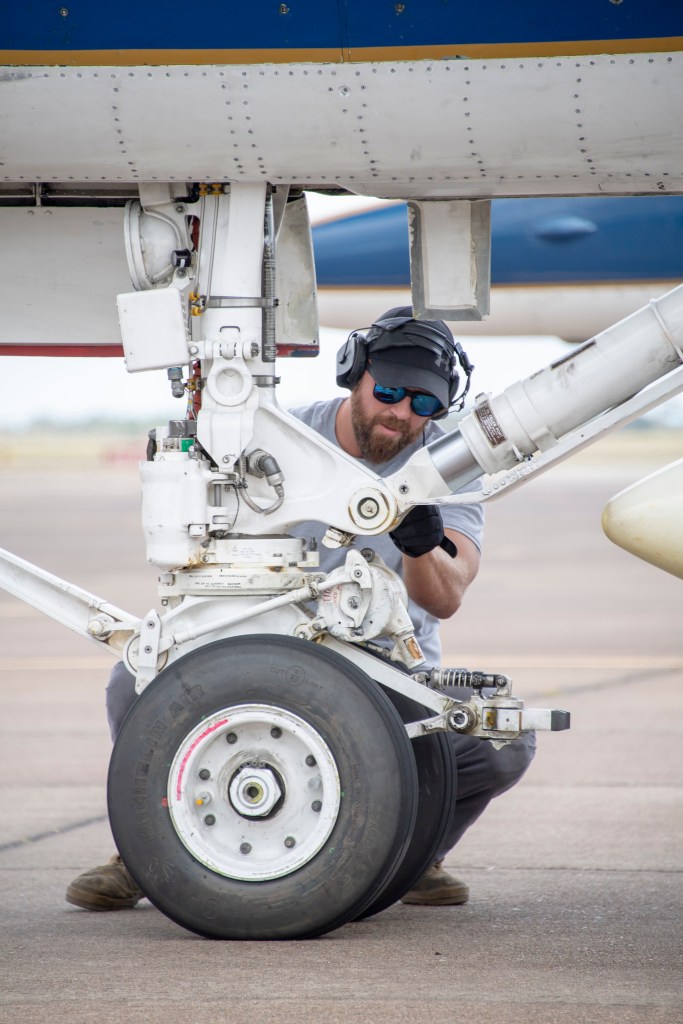
Take a look behind the lens where world-class aeronautics photographers are redefining the craft by merging advanced photographic techniques, science, and IT.
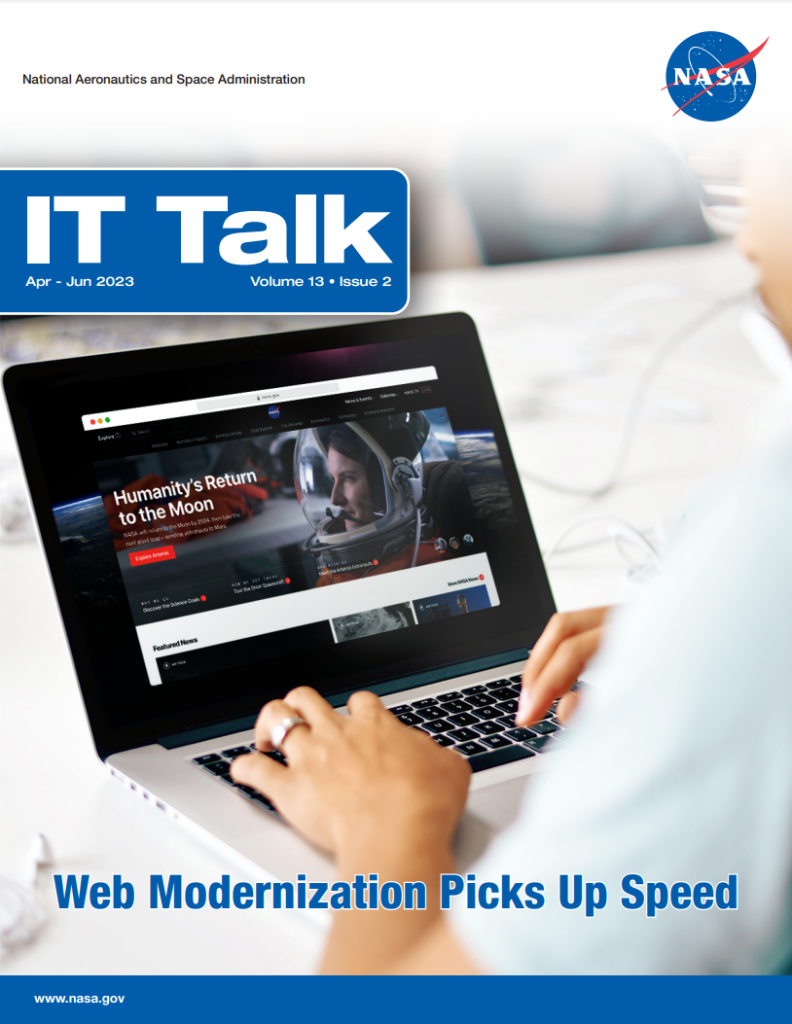
Web Modernization Picks Up Speed
April – June 2023
The NASA Web Modernization Team updates us on the latest news from the project to improve the www.nasa.gov and science.nasa.gov user experiences for employees, partners, and the public.
Toward a More Automated &
Intelligent Digital Universe
January – March 2023
Explore the tools and technologies the OCIO will leverage in 2023 and beyond as we move Toward a More Automated & Intelligent Digital Universe.
Why We Go To Space
Human space exploration helps to address fundamental questions about our place in the Universe and the history of our solar system.
NASA’s robotics technology has allowed us to send robotic orbiters, landers, and rovers ahead of us to study other planets and identify potential signs for life. On the International Space Station, NASA and their partners have used robotic technology extensively, to lorem and ipsum the dolor sit amets and more.
Archive
Firefox users may experience problems viewing PDFs with transparency using their built-in PDF viewer. Click here to have all PDFs open in Acrobat from Firefox.