









Glenn Expertise: Acoustics Research

Mission
Our mission is to help increase the peace and quiet in the world by serving as a leader in aircraft engine noise reduction research.
Air travel is safer, cleaner, and quieter because of the aircraft engine acoustic research performed at the NASA Glenn Research Center. Quiet and efficient aircraft have a competitive advantage in today’s market. Research teams at NASA Glenn study the acoustic and aerodynamic performance of aircraft propulsion systems ranging from supersonic aircraft to advanced air mobility vehicles. Concepts become reality as they advance from small scale engine component experiments to full-size flight tests.
Learn More about Mission
About Acoustics Research
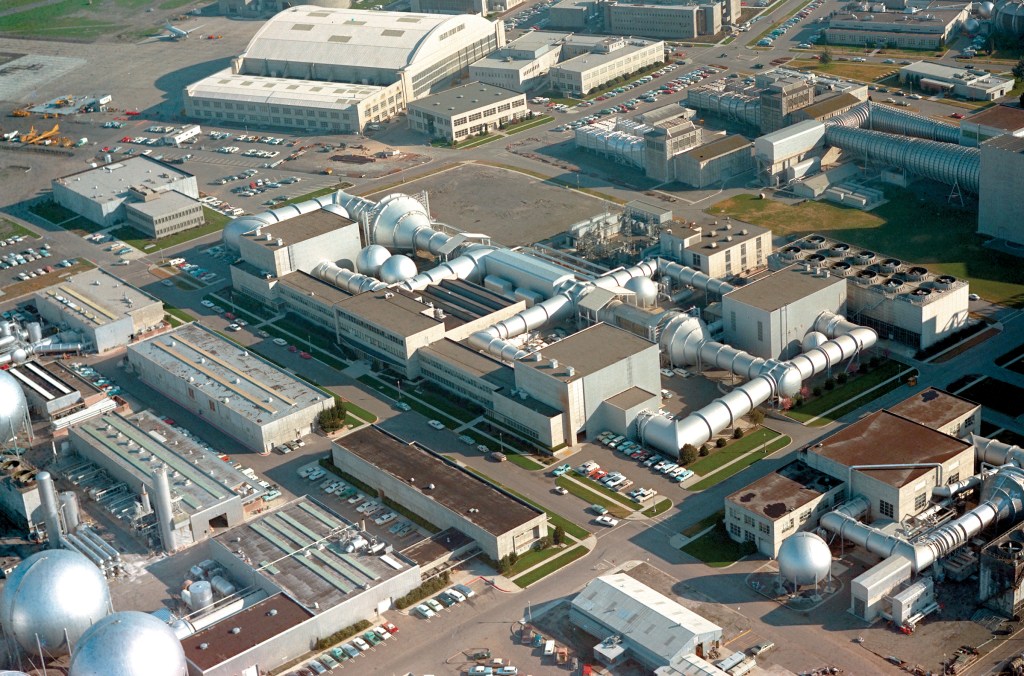
Research teams at NASA Glenn perform acoustic research in world-class facilities like the 9- by 15-Foot Low Speed Wind Tunnel, the Aero-Acoustic Propulsion Laboratory and the Acoustical Testing Laboratory. We develop and use specialized instrumentation such as Rotating Microphone Rakes and Phased Array Microphones to measure sound and Particle Image Velocimetry and Laser Doppler Velocimetry to measure the velocity of the air passing through experimental aircraft engines and engine subsystems. We develop theory and computer software to predict noise generated by aircraft engine components and systems. We compare our measurements to our predictions so that we can understand how experimental aircraft engines produce noise so that we can invent technology for quieter and more efficient engines. We invite you to learn more about our expertise.
Experimental Facilities
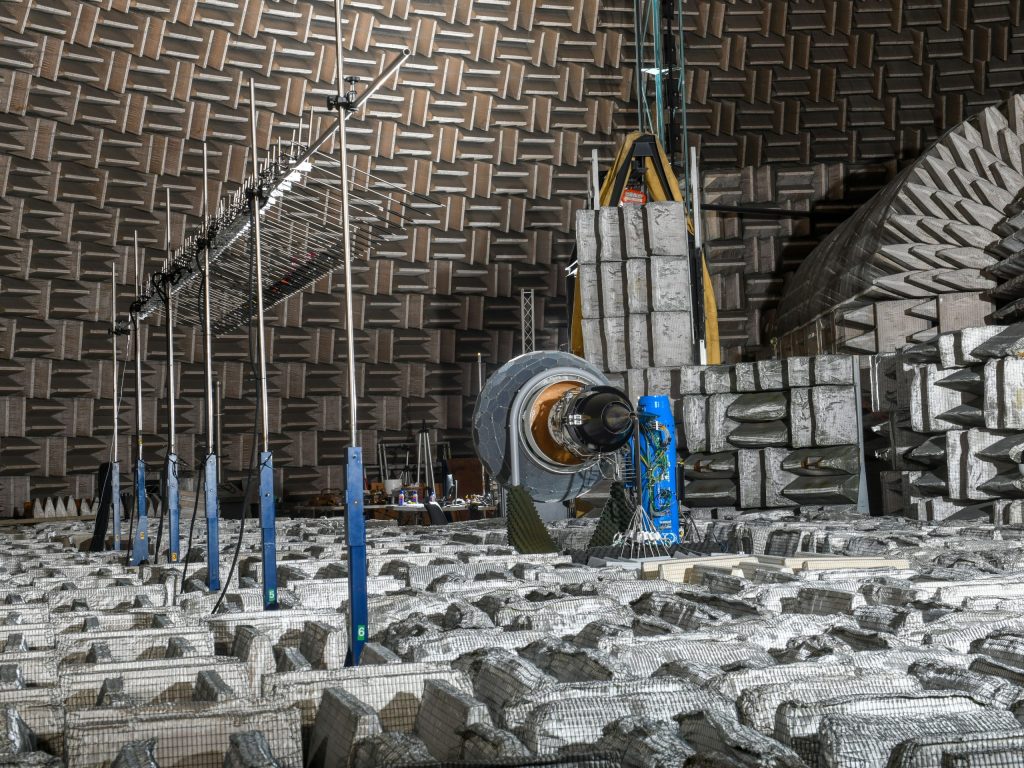
Research teams perform experiments in world-class facilities at NASA Glenn such as the 9- by 15-Foot Low Speed Wind Tunnel (9 x 15 LSWT), the Aero-Acoustic Propulsion Laboratory (AAPL), the Small Hot Jet Acoustic Rig (SHJAR), the Nozzle Acoustic Test Rig (NATR), the DGEN Aero-propulsion Research Turbofan (DART), and the Acoustical Testing Laboratory (ATL).
Instrumentation
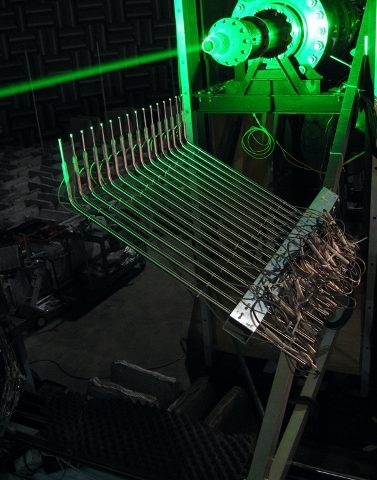
To measure airflow and sound, research teams at the NASA Glenn Research Center use special instrumentation like particle image velocimetry, hot wire anemometry, Raman spectroscopy, microphones in phased arrays or continuously rotating rakes. The aviation noise reduction research community relies on data from NASA Glenn experiments to validate theory and noise prediction software.

Software
Research teams at the NASA Glenn Research Center are involved in the development of theory and software to predict the noise from aircraft engines. This software helps engineers to design and analyze new and improved aircraft propulsion systems. Copies of our software can be requested from the NASA Software Catalog.
Featured News

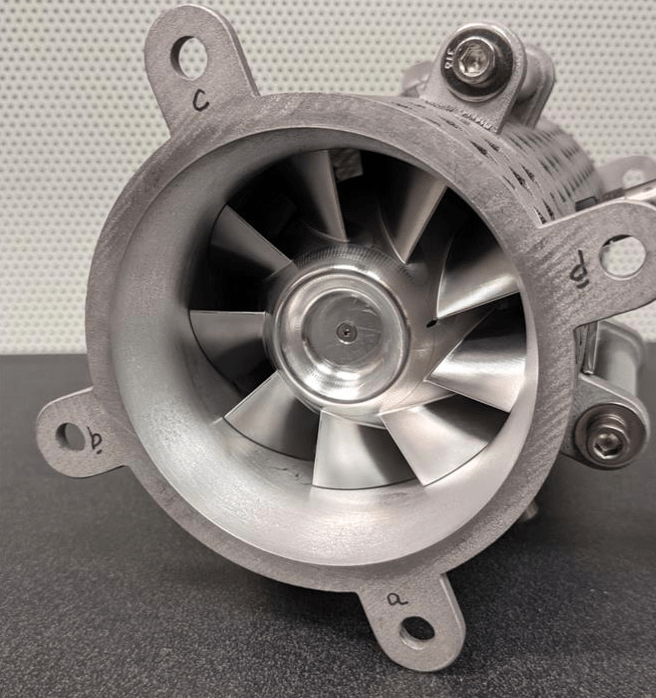


Revolutionary Vertical Lift Technology Project Overview

We’re a Fan of Reduced Aircraft Noise

NASA, Moog Humming Along on Air Taxi Noise Tests

NASA, Notre Dame Connect Students to Inspire STEM Careers
Contact
Need to reach us for more information about our research, software, or data? Get in touch via the link below.
Send an email