














Week Ends With Spacewalk Preps and Space Exercise Research
The Expedition 75 crew wrapped up the work week getting ready for a spacewalk to finish installing a high-speed antenna on the International Space Station. The orbital residents also explored new space exercise techniques, studied the human respiratory system, and completed an Earth observation session.
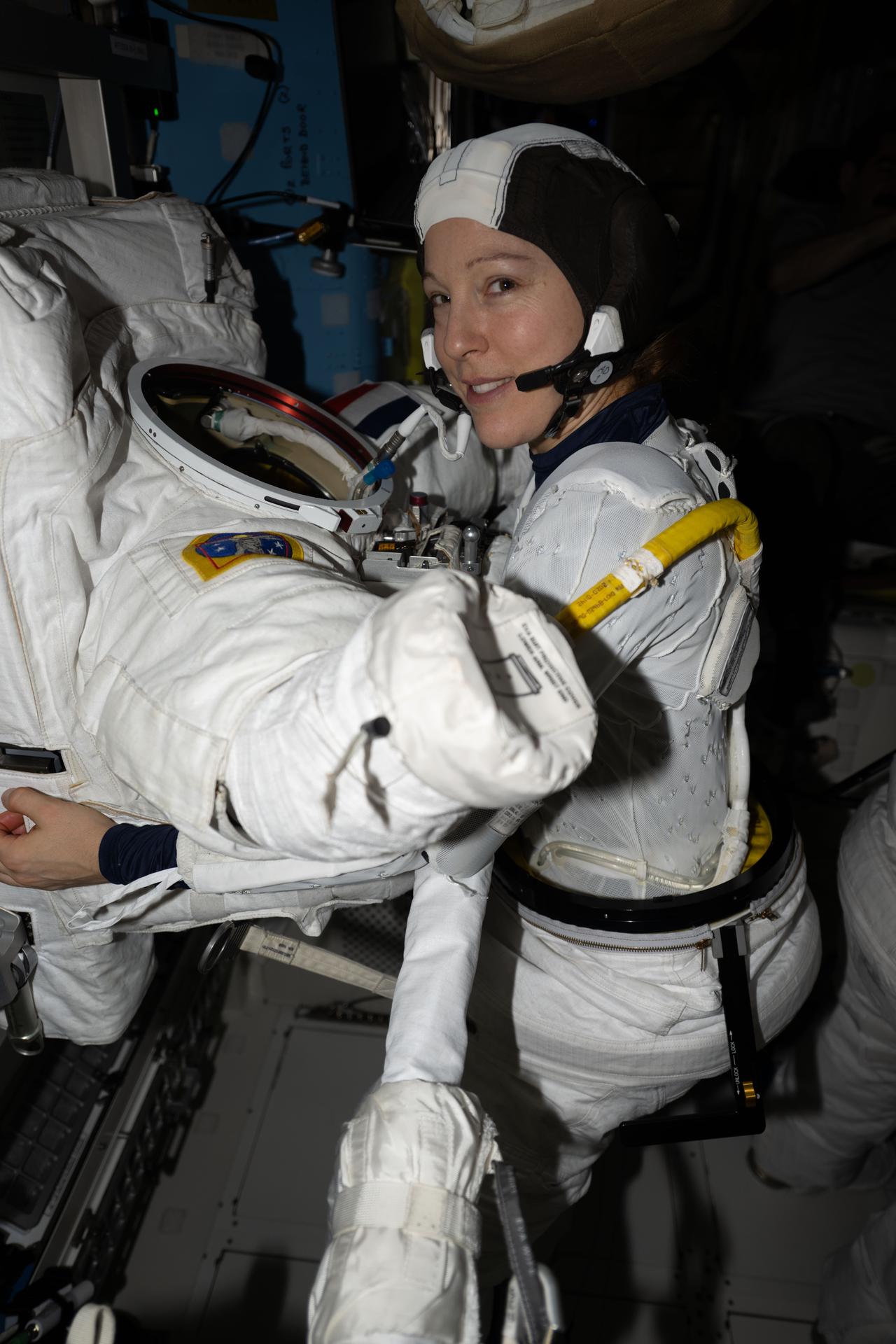
On Friday, flight engineers Anil Menon of NASA and Sophie Adenot of ESA (European Space Agency) took turns inside the Quest airlock organizing the tools they will use during a spacewalk scheduled for 8:35 a.m. EDT on Tuesday. The pair configured the tethers they will use to stay secured to the orbital outpost, checked the bags carrying an array of specialized tools and parts, and staged them for readiness inside Quest. Adenot also studied her spacewalking procedures on a computer using 3D animation software that depicts her tasks outside of the orbital outpost.
The spacewalkers will be assisted throughout Tuesday’s excursion by flight engineer Jack Hathaway and station commander Jessica Meir, both NASA astronauts. Hathway and Meir joined each other Friday and studied the Canadarm2 robotic arm maneuvers necessary to support Menon and Adenot as they install a spare space-to-ground antenna to the Z1 truss segment above the station’s Unity module.
During Tuesday’s spacewalk, Menon will ride the Canadarm2 and retrieve a spare antenna released by Adenot from an external platform. The duo will then translate to Z1, install the antenna, and make the precise electrical and data connections required to activate high‑speed transmissions with mission control. Next, Adenot will hand Menon the failed space-to-ground antenna from its temporary stowage on Z1. They will then install the old antenna on the same external platform that housed the spare finishing the swap. If time allows, the spacewalkers will also replace a retroreflector on the forward port of the Harmony module, which improves navigation, tracking, and alignment data for visiting spacecraft such as the SpaceX Dragon.
Hathway and Adenot still had time scheduled on Friday to study advanced workout methods to maintain muscle and bone health while living and working in microgravity. Hathaway began his shift collecting his blood sample to be analyzed as part of the Muscle Stimulation experiment. Afterward, he applied electrodes to his legs that sent electrical signals stimulating his muscles as he strapped himself in the Columbus laboratory module and relaxed. Adenot wore the EasyMotion-2 suit packed with electrodes that triggered muscle contractions while she jogged on the Tranquility module’s treadmill. Results from the investigations may enhance space exercise and enable faster muscle recovery after returning to Earth’s gravity.
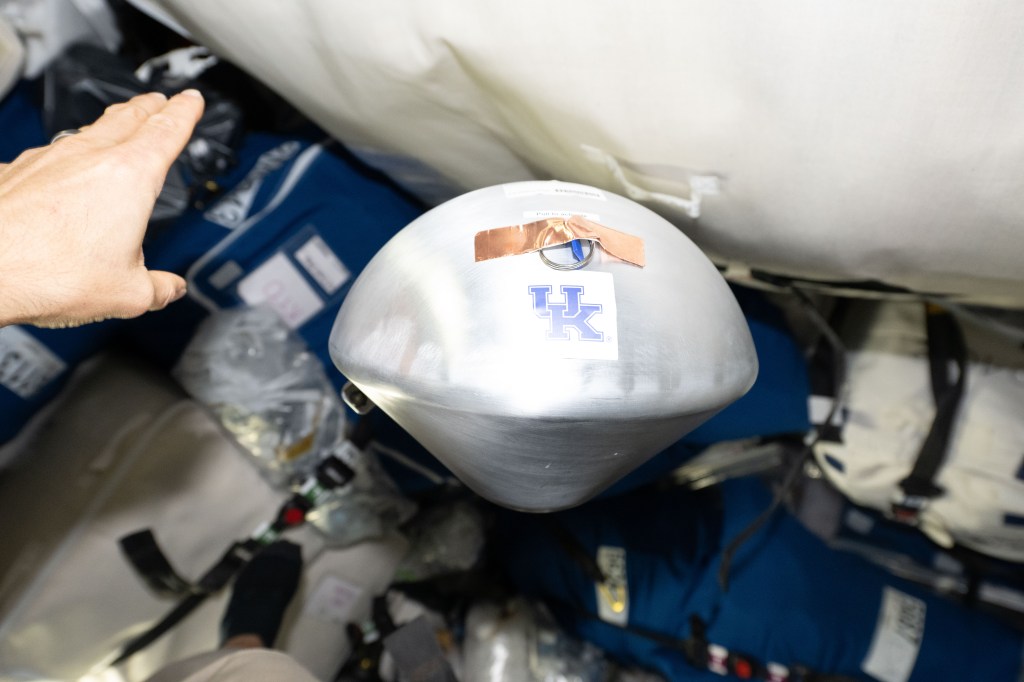
Menon and Meir focused on hardware maintenance with their extra time at the end of the week. Menon worked in the Kibo laboratory module and removed a scientific payload from Kibo’s airlock that had been exposed to the vacuum of space. Meir refilled a spacesuit tank and a liquid cooling and ventilation garment with water to provide thermal conditioning to suit systems and keep astronauts comfortable during a spacewalk.
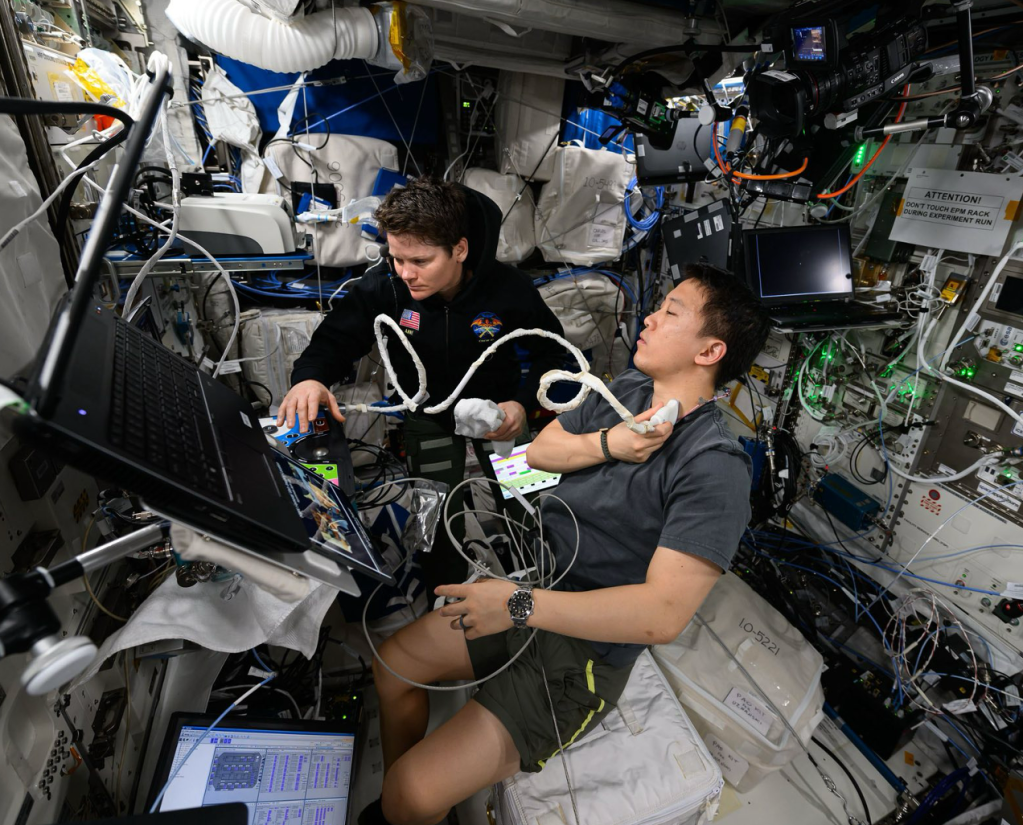
Roscosmos flight engineer Andrey Fedyaev started Friday helping scientists understand how weightlessness affects the respiratory system by wearing an acoustic sensor around his neck that recorded his rapid exhalation. Next, he documented radiation exposure measurements collected from the Nauka, Zvezda, and Zarya modules. Flight engineers Pyotr Dubrov and Anna Kikina joined each other at the beginning of their shift and uninstalled automated Earth observation gear that photographed landmarks on the ground during the crew’s sleep shift. Dubrov then inspected ethernet cables and network connections while Kikina took inventory and photographed lab hardware stowed throughout the station’s Roscosmos segment.
Learn more about station activities by following the space station blog, @space_station on X, as well as the ISS Facebook and ISS Instagram accounts.
Get the latest from NASA delivered every week. Subscribe here.
