






Spacewalk Preps, Bioprinting, and Exercise Research Top Station Schedule
Expedition 75 is gearing up for a busy August with three spacewalks planned at the International Space Station. The orbital residents are also printing living cells and tissues and studying how to increase the effectiveness of exercising in space.
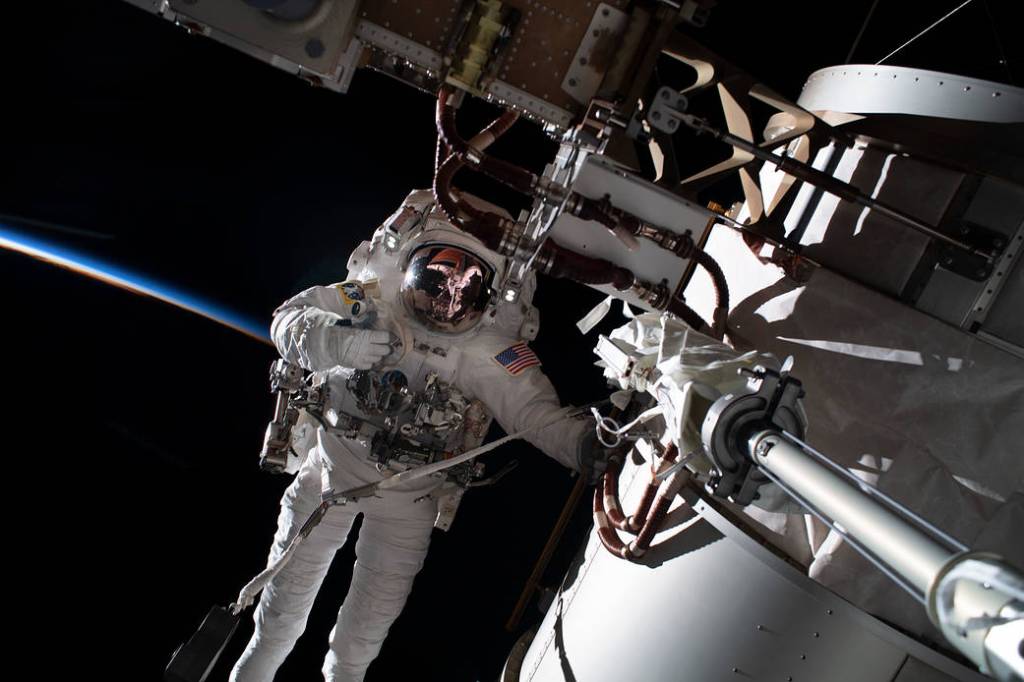
Mission managers discussed a series of spacewalks and their associated tasks during a news conference on Thursday. NASA flight engineers Jessica Meir and Anil Menon will conduct the first spacewalk at 7:35 a.m. EDT on Thursday, August 6, for solar array work. NASA will soon announce the astronauts who will participate in the spacewalks scheduled on Aug. 13 and 25 for communications and electronics maintenance. All three spacewalks will be broadcast live on NASA+ and a variety of platforms.
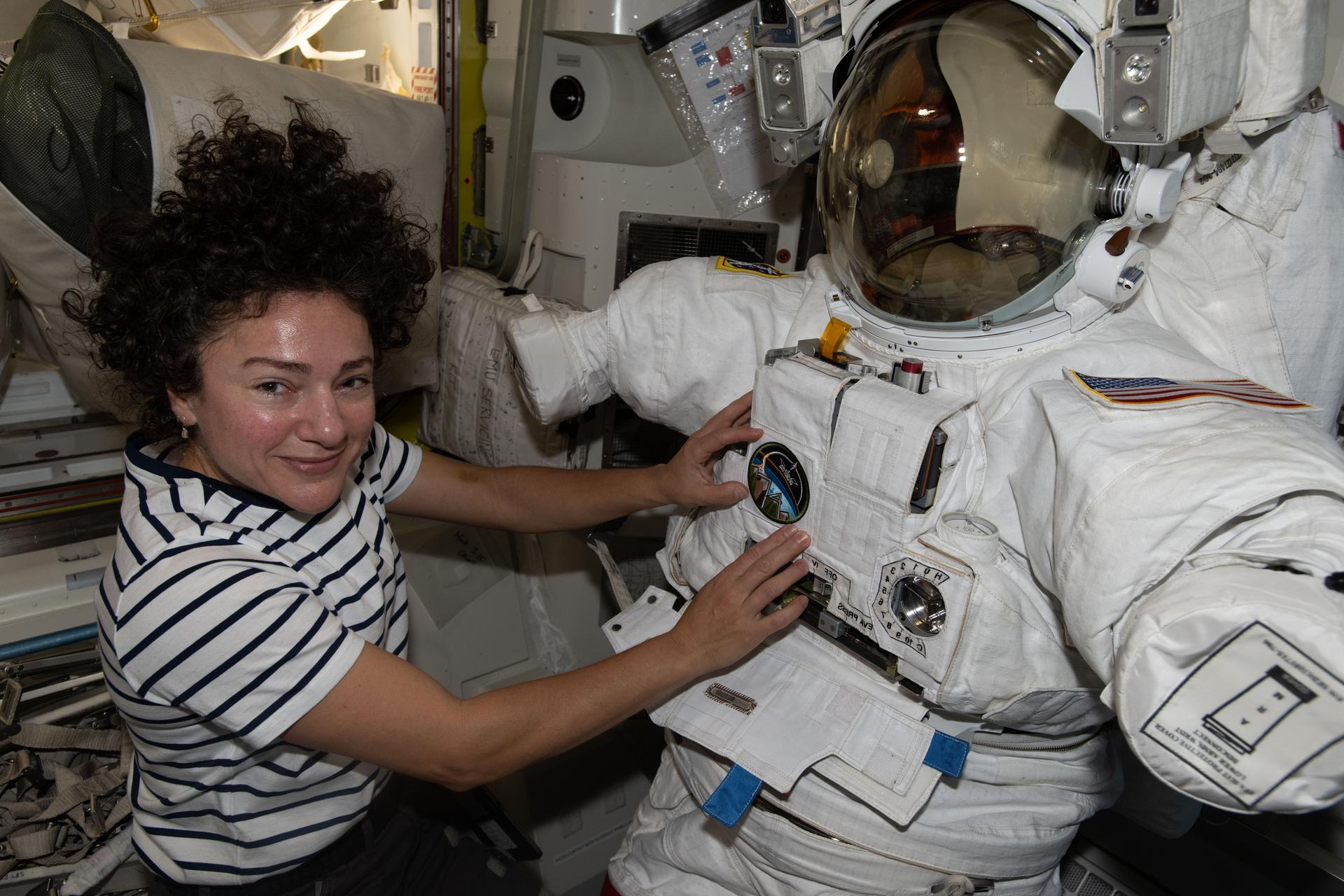
Meir and Menon spent Thursday practicing using the spacewalking tools and familiarizing themselves with the parts they will use to prepare the orbital outpost for the future installation of its seventh roll out solar array to augment its power system. The astronauts also studied their spacewalking procedures, staged their spacesuits, and organized hardware inside the Quest airlock in advance of the upcoming excursion.
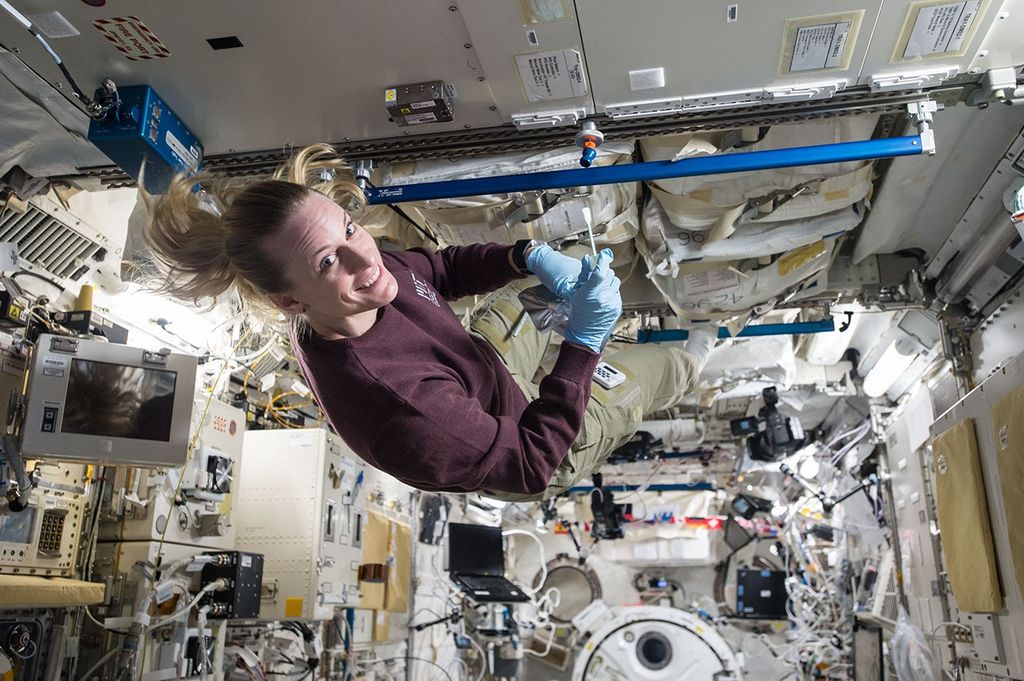
Bioprinting, or manufacturing living cells and tissues using bioinks, has been a key research objective aboard the space station for several years. The lack of gravity enables the cells to grow naturally in three dimensions resulting in higher-quality tissues than those produced on Earth. Flight engineers Jack Hathaway of NASA and Sophie Adenot of ESA (European Space Agency) partnered together in the Kibo laboratory module continuing the advanced biotechnology investigation. Adenot mixed cartilage cells with bioink then injected the mixture into cartridges. Next, Hathaway collected the cartridges from Adenot and loaded them inside the InSPA-Auxilium Bioprinter installed in Kibo’s Life Science Glovebox. The bioprinted samples will be frozen and returned to Earth for analysis. Results may lead to the development of advanced treatments for cartilage injuries on Earth and in space.
Hathaway and Adenot also took turns conducting exercise research with a futuristic suit and new equipment to stay fit in weightlessness. Adenot tried on the EasyMotion-2 Suit and jogged on the COLBERT treadmill in the Tranquility module. The suit sends electrical impulses and triggers muscle contractions to supplement a space workout. Hathaway performed a rowing session on the European Enhanced Exploration Exercise Device (E4D) installed in the Columbus laboratory module. The E4D is optimized for working out in microgravity and is being evaluated for use on future space exploration missions.
Roscosmos flight engineers Pyotr Dubrov and Anna Kikina took turns wearing virtual reality goggles and responding to computerized visual stimuli. The long-running Virtual experiment tests how a crew member’s sense of balance and direction adapts to microgravity. Flight engineer Andrey Fedyaev jogged on the Zvezda service module’s treadmill while attached to electrodes for a physical fitness assessment. Afterward, Fedyaev configured radiation detection hardware to measure the neutron environment the station is exposed to and studied materials that may shield a spacecraft from space radiation.
Learn more about station activities by following the space station blog, @space_station on X, as well as the ISS Facebook and ISS Instagram accounts.
Get the latest from NASA delivered every week. Subscribe here.
