















Crew Conducts Futuristic Workouts, Advanced Eye Exams During Spacewalk Preps
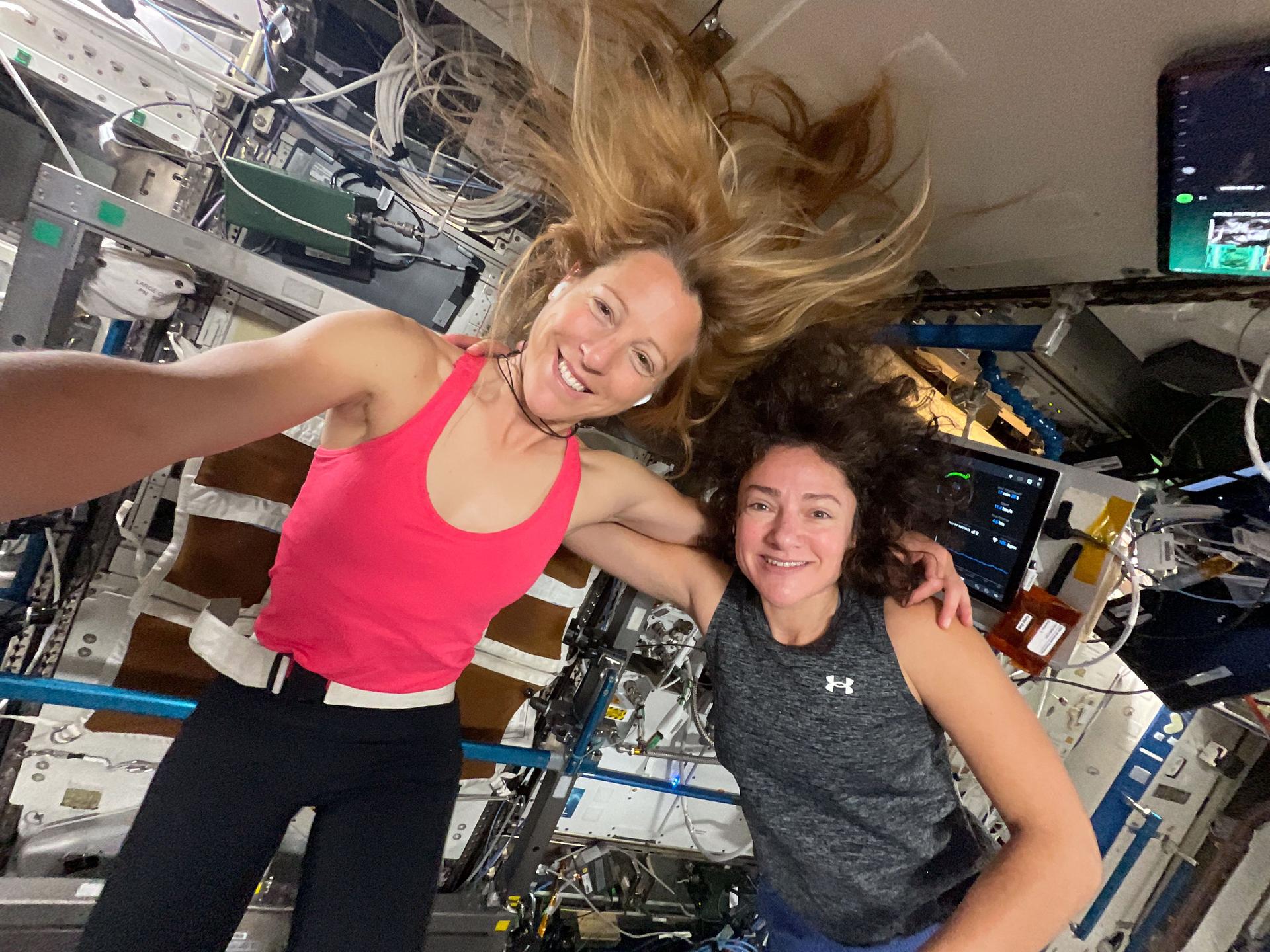
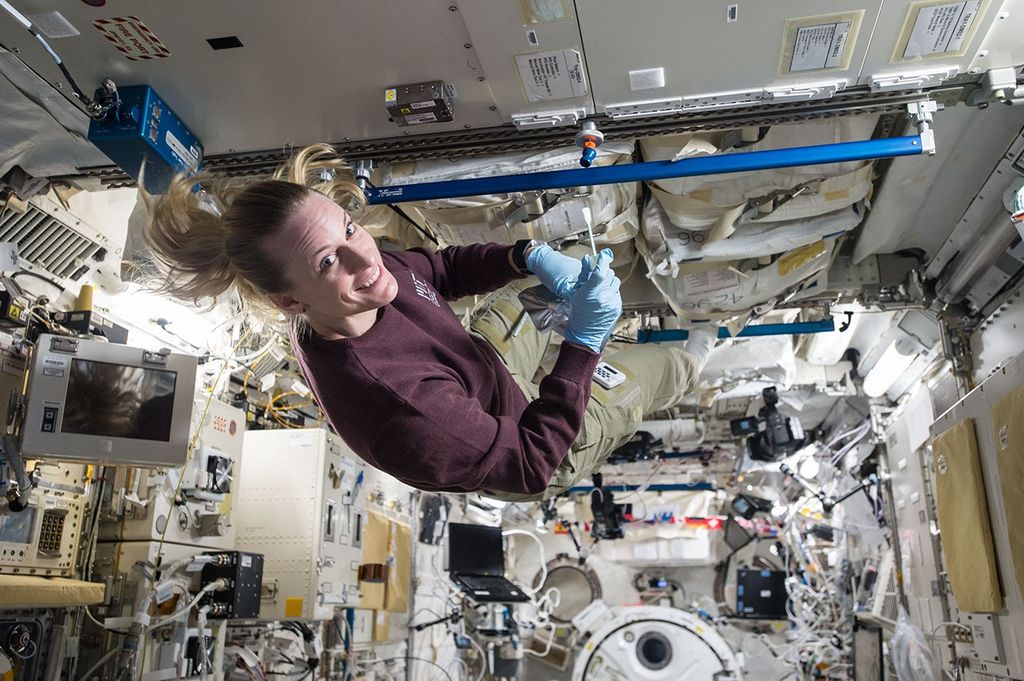
Futuristic workouts, eye exams, and virtual reality led the research schedule for the Expedition 75 crew aboard the International Space Station on Wednesday. Spacewalk training and lab maintenance filled the rest of the shift for the seven orbital residents.
Living in weightlessness speeds up muscle and bone loss since it takes much less effort for an astronaut to move around a spacecraft than on Earth. Fluids also rise toward a crew member’s head in microgravity creating pressure on the back of the eye potentially affecting vision. Doctors are constantly monitoring astronaut health to understand microgravity’s effect on the human body while living in space, develop countermeasures to treat space-caused issues, and promote long-term mission success as NASA and its international partners plan missions to the Moon, Mars, and beyond.
NASA flight engineer Jack Hathaway tested new workout methods on the European Enhanced Exploration Exercise Device (E4D) installed in the Columbus laboratory module. Hathaway first pedaled on the E4D’s exercise cycle then he reconfigured the device for resistance workouts including bicep curls, squats, bench press, and more. Afterward, he joined flight engineer Sophie Adenot of ESA (European Space Agency) and called down to researchers to discuss their experiences on the futuristic workout device optimized for exercising in space. Adenot also reviewed her support role for when she helps a pair of astronauts suit up ahead of the first spacewalk planned in August.
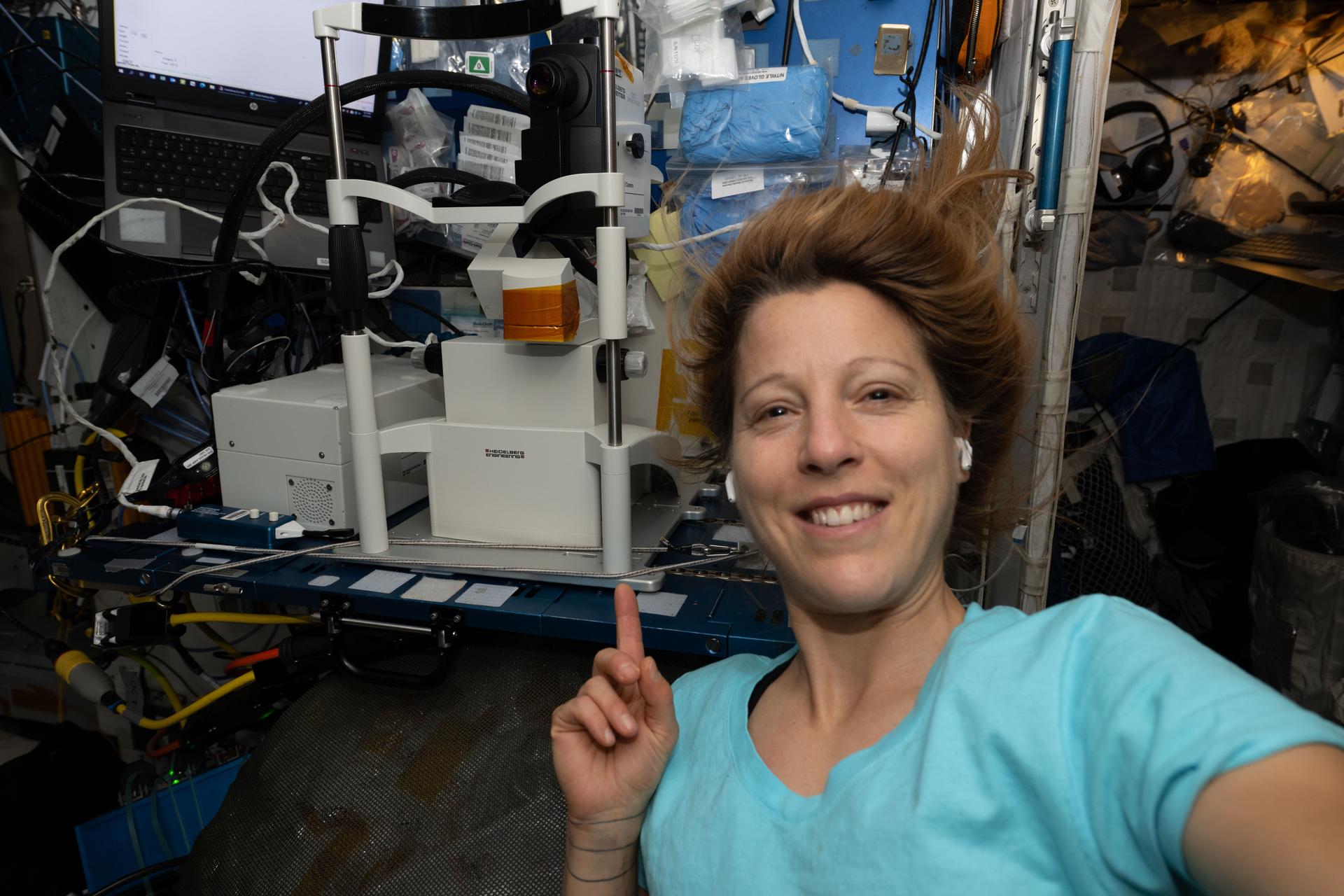
Adenot and Hathway then joined Roscosmos flight engineers Andrey Pyotr Dubrov and Fedyaev for eye checks in the Harmony module. Adenot led the first eye imaging round as Hathaway peered into a biomedical device that lets researchers on the ground examine his retina, lens, and cornea in real-time. Dubrov took charge of the second-round and guided Fedyaev as he took his optical exam.
Station commander Jessica Meir participated in an advanced eye exam while wearing a set of virtual reality goggles, also called the Nevada Screening Vision System. The head-mounted display system measures visual function using a series of vision screening apps testing visual acuity, contrast sensitivity, and more. Earlier, she took turns with NASA flight engineer Anil Menon and practicing their spacewalk procedures on a computer using 3D interactive animation software. The astronauts are scheduled to begin a spacewalk at 7:35 a.m. EDT on Thursday, Aug. 6. Menon also worked inside the Kibo laboratory module and cleaned its cooling fluid systems.
Dubrov partnered with Roscosmos flight engineer Anna Kikina and began their shift together testing the performance of life support hardware inside the Zarya module. Kikina then moved on and checked the data output of scientific hardware then tested the functionality of video recording gear. Fedyaev spent his shift in the orbital outpost’s Roscosmos segment working on orbital plumbing duties and Elektron oxygen generator maintenance.
Learn more about station activities by following the space station blog, @space_station on X, as well as the ISS Facebook and ISS Instagram accounts.
Get the latest from NASA delivered every week. Subscribe here.
