






Overview
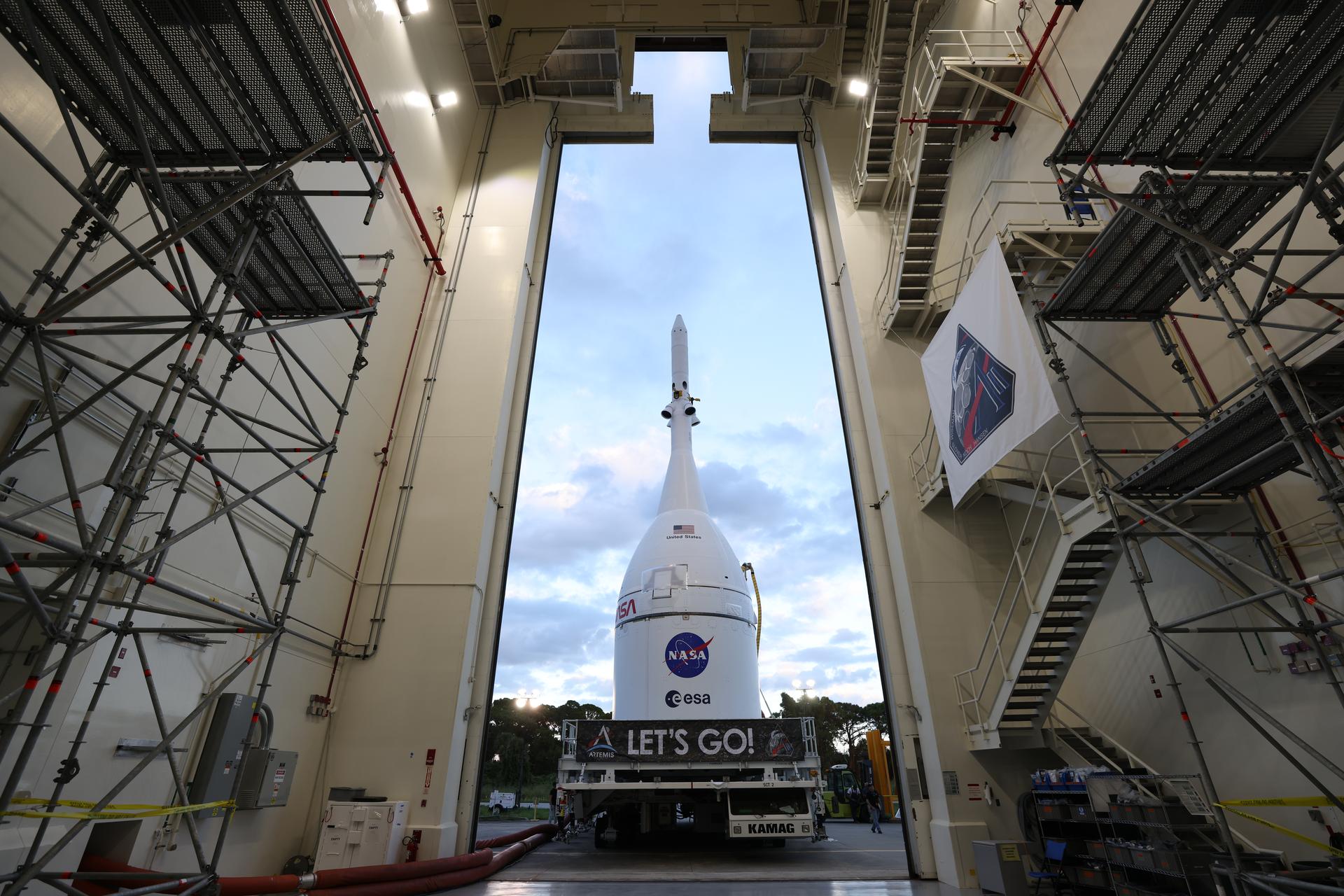
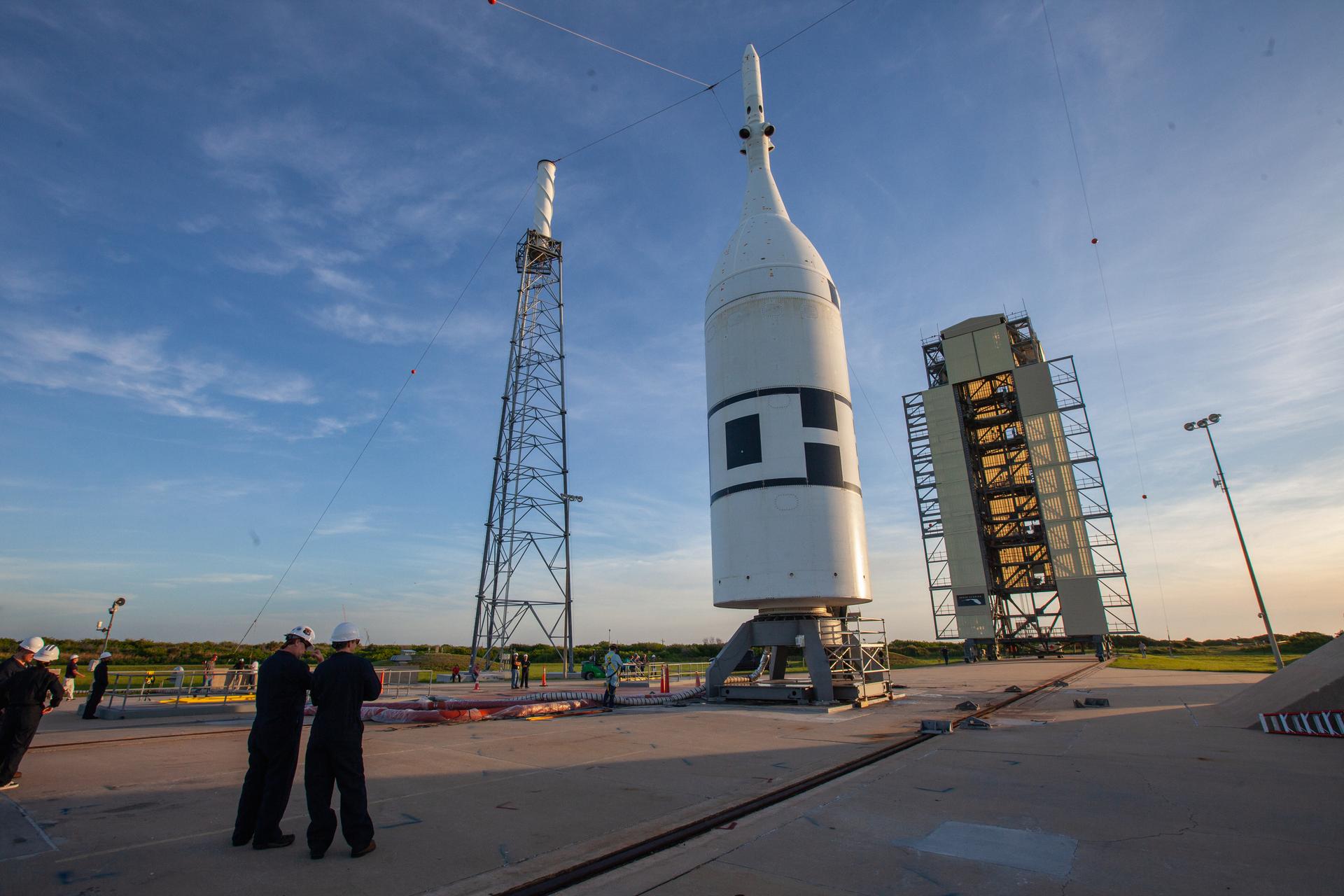
The LAS is divided into two parts: the fairing assembly and the launch abort tower. The fairing assembly is a shell of ogive panels surrounding the crew module. The panels are composed of a lightweight composite material, protecting the crew module from the heat, wind, and acoustics of the launch, ascent, and abort environments. The launch abort tower sits on top of the crew module and includes the system’s three motors.
The three solid rocket motors work together to propel Orion’s crew module to safety in an emergency: the abort motor pulls the crew module away from the rocket; the attitude control motor steers and orients the capsule; then the jettison motor ignites to separate the LAS from the crew module prior to parachute deployment.
During a normal launch, once the SLS clears most of the atmosphere, the job of the LAS is done. The jettison motor fires to separate the LAS from the spacecraft, and from this point, abort scenarios are handled by the engines in the service module. Fully jettisoning the entire LAS once it’s no longer needed frees Orion of thousands of pounds that will make it lighter for its trips into space.
The LAS is specifically built for deep space missions and to ride on a high-powered rocket. The system offers the highest thrust and acceleration escape system ever tested, generating 400,000 pounds of thrust. In the event of an abort during ascent to orbit, the LAS can outrun the SLS rocket, which generates 8.8 million pounds of thrust.
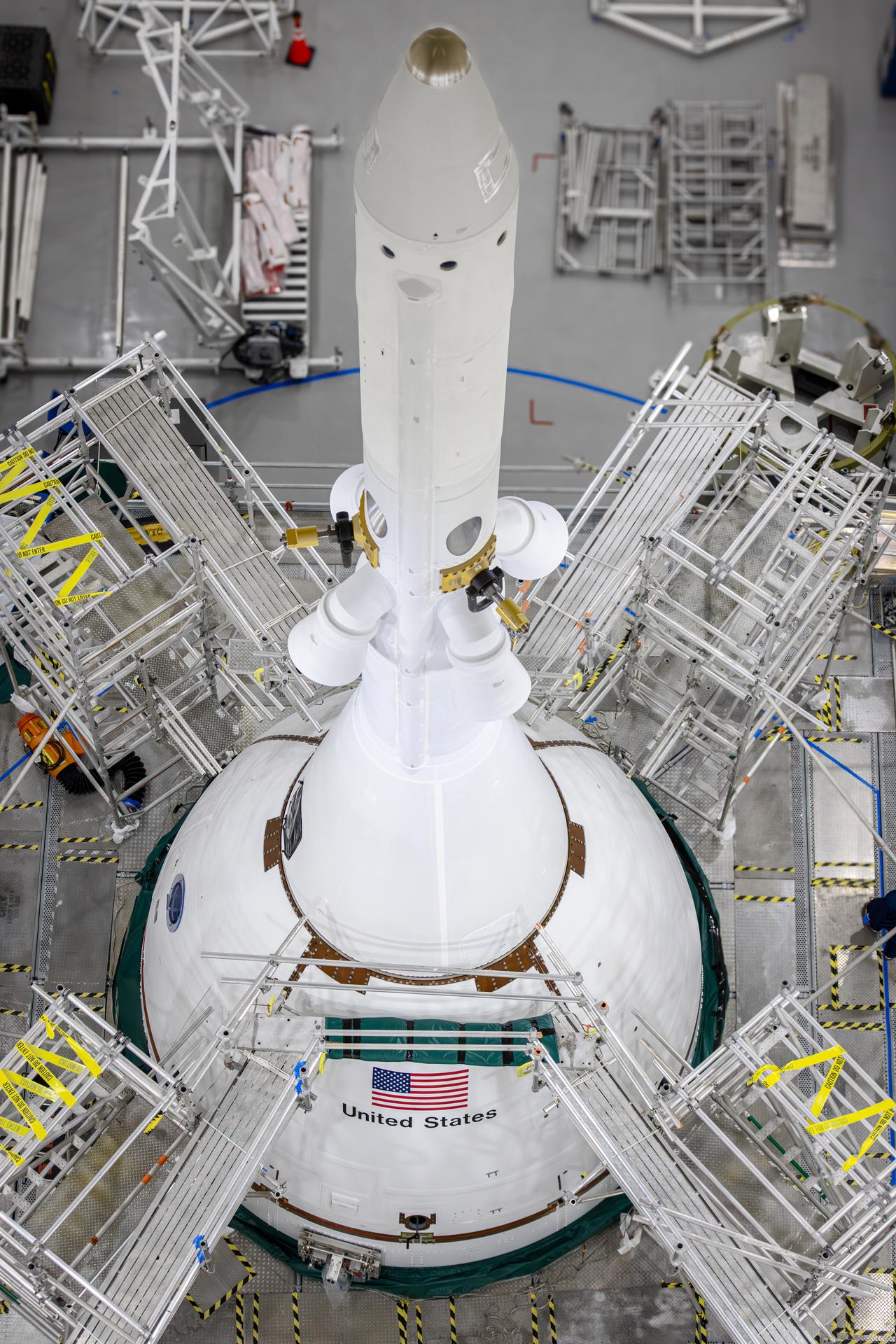
The LAS is designed with its motors above the Orion crew module that pull the capsule away from the rocket, rather than push it away with motors at the base, as some other escape systems are built to do. The puller-style system with the tower above the spacecraft is also the first of its kind capable of controlling the spacecraft’s orientation after separating from the rocket.
The LAS design is ideal for deep space missions because it minimizes the mass that aborts in an emergency by leaving the service module behind. It also avoids carrying thousands of pounds of unwanted mass to deep space by fully jettisoning the entire LAS once it is no longer needed.
On crewed Artemis missions, all launch abort system motors are active. The abort and attitude control motors were not active on Artemis I, because there were no astronauts inside the spacecraft on that mission. The jettison motor still fired once Orion reached orbit to enable the spacecraft to continue on the remainder of its journey. The full abort system has been thoroughly tested and certified for flights with astronauts beginning with Artemis II.
Abort Motor
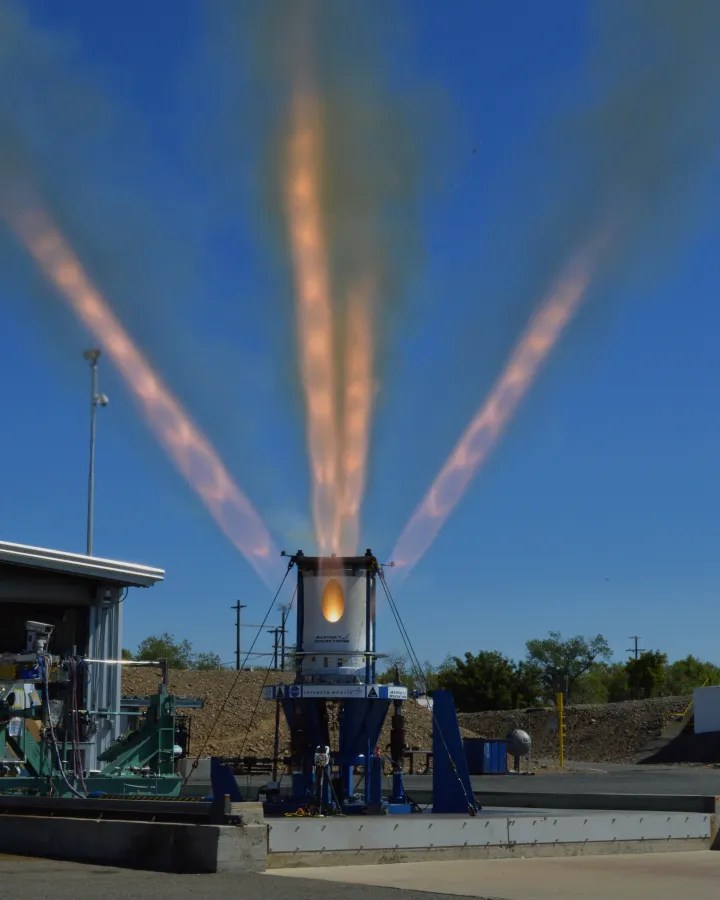
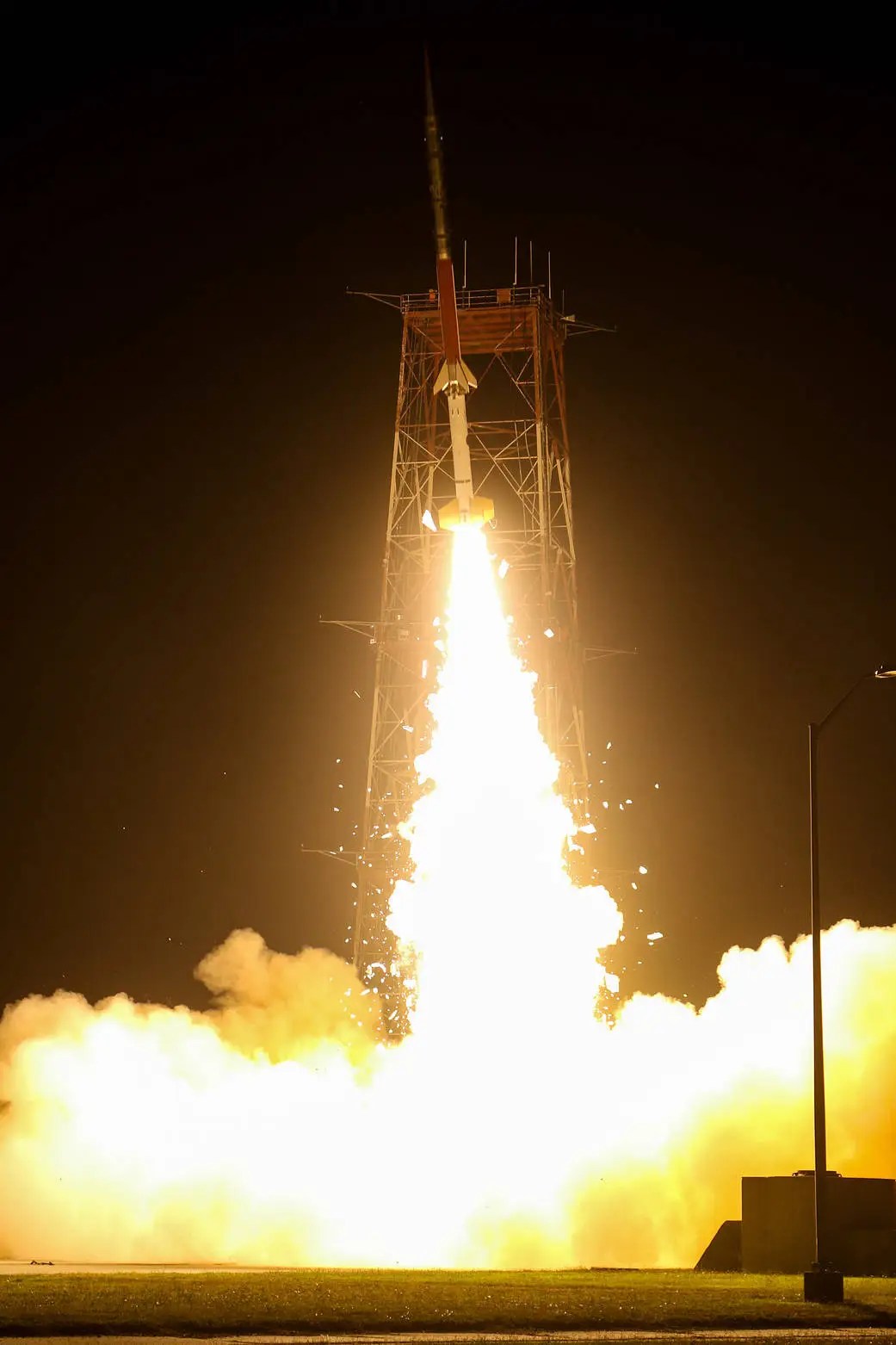
The 17-foot-long, 3-foot-diameter abort motor, built by Northrop Grumman, has a manifold with four exhaust nozzles and provides thrust to quickly pull the crew module to safety if problems develop during launch. The high-impulse motor is designed to burn most of the propellant within the first three seconds and burns three times faster than a typical motor of this size to immediately deliver the thrust needed to pull the crew module to safety. If needed during a launch emergency, the crew module would accelerate from zero to 400–500 mph in just two seconds.
Quick Facts:
| Weight | 7,600 lbs., including 4,500 lbs. propellant |
| Peak Thrust | 400,000 lbs. |
| Fuel type | Solid Fuel – hydroxyl-terminated polybutadiene (HTPB) |
| Burn duration | Approximately 3 seconds |
Attitude Control Motor
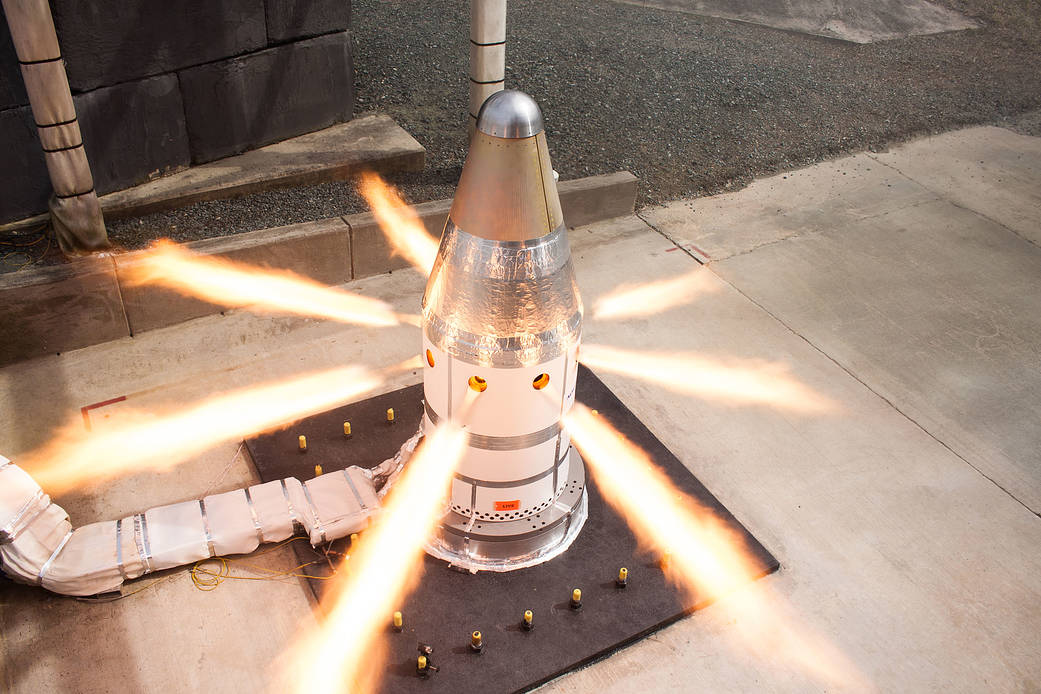
The attitude control motor, also built by Northrop Grumman, consists of a solid propellant gas generator and eight equally spaced valves capable of providing 7,000 pounds of thrust in any direction. The unique valve control system enables each valve to open and close, directing the flow of gas. The motor operates to keep the crew module on a controlled flight path after it is pulled away from the rocket by the abort motor, and then it reorients the module for parachute deployment and landing.
Quick Facts:
B
| Weight | 1,700 lbs, including 650 lbs. propellant |
| Peak Thrust | 7,000 lbs. |
| Fuel type | Solid Fuel – carboxyl-terminated, polybutadiene (CTPB) |
| Burn duration | Approximately 30 seconds |
Jettison Motor
The jettison motor was built by Aerojet Rocketdyne and is the only LAS motor that fires on every mission. During a normal launch, once SLS successfully clears most of the atmosphere and the LAS is no longer needed, the jettison motor fires to separate the LAS from the spacecraft. In a pad-abort or launch-abort scenario with crew, the jettison motor ignites to separate the LAS from Orion after the abort motor is used and the attitude control motor has reoriented the spacecraft — and prior to parachute deployment and landing.
Quick Facts:
| Weight | 900 lbs., including 360 lbs. propellant |
| Peak Thrust | 40,000 lbs. |
| Fuel type | Solid fuel – hydroxyl-terminated polybutadiene (HTPB) |
| Burn duration | Approximately 1.5 seconds |