

















Phase II Sequential
Phase II Sequential is a unique opportunity in the NASA SBIR/STTR Program that allows Phase II firms to continue Phase II work towards specific NASA needs. NASA has typically awarded three to four contracts per opportunity. Awards have a high-dollar value to accelerate development of technology required to meet mission needs.
Minimum Investor Funding
Not Required
Available to
NASA Phase II Awardees
NASA Investment
$2.5 – $4 Million
Period of Performance
24 months
Why is Phase II Sequential unique?
The opportunity is open to Phase II technologies that can align to Technical Need Areas (TNAs), which are focused on fulfilling specific needs in the NASA pipeline and change year to year.
- The number of TNAs depends on NASA’s budget and priorities. Prior TNAs have developed technology to support robotic science missions to the surface of other planets and moons, lunar dust mitigation technologies, and helped small satellites with de-orbit capability.
- The infusion into missions is anticipated to be 2 to 5 years after submissions.
- The submission process consists of two steps: (1) Call for white papers and (2) Invitation to a subset to submit full proposals.
- Eligible firms have a prior Phase II with technology related to the announced TNA. The Phase II award must come from the last 10 Program Years.
- Only one Sequential award can be made to a previous Phase II contract.
If this Post Phase II opportunity sounds like something you and your firm would be interested in, make sure you have signed up for the SBIR/STTR newsletter.
Schedule
| Opportunity Opens | NASA Reviews White Papers | Submit Full Proposal | NASA Reviews Full Proposal Submissions | Selection Announcement |
|---|---|---|---|---|
| 4 weeks | 3 months | 2 months By invite only, if chosen to proceed after the white paper review | 2 months | Due to contract negotiation, award could be 12 months from when the opportunity opened |
*Timelines above are approximations that are subject to change
Eligibility Requirements
Below are general eligibility requirements to submit a white paper. Please refer to the applicable opportunity requirements to which you apply.
- Must still qualify as Small Business Concerns (SBCs)
- Has received a NASA SBIR Phase II award from the last 10 years at the time of the white paper request (see specific call for exact program year cutoff date)
- Prior Phase II contract has not already received a Sequential Phase II award from any government agency, including NASA
- Prior Phase II awards must also be completed, including any option periods (see specific call for exact cutoff date)
- Developments proposed must be directly related to and continue the prior Phase II work
- Must demonstrate relevance to the applicable original solicitation subtopic and cited NASA goals in the Technical Need Area (TNA) for applicable white paper
- Must justify how the continued development of the prior Phase II innovation meets stated goals within the Technical Need Area
Past Requests for White Papers
Firms Library
Click the link below to view reference guides, templates and forms for your next Sequential White Paper.
Explore the Firms Library
Recent Awardees
| 2025 Awardee Firm | 2025 Award Title | Technical Needs Area (TNA) |
|---|---|---|
| Psionic Inc | PSNDL Component Qualification for Class A Missions | Entry, Descent and Landing Flight Instrumentation Technologies for Precision Landing, Environment Characterization, and System Performance |
| Astrobotic Technology Inc | LaserNav LiDAR-Based Dark Navigation for Safe and Precise Lunar Landing | Entry, Descent and Landing Flight Instrumentation Technologies for Precision Landing, Environment Characterization, and System Performance |
| HiFunda LLC | Castable Inorganic Composite Potting Material for High-Temperature Electromagnets | Nuclear Electric Propulsion Subsystems – Nuclear Propulsion |
| Ad Astra Rocket Company | Technology Maturation of the VASIMR Electric Propulsion System | Nuclear Electric Propulsion Subsystems – Nuclear Propulsion |
| TDA Research, Inc. | Low-Temperature Secondary Batteries for the Lunar Surface | Lunar Surface Power: Energy Storage and Power Management and Distribution Technologies |
| CoolCAD Electronics, LLC | Manufacturing Radiation Tolerant Silicon Carbide Switches | Lunar Surface Power: Energy Storage and Power Management and Distribution Technologies |
| 2024 Awardee Firm | 2024 Award Title | Technical Needs Area (TNA) |
| Motiv Space Systems, Inc (Pasadena, CA) | xWalker – Enhanced Inspection and Manipulation for Lunar Assembly | Autonomous Lunar Surface Assembly and Outfitting of Tall Towers for Communications and Solar Power Generation |
| OxEon Energy, LLC (North Salt Lake, UT) | Mars Oxygen and Methane System (MOMS) | Technologies for Lunar Resource Extraction and Processing |
| 2023 Awardee Firm | 2023 Award Title | Technical Needs Area (TNA) |
| Applied Material Systems Engineering, Inc. (Streamwood, Illinois) | Integration of Dust Resisting Secondary Emission Engineered Passive Thermal Control Material Systems (TCMS) Coating | Lunar Dust Mitigation Solutions Partnership with Lunar Surface Innovation Initiative (LSII) |
| ATSP Innovations (Houston, Texas) | Extreme Environment Tribological Characterization of Advanced Bearing Materials | Lunar Dust Mitigation Solutions Partnership with Lunar Surface Innovation Initiative (LSII) |
| Busek (Natick, Massachusetts) | High Total Impulse BET-MAX System for Small-Sat Deorbiting | Reliable Small Spacecraft Identification and De-Orbit Technologies for Space Debris Mitigation Partnership with Small Spacecraft Technology Program (SSTP) |
| CU Aerospace (Champaign, Illinois) | Fiber-fed Pulsed Plasma Thruster (FPPT) for Active Debris Removal | Active Debris Removal (ADR) Partnership with In-Space Servicing, Assembly, and Manufacturing (ISAM) |
| Flight Works (Irvine, California) | Green Propulsion System for Multi-Object Removal/Recovery System | Active Debris Removal (ADR) Partnership with In-Space Servicing, Assembly, and Manufacturing (ISAM) |
| Vestigo Aerospace (La Canada Flintridge, California) | Flight Demonstration of Spinnaker Dragsails for SmallSat Deorbit | Reliable Small Spacecraft Identification and De-Orbit Technologies for Space Debris Mitigation Partnership with Small Spacecraft Technology Program (SSTP) |
Sequential Success
ProtoInnovations pivoted their technology to a specific NASA technological need using a Phase II Sequential.
Learn More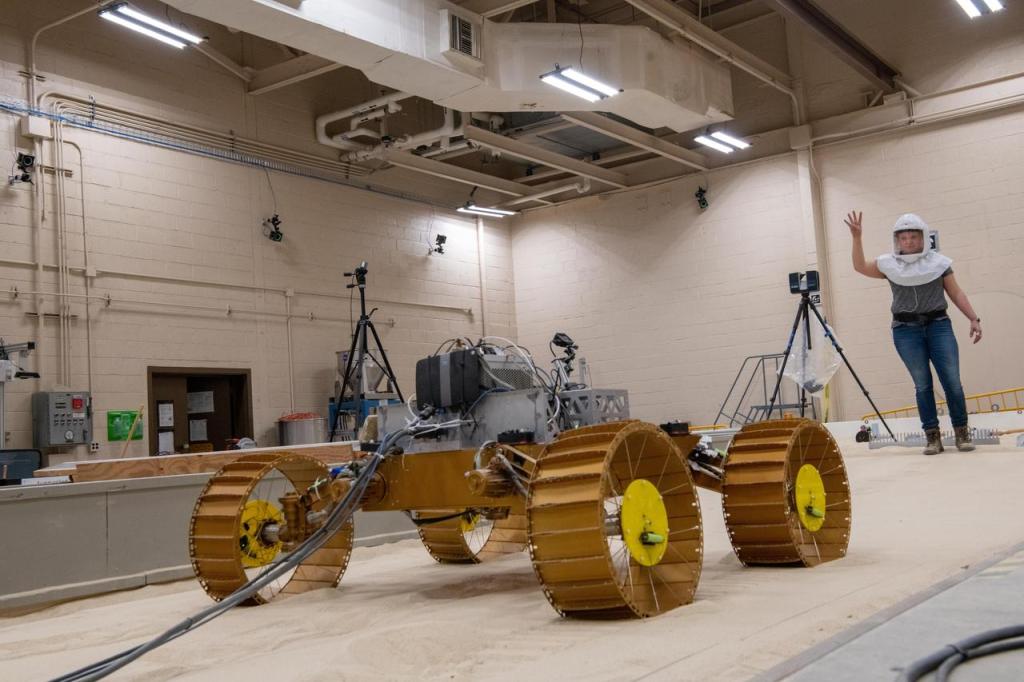
Recent Press Releases
2022 Sequential Press Release
In August 2022, NASA announced the selection of six U.S. small businesses to receive nearly $27 million in total to continue work on technologies poised to make a significant impact in key areas, from wildfire readiness to sustained lunar exploration. Read the press release for more information on the awarded technologies.