A meteor flashes by the Moon at the beginning of the September 27, total lunar eclipse. From the NASA meteor camera in Mayhill, New Mexico.
September 27th Lunar Eclispe
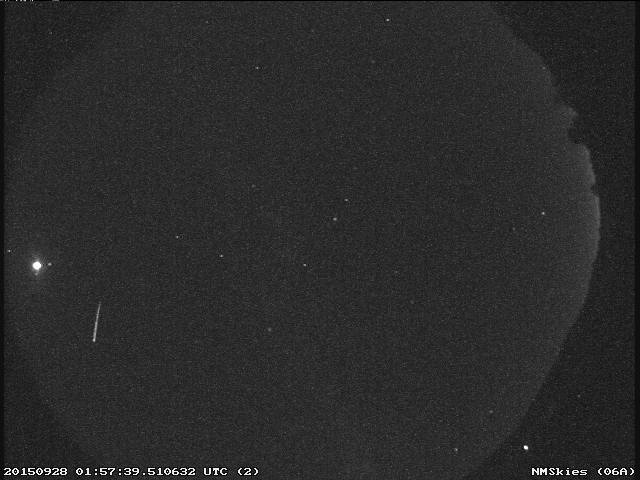














A meteor flashes by the Moon at the beginning of the September 27, total lunar eclipse. From the NASA meteor camera in Mayhill, New Mexico.
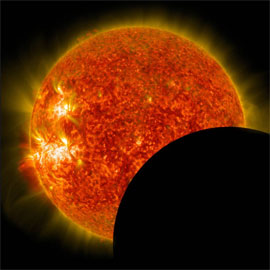
In the Americas on Sunday night, Sept. 27, we will be treated to a lunar eclipse with its beautiful orange and red colors, a prelude to the fall color of leaves in Earth’s Northern Hemisphere. This eclipse will straddle midnight on Sept. 27, depending on where you live. If observing close to the Greenwich Meridian …
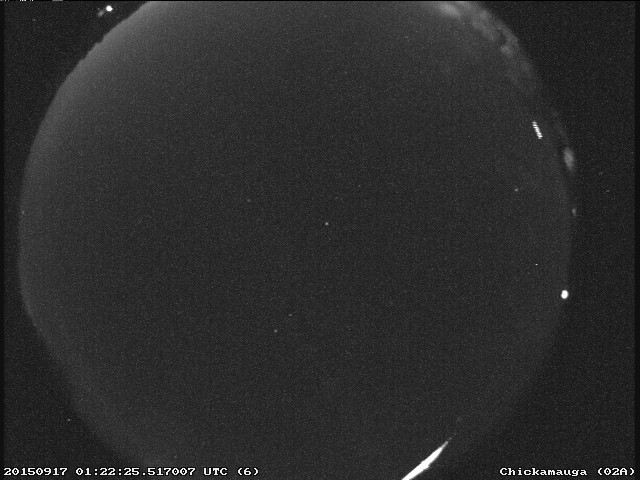
On September 16, at 8:22:25 PM local time, NASA meteor cameras in north Georgia and western North Carolina detected a bright fireball over middle Alabama. First seen at an altitude of 45 miles above Paul M. Grist State Park, near Selma, Alabama, the 6 inch diameter chunk of asteroid moved east at a speed of …
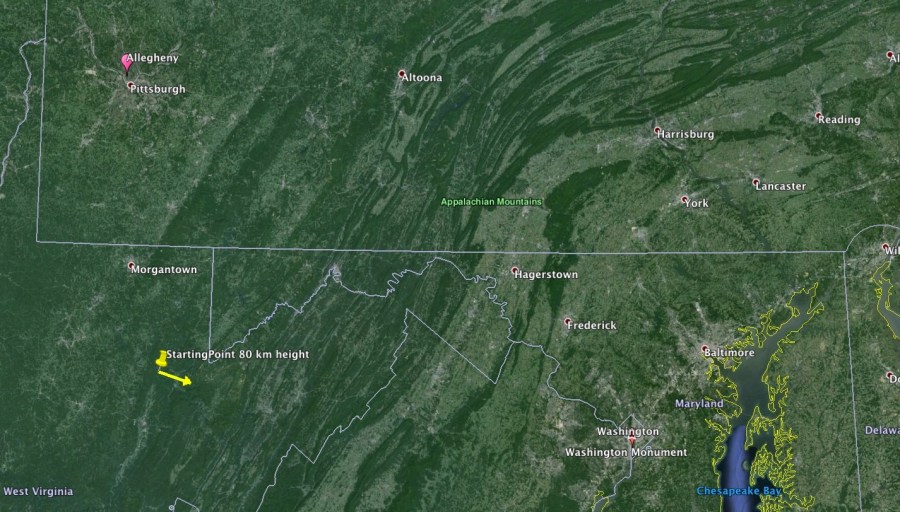
A bright meteor occurred over West Virginia last night at 9:27 EDT. It was seen across Ohio, Pennsylvania, Virginia, North Carolina, and Maryland! NASA’s Pennsylvania and Ohio all sky cameras caught it near the edge of the field-of-view, but what also saw it was an EarthCam located on the Washington Monument!
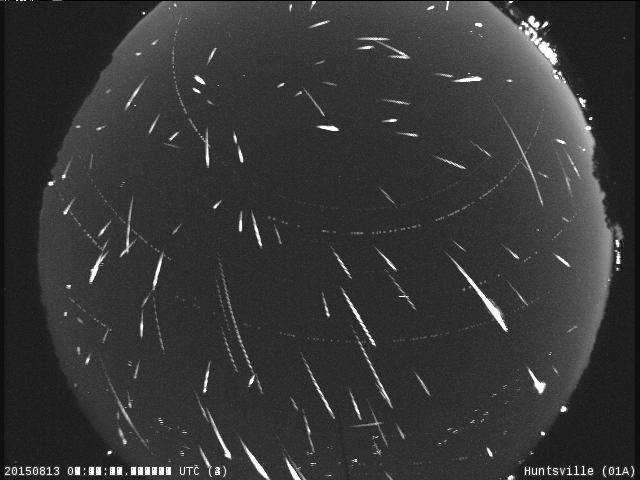
A composite image combines about 120 meteor images taken by the NASA All Sky Fireball Network station at Marshall Space Flight Center in Huntsville, Ala. on August 13, 2015. The majority of the meteors are Perseids. Danielle Moser of the Meteoroid Environment Office compiled the composite image.
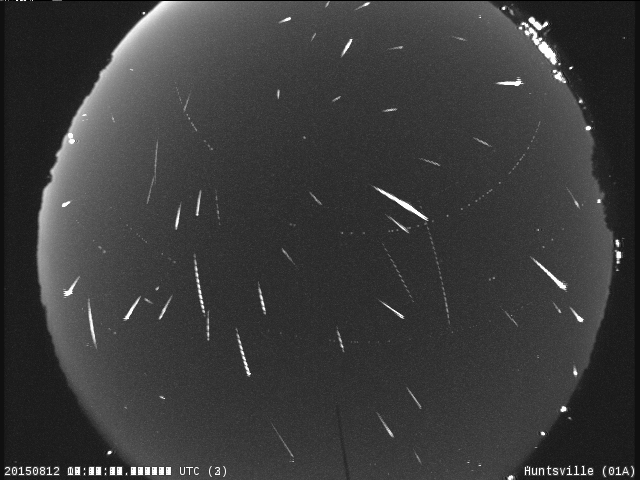
This composite image shows the meteors detected by the NASA All Sky Fireball Network station here in Huntsville, Alabama this morning. The majority of the meteors are Perseids, but a handful belong to the Northern Delta Aquariid, Southern Delta Aquariid, Alpha Capricornid, and Southern Iota Aquariid meteor showers that are also active. This Perseid meteor …

This Perseid fireball was observed by the NASA All Sky Fireball Network in the skies over New Mexico on the morning of August 12.
Dr. Bill Cooke, of NASA’s Meteroid Environment Office — located at NASA’s Marshall Space Flight Center in Huntsville, Alabama — explains what the All-Sky Camera Network is and how it’s used to track meteors or fireballs.
Rhiannon Blaauw, of NASA’s Meteoroid Environment Office — located at NASA’s Marshall Space Flight Center in Huntsville, Alabama — shares some tips and strategies to best view a meteor shower.
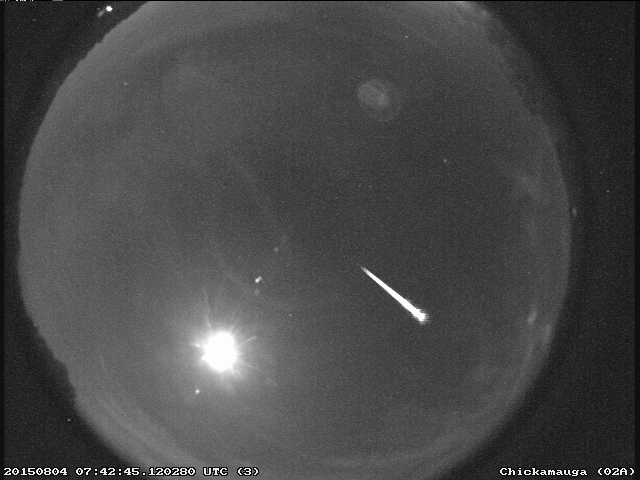
The Perseids are ramping up! Here’s a Perseid meteor captured by the NASA All Sky Fireball Network on August 4th. The shower will peak the morning of August 13th. With a near-new Moon, we may get a good show that morning!