












Shannon W. Lucid
NASA Oral History Interviews
Interviews and Links
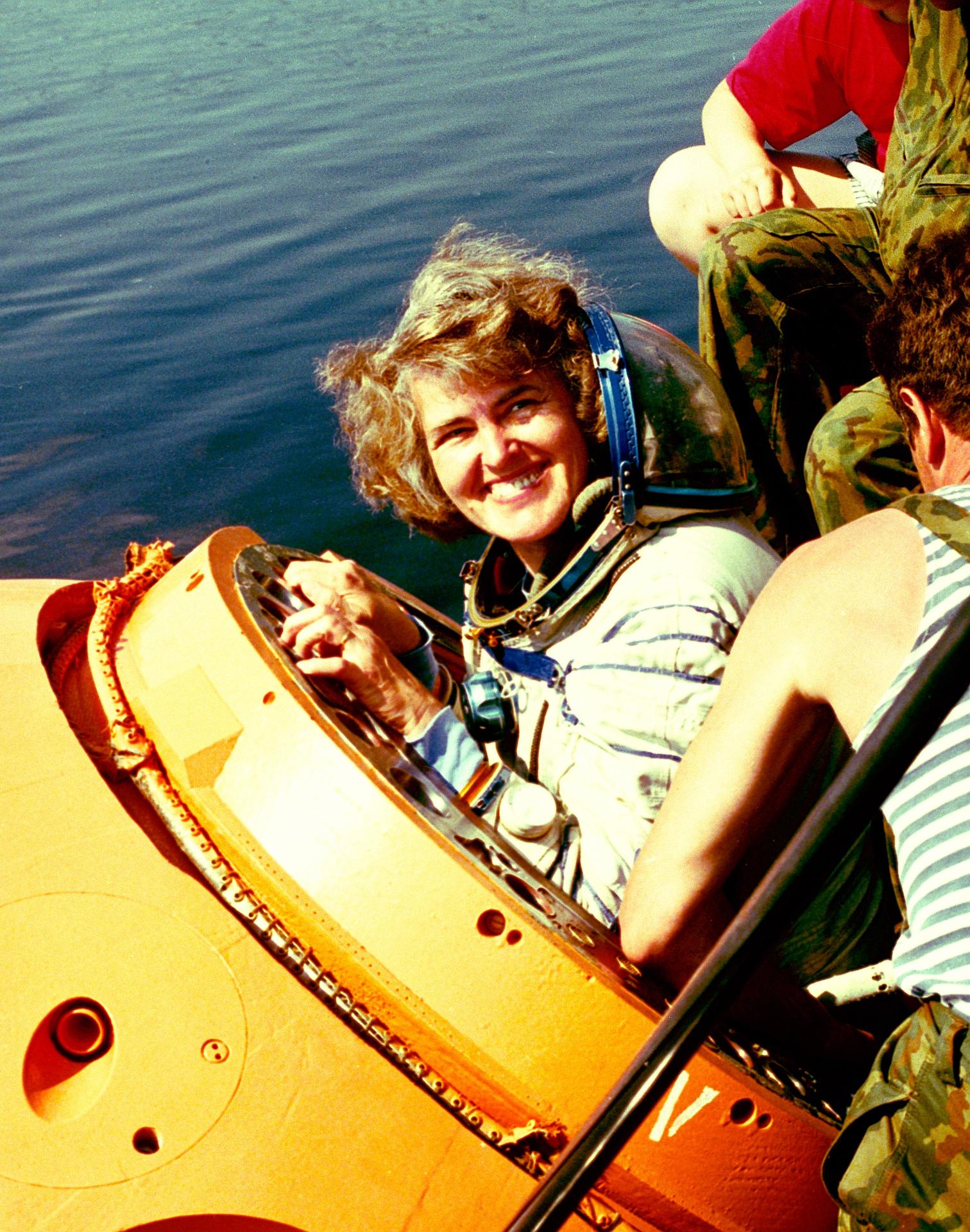
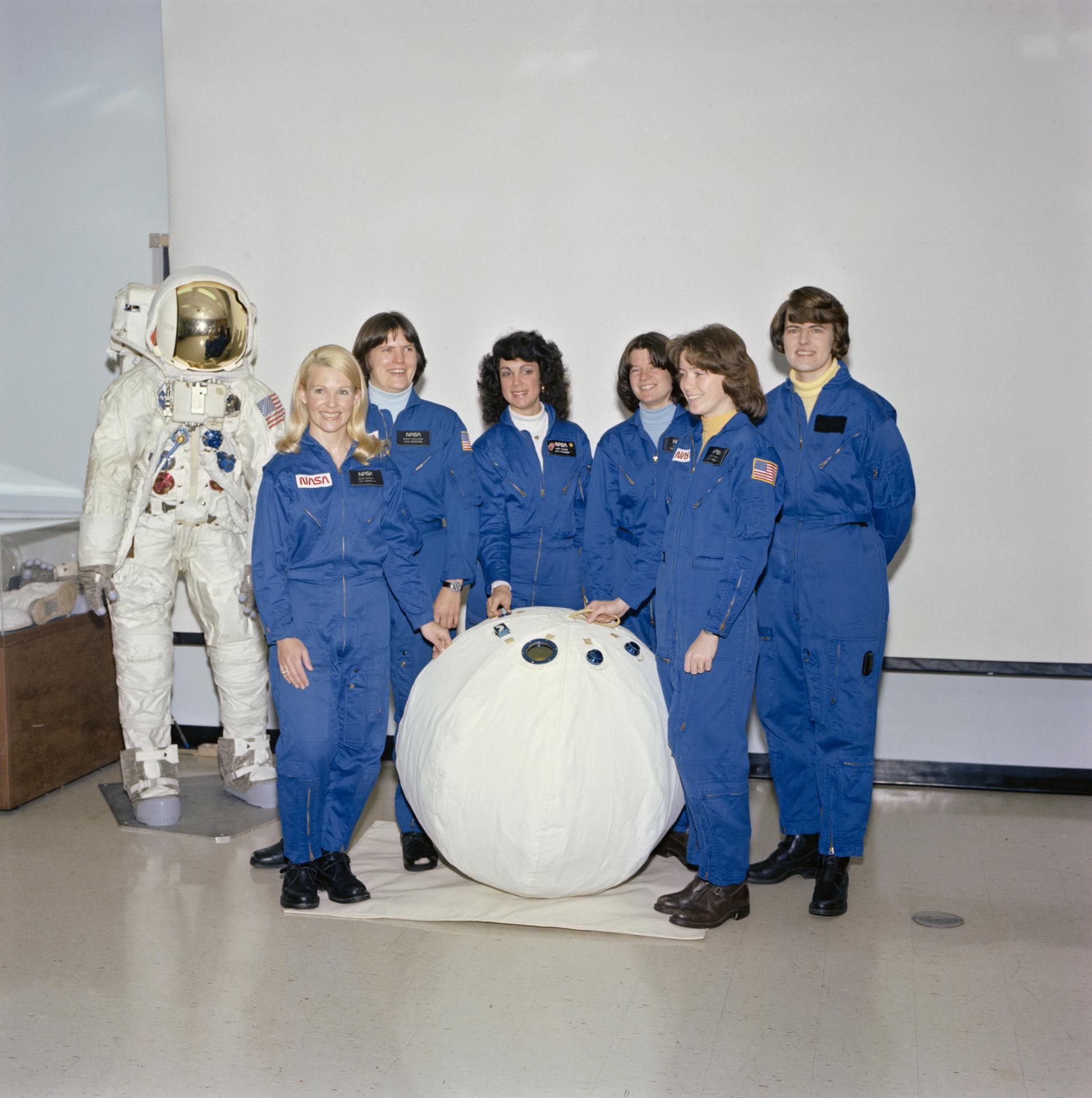
Shannon Lucid began her record-breaking career as one of the original six female astronauts selected by NASA in 1978. In 2021, she agreed to a series of oral history interviews, conducted by NASA Historian Jennifer Ross-Nazzal, and the result is a collection of 13 separate interviews about her life and career, and her thoughts about both.
STS-51G
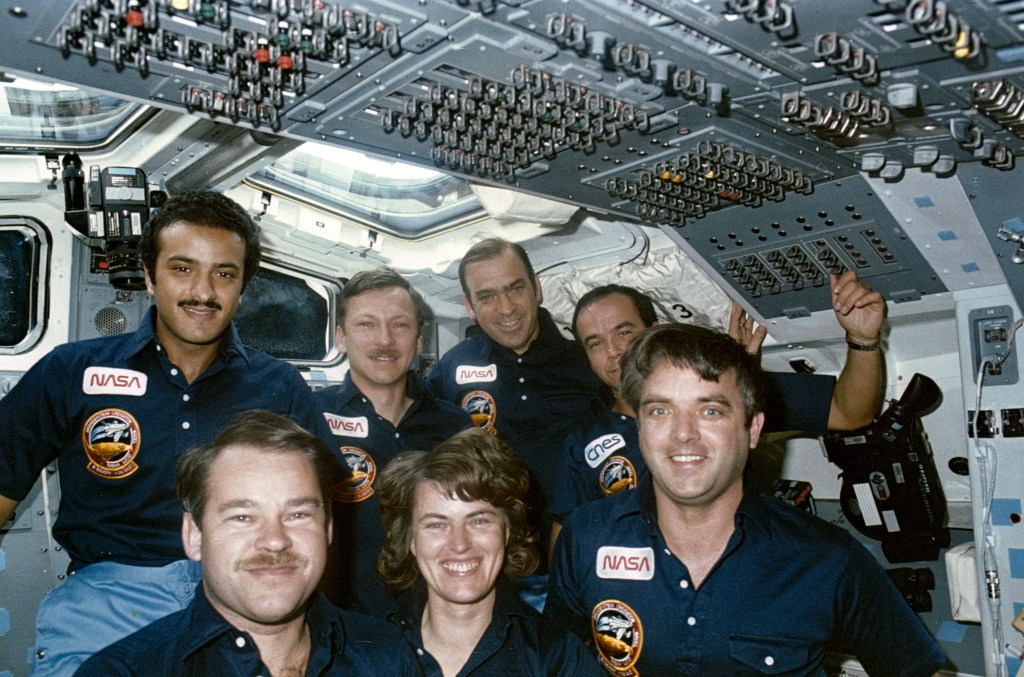
STS-51G was the 18th flight of NASA’s Space Shuttle program, and the fifth flight of Space Shuttle Discovery. The crew included Daniel C. Brandenstein, Commander; John O. Creighton, Pilot; Shannon W. Lucid, Mission Specialist; Steven R. Nagel, Mission Specialist; John M. Fabian, Mission Specialist; Patrick Baudry, Payload Specialist; Sultan Salman Al-Saud, Payload Specialist.
STS-34
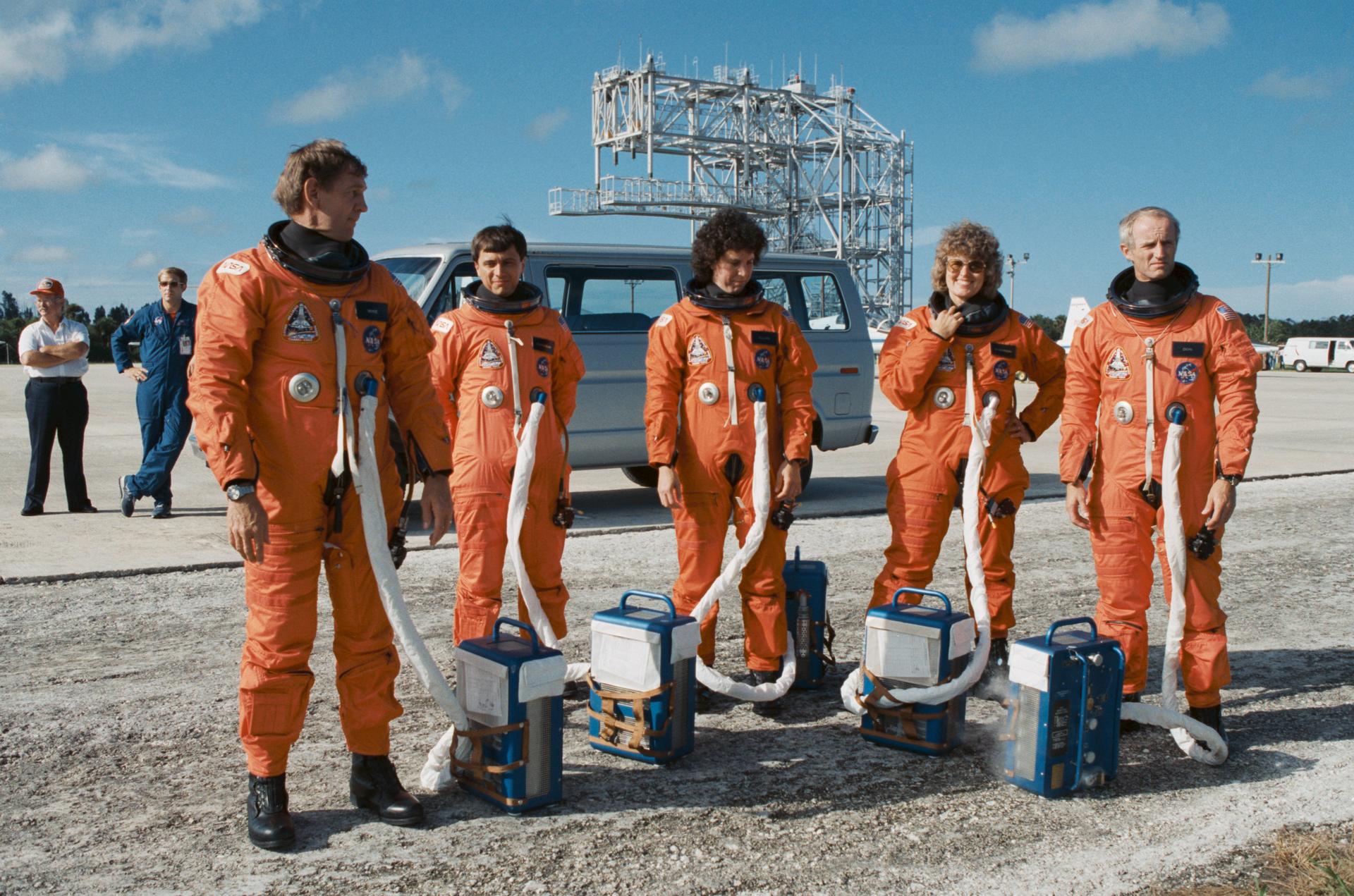
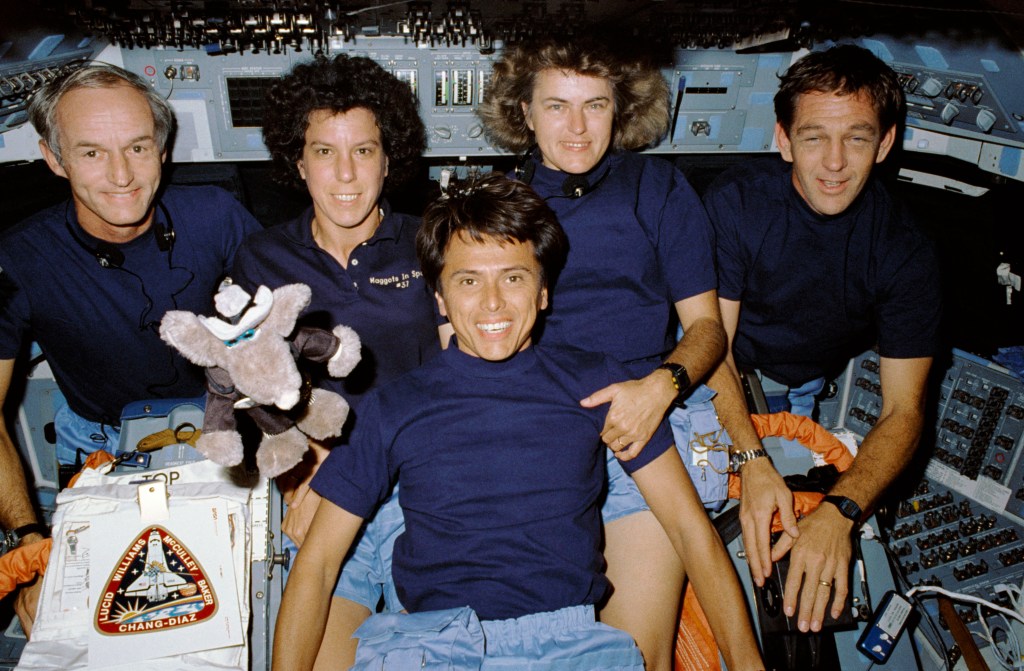
The primary payload for STS-34, Galileo/Jupiter spacecraft and attached Inertial Upper Stage (IUS), deployed around six hours into the flight, placing Galileo on trajectory for six-year trip to Jupiter via gravitational boosts from Venus and Earth and possible observational brushes with asteroids Gaspra and Ida. The STS-34 crew included Donald E. Williams, Commander; Michael J. McCulley, Pilot; Shannon W. Lucid, Ph.D., Mission Specialist; Franklin Chang-Diaz, Ph.D., Mission Specialist; Ellen S. Baker, M.D., Mission Specialist.
STS-43
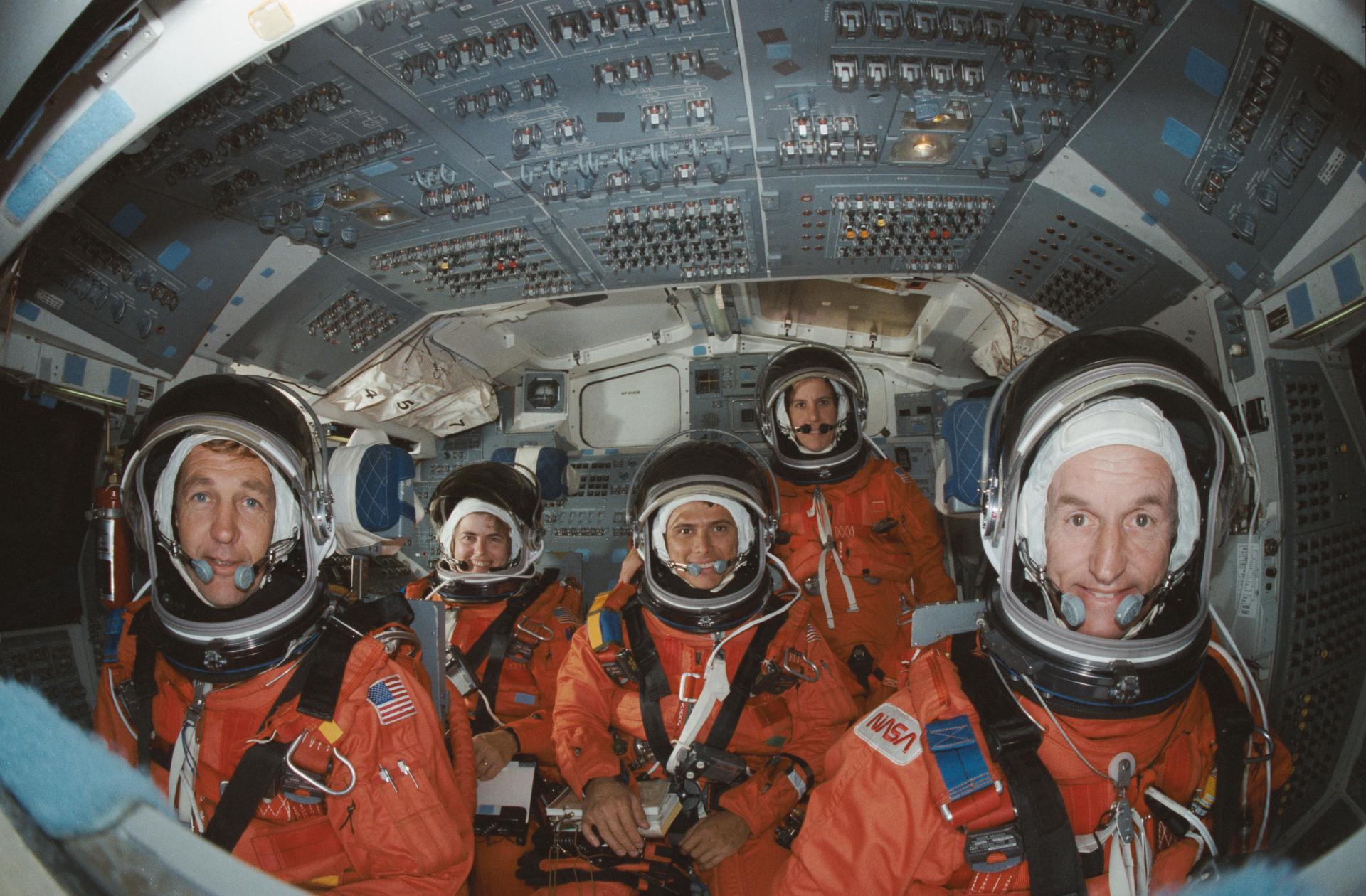
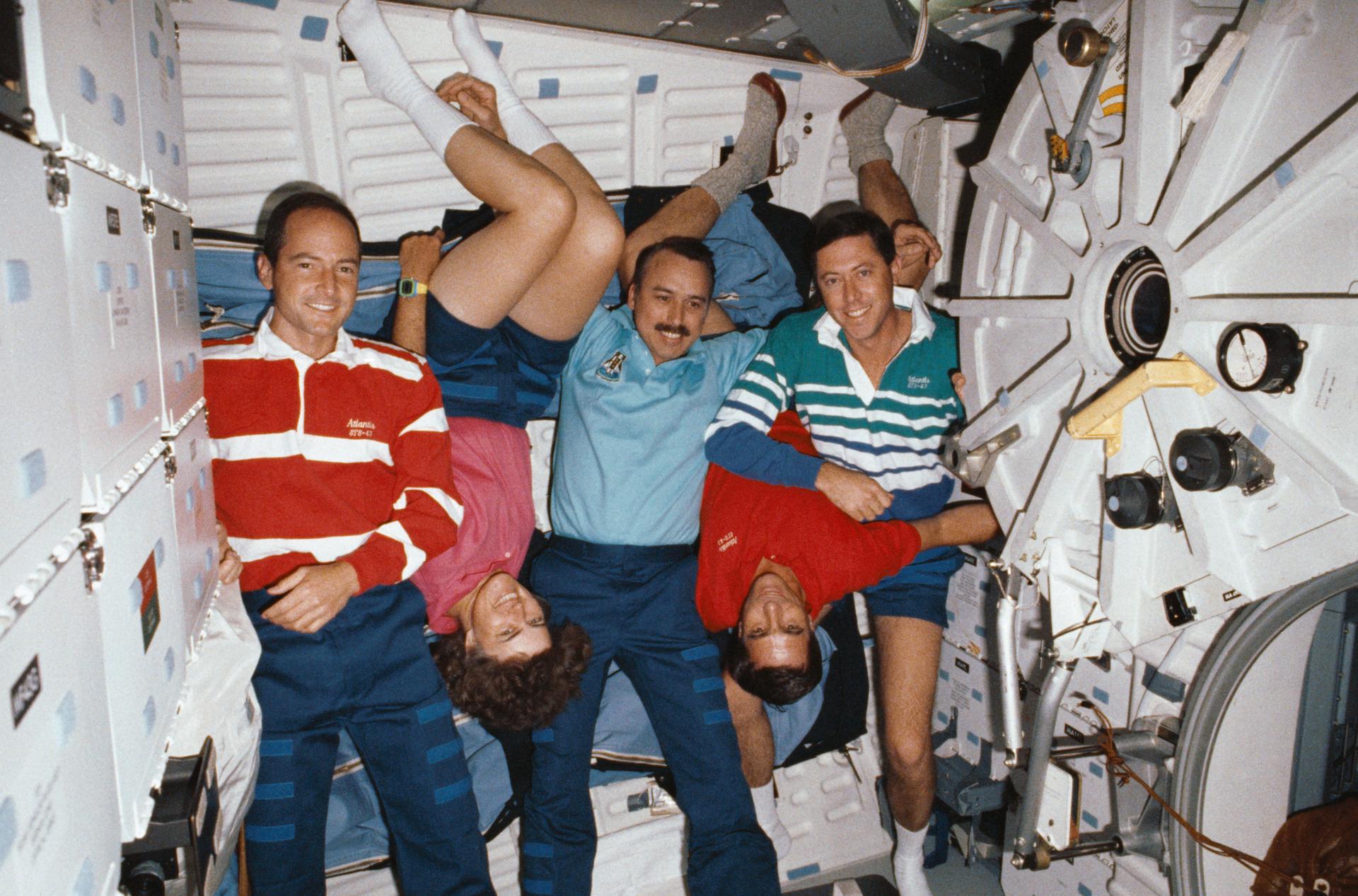
The primary payload for STS-43, Tracking and Data Relay Satellite-5 (TDRS-5) deployed about six hours into flight. Crew members included John E. Blaha, Commander; Michael E. Baker, Pilot; Shannon W. Lucid, Mission Specialist; James C. Adamson, Mission Specialist; G. David Low, Mission Specialist.
STS-58
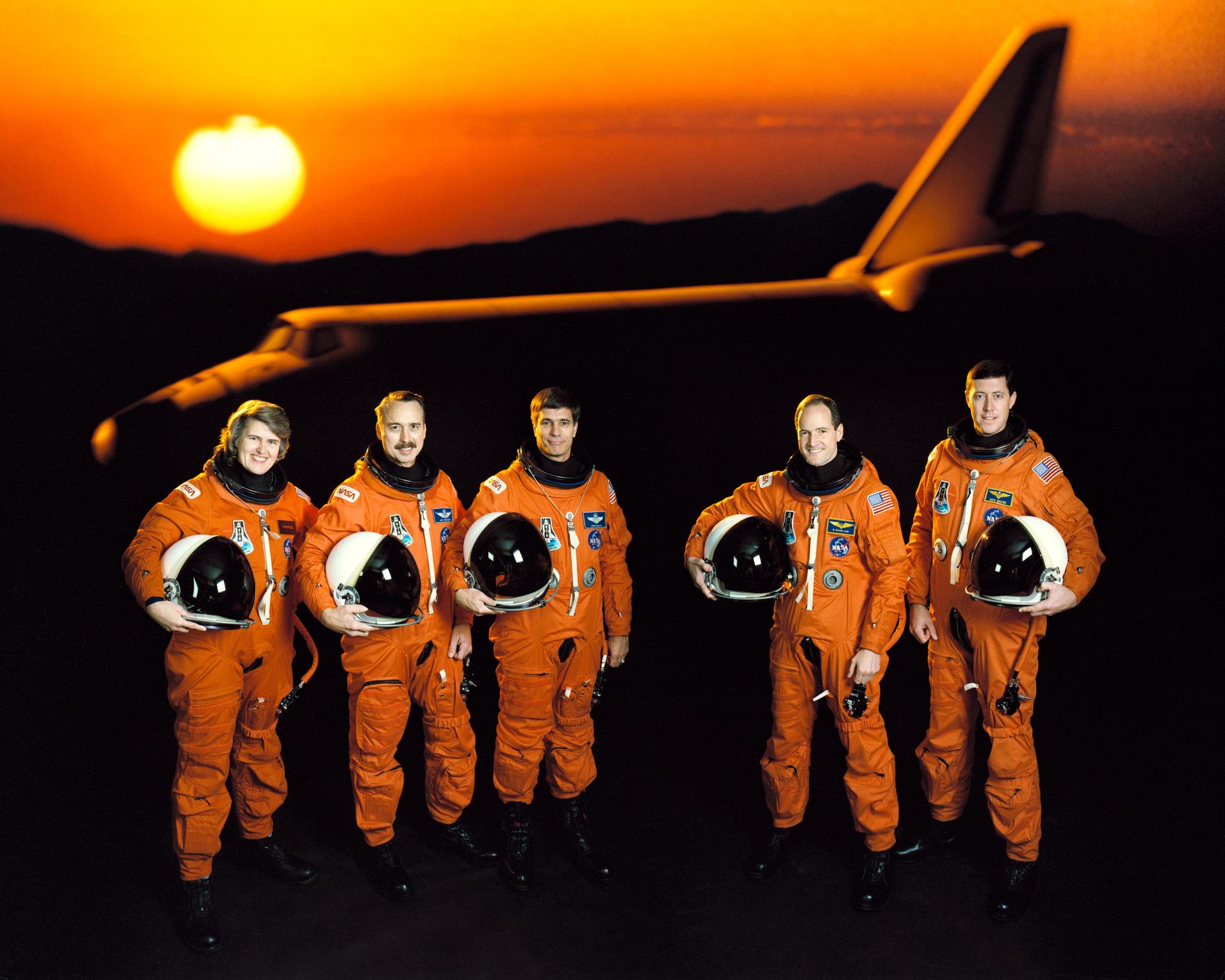
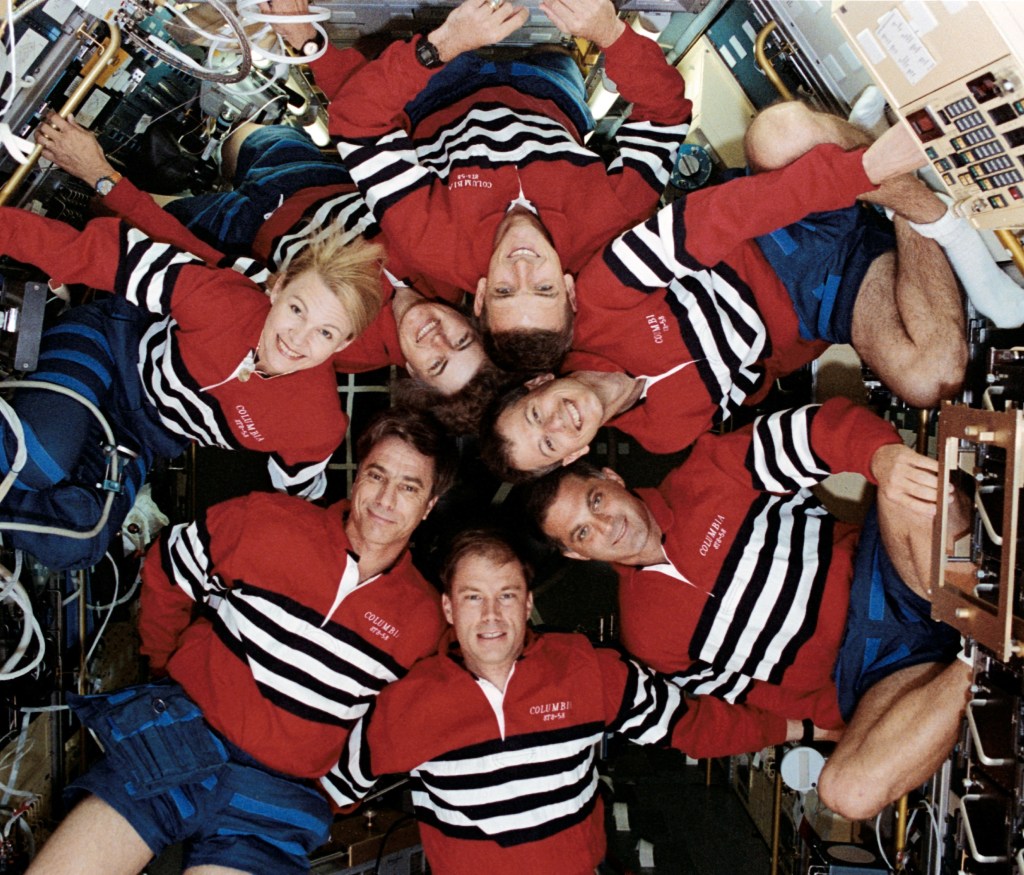
STS-58 flew as the second dedicated Spacelab Life Sciences mission (SLS- 2 with fourteen experiments conducted in four research areas: regulatory physiology, cardiovascular/cardiopulmonary, musculoskeletal, and neuroscience. The crew included John E. Blaha, Commander; Richard A. Searfoss, Pilot; M. Rhea Seddon, Payload Commander; William S. McArthur, Jr., Mission Specialist; David A. Wolf, Mission Specialist; Shannon W. Lucid, Mission Specialist; Martin Fettman, Payload Specialist.
Shuttle-Mir
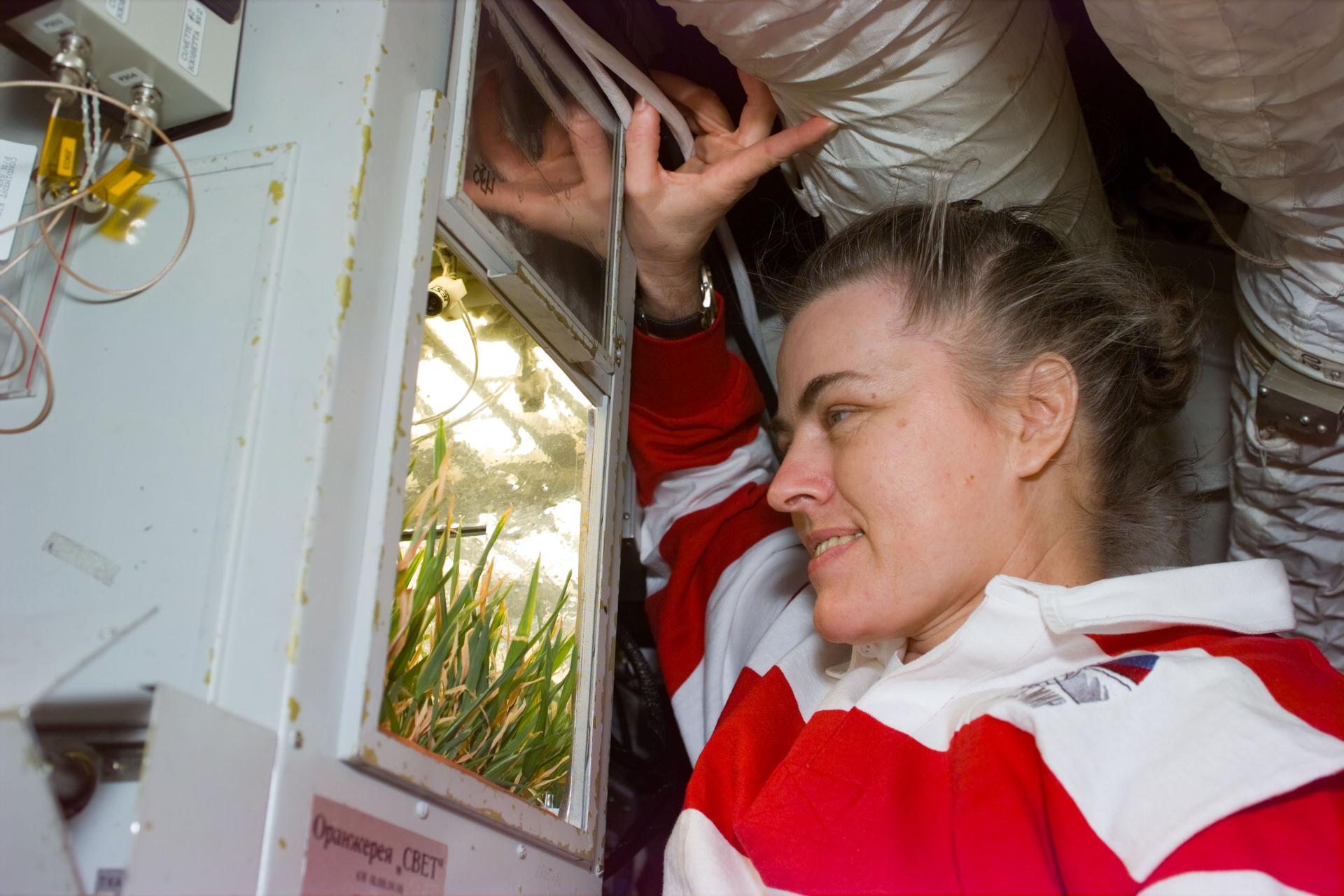
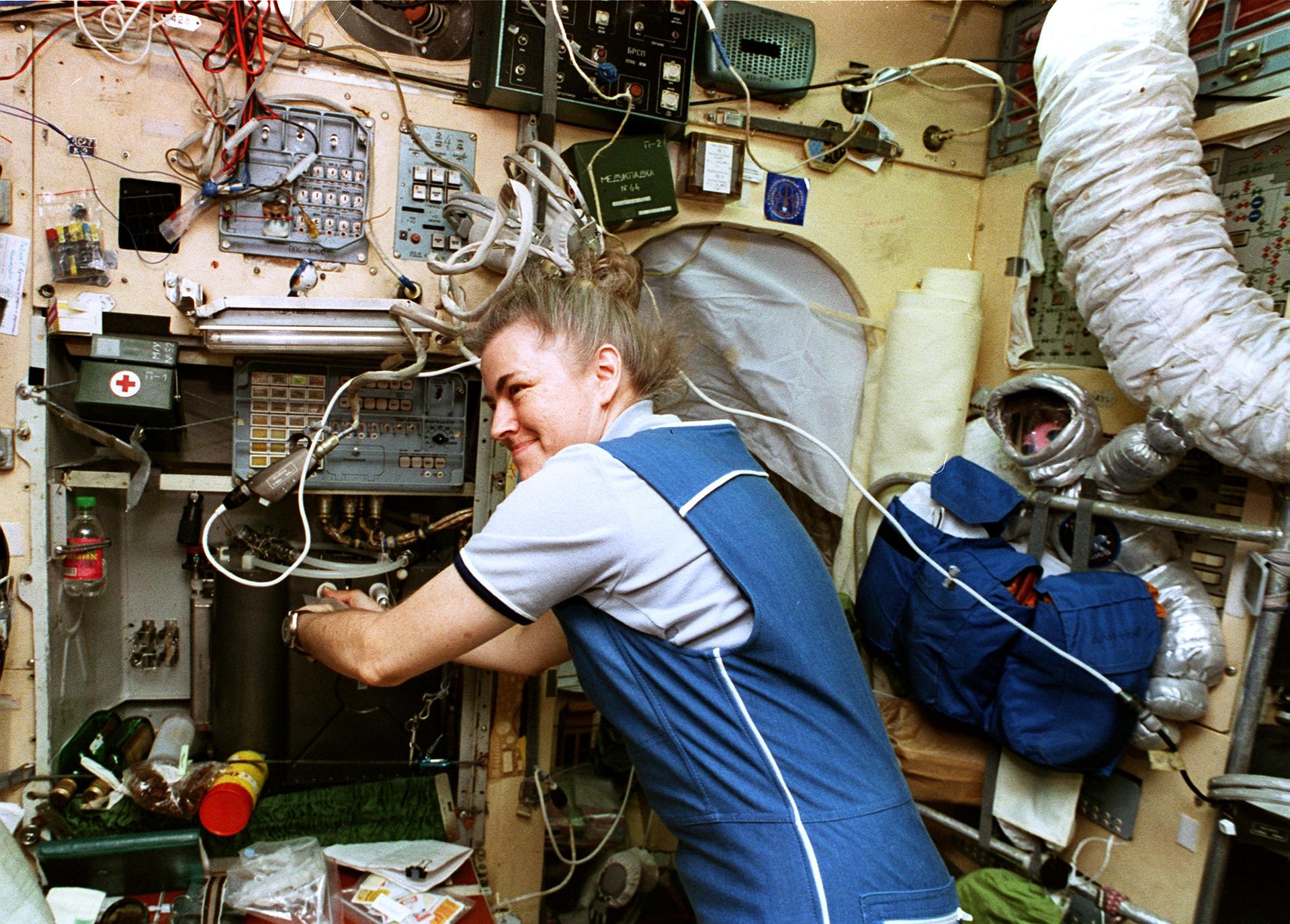
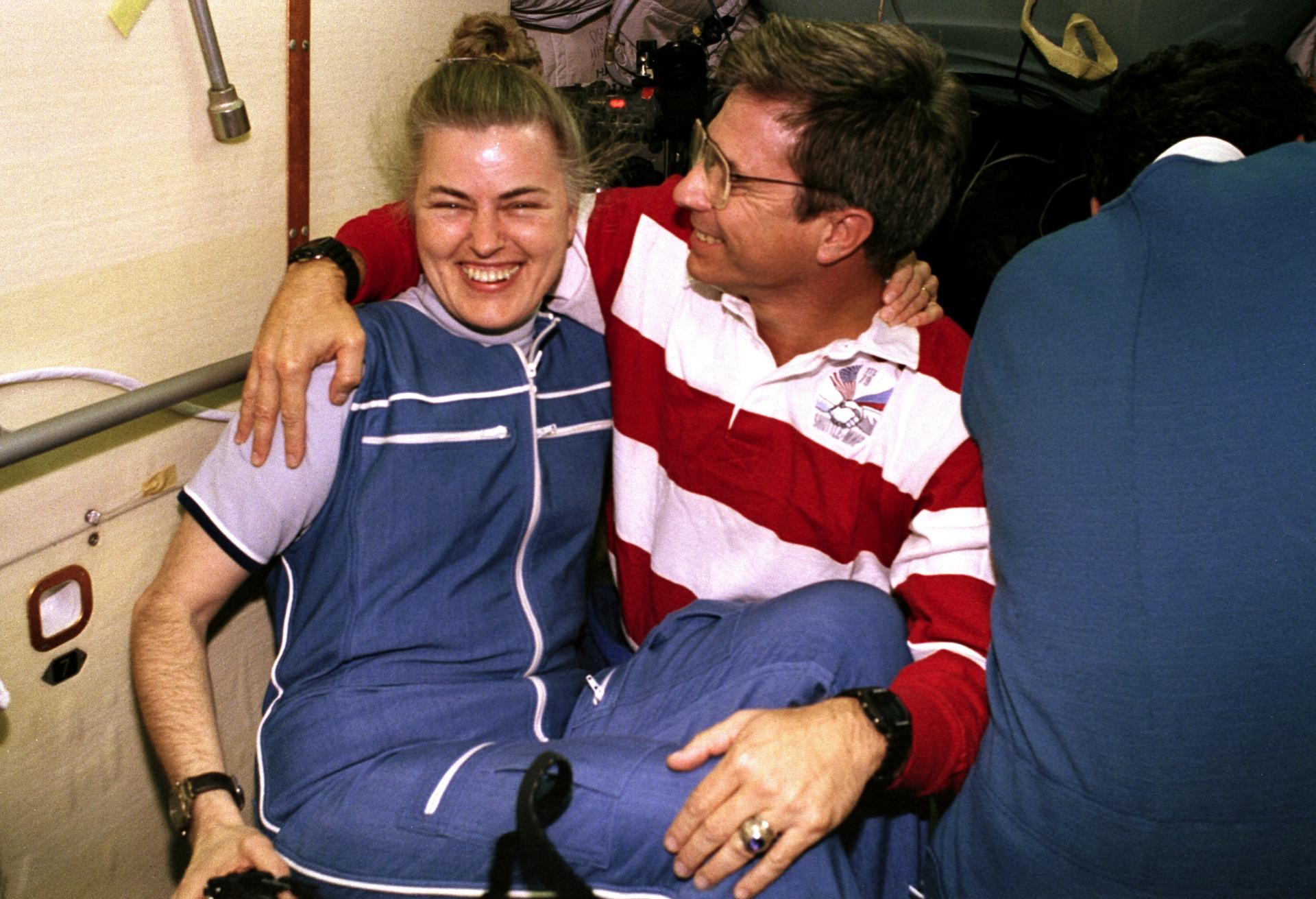
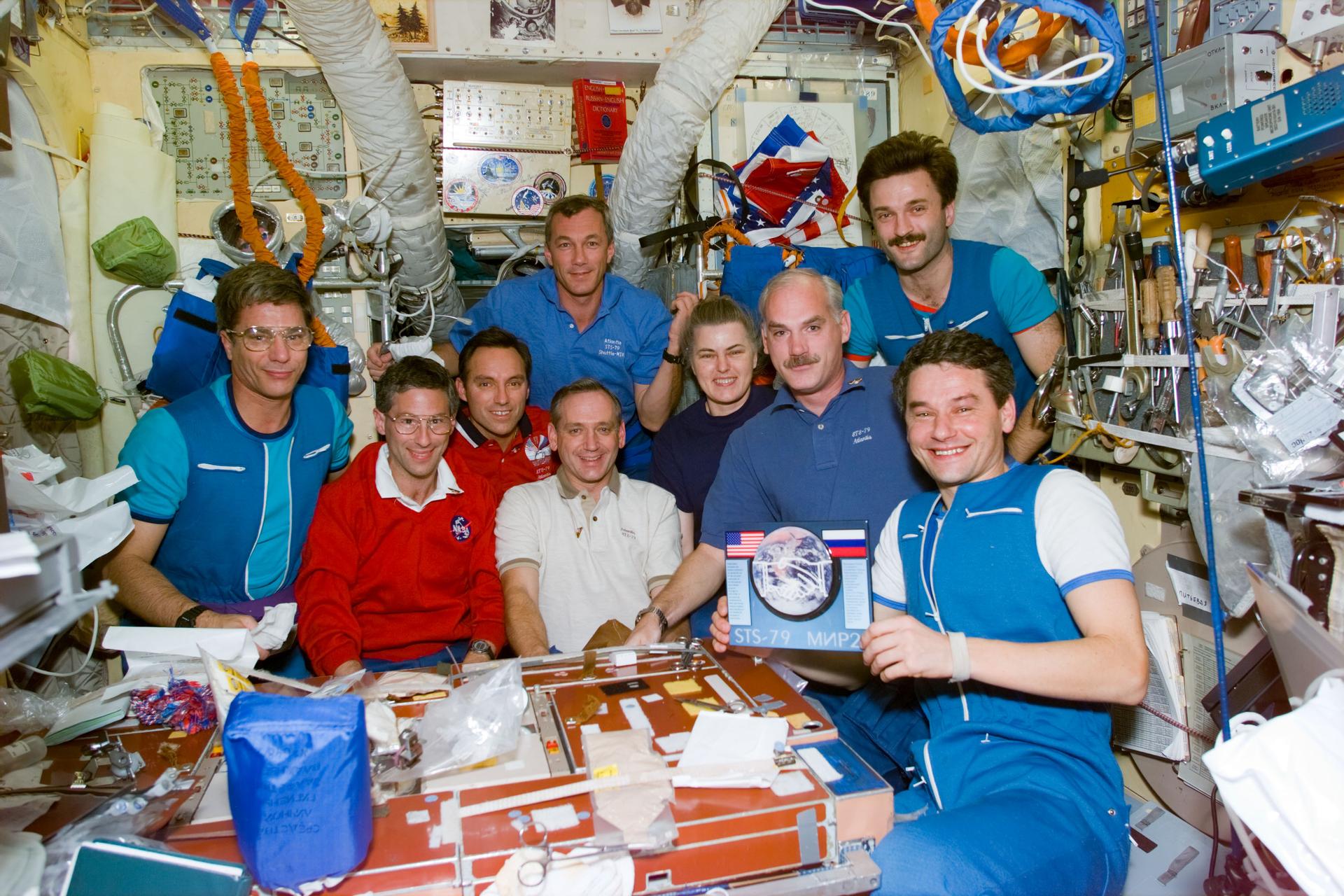
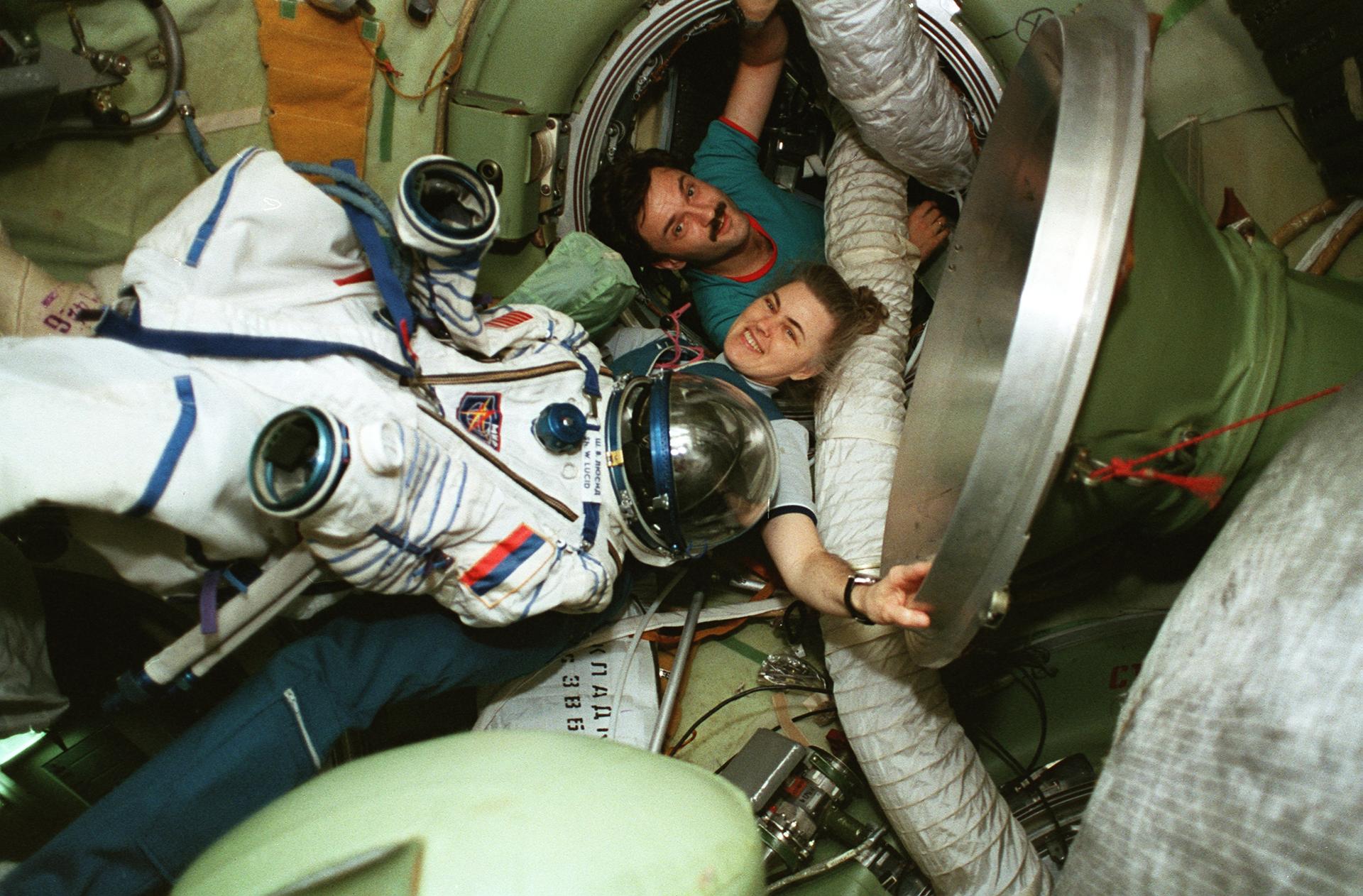
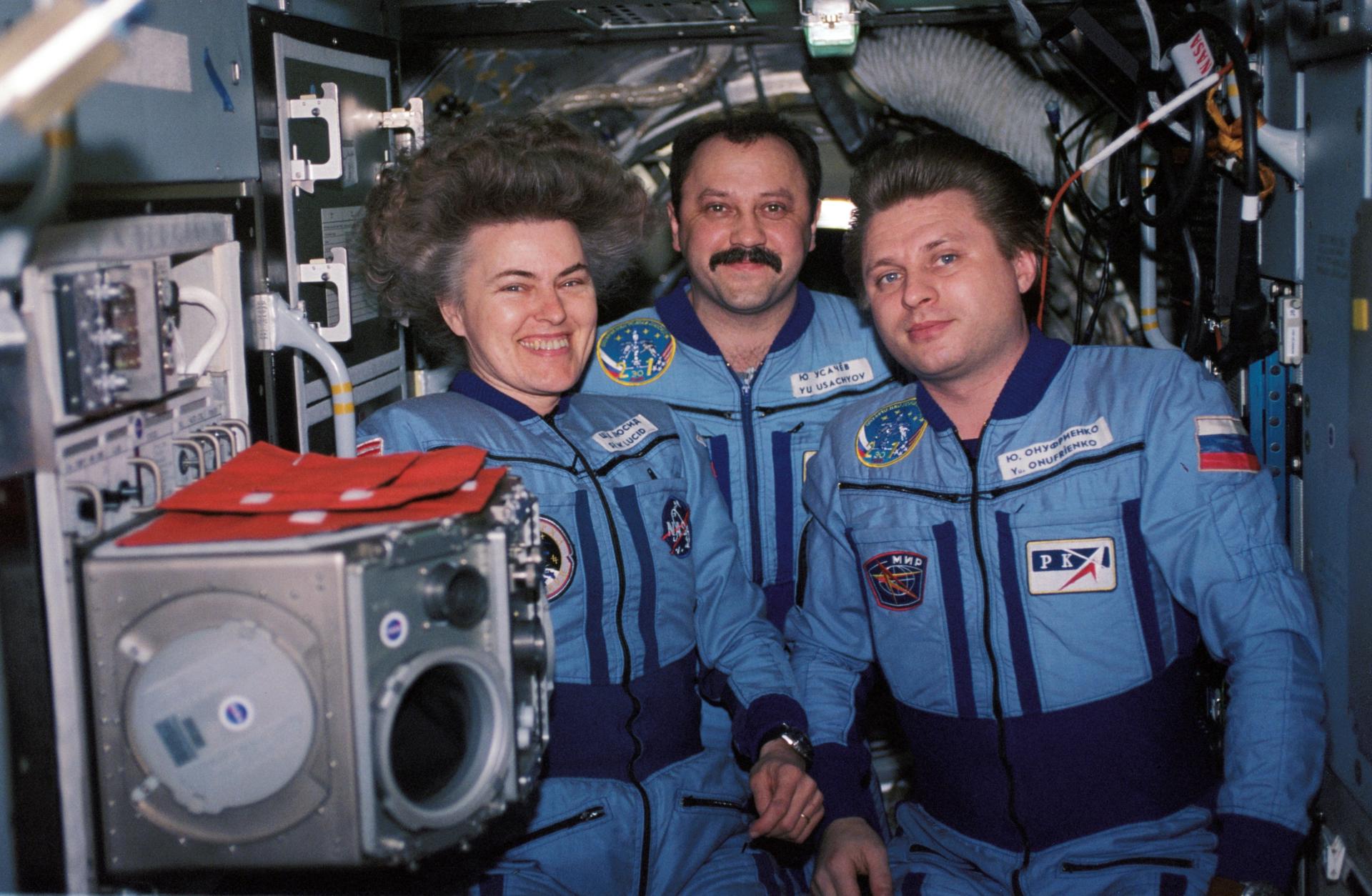
Shannon Lucid flew to Russia’s Mir space station aboard STS-76 to become the first American woman to reside on a space station. Months later, she returned to Earth aboard STS-79, after spending a total of 188 days in space and setting an American long-duration spaceflight record.
Chief Scientist and CAPCOM
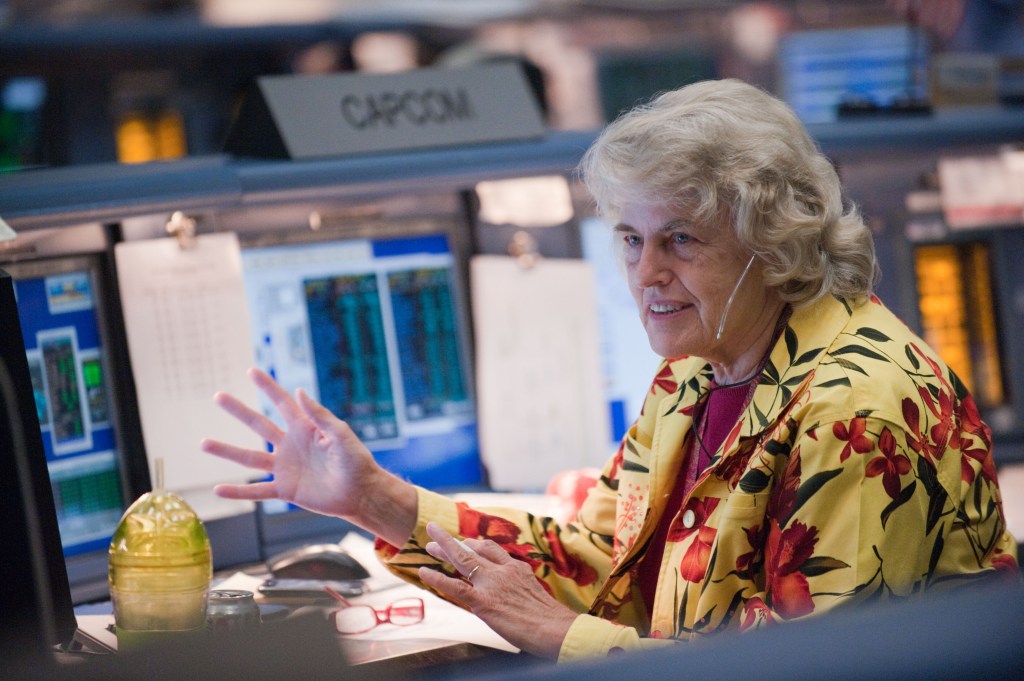
Dr. Shannon Lucid served as NASA’s Chief Scientist stationed at NASA Headquarters, Washington D.C., with responsibility for developing and communicating the agency’s science and research objectives to the outside world. She returned to JSC in fall 2003 and resumed technical assignments in the Astronaut Office. She served as a CapCom in Mission Control for numerous Space Shuttle and International Space Station (ISS) crews, providing a friendly voice for her friends and colleagues in space, including the crew of STS-135 on the final mission of the Space Shuttle program.
Excerpt from an interview with Shannon Lucid
Houston, Texas
19 August 2021
Lucid: Norm [Norman E. Thagard] went over to Russia and flew on the Soyuz up to [the Russian Space Station] Mir, so when it started Norm was going to be the only one. It was a one-time deal. As Norm started his training, the Russians—however it works at high levels, you never know—they were talking about, “Well, maybe we can extend the program and get more flights.” When they first started talking about it, Norm wanted to go fly, and I told him I’d love to fly on Mir. Norm was a logical choice because he was a medical doctor, and Norm was very good with languages. Norm was there. There was this feeling that the program was going to be extended, there were going to be a few more exchanges, the Shuttle was going to dock with Mir, and we were going to exchange crew members. But there wasn’t anything formalized.
One afternoon Hoot [Gibson] called me up and said, “Shannon, you still want to go over to Russia and fly on Mir?”
I said, “Oh, I’d love to do that.”
He said, “Well, I tell you what, you can go out to the Defense Language Institute [DLI] in California and learn a little Russian. Because if this actually comes to pass, we really need to have some people that are a little familiar with Russian. Can you go out there Monday?” This was Friday afternoon.
I said, “Well, actually, Hoot, my daughter is getting married next weekend. Could I wait a week and go out the Monday after she gets married?”
Hoot said, “Oh, we’ve waited this long, what’s a week going to make any difference? Now this is not a flight assignment; you’re not getting a flight assignment. All this is is just a tour out there at the Defense Language Institute to learn a little Russian.”
John Blaha got a similar call. According to my understanding, we were the only two that ever expressed any interest that were willing to go. John and I went out to California, to Monterey, and we took Russian together for I don’t know, three or four months, however long it was. I was never actually told by anybody in the office that we were going to be assigned to the flight.
We went out there, and John was talking, “Well, are we going to be assigned? Are we not? What is going to happen?” John likes to talk. We talked about this. Then John said, “If we’re going to go to Russia, I need to have some winter clothes.” He was going to go buy a coat and one weekend he said, “Do you want to go over to the sports store?”
I said, “I’m not spending any money until I know where I’m actually going to go or whatever is going to happen.”
One afternoon I got back. It was toward the end of our time at DLI, when I thought we were supposed to leave Monterey, and I got back into my little room and the phone rang. It was from somebody from JSC in the Travel Office. They were asking for some information. I said, “Why do you need this information?”
They said, “We’re updating your passport.”
I said, “What for?”
They said, “You’re going to Russia in January, and we have to get this ready.”
I said, “Oh, I am? Oh, thanks for letting me know.”
The next day I told John, and I said, “Hey, I guess I’m ready to go buy a coat.” Then I ordered a very heavy winter jacket.
Shannon W. Lucid
A veteran of four previous Space Shuttle missions, Lucid launched to Russian’s Space Station Mir aboard STS-76 on March 22, 1996, to become the first American woman to reside on an orbiting space station. Because of a delay with the launch of STS-79, her ride home, she stayed for six more weeks and set the U.S. record for long-duration spaceflight and a world record for a woman at the time with 188 days orbiting the Earth.
Read her NASA biography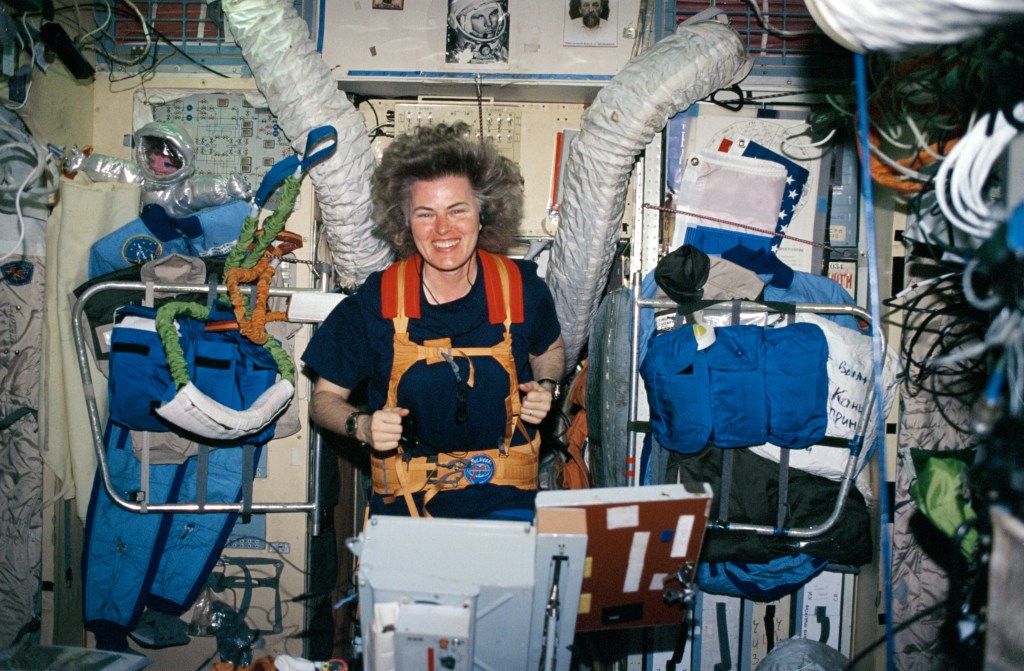
Excerpt from an interview with Shannon Lucid
Houston, Texas
30 September 2021
Lucid: You asked me about the jobs that I was assigned to after I got back from Mir, and I CapCommed [performed Capsule Communicator duties] some, and I can’t remember exactly what order. I was also the [International Space Station] Phase I rep for a long time. One of the things that I talked to people about when I came back was that you need to have some training for people that are going to go on long space missions, because it’s different than a short Shuttle mission. You need to train people in expedition behavior. Flying on the Space Station, it was an expedition, the same kind of expedition as all these guys had done going to the Arctic and Antarctic and all these different kinds of expeditions. If you looked at all these expeditions there were certain characteristics, certain things in expeditions, that would set up for a great experience.
One of the big things that Ellen [S. Baker] and I were trying to push was that you could have somebody that’s the leader or the commander, but you really need someone that understands the job of the commander is not to sit around issuing orders and saying what to do. The job of the commander is to just make sure that everybody has the resources they need so that everybody can get the job done and to make sure that you’re a team that works together. That was the big thing. It’s not one person being a little superstar and everybody else. You had to work as a team, and that was the most important thing.
As I tried to tell people, the most important thing on a long mission are the people that you work with. Now you’re not going to ever have an ideal group of people. So you need to help the people, the expedition members, to understand how you could work with people to make everybody flourish. That was what Ellen and I were advocating for.
Behavioral Science helped out some. We worked together and developed expedition training. It was really good because we read a lot of books and talked to a lot of people that had studied expeditions. We got all this information together as to what makes a good expedition crew person, and we put together a training session. I don’t know whether it was for two days or one day. We would take a small group of people, go through this training with them, and go off-site somewhere. It was really good. We did quite a few of the people in the office.
But at that time most people didn’t want to go on an expedition, they just wanted the short Shuttle missions. There was a big push in the office. A lot of people didn’t want flights extended. They thought two weeks would be a max. But we were going into the Station era, so you needed people to be trained for long periods of time and what it’s like to be away. Back in the early days you were really out of contact. You didn’t have all the contacts that they have now like on Space Station.
There was a chamber; it was there on-site, and it had been used I think when they were doing some early chamber runs before Skylab. We said that we could use it. For two or three days people would be in there, a group of people together. They would have no contact except somebody by radio contact, and they couldn’t call their family. It would give everybody a feeling of what it’s like to be on a space station.
I thought everybody can be happy if you know what to bring with you to make yourself happy. I knew, and I happened to know this before I went up on Mir, that I would be happy and contented as long as I had books to read. NASA was very responsive, and they provided books. But I’m well aware that’s not what will make everybody happy. A person needs to think, what would I really like to have. Maybe it’s watching movies or listening to certain music or different things, whatever it is.
I was thinking well, okay, you have a zip lock bag. You can put whatever you want in this zip lock bag that you can carry with you that would make you feel good for the six months you were gone. That was in the chamber. People were supposed to be thinking about that. They were talking about how to interact. That worked out really well.
Read Shannon Lucid’s Oral History Interviews
The transcripts available on this site are created from audio-recorded oral history interviews. To preserve the integrity of the audio record, the transcripts are presented with limited revisions and thus reflect the candid conversational style of the oral history format. Brackets and ellipses indicate where the text has been annotated or edited for clarity. Any personal opinions expressed in the interviews should not be considered the official views or opinions of NASA, the NASA History Office, NASA historians, or staff members.