












FLIGHT OPPORTUNITIES COMMUNITY OF PRACTICE WEBINAR
Heat Shield Flight Testing and Space Industry Growth: NASA Successes
May 6, 2026
Speakers
- Jan Stupl, Project Manager, NASA’s Ames Research Center
- Dr. Matthew Gasch, Research Scientist, NASA’s Ames Research Center
- Jonathan Morgan, Arc-Jet Liaison, NASA’s Ames Research Center
- Dr. Hannah Alpert, Aerospace Systems Engineer, NASA’s Ames Research Center
- Dr. Marat Kulakhmetov, Head of Analysis and Hypersonics, Varda Space Industries
- Jake Moomaw, Senior Thermal Engineer, Varda Space Industries
Abstract
When venturing to other planets or returning to Earth, safe atmospheric entry is a top priority. NASA has decades of experience in creating thermal protection systems (TPS) that help spacecraft withstand the intense heat generated when entering an atmosphere. Join this webinar to hear how TPS technologies advanced through the Flight Opportunities program are building commercial space capabilities, illustrating what’s possible through NASA and industry collaboration.
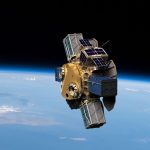
The C-PICA (Conformal Phenolic Impregnated Carbon Ablator) powerful yet lightweight protective material originally developed at NASA’s Ames Research Center in California’s Silicon Valley is enabling important commercial space applications. For example, in early 2026, a heat shield based on this NASA technology and manufactured by Varda Space Industries re-entered Earth’s atmosphere for the first time. Launched into orbit on Nov. 28, 2025, the capsule’s return tested how effectively the NASA-developed, Varda-produced C-PICA material protected the company’s W-5 spacecraft — and the science and technology experiments inside it — from the extreme heat of speeding through Earth’s atmosphere. Supported by Flight Opportunities via a Tipping Point award, this flight test demonstrated how NASA is helping open the door to greater growth of in-space manufacturing and commercial re-entry technology for routine orbital return, potentially expanding the U.S. space economy.
In a discussion moderated by Flight Opportunities representatives, speakers from NASA’s Ames Research Center and Varda Space Industries will discuss the C-PICA flight testing as well as commercial use of other NASA TPS technologies, such as ADEPT (Adaptable Deployable Entry and Placement Technology). Testing of ADEPT with Flight Opportunities helped pave the way for commercialization of this cutting-edge technology, which serves as both a heat shield and an aerodynamic surface. Panelists will also explore how partnerships between industry and government accelerate transformative technologies and foster the growth of America’s orbital economy.
Speaker Bios
Dr. Matthew Gasch received his Ph.D. in materials science and engineering from the University of California, Davis, Davis CA in 2003. Dr. Gasch’s professional career as a research scientist/project M=manager spans 20+ years at NASA’s Ames Research Center where he is an internationally recognized expert in entry systems and thermal protection materials. As a project manager he has led several groundbreaking R&D efforts that have had significant impacts on national programs including the Multi-Purpose Crew Vehicle (Orion) and the Mars Science Lab (MSL). In an effort to revolutionize entry, descent, and landing (EDL) systems for future planetary probes across the solar system, Dr. Gasch currently supports several advanced TPS development efforts investigating new TPS materials including 3D Woven TPS (HEEET/3MDCP) Advanced Ablative TPS solutions and Phenolic Impregnated Carbon Ablator – Domestic (PICA-D).
Dr. Hannah Alpert is an aerospace systems engineer at NASA’s Ames Research Center in the Entry Systems and Vehicle Development Branch, working on heatshield design, instrumentation, modeling, and post-flight analysis.
Dr. Marat Kulakhmetov was part of the founding team of engineers to join Varda Space Industries, where he currently leads the aerodynamics department. While at Varda, Dr. Kulakhmetov has helped architect the W-Series manufacturing and EDL mission, develop the reentry aeroshell, and contributed to the design of critical tools required to fly the capsule such as: 6DOF simulations, aerodynamic/aeroheating databases, flight safety solvers, and more. He worked to establish the Varda Hypersonic Testbed program, which will support fundamental science and flight qualification of hypersonic Department of Defense and NASA payloads, offering real-world flight heritage for unique environments that cannot be simulated on Earth. Prior to Varda, Dr. Kulakhmetov worked as a senior propulsion research engineer at Blue Origin, where he helped architect the BE-7 LOX/LH2 lunar lander engine, the BE-3U-II LOX/LH2 upper stage engine, ran trade studies for future Blue Origin programs, and developed analysis tools for engine/vehicle/mission optimization, modeling evolution of stresses within additive parts, and more. Dr. Kulakhmetov is a graduate of Purdue University, where he studied high enthalpy interactions within hypersonic shock-layer flows. He was an intern at NASA Ames in 2015, where he modeled effect on ablation products on radiation sensed from hypersonic flows.
Jacob Moomaw has been in the aerospace industry for 14 years, focused on high temperature materials development and thermal protection systems. Throughout his career, Jacob has made major contributions at both SpaceX and Blue Origin, developing materials for Falcon 9 first stage, Dragon 2 space capsule, and the New Glenn rocket. He has extensive experience in materials testing, TPS attachment methods, materials manufacturing, surface treatment methods, and multi-layer Insulation. He currently leads the TPS efforts at Varda Space Industries, bringing PICA manufacturing on-site and developing an in-house TPS for the aft body of the Winnebago Vehicle.