













Current Drop Tower Challenge
Secondary students from the United States are annually challenged to design and build hardware to be tested in NASA’s 2.2 Second Drop Tower.
2027 Drop Tower Challenge: Fluid Shift
WHAT?
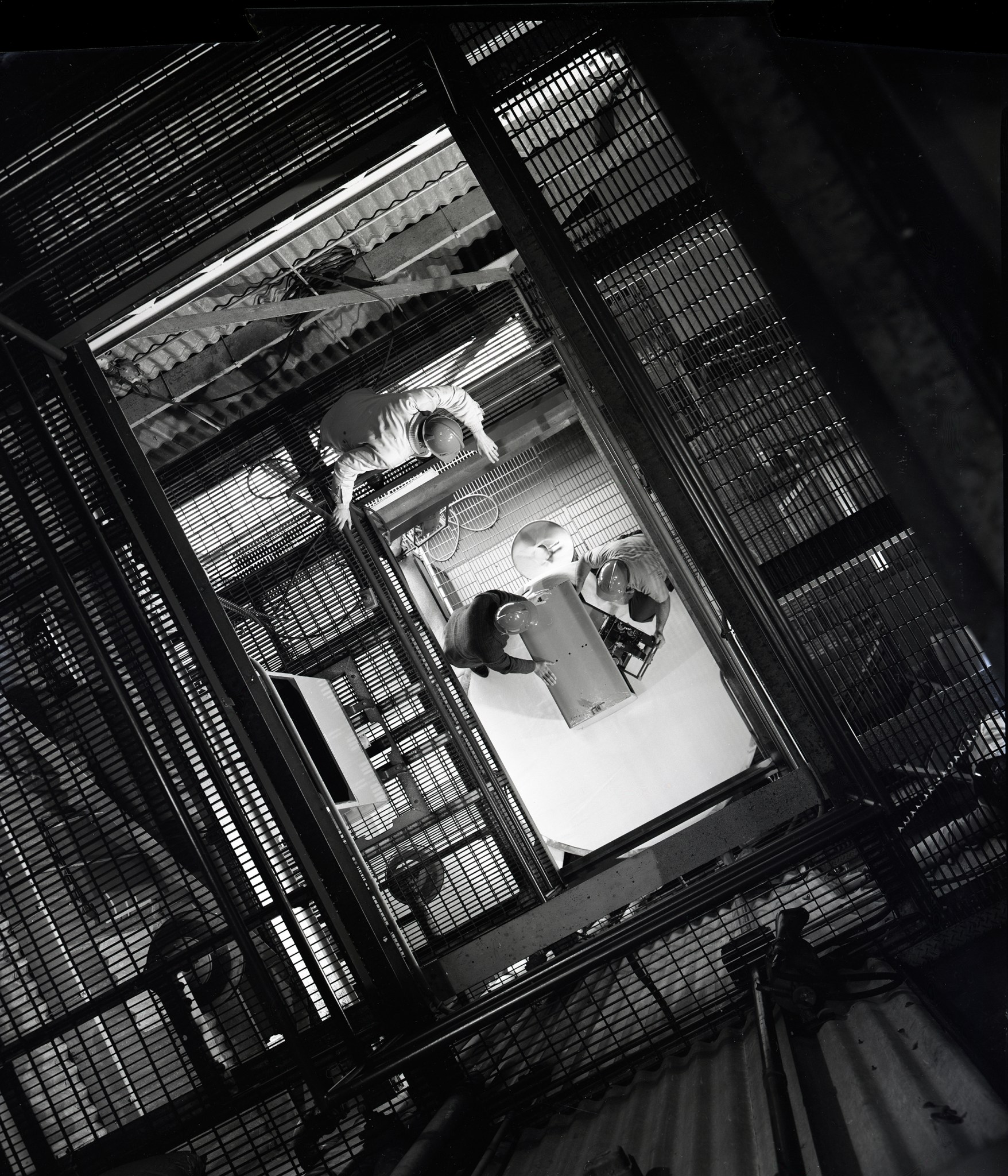
Teams of grade 8-12 students are challenged to design and build small devices that will experience apparent weightlessness, i.e. microgravity, in NASA’s 2.2 Second Drop Tower. Each test object will be placed with water (and a little liquid soap) in a plastic vessel. Each device must suck in as much water as possible during the fall, where that will be evaluated by the drop in the vessel’s water level. The fluid shift must result from the device’s wetting properties only and not mechanical means, etc.!
Teams are only responsible for their small devices; NASA will provide the rest of the experimental hardware including the water vessel, video camera, lighting, etc. After developing their concepts, the youth prepare their proposal, consisting of conceptual drawings and a short entry form, which is e-mailed to Ed-DropTower@lists.nasa.gov.
If selected, the youth prepare their devices based on provided guidance. The devices are then sent to NASA where they will fall 24 meters (79 feet). Video from the drop tests is provided for student analysis and their written report on what was learned. The report and test performance are both key factors in NASA’s selection of winners.
WHO?
This design challenge is for students in grades 8-12 from U.S. schools, including the fifty states (and the tribal nations within them), District of Columbia, Puerto Rico, American Samoa, Guam, the Northern Mariana Islands, the U.S. Virgin Islands, and all DoWEA schools (which are for children of U.S. military personnel). Except for the DoWEA schools, this challenge is not open to participants outside of the United States regardless of citizenship.
Teams will be favored over individuals in selection. Youth are expected to do most of the work, but may get help from adults, for example in building their test objects. Furthermore:
- Each team is required to have an adult advisor, who may advise more than one team.
- Teams may be of any size, but a maximum of four students per team will be invited to the 2027 ASGSR meeting; see the next section.
- Each student may belong to no more than one team.
- Each team may submit no more than one proposal.
- An organization (e.g., school, science center, 4-H club, Scout troop) may have many teams, but it may submit no more than two proposals to NASA. It is envisioned that no more than one proposal will be selected per organization.
SELECTION?
NASA anticipates selecting up to 30 teams to build devices to be tested at the Glenn Research Center in Cleveland, Ohio. After evaluation of the experimental results and teams’ reports, a small number of top-performing teams will be invited to present their results in a student poster session at the 2027 meeting of the American Society for Gravitational and Space Research (ASGSR).
More specifically, teams will be evaluated for ASGSR meeting participation based on the following:
- Performance during testing in the 2.2 Second Drop Tower
- Team’s approach to the challenge (as revealed in their proposal and especially their written report) including their application of:
- engineering design process
- scientific method
- Team’s analysis (as revealed in their final report)
- Team’s written report
- Compliance with rules and instructions
- On-time submission of the proposal, test objects, and written report
WHERE?
Participation is remote, where participants do not travel to NASA for the testing. An exception is for those teams invited to present their results at the 2027 ASGSR meeting, but its location and dates will not be announced until Dec. 2026.
COST?
There is no cost to participate in the challenge other than for (1) preparation of the test objects, (2) shipment of the test objects to NASA, and (3) travel costs for those invited to present their results at the ASGSR meeting. Regarding the latter, the ASGSR has typically provided travel support of $500 each for invited non-local students who present their results at the conference.
WHEN?
| 2026 | October 26 | Proposal deadline |
| Late November | NASA announces teams selected for testing | |
| Mid-December | NASA provides proposal feedback | |
| 2027 | Jan.-February | Teams prepare their devices |
| January 15 | Deadline to update NASA on your designs, e.g., materials | |
| February 18 | Deadline for arrival of devices at NASA | |
| Feb.-March | Tests conducted in NASA’s 2.2 Second Drop Tower | |
| April | Analysis and report writing | |
| May 1 | Deadline for written report | |
| Mid-May | NASA announces winning teams | |
| Fall | Annual ASGSR meeting (typically late Oct. to early Dec.) |
Deadlines
- This is a competition and failure to meet the three deadlines shown above in bold will disqualify a team from being selected for ASGSR participation, if not more!
- The proposals and written reports must be e-mailed to Ed-DropTower@lists.nasa.gov by 11:59 PM (your local time) on the listed dates. Each of these documents must be in English, submitted in a pdf format, and be less than 9 MB in size.
WHY?
Participation in a nationwide NASA design challenge could be good to include in college applications. And it is likely that your team will be selected for testing. Thus far, 100% of the in-scope proposals have been selected for participation in this annual series of problem-based drop tower challenges.
HINTS
- Follow the rules and instructions!!!
- Control and variables: You should have multiple devices so that you can compare their performance in your report–-and poster too if you are selected for ASGSR meeting participation. An added benefit is the increased probability of success with the challenge.
- Conduct your own tests: To improve your odds of success, conduct your own tests to discover which designs work best.
- Test as dropped, drop as tested: If you want to verify your designs, then you should conduct your own tests like they will be carried out in NASA’s drop tower. Consider mounting your devices in a plastic jar (or similar) in a box with a video camera and dropping the box to get a glimpse of what happens in microgravity. Just a 4-foot fall provides a half second of microgravity. While that’s not long, it can provide a hint of what will happen in the 79-foot fall in NASA’s 2.2 Second Drop Tower. For inspiration on conducting your own drop research, check out the Fire in Free Fall video by Physics Girl Dianna Cowern. You may change your device designs after your proposal is submitted, but the rules must still be followed.
- Timing is critical: Late submissions to NASA of your proposal, devices, or written report will each disqualify your team from invitation to the ASGSR meeting. Don’t wait until the deadlines to complete tasks!
- Communication: When contacting the challenge staff, please e-mail Ed-DropTower@lists.nasa.gov rather than individual staff members to avoid the chance of e-mailing someone who is vacationing, sick, etc. and not checking their e-mail.
DOWNLOADS
Fluid-Shift-2027-entry-form.docx
QUESTIONS?
Please carefully review the available information, but you may also email the challenge staff at Ed-DropTower@lists.nasa.gov.
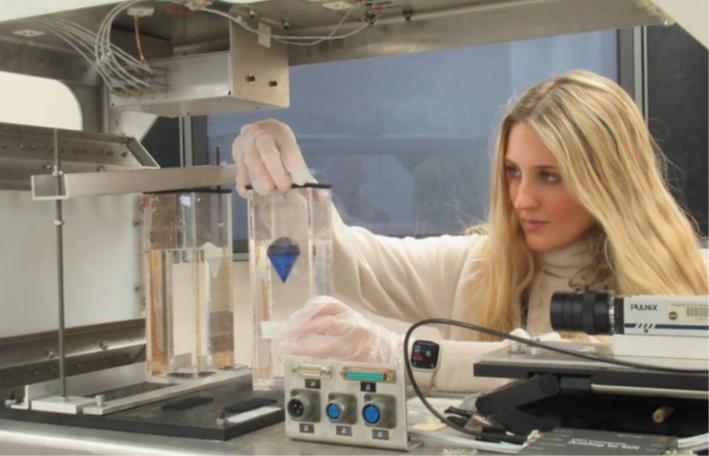
Containers with objects from a past challenge being loaded into the drop rig.