























Suggested Searches

Watch the Skies

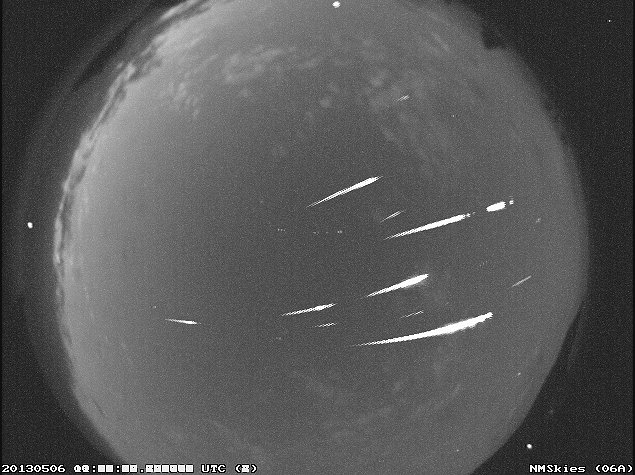
    NASA All Sky Fireball Network Captures Eta Aquarids
    1037759main_eta.jpg

    A composite image of 13 Eta Aquarid meteors from the NASA All Sky Fireball Network station in Mayhill, New Mexico the morning of May 6, 2013.  Clouds seriously hampered our view of the ETAs this year. Observations reported to the International Meteor Organization indicate an outburst in the early hours of  May 6th UTC.(Credit: All Sky …

    Read Full Post

    First Observations of the 2013 Eta Aquarids

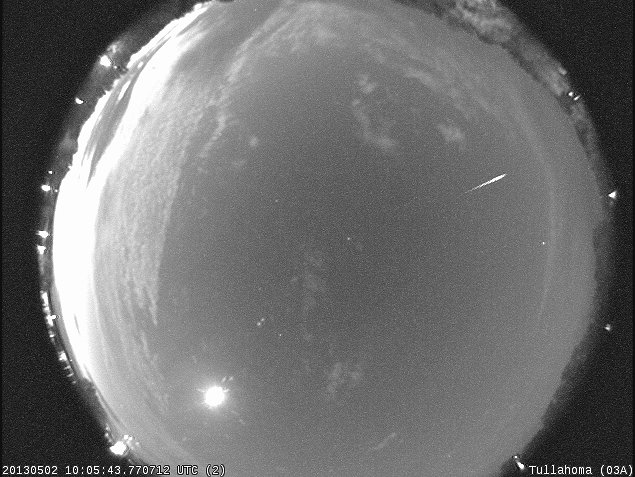
    Despite interference from the moon and clouds (and rising sun!), this morning we snagged our first observations of the 2013 Eta Aquarids.  Here’s an image of one from the all sky camera in Tullahoma, Tennessee.  The Eta Aquarids peak in the pre-dawn hours on May 6 and are material from Halley’s comet.  They zoom around …

    Read Full Post

    Lyrid Meteor Over Georgia

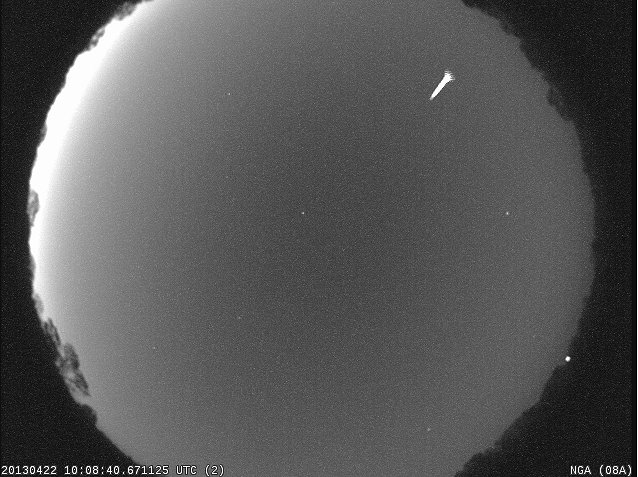
      (Credit: MSFC Meteoroid Environment Office)A Lyrid meteor streaks though the dawn sky over North Georgia College and State University. Moving at 105,800 mph, this inch-diameter piece of Comet Thatcher lasted less than one and a half seconds, burning up 46 miles above Earth’s surface. The second image shows the same meteor seen from the Tellus …

    Read Full Post

    East Coast Meteoroid

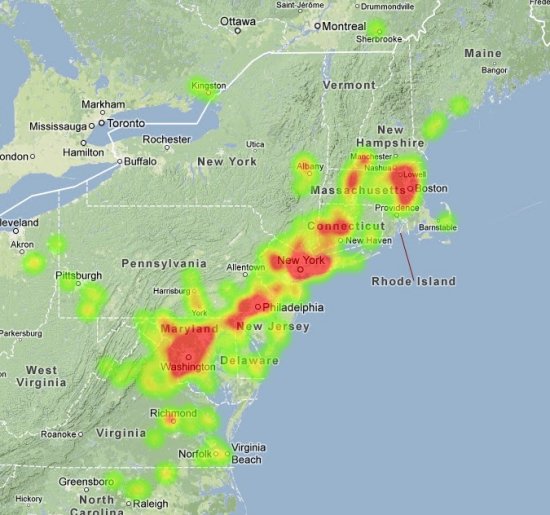
    Last night (March 22) at around 8 p.m. EDT, a meteoroid with a boulder size of ~1 yard in diameter entered the atmosphere above Pennsylvania and moved southeast, passing just south of New York City. It went dark over the Atlantic Ocean, and may have produced meteorites which dropped harmlessly into the water below. This …

    Read Full Post

    PANSTARRS images

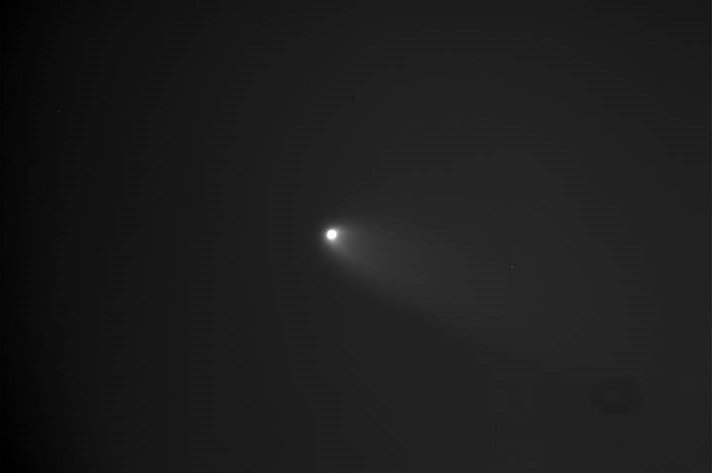
    Images were taken by Rob Suggs and Aaron Kingery in twilight through cirrus clouds around 00:36 UT on 17 Mar 2013 with a 14 inch Schmidt-Cassegrain telescope at Marshall Space Flight Center’s Automated Lunar and Meteor Observatoryin Huntsville, Ala.  The detector was a low-light level B&W video camera with a focal reducer giving a 20 …

    Read Full Post

    How Do We Know the Russian Meteor and 2012 DA14 Aren’t Related?

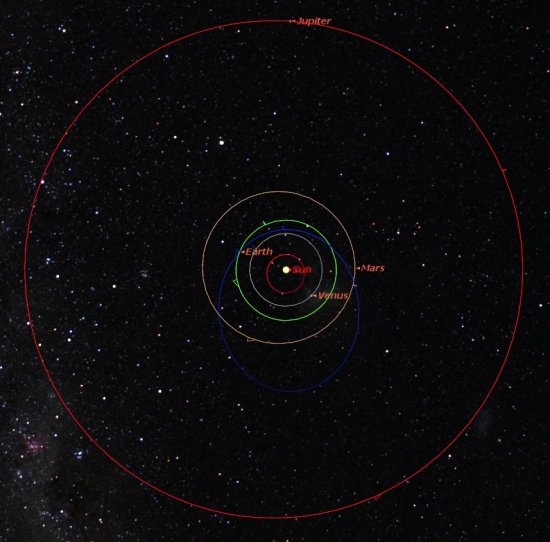
    So how can we tell that the Russian meteor isn’t related to asteroid 2012 DA14?One way is to look at meteor showers — the Orionids all have similar orbits to their parent comet, Halley. Similarly, the Geminids all move in orbits that closely resemble the asteroid 3200 Phaethon, which produced them. So if the Russian …

    Read Full Post

    Orbit of the Russian Meteor

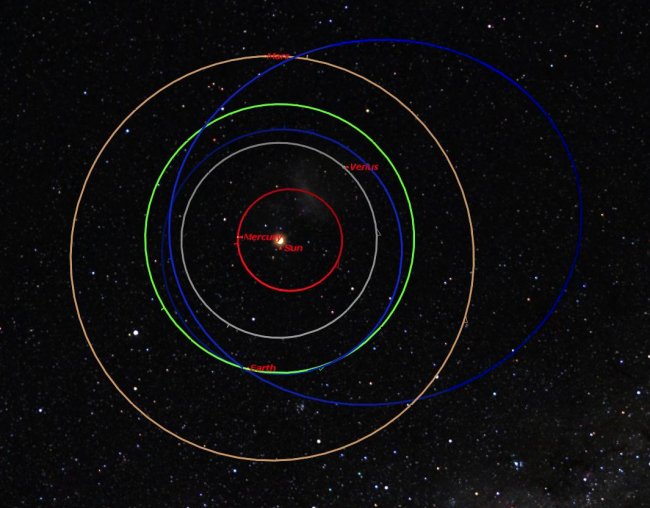
    The bright blue line in the diagram above shows the orbit of the Russian meteor prior to the meteor breaking apart over the city of Chelyabinsk. The meteor hit the atmosphere at a speed of 18 km/s (11.2 miles per second or 40,300 mph). It was moving at a shallow entry angle (less than 20 …

    Read Full Post

    NASA Statement on the Russian Meteor

     According to NASA scientists, the trajectory of the Russian meteor was significantly different than the trajectory of the asteroid 2012 DA14, making it a completely unrelated object. Information is still being collected about the Russian meteor and analysis is preliminary at this point. In videos of the meteor, it is seen to pass from left …

    Read Full Post

    Asteroid 2012 DA14 and the Eta Carinae Nebula

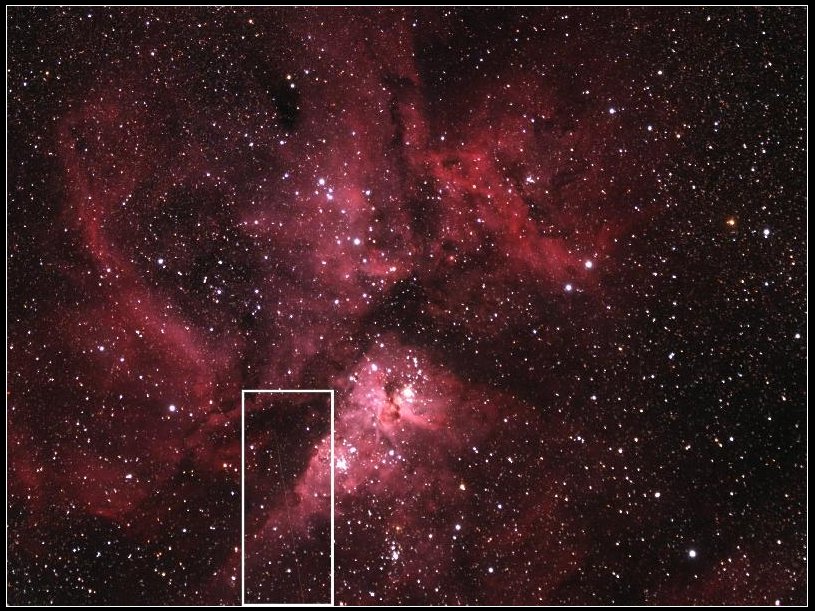
    This image shows asteroid 2012 DA14 and the Eta Carinae Nebula, with the white box highlighting the asteroid’s path. The image was taken using a 3″ refractor equipped with a color CCD camera. The telescope is located at the Siding Spring Observatory in Australia and is maintained and owned by iTelescope.net.Image credit: NASA/MSFC/Aaron Kingery 

    Read Full Post

Subscribe to this blog

Show Past Archives