













Suggested Searches

NASA Quesst

NASA's Quesst mission, which features the one-of-a-kind X-59 aircraft, will demonstrate technology to fly supersonic, or faster than the speed of sound, without generating loud sonic booms. NASA will then survey how people respond when the X-59 flies overhead, sharing these reactions to the quieter sonic "thumps" with national and international regulators to inform the establishment of new data-driven acceptable noise thresholds related to supersonic commercial flight over land. Quesst is supported through NASA’s Aeronautics Research Mission Directorate.

    Customize Your Devices With NASA’s New X-59 Digital Backgrounds

    A hand holding up a cellular phone with the X-59 as the wallpaper background.

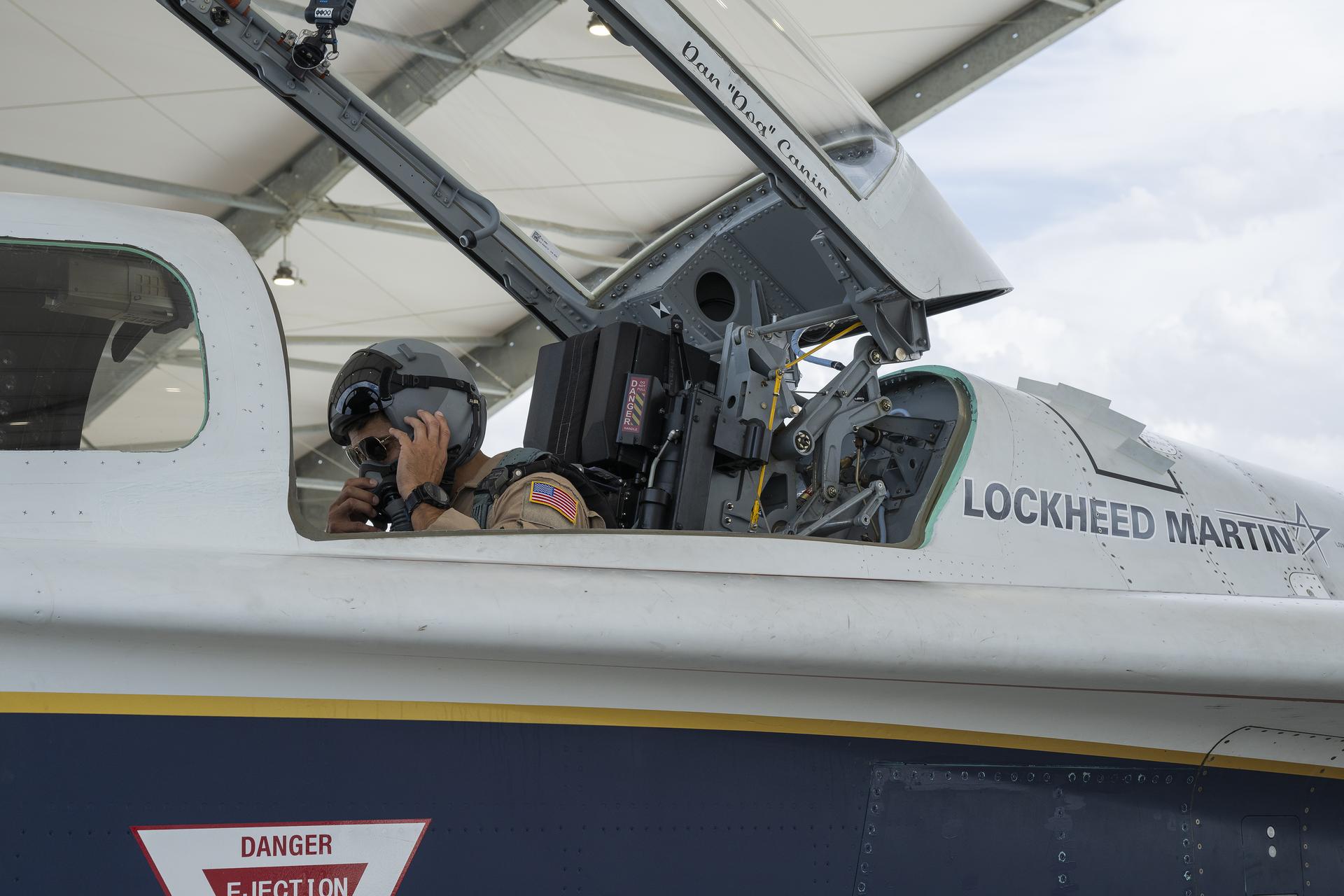
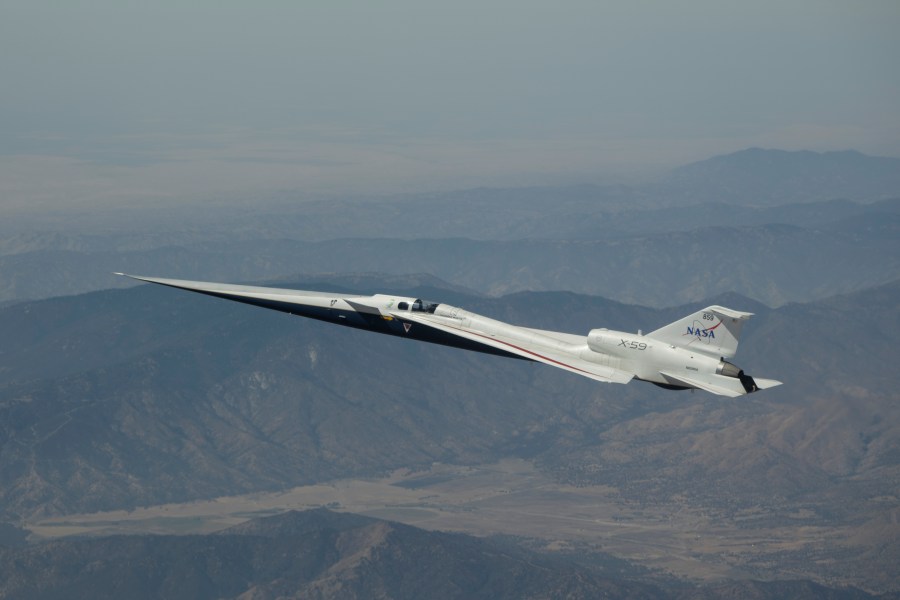
    In celebration of the X-59’s recent supersonic milestone flights, NASA’s Quesst mission invites you to refresh your phone wallpaper and virtual meeting background with images of this unique aircraft in action.   NASA is releasing multiple images sized to fit your device screens. Your next video call can boast NASA’s X-59 in flight, on the ground – or even from the cockpit.   Chosen from the X-59’s first series flights where the plane expanded its operational envelope expansion testing by going higher and […]

    Read Full Post

    NASA’s X-59 Reaches Speed, Altitude for Future Quiet Supersonic Flights

    The X-59 in flight on June 12, 2026 against a blue sky.

    NASA’s X-59 experimental aircraft reached a major milestone Friday, June 12, flying Mach 1.4 (about 924 mph) and an altitude of 55,000 feet, the conditions required for the aircraft to make future flights critical to its mission.   The X-59 still has months of performance testing ahead, but after those are complete, NASA’s Quesst mission will fly the aircraft over several U.S. communities to collect data on public perception of the quiet sonic thump it will make at […]

    Read Full Post

    NASA’s X-59 Flies Supersonic for First Time 

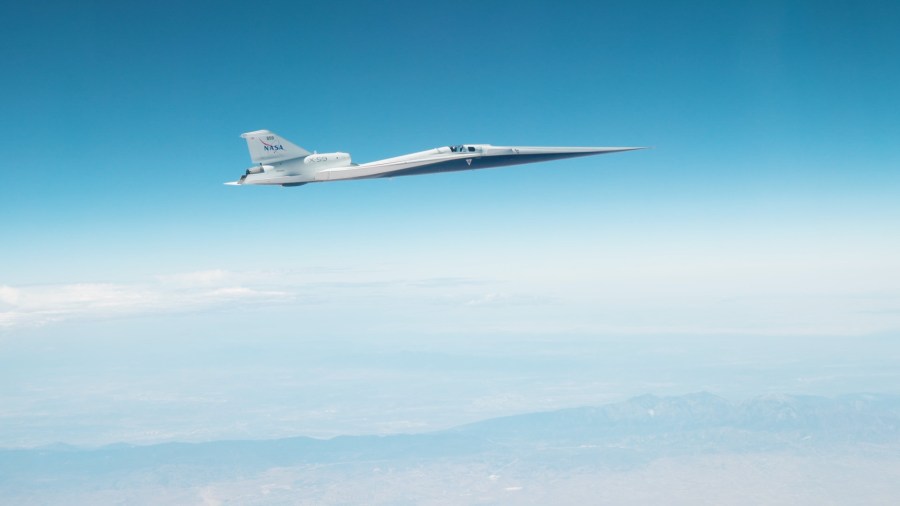
    NASA’s X-59 quiet supersonic research aircraft flies above the clouds during its first supersonic flight. The aircraft is shown in side profile during level flight with desert and mountain terrain visible below.

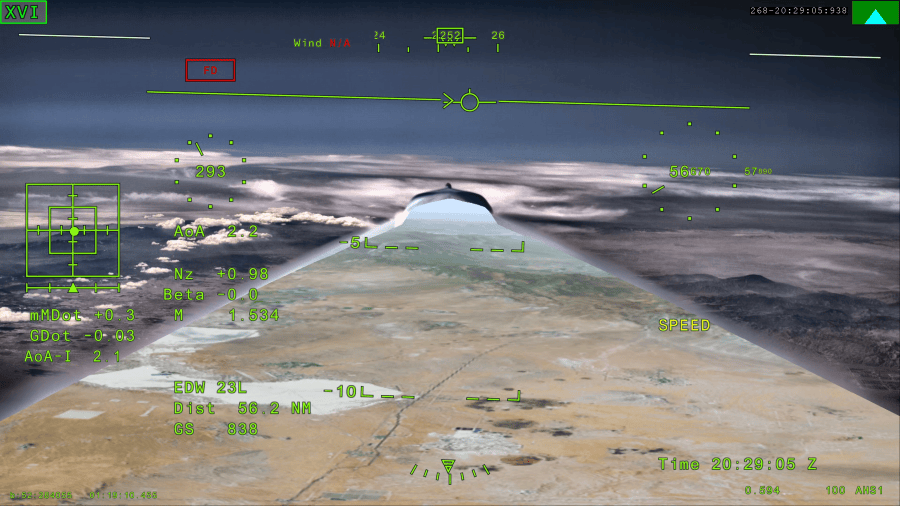
    NASA’s X-59 experimental aircraft reached a major milestone Friday, June 5, when it flew faster than the speed of sound for the first time.   The 81-minute flight achieved a speed of Mach 1.1 (approximately 713 mph) at an altitude of 43,400 feet, with the X-59 performing as expected. For NASA test pilot Jim “Clue” Less, the plane’s instruments were the only indication of flying supersonic — exactly what the team wanted.  “You know you are supersonic when gauges say you are supersonic. I didn’t feel anything,” Less said. “It went […]

    Read Full Post

    NASA’s X-59 Undergoes Scheduled Maintenance

    Workers examine the wing area of the X‑59 aircraft inside a hangar.

    After completing a series of initial test flights at high and low altitudes, NASA’s X-59 aircraft is undergoing a scheduled maintenance period inside its hangar. Teams at NASA’s Armstrong Flight Research Center in Edwards, California, have removed panels on the aircraft to take a better look inside. This allows for thorough visual inspections to confirm […]

    Read Full Post

    NASA’s X-59 Team Testing Aircraft Performance at All Speeds

    NASA’s X-59 quiet supersonic research aircraft flies above NASA’s Armstrong Flight Research Center and Rogers Dry Lake in California. The aircraft is shown in side profile during level flight with the compass rose, facilities, and desert terrain below.

    Although NASA’s X-59 is designed to fly supersonic, its test flight schedule is about more than just going gradually faster and higher – sometimes, to make sure the aircraft is fully mission-ready, slower and lower is the way to go. The X-59 has completed initial test flights at high altitudes and near-supersonic speeds, opening the […]

    Read Full Post

    NASA’s X-59 Flight Tests Pick Up Speed with Two-Flight Days

    NASA’s X-59 quiet supersonic research aircraft flies above the Mojave Desert on a clear day. The aircraft is white with light gray, red, and blue accent colors. A NASA logo is visible on its tail, along with the number 859 above it.

    As flight operations for NASA’s quiet supersonic X-59 aircraft accelerate, its team has picked up their testing tempo, completing two test flights in a single day for the first time. The first dual-flight day was on April 30 at NASA’s Armstrong Flight Research Center in Edwards, California. Making its 11th and 12th flights, the X-59 […]

    Read Full Post

    NASA’s X-59 Shows Off Early Flight Test Maneuvers

    NASA's X-59 supersonic jet with blue hull and white wing and tail is seen from below as it flies among clouds.

    The envelope expansion phase of any experimental aircraft is critical, not just for pushing the aircraft higher and faster, but for understanding how the aircraft operates in flight. As NASA’s X-59 experimental aircraft makes progress through its envelope expansion, the team is assessing data collected during specific maneuvers performed by the X-59’s pilot in flight. […]

    Read Full Post

    Hangar Sweet Home for NASA’s X-59

    A white and blue jet airplane is parked in front of a building with large sliding doors and a NASA logo centered on the forward wall. The building is the new X-59 hangar.

    From the beginning of NASA’s work to bring its quiet supersonic X-59 aircraft from the drawing board into reality, the agency’s team knew they also needed to make a home for it. But at nearly 100 feet long and 30 feet wide, not just any hangar would do. So, while the experimental aircraft was being […]

    Read Full Post

    X-59 Adds Freedom 250 Logo

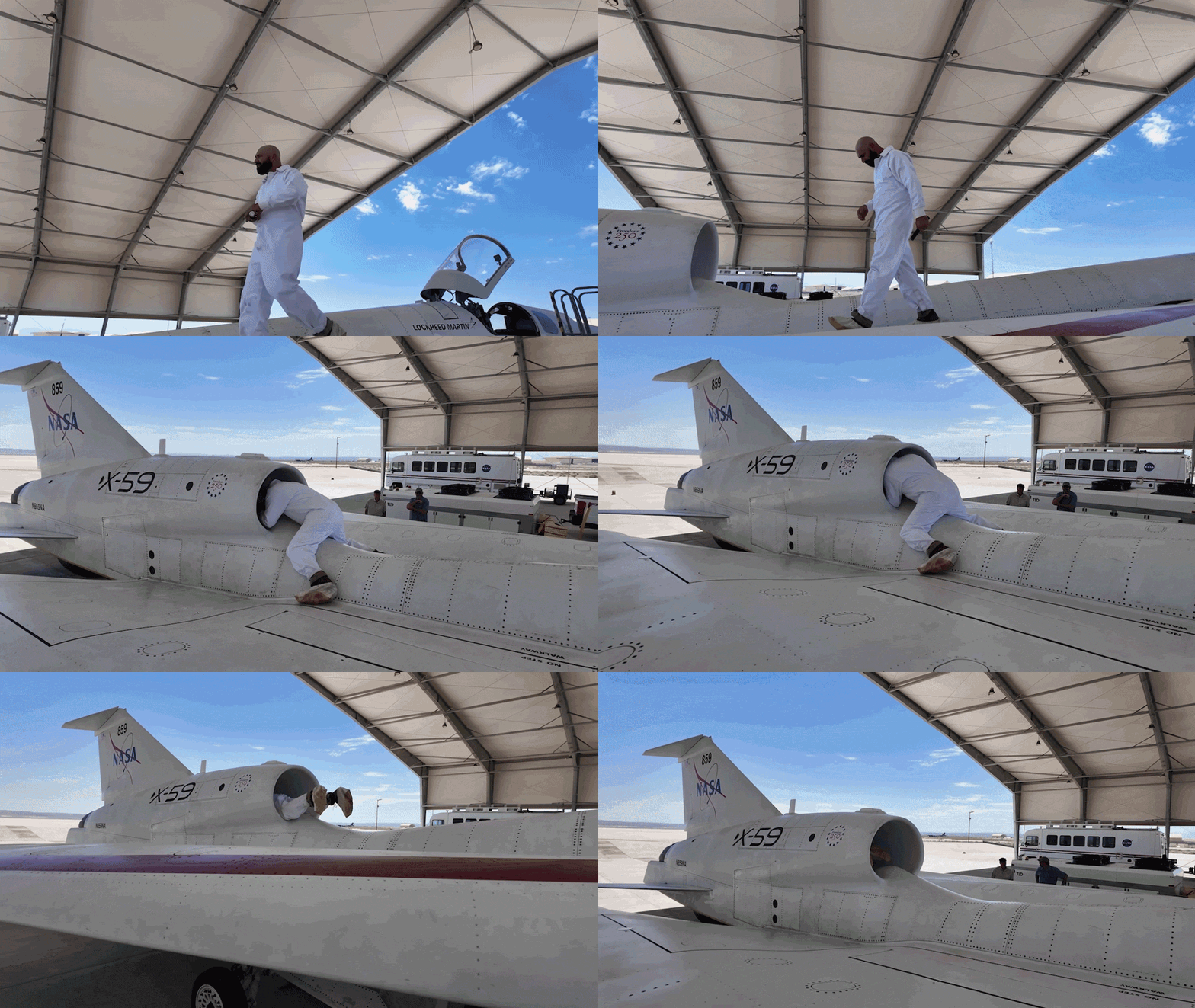
    A close-up of NASA's X-59 tail showing a NASA graphic on the tail. "X-59" on the side of the jet engine, and a Freedom 250 logo toward the front of the engine.

    A new look for X-59 NASA’s X-59 is helping the nation celebrate the 250th anniversary of its independence with an update to its livery – its official paint job and insignia. The X-59 has sported a Freedom 250 logo on its engine since its second flight, and it will continue showing off the new detail […]

    Read Full Post

    Latest NASA X-59 Flights Go Higher and Faster

    NASA’s X-59 flies above the Mojave Desert on a clear day. The white aircraft has light gray, red, and blue accents, with a NASA logo and the number 859 on its tail. It appears flying level over the desert landscape, with a mountain range visible on the horizon and a trail of clouds above.

    NASA’s X-59 experimental aircraft has made its highest and fastest flights so far, expanding its operational range and making progress toward supersonic flight. In a pair of test flights on April 10 and April 14, the aircraft reached new altitudes and speeds, reaching 43,000 feet and 528 to 627 mph (approximately Mach 0.8 to 0.95 […]

    Read Full Post