
























NASA’s X-59 Undergoes Scheduled Maintenance
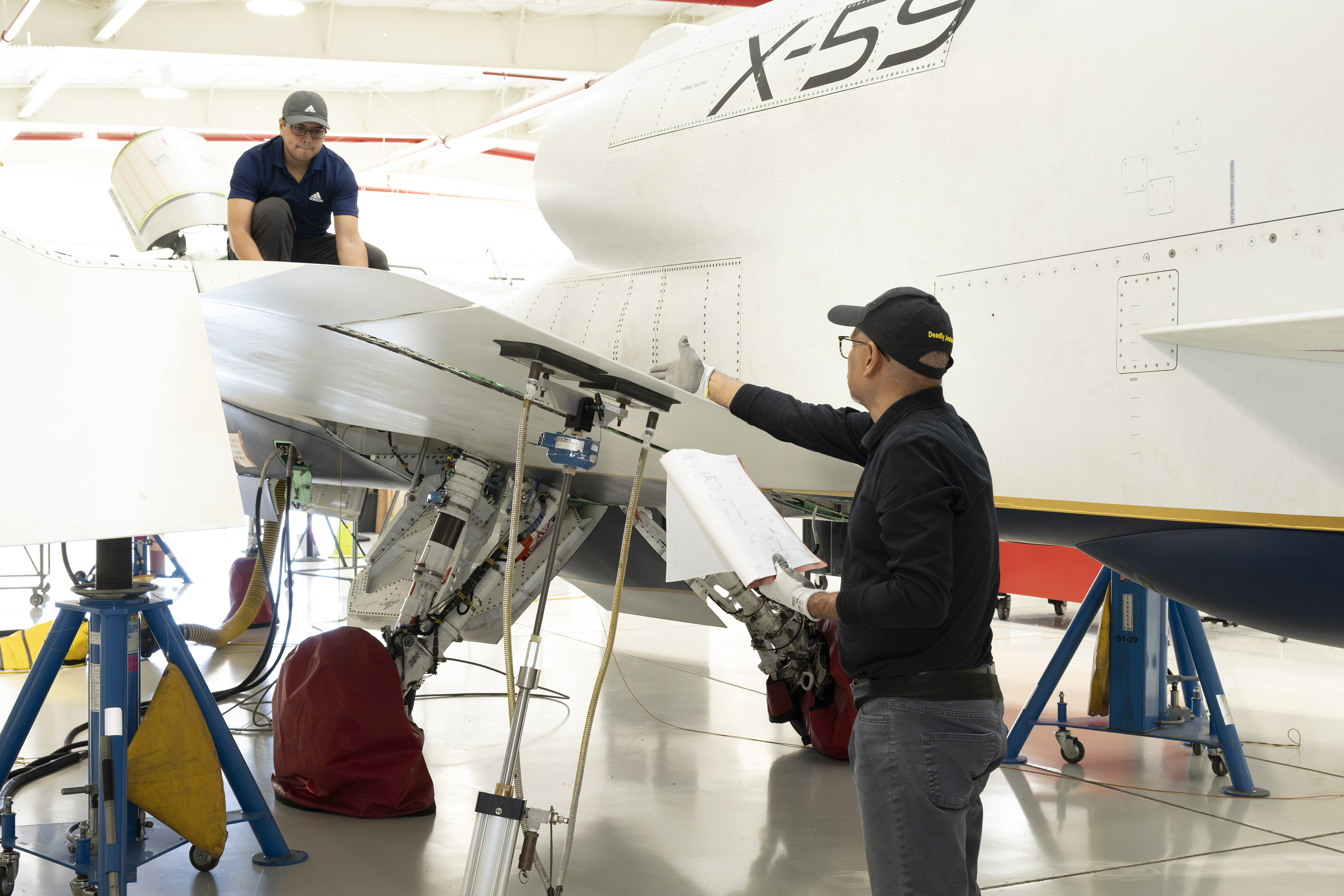
After completing a series of initial test flights at high and low altitudes, NASA’s X-59 aircraft is undergoing a scheduled maintenance period inside its hangar.
Teams at NASA’s Armstrong Flight Research Center in Edwards, California, have removed panels on the aircraft to take a better look inside. This allows for thorough visual inspections to confirm that all internal systems are working properly as the aircraft prepares for the next flight series.
“Inspections are a very important part of the airworthiness process for a brand new airplane,” said David Mcallister, operations lead for the X-59. “We have to inspect this aircraft more frequently than other aircraft, since the X-59 brings together a lot of systems for the first time.”
The team is using the maintenance period to look for unexpected interactions between hardware, wiring, or software.
“This down time is important, just like the inspection after first flight,” Mcallister said. “Our inspections are more frequent than a normal production airplane like a 737 because those aircraft have more history behind them, so those teams know what to inspect and when to inspect it. We’re trying to build that story, so we will adjust the maintenance actions as needed, based on our experience.”
The aircraft will soon return to the sky as the team maintains its cadence of testing, with multiple days of dual flights at varying altitudes and speeds. This ongoing data collection will help ensure the X-59 is ready for the next series of flight tests to extend its speed and altitude range, known as its operational envelope.
More X-59 to Explore

Read more on the Quesst mission page.
