




















NASA’s X-59 Flight Tests Pick Up Speed with Two-Flight Days
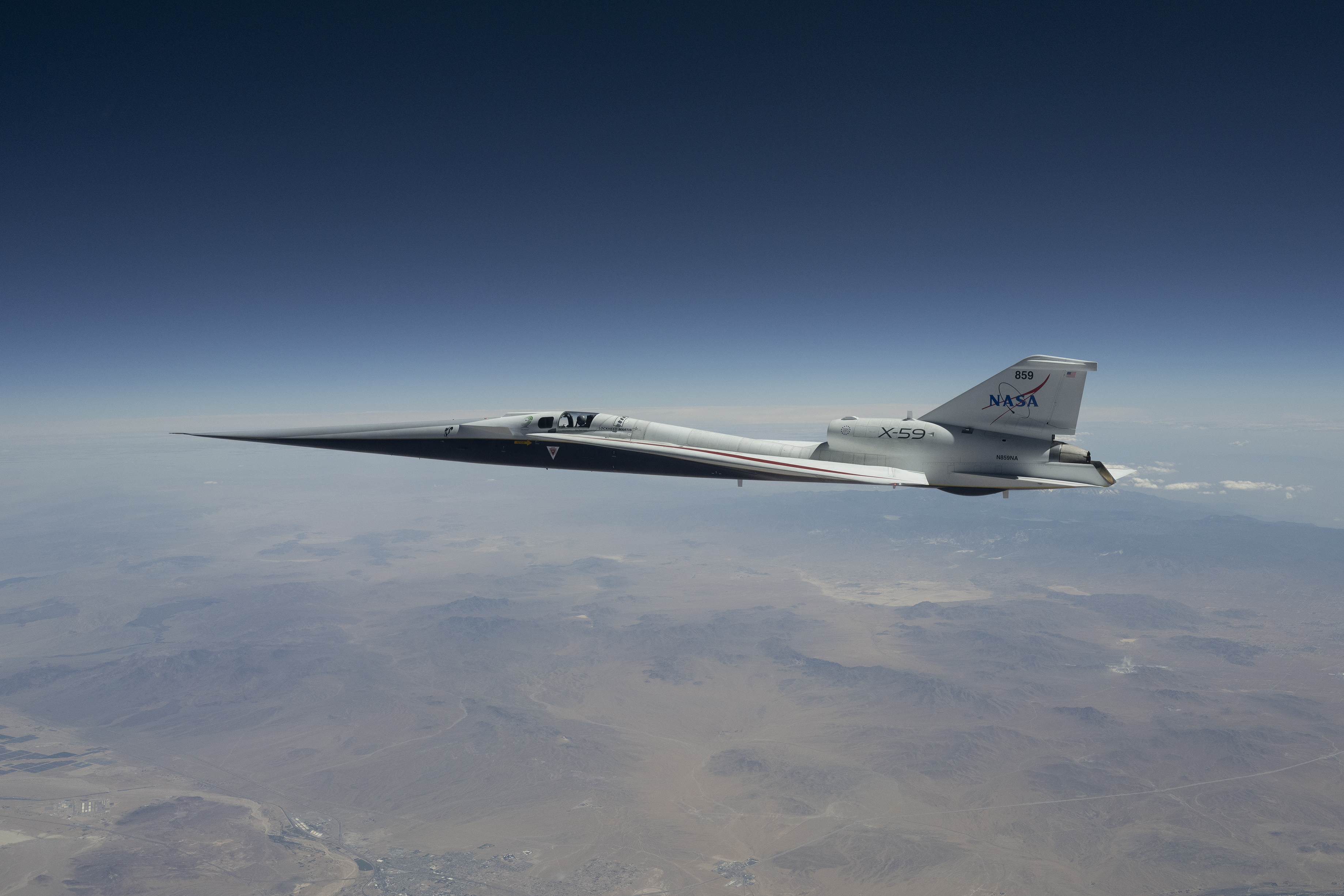
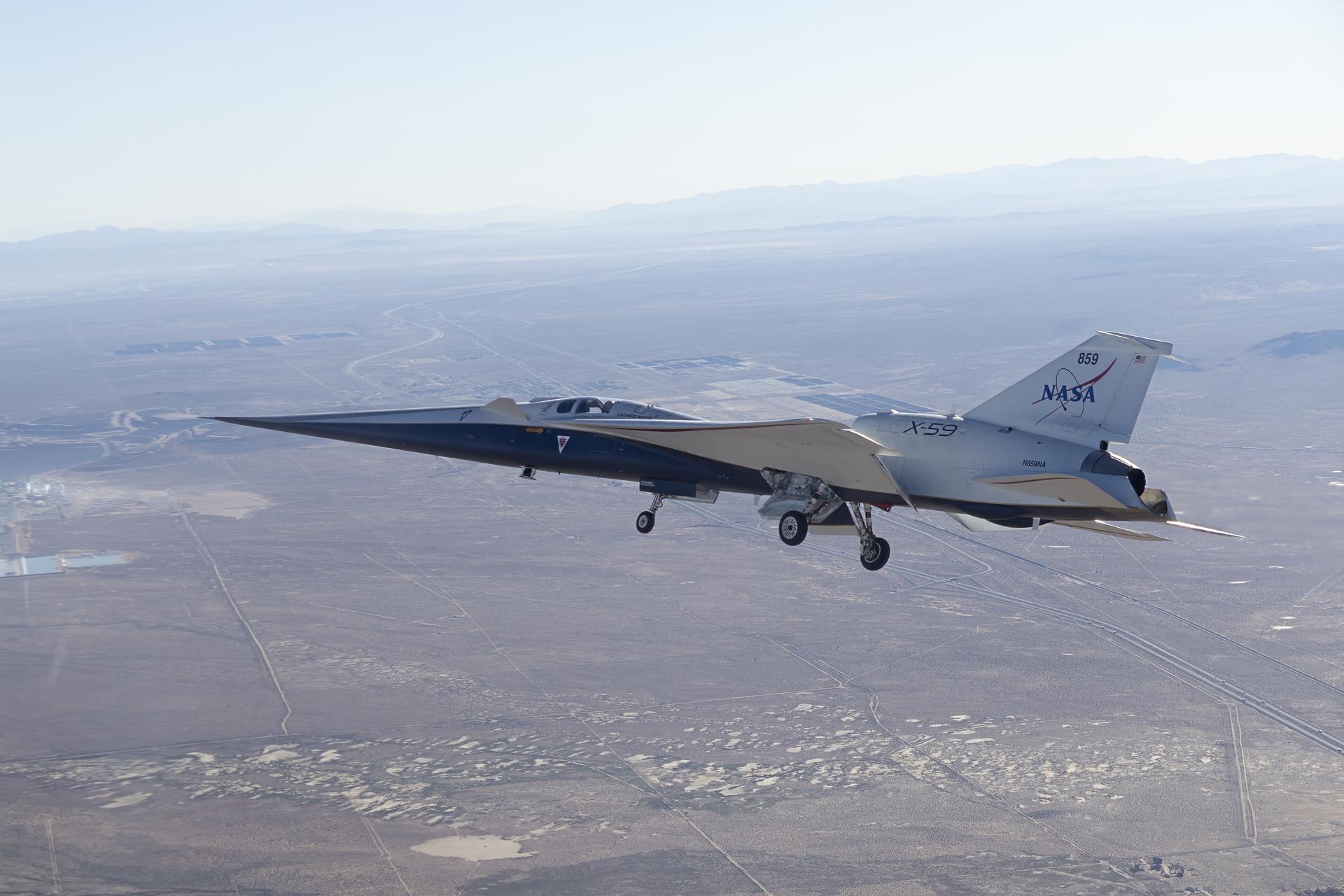
As flight operations for NASA’s quiet supersonic X-59 aircraft accelerate, its team has picked up their testing tempo, completing two test flights in a single day for the first time.
The first dual-flight day was on April 30 at NASA’s Armstrong Flight Research Center in Edwards, California. Making its 11th and 12th flights, the X-59 completed multiple test objectives at altitudes ranging from 12,000 to 43,000 feet and speeds from 528 to 627 mph (Mach 0.8 to Mach 0.95).
The pace, and the objectives the teams met, support NASA’s aim to complete the first two phases of the Quesst mission – envelope expansion and acoustic validation – by the end of 2026. The dual flights marked significant progress and reflected the extraordinary efforts of the X-59 team.
“The team has done an amazing job meeting the weekly planned flight rate,” said Cathy Bahm, Low Boom Flight Demonstrator project manager. “During taxi testing last summer, we demonstrated that we could do two tests in a day. I’m proud to see that our team has met the challenge of executing two flights a day, and I’m very excited to see it happen regularly.”
Dual-flight days include two planned test flights separated by a brief period after the first to refuel and prepare for the second.
The increased tempo allows teams to collect more data in a shorter period of time, supporting the mission’s goals of meeting major test objectives quickly and efficiently while ensuring safety.
More information on NASA’s Quesst mission is available online.
Quesst
Quesst is the name of NASA Aeronautics’ mission to help take the first step toward enabling commercial, faster-than-sound air travel over land. The centerpiece of the mission is NASA’s X-59 research aircraft. The experimental supersonic jet is designed with technology that reduces the loudness of a sonic boom to a gentle thump. NASA will fly the X-59 over select U.S. communities and take surveys to record what people think of the quieter sonic thumps. The human response data will be delivered to U.S. and international regulators, who will consider setting new rules that allow supersonic flight over land.
Stay up to date at the Quesst mission page