














Suggested Searches

NASA Quesst

NASA's Quesst mission, which features the one-of-a-kind X-59 aircraft, will demonstrate technology to fly supersonic, or faster than the speed of sound, without generating loud sonic booms. NASA will then survey how people respond when the X-59 flies overhead, sharing these reactions to the quieter sonic "thumps" with national and international regulators to inform the establishment of new data-driven acceptable noise thresholds related to supersonic commercial flight over land. Quesst is supported through NASA’s Aeronautics Research Mission Directorate.

Viewing Posts from July 2026

View All Posts
  • Meet NASA’s New X-59 Test Pilot 

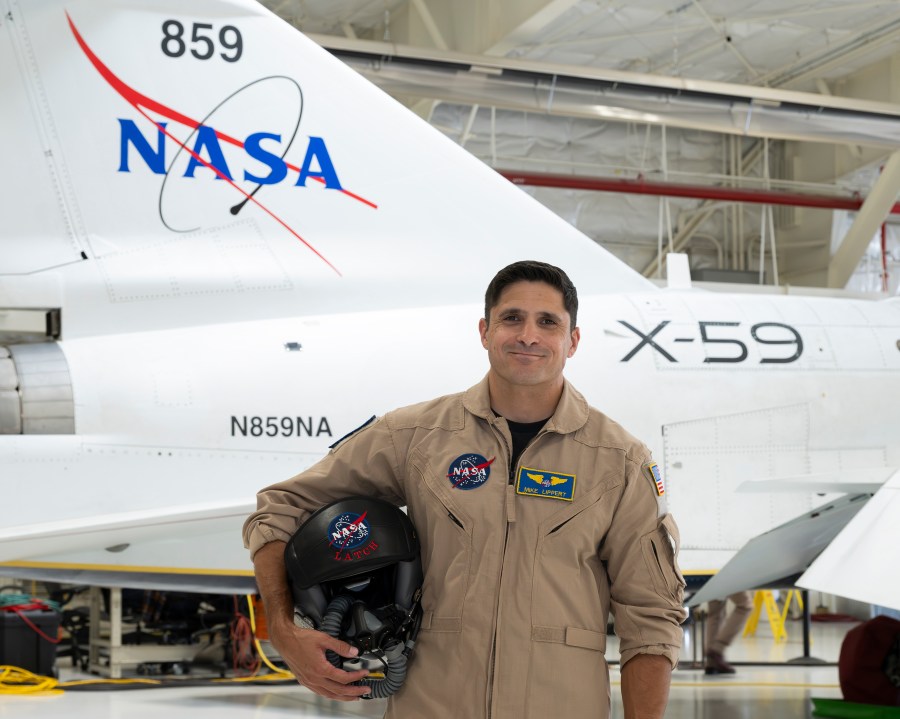
    NASA’s X-59 test pilot Mike Lippert stands in a hangar in front of NASA’s quiet supersonic research aircraft, wearing a tan NASA flight suit and holding a flight helmet under the right arm. The X-plane in the background displays the NASA logo, tail number 859, and “X-59” marking.

    NASA added a new X-59 test pilot to support the agency’s Quesst mission: Mike Lippert, a research test pilot based at NASA’s Armstrong Flight Research Center in Edwards, California.   “This fulfills a lifelong dream of conducting airborne research and experimental flight test for NASA in the high desert — contributing to humankind’s understanding of the science of flight and the nature of the world around us,” Lippert said.  Lippert will fly the X-59, along with the […]

  • What’s a Chase Plane and Why Does the X-59 Have One?

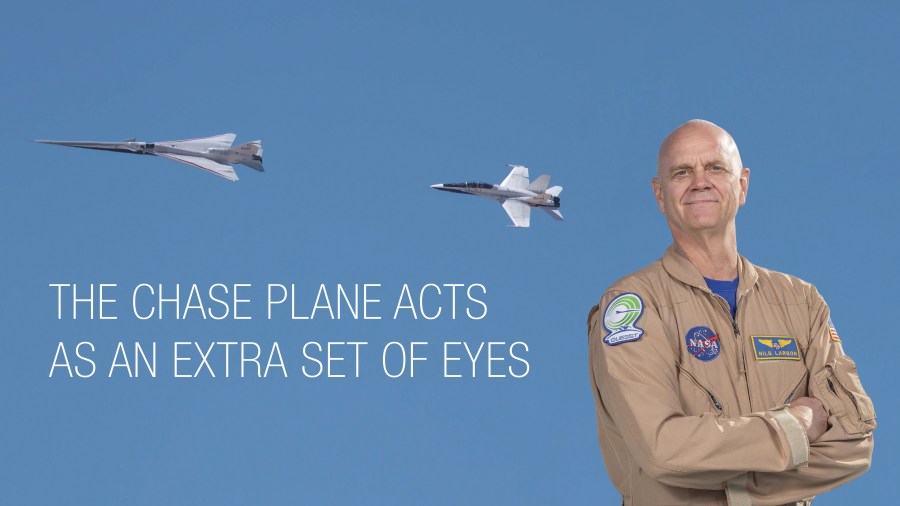
    The X-59 and it's chase plane in flight with a photo of Nils Larson and the text The chase plane acts as an extra set of eyes.

    You may have noticed that NASA’s X-59 has a shadow – another aircraft trailing it from a safe distance. That sidekick is known as a “chase plane,” and it has an important role in NASA’s Quesst mission. Chase planes are commonly used during the flight testing of major experimental aircraft, providing an extra layer of observation and support for test pilots. […]