















Artemis II Flight Day 10: Live Re-Entry Updates
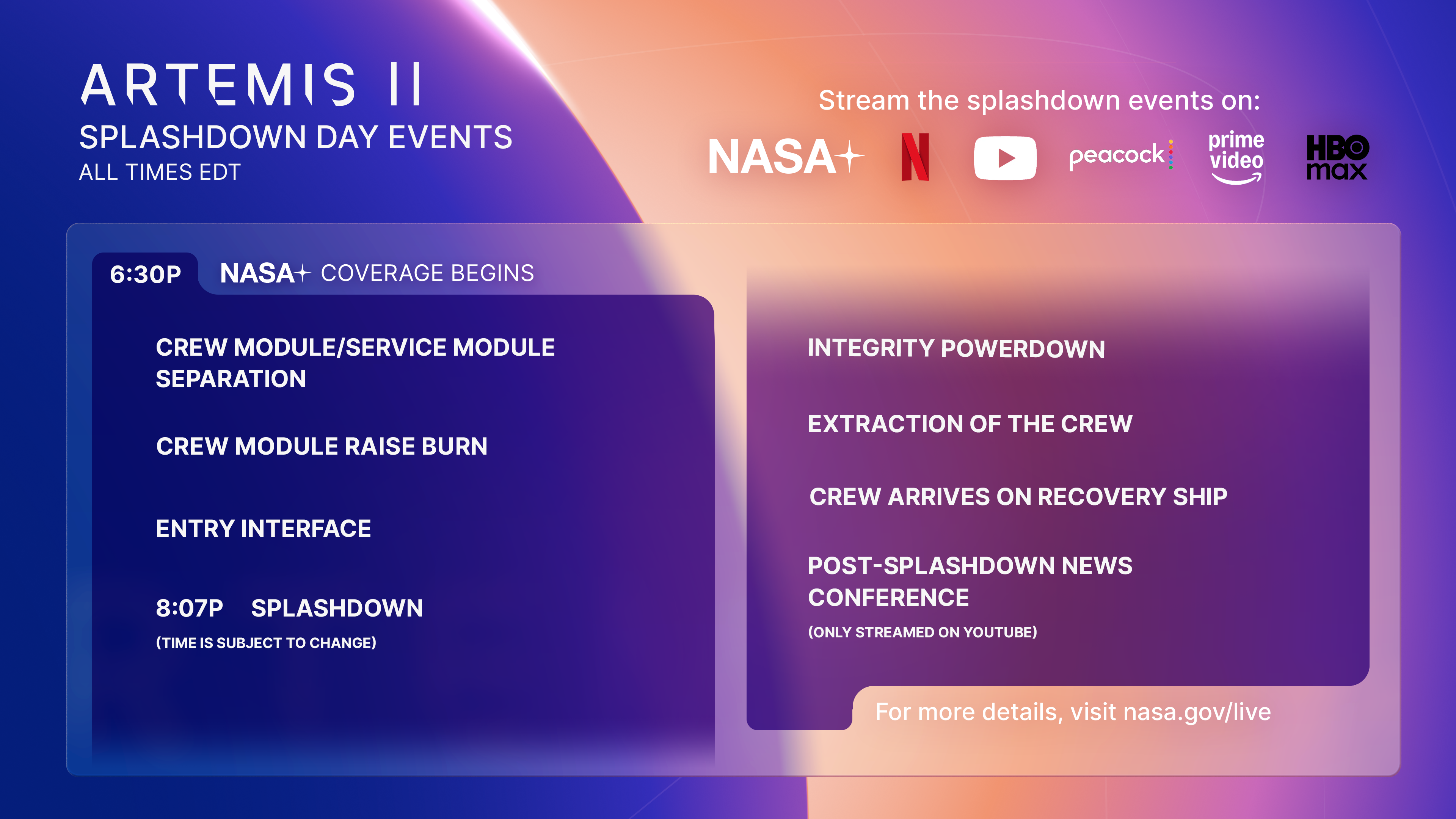
Live re-entry updates for NASA’s Artemis II mission will be published on this page. All times are Eastern.
4:27 a.m.
The Orion spacecraft is secured in the well deck of USS John P. Murtha after splashing down in the Pacific Ocean and carrying NASA astronauts Reid Wiseman, Victor Glover, Christina Koch and Canadian Space Agency astronaut Jeremy Hansen on an approximate 10-day mission around the Moon and back. The ship will soon begin its trip back to Naval Base San Diego, where engineers will remove Orion from the ship in preparation for transport back to Kennedy Space Center in Florida for post-flight analysis.
9:58 p.m.
The Artemis II crew is safely aboard the USS John P. Murtha, where they will undergo post-mission medical evaluations in the ship’s medical bay before traveling back to shore to board a NASA aircraft bound for the agency’s Johnson Space Center in Houston.
NASA will hold a post-splashdown news conference at 10:35 p.m. EDT from the agency’s Johnson Space Center in Houston. Participants include:
- NASA Associate Administrator Amit Kshatriya
- Lori Glaze, acting associate administrator, Exploration Systems Development Mission Directorate
- Rick Henfling, entry flight director, Artemis II
- Howard Hu, manager, Orion Program
- Shawn Quinn, manager, Exploration Ground Systems Program
9:56 p.m.
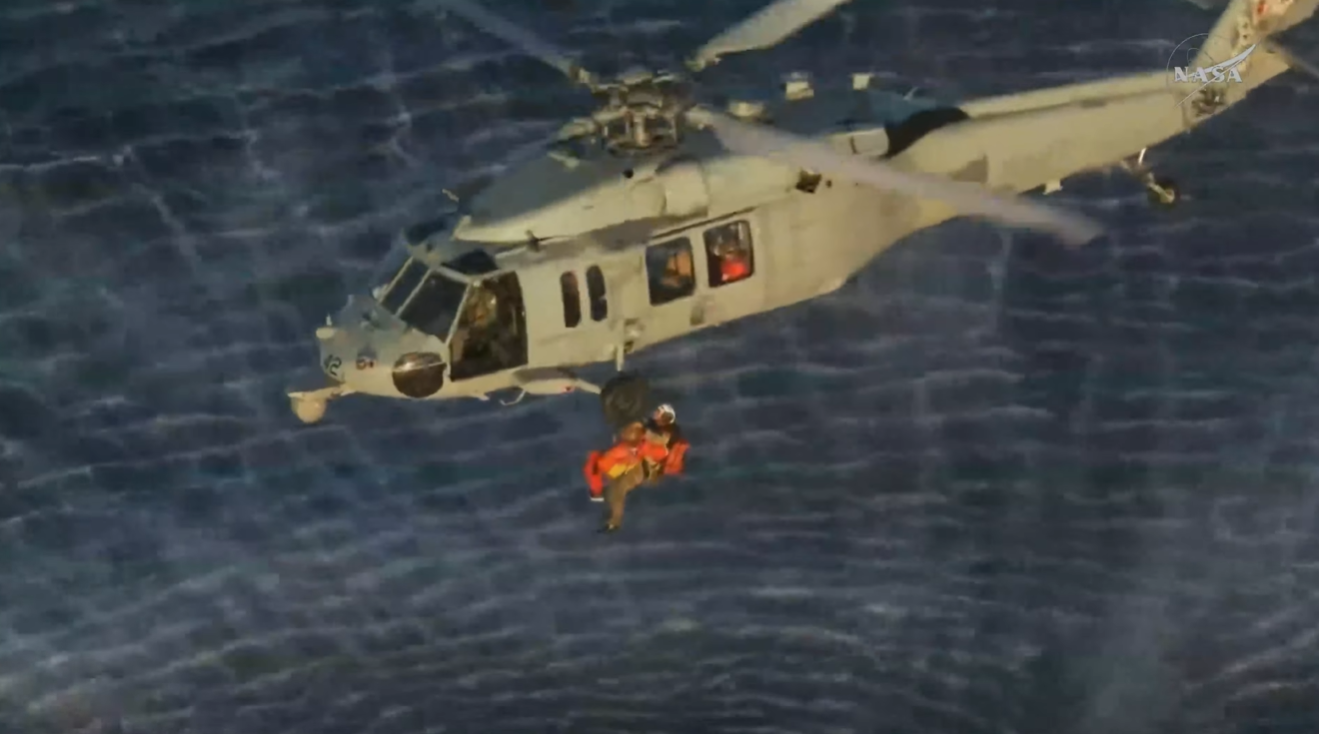
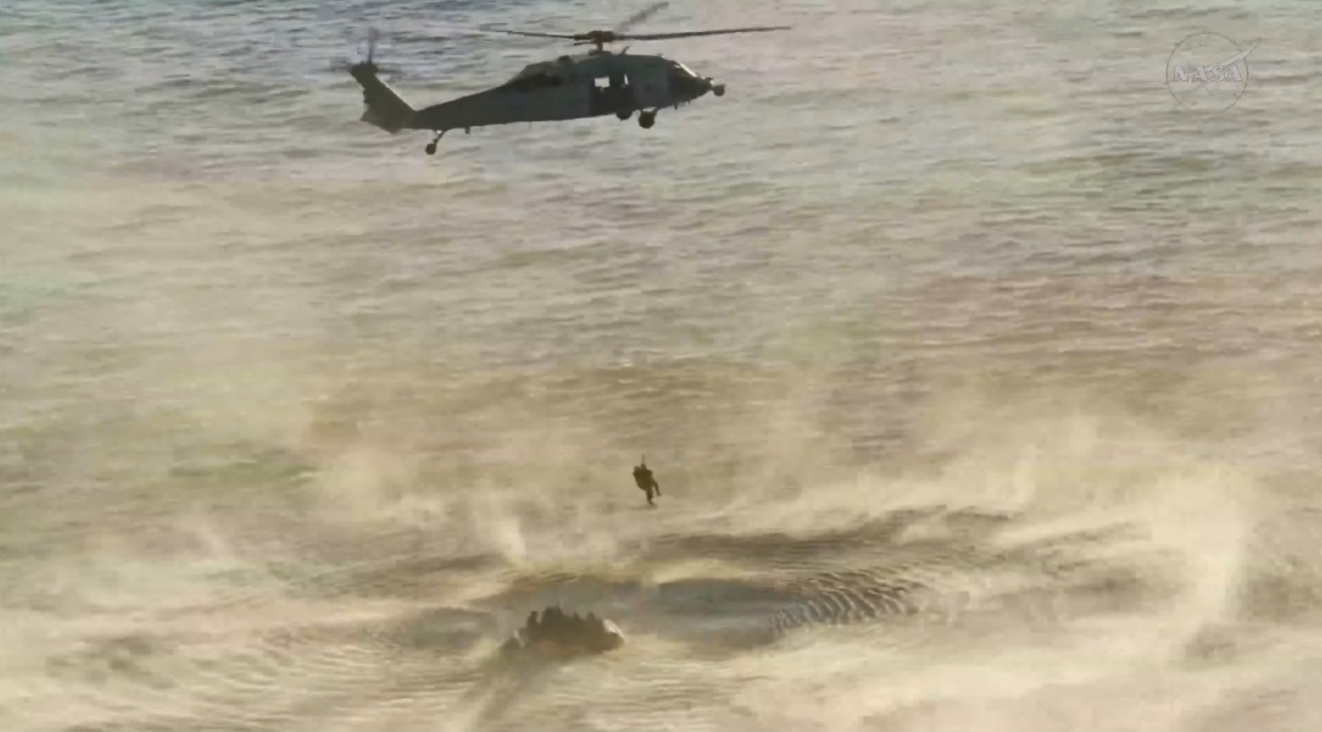
The Artemis II crew has been hoisted into U.S. helicopters and are being flown to the USS John P. Murtha.
9:34 p.m.
The Artemis II crew – NASA astronauts Reid Wiseman, Victor Glover, and Christina Koch, and CSA (Canadian Space Agency) astronaut Jeremy Hansen — have been safely extracted from the Orion spacecraft.
8:12 p.m.
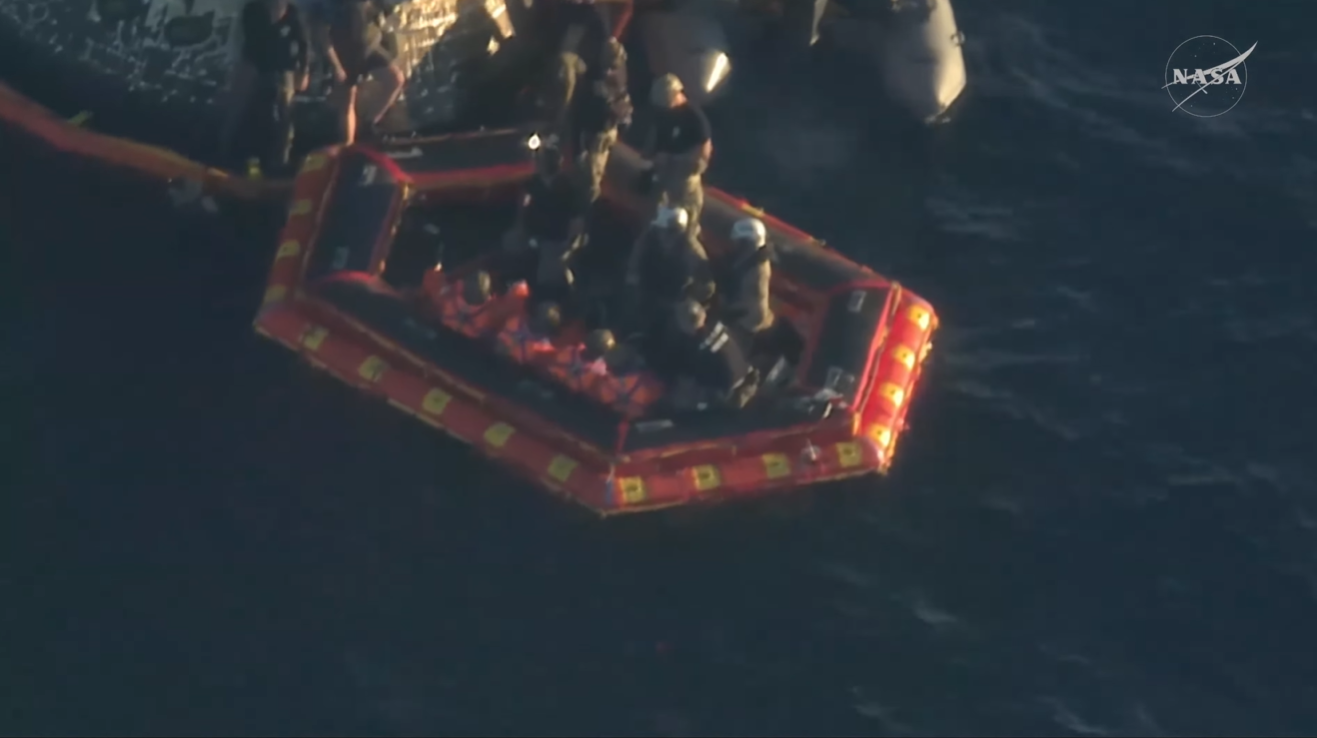
At the direction of the NASA recovery director, team members from the agency and the U.S. military now are approaching the spacecraft in inflatable boats.
Approximately an hour after splashdown, the crew will be extracted from Orion and then flown to the USS John P. Murtha. U.S. Navy helicopters will then transport them to the ship. Once aboard, the astronauts will undergo post-mission medical evaluations before returning to shore to board an aircraft bound for NASA’s Johnson Space Center in Houston.
When ready, Navy divers will attach a cable, called the winch line, to Orion to pull the spacecraft into a specially designed cradle inside the ship’s well deck. Four additional tending lines will be secured to attachment points on the crew module while under tow.
Once Orion is positioned above the cradle assembly, technicians will drain the well deck and secure the capsule.
After it is secure aboard the ship, teams will return Orion to U.S. Naval Base San Diego before returning it to NASA’s Kennedy Space Center in Florida for inspection. Once there, technicians will thoroughly examine the spacecraft, retrieve onboard data, remove payloads, and conduct additional post-flight checks.
8:07 p.m.
SPLASHDOWN!
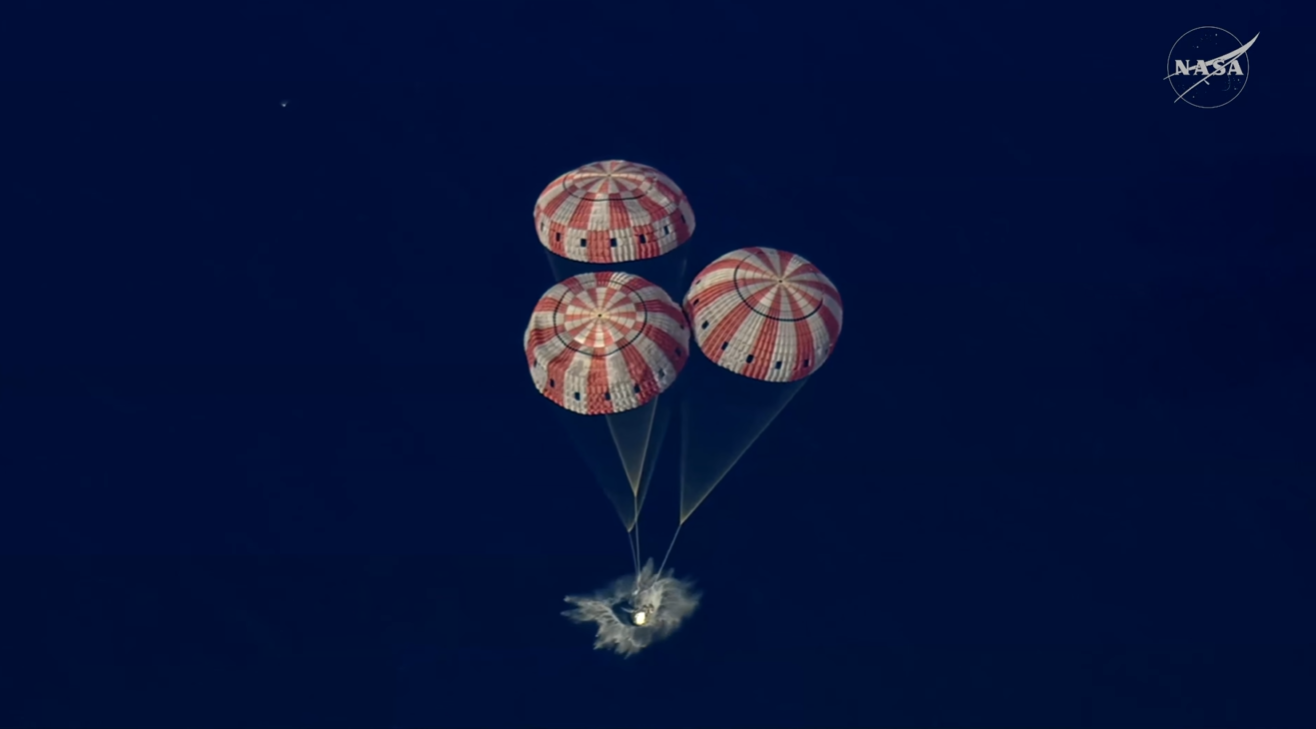
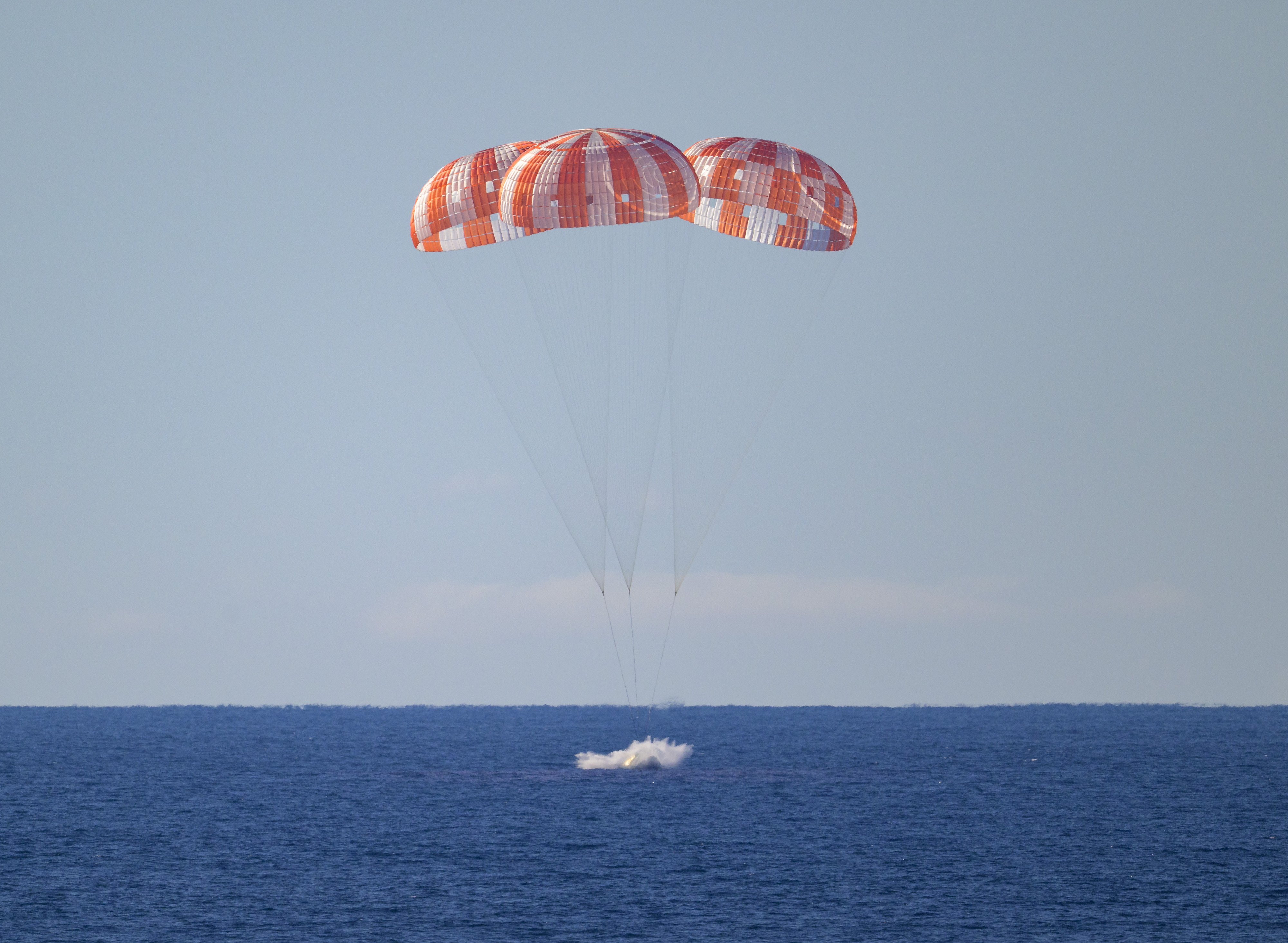
NASA’s Artemis II crew in their Orion spacecraft is back on Earth. They successfully completed a parachute-assisted splashdown in the Pacific Ocean off the coast of San Diego at 8:07 p.m. EDT (5:07 p.m. PDT).
Engineers will conduct several additional tests while Orion is in the water before powering down the spacecraft and handing it over to the recovery team aboard the USS John P. Murtha. The recovery team is on site and headed to the capsule to begin assisting the crew out of Orion.
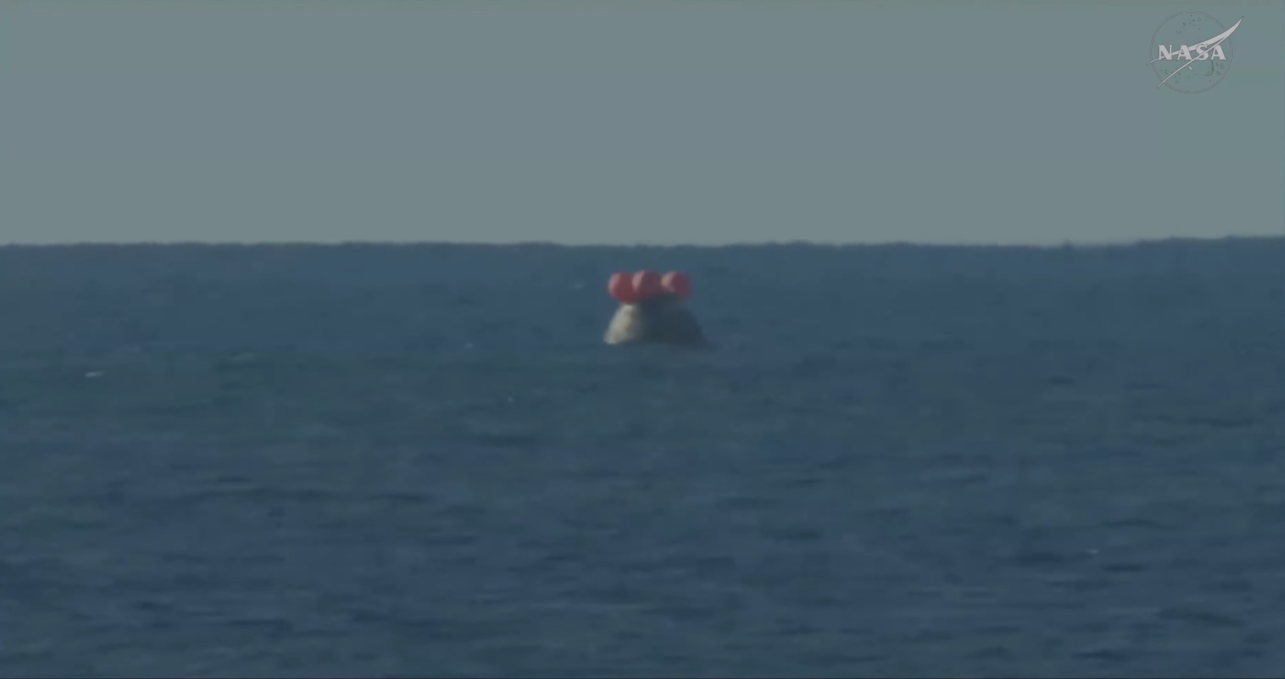
Orion has begun crew module power down, a planned post-splashdown step in which flight controllers shut down nonessential systems and transition the capsule into its recovery configuration. This reduces power demand and prepares the spacecraft for crew extraction as recovery teams move in.
8:04 p.m.
At 5,400 feet, Orion’s drogue parachutes were cut and the three main parachutes deployed, reducing velocity to less than 200 feet per second and guiding Orion on its final descent and splashdown.
8:03 p.m.
At 23,400 feet, the drogue parachutes on Orion deployed to slow and stabilize the spacecraft. Orion’s velocity drops to 479 feet per second and is .8 miles from splashdown.
8:00 p.m.
NASA has reestablished communications contact with the Artemis II crew aboard the Orion spacecraft as it returns to Earth.
7:53 p.m.
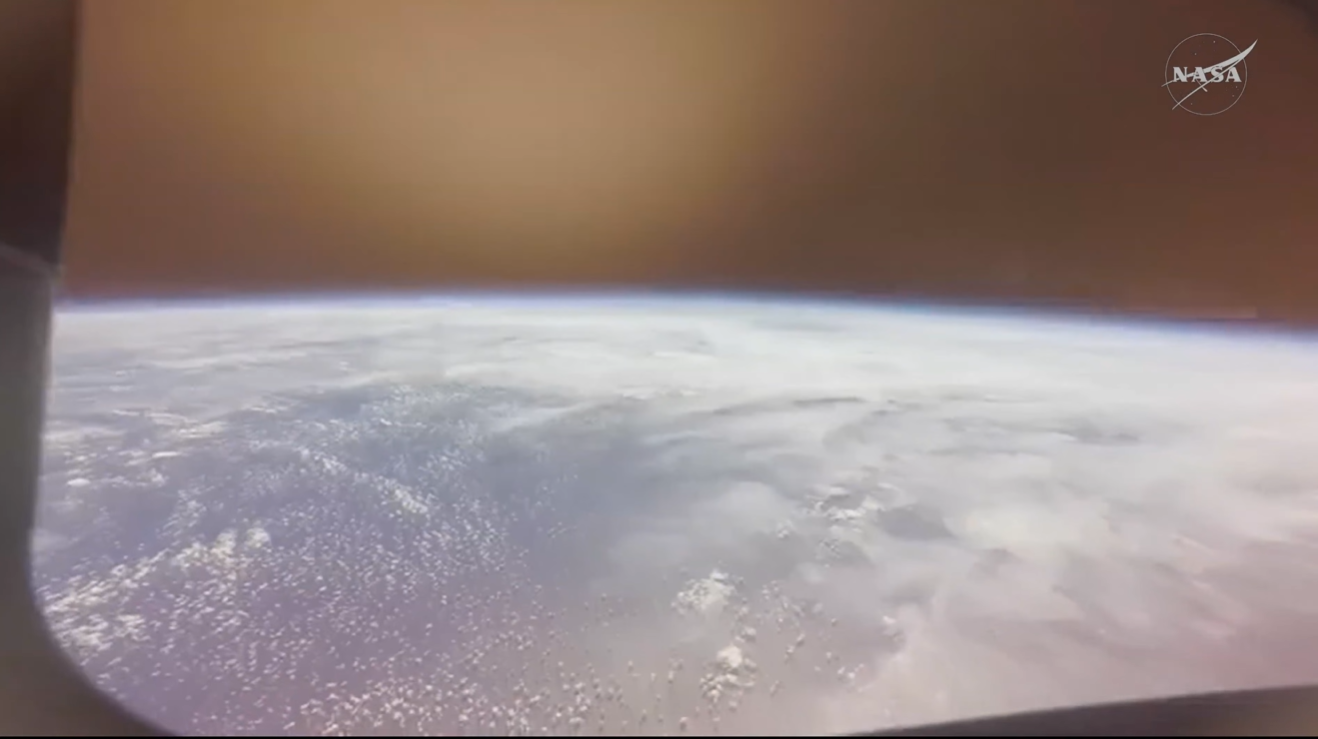
The Orion spacecraft reached Earth’s atmosphere 400,000 feet above the planet’s surface, traveling 35 times the speed of sound and about 1,956 statute miles from the splashdown site. This is where the spacecraft first encounters the upper atmosphere and begins its guided descent. Shortly after, Orion is in a planned communications blackout expected to last about six minutes as plasma built around the crew capsule during heating.
7:37 p.m.
Orion performed the crew module raise burn, adjusting the spacecraft’s orientation to align its heat shield for re-entry.
7:33 p.m.
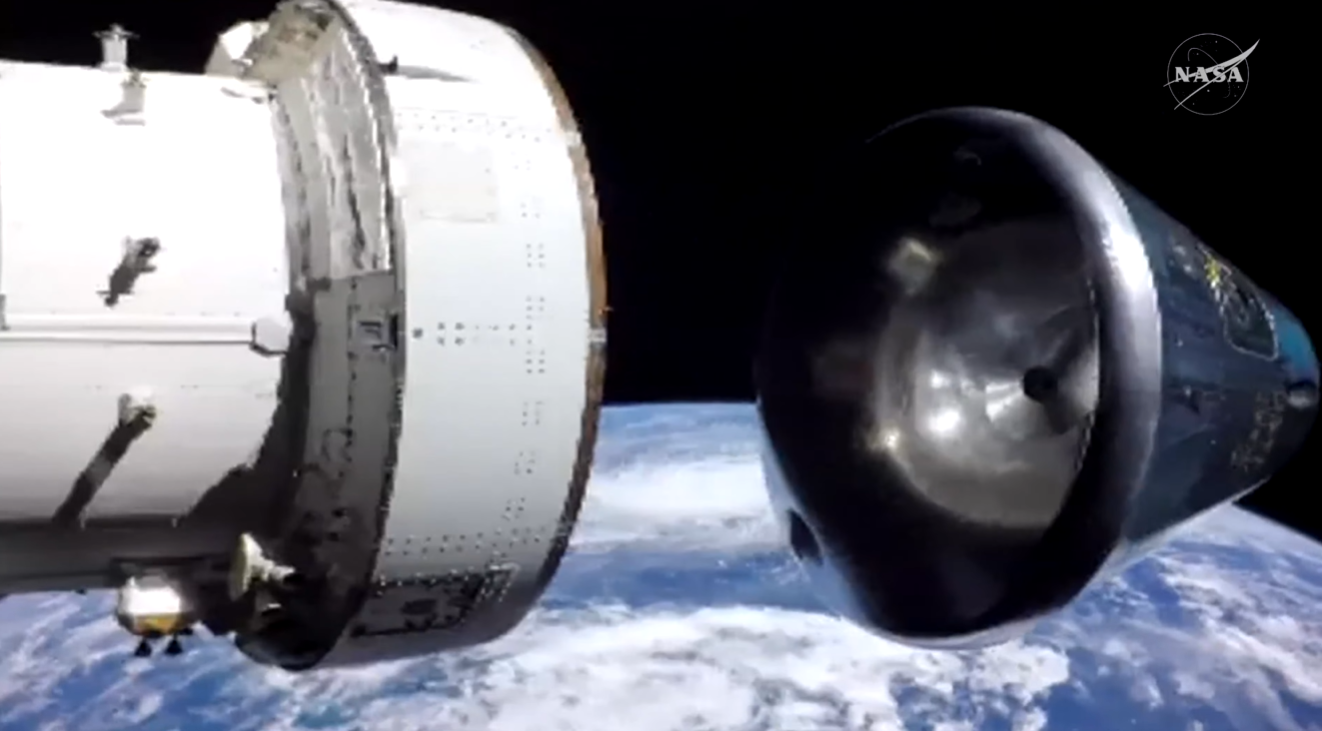
Orion’s crew and service module have separated. The crew module continues on its path towards Earth while the service module will harmlessly burn up in Earth’s atmosphere over the Pacific Ocean. The Artemis II return trajectory is designed to ensure any remaining debris does not pose a hazard to land, people, or shipping lanes.
7:15 p.m.
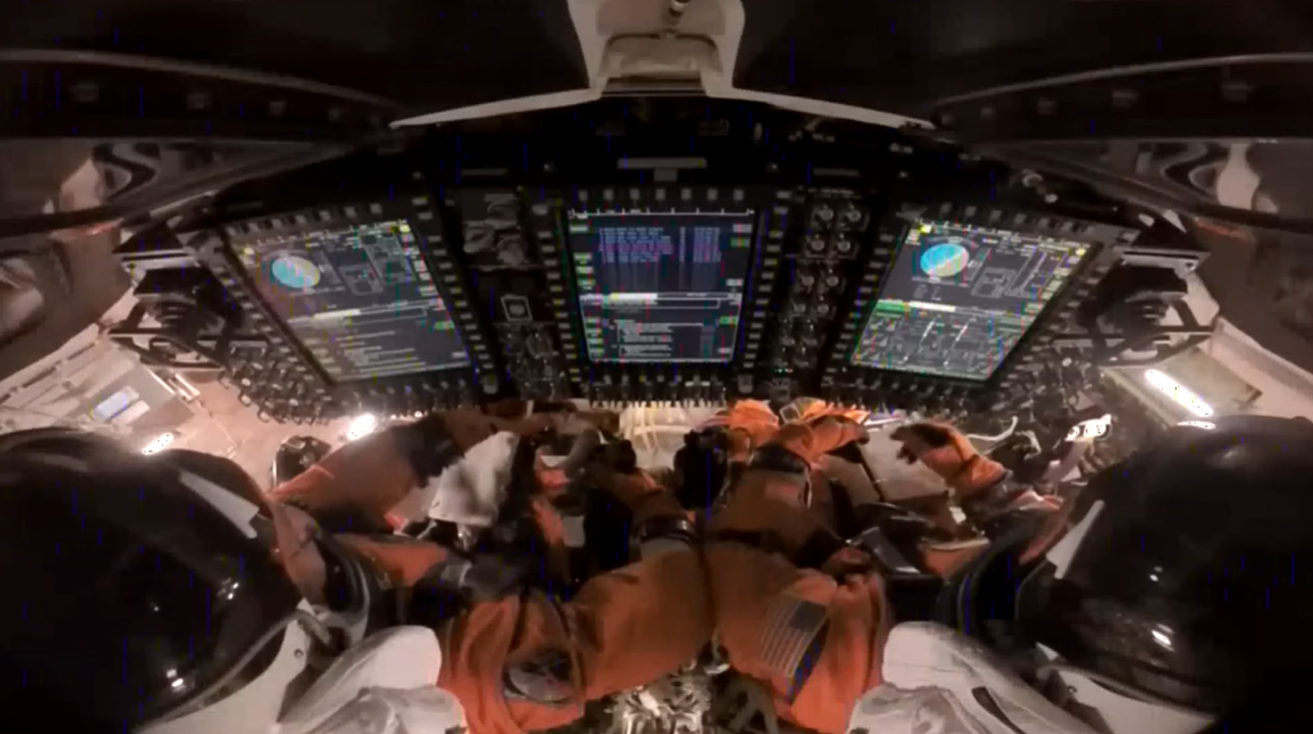
The Artemis II Orion spacecraft completed its handover from NASA’s Deep Space Network to the Near Space Network’s Tracking and Data Relay Satellite system, ensuring continuous communications as the crew heads into the final phase of their return to Earth.
6:25 p.m.
NASA’s Artemis II mission is scheduled to splash down at about 8:07 p.m. EDT (5:07 p.m. PDT) off the coast of San Diego. After splashdown, a combined NASA and U.S. military team, will retrieve the crew and transport them by helicopter to the USS John P. Murtha. Once aboard the ship, the astronauts will undergo post-mission medical evaluations before returning to shore to board an aircraft bound for NASA’s Johnson Space Center in Houston.
Watch live return coverage on NASA+, Amazon Prime, Apple TV, Netflix, HBO Max, Discovery+, Peacock and Roku. Learn how to stream NASA content through a variety of online platforms, including social media.
Coverage will continue until NASA and U.S. military personnel safely assist the crew out of the spacecraft and transport them to the USS John P. Murtha.