






![Request for Information – Potential [Placeholder for Prize]](https://assets.science.nasa.gov/dynamicimage/assets/science/missions/a-step/FFR_Earth_Background_20251120%20.png?w=1024)



Moon Base
The Moon Base is home base for Artemis astronauts who will live and work at humanity’s first lunar outpost. NASA is leading global teams of innovators across industry, and academia to build the Moon Base and establish an enduring human presence near the lunar South Pole for the benefit of all.
Achieving the Vision
Moon Base Systems
This page lists some of the major systems planned to support NASA’s Moon Base initiative, and outlines how these systems are expected to evolve through each phase of Moon Base development.
Systems
Mobility
Systems to move crew and cargo around the lunar surface and between Moon Base components
Moon Base mobility systems are expected to evolve through a phased approach, progressing from early crewed and robotic surface vehicles to advanced transportation and logistics capabilities designed to support sustained long-duration exploration and infrastructure operations. Expand the sections below for details on how mobility systems are expected to evolve throughout each phase of Moon Base development.
- Deployment of small science rovers, including NASA’s VIPER (Volatiles Investigating Polar Exploration Rover), and MoonFall drones to conduct science, reconnaissance, and resource discovery.
- During Phase One of Moon Base development, NASA plans to begin deploying both crewed and uncrewed Lunar Terrain Vehicles, or LTVs, to establish the foundation for sustained surface mobility.
- Uncrewed LTVs will support early exploration, technology demonstrations, and surface preparation activities before large-scale human operations begin. These vehicles are expected to feature basic autonomy and teleoperations, operate for a minimum of one year, and travel at least 497 miles (800 kilometers).
- Crewed LTVs will give astronauts the ability to travel farther and accomplish more during surface missions. These vehicles are expected to provide at least one year of operational life and traverse distances of 559 miles (900 kilometers) or more, including at least 62 miles (100 kilometers) of additional crewed traverses.
- Designed for the demanding lunar environment, these early LTV concepts will include the ability to traverse slopes of up to 20 degrees, survive up to 150 hours in shadow, and operate at speeds up to six miles (10 kilometers) per hour.
- NASA has awarded Astrolab $219 million and Lunar Outpost $220 million to build and deliver the first phase of LTVs. Awarded under the Phase 1 High Achievability Mission task orders of the Lunar Terrain Vehicle Services contract, these firm-fixed-price, performance-based milestones will enable NASA to deploy crewed and uncrewed mobility systems to the lunar surface by 2028 through the agency’s CLPS (Commercial Lunar Payload Services) initiative.
- Astrolab’s Crewed Lunar Vehicle, or CLV‑1, adapted from the company’s FLEX architecture, is a crewed rover designed to transport astronauts, carry supplies, and support remote operations, with a compact stowed configuration, a mass of about 2,000 pounds, and the ability to reach more than 6 mph on level terrain.
- Complementing this capability, Lunar Outpost’s Pegasus is a lighter, mission‑ready evolution of its Eagle rover designed explicitly to meet NASA’s updated LTV requirements. Operational for up to a year and capable of manual, autonomous, or teleoperated driving at speeds more than 9 mph, Pegasus incorporates Apollo‑heritage technologies and builds on prototype and flight experience to deliver human‑centered mobility essential for establishing a sustained Moon Base.
- To deliver these rovers to the Moon’s South Pole region, NASA awarded Blue Origin $188 million with an option period worth $280.4 million for two task orders, which includes an option period based on initial phase performance. NASA can choose to extend the task order for payload delivery.
- Deployment of crewed and uncrewed lunar terrain vehicles with enhanced reliability, expanded logistics and science payload capacity, and regolith manipulation demonstration capabilities.
- Expanding industry and international partnership opportunities, including potential contributions such as science rovers, landing and habitation site preparation rover demonstrations, power cable deployment rover demonstrations, initial logistics transfer rovers, and enhanced robotic manipulation capabilities.
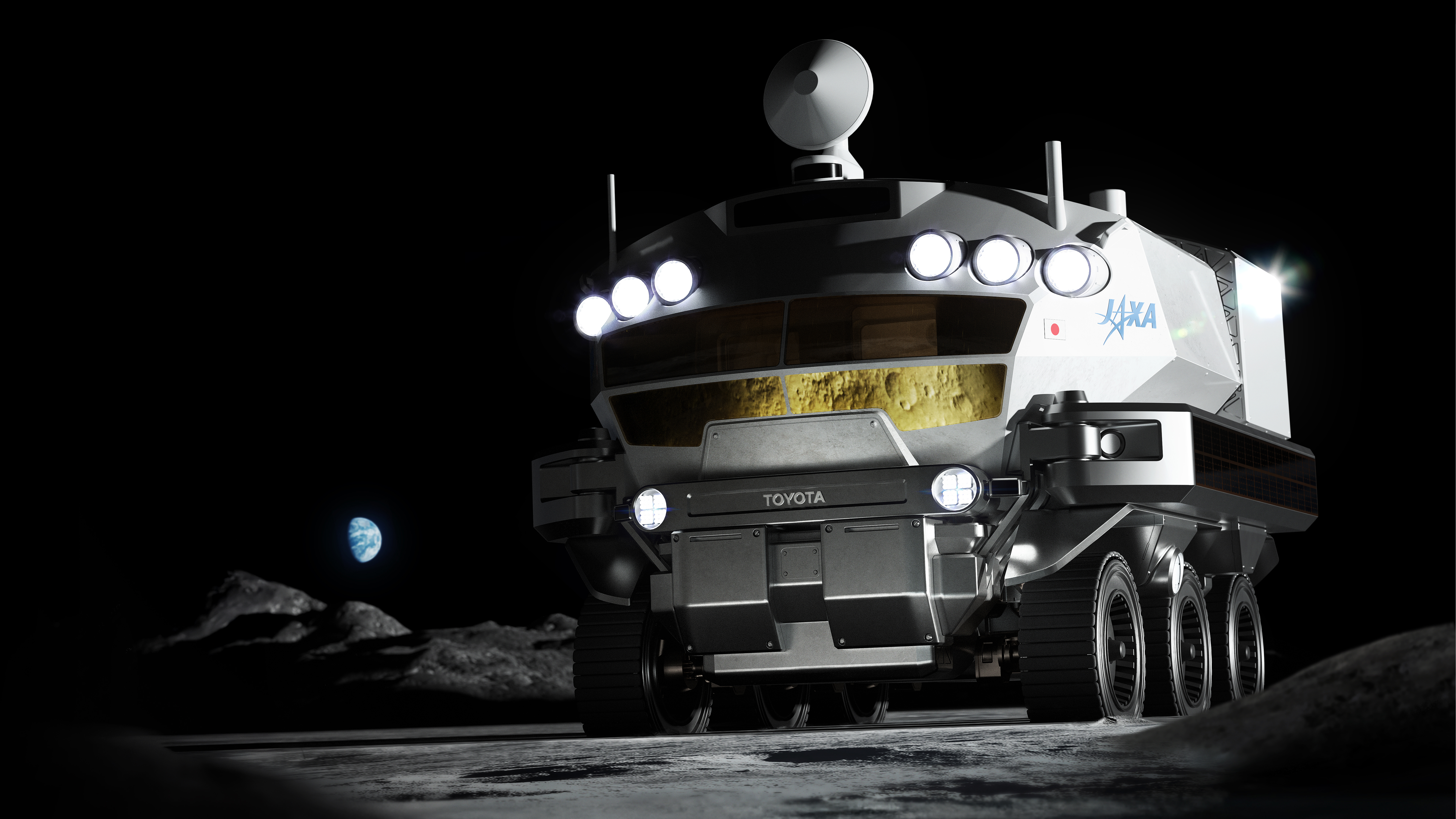
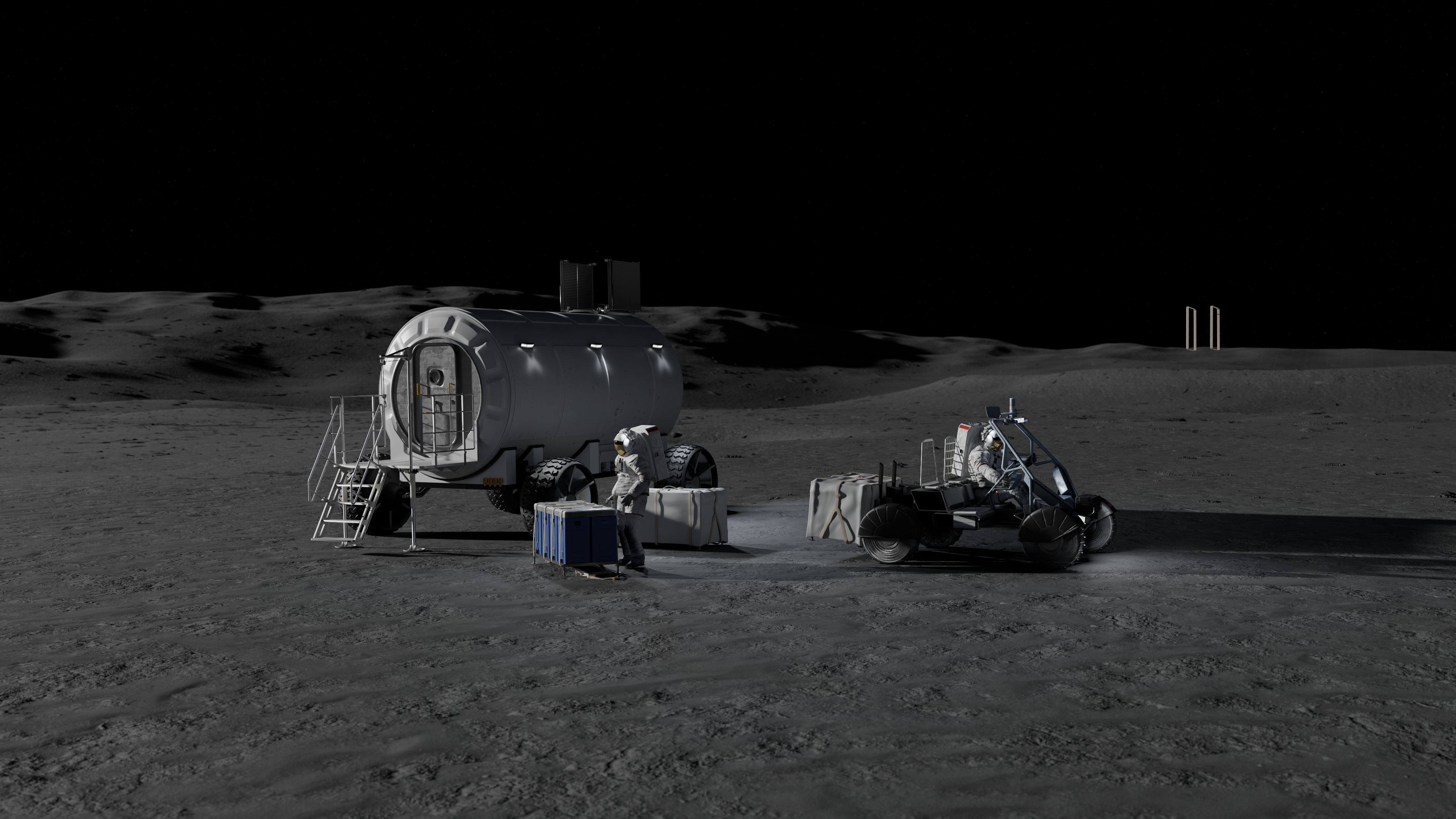
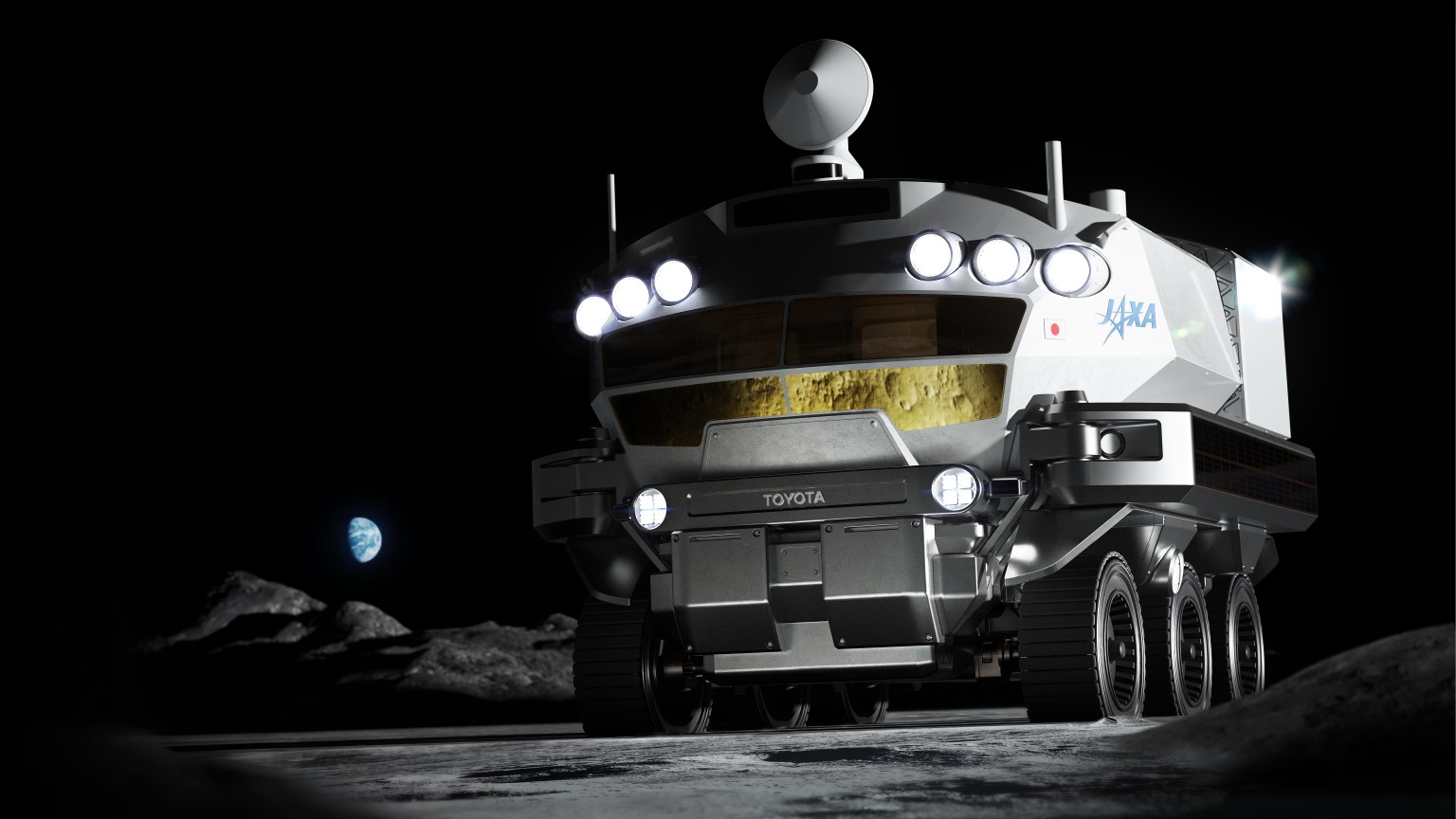
- A pressurized rover, supplied by JAXA (Japan Aerospace Exploration Agency), is also expected to be deployed during Phase Two of Moon Base development.
- The pressurized rover will expand how far astronauts can travel and work across the lunar South Pole. Serving as a mobile habitat and laboratory, the rover will allow crews to explore geographically diverse regions and conduct science far beyond the immediate vicinity of landing sites or fixed habitats.
- Designed to support two astronauts in a shirt-sleeve environment for up to 30 days, the pressurized rover is intended to provide a safe, enclosed workspace where crews can live, conduct research, and prepare for surface excursions. This capability reduces the need for astronauts to remain in spacesuits during long traverses, increasing comfort, efficiency, and mission productivity.
- The pressurized rover will enable astronauts to perform moonwalks from remote locations, extending exploration range and allowing access to new science targets, rugged terrain, and resource-rich areas that would otherwise be difficult to reach. By functioning as both transportation system and temporary habitat, it will help turn the lunar surface into a place where crews can operate for extended periods.
- Built for the harsh lunar environment, the rover is expected to have an approximate 10-year lifespan, traverse slopes up to 15 degrees, survive as many as 150 hours in shadow, and reach speeds of up to two miles (3.5 kilometers) per hour.
- Deployment of advanced crewed and uncrewed lunar terrain vehicles designed for long-duration service life, logistics transfer, robotic manipulation, permanently shadowed region exploration, and regolith handling capabilities.
- Partner rover opportunities may include systems designed for landing and habitation site preparation, power cable deployment, logistics and utility transport, and robotic manipulation operations.
Systems
Communications, Positioning, Navigation, Timing
Systems to transmit data, commands, and timing information between lunar assets and Earth
Moon Base communications and navigation systems are expected to evolve from initial orbital relay constellations to an advanced, interconnected lunar network capable of supporting a sustained presence. Expand the sections below for details on how these systems are expected to evolve through each phase of Moon Base development.
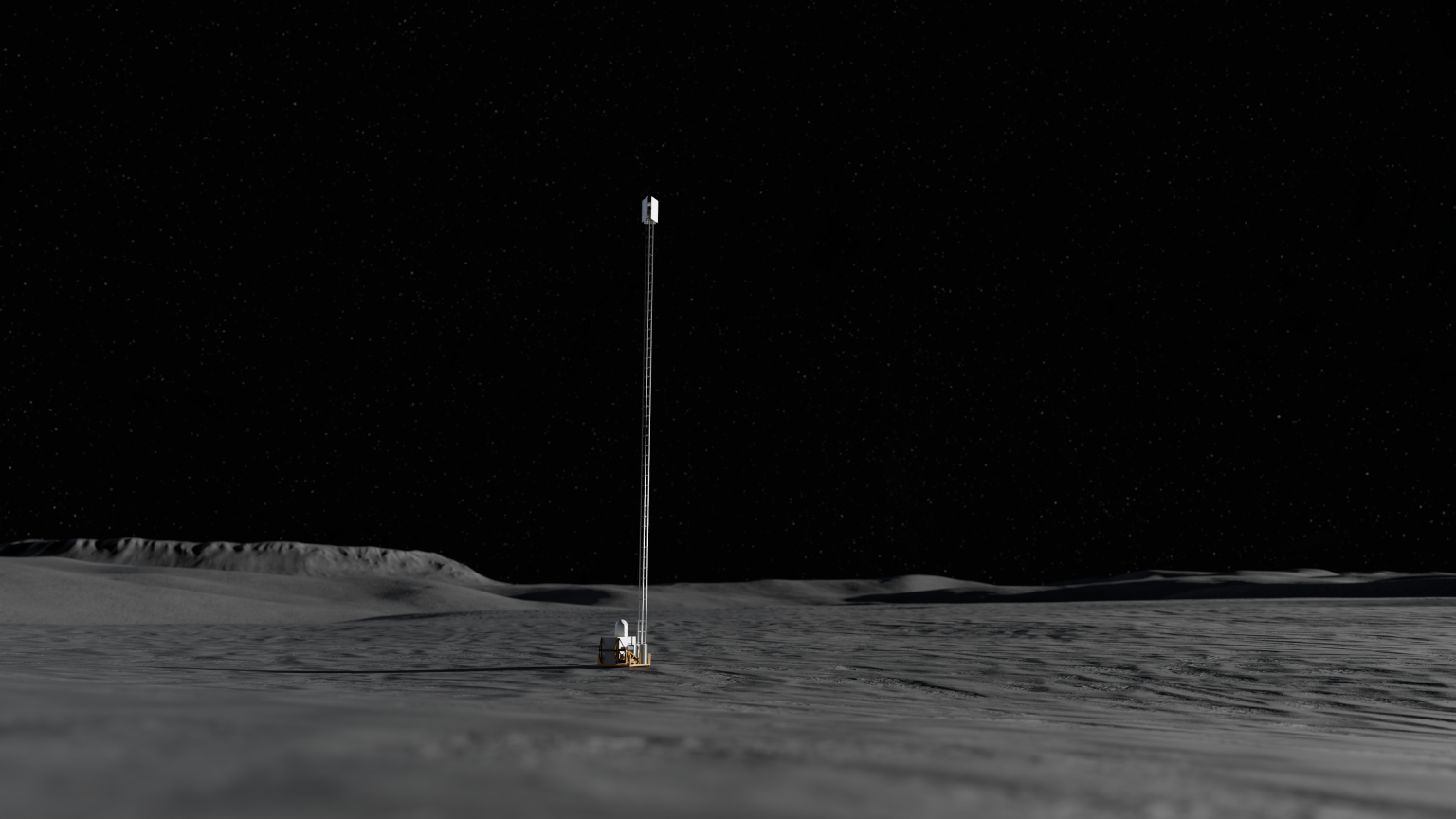
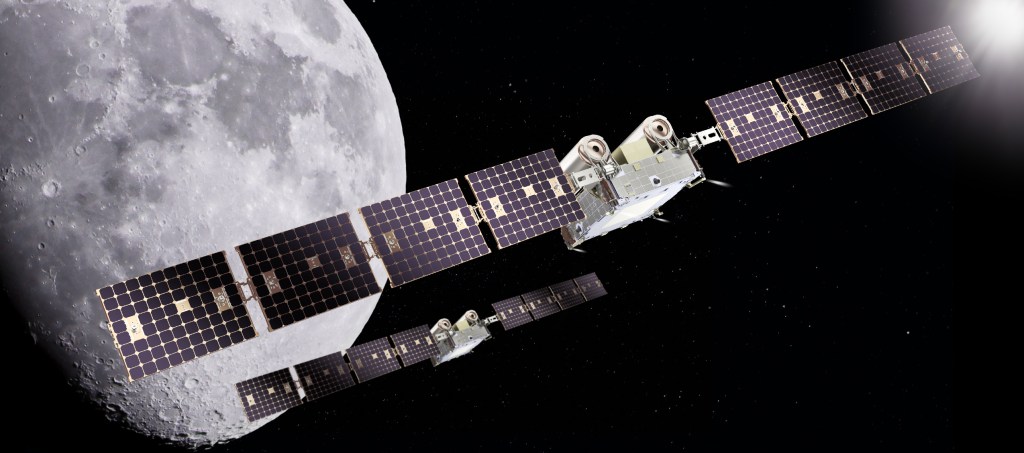
- Deployment of an initial five-satellite orbital relay constellation supporting communications, positioning, navigation, and timing services, followed by the addition of a second provider constellation to expand coverage and resiliency.
- Mature LunaNet interoperability baseline to help enable standardized communications and connectivity across all users, systems, and infrastructure.
- Phase Two communications capabilities are expected to expand through deployment of lunar surface communications infrastructure, enabling improved asset-to-asset connectivity and enhanced uplink capabilities.
- This phase is also expected to include demonstrations of lunar timing technologies designed to help synchronize multiple surface operations across Moon Base.
- Phase Three communications and navigation capabilities are expected to mature into a coordinated lunar network supporting communications across Moon Base assets.
- Expanded infrastructure deployment across broader regions of the lunar surface.
- Persistent timing and navigation services enabled through advanced clock and time-broadcast systems.
Systems
Habitation
Habitable volumes and supporting systems ensuring the health and performance of astronauts in controlled environments of Moon Base
Moon Base habitation systems are expected to evolve from early pressurized modules supporting short-duration stays to larger, interconnected habitats designed to enable long-duration human presence and sustained lunar surface operations. Expand the sections below for details on how habitation systems are expected to evolve through each phase of Moon Base development.
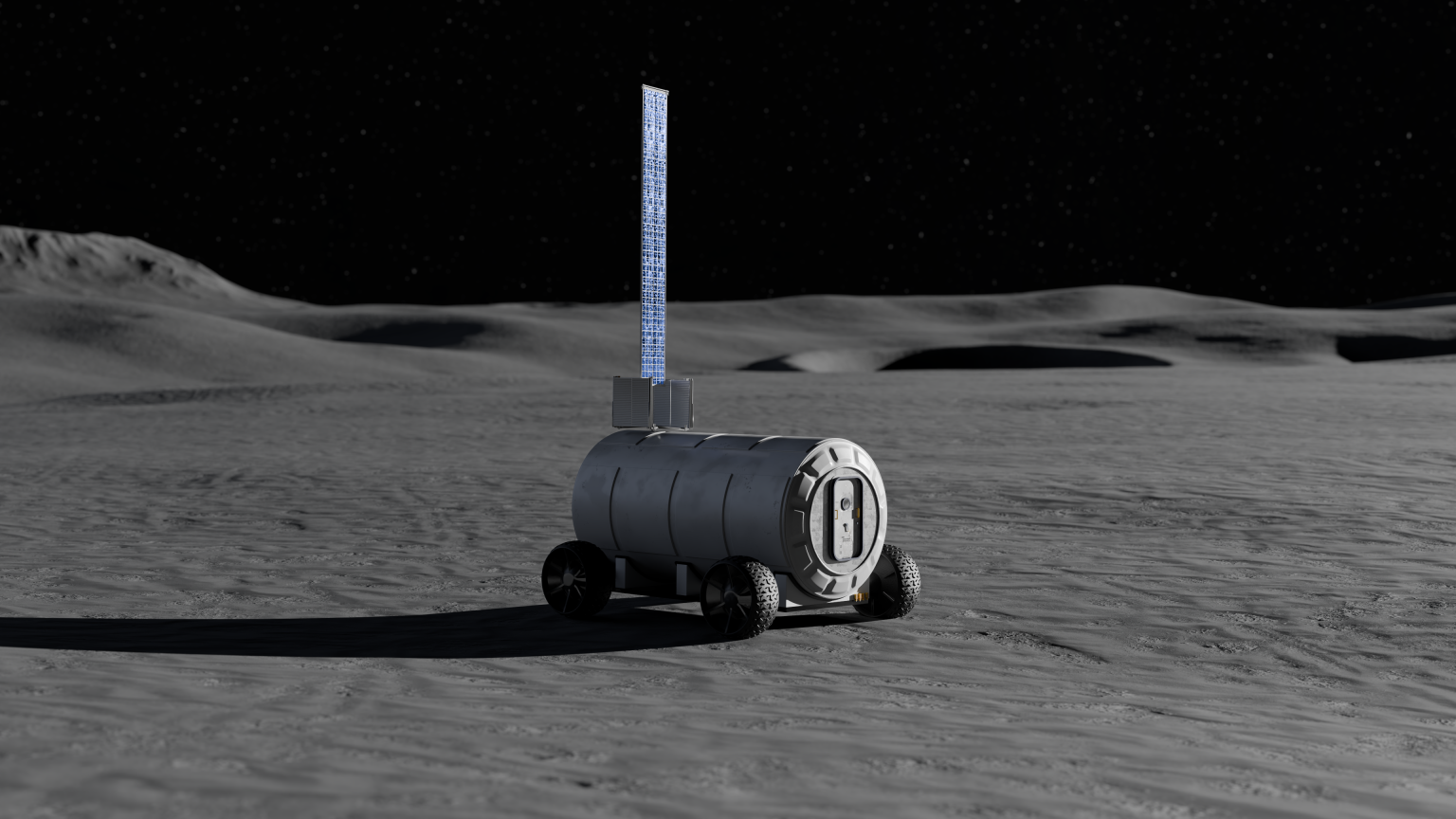
- Phase Two habitation capabilities are expected to begin establishing an early human presence on the lunar surface through deployment of initial pressurized modules designed to support short-duration stays.
- These early habitation systems will help demonstrate early environmental control and life support capabilities.
- Phase Three habitation capabilities are expected to expand into larger, long-duration habitation systems featuring 100-cubic-meter-class modules, airlocks, and module aggregation nodes designed to support a longer-duration human presence on the lunar surface.
Systems
Power
Systems to generate, store, condition, and distribute electricity for the Moon Base
Moon Base power systems are expected to evolve from early self-supported power generation and thermal protection technologies to advanced surface power infrastructure capable of sustaining habitats and long-duration operations. Expand the sections below for details on how power systems are expected to evolve through each phase of Moon Base development.
- Phase One power capabilities are expected to begin with deployment of systems capable of self-supported power generation and survival along with demonstrations of Radioisotope Heater Units (RHUs) designed to help protect lunar surface assets survive the extreme conditions of the lunar South Pole, where long periods of darkness and severe cold can challenge extended operations.
- Phase Two power capabilities are expected to expand through deployment of initial lunar power infrastructure, including solar array and radioisotope power stations.
- Lunar assets are also expected to begin routinely using Radioisotope Heater Units (RHUs) and Radioisotope Thermoelectric Generators (RTGs) to enable survival and expanded operational capability during extended periods of darkness.
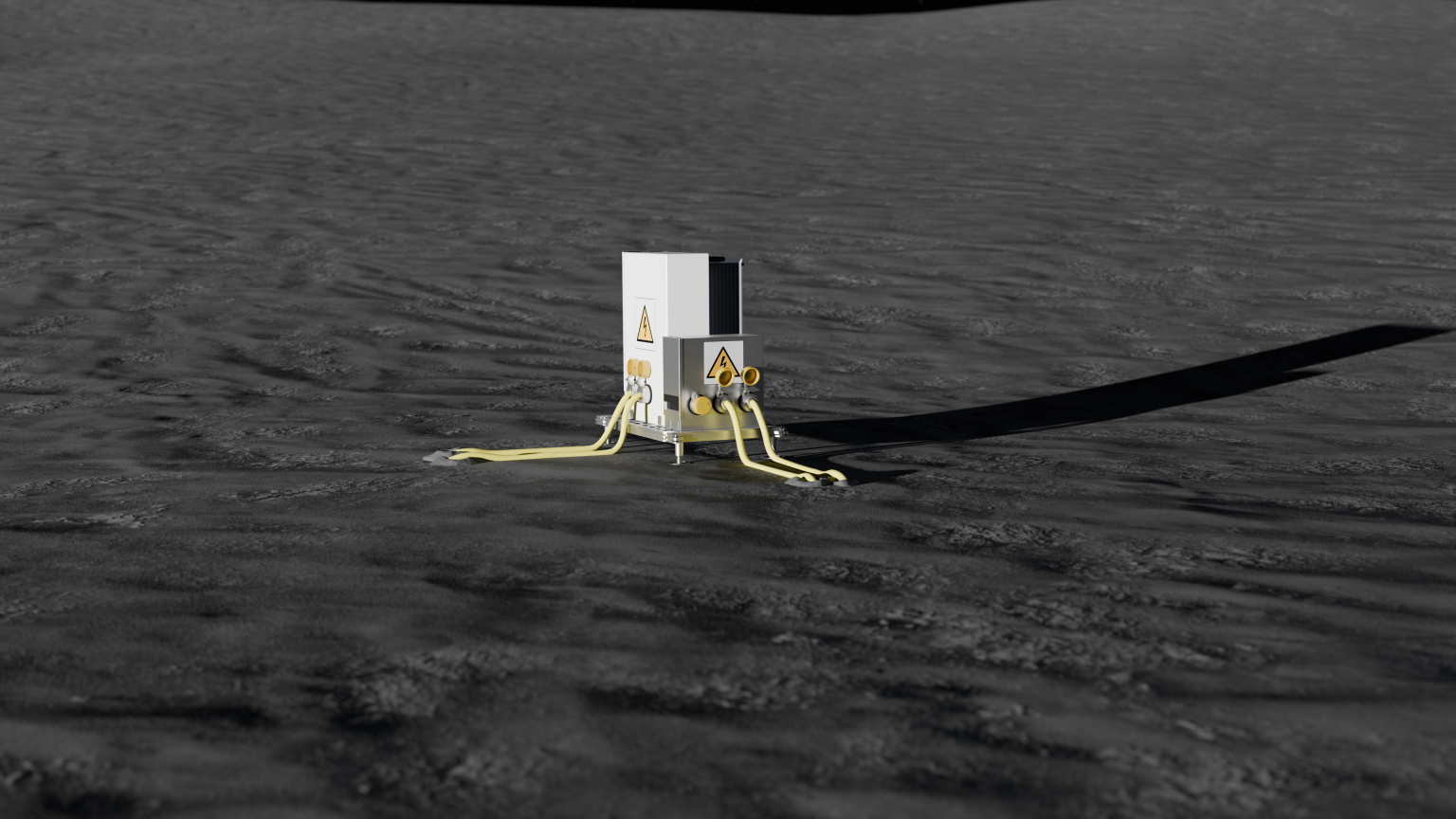
- This phase is also expected to demonstrate wireless rover charging, dust-tolerant electrical connectors, and robotic electrical cable deployment technologies for future surface infrastructure networks.
- Phase Three power capabilities are expected to include operational fission surface power systems capable of providing steady, reliable energy through long lunar nights, along with expanded power distribution infrastructure supporting habitats and surface assets.
- Advanced capabilities such as wireless charging, dust-tolerant electrical connectors, and electrical cable deployment systems are also expected to support a more sustained lunar surface presence.
Systems
Logistics
Systems related to the packaging, handling, transportation, storage, and transfer of cargo for the Moon Base
Moon Base logistics systems are expected to evolve from early cargo delivery demonstrations to a robust network capable of transporting large amounts of equipment, resources, and returned cargo. Expand the sections below for details on key logistics capability targets for each phase of Moon Base development.
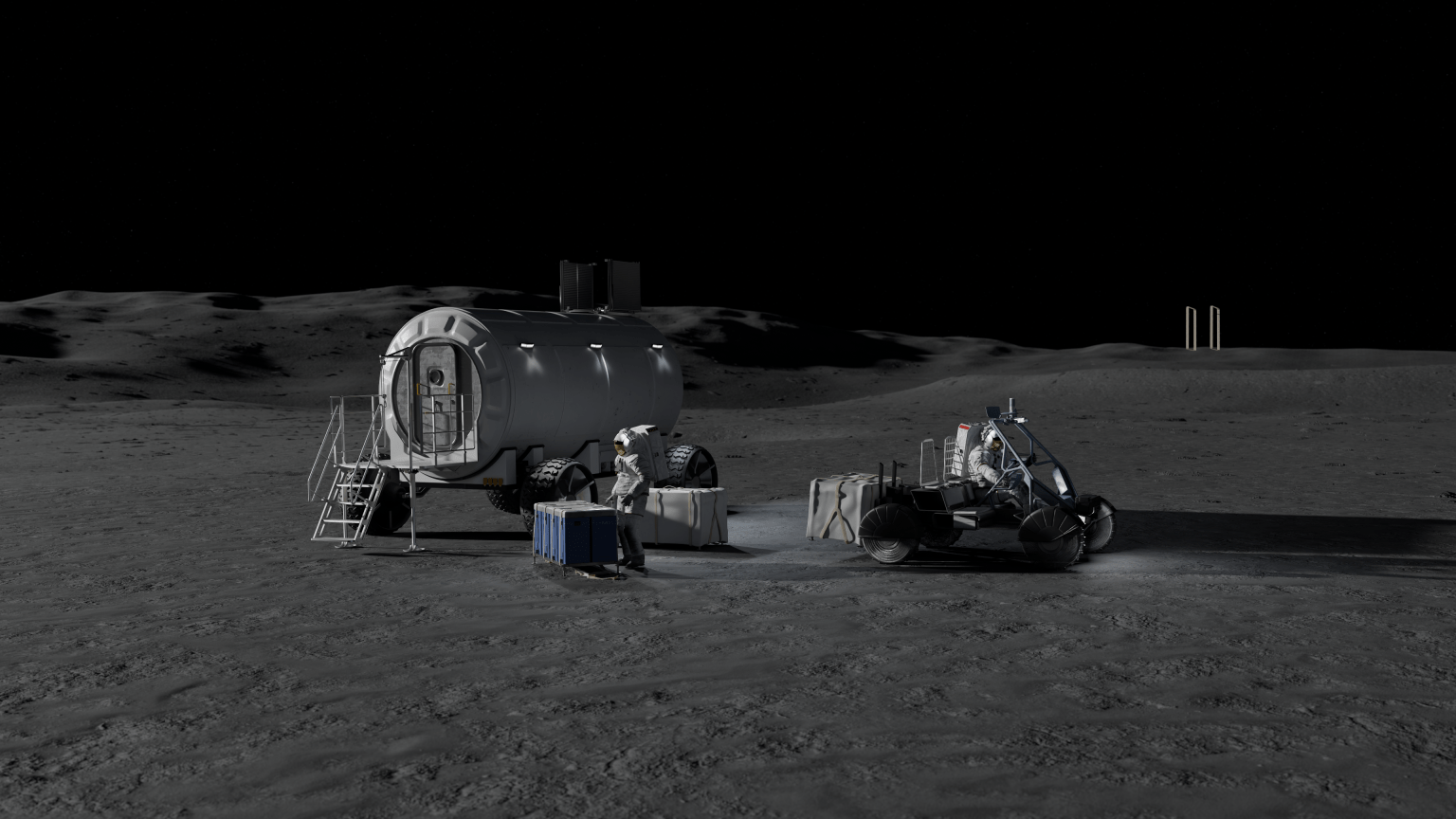
- Phase Two will see the initial demonstration of logistics capabilities, including the deployment of cargo modules to the lunar surface, early surface mating operations and initial small-scale cargo return.
- Phase Three logistics capabilities are expected to expand to support longer-duration lunar stays through increased cargo delivery capacity and end-to-end human-tended logistics systems provided by NASA and international and industry partners, with a goal of delivering up to eight metric tons per 28-day mission.
- This phase is also expected to include sustained small cargo return capabilities and demonstrations of medium- to large-scale cargo return systems targeting up to 500 kilograms of returned material.