








![Request for Information – Potential [Placeholder for Prize]](https://assets.science.nasa.gov/dynamicimage/assets/science/missions/a-step/FFR_Earth_Background_20251120%20.png?w=1024)



Moon Base
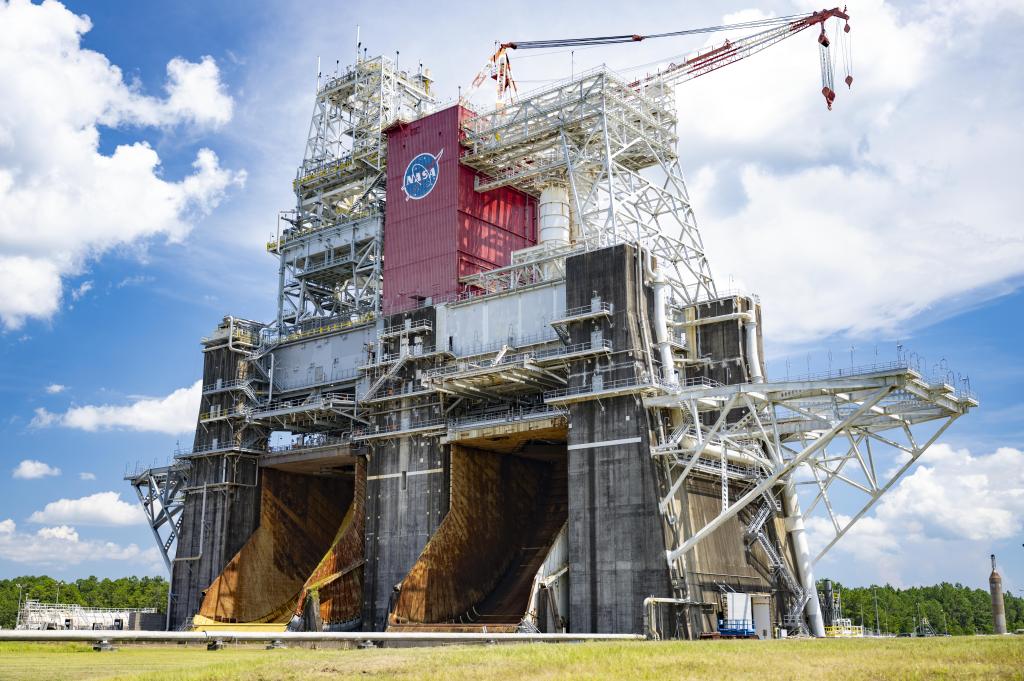
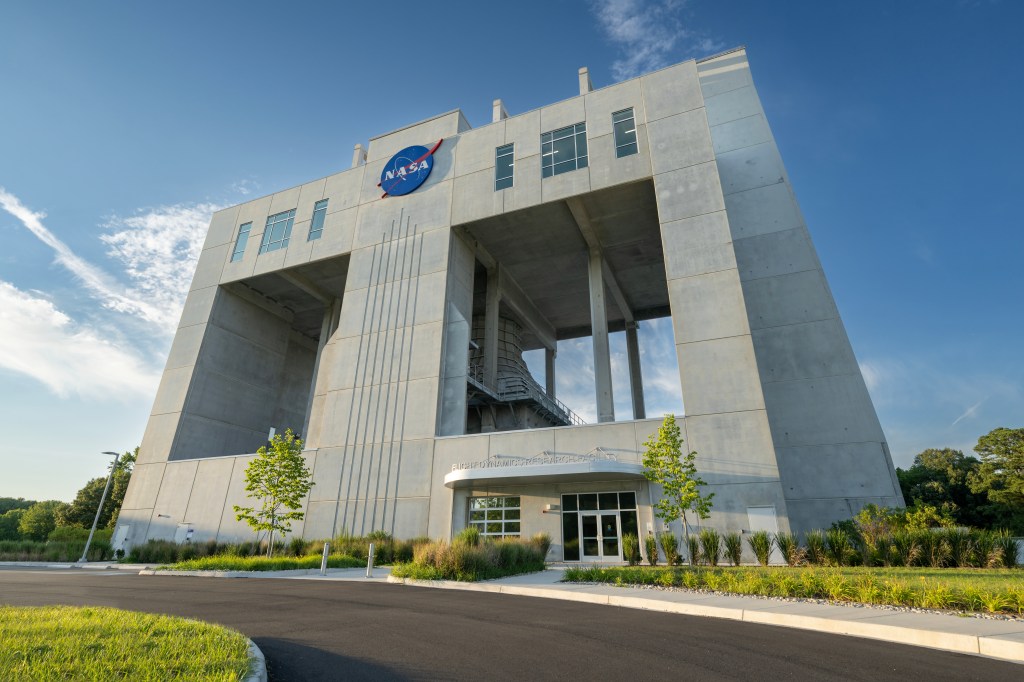
The Moon Base is home base for Artemis astronauts who will live and work at humanity’s first lunar outpost. NASA is leading global teams of innovators across industry and academia to build the Moon Base and establish an enduring human presence near the lunar South Pole for the benefit of all.
A Step-by-Step Approach
Moon Base Development
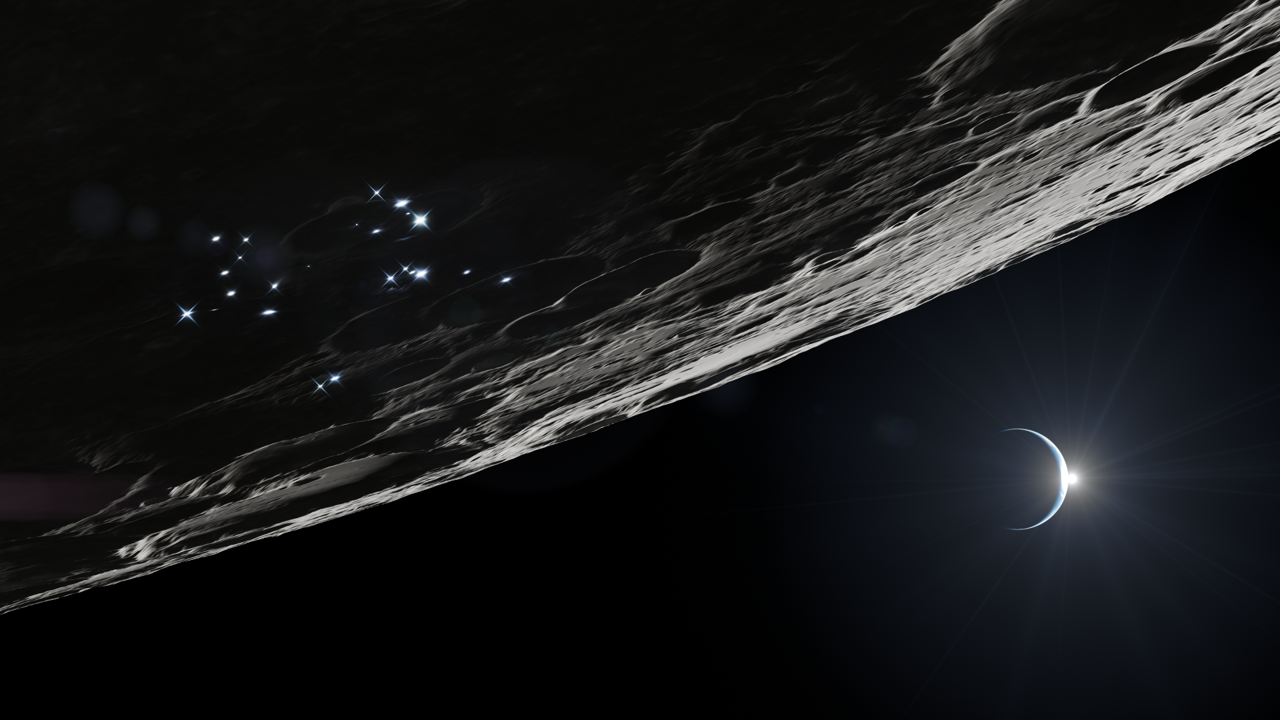
NASA will establish the Moon Base in the lunar South Pole region through a phased, iterative approach that builds capability over time. By starting with near-term technology demonstrations, robotic missions, and early experiments, NASA and its partners can test systems, learn quickly, and steadily mature the capabilities required for continuous human presence on the Moon.
Now–2029
Phase One
Learn, Test, Build
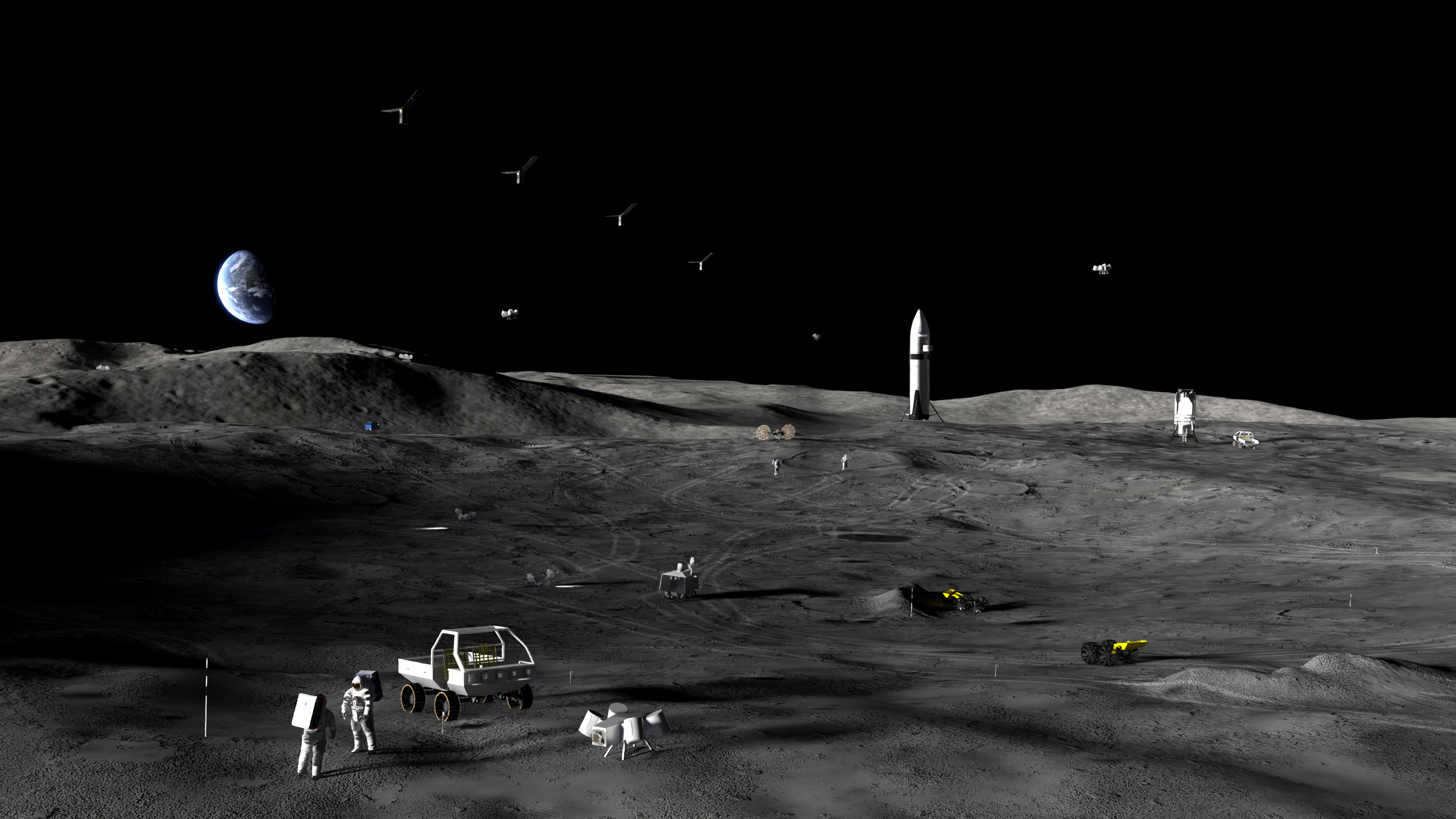
NASA will begin with a rapid series of robotic missions to scout the lunar South Pole region, test technologies, and prepare for surface operations. Scroll below to learn more about some of the key missions, assets, and technology demonstrations planned for Phase One of Moon Base development.
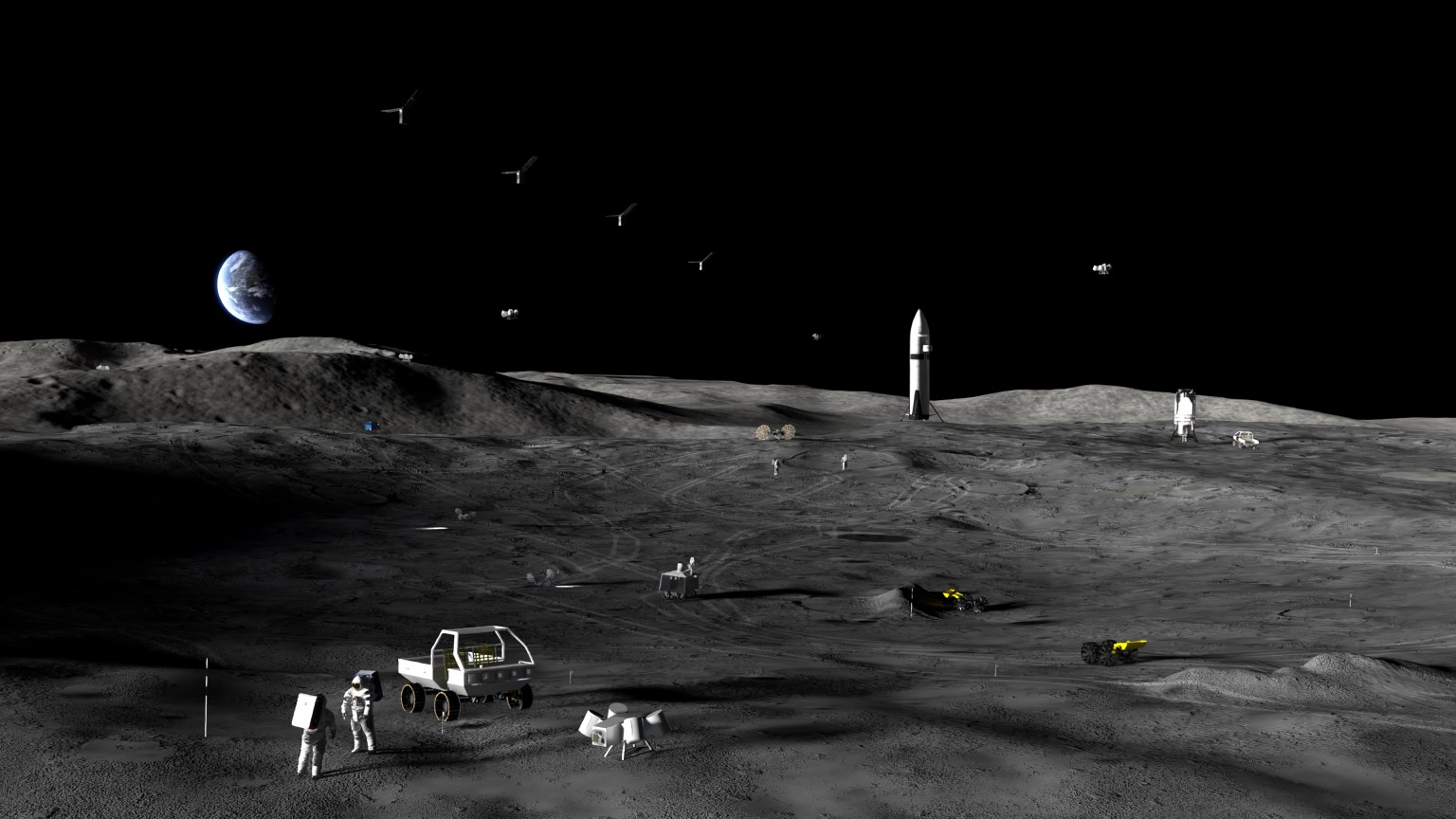
Phase One of Moon Base development includes:
- A major increase in lunar activity, with up to 25 missions, including 21 landings.
- Crewed and autonomous rovers for mobility demonstrations and surface preparation, along with four drones known as MoonFall and communications relay and observation satellites.
- Early demonstrations of power, navigation, communications, and nuclear radioisotope heater unit technologies designed to endure the long lunar night.
- Scientific payload opportunities integrated across landers and rovers.
- The first tangible footprint of the Moon Base effort, with four tons of payload delivered to test what works on the lunar surface.
During Phase One of Moon Base development, Blue Origin’s Blue Moon Mark 1 Endurance lander will help deliver science investigations, demonstrate key technologies, and support the development of capabilities needed for sustained lunar operations near the Moon’s South Pole.
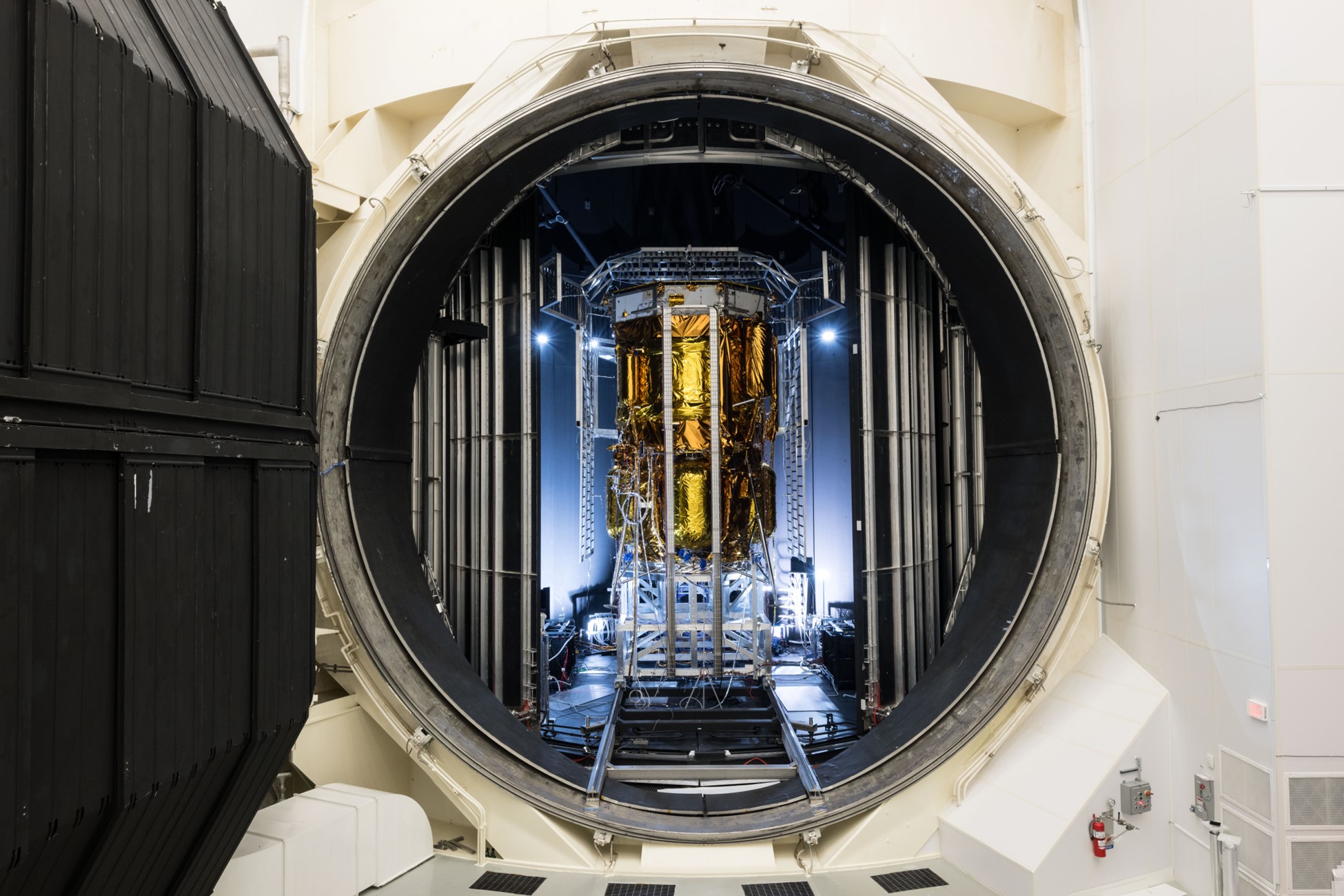
- A mission under NASA’s CLPS (Commercial Lunar Payload Services) initiative.
- Moon Base I will be the first privately funded lunar lander mission in history.
- Endurance will land on the Shackleton Connecting Ridge, a strategically important area near the lunar South Pole.
- The mission is designed to demonstrate key landing system capabilities and technologies in support of NASA’s Artemis program, including precision landing, cryogenic propulsion, and autonomous guidance, navigation, and control. The uncrewed mission will provide valuable operational experience and data to help reduce risk for future crewed Artemis missions.
- In addition to its primary mission objectives, Endurance is scheduled to deliver two NASA science and technology payloads. These include the Stereo Cameras for Lunar Plume-Surface Studies, an array of high-resolution cameras designed to capture imagery of the interaction between the lander’s engine plume and the lunar surface during descent and landing, and the Laser Retroreflector Array, a small laser-reflecting device that helps orbiting spacecraft precisely locate landers and other assets on the Moon.
During Phase One of Moon Base development, Astrobotic’s Griffin lander will help demonstrate commercial lunar landing and mobility capabilities, deliver NASA payloads to the lunar South Pole region, and support the development of technologies needed for future surface operations on the Moon.
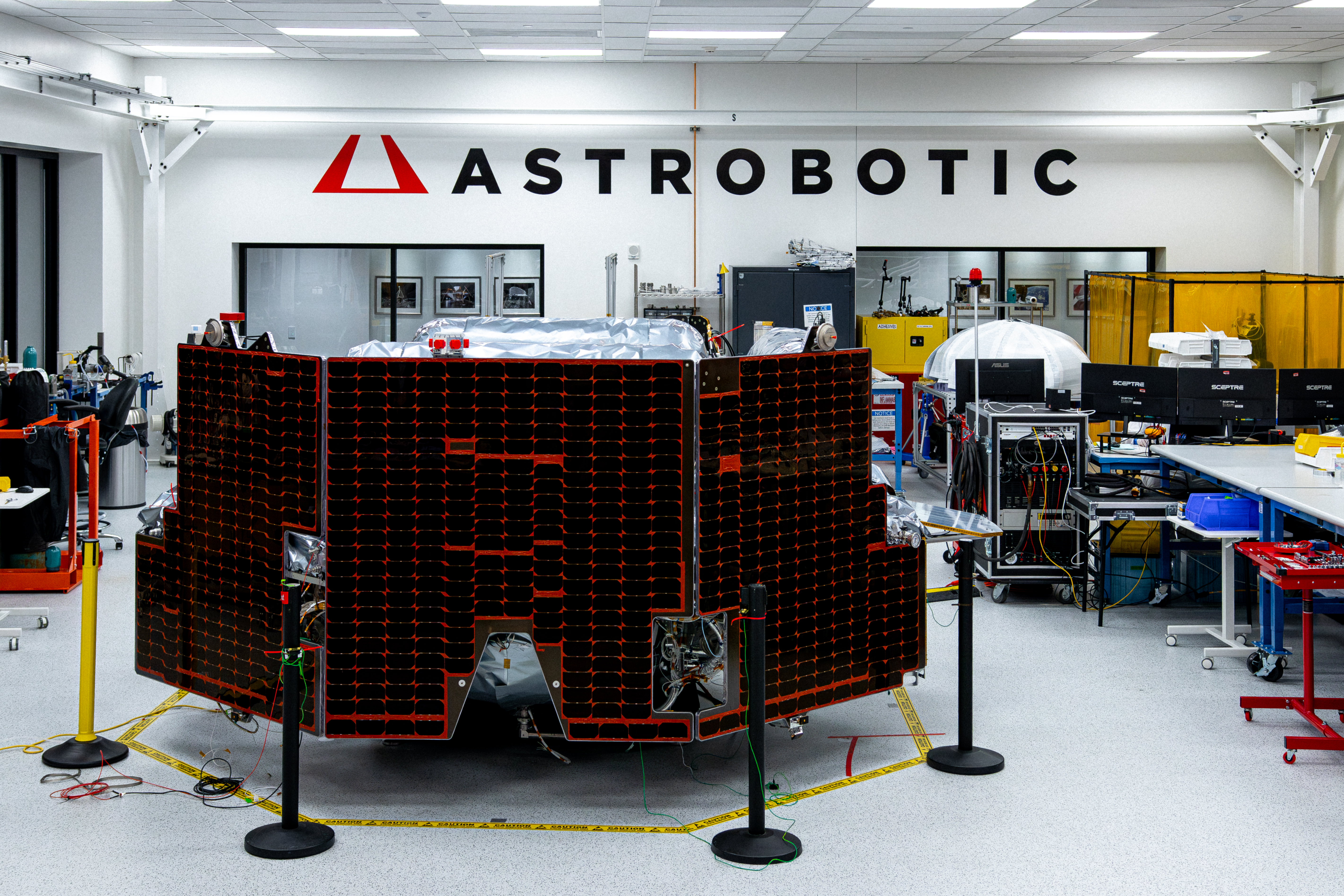
- Griffin-1 is a lunar lander mission under NASA’s CLPS (Commercial Lunar Payload Services) initiative that will target a landing at Nobile Crater near the Moon’s South Pole.
- The mission will serve as a large lander demonstration flight carrying payloads from NASA, ESA (European Space Agency), Venturi Astrolab, and Astrobotic.
- Griffin-1 will deliver the largest commercial payload sent to the lunar surface to date: Astrolab’s FLEX Lunar Innovation Platform (FLIP), a technology demonstration rover designed to mature systems and components for the company’s future Flexible Logistics and Exploration (FLEX) rover. The FLIP rover will carry 10 additional payloads, including four developed in partnership with NASA.
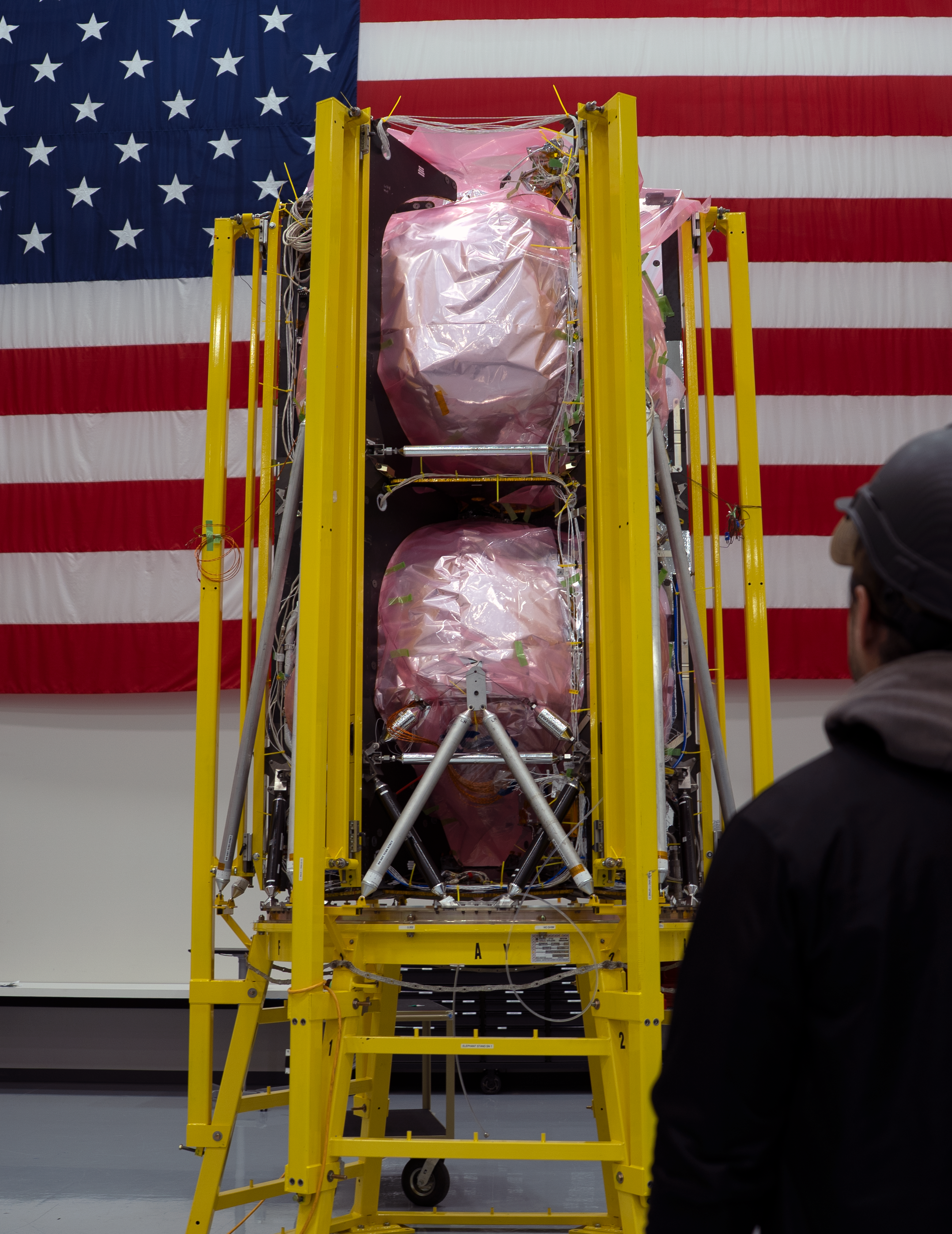
- Intuitive Machines’ Nova-C Trinity lander will deliver science investigations and technology demonstrations to the Moon’s Reiner Gamma swirl.
- This mission marks NASA’s first delivery of a payload selected through the Science Mission Directorate’s Payloads and Research Investigations on the Surface of the Moon (PRISM) solicitation process. Managed by Johns Hopkins Applied Physics Laboratory, the Lunar Vertex payload will investigate the origins of the Moon’s magnetic anomalies and their potential connection to visible lunar swirls. In addition to this science investigation, IM-3 will also deliver payloads through international partnerships with ESA (European Space Agency) and the Korea Astronomy and Space Science Institute (KASI).
During Phase One of Moon Base development, NASA plans to deploy MoonFall drones to the lunar South Pole to help explore and map challenging terrain.
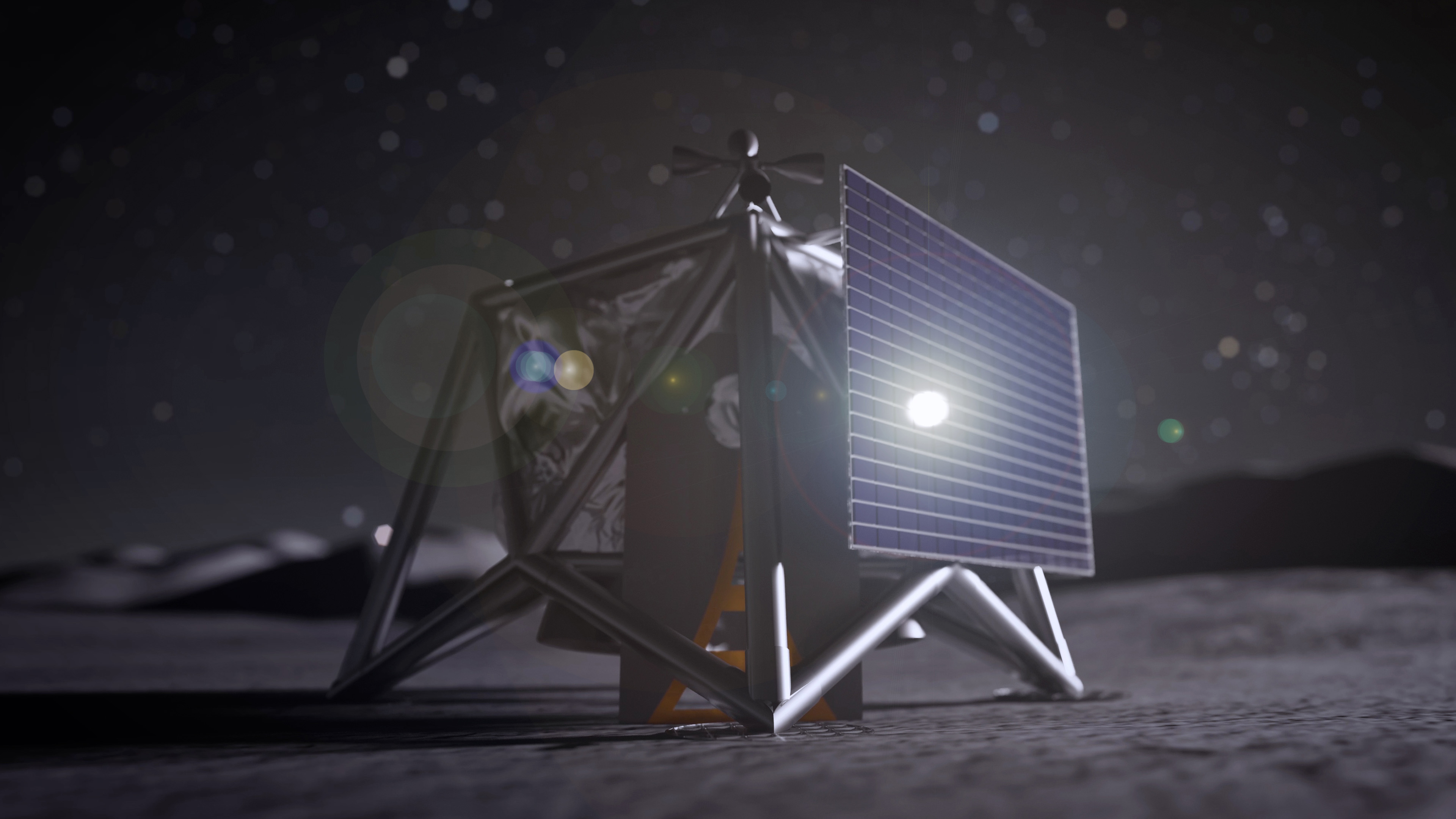
- Managed by NASA’s Jet Propulsion Laboratory in Southern California, the MoonFall mission is targeted to land near the lunar South Pole in 2028.
- Designed to explore one of the most challenging and strategically important regions on the Moon, MoonFall drones will provide valuable data to support future surface operations and site development.
- Built on the legacy of NASA’s Ingenuity Mars Helicopter, the MoonFall drones will be transported from Earth orbit to the Moon aboard Firefly Aerospace’s Elytra spacecraft and deployed during descent to the lunar surface.
- Once deployed, the drones will land and operate independently, using high-definition optical cameras to capture detailed imagery and video of rugged terrain beyond the reach of traditional rovers.
- Using their onboard propulsion systems, the drones will make multiple flights over the course of a lunar day, approximately 14 Earth days.
- Each drone will be approximately 7 feet in diameter, 4 feet tall, and weigh about 550 pounds, including propellant.
- MoonFall’s Lunar Dashcam imaging system will create digital terrain maps at significantly higher resolution than those currently available from lunar orbiters.
- Additional science instruments include a laser retroreflector array for precise positioning and navigation, a neutron spectrometer to help determine the location and amount of ice water , and a radiation spectrometer to characterize the lunar radiation environment for future human exploration.
- The data collected by MoonFall drones will help NASA better understand the lunar South Pole environment, reduce risk for future crews, and inform the technologies and operations needed to establish a sustained presence on the Moon.
During Phase One of Moon Base development, NASA plans to begin deploying both crewed and uncrewed Lunar Terrain Vehicles, or LTVs, to establish the foundation for sustained surface mobility.
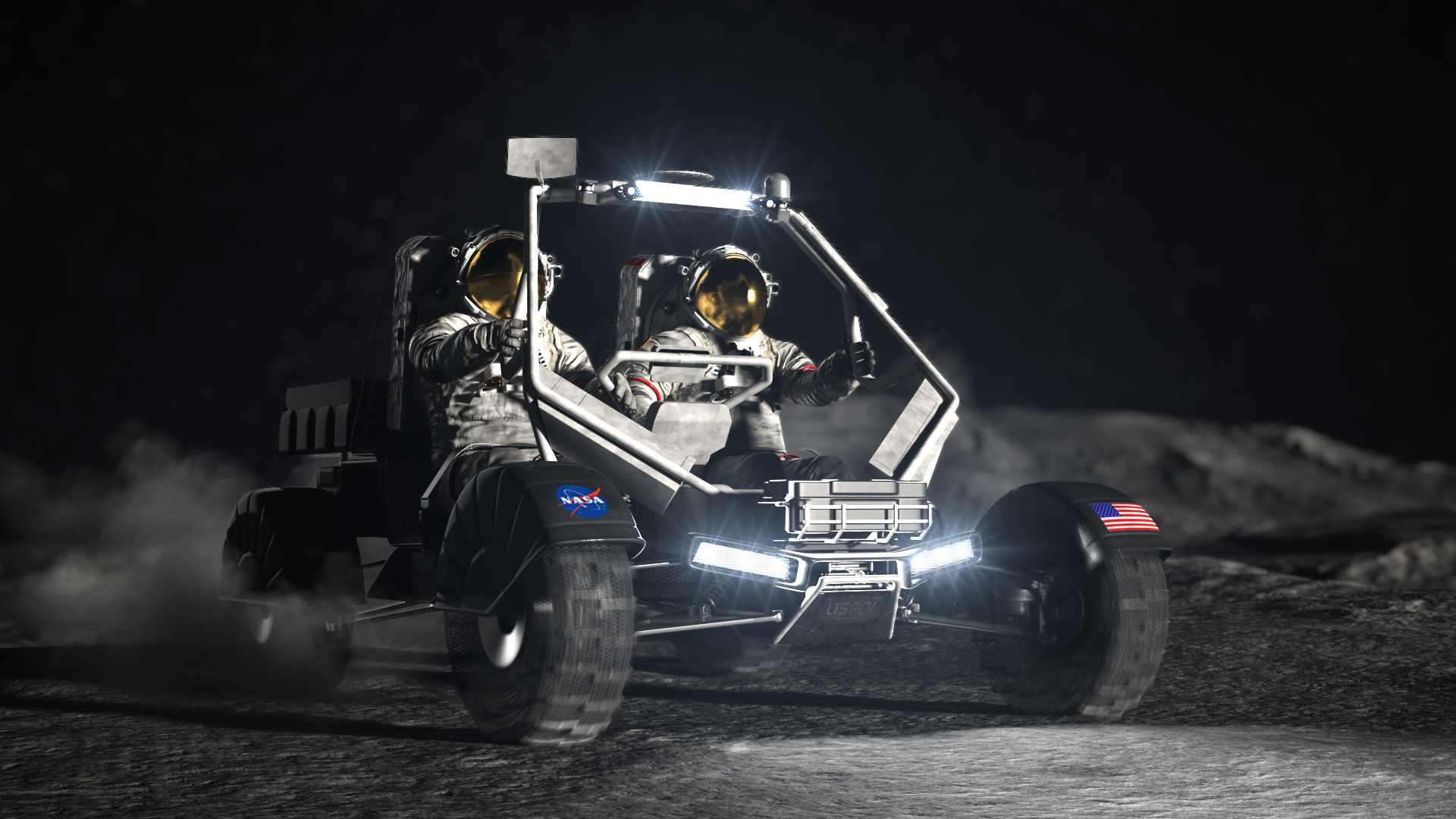
- Uncrewed LTVs will support early exploration, technology demonstrations, and surface preparation activities before large-scale human operations begin. These vehicles are expected to feature basic autonomy and teleoperations, operate for a minimum of one year, and travel at least 497 miles (800 kilometers).
- Crewed LTVs will give astronauts the ability to travel farther and accomplish more during surface missions. These vehicles are expected to provide at least one year of operational life and traverse distances of 559 miles (900 kilometers) or more, including at least 62 miles (100 kilometers) of additional crewed traverses.
- Designed for the demanding lunar environment, these early LTV concepts will include the ability to traverse slopes of up to 20 degrees, survive up to 150 hours in shadow, and operate at speeds up to six miles (10 kilometers) per hour.
- NASA has awarded Astrolab $219 million and Lunar Outpost $220 million to build and deliver the first phase of LTVs. Awarded under the Phase 1 High Achievability Mission task orders of the Lunar Terrain Vehicle Services contract, these firm-fixed-price, performance-based milestones will enable NASA to deploy crewed and uncrewed mobility systems to the lunar surface by 2028 through the agency’s CLPS (Commercial Lunar Payload Services) initiative.
- Astrolab’s Crewed Lunar Vehicle, or CLV‑1, adapted from the company’s FLEX architecture, is a crewed rover designed to transport astronauts, carry supplies, and support remote operations, with a compact stowed configuration, a mass of about 2,000 pounds, and the ability to reach more than 6 mph on level terrain.
- Complementing this capability, Lunar Outpost’s Pegasus is a lighter, mission‑ready evolution of its Eagle rover designed explicitly to meet NASA’s updated LTV requirements. Operational for up to a year and capable of manual, autonomous, or teleoperated driving at speeds more than 9 mph, Pegasus incorporates Apollo‑heritage technologies and builds on prototype and flight experience to deliver human‑centered mobility essential for establishing a sustained Moon Base.
- To deliver these rovers to the Moon’s South Pole region, NASA awarded Blue Origin $188 million with an option period worth $280.4 million for two task orders, which includes an option period based on initial phase performance. NASA can choose to extend the task order for payload delivery.
During Phase One of Moon Base development, NASA plans to utilize radioisotope heating units to help support surface systems and operations in the lunar South Pole region.
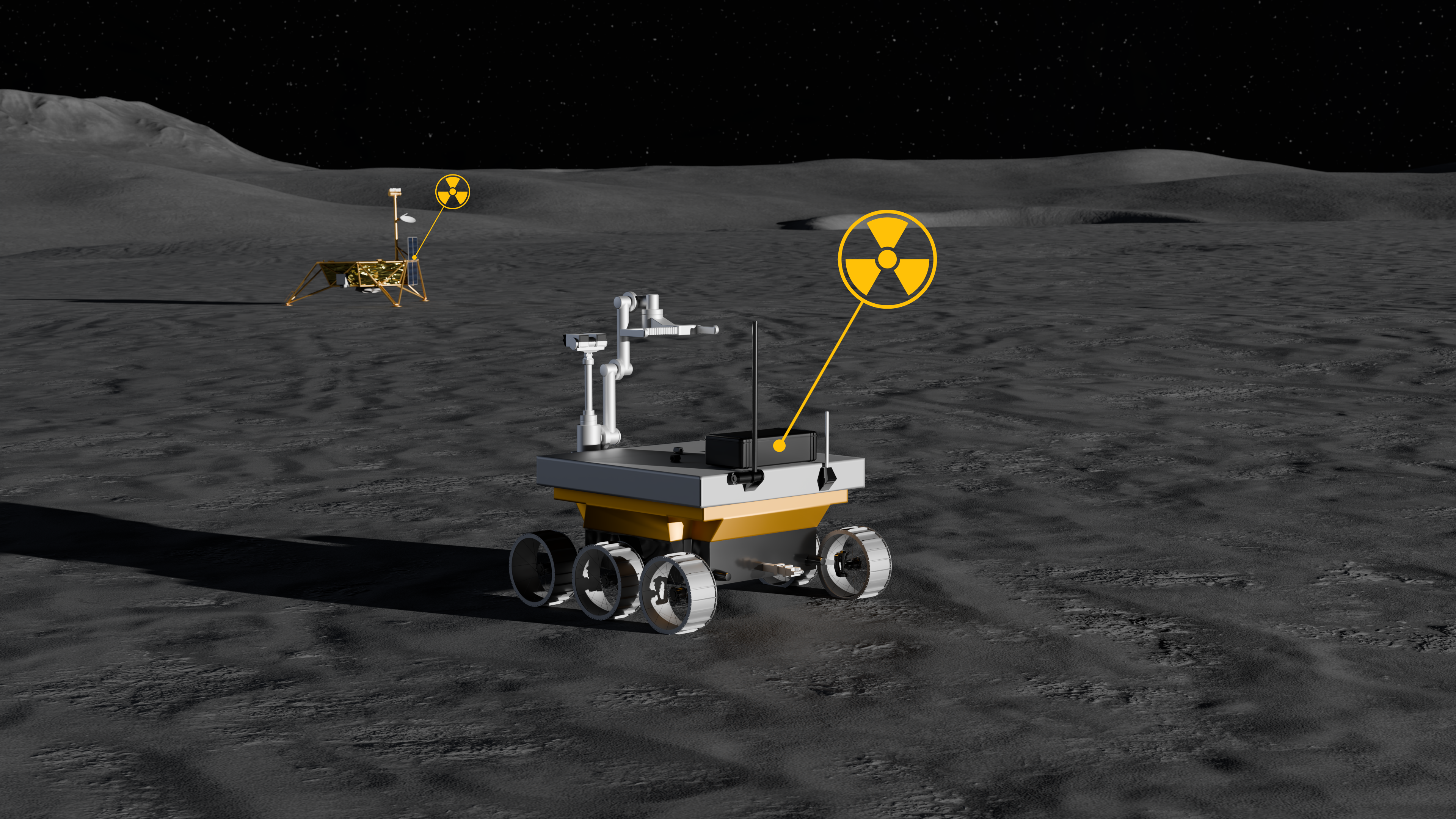
- Reliable power and thermal control will be essential for establishing a sustained human presence on the Moon. As part of the Moon Base initiative, NASA is pursuing radioisotope heating units, or RHUs, and related technologies that can help systems survive the extreme conditions of the lunar South Pole region, where long periods of darkness and severe cold can challenge extended operations.
- Unlike Earth, the Moon has little atmosphere to retain heat, and temperatures in shadowed regions or during the lunar night can plunge to extreme lows. Solar power can be highly effective in sunlit areas, but periods of darkness, low-angle sunlight, and permanently shadowed terrain create environments where additional heating solutions are critical. RHUs use the natural heat generated by decaying radioisotope material to keep electronics, batteries, instruments, and mechanical systems within safe operating temperatures.
- Radioisotope heating systems can enable missions in colder regions, support longer-duration surface operations, and help robotic explorers reach scientifically valuable areas that receive little or no sunlight. These capabilities are especially important near the lunar South Pole, where access to ice-bearing craters and shadowed terrain may be central to future exploration and resource development.
- Demonstrating radioisotope heating technologies on the Moon will help NASA mature systems that support a lasting lunar presence while informing future deep space missions, including Mars, where reliable heating and power are also essential for long-duration exploration.
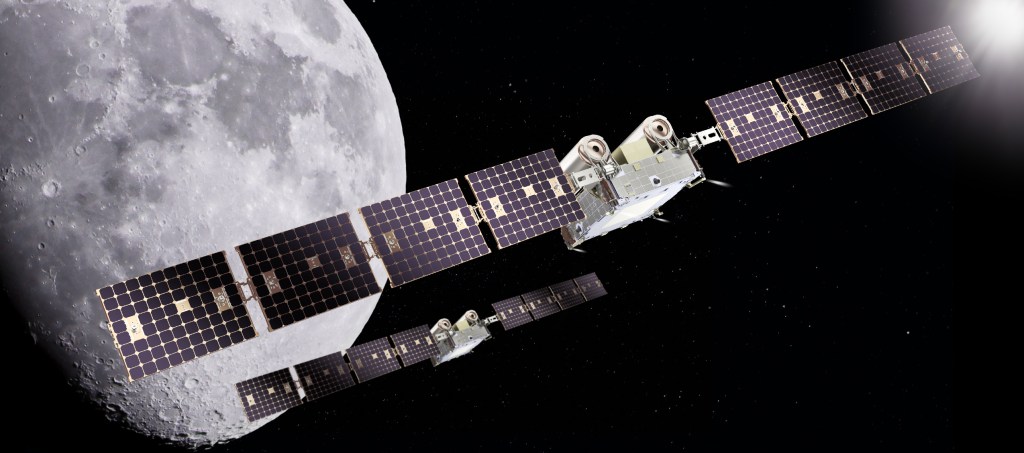
During Phase One of Moon Base operations, NASA anticipates deploying an initial orbital relay constellation, followed by an additional provider-developed constellation to expand communications and navigation capabilities.
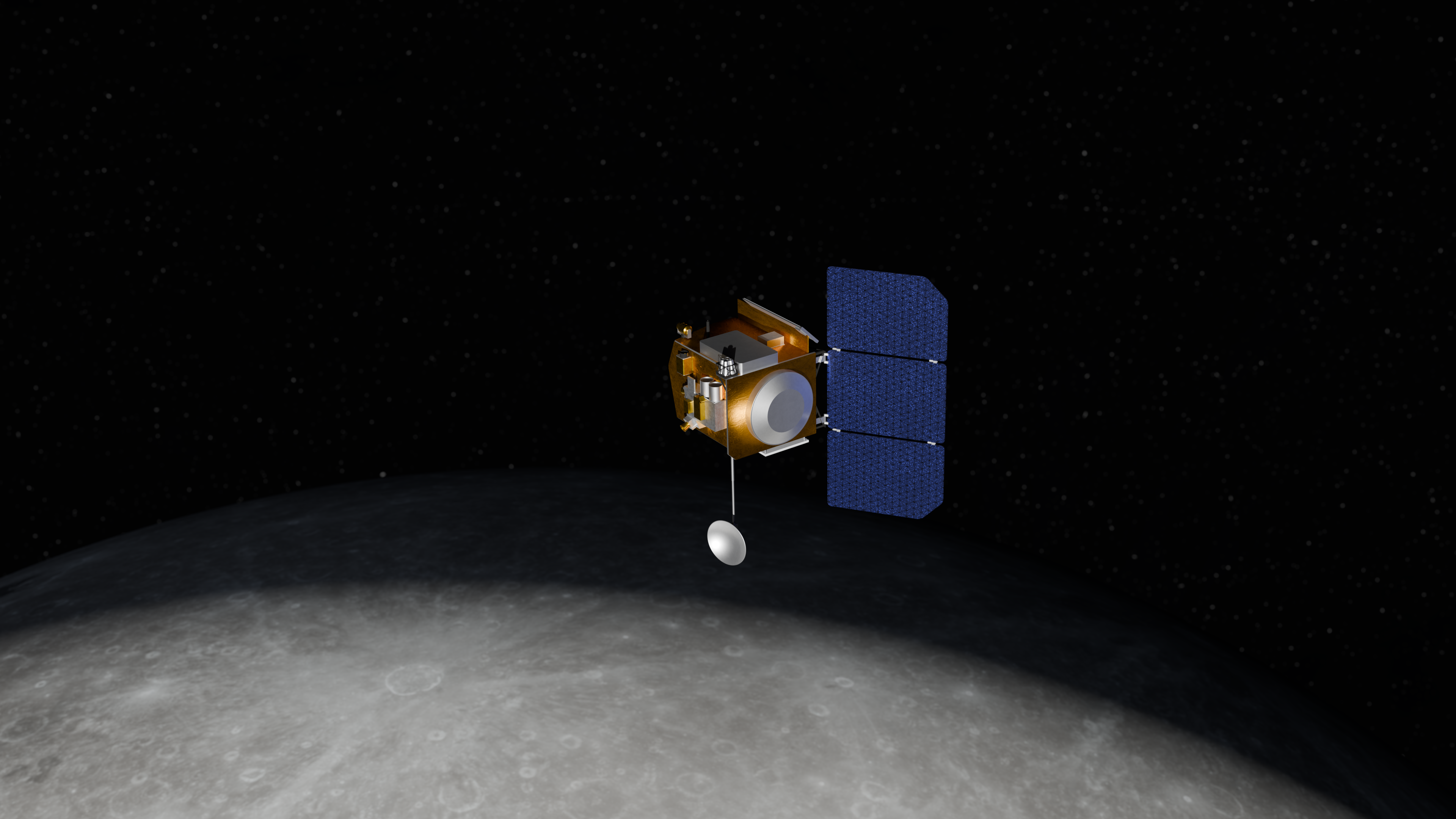
- Planned capabilities include high-bandwidth communications between Earth, cislunar space, and the lunar surface to support growing science, exploration, and operational needs.
- NASA also plans to demonstrate early interoperability standards through LunaNet, a developing lunar communications and navigation architecture designed to help different systems and providers operate together more seamlessly.
NASA’s VIPER (Volatiles Investigating Polar Exploration Rover) is a key mission planned for Phase One of Moon Base development, designed to help scientists better understand the location of water ice and other volatiles near the lunar South Pole.
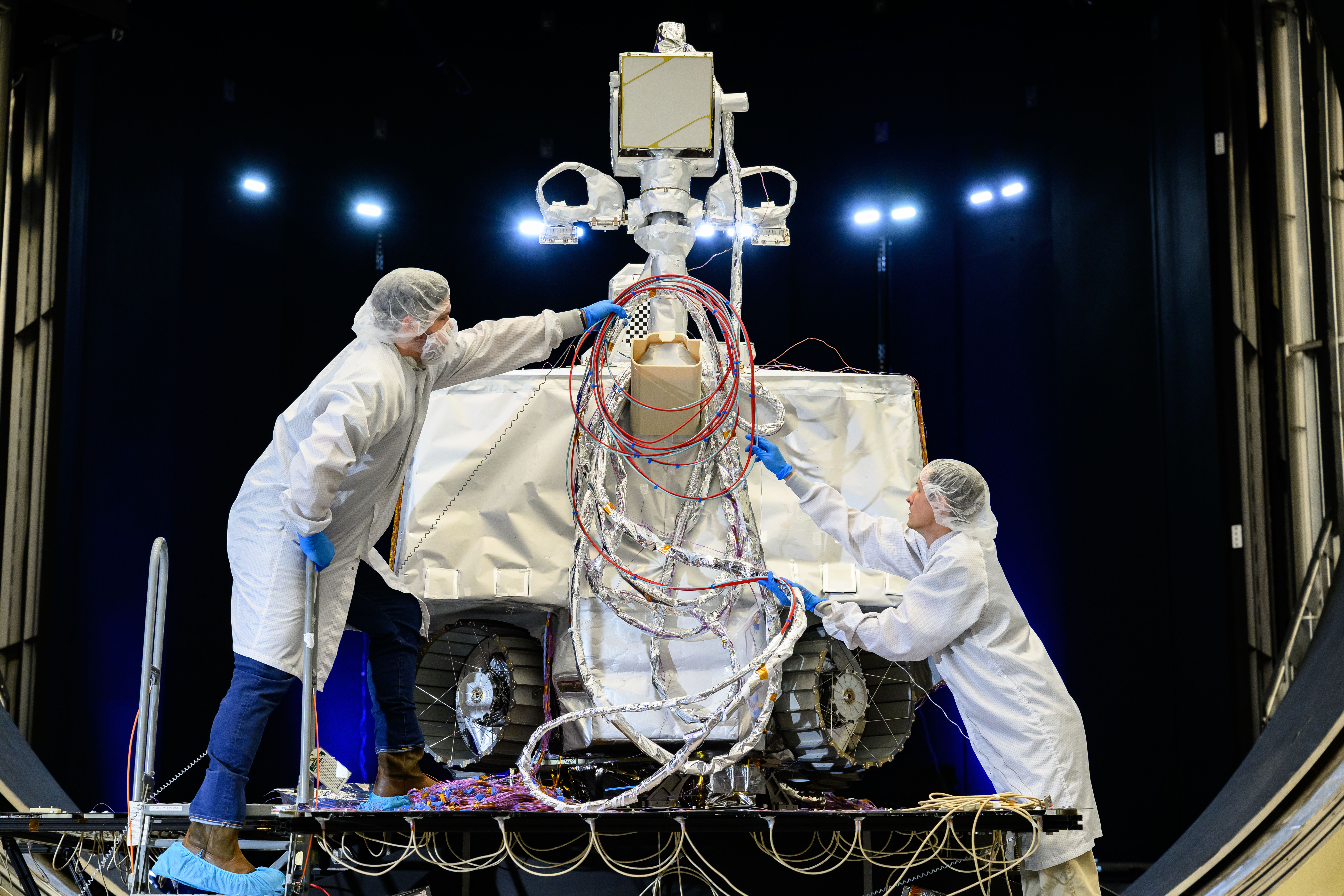
- NASA’s VIPER (Volatiles Investigating Polar Exploration Rover) will help pave the way for Moon Base development by searching for water ice and other valuable resources near the lunar South Pole. Operating in one of the Moon’s most extreme environments, VIPER will provide critical data to support long-term human exploration of the Moon.
- Scheduled for delivery to the lunar surface in late 2027 through NASA’s CLPS (Commercial Lunar Payload Services) initiative, VIPER will be delivered by Blue Origin aboard a second Blue Moon MK1 lander currently in production. The mission reflects NASA’s strategy of leveraging commercial partnerships to accelerate lunar exploration.
- VIPER was designed as a mobile robotic explorer capable of traversing the rugged South Pole region. Equipped with several science instruments and a 3.28-foot (1-meter) drill, the rover will analyze lunar soil at multiple depths and temperatures to detect and study volatiles.
- The rover is capable of entering permanently shadowed craters—some of the coldest locations in the solar system—where ice may have remained preserved for billions of years. By examining where resources are located, their composition, and how accessible they may be, VIPER is expected to become the first resource mapping mission on another celestial body.
- The data gathered by VIPER will help NASA determine how lunar resources could support future explorers while also advancing scientific understanding of how water and other volatiles were distributed across the solar system. VIPER’s discoveries will help inform site planning, resource strategies, and the long-term sustainability of the Moon Base.
2029-2032
Phase Two
Early Habitation
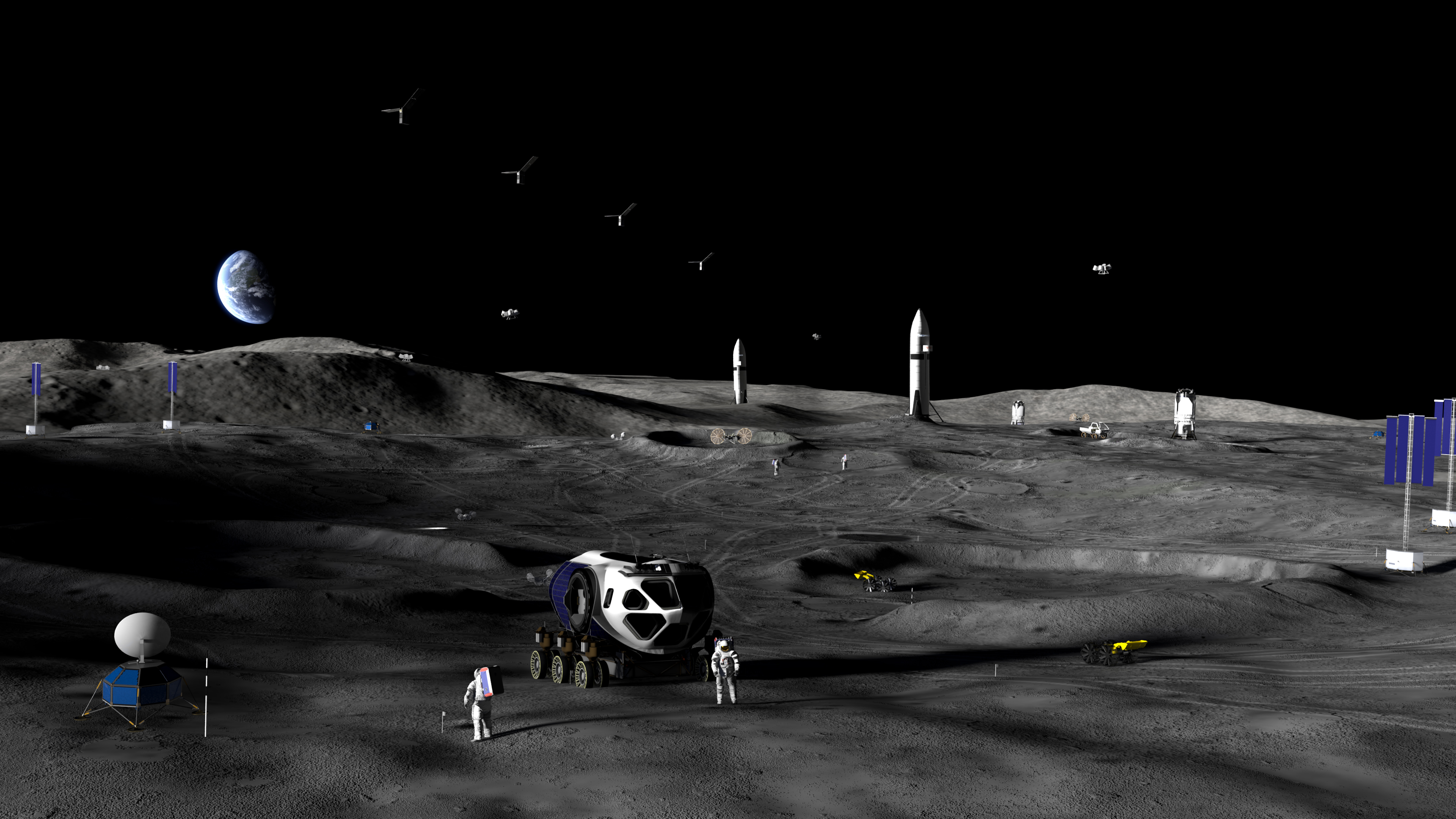
By 2029, NASA will transition to assembling semi-permanent infrastructure and initiating early habitation and logistics operations. Scroll below to learn more about some of the key assets, demonstrations, and activities planned for Phase Two of Moon Base development.
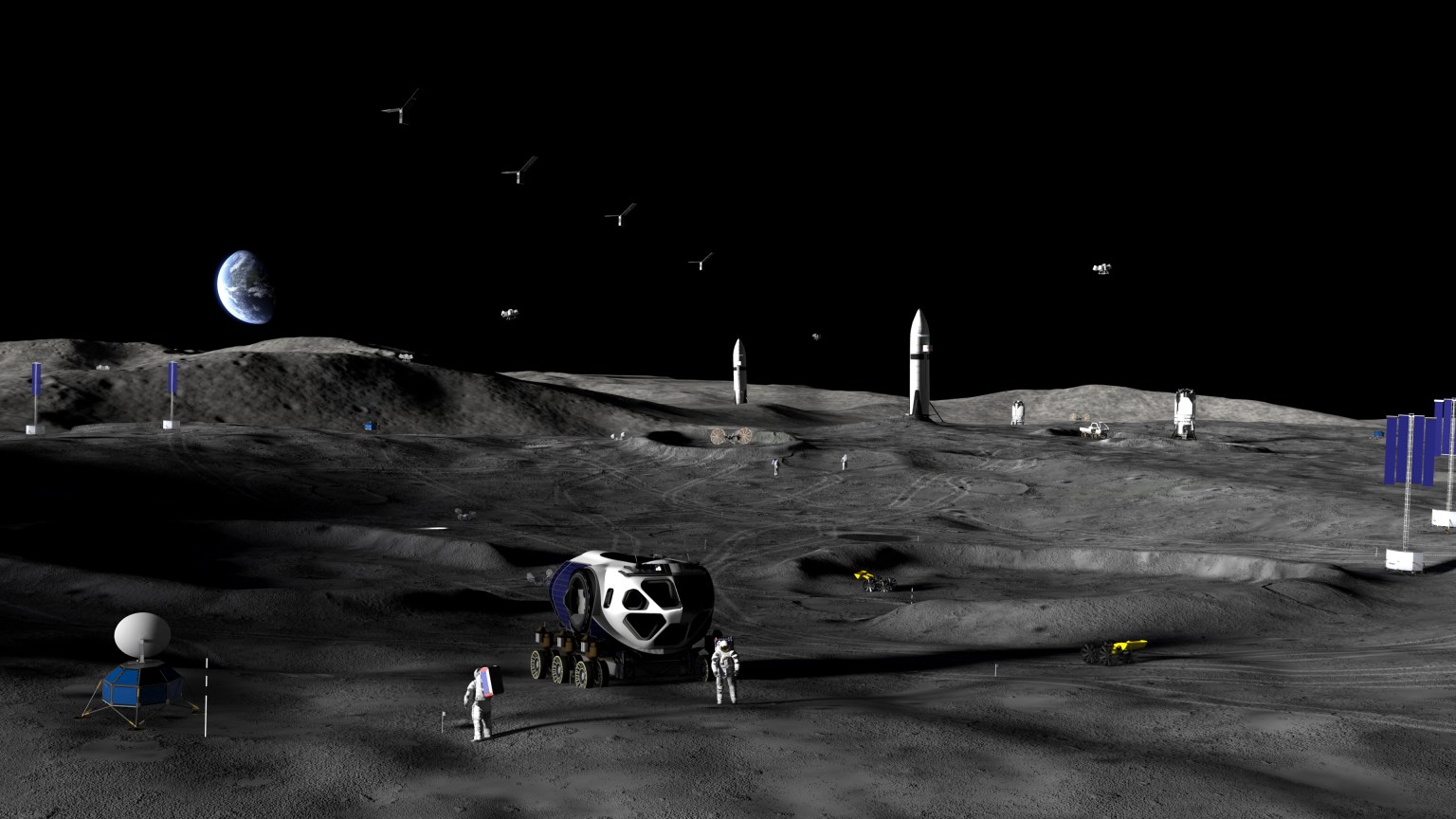
Phase Two of Moon Base development will include:
- Deployment of expanded solar power systems and initial nuclear surface power capabilities, potentially including fission reactors and radioisotope power systems.
- Upgraded rovers, potential advanced MoonFall drones, and early habitation elements.
- Enhanced surface-to-orbit communications networks to provide reliable connectivity across the lunar South Pole region.
- Delivery of up to 60 tons of cargo through as many as 24 landings using low-, medium-, and heavy-class cargo landers.
A pressurized rover, supplied by JAXA (Japan Aerospace Exploration Agency), is expected to be deployed during Phase Two of Moon Base development.
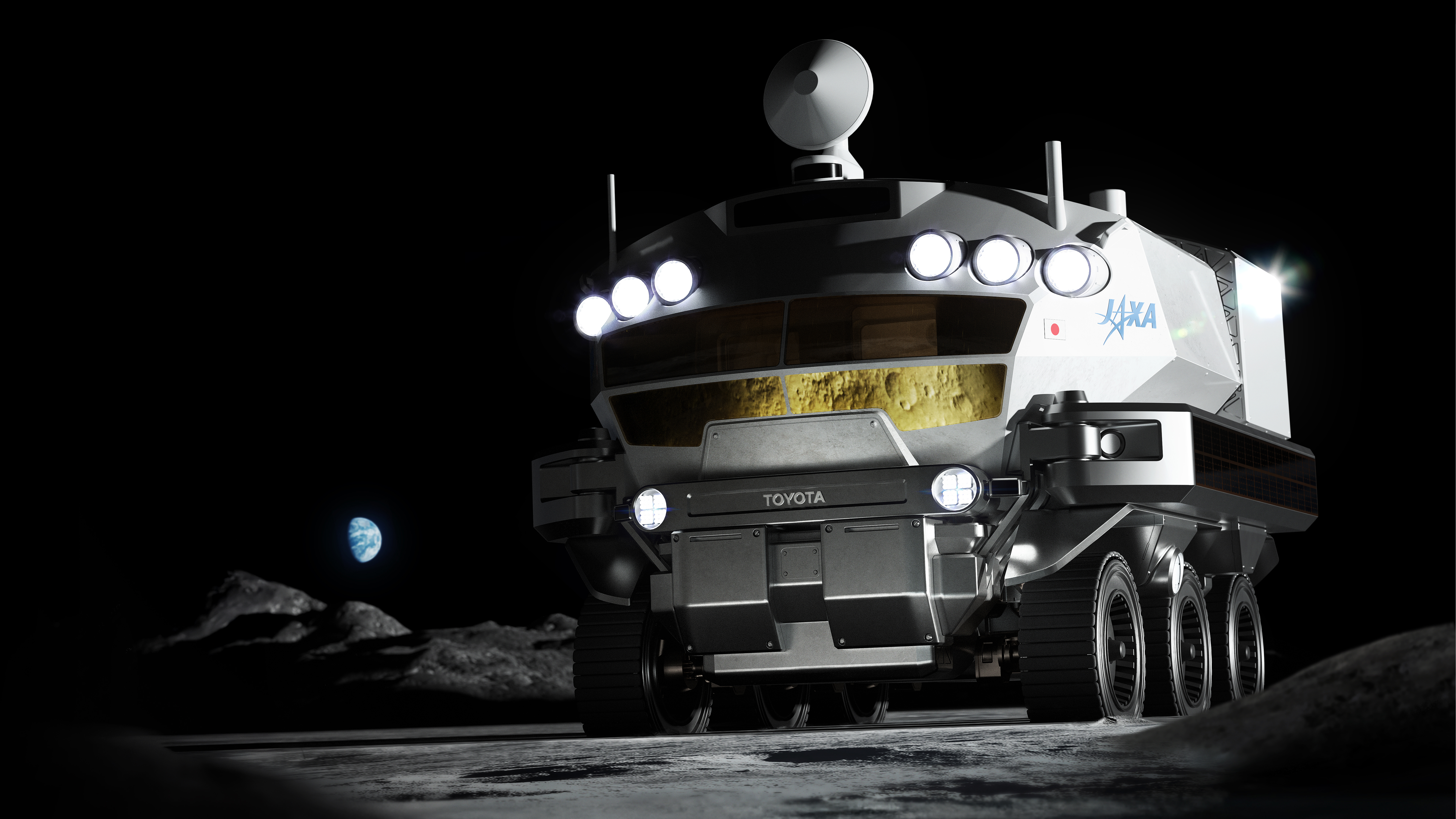
- The pressurized rover will expand how far astronauts can travel and work across the lunar South Pole region. Serving as a mobile habitat and laboratory, the rover will allow crews to explore geographically diverse regions and conduct science far beyond the immediate vicinity of landing sites or fixed habitats.
- Designed to support two astronauts in a shirt-sleeve environment for up to 30 days, the pressurized rover is intended to provide a safe, enclosed workspace where astronauts can live, conduct research, and prepare for surface excursions. This capability reduces the need for astronauts to remain in spacesuits during long traverses, increasing comfort, efficiency, and mission productivity.
- The pressurized rover will enable astronauts to perform moonwalks from remote locations, extending exploration range and allowing access to new science targets, rugged terrain, and resource-rich areas that would otherwise be difficult to reach. By functioning as both transportation system and temporary habitat, it will help turn the lunar surface into a place where crews can operate for extended periods.
- Built for the harsh lunar environment, the rover is expected to have an approximate 10-year lifespan, traverse slopes up to 15 degrees, survive as many as 150 hours in shadow, and reach speeds of up to two miles (3.5 kilometers) per hour.
During Phase Two of Moon Base development, NASA plans to deploy site preparation and logistics rovers to the lunar South Pole region to support site preparation activities, regolith handling, and early surface logistics operations.
- Planned Phase Two surface mobility systems include NASA’s Lunar Terrain Vehicle (LTV) Gen 2 and additional industry and international partner rovers designed to support cargo and logistics transport, site preparation activities, regolith excavation, and soil compaction operations near the lunar South Pole.
During Phase Two of Moon Base development, NASA plans to utilize radioisotope thermoelectric generators (RTGs) to demonstrate technologies, operational approaches, and processes that could help inform future large-scale nuclear power systems for the lunar surface.
- Planned Phase Two nuclear surface power capability demonstrations include the use of RTGs capable of producing hundreds of watts of power to help support lunar surface systems, lunar night survival, and exploration within permanently shadowed regions.
- These demonstrations are intended to help advance technologies, thermal management approaches, operational concepts, and processes that could inform future large-scale nuclear power systems for sustained lunar and Mars exploration.
During Phase Two of Moon Base development, NASA plans to test solar power augmentation technologies, operational approaches, and processes that could help inform future large-scale power generation, energy storage, and distribution capabilities.
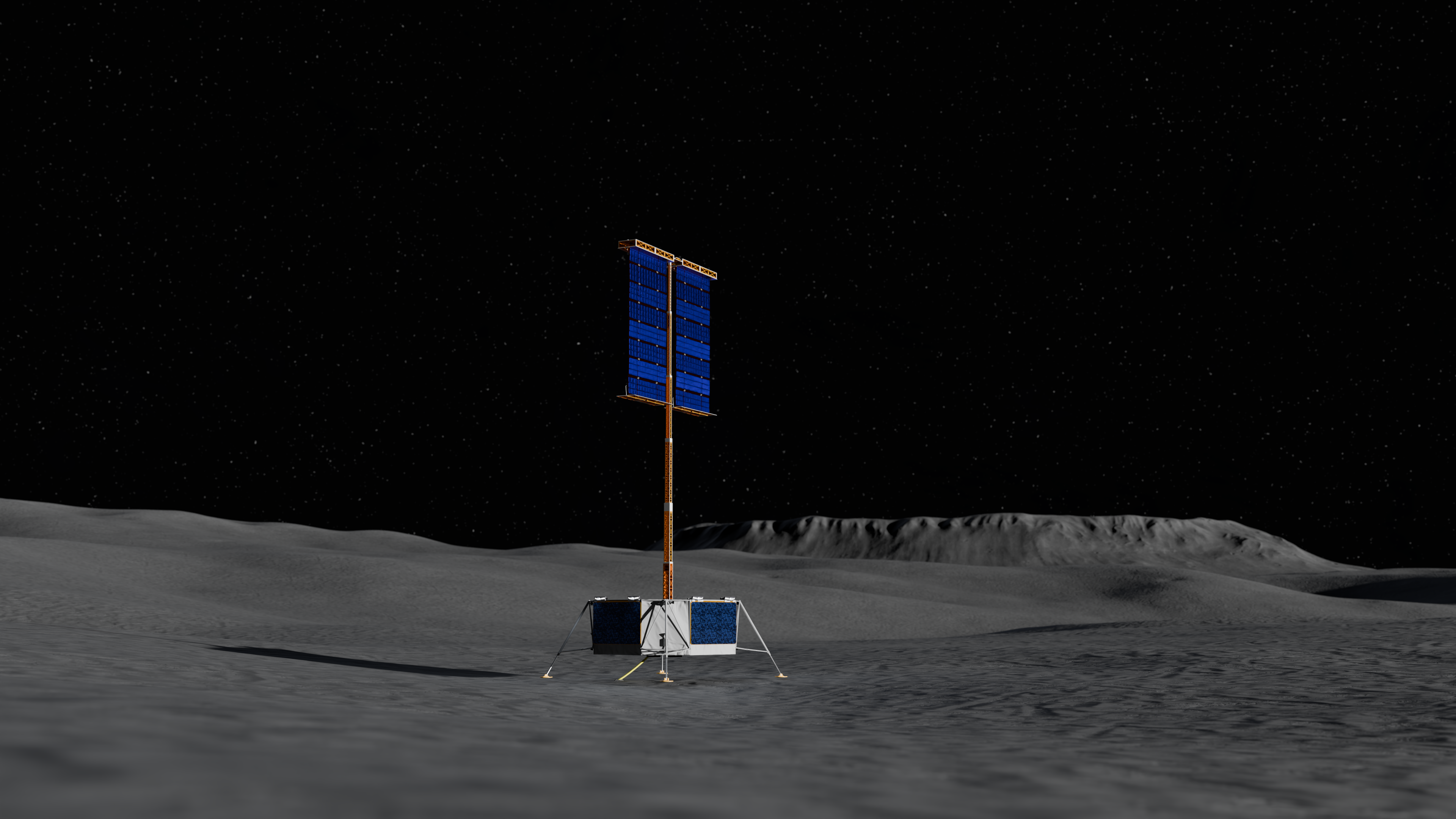
- Planned Phase Two solar power augmentation demonstrations include the deployment of solar array systems with energy storage and power distribution capabilities.
- Early demonstrations are expected to test solar array deployment systems, battery technologies, and surface power distribution hubs.
- Permanent infrastructure capabilities will need to be capable of generating more than 10 kilowatts of power during illuminated periods and providing up to 360 kilowatt-hours of stored energy during lunar shadow periods.
During Phase Two of Moon Base development, NASA plans to demonstrate and expand surface communications systems designed to support growing connectivity needs across the lunar South Pole region.
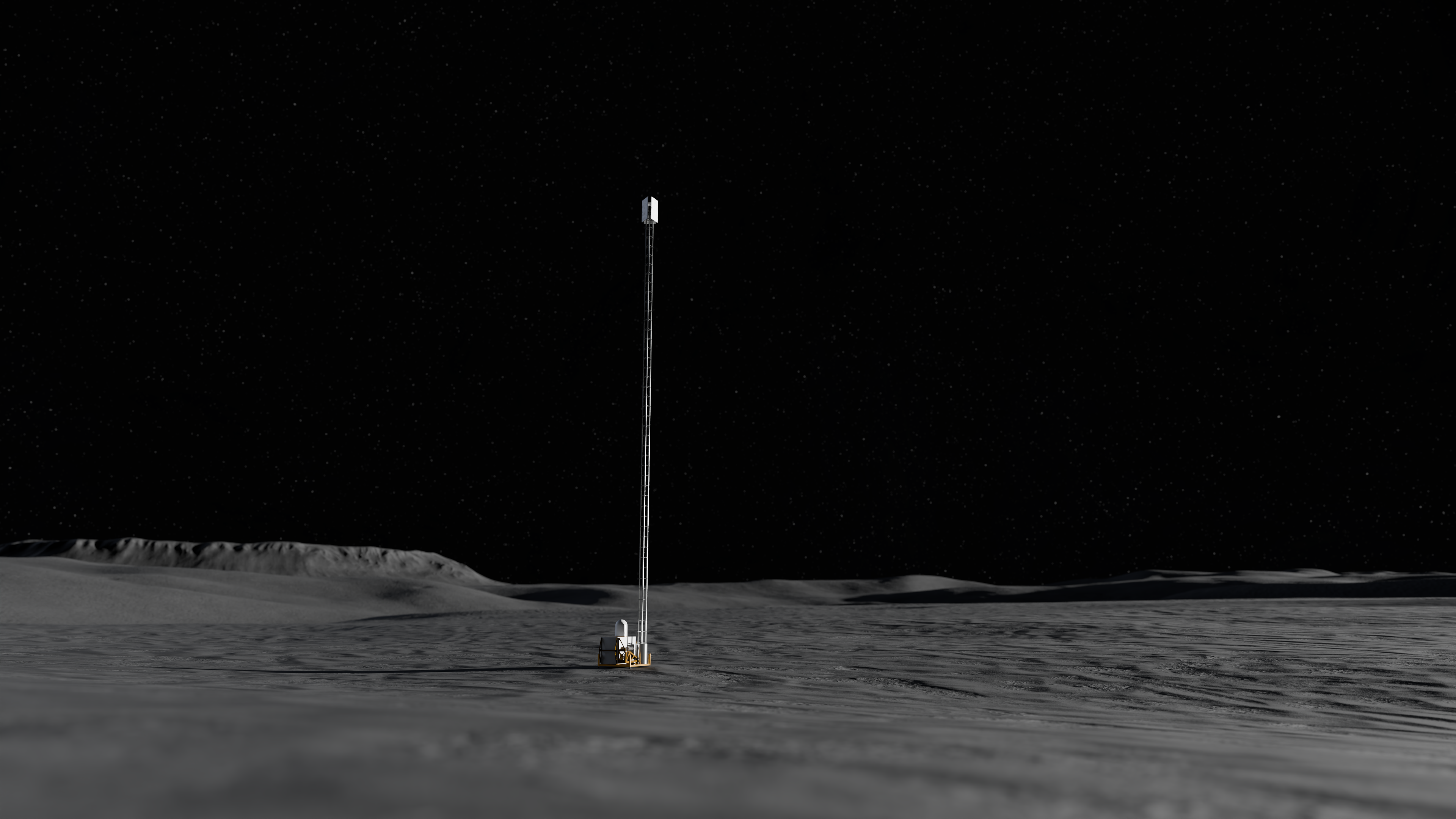
- Surface communications development activities include the deployment of dedicated surface-to-orbit communications stations capable of supporting greater data throughput and connections.
- Surface communications nodes are expected to provide coverage ranges of approximately six miles (10 kilometers) per node, functioning similarly to cellular network towers on Earth to create a more connected and resilient lunar communications architecture.
2032-Beyond
Phase Three
Sustained Human Presence
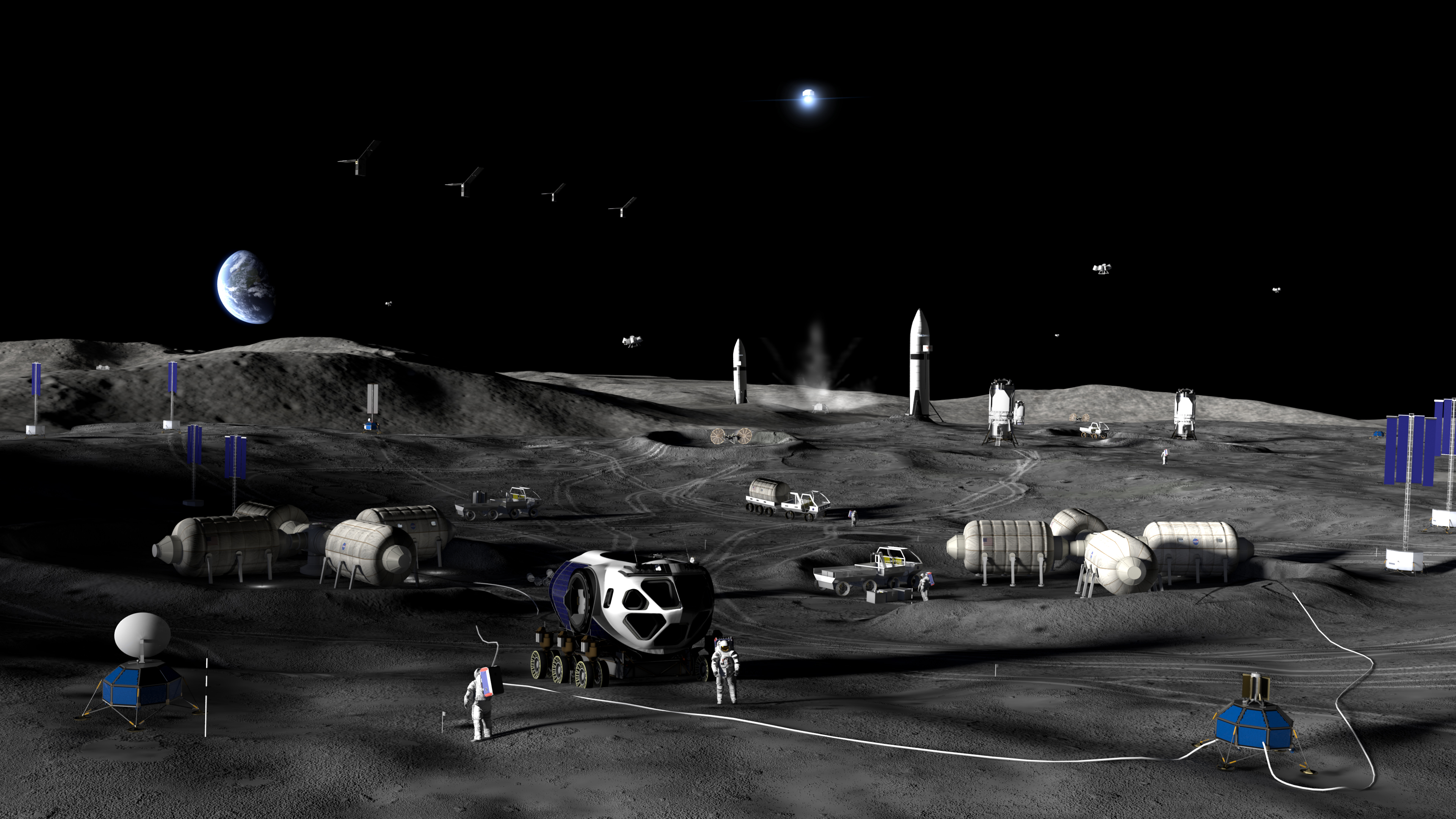
This phase will scale operations to achieve a sustained presence, with routine crew rotations and continuous surface activity. This is when living and working on the Moon becomes a reality. Scroll below to learn more about some of the key demonstrations and activities planned for Phase Three of Moon Base development.
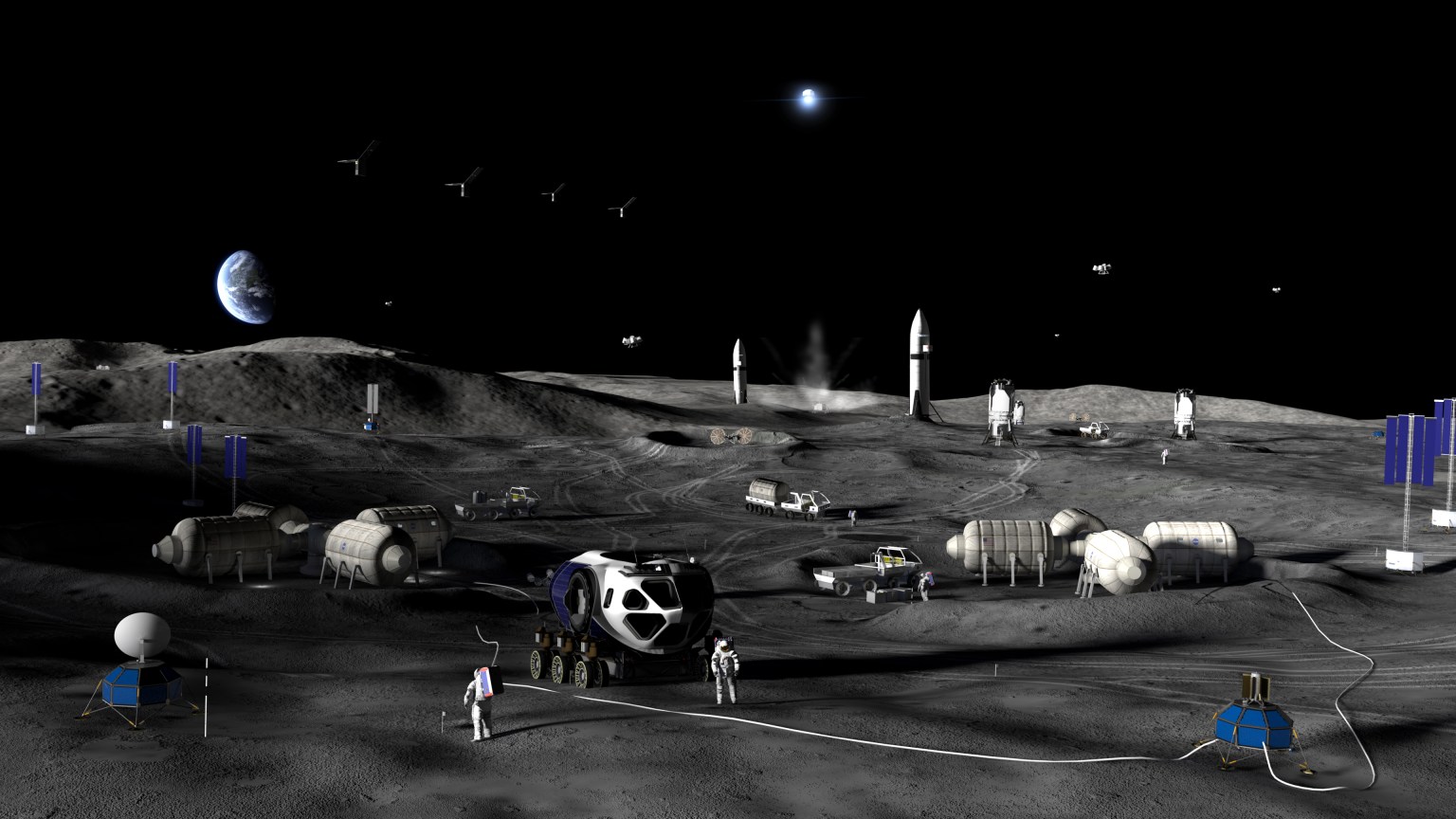
Phase Three of Moon Base development will include:
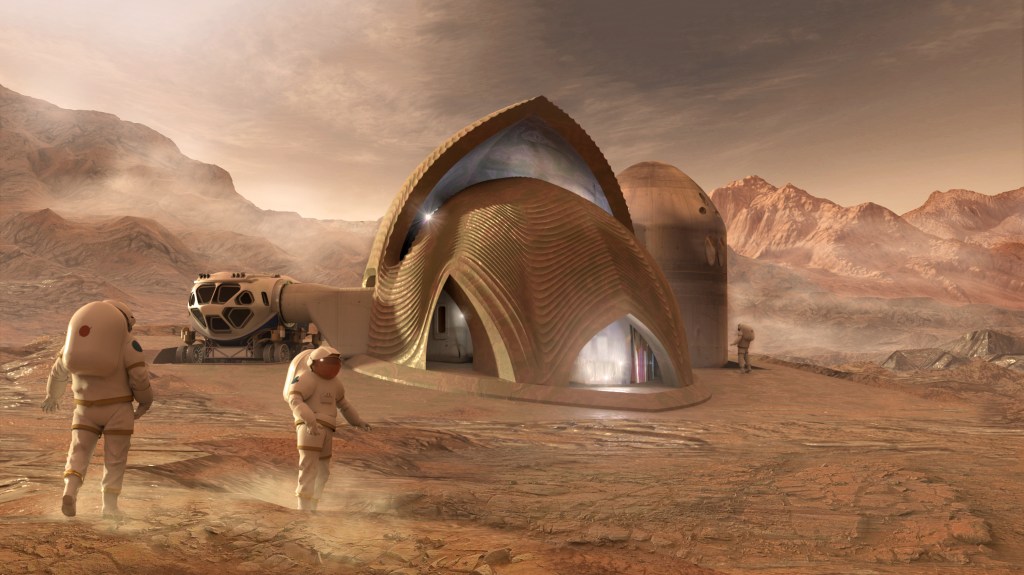
- Semi-permanent habitation modules with more spacious interior for crew living and operations.
- Operational fission surface power systems capable of delivering steady, reliable energy through the long lunar nights, leveraging in-situ resource manufacturing.
- Pressurized rovers enabling long-distance travel, exploration, and science operations.
- Advanced logistics networks supported by crewed and autonomous rovers to keep the base supplied and functioning year-round.
- Delivery of up to 38 tons of cargo annually to sustain habitats, power systems, logistics operations, and major science outposts, enabled by low-cost reusable heavy-lift capabilities.
During Phase Three of Moon Base development, NASA plans to expand lunar surface habitation capabilities from the initial short-duration systems demonstrated during Phase Two toward more advanced infrastructure designed to support longer-duration human presence.
- Building on earlier habitation efforts, Phase Three systems are expected to incorporate larger habitation modules, along with expanded environmental control, power, and life support capabilities.
- Planned habitation infrastructure may also include airlocks and module aggregation nodes designed to support interconnected habitats.
During Phase Three of Moon Base development, NASA plans to advance from early in-situ resource utilization (ISRU) demonstrations toward more sustained implementation of technologies designed to use lunar materials for exploration and surface operations.
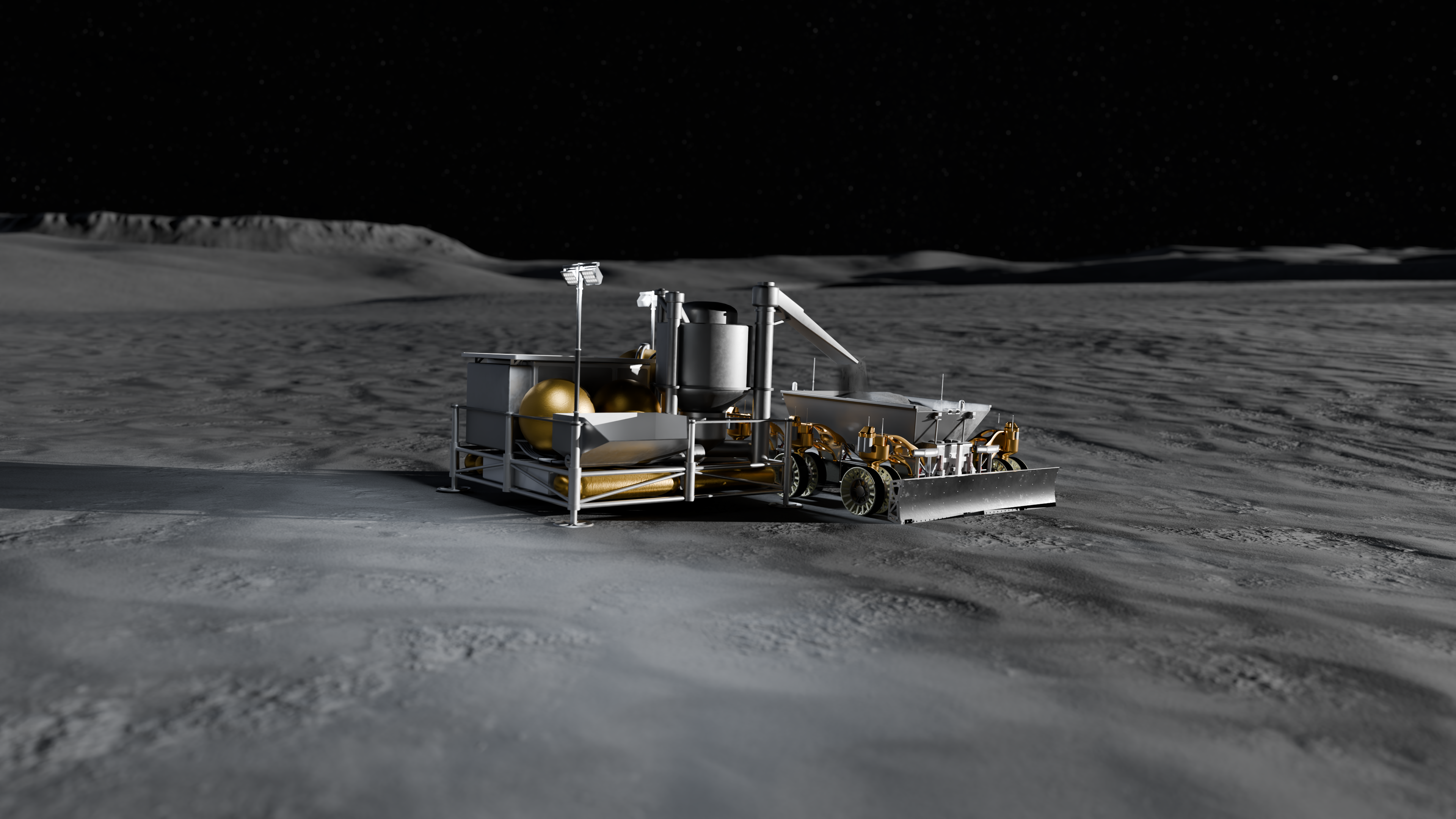
- Building on ISRU testing conducted during Phases One and Two, Phase Three efforts are expected to focus on utilizing lunar resources and commodities that could help reduce launch mass, operational costs, and risks associated with long-duration lunar exploration.
- ISRU demonstrations could include extracting oxygen, water, and hydrogen from lunar regolith while also exploring techniques for converting regolith into durable construction and infrastructure materials through approaches such as sintering, corbelling, and 3D printing.
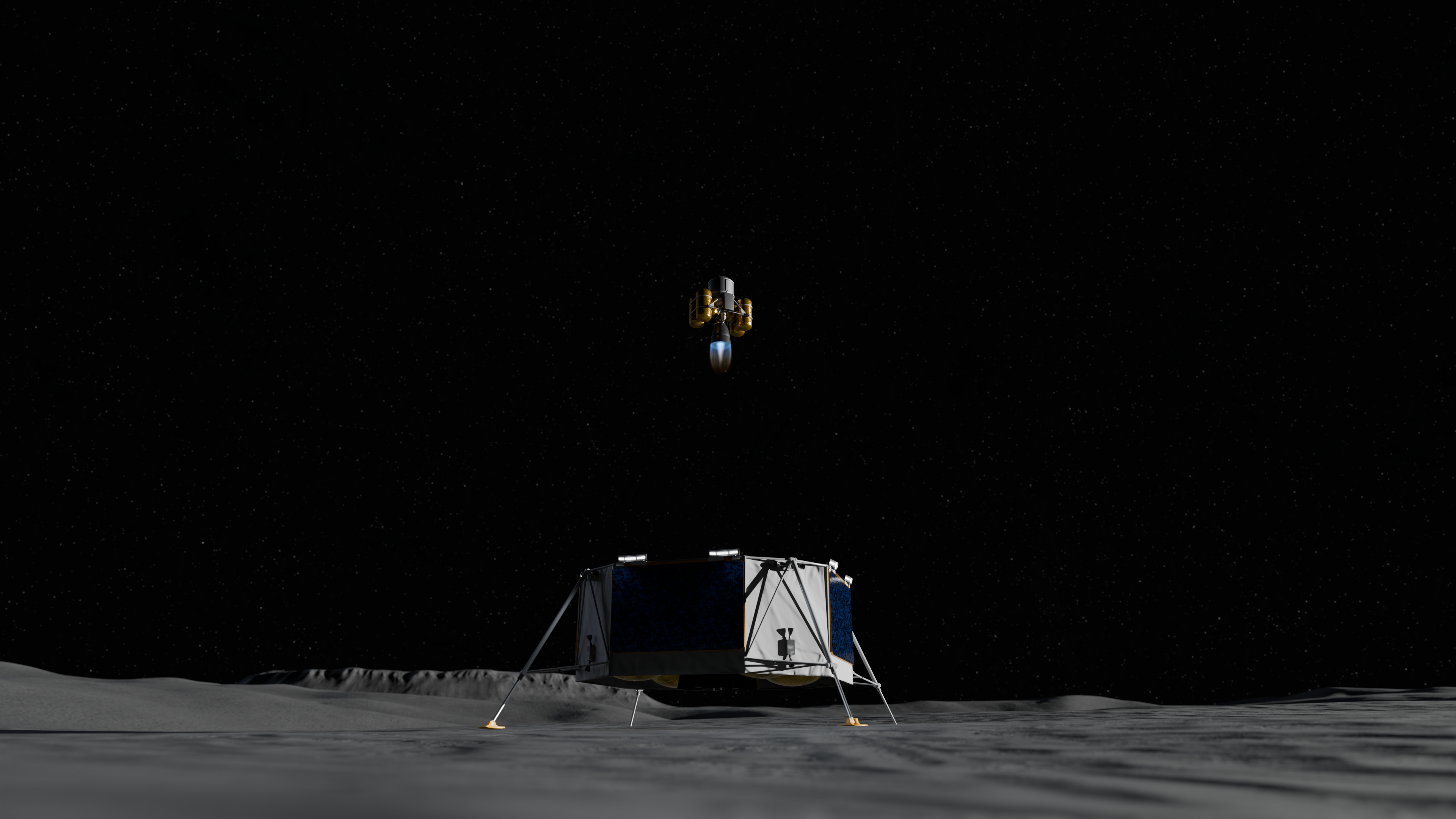
During Phase Three of Moon Base development, NASA plans to begin implementing substantial uncrewed cargo return capabilities from the lunar surface to Earth.
- Building on initial demonstrations conducted during Phase Two, Phase Three efforts are expected to advance uncrewed cargo return systems capable of returning up to 1,102 pounds (500 kilograms) of material from the Moon.
- These return missions are intended to support the transport of scientific samples, research payloads, and critical hardware from the lunar surface back to Earth for further analysis and evaluation.
During Phase Three of Moon Base development, NASA plans to expand end-to-end logistics capabilities designed to support more sustained and complex lunar surface operations.
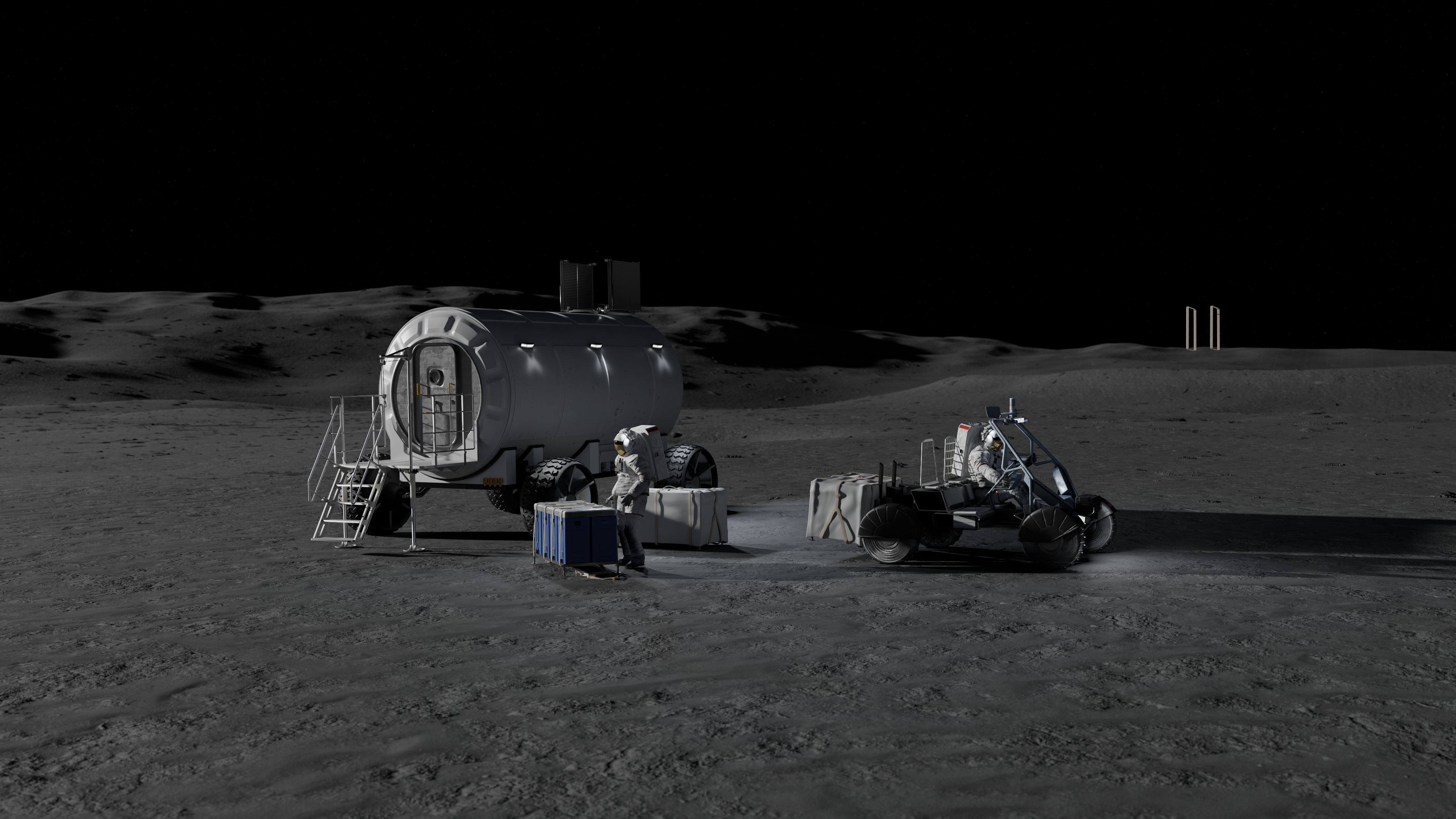
- Building on the initial logistics capabilities demonstrated during Phase Two, Phase Three efforts are expected to increase delivery capacity from approximately 0.5–1.5 metric tons to as much as eight metric tons per 28-day mission.
- These logistics systems are intended to support the transport and sustainment of essential supplies and infrastructure, including food, water, clothing, spare parts, science payloads, maintenance equipment, and other materials needed to support crews, habitats, and surface systems.