


























Flight Cognition Laboratory
Overview
The Flight Cognition Laboratory, part of the Human Systems Integration Division at NASA Ames Research Center, studied the cognitive, team and organizational processes that underlie the performance of pilots, air traffic controllers, physicians, nurses, and other skilled professionals. This research involved a combination of well-controlled laboratory studies of basic cognitive mechanisms, theoretical modeling, simulation studies, field observations, and analysis of accident and incident reports. We worked closely with airline departments and medical personnel to provide a bridge between research and aviation and medical operations, respectively, with the goal of improving safety and efficiency. We presented our findings at professional conferences and meetings, and authored technical reports and journal articles, as well as magazine articles written especially for the aviation and medical operations and training communities. We also worked with other user groups, such as process control industries to improve safety.
Research Areas
Emergency and Abnormal Situations (EAS)/Training and Decision-Making
Emergency and abnormal situations and critical events represent a unique challenge in the operation of all complex systems. Operators must maintain a high degree of proficiency in relevant procedures though they rarely have an opportunity to practice them. A wide range of contextual factors affect the demands these situations pose, but the focus of emergency and abnormal situations training is often on completing a specific procedure or demonstrating a specific skill, rather than on managing the situation as a whole. Also, training sessions tend to focus on situations in which a single problem triggers the use of a particular procedure, whereas in real operations multiple problems may occur simultaneously, and cues about the nature of the situation are ambiguous or may seem contradictory. Coordination of all those involved (such as pilots, cabin crew, Air Traffic Control (ATC), dispatch, maintenance, and passengers during aviation emergencies; and attending and resident surgeons and anesthesiologists, nurses and technicians during medical critical events) is essential for ensuring effective response. In our research we examined checklist and procedure design, content, and use; human performance capabilities and limitations under stress and high workload conditions; personnel communication and coordination issues; training; and the situational, operational, and contextual demands of emergency and abnormal situations and critical events that affect operator responses and situation outcomes.
Procedures and Checklists
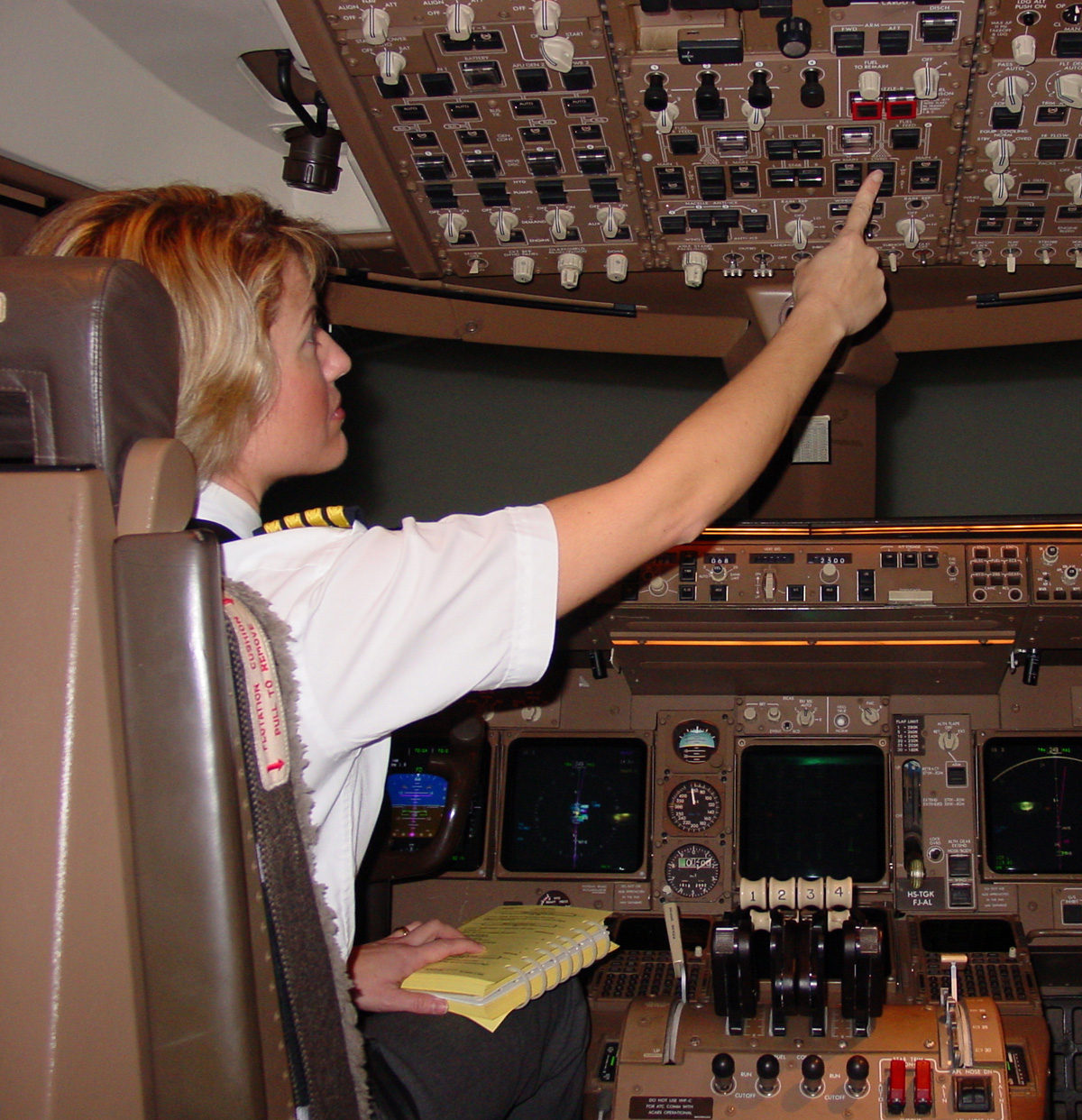
Formal checklists and procedures are used in both normal and non-normal situations to guide the actions of skilled professionals. In normal operations, checklists are used to ensure that all essential steps for a phase or segment of work have been properly completed. Examples in aviation and medicine are Before Take-off Checklists, and Surgical Safety Checklists, respectively. In emergency and abnormal situations and critical events, written procedures can be essential tools to guide appropriate operator response. Developing normal, emergency, abnormal and critical event checklists can be quite complex. For example, in aviation, checklists for flight crew use in emergency or abnormal situations must be appropriate for the specific situation encountered, easy to access and read and must provide sufficient information to guide crew response effectively. In medicine, critical event checklists may be accessed well after the initiation of a critical event and be sampled only for specific information such as additional treatment ideas or drug dosages rather than used to guide step-by-step response. To minimize human error during execution in all work domains, these checklists must also be designed and written to accommodate the demands of high workload and the human performance limitations imposed by stress. We studied the design, content, and use of checklists and procedures used in normal, emergency, and abnormal situations and critical events. Our research involved different modes of presentation (paper, stand-alone electronic, integrated electronic) as well as dynamic checklists and procedures, whose content changes in real-time.
Technologically Advanced Aircraft and Single-Pilot Operations
Automation and advanced technology can provide a great benefit to pilots, particularly in single-pilot operations, in terms of reducing workload and increasing situational awareness. However, automation and advanced technology are not a panacea. The design of integrated glass cockpit systems currently used in these aircraft places a heavy cognitive load on the pilot in terms of long-term, working, and prospective memory; workload and concurrent task management; and developing correct situational mental models. These cognitive demands directly affect pilot error. Both the advantages and the limitations of technologies must be understood if these technologies are to be used effectively. We collaborated with other researchers and industry partners to examine the demands of single pilot operations in technologically advanced aircraft and to developed guidance for single pilot resource management (SRM), training, and advanced technology design and displays.
Prospective Memory
An intention to perform a task at some future time is known as a prospective task. In everyday life, failing to remember to perform deferred tasks at the appropriate time often frustrates individuals. In critical workplace settings such as aviation and medicine, individuals typically must manage several concurrent tasks, and consequently are often forced to postpone or interrupt tasks and attempt to remember to perform the deferred tasks later. Failure to remember to perform intended tasks can have disastrous consequences in the operational world. We studied the cognitive processes involved in forming, recall and executing intentions; by determining why these processes are vulnerable to failure were able to develop practical countermeasures. Our research combined laboratory studies, field observations of domain experts at work, and theoretical modeling.
Human Error, Skilled Performance, and Safety
Most accidents in aviation and adverse events in medicine and other areas of skilled performance are attributed to human error, but this is a misleading conclusion for multiple reasons. It is true that even the most skilled of professionals sometimes make errors performing familiar tasks, a manifestation of the inherent nature of cognitive and perceptual processes. But blaming human operators for errors contributing to accidents overlooks the roles of incomplete and sometimes confusing information, problematic machine-operator interfaces, conflicting organizational goals, and task requirements for which no perfect solution exists. It is true that computers are far more reliable than humans–in the sense of consistent response to well-defined inputs–but for many tasks human judgment and decision-making are still essential. In our work we took a systems approach to understanding the roots of human error and its relationship to the demonstration of skilled performance and safety.
Attention and Concurrent Task Management
Pilots, air traffic controllers, maintenance technicians, surgeons, anesthesiologists, nurses, and workers in many other fields often must juggle several tasks concurrently, switching attention back and forth among the tasks to keep each going. Unfortunately, no matter how skilled, individuals are vulnerable to forgetting to perform task steps and to losing track of some tasks when switching attention this way. Similar problems are caused by interruptions and distractions. Individuals sometimes underestimate the risks of juggling concurrent tasks, as evidenced by use of cell phones while driving. Our research examined how skilled operators managed concurrent tasks, the errors to which they are vulnerable, and countermeasures for reducing vulnerability.
Cognition, Stress, and Skilled Performance
Stress has historically been viewed as a ‘non-specific’ response to threat or anxiety. Stress responses appear to be triggered by interaction among an individual’s perception of task demands, his or her ability to cope with those demands, and the importance of being able to cope with the demands. Substantial research has been directed toward elucidating the cognitive and behavioral effects of various stressors, however gaps and inconsistencies exist in the literature. Aircrew and medical personnel responding to emergencies and other abnormal situations must deal with acute stressors such as time pressure, high workload, and threat to life. In our work in this area we examined the cognitive demands imposed by emergency situations and the ways in which stresses associated with those demands influenced the operators’ cognitive processes and performance of tasks.
Visual Search and Attention
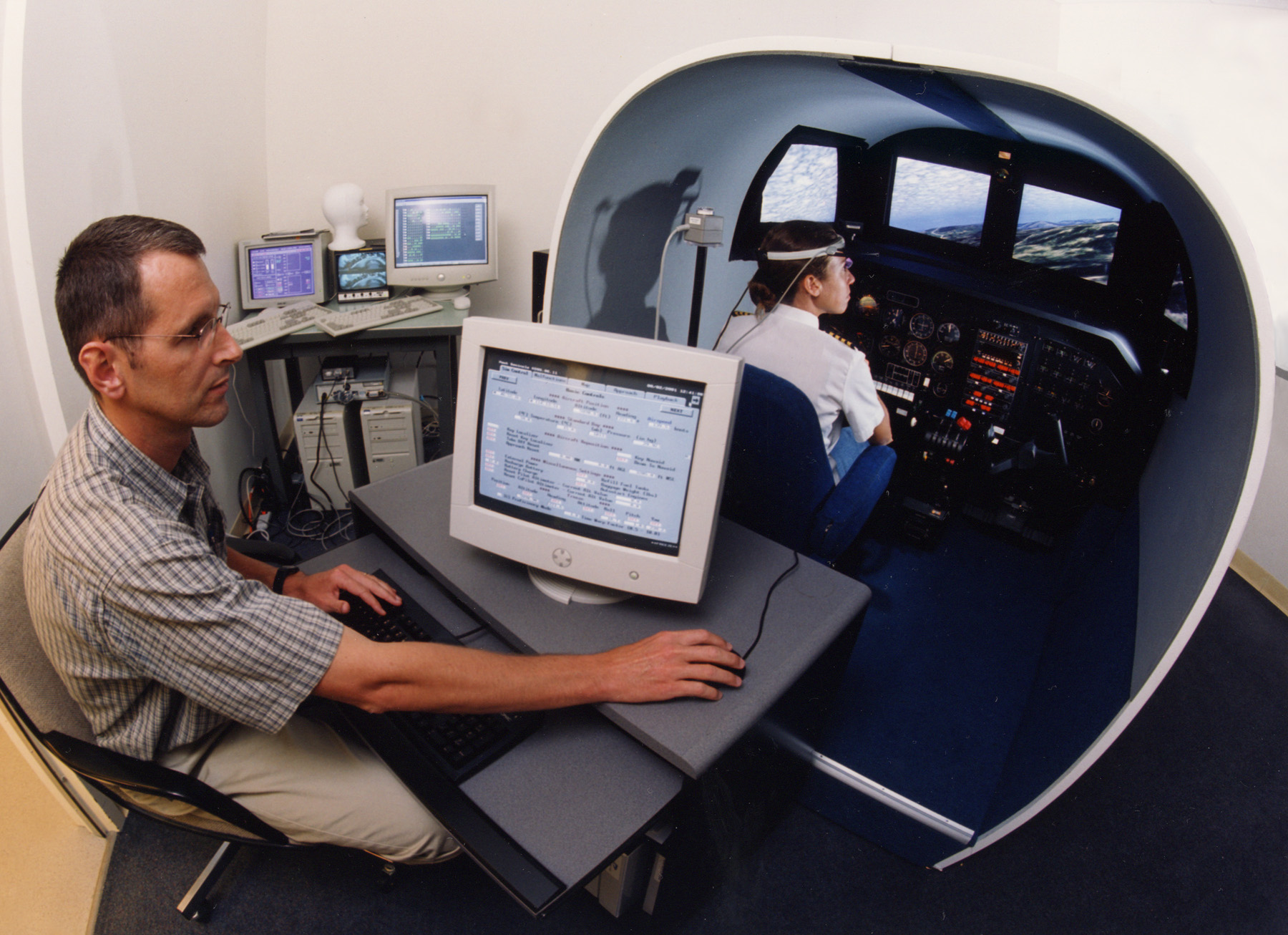
Despite safety improvements in some areas of general aviation, midair collisions remain steady at around 0.035 per 100,000 flying hours, or about 15 per year. The FAA and other organizations recommend a timed, systematic, visual scan in which the pilot fixates at a location for at least one second, then shifts gaze no more than 10 degrees to the next sector in the visual field. Although all pilots are exposed to this concept, they do not receive systematic or extensive training in how to execute it. Using a General Aviation Flight Training Device and head and eye tracking systems, we conducted studies to determine the scanning patterns pilots actually use and to evaluate the effectiveness of these patterns.
Checklists and Procedures
Formal checklists and procedures are used in both normal and non-normal situations to guide the actions of skilled professionals. In normal operations, checklists are used to ensure that all essential steps for a phase or segment of work have been properly completed. Examples in aviation and medicine are Before Take-off Checklists, and Surgical Safety Checklists, respectively. In emergency and abnormal situations and critical events, written procedures can be essential tools to guide appropriate operator response. Developing normal, emergency, abnormal and critical event checklists can be quite complex. For example, in aviation, checklists for flight crew use in emergency or abnormal situations must be appropriate for the specific situation encountered, easy to access and read and must provide sufficient information to guide crew response effectively. In medicine, critical event checklists may be accessed well after the initiation of a critical event and be sampled only for specific information such as additional treatment ideas or drug dosages rather than used to guide step-by-step response. To minimize human error during execution in all work domains, these checklists must also be designed and written to accommodate the demands of high workload and the human performance limitations imposed by stress. We studied the design, content, and use of checklists and procedures used in normal, emergency, and abnormal situations and critical events. Our research involved different modes of presentation (paper, stand-alone electronic, integrated electronic) as well as dynamic checklists and procedures, whose content changed in real-time.
Noteworthy Publications
Burian, B.K., Barshi, I., Dismukes, R.K. (2005). The Challenge of Emergency and Abnormal Situations, NASA Technical Memorandum 2005-213462. Moffett Field, CA: NASA Ames Research Center.
Dismukes, R.K., Nowinski, J. L. (2007). Prospective memory, concurrent task management, and pilot error, In A. Kramer, D. Wiegmann, & A. Kirlik (Eds.) Attention: From Theory to Practice. New York: Oxford University Press.
Dismukes, R.K., Berman, B., Loukopoulos, L.D. (2005). The Limits of Expertise: The Misunderstood Role of Pilot Error in Airline Accidents, Presented at the ASPA/ICAO Regional Seminar on Cross-Cultural Issues in Aviation Safety. (INTERNATIONAL CIVIL AVIATION ORGANIZATION, North American, Central American and Caribbean Office). Mexico City, 10 11 March 2005.
Dismukes, R.K., Berman, B., Loukopoulos, L.D. (2007). The Limits of Expertise: Rethinking Pilot Error and the Causes of Airline Accidents, Ashgate Publishing Company.
Loukopoulos, L.D., Dismukes, R. K., Barshi, I. (2009). The Multitasking Myth: Handling Complexity in Real-World Operations. Burlington, VT: Ashgate.
Loukopoulos, L.D., Dismukes (2009). The Perils of Multitasking. Burlington, VT: Ashgate.
Dismukes, R. K. (2010). Understanding and Analyzing Human Error in Real-World Operations, In E. Salas and D. Maurino (Eds.), Human Factors in Aviation, 2nd Edition. Burlington, MA: Elsevier.
* Please note, this webpage is not actively maintained and is for historical reference only.