
























Aviation Safety Reporting System (ASRS)
About ASRS
The NASA Aviation Safety Reporting System (ASRS) has been a defining part of aviation safety culture since 1976 and has collected and analyzed over 2 million safety reports to date. These reports describe unsafe occurrences, near-misses or close calls, hazardous situations, and descriptions of best practices.
The ASRS is a voluntary, confidential, non-punitive, safety reporting system that receives safety reports from pilots, air traffic controllers, dispatchers, cabin crew, maintenance technicians, UAS/Drone operators, and anyone who wishes to report issues related to aviation safety.
All reports are held in strict confidence and de-identified by ASRS safety analysts. The resulting anonymous aviation safety data is shared with the aviation community. These reports are used to identify hazards and discrepancies in the aviation environment. In addition to identifying hazards, many reports also contain lessons learned and best practices, which may lead to systematic improvements or help prevent others from making similar mistakes.
The ASRS is a partnership between the Federal Aviation Administration (FAA), NASA, and the Aviation Community
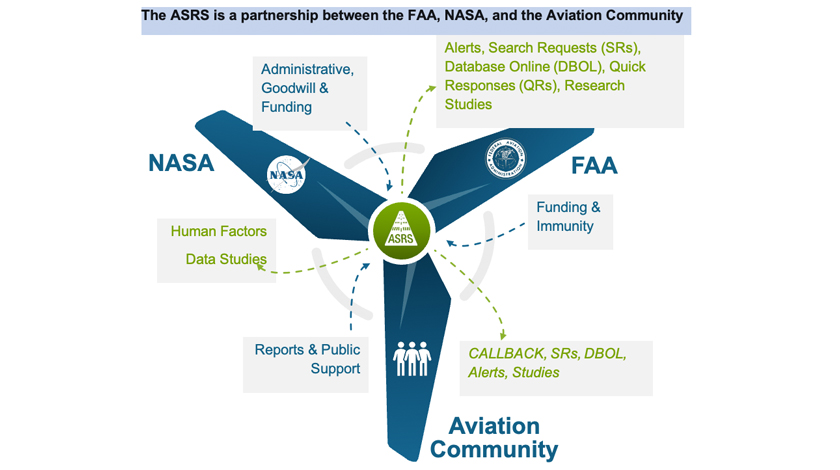
NASA and the FAA are working together to enhance the safety of the national aviation system.
- NASA serves as the independent third-party that manages the day-to-day operation of the program, including receiving the safety reports, de-identifying and analyzing them, and disseminating important safety information to the proper authorities.
- The FAA provides funding for the program and offers important incentives to reporters including protections against certificate action and civil fine in exchange for the valuable safety information (see AC-00-46F).
- The aviation community plays an important role by submitting their safety reports and learning from other reports to prevent future incidents and accidents.
How are the Safety Reports Used?
ASRS safety products include:
- Targeted Alert Bulletins and For Your information Notices are issued to regulatory authorities and aviation industry stakeholders who may take action to address specific concerns that ASRS has flagged from among the hundreds of thousands reports received annually.
- ASRS produces two safety newsletters:
- The CALLBACK, targeted to the wider aviation community
- The UAS Safety In Sight, specifically for the UAS community
- The ASRS Database On-line contains the de-identified reports and is widely used by NASA researchers, other government entities including the FAA and NTSB, academia, research organizations, and the aviation community.
- ASRS provides assistance with data to various stakeholders in the form of Search Requests (SRs), Quick Responses (QRs), and Research Studies.
To learn more about the ASRS, visit our website at – https://asrs.arc.nasa.gov/
Point of Contact: Becky Hooey- becky.l.hooey@nasa.gov