




















NASA Officially Takes Ownership of X-59 Supersonic Aircraft
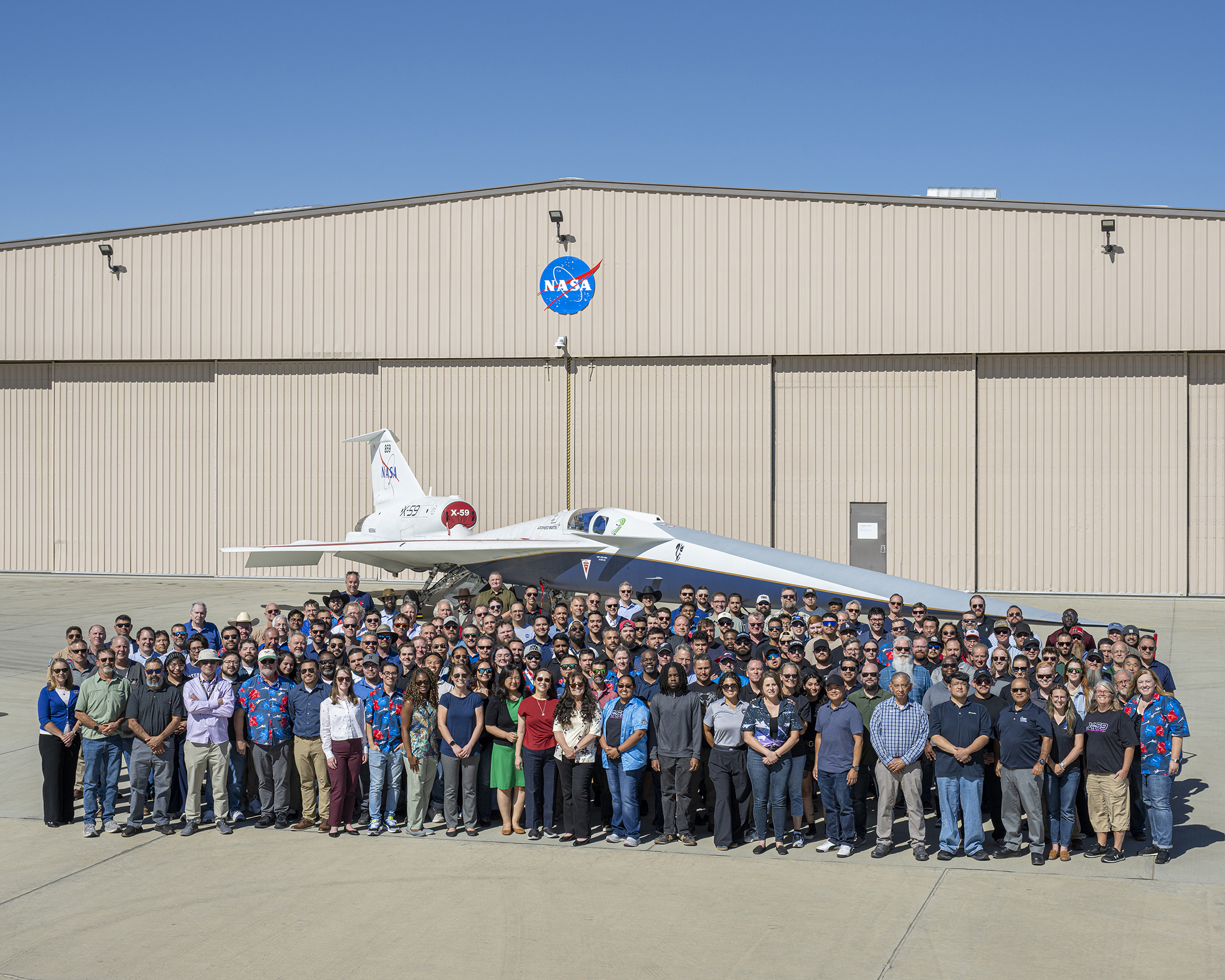
NASA’s X-59 reached a new milestone Nov. 18, when the agency officially took ownership of the quiet supersonic research aircraft from contractor Lockheed Martin Skunk Works.
NASA selected Lockheed Martin to collaborate on the design of the X-59 and lead on vehicle building and testing for the agency’s Quesst mission. The aircraft is designed to fly faster than the speed of sound while reducing the loud sonic boom to a quieter “sonic thump.”
The X-59 made its first flight Oct. 28, 2025, departing Lockheed Martin Skunk Works’ facility in Palmdale, California, and flying to NASA’s Armstrong Flight Research Center in Edwards, California, which has since served as its home base.
As flight testing continued out of the center, Lockheed Martin had retained official ownership while working toward completion of an aircraft acceptance review with NASA – a key step in contract closeout.
As the X-59 continues flight testing under NASA ownership, Lockheed Martin will provide supplemental support on an as-needed basis.
“To someone outside the flight test, this might seem like a subtle change,” said Cathy Bahm, Low Boom Flight Demonstrator project manager. “But for NASA, this is another big moment for the X-59 showing how far we have come, how much our hard work has paid off, and how much closer we are to providing the data to hopefully make commercial supersonic flight over land a reality.”
The X-59 is part of NASA’s commitment to use X-planes and other experimental aircraft to advance U.S. leadership in aviation. NASA is working to expand these capabilities, with its newly announced X-70 joining the X-59 in the agency’s growing, revitalized X-plane portfolio. With these projects, NASA is expanding its capacity to conduct experimental flight research, accelerate emerging technologies and capabilities, and advance future generations of American aviation.
Learn more about the Quesst mission on NASA’s site.
