









Host Andres Almeida: How do engineers know a new aircraft or spacecraft will be safe to fly before a crew member ever climbs in?
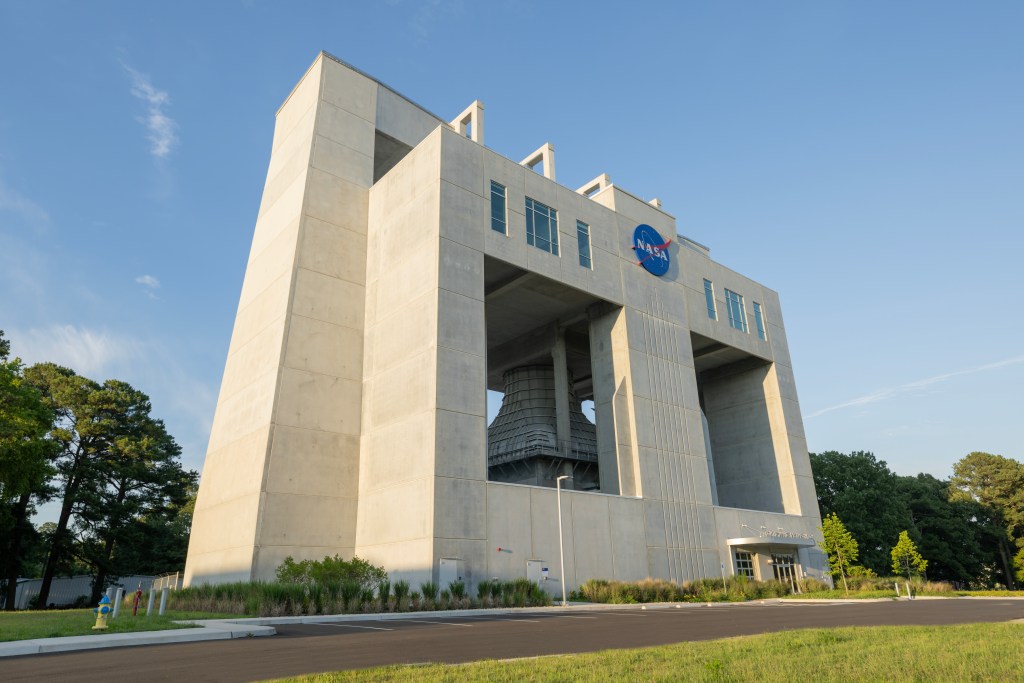
At Langley Research Center in Hampton, Virginia, a new wind tunnel is taking these questions to the next level. The Flight Dynamics Research Facility is NASA’s first new wind tunnel in more than 40 years, building on decades of research with new capabilities to test aircraft and spacecraft.
Today, facility manager Tom Ivanco explains how wind tunnel testing can save entire missions and shares how a childhood experiment sparked his passion for flight.
And a fair warning: This episode contains a spoiler for the 1986 movie Top Gun. Listen at your own risk.
This is Small Steps, Giant Leaps.
[Intro music]
Host Andres Almeida: Welcome to Small Steps, Giant Leaps, the podcast from NASA’s Academy of Program/Project & Engineering Leadership, or APPEL. I’m your host, Andres Almeida.
Tom Ivanco is at Langley Research Center and he’s joining us today on the podcast.
Tom, thanks for being here.
Tom Ivanco: Sure, of course. Thank you.
Host: Can you give us a brief intro on yourself and this new, exciting wind tunnel?
Tom Ivanco: Yeah, I am currently the facility manager of the Flight Dynamics Research Facility, and it’s NASA’s newest wind tunnel.
It’s the first wind tunnel that the agency has built in over 40 years. You know, the last wind tunnel was the National Transonic Facility, that’s also here at Langley. And this wind tunnel, it replaces two of our older facilities that were just decommissioned.
And those wind tunnels, prior to being decommissioned, were the oldest operational facilities that the agency owned: the 12-Foot Low Speed Tunnel, which came online in 1939, and the Vertical Spin Tunnel, which came online in 1941.
So, for over 80 years, those facilities ran and they did vertical spin testing and flight dynamics testing for a plethora of different aircraft and spacecraft and launch vehicles, you know, throughout the, throughout the decades.
So, this wind tunnel carries that legacy and continues that genre of research, you know, for the agency and for the nation.
Host: And how will this one be different?
Tom Ivanco: What kind of makes this facility unique is it’s designed for flight dynamics, like its name says. So, what does that mean (flight dynamics)?
If you’ve seen the movie Top Gun, where Goose gets into that spin, you know, Maverick and Goose, and then you know, Goose dies from during the ejection, hitting the canopy.
That’s actually a relatively common problem with a lot of high-performance aircraft. It’ll get into a stabilized spin to where once it gets in, it becomes a difficult-to-recover-from phenomena. It’s either somewhere between difficult to impossible to recover from.
So, every high-performance aircraft that the nation has built since 1941, when VST came online, has come through these wind tunnels to look at spin stability, and to see not only, hey, what you know what do the spin modes look like, but how do we get out of them either with recovery chutes? Or with a[n] input of control inputs that the pilots can do?
And those types of testing inform the experimental flight test. So, before they’ll go and, you know, put a test pilot in a new design and intentionally get into a spin to recover from, so they can characterize what spin entry looks like for that particular vehicle, so they can inform the fleet and where they put the envelopes (you know, the flight envelope for that aircraft), we need to make sure the test pilot’s going to survive.
And part of that is they put a spin chute or recovery chute on the back of the aircraft, where when it gets into the stabilized spin, it can stop the spin, and then the aircraft can recover.
But the unknown is, well, how big of a chute do you need? What kind of riser length do you need? You know, where do I attach the chute? Is it going to be stable? Can it, is it something that’s reliable and a recovery of the aircraft? Is there a control input that we can demonstrate you can recover from the, you know, from the spin?
So, we do that in a wind tunnel first as a drastic risk reduction technique for the flight test program. So, that’s one genre of test.
The other, the other way I would describe flight dynamics is we keep the pointy end forward.
[Laughter]
So, we look at the stability of the vehicle, right? And there are things called static stability derivatives, or like static stability as to if an aircraft is, say, in a trim condition in level flight and it gets perturbed from that flight, you know, a gust of wind or whatever bumps the nose from its trim condition.
The tail or the other surfaces on that aircraft bring it back to its original, its original position, and that’s what stability eventually essentially is. Well, that’s static stability.
Dynamic stability is the dynamic version of that where it gets bumped from an equilibrium, you know the tail returns the aircraft out of equilibrium, but it returns too quickly, and it goes beyond the equilibrium into the other direction, and then it returns even faster, and then goes further in the original direction, and further in the next direction, and back and forth until the dynamics increase, increase, increase until the, you know, the aircraft becomes uncontrolled.
So, that’s a dynamic stability, which has a different way of determining those stability parameters, or what we call dynamic stability derivatives, where it’s just a, let’s say, aerodynamic characterization of the aircraft. And we test those in a wind tunnel through forced oscillation testing, where we put it on a sting, and we actually move the model back and forth about different axes of the vehicle.
And then we can simulate different center of gravity locations where we oscillate the vehicle about different axes, and then we can do it in pitch, we can do it in roll, we do it in yaw. So, we do all three, you know, stability axes of the vehicle to make sure that it’s stable in all, all of those axes.
And that’s what makes the tunnel especially unique within the agency, is not just, hey, we have a large test section and, hey, it’s vertical, but we have these oscillation rigs that we can install that have dynamic balances that we have dynamic data systems with unique data processing techniques that enable us to then derive what these dynamic stability derivatives are.
We also have a unique test rig that we call the rotary balance system, where, you know, like its name suggests, it spins. It’s rotary. Where we talked about the free flight spin (like, you know, the flat spin that you know Goose and Maverick got into), we can also do that captive, where we mount the model on a balance. You know, balance is like a scale, if you will. It measures forces and moments on the vehicle, and we spin this.
We have this rig that will actually spin around, and now you can simulate that flat spin, but you measure the loads [in] real time with a balance while you’re doing it. So, we call it a captive spin test, where it’s, it’s captively held by the balance to, to measure those loads.
And with that free flight and the captive spin, you can compare all the different parameters and data that you get from it to gain a lot of insight and characterization of a flight vehicle that you otherwise you just can’t do anywhere else.
You know, I’m not aware of another facility that has model support systems and dynamic rigs that are even remotely close to the kind of rigs that we offer here.
Host: You’re testing all sorts of hardware, not just NASA aircraft.
Tom Ivanco: Oh, absolutely. You know, a lot of the tests that come through here. Of course, we will test the X-planes, the experimental aircraft, but that’s a relatively small customer base.
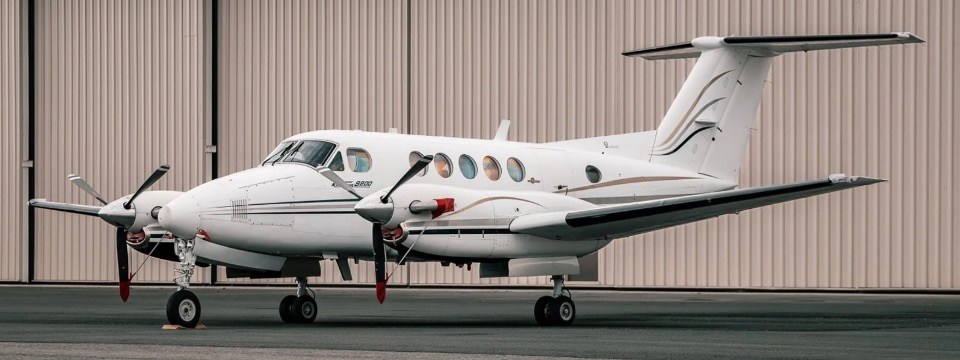
We will have a lot more commercial vehicles that will come through here, like you, like even say commercial transport aircraft, the kind of airliners that civilians fly on every day.
They’ve come through, you know, the wind tunnels here, where, you know, they’ll do spin testing of those or free flight testing, looking at, you know, spin stability and dynamic stall and entrance into high angle of attack, you know, where the aerodynamics become extremely difficult to predict, and if it exceeds the capability of modern computational fluid dynamics codes, to where you know the computer codes can predict aerodynamics.
When you get into high angle of attack or dynamic oscillation of a structure or the vehicle in flight, it becomes extremely difficult to predict what those aerodynamic behaviors are going to be. So, by testing those in the wind tunnel, we can characterize those for commercial vehicles.
We’ve tested, you know, like I said, transport aircraft. We’ve had multiple entry capsules come through here. We’ve had, you know, SpaceX, Blue Origin, Orion, all the way back to Apollo, Gemini, Mercury, the original, the original NASA seven astronauts.
Their capsules came through, came through these facilities too, and looking at, you know, stability of entry vehicles as they as they come through the atmosphere. I mean it’s a lot of really, really unique things. We’ve had parachute designs…
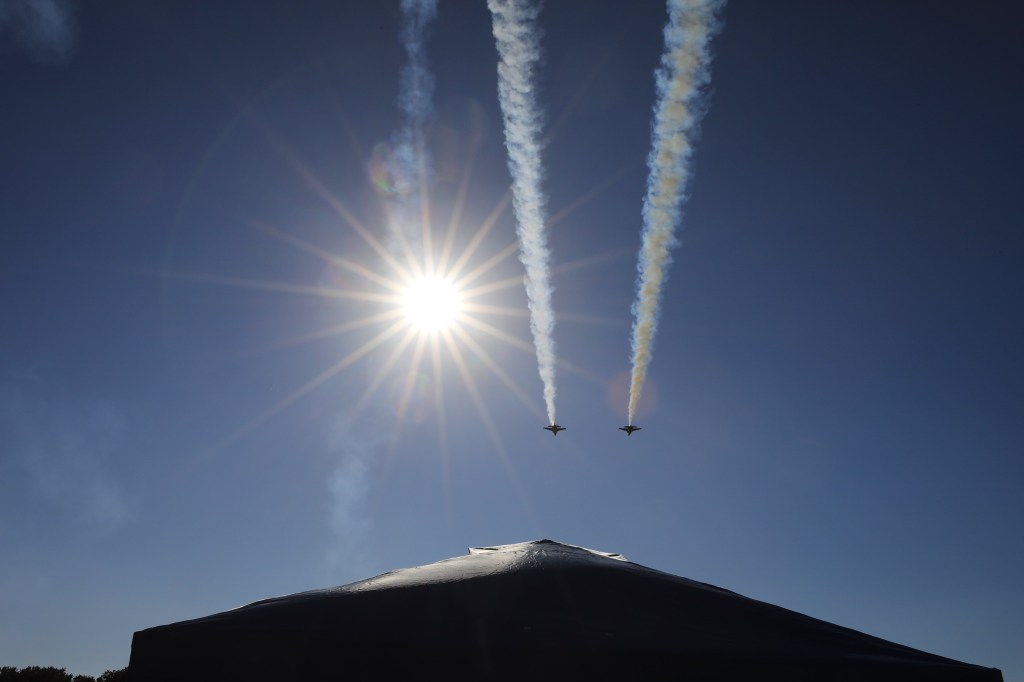
Host: I have to say, I know you’re at Langley because I think I just heard a fighter jet outside your window.
[Laughter]
Tom Ivanco: Yes, yes, because we, yes, F-20, F-35. That was an F-22 that just flew past. I recognize the sound.
Yeah, they they came through these tunnels too. They were tested in the you know the legacy tunnel. When I say these tunnels, I mean, you know, the 12-Foot Low Speed Tunnel and Vertical Spin Tunnel that this facility replaces.
We, they haven’t come through here yet because we’re still coming online. We haven’t had anybody in the tunnel yet. We’re still getting the calibration and the integration of hardware finalized and making sure that the facility is ready for testing.
So, nothing has come through FDRF yet, but they’ve come through the predecessor to this tunnel, and we, we share those same test techniques.
Host: What’s a good example of wind tunnel testing that led to improvements in design?
Tom Ivanco: Yeah. We had a, an Earth entry vehicle, so it was, it was an entry vehicle come through the Earth atmosphere. And I specify Earth because, well, we do Mars entry. We do, like, Titan. There’s vehicles that go to Titan, we test those. You know, so, moons of Saturn. A Venus vehicle, we tested that. This one happened to be an Earth entry vehicle.
And the thing about entry vehicles, like, if you look at say, like, the XR-71 or fast airplanes. The faster they go, the pointier they seem to get. But if you look at, say, the space shuttle, it’s very blunt. It’s very rounded. It’s not, it’s not pointy at all. You look at, you know, entry capsules. They’re very blunt objects.
The reason that they stop getting pointy is once you get beyond about Mach 5, the aerothermodynamic heating of going that fast, coming out the shock wave that comes off of the vehicle, it starts to melt the metals that we build vehicles out of.
So, if you get above Mach 5, the pointy nose doesn’t work anymore. So, you need something blunt because what happens when you make instead of a pointy nose, you make a fat nose or a blunt object, it takes that shock wave that forms in the front and it pushes it further away. Because the fatter the object is, the more the air has to move to turn, the more the air has to turn to go around it. The shock wave has to be further away, because of that limit of physics.
And when you push that far away, it lowers the aerothermodynamic heating. So, that’s why the space shuttle is blunt. That’s why entry vehicles have a flat bottom.
The problem with flat bottom entry vehicles is it’s aerodynamically a lot less stable. Pointy objects with tails are naturally stable. You know, Hershey Kisses are not.
[Laughter]
So, we have to, we were doing this study on okay, well, how flat can I make the heat shield, and it still be stable? And calculations were done, and experience was used.
And we thought, “Okay, this shape of heat shield is going to work, and it’s going to be great. It gives us good thermodynamics, and it’s naturally stable.” Tested it in the wind tunnel, and it tumbled. It wasn’t stable.
And it saved the vehicle program because had it come back in with that design, it would not have survived reentry.
And so, what we did was we said, “Okay, well, how do I change the shape?” And the researchers sat down and came up with an idea, and managed to 3D-print the model, tested it the next day, and the new design turned out to be the borderline of where stable was. So, we had the sweet spot.
It’s stable, and I can push that shock wave away, and it can survive the heat. So, had a survivable, stable reentry vehicle that was tested here. It went from idea to data in hand in 48 hours because of the 3D printing capability we have on site.
Host: In my head I’m hearing, “This is why we test.”
Tom Ivanco: Yeah. One of the things that is unappreciated, I would say, is in doing flight dynamics research is like the name says, it’s dynamic, and we use, you know, wind tunnel balances like I talked about before.
There’s strain gage balances where you know you measure forces of moments on the model.
Most other places – you know, normal wind tunnels, if you will – they put a model in at a certain you know angle of attack or side slip condition, and they’re looking for, “What’s my lift and drag at that flight condition?” They’re looking for a number, right?
Like, “Hey, if my lift is three, and my, you know, my drag is one and a half, or whatever, we’re looking for what’s the time history of my forces and moments as my model moves like this?”
[Laughter]
And that is a lot more challenging to acquire.
You know, you need specialty data systems. You need specialty tare routines. You know, so just like when you’re baking a cake, you know, and you’re trying to measure how many grams of sugar you’re putting in, you put your cup on the scale, you tare the balance, and then you put the sugar in. So, that way, you’re only measuring how much sugar you have in your cup. Same thing in a wind tunnel.
It’s like, well, the model has mass. It’s got weight. Gravity plays a factor, so you have to tare the balance with the model at whatever angles that you’re going to go to. So that way, you can, whatever’s left is your aerodynamic load.
Well, that works if I don’t move the model, but now I’m going to spin the model. I’m going to shake the model. I’m going to oscillate it back and forth. Well, now I introduce all these inertia loads that the balance is going to feel, so I have to subtract those out, too. But how do I subtract out?
I’m oscillating it in a sine wave back and forth like this while I’m spinning it around this way. While I got gravity that way, and then I’m going to change the angle while I’m doing it. But I only want to measure dynamic loads.
So, subtracting all of the, you know, inertia dynamic loads out from the model, it’s between art and science. It bridges that kind of gap, right? Because there are three different methods that we use.
You know, there’s documents out there about how we do it, but we basically average a series of cycles, you know, that with a fixed amplitude and a fixed frequency, and back out what we determine to be the inertial loads, which are a function of position throughout its time history.
And then we take the wind on data, and you kind of have to track its local position throughout that time history, and go, “Well, what tare do I remove at that instant in time at that sample so I can derive a reliable time history of aerodynamic load?” And that’s really tricky if you’ve never done it before, right?
So, in addition to the wind tunnel test techniques, we also bring a team of researchers who have done this before that can help guide folks through the, you know, the rocket science that is that is doing flight dynamics testing.
Host: Does that often include researchers who work on NASA wind tunnels in other parts of the country?
Tom Ivanco: Yeah. Oh yeah, yes, quite a bit. Yeah, I mean, there’s, there’s a whole wind tunnel infrastructure and facility managers. We all, we’re on the, we’re all on the same team and we, we talk and share.
And, you know, I jokingly say we do deals. You know, where like, “Hey, I’ll borrow this instrument, but I’ll loan you that one, and if I can have two of your connectors, I’ll buy them and I’ll repay you in interest,” and we help each other out.
But there’s also expertise because each wind tunnel, I mean, every wind tunnel NASA has does something unique. You know, if it was something that was common, NASA wouldn’t do it. Universities would do it. Industry would do it. The reason NASA does it is we have a capacity, capability, understanding, expertise in order to run a world-unique facility that other places don’t have.
So, every wind tunnel we have within the agency does something unique and special. And the tests and the research questions that a project has, a lot of times it spans that expertise of multiple wind tunnels.
So, when you when you come, you know somebody comes in with whatever research questions they have, a lot of times they will test at more than one wind tunnel. Even our branch, our researchers go to multiple wind tunnels. This is just one of them.
And when we go to those other facilities, we share knowledge, you know, and it’s like, “Hey, this place is really good at lift and drag balance science. How do I tap into that knowledge so that I can improve my dynamic rig over here?”
This one tunnel over there, they’re really good at dynamic data. How can I use their data system codes to say improve our data processing over here?
And you know, these folks over here are really good at instrumentation, and they have instrumentation technicians we don’t have. How can I leverage that to, you know, help our data over here? That’s, and same thing.
We, we have things that they, you know, that they need, and you know we share knowledge and capacity, and it’s, it is quite a nice community that that we have to do that.
Host: You’ve been at Langley your entire NASA career, speaking of community.
Tom Ivanco: I have. Since I’ve been in the agency, yeah, almost 30 years now. Next year will be my 30-year mark. I’ve been at Langley the whole time, and I really like Langley because it’s a research center.
We have operational centers and we have specialty centers and, you know, things like Goddard that do something unique and special.
But the area that I ended up gravitating towards, you know, flight dynamics, air elasticity, and structural dynamics and and loads, that’s the kind of stuff that is studied at this center, and that’s where, you know, the expertise within the agency lies.
So yeah, I’ve always been here.
Host: That’s really nice. What was your giant leap?
Tom Ivanco: [Pensive sigh.] This may sound strange, but my giant leap actually was a physical leap off of a hill in my parents’ backyard.
[Laughter]
When I was a kid, they had my, my parents had this outrageous hill in their backyard. It had like, it’s about a 30-foot vertical, 45-50 degrees slope, you know, on it, and, you know, we would sled ride down that in the winter time. You take your life in your hands, kind of thing. It was outside of Pittsburgh. You know, a lot of, a lot of hills in Pittsburgh area.
Host: Very steep hills, too!
Tom Ivanco: And yeah, yeah, it’s a great town. And I decided one day I wanted to build a parachute and jump off this hill. So, I built it out of trash bags. Didn’t work out that well.
And I said I need a bigger parachute, and I sewed two trash bags together. It’s like, it worked better, but still wasn’t good enough. I went to three, and then four, and then I had this ginormous plastic bag sewed together, and I was able to jump off at the top of this hill, and I eventually floated all the way down to the flats, and I landed in the flats at the bottom.
My mother caught me doing this, and decided it was safer to buy me hang gliding lessons than to let me continue.
[Laughter]
And that that’s when I got into flight and just became, just, I’ve always been fascinated with aircraft and spacecraft. I missed the Apollo landing, you know, but I I grew up through the shuttle era.
I’ve always wanted to do this. I can’t think of a time where I’ve said, “Oh wow, that’s uh, that’s game changing for me.” But it’s yeah, this is what I’ve always sought out to do.
Host: I must say, we are 187 episodes deep in this podcast and you might be the first guest to say your giant leap was an actual leap.
[Laughter]
Host: It is nice to hear when people at NASA talk about how much they enjoy what they do, especially when their work benefits people every day.
Tom Ivanco: Sure. Yeah. Well, that’s the idea, right? At the end of the day, we serve the American taxpayer, all right, and the research we do is owned by, by the American public, like the vast majority of what NASA does.
So, yeah, it’s, we have big hopes, and this wind tunnel is more capable than the other two put together, you know, both 12-foot and VST. The flow quality is much better. The flow speed is much higher. The calibration is a lot more reliable. So yeah, it’s exciting times ahead for sure.
Host: Well, this has been great. Now I just have to decide if I keep the Top Gun spoiler at the beginning.
[Laughter]
Tom Ivanco: I think everybody’s seen the movie by now!
Host: At this point…
Tom Ivanco: I mean, I watched that as a kid, but it was new.
Host: Right on. Thank you, Tom. Thanks for talking with us today about the Flight Dynamics Research Facility.
Tom Ivanco: Yeah, of course. Thank you, Andres.
Host: That’s it for this episode of Small Steps, Giant Leaps. For a transcript and for all other episodes, visit nasa.gov/podcasts. While you’re there, check out our other podcasts like Houston, We Have a Podcast, Curious Universe, and Universo curioso de la NASA. As always, thanks for listening.
Outro: This is an official NASA podcast.