









Expedition 74 Works Scientific Installs, Suit Prep Ahead of Canadarm2 Repair Spacewalk

Scientific hardware installations and biomedical monitoring topped the research schedule aboard the International Space Station on Wednesday. The Expedition 74 crew members also adjusted a spacesuit to prepare for a spacewalk and explored space physics to round out their day.
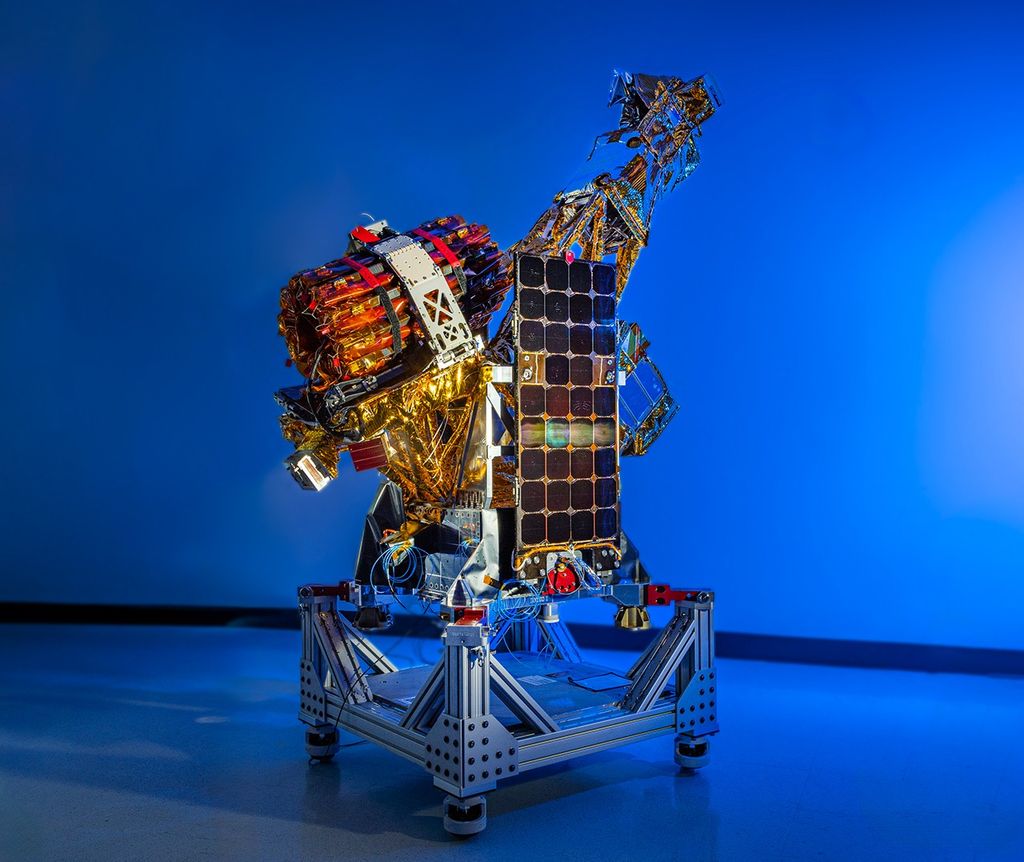
A series of shoebox-sized CubeSats will soon be deployed outside the Kibo laboratory module into Earth orbit for public and private research. One of the satellites, Hokushin-1 CubeSat, will test space technologies such as radio frequency, propulsion, and solar arrays. NASA flight engineer Jack Hathaway finished installing a small satellite orbital deployer, packed with the CubeSats, into Kibo’s airlock where it will soon be placed in the vacuum of space and grappled by the Japanese robotic arm. The deployer will be maneuvered with the robotic arm and positioned away from the orbital outpost to safely release the tiny satellites into Earth orbit.
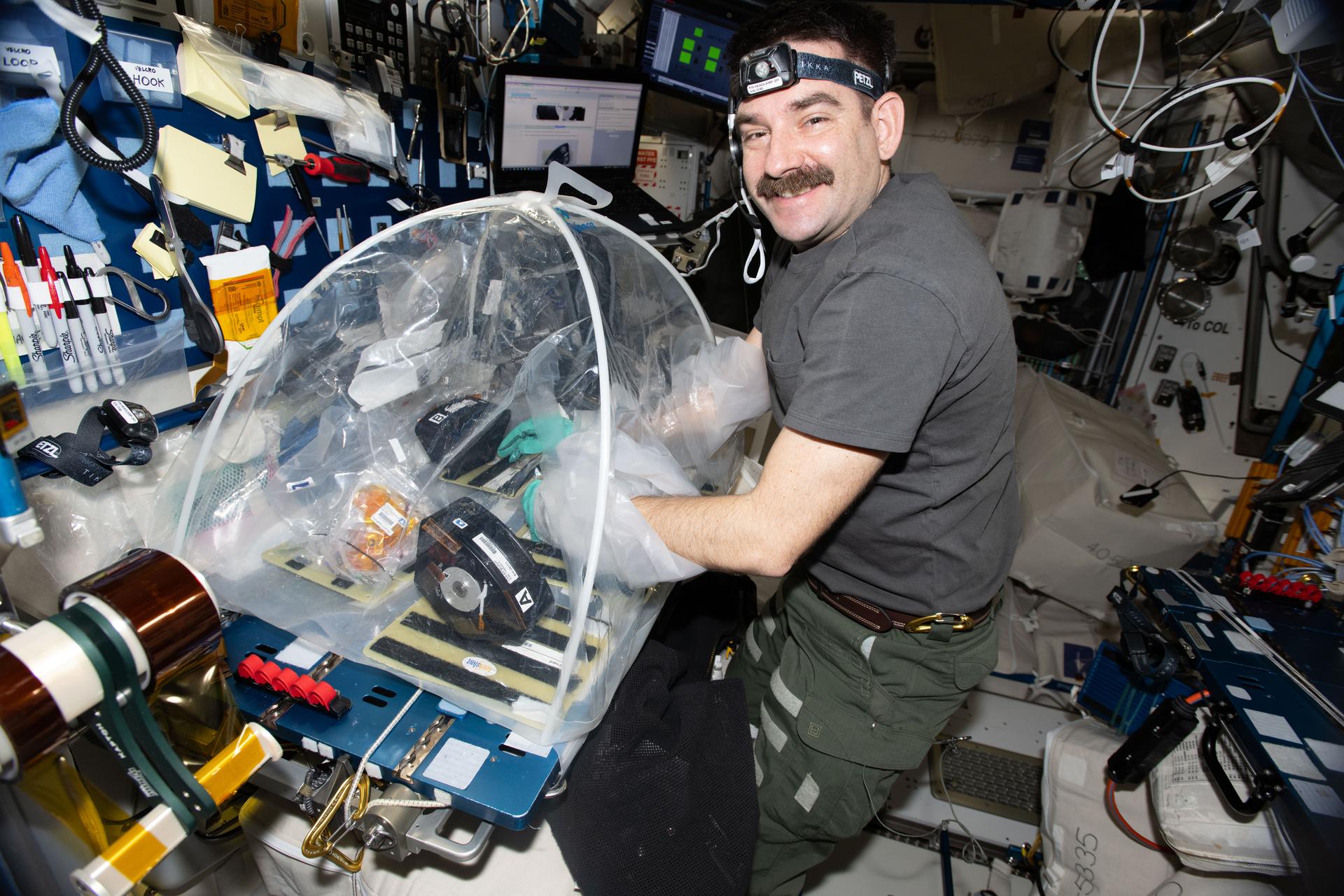
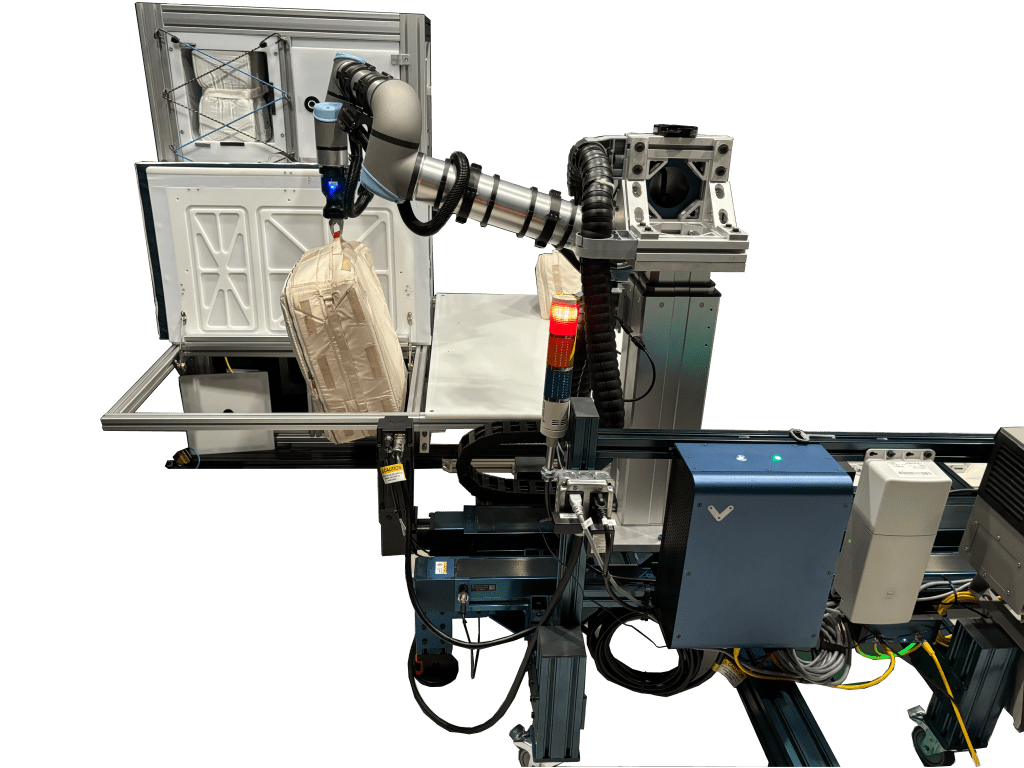
Onboard the orbital outpost are a variety of research freezers—large, small, portable, and permanent—that house and preserve station research samples for analysis both on Earth and in space. One of them, a smaller glovebox freezer, is being installed inside Kibo’s Life Science Glovebox (LSG) by NASA flight engineer Jessica Meir for upcoming experiment operations. The freezer’s location inside the LSG allows the samples to be stowed and frozen immediately after processing to prevent degradation and preserve integrity during sensitive biology research.
Meir also assisted flight engineer Sophie Adenot of ESA (European Space Agency) as she set up wearable devices for a pair of biomedical tests on Wednesday. Adenot first measured her blood pressure to calibrate the PhysioTool technology demonstration gear. Next, she wore head and body sensors that measured her brain oxygen and blood flow levels as she performed cognitive and mental tasks on a computer. Researchers are testing the portable device onboard the station to potentially monitor crew health on missions to the Moon, Mars, and beyond.
Meir also had time to help NASA flight engineer Chris Williams pack cargo inside a SpaceX Dragon cargo spacecraft that will undock from the Harmony module’s forward port and soon return to Earth. Williams then maneuvered into the Quest airlock and adjusted a spacesuit’s legs, arms, and helmet, then ensured the suit’s switches and valves were correctly configured ahead of an upcoming spacewalk.
On May 27, during routine operations of the International Space Station’s Canadarm2, the system demonstrated an elevated motor current in a wrist joint and arm motion did not occur as expected. NASA worked alongside CSA (Canadian Space Agency) to understand the issue and determined a spacewalk will be required to replace the joint using a spare already aboard the orbital complex. The Canadarm2, which is designed to be repaired in orbit, is in a safe configuration and standard operations using the arm have been paused. In the coming weeks, NASA will host a news conference to discuss the repair and preview the planned Tuesday, June 30 spacewalk. NASA will share more on the spacewalkers closer to the activity.
Roscosmos cosmonauts Sergey Kud-Sverchkov and Sergei Mikaev joined each other and explored space physics in the Zvezda service module. The duo observed how two different sized spheres drift freely in microgravity with no pushing movement from the crew. Results may lead to the design of newer space tools, improved robotics, and a deeper understanding of crew motion. Roscosmos flight engineer Andreu Fedyaev focused primarily on maintenance testing computer operations, cleaning ventilation systems, and transferring water between station tanks.
Finally, the space station is orbiting higher today after the Progress 95 cargo spacecraft fired its thrusters for over eight minutes early Wednesday raising its altitude by 1.9 miles. This adjusts the orbital outpost’s altitude ahead of the launch and docking of the Soyuz MS-29 crew spacecraft planned for mid-July.
Learn more about station activities by following the space station blog, @space_stationon X, as well as the ISS Facebook and ISS Instagram accounts.
Get the latest from NASA delivered every week. Subscribe here.
