Latest Research News and Features

Artist rendering of SpaceX Dragon spacecraft berthing to nadir Common Berthing Mechanism on the Harmony module of the International Space Station. (NASA)

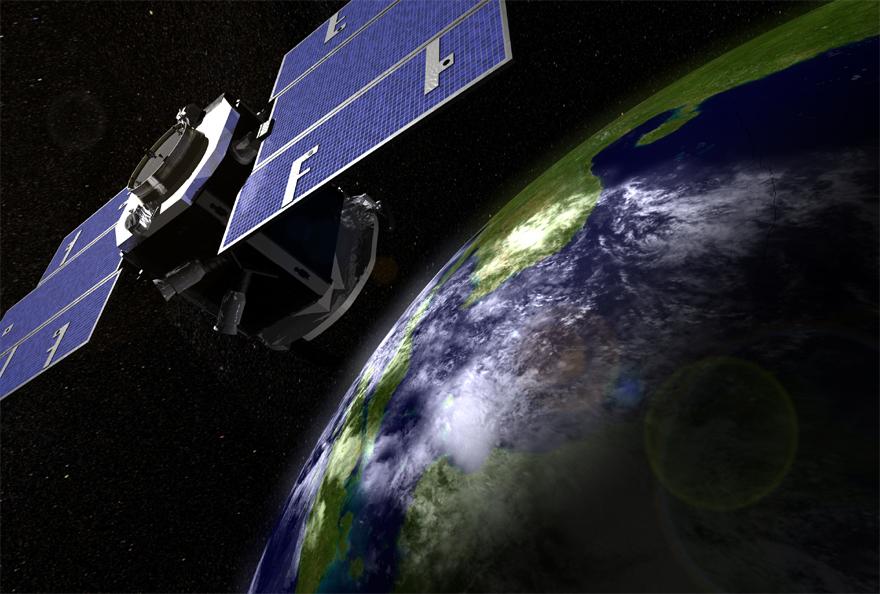
Space Station Bound SAGE III is Full Steam Ahead

Above Earth, observations from the “A-Train" build three-dimensional images of the atmosphere. NASA’s SAGE III will supplement those satellites.

› Read More
A picture of the east coast of Massachusetts taken as part of the Earth Knowledge Acquired by Middle school students (EarthKAM) mission. (EarthKAM)

Record Number of Students Control Station Camera

Wonder what it's like to control a camera on the International Space Station? More than 30,000 students found out as part of the EarthKAM mission.

› Read More
Some of the research on the International Space Station is already focusing on meeting the needs of long-term spaceflights beyond low-Earth orbit. During Expedition 29 in 2011, Russian cosmonaut Sergei Volkov checks the progress of new growth in the Rastenia investigation aboard the space station. (NASA)

Kennedy Engineers Designing Plant Habitat

NASA's Kennedy Space Center uses in-house expertise to develop an International Space Station Plant Habitat for microgravity plant growth studies.

› Read More
Canadian Space Agency astronaut Chris Hadfield holds two Material Science Laboratory Solidification and Quench Furnace (MSL SQF) Sample Cartridge Mechanical Protection Containers (MPCs) during the cartridge exchange in the Destiny laboratory of the International Space Station. (NASA)

ISS Research Update For The Week of Feb. 4, 2013

Expedition 34 is hard at work 200 plus miles above us! Catch this week's research highlights here.

› Read More
Astronaut Frank DeWinne works with the Selectable Optical Diagnostics Instrument Influence of Vibration on Diffusion in Liquids (SODI-IVIDIL) hardware in the Microgravity Science Glovebox (MSG) aboard the International Space Station. (Credit NASA)

Fluids in Space, Shaken Not Stirred

Furthering fluid physics fundamentals in microgravity with results from the International Space Station SODI-IVIDIL investigation.

› Read More
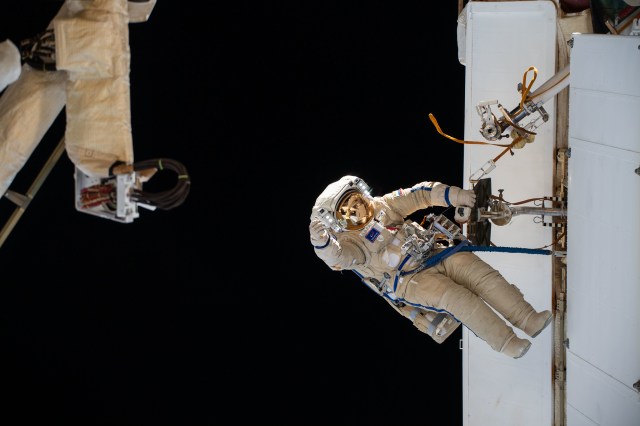
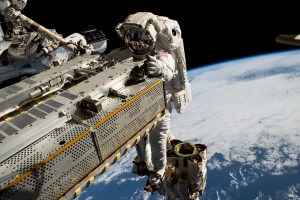
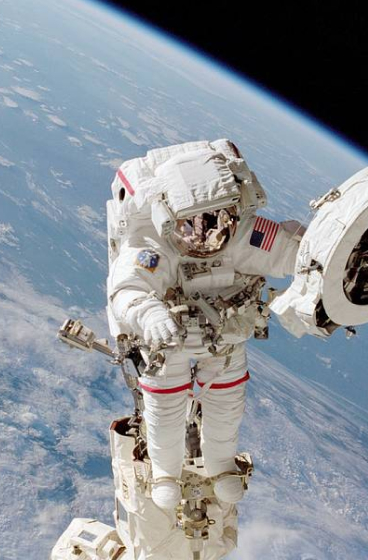
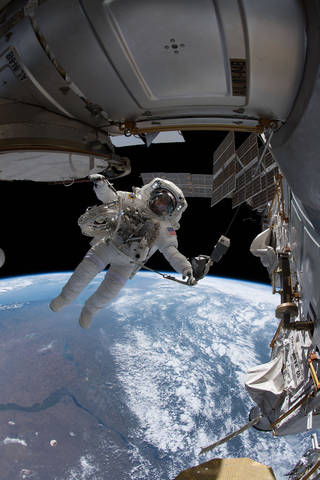
ESA astronaut Thomas Reiter, Expedition 13 Flight Engineer, during a 5-hour, 54-minute spacewalk, which he shared with NASA astronaut Jeff Williams. For part of the spacewalk, the pair worked in tandem, and then worked separately, getting ahead of their timeline, allowing them to work on extra tasks. (NASA)

Finding the Key to Immunity

Living in space weakens astronauts' immune systems, researchers discovered. The findings are providing clues on how to tackle diseases on Earth.

› Read More
Canadian Space Agency astronaut Chris Hadfield installs Ultrasonic Background Noise Tests (UBNT) sensors behind a rack in Destiny, using the space station as Testbed for Analog Research (ISTAR) procedures. These sensors detect high-frequency noise levels generated by station hardware and equipment operating within Destiny. (NASA)

ISS Research Update For The Week of Jan. 28, 2013

ISS team breaks record in crew time research at 71 hours.

› Read More

Blog: A Lab Aloft

Weekly Research Highlights

    Canadian Space Agency astronaut Chris Hadfield holds bubble detectors for the RaDI-N 2 investigation in the International Space Station's Kibo laboratory. This investigation measures neutron radiation levels onboard the space station. It uses bubble detectors as neutron monitors which have been designed to only detect neutrons and ignore all other radiation. (NASA) Canadian Space Agency astronaut Chris Hadfield holds bubble detectors for the RaDI-N 2 investigation in the International Space Station's Kibo laboratory. This investigation measures neutron radiation levels onboard the space station. It uses bubble detectors as neutron monitors which have been designed to only detect neutrons and ignore all other radiation. (NASA)
    View large image
    (Highlights: week of Jan. 21, 2013) -- NASA astronauts Kevin Ford, Expedition 34 commander, and Thomas Marshburn assessed the operational readiness of the Advanced Biological Research System (ABRS) for upcoming plant investigations onboard the International Space Station. The ABRS is a single locker system with two growth chambers. Each chamber is a closed system capable of independently controlling temperature, illumination and atmospheric composition to grow a variety of biological organisms.

    Ford performed the final Capillary Flow Experiment-2 (CFE-2) fluid test run with the vane gap-2 hardware. This suite of fluid physics experiments investigates how fluids move up surfaces in microgravity. The results aim to improve current computer models used by designers of low-gravity fluid systems and may improve fluid transfer systems for water on future spacecraft.

    Canadian Space Agency astronaut Chris Hadfield concluded the second of four RaDI-N 2 Neutron Field Study (RaDI-N 2) sessions. This investigation measures neutron radiation levels onboard the space station. It uses bubble detectors as neutron monitors which have been designed to only detect neutrons and ignore all other radiation. In collaboration with a Russian cosmonaut, eight bubble detectors were retrieved from their deployed locations. Hadfield inserted two of the detectors into the bubble-dosimeter reader to generate a table of results. The Russian crew member processed the remaining six detectors. RaDI-N 2 is a follow-on investigation designed to characterize the neutron radiation environment onboard the space station. The objective of this investigation is to better characterize the station neutron environment and define the risk posed to the crew members' health and provide the data necessary to develop advanced protective measures for future spaceflight.

    The Robotics Refueling Mission, or RRM, operations team completed the refueling task. The investigation demonstrates and tests the tools, technologies and techniques needed to robotically service and refuel satellites in space, especially satellites not originally designed to be serviced. Findings from the mission are expected to reduce risks and lay the foundation for future robotic servicing missions in microgravity.

    Other human research investigations continued for various crew members including Spinal Ultrasound, Integrated Cardiovascular, Circadian Rhythms, Repository, and Dietary Intake Can Predict and Protect Against Changes in Bone Metabolism During Spaceflight and Recovery, or Pro K.

    Vic Cooley, Lead Increment Scientist
    Expedition 33/34


    › View All Science Updates

More About Space Station