

![Request for Information – Potential [Placeholder for Prize]](https://assets.science.nasa.gov/dynamicimage/assets/science/missions/a-step/FFR_Earth_Background_20251120%20.png?w=1024)



History
The MCMC has a decades-long history of model development, community outreach, and cutting-edge scientific discovery.
The MCMC has a decades-long history of model development, community outreach, and cutting-edge scientific discovery.
Mars global climate modeling at NASA Ames began in the 1960s when Conway Leovy and Yale Mintz modified the UCLA two-level model to study the wind systems, thermal structure, and energetics of Mars (Leovy & Mintz, 1969). Jim Pollack, who joined NASA’s Ames Research Center in the early 1970s, recognized the importance of such a tool for NASA’s Mars Exploration Program (MEP) and collaborated with Leovy and Mintz to bring the model to NASA’s Ames Research Center, where it has continued to evolve since then. Many groups, motivated by the increasing number of missions to the Red Planet with payloads capable of measuring the atmosphere, have developed general circulation models for Mars. Here we briefly describe how the Ames Mars GCM evolved to its present state.
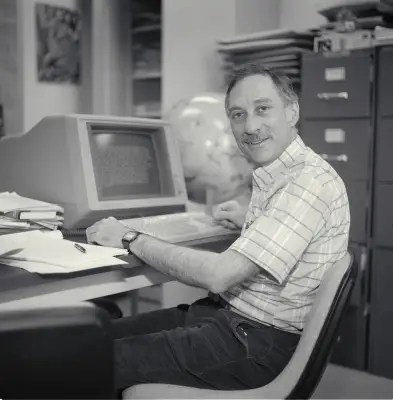
As research on the Martian climate continued, the model underwent significant changes and improvements. By the early 1980s it was becoming increasingly apparent that dust in the Martian atmosphere had a significant effect on the general circulation and could even play a major role in the development of global-scale dust storms (Haberle et al., 1982). As a result, dust radiative heating algorithms were implemented and tested in the model, the number of layers increased from three to thirteen, and several new diagnostic packages were designed throughout the 1980s and early 1990s.
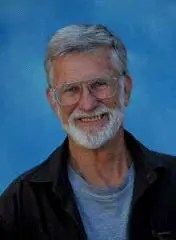
Bob Haberle assumed leadership of the effort when Pollack fell ill in 1992 and passed away in 1993. He continued with Pollack’s plan to improve the model’s physics packages and stay involved in NASA’s Mars missions. During the 1990s the model’s radiation code and boundary layer scheme were upgraded (see Haberle et al., 1999), and a new dynamical core with a tracer transport scheme was developed (Suarez & Takacs, 1995). By the early 2000s Mars GCMs shifted toward multi-annual simulations with tracer transport capabilities and more sophisticated cloud microphysics and dust lifting schemes.
Jeff Hollingsworth took over leadership of the Ames Mars GCM group in the Spring of 2007 and led the group through a significant period of growth. He worked closely with NASA HQ to create the Mars Climate Modeling Center (MCMC), a NASA facility intended to provide products and services to the community. Hollingsworth also began the transition from the Goddard C grid dynamical core, our so-called “Legacy model” (Haberle et al., 2021; Kahre et al., 2023), to the GFDL cubed-sphere finite volume (“FV3”) dynamical core.
In January 2019, Melinda Kahre assumed leadership of the MCMC and has overseen continued group growth. Kahre has led the effort to develop the new FV3-based Mars GCM, which allows for high resolution modeling for science and mission support applications. She has also led the effort to publicly release source code for the Legacy Mars GCM and the new FV3-based GCM, model analysis and plotting routines, and model output. She is passionate about leading an inclusive, vibrant, and productive research group at Ames.
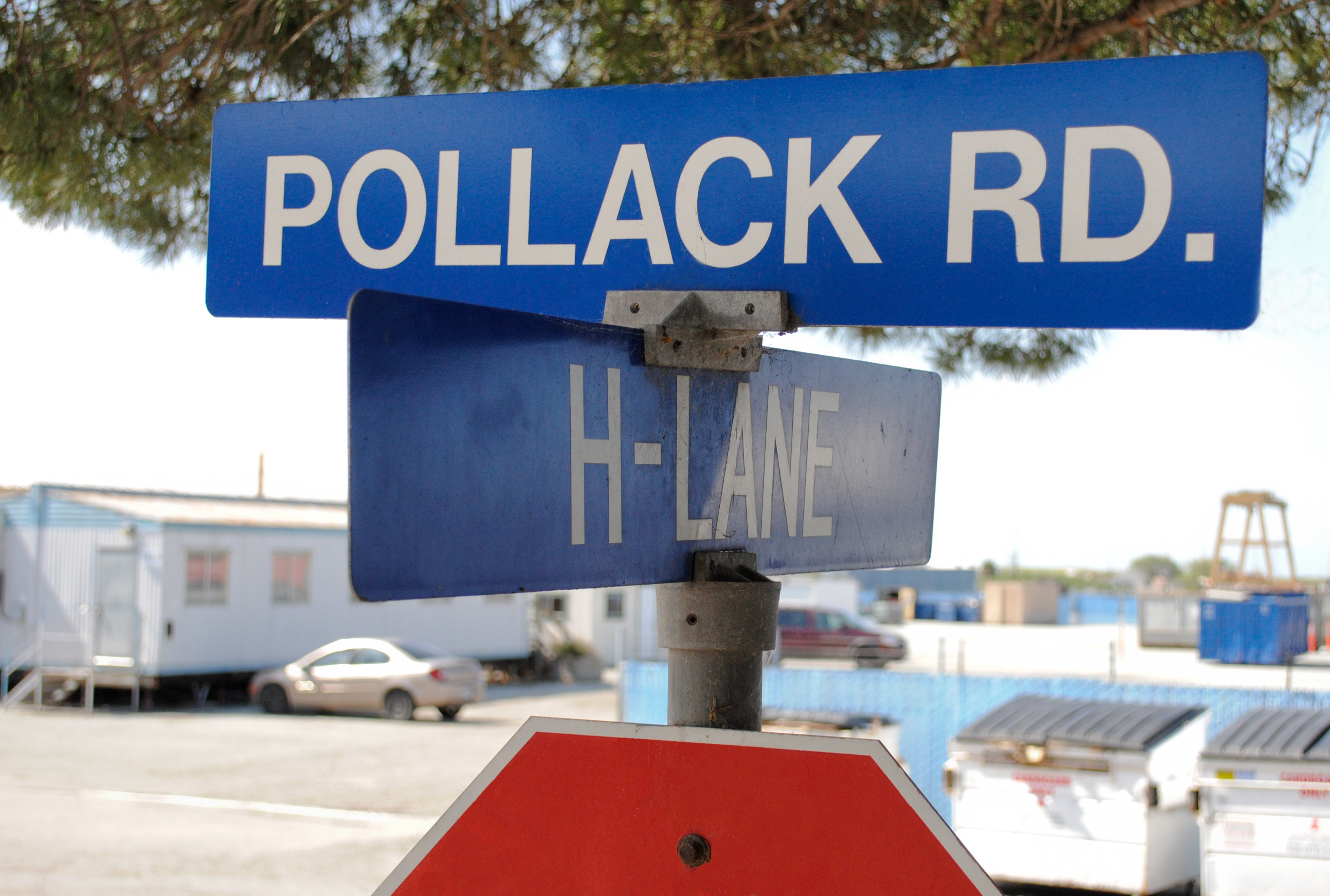
The MCMC is built on a rich history that has included many students, postdocs, research associates, and civil servants. Students with a range of experience and academic backgrounds (high school to graduate students) have contributed significantly to the group’s goals, and several members of the MCMC have advanced through positions within the group over time. Today, members of the MCMC continue to develop state-of-the-art Mars GCMs and conduct research on the current and past climate of Mars as well as Mars as a potential exoplanet.
Return to the MCMC homepage