














Moon Base
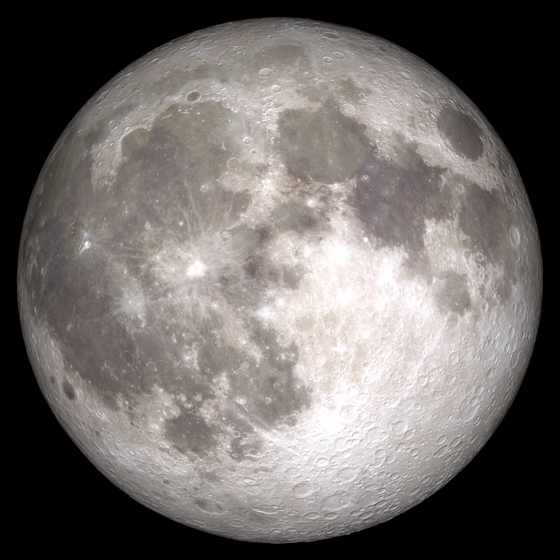
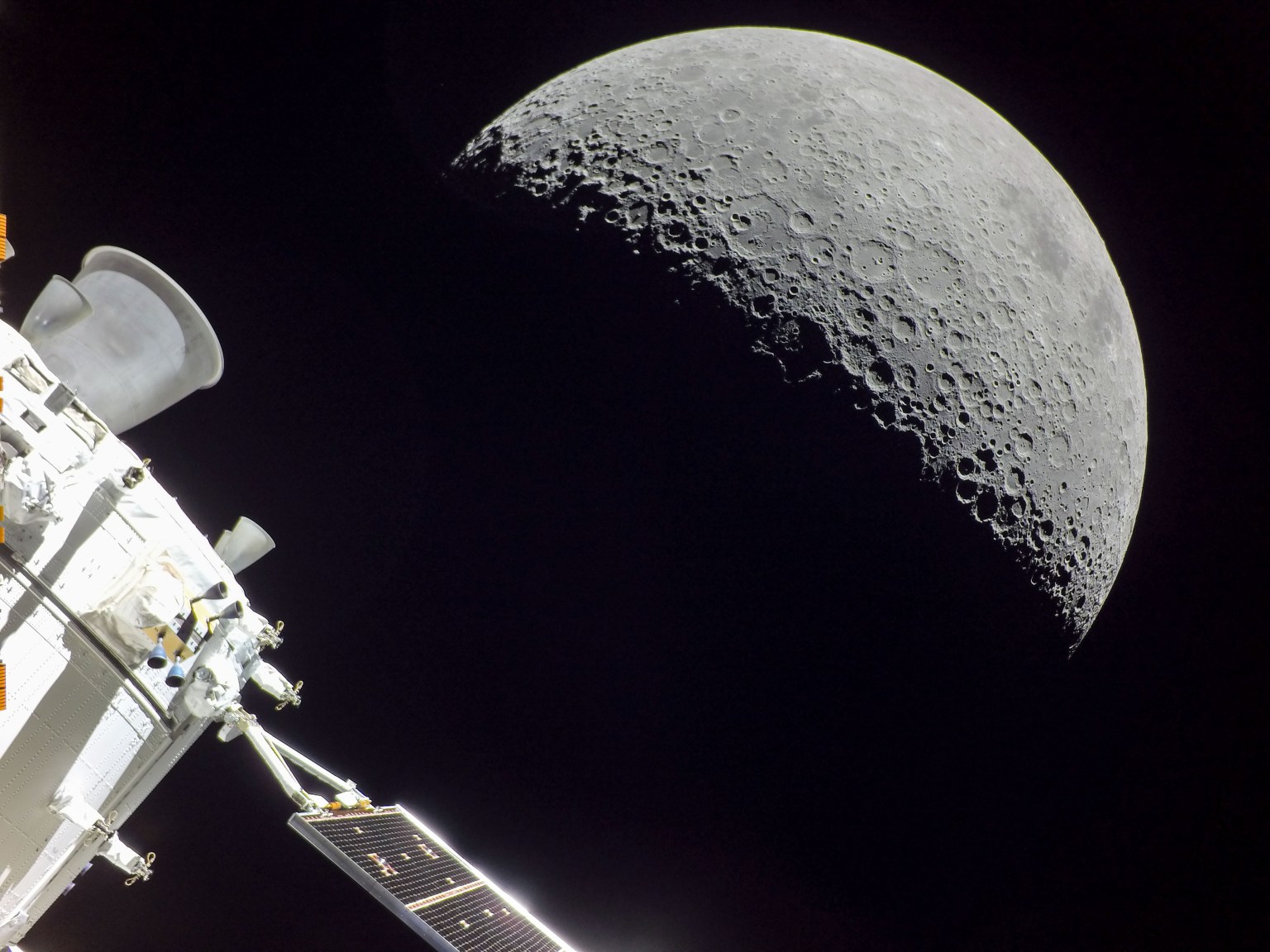
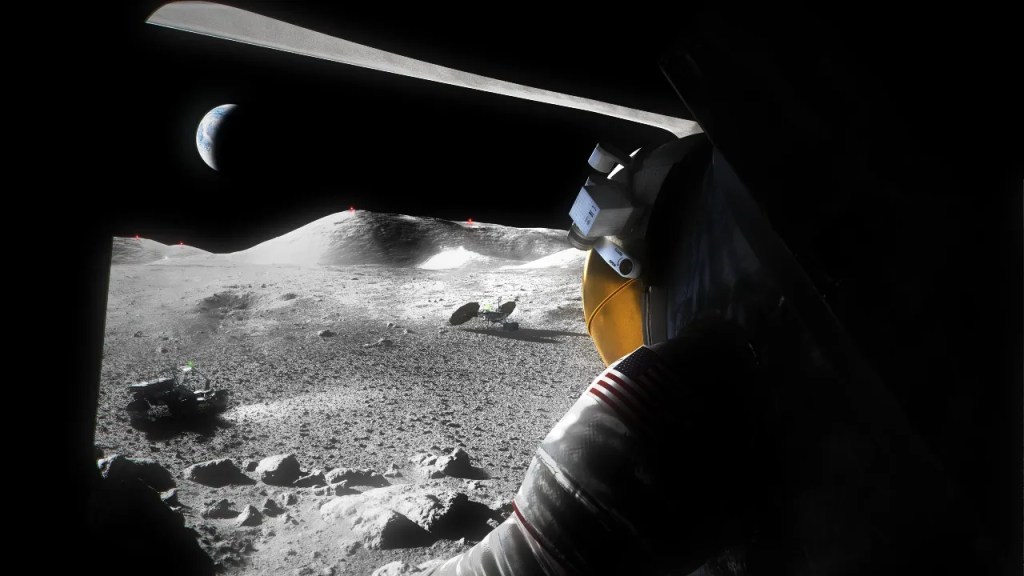
The Moon Base is humanity’s first lunar outpost, a place where astronauts will live, work, and explore near the Moon’s South Pole. Through a series of crewed and uncrewed missions, NASA and its partners will build the infrastructure needed to support an enduring human presence on the lunar surface while advancing science, technology, and exploration for the benefit of all.
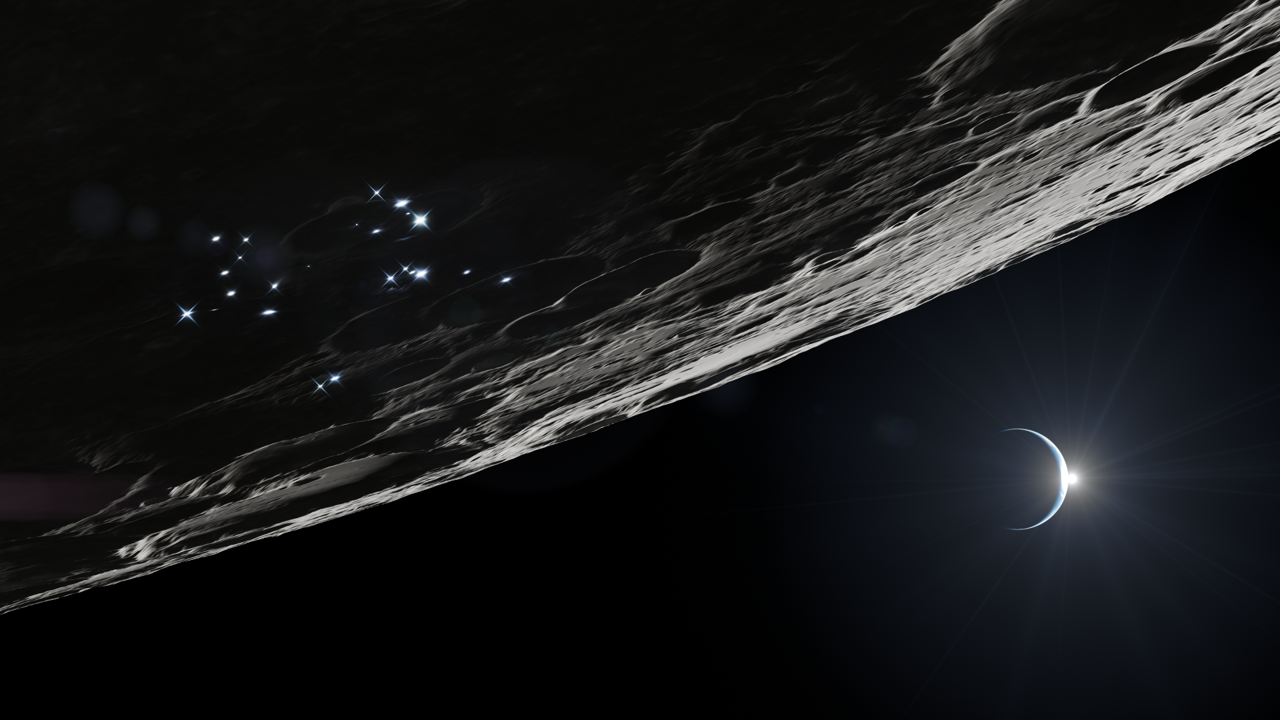
From Apollo to Artemis: Exploring the Lunar Surface
The lunar South Pole region presents an environment unlike any previously explored by humans. This interactive experience demonstrates how the regions targeted for Artemis missions and future Moon Base development differ from the environments explored during Apollo.
The representative Apollo landing site, based on the Apollo 17 mission, highlights the relatively smooth terrain, broad visibility, and more consistent lighting conditions of the Moon’s equatorial region. By comparison, representative Artemis landing sites reveal rugged terrain, steep slopes, and dramatic lighting conditions shaped by low-angle sunlight and deep shadowed regions.
NASA selected the lunar South Pole region as the site of the Moon Base because of its scientific value, access to resources, and potential to support long-duration human exploration. But the same conditions that make the region important for future exploration also make it one of the most challenging environments humans have ever attempted to operate in. Extreme temperature swings, long periods of darkness, abrasive lunar dust, rugged terrain, and permanently shadowed craters present major challenges for sustained surface operations. Establishing the Moon Base in this environment will require advanced technologies, resilient infrastructure, careful site planning, and new approaches to living and working beyond Earth.
Learn more about the harsh conditions at the lunar South Pole here. To explore more of the lunar surface, download the desktop version of the application.