

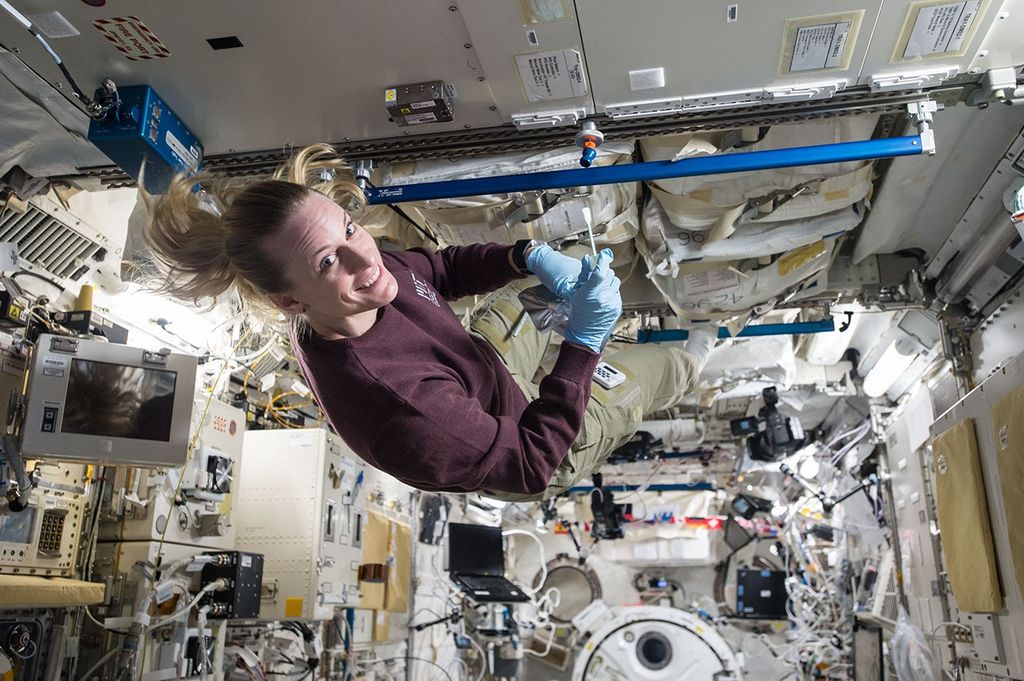










Circadian Rhythms: A crewmember removed the Armband Monitor and the Thermolab Unit mounted to their belt, completing 36 hours of monitoring for the Circadian Rhythms investigation. Circadian Rhythms investigates the role of synchronized circadian rhythms, or the “biological clock,” and how it changes during long-duration spaceflight. Researchers hypothesize that a non-24-hour cycle of light and …
Eye Check Day on Station, Dragon Gets Ready For Launch

The Expedition 52 crew members pulled out their medical hardware today for a variety of eye checks and other biomedical research. The station residents are also making space and packing up gear for next week’s cargo delivery aboard the SpaceX Dragon. The crew each participated in a series of eye exams throughout Thursday working with …
ISS Daily Summary Report – 8/09/2017
Human Research Program (HRP): The crew collected blood, urine and air samples today to satisfy Return minus 15 days (R-15) Cardio Ox, Flight Day 15 (FD 15) and R-15 Biochemical Profile and R-30 and Launch plus 12 days (L+12) Marrow requirements. By collecting Cardio Ox ultrasound and ECG data, along with blood and urine samples, …
Station Boosts Orbit, Dragon Launch Slips a Day

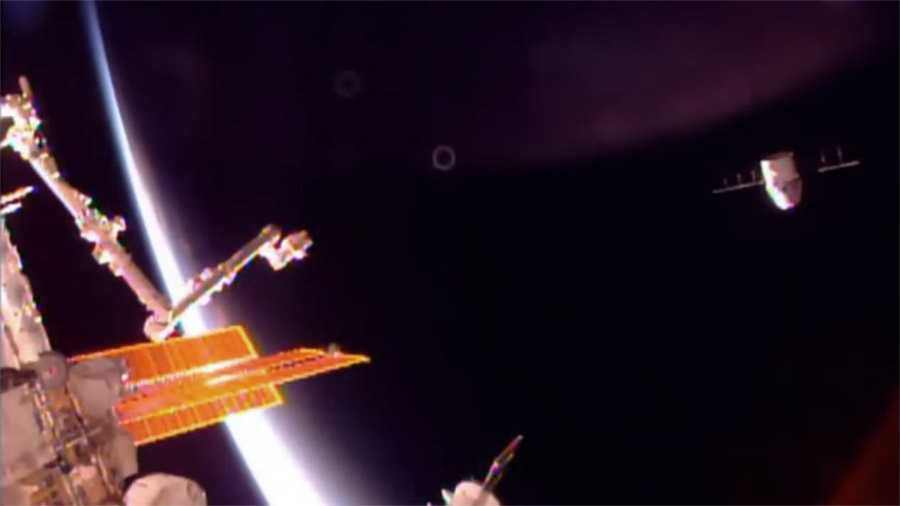
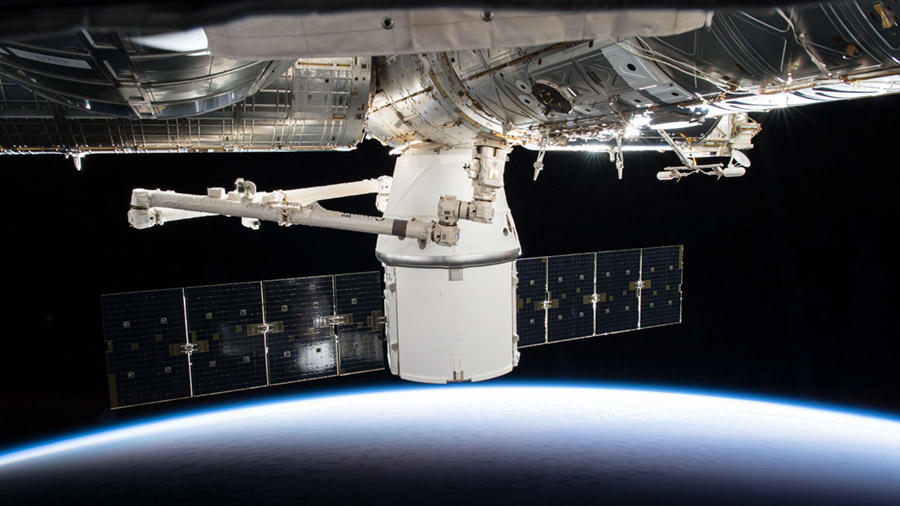
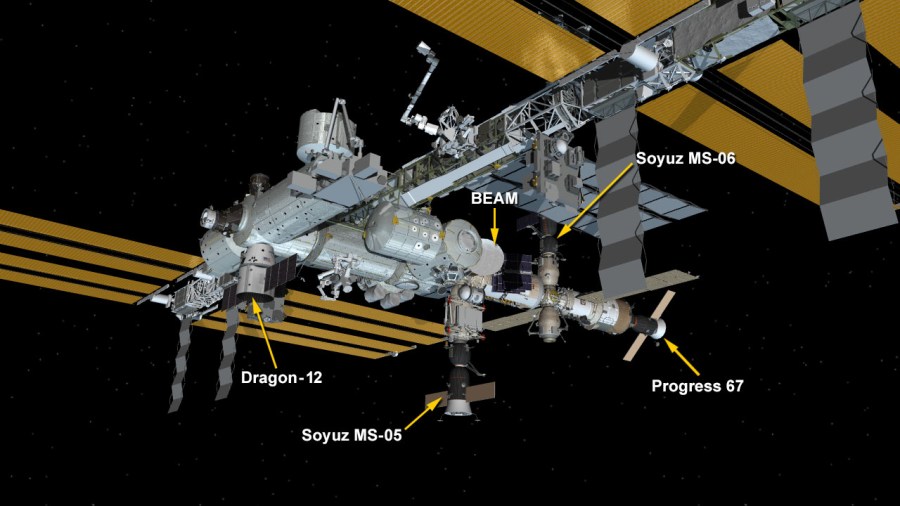
A docked Russian cargo craft fired its engines today slightly raising the orbit of the International Space Station. The orbital boost sets up next month’s crew swap. The SpaceX Dragon cargo craft also received a new target launch date while the crew gets ready for a spacewalk next week. NASA astronauts Peggy Whitson and Jack …
ISS Daily Summary Report – 8/08/2017
Fluids Integrated Rack (FIR): The crew replaced the two FIR white lights. One was burned out and the other had high usage and was nearing its end of life. After replacement, the rack was powered from the ground and the Payload Developer verified both lights were functioning properly. The next FIR science operations will occur next week …
ISS Daily Summary Report – 8/07/2017
Fine Motor Skills (FMS): On Sunday a crewmember completed a series of interactive tasks during a FMS session. The FMS investigation studies how the fine motor skills are effected by long-term microgravity exposure, different phases of microgravity adaptation, and sensorimotor recovery after returning to Earth gravity. The goal of the investigation is to determine how …
Week Starts With Life Science and Spacewalk Preps

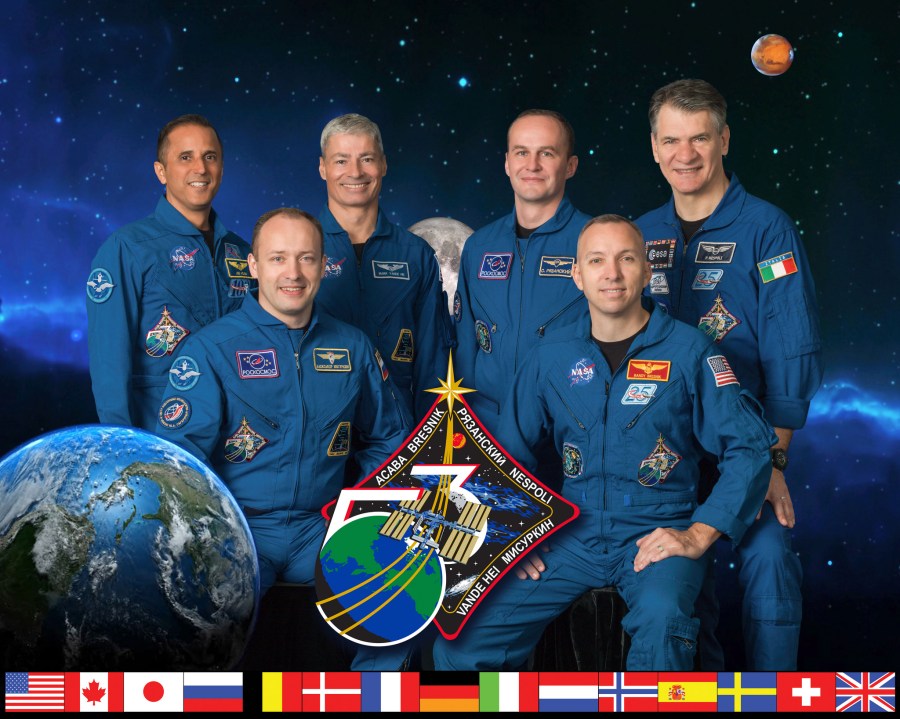
The fully staffed International Space Station stepped up its life science research today studying a host of space phenomena. Two cosmonauts are also preparing for the 202nd spacewalk at the station late next week. Astronauts Randy Bresnik and Paolo Nespoli continued observing how living in space affects their muscles. The duo used electrodes and an …
ISS Daily Summary Report – 8/04/2017
Sarcolab-3: With assistance from an operator, RS and USOS crewmembers ingressed the Muscle Atrophy Research & Exercise System (MARES) chair in the Columbus module, installed the Electromyograph and Percutaneous Electrical Stimulation (PEMS) device and adjusted pads and constraints for the Sarcolab-3 knee protocol. After attaching electrodes and verifying signals the operator collected ultrasound images of …
Service Platforms Arrive for Space Launch System Booster Engines

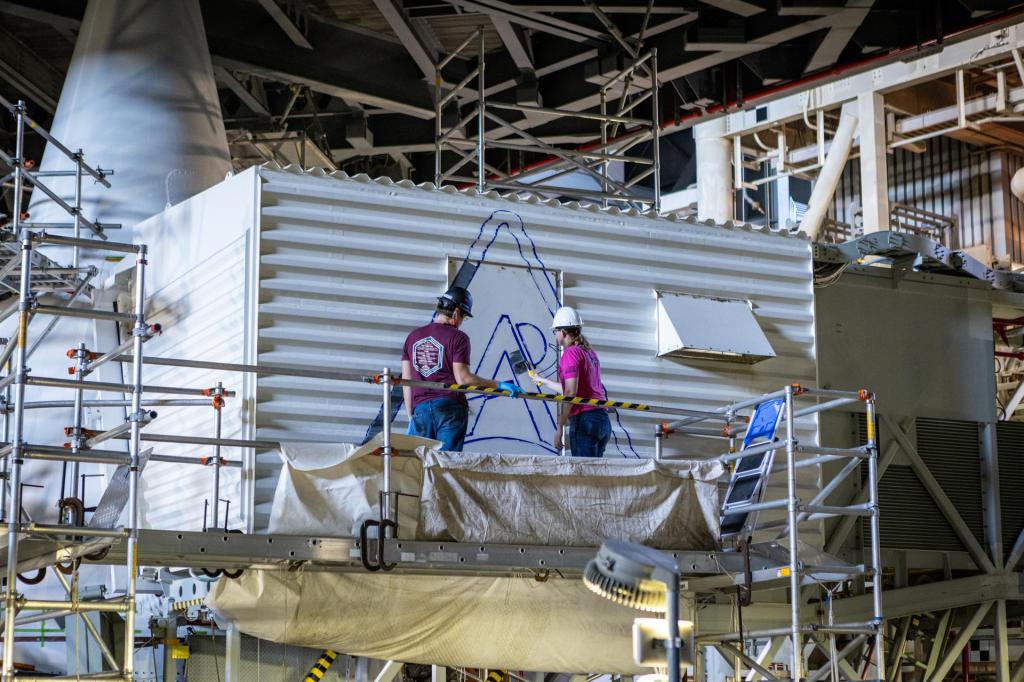
New service platforms for NASA’s Space Launch System (SLS) booster engines arrived at the agency’s Kennedy Space Center in Florida. The platforms were transported on two flatbed trucks from fabricator Met-Con Inc. in Cocoa, Florida. They were offloaded and stored inside the Vehicle Assembly Building (VAB). The platforms will be used for processing and checkout …
The Greatest Meteor Show of All Time

By Bill Cooke At NASA, we get very excited about many astronomical events — to name just a few, the return of Halley’s Comet back in 1985/86; the impact of the fragments of Comet Shoemaker-Levy 9 with Jupiter in 1992; the Leonid meteor storms of 1998, 1999, 2001 and 2002; and, of course, the upcoming …