











New Status: Automated Transfer Vehicle (ATV)-4 Transfer Operations: Flight Engineer (FE)-3 Cassidy, FE-5 Parmitano, and FE-6 Nyberg have completed 94% of transfer operations as of today. The crew performed approximately 9 hours of scheduled operations in six hours. Approximately 5 hours 20 minutes remain of ATV4 cargo operations, which will not be scheduled until after …
ISS Daily Summary Report – 07/01/13
New Status: Extravehicular Activity (EVA) Prep: Flight Engineer (FE)-3 Cassidy and FE-5 Parmitano continued with preparations for next week’s EVA #22 scheduled for July 9. Cassidy relocated hardware from the Airlock not needed for the EVA and prepared the Airlock to support EVA operations. Both crewmembers completed the Simplified Aid for EVA Rescue (SAFER) On-board …
ISS Daily Summary Report – 06/28/13
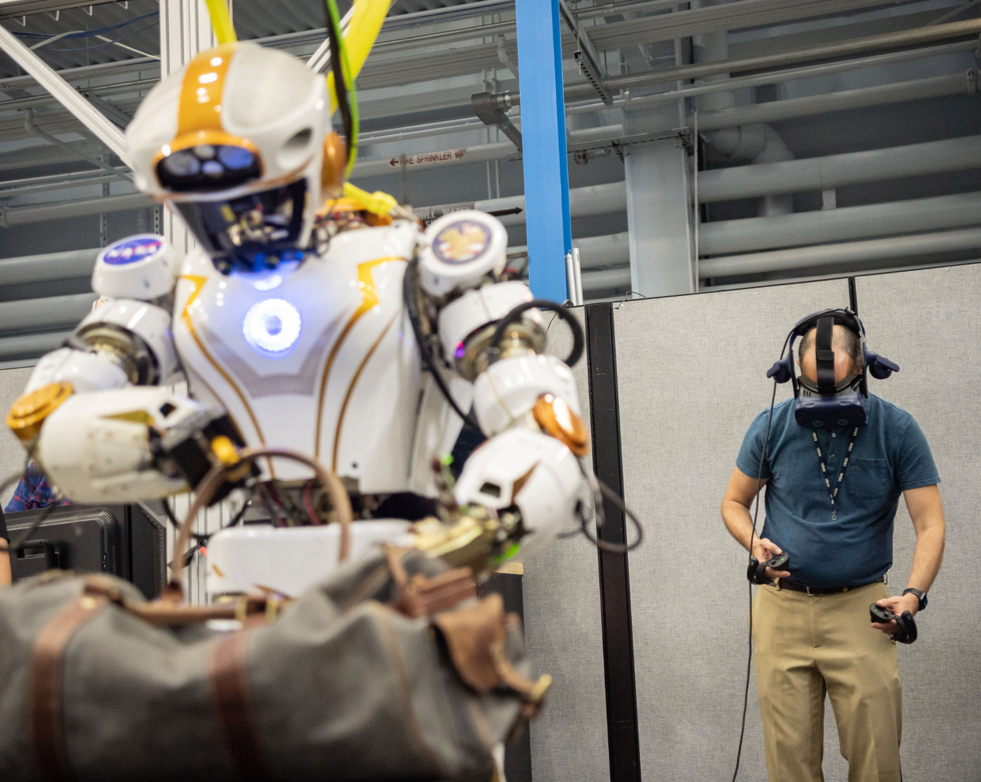
New Status: Robonaut Experiment: FE-5 Parmitano set up Robonaut for a second day of ground commanded activities. Today’s objectives included a vision recognition test and velocicalc measurements to characterize air flow in the work volume. Robonaut is a humanoid robot designed with the versatility and dexterity to manipulate hardware and react safely when bumped or …
From Tweet Density to Satellite Remote Sensing
Somehow, a recent conversation on Twitter about tweet density led to a mention of the installation of variable highway lighting in the Netherlands, by way of the 2012 NASA/NOAA city lights map. Which made me wonder—would we be able to see the effects of the new lighting from space? After all, the day night band […]
ISS Daily Summary Report – 06/27/13
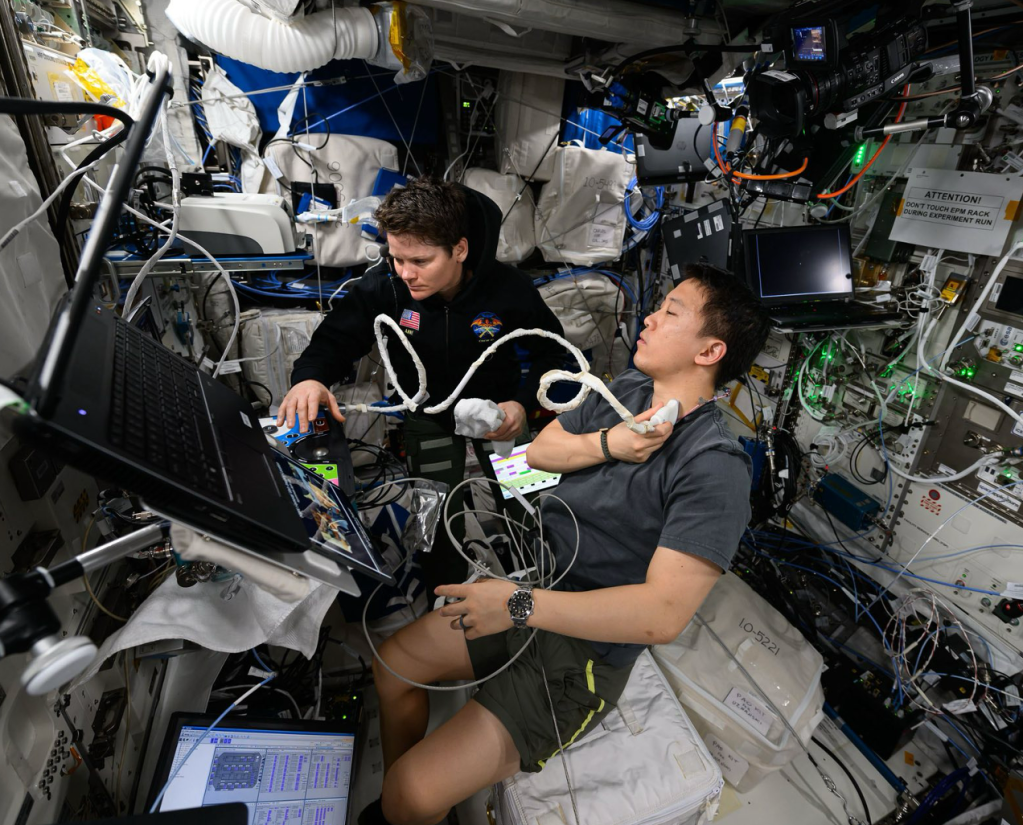
New Status: Ocular Health: The crew continued Ocular Health activities with Flight Engineer (FE)-5 Parmitano and FE-6 Nyberg performing ultrasound scans with each crewmember acting as a Crew Medical Officer (CMO) and subject. They also performed cardiac ultrasound scans and blood pressure measurements. These activities are a part of the nominal medical testing on ISS …
ISS Daily Summary Report 6/26/13
New Status: Ocular Health: Flight Engineer (FE)-5 Parmitano and FE-6 Nyberg collected blood pressure and vital sign data in support of the Ocular Health payload. They then performed tonometry measurements with each acting as a Crew Medical Officer (CMO) and subject. FE-3 Cassidy was the CMO for both Parmitano and Nyberg to assist in the use …
ISS Daily Summary Report 06/25/13
New Status: Crew Half Duty Day: The crew had a half day off today due to yesterday’s support of Russian EVA #33. Due to the long day yesterday, the crew was scheduled to wake up three and one-half hours later than normal and USOS Extravehicular Activity (EVA)-22 Preparations: Flight Engineer (FE)-3 Cassidy, FE-5 Parmitano, FE-6 Nyberg and CDR …
ISS Daily Summary Report – 06/24/13
New Status: Russian Segment (RS) Extravehicular Activity (EVA) #33: Flight Engineer (FE)-2 Misurkin and FE-4 Yurchikhin egressed the ISS at 8:32 am and performed a 6 hour 34 minute EVA. During this time, FE-3 Cassidy and CDR Vinogradov were isolated in the Mini Research Module (MRM)-2/34 Soyuz. FE-5 Parmitano and FE-6 Nyberg were isolated from the …
Engineering smarts and longest running show in Earth observation
On June 19, 2013, the U.S. Geological Survey officially decommissioned Landsat 5 after an astonishing 29 years of operation. The satellite’s longevity was recognized by the Guinness Book of World Records, which dubbed Landsat 5 as the longest-operating Earth observation satellite. I recently listened to Dr. Steve Covington — the flight systems manager for Landsat […]
ISS Daily Summary Report – 06/21/13
New Status: Crew Medical Officer (CMO) On-Board Training (OBT): Flight Engineer (FE)-3 Cassidy, FE-5 Parmitano and FE-6 Nyberg completed their CMO OBT. This is a Computer Based Training (CBT) module that requires no ground interaction and is performed periodically to maintain proficiency for designated onboard CMOs. Binary Colloidal Alloy Test (BCAT)-C1 Experiment Pre-Mix: Cassidy pre-mixed samples …