








Suggested Searches

Blogs

  • NASA Wallops to Support June Rocket Launch

    Aerial view of NASA's Wallops Flight Facility's launch range structures along the coastline of Wallops Island, Virginia. Ocean, bay and marsh lands surround the range.

    A suborbital rocket is scheduled to launch from NASA’s Wallops Flight Facility in Virginia during a window extending from June 10 – 16, 2026. No real-time launch status updates or livestream will be available.   NASA Wallops provides services such as vehicle tracking, data telemetry, and range safety from NASA’s only owned and operated launch range to ensure successful missions […]

  • NASA’s X-59 Flies Supersonic for First Time 

    NASA’s X-59 quiet supersonic research aircraft flies above the clouds during its first supersonic flight. The aircraft is shown in side profile during level flight with desert and mountain terrain visible below.

    NASA’s X-59 experimental aircraft reached a major milestone Friday, June 5, when it flew faster than the speed of sound for the first time.   The 81-minute flight achieved a speed of Mach 1.1 (approximately 713 mph) at an altitude of 43,400 feet, with the X-59 performing as expected. For NASA test pilot Jim “Clue” Less, the plane’s instruments were the only indication of flying supersonic — exactly what the team wanted.  “You know you are supersonic when gauges say you are supersonic. I didn’t feel anything,” Less said. “It went […]

  • Crew Begins Week with More Cartilage Printing and Plant Harvesting

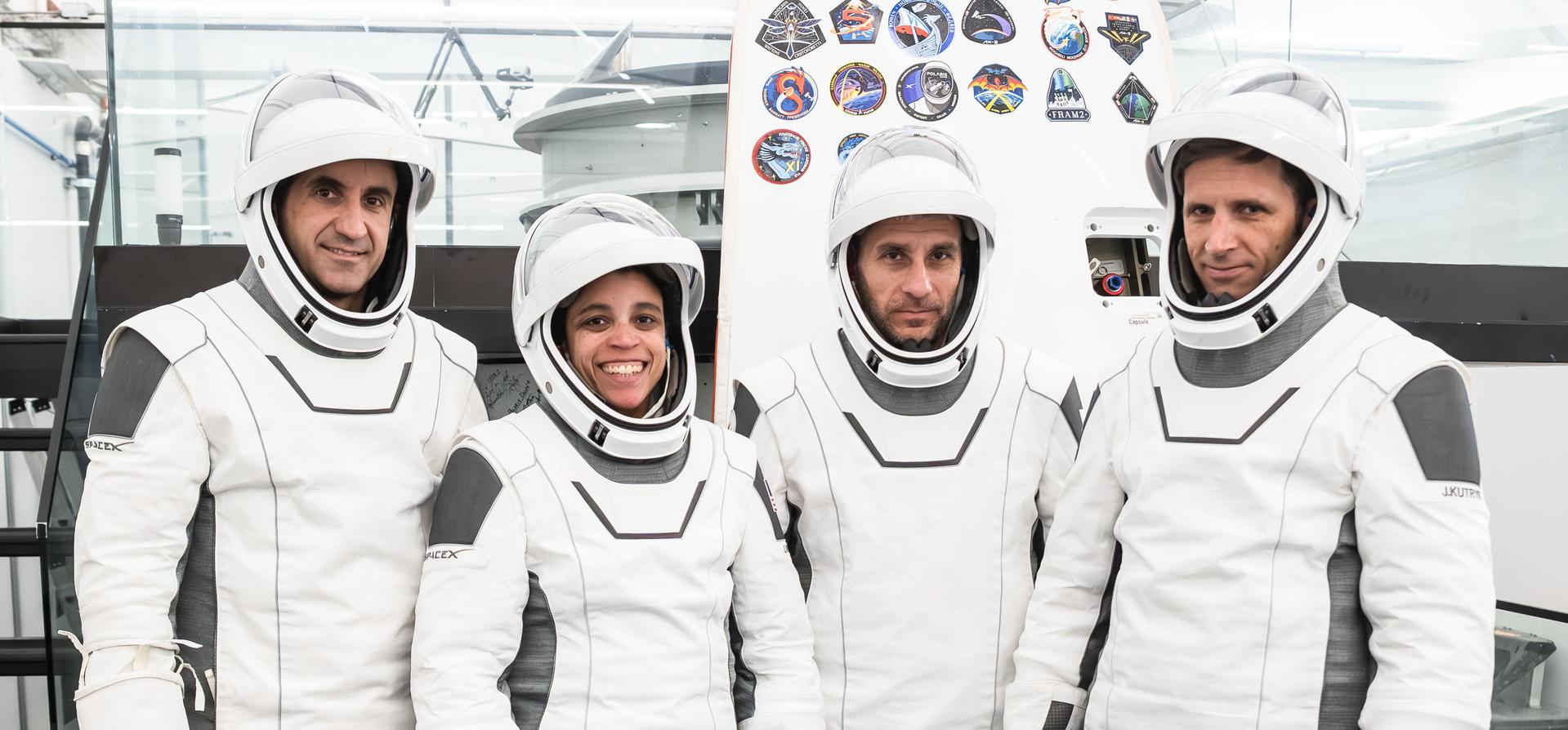
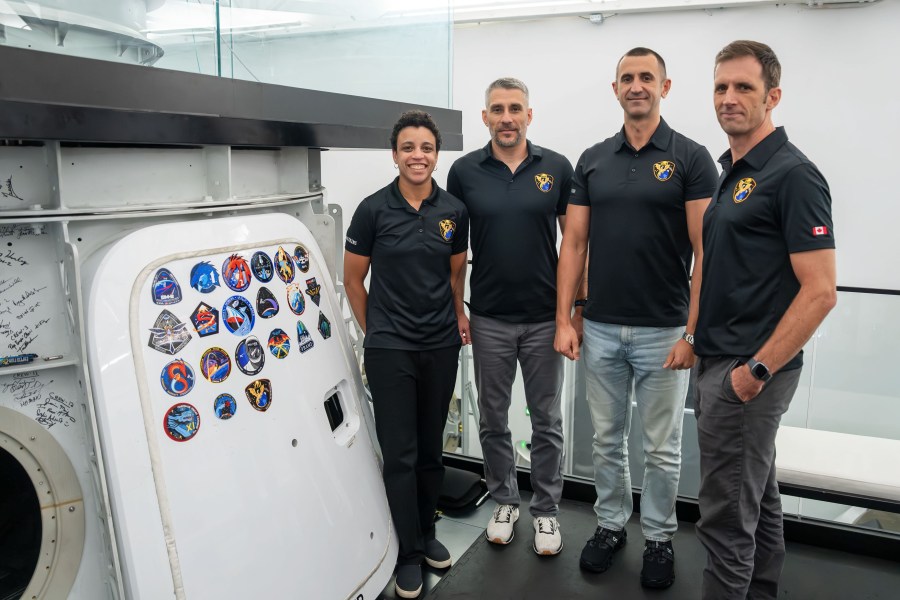
    Expedition 74 crew members (from left) Sophie Adenot of ESA (European Space Agency), NASA astronauts Jack Hathaway and Chris Williams, and Roscosmos cosmonaut Sergey Kud‑Sverchkov pose for a portrait together inside the International Space Station’s cupola and Tranquility module.

    Expedition 74 began the week bioprinting human cartilage tissue and harvesting alfalfa plants aboard the International Space Station to advance health and promote self-sustainable space crews. The orbital residents also retrieved materials exposed to the external space environment and conducted their own ultrasound vein scans to continuously learn how living in space affects physics and biology.

  • NASA Provides Update on Space Station Leak

    The station pictured from the SpaceX Crew Dragon

    The Zvezda service module’s transfer tunnel, known as the PrK, on the International Space Station has experienced cracks since 2019 that have resulted in small atmosphere leaks and prompted ongoing monitoring and repair efforts by Roscosmos. NASA and Roscosmos have worked together to identify the root cause while Roscosmos has been applying leak mitigation measures, including temporary and permanent sealants. 

  • NASA’s INCUS Mission on Road to Launch, Study Storms From Space

    A complex spacecraft partially wrapped in gold-colored foil and featuring a large rectangular solar panel stands on a metallic support structure against a solid blue background.

    Teams working on NASA’s INCUS (Investigation of Convective Updrafts) mission, the first space-based survey of the dynamics of tropical convective storms, have completed assembly and tested two of the mission’s small satellites, or SmallSats. Testing continues on the third SmallSat and is scheduled for completion no earlier than September in advance of a 2027 launch. […]

  • NASA Satellites Reveal Aquifer Decline in Brazilian Breadbasket

    A collaboration of scientists from NASA and Brazilian research institutions has produced a detailed picture of groundwater change across Brazil. The images reveal significant declines in some of the aquifers that are critical to one of the world’s largest agricultural producers. In the study, published June 3 in Science Advances, researchers used artificial intelligence to […]

  • NASA Satellites Show Mangrove Forest Rebound

    NASA satellite images show that mangrove forests, which protect shorelines, support coastal ecosystems, and store large amounts of carbon along saltwater coasts, are more resilient than scientists once believed. Four decades of Landsat observations reveal that mangrove forest coverage shifted from long-term decline to expansion, with the rebound beginning in 2010. The forests have long […]