


















The NASA Integrated Medical Model (IMM)
What is the IMM?
The Integrated Medical Model (IMM) is a sophisticated, stochastic (probabilistic) risk assessment tool used by NASA to evaluate the impact of medical events during spaceflight. By utilizing Monte Carlo simulation methodologies and historical medical data, the IMM helps mission planners evaluate in-flight crew health requirements, forecast potential medical risks, and optimize the medical resources packed for various Design Reference Missions (DRMs) such as Low Earth Orbit (LEO), Lunar missions, and Mars transits.
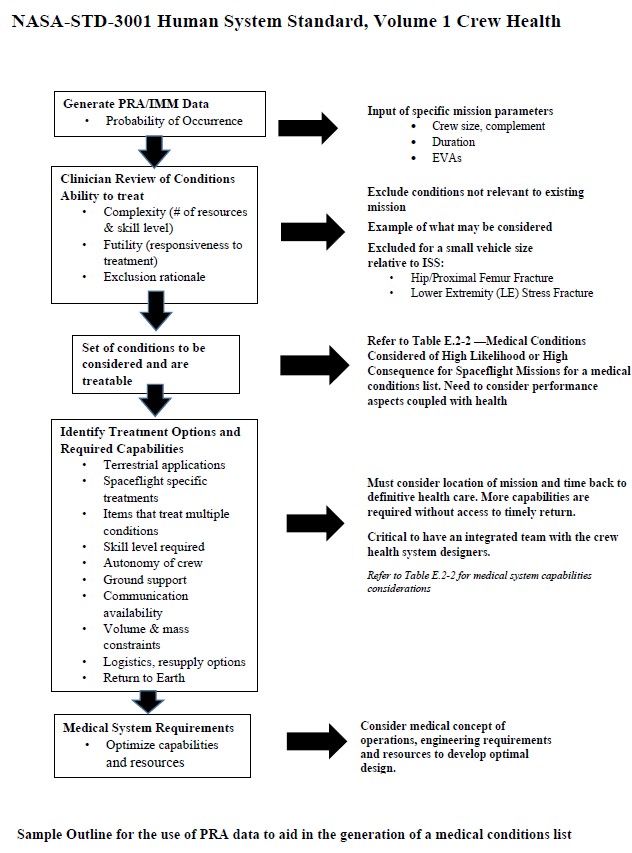
Input: The model requires a user-defined mission profile. This includes mission duration, crew size, individual crew characteristics (such as sex, dental history, or prior surgeries), and the number of planned spacewalks (EVAs). It draws its baseline medical data from the integrated Medical Evidence Database (iMED). See associated CLiFFS (Clinical Finding Forms) for each medical condition.
- Simulation: The IMM runs hundreds of thousands of stochastic mission simulations (trials) to model the random occurrence of medical events based on evidence-based incidence rates.
- Output: The system generates quantitative estimates for primary medical outcomes (detailed below).
- Optimization: Planners use the outputs to optimize resource choices, ensuring the crew has the necessary medical kits (MedCap) while strictly adhering to the severe mass and volume constraints of a spacecraft.
Output: The model provides mission planners with several critical data points:
- Total Medical Events (TME): The estimated total number of medical conditions that will occur during a given mission.
- Crew Health Index (CHI) & Quality-Adjusted Time Lost (QTL): A functional health metric. CHI is represented as a percentage (from 0 to 100), where 100% means a completely functional crew, and lower percentages indicate impairment or time lost due to diagnosis, treatment, and recovery.
- Probability of Evacuation (EVAC): The likelihood that a medical event will occur that is severe enough to warrant a medical evacuation back to Earth.
- Probability of Loss of Crew Life (LOCL): The estimated probability that a medical scenario will result in the death of a crew member.
- Resource Utilization: A tracker of what medical supplies (consumable and non-consumable) are depleted to treat the simulated conditions.
Modeled Medical Conditions
The IMM currently tracks and simulates 100 specific medical conditions that have occurred or could occur during spaceflight. These conditions are categorized into three distinct groups:
- Environmental Conditions caused by the unique environment of spaceflight and the spacecraft.
Examples include: Acute Radiation Syndrome, Space Motion Sickness, Altitude Sickness, Barotrauma (ear/sinus block), Decompression Sickness, Toxic Exposure (e.g., Ammonia), and Smoke Inhalation. - Injury / Trauma Physical injuries ranging from minor to severe, including those that might occur during Extravehicular Activities (EVAs).
Examples include: Abrasions, Lacerations, Burns, Sprains/Strains (ankle, back, wrist), Fractures, Head Injuries, Finger Dislocations, Fingernail Delamination (secondary to EVA spacesuit gloves), and Dental Damage (tooth loss/avulsion). - Medical Illness General health issues and diseases, spanning infectious, cardiovascular, gastrointestinal, and psychological ailments.
Examples include: Renal (kidney) Stones, Appendicitis, Sepsis, Cardiovascular Disease (Stroke, Sudden Cardiac Arrest, Angina), Infections (Urinary Tract, Respiratory, Skin), Dental Caries/Abscesses, Behavioral Emergencies, Anxiety, Depression, and Sleep Disorders.
Model Assumptions & Limitations
While highly advanced, the IMM currently operates with a few predefined assumptions:
- ISS Baseline: The model’s standard medical capabilities and space flight environment are currently baselined to the International Space Station (ISS), which operates with regular 6-month resupplies and the ability to quickly return to Earth.
- Clinical Optimism: The model assumes that all medical conditions are correctly diagnosed by the crew and that all administered treatments are effective.
- Resource Limits: If an essential resource runs out during a simulation, the condition goes untreated, representing the strict reality of medical care in isolated spaceflight.
Integrated Medical Model Runs
It is strongly recommended that care be taken when using the results of the simulation and the output should be weighted appropriately for its level of credibility with respect to informing any decision making.


Resources