


















FLIGHT OPPORTUNITIES COMMUNITY OF PRACTICE WEBINAR
Robotically Manipulated Payload Challenge: Learn about the Latest TechLeap Prize
June 3, 2026
Speakers
- Greg Peters, Program Manager, NASA’s Flight Opportunities Program
- Chris Birkinbine, Project Manager, Space Projects and Partnerships, NASA’s Armstrong Flight Research Center
- Bo Naasz, ISAM Capability Architect (Acting), NASA’s Goddard Space Flight Center
- Joe Zimo, Space Technology Analyst, NASA Headquarters
- Lynn Van Deventer, Open Innovation Advisor, NASA’s Prizes, Challenges, and Crowdsourcing program
Abstract
Join us on June 3 to learn more about the newest competition from NASA’s TechLeap Prize: The Robotically Manipulated Payload Challenge.
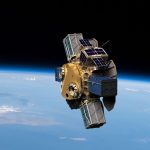
The fifth in the NASA TechLeap Prize series, this competition aims to advance persistent infrastructure for in-space servicing, assembly, and manufacturing (ISAM). Applicants are invited to propose payloads that can be manipulated by a robotic arm in low Earth orbit. Up to three winners will each receive up to $500,000 to develop a flight-ready payload. NASA intends to fly each of the winning payloads aboard a spacecraft that will deliver the payloads to the Fly Foundational Robots (FFR) spacecraft. The FFR mission is expected to launch in late 2027, and the TechLeap payloads are slated to launch in early 2028.
Speakers will cover key details of the new challenge, provide an overview of ISAM and FFR, and offer tips for preparing an application. A Q&A session will be included.
- TechLeap Registration Deadline: July 29, 2026, at 5pm ET
- TechLeap Applications Due: Aug. 12, 2026, at 5pm ET
More about the challenge
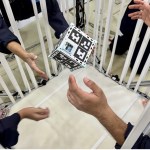
Submit your application to develop a payload that can interact with, be manipulated by, or be reconfigured by a robotic arm in low Earth orbit for potential applications in robotic inspection, structural assembly, sensor deployment, material processing, or modular systems that can be swapped and upgraded.
Speaker Bios
Greg Peters is currently the program manager for NASA’s Flight Opportunities program out of Armstrong Flight Research Center. During his career at Jet Propulsion Laboratory, Greg held many roles across multiple projects and missions. Most notably Greg served as a Surface Scientist for the Mars Science Laboratory (MSL, Curiosity) Mission, the Project Scientist for Lunar PUFFER Instruments development, and the Cognizant Engineer for Mars geologic analogs development for the Mars 2020 (Perseverance) Mission. Greg also spent four years as the Chief Operations Officer at Firestar Technologies, an advanced propulsion company at the Mojave Air and Space Port.
Chris Birkinbine is the TechLeap Challenge Project Manager for NASA’s Flight Opportunities program at NASA Armstrong Flight Research Center, where he helps accelerate the development and testing of innovative technologies for space and aerospace applications. With a background in applied physics and space engineering, he has spent more than 10 years at NASA supporting research and technology development through project management, flight testing, and range operations.
Bo Naasz is NASA’s Senior Technical Lead for ISAM and RPOC (In-space Servicing, Assembly, and Manufacturing and Rendezvous, Proximity Operations, and Capture [RPOC]) System Capabilities. His duties include stewardship, strategy, and advising agency leadership and projects on topics relevant to ISAM, RPOC, and space sustainability. Bo plays a leadership role in several ongoing NASA projects, including Fly Foundational Robots and the Swift Reboost Mission. Bo has over 20 years of experience at NASA, including roles on several efforts as GNC and Flight Dynamics engineer, Principal Investigator, Mission System Engineer, Project Manager, System Capability Lead, and acting Deputy Director.
Joe Zimo is a systems engineer supporting NASA’s EXPAND domain, where he contributes to programs focusing on emerging space technologies and mission capabilities. His work has included support for technology portfolio analysis, program/project planning, stakeholder coordination, decision making, and research into systems, policy, and commercialization strategies.
Lynn Van Deventer is an open innovation advisor with NASA’s Center of Excellence for Collaborative Innovation (CoECI), where she is responsible for challenge formulation, proposal evaluation integration, and challenge execution. Lynn’s experience includes leading large-scale software development projects, managing the implementation of the strategic plan at Seattle Public Schools, and designing, developing, and managing global open innovation efforts for private-sector companies, major foundations, and governments. Previously, she led a team of program officers, working with clients to solve some of the world’s most complex technical and social challenges.