















Host Andres Almeida: For decades, scientists have been studying exoplanets, or worlds outside our solar system, using several methods. One way is by measuring the light that passes through a planet’s atmosphere, a process called spectroscopy.
This helps us figure out what that planet is made of. Does it have a mostly carbon dioxide atmosphere? Maybe methane? Something else?
But it’s not always so easy. The light from the planet’s host star can interfere, making the data harder to interpret.
Luckily, there’s a new NASA mission for that. And it’s called Pandora.
It’s relatively small in size, but it promises big results.
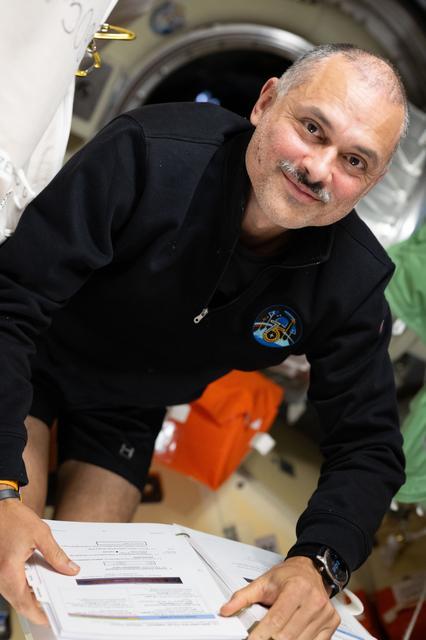
Associate Project Scientist Dr. Emily Gilbert of Caltech is going to tell us about Pandora on this episode of Small Steps, Giant Leaps.
[Intro music]
Welcome to Small Steps, Giant Leaps, the podcast from NASA’s Academy of Program/Project & Engineering Leadership, or APPEL. I’m your host, Andres Almeida. Let’s get into it.
Host: Hey, Emily, welcome to the podcast.
Dr. Emily Gilbert: Hi. Thank you so much for having me.
Host: Tell us a bit about your job and your role with the Pandora mission.
Dr. Gilbert: So, I first started out working on Pandora as a graduate student. I was actually the project’s first graduate student shadow, and I shadowed Knicole Colón, Pandora’s project scientist from the very early days of the project.
I’m currently the associate project scientist and one of the co-leads of the supporting observations science working group where we’re working on getting additional data sets to improve Pandora science.
Host: Can you tell us a bit more about Pandora?
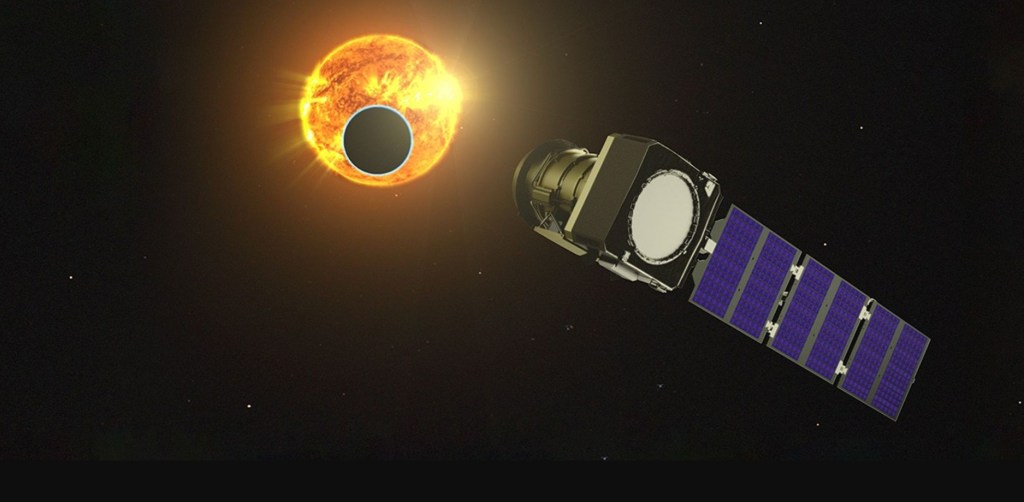
Dr. Gilbert: Yeah! So, Pandora’s goal is to disentangle stellar activity signals – so, spots and flares occurring on the surface of the star – from what we can see in planet atmospheres.
So, we’re using a technique called transmission spectroscopy. And the way this works is that as a planet passes in front of a star, the light from the star will filter through the planet’s atmosphere and imprint itself in the spectrum that we get from the star. So, you end up with a combined spectrum of both the star and the planet.
In theory, in a perfect world, you could subtract off the spectrum of the star itself and leave you with just the information from the planet. But it turns out that stars are not always well behaved, and subtracting off this stellar spectrum is more difficult than you might think.
Host: How does Pandora help scientists separate what’s coming from the exoplanet versus what’s coming from the star?
Dr. Gilbert: So, we have a few different strategies to distinguish what’s from the star and what’s from the planet.
First is our observing strategy itself. So, for each of our 20 prime mission targets, Pandora will observe 10 transits of each of them, with each transit observation lasting 24 hours. So, this is really helpful for a couple of reasons.
With the 10 transits, we can sample stellar activity as the star rotates over time. And so, this lets us characterize transit to transit variability, the long baseline observations, also give us lots of out-of-transit information that can be useful to characterize the star.
So, a typical transit is on the order of a few hours, and with a facility like JWST or HST [Hubble Space Telescope], the time is so valuable that you can often only get a small amount of out-of-transit baseline. So, this is a significant increase in the amount of out-of-transit baseline time that we’ll get.
Next up is the hardware. So, we use a combination of optical photometry, so, measuring how bright the star is. And near-infrared spectroscopy, breaking up the light into its component pieces.
And so, the optical photometry helps us to characterize what the star is doing, since in the optical, the contrast between the general stellar surface and the spots is greater, and then the simultaneous near infrared spectroscopy helps us to characterize the planet.
So, a quick example: We could be looking for something like water, which could, in theory, be in a planet atmosphere, but it could also exist in cooler star spots on the star.
So, we want to use our full data set to infer what we can about the star, so figuring out things like how many spots there are, how big they are on the surface of the star, and what their temperatures are. And we want to try and match this to our full observed data set.
So, then we can determine what we think the stellar properties should be based on the data that we’re seeing. And using this, we’re going to be able to separate out the signal of what’s from the star versus what’s from the planet, and hopefully be able to figure out if the water is coming from the exoplanet atmosphere or the spots on the star.
Host: Can you give an example of how Pandora data and James Webb [JWST] data will be used together?
Dr. Gilbert: Yes! So, right now we have one prime mission target that overlaps with JWST’s upcoming observations. So, that’s TOI-674 b, so that’s currently slated to be observed by JWST in May and June [2026].
Fortunately for us, Pandora has a fair amount of scheduling flexibility, so we’re going to try and schedule our observations to be at the same time as the JWST observations.
JWST is planning to get six different transit observations in a few different observing modes. And Pandora, by default for each of our prime mission targets, observed 10 transits.
So, on top of the six that we’ll try and schedule simultaneously with JWST, we’ll be able to add four more transits on top of that.
And then the Pandora’s observing strategy also helps us to get more baseline observations on top of JWST.
So, for each transit, we get 24 hours of full observing time, versus JWST, which nominally just gets the transit observation, plus maybe a few hours of out-of-transit baseline.
Host: Which targets are especially well-suited to Pandora. What are teams prioritizing?
Dr. Gilbert: So, Pandora is best suited to observing young or low mass stars.
So, the signal size of planet atmospheres in transmission spectroscopy is more favorable around smaller stellar hosts as compared to larger ones. So that’s why we go after smaller stars.
We’re also really interested in younger systems, because then we can study planets when they’re young and see how they form and evolve over time.
But the problem is these smaller, or sometimes younger stars tend to be more active with more spots and flares, which can then impede our ability to study their planets. And that’s where Pandora comes in.
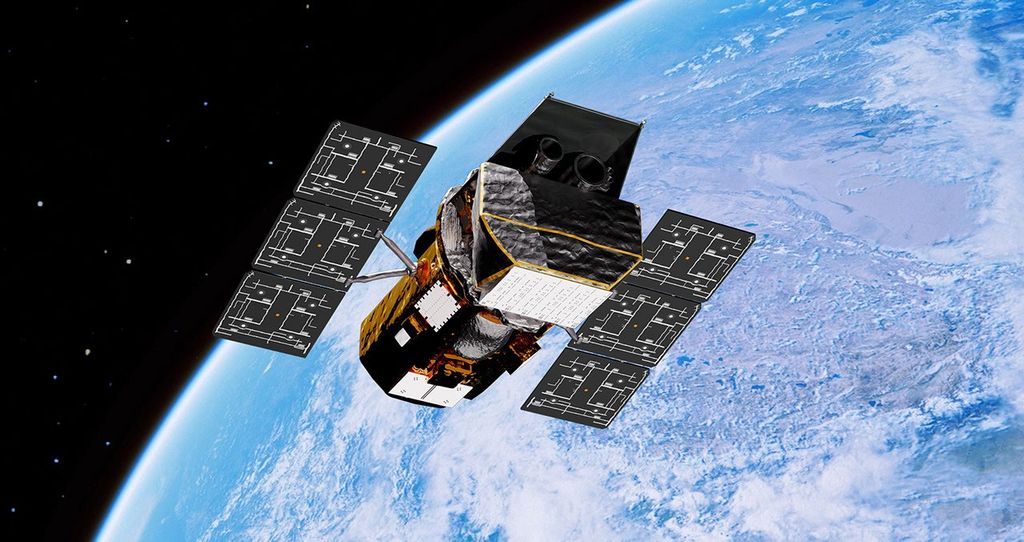
Host: So what does Pandora, the satellite, look like? And what were some of the challenges in building it?
Dr. Gilbert: So, Pandora is nominally a SmallSat, but it’s perhaps a little bigger than you’d think. It’s roughly the size of maybe a mini fridge.
And so, some of the challenges was determining how we navigate this as a new mission class. So, the Pioneers missions are a bit of an in-between size.
So, there are a lot of questions as to whether we follow things like review procedures of a flagship or a larger mission, or if we can take more risks like a smaller mission or a CubeSat.
And I think a common answer to this question of “What were some of the challenges you saw?” was, again, it’s hard to fit within the budget. So, we used a combination of new hardware, like an all-aluminum telescope. We used some off-the-shelf hardware. We used a JWST flight spare as our detector.
And so, by piecing all of these things together and working closely and carefully with our mission partner, we were able to bring everything together and make it work for Pandora.
Host: How long is the mission, the primary mission for?
Dr. Gilbert: So, our primary mission is one year long, and during that time we will be collecting 10 transit observations of each of our 20 prime mission targets, as well as some auxiliary science in the background.
Host: And where does Pandora orbit?
Dr. Gilbert: Pandora is in low Earth orbit. So, it orbits the Earth roughly every 90 minutes.
And it’s in what we call a sun synchronous orbit, so right at the terminator, where day becomes night. So, it has constant illumination to keep the spacecraft powered.
So, Pandora launched at 5:44 a.m., which is not a time astronomers like to find themselves awake. We are generally nighttime people, not morning people, but a good portion of the team ended up going to Vandenberg for the launch.
And, fueled by lots of coffee and adrenaline, we went outside to watch in the total darkness at 5 a.m. and it was so much fun to see the rocket rise literally like the Sun over the mountains. It was amazing.
Host: Gorgeous, onto a new, new endeavor. I love that. What lessons, scientific or technical, do you hope that Pandora will pass on to the next generation of astrophysics observatories?
Dr. Gilbert: One of the main goals of Pandora is actually training the next generation of scientists. So, that is a lesson in and of itself.
Over the years, we’ve had a significant amount of early career participation in the project. We had and still have a graduate student shadow program that I was a part of as the first graduate student shadow.
Right now, we have a number of postdocs who are heavily involved in commissioning, and so at face value, just the mission experience has been really valuable across the team.
And then, when it comes to actual lessons learned: In this rather low-cost cap, our team is really small, but we found that that actually really helped us. So, our science and our engineering teams worked really closely together with daily meetings between leadership.
And so, this allowed us to communicate really effectively between the science and the engineering teams, and so we could make decisions really quickly in order to decide how to do things like allocating funds and how to spend our time most efficiently.
We also had some really valuable internal software packages, and so we used this to simulate Pandora data and science results, and this was all based on our expected hardware performance.
And so, this let us simulate our science performance based on different engineering tradeoffs. And so, we could very quickly iterate on our design choices. And we were able to get from selection to launch in just about five years.
Host: Can you tell us more about Pioneers?
Dr. Gilbert: Pioneers are a new class of NASA astrophysics missions with a $20 million cost cap. And so, they’re meant to carry out high-value astronomy research in a lower cost cap than some of the other mission classes, like Explorer missions, which have budgets on order [of] a few 100 million dollars.
Pioneers are specifically meant for smaller projects, things like balloon missions, payloads on the International Space Station, and SmallSats like Pandora.
So, these missions have more targeted science goals than something like JWST or other flagships, and the missions are specifically chosen to fill gaps in astronomy research.
So, Pandora was selected in the first class of Pioneer’s missions back in 2021 alongside three other missions. That was PUEO, Aspera, and StarBurst. And since then, there have been three additional missions that have been selected.
Host: So now, I’d like to ask you something totally different. Emily, what was your giant leap?
Dr. Gilbert: When I was an undergraduate at Brown University, I was a member of the Brown CubeSat team, where we were working on designing and building a CubeSat to send to space.
And my senior year, we ended up applying to NASA through the CubeSat Launch Initiative to try and get a ride to space for the satellite. And we spent weeks and weeks and weeks preparing this application. We sent it in, and then we waited.
It was very stressful, and it turned out we then got selected, and it was just pure euphoria. It was so exciting. We still had years and years before it ended up going to space. But in that moment, I knew this is what I wanted to do.
Host: Thank you, Emily, thanks for your time here. It’s great learning about Pandora. Can’t wait to see what you and the team do.
Dr. Gilbert: Thank you so much for having me.
[Outro music]
Host: That’s it for this episode of Small Steps, Giant Leaps. For a transcript and to hear previous episodes, visit nasa.gov/podcasts. While you’re there, you can check out our other podcasts like Curious Universe, Houston, We Have a Podcast, and Universo curioso de la NASA. As always, thanks for listening.
Outro: This is an official NASA podcast.