























Editor’s note: An update to this story, Artemis II: How NASA Will Study the Moon—And the Astronauts Going There, was published on March 4, 2026.
After this episode was published, NASA announced changes to the Artemis program, including adding a new mission. Some references to future Artemis missions in this episode differ from the updated plan. For more details, refer to NASA Strengthens Artemis: Adds Mission, Refines Overall Architecture.
Episode description:
During Artemis II, four astronauts will see the lunar surface as few humans have—and possibly, parts of the Moon’s far side that no one has seen before. Learn what lunar science questions NASA hopes to answer through the astronauts’ eyes with lunar geologist Kelsey Young. And those astronauts will also be subjects of science. Jancy McPhee, associate chief scientist of NASA’s Human Research Program, explains how studying human health on Artemis II will prepare us for exploration deeper into space than ever before.
For Artemis II news and the latest launch information, visit nasa.gov/artemis-ii
[MUSIC: “Supercluster” by Sergey Azbel]
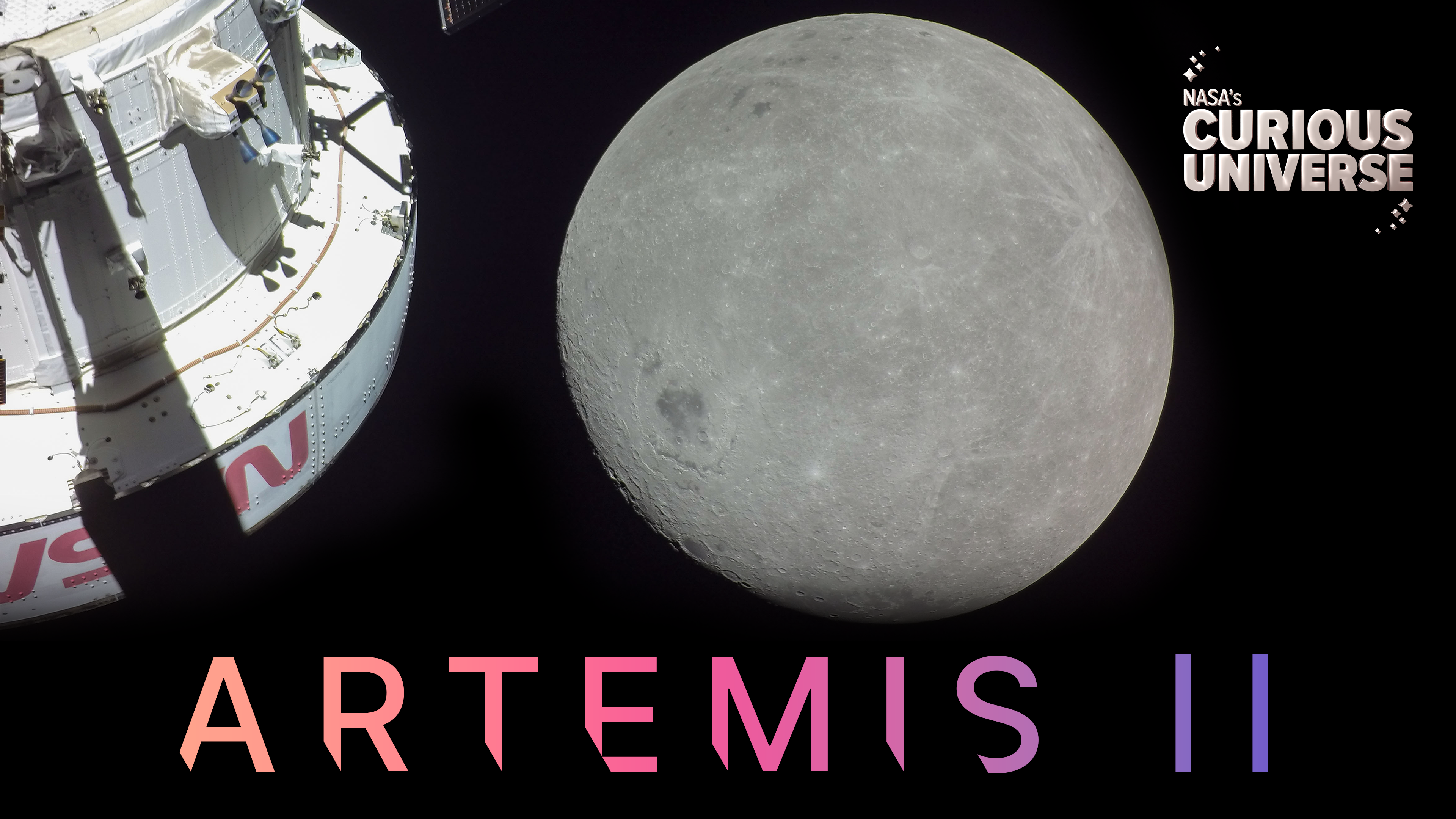
PADI BOYD: You’re listening to NASA’s Curious Universe. I’m Padi Boyd. NASA is leading a golden age of space exploration. The Artemis II mission will send humans around the Moon for the first time in more than 50 years. It sets the stage for future Artemis missions, when astronauts return to the Moon’s surface.
And Artemis will build upon the foundation we’ve laid and prepare us for the first human journey to Mars. In this limited series, you’re along for the ride of Artemis II. You’ll meet the astronauts flying around the Moon, and go behind the scenes with NASA engineers and scientists powering this mission.
This is episode four of our Artemis II series. In this episode: science. When the Artemis II astronauts soar around the Moon in their Orion capsule, it’ll be the first time in decades that humans lay eyes on the lunar surface directly, close up. Reid Wiseman, Victor Glover, Christina Koch, Jeremy Hansen — these four humans will observe the Moon informed by scientific advances made in recent decades by uncrewed missions.
As the astronauts study the Moon from orbit, the NASA scientists who trained them in geology will be following from mission control on Earth, guiding them in real-time. And if they’re lucky, the Artemis II astronauts may make new discoveries about features on the lunar surface. In other words, on this mission, these astronauts. They’re sort of our scientific ambassadors to the Moon. Christina says they’re excited to take on that role.
CHRISTINA KOCH: I am ready to be an observer and hopefully contribute to answering some of these questions that really the Moon is one of the few places we can answer them. The Moon is a witness plate for all of our solar system’s formation, and there are things that we can know only because we are doing this mission.
PADI: The Moon has no wind or liquid water — forces that constantly reshape Earth’s surface. Which means the lunar surface, with its many craters, is a record of the history of our solar system. The Artemis II astronauts have taken intense science classes to become experts in lunar geology and in a minute we’ll hear more about the training process.
They’re also the subjects of science. They’ve volunteered to participate in groundbreaking experiments studying what happens to the human body during deep space travel. The answers to both sets of questions — lunar and human — have big implications for NASA’s future goals of establishing a long-term presence on the Moon and landing the first astronauts on Mars. And after hundreds of hours of training, Jeremy says the crew is ready to do science.
JEREMY HANSEN: Science is what got us here, this ability to be able to send humans off of our planet, and so to the point that we can enable science, we definitely are all in for that. However, it’s really like we’re on the shoulders of giants. We do very little. We just do what they tell us to do. And then other people behind the scenes, like everything, the unsung heroes of the space program, they use their genius to glean what we can from it.
PADI: Joining me to get us up to speed on all things Artemis II science is producer Christian Elliott, who’s been checking in with the research teams. Hey, Christian.
CHRISTIAN ELLIOTT: Hi, Padi!
PADI: So, where should we begin?
[MUSIC: “Robotica” by Carl David Harms]
CHRISTIAN: Well, I thought we could hear from some of those unsung heroes: the scientists behind the scenes of Artemis II, telling the astronauts what to do. And let’s start with lunar science. So, back in the ‘60s and ‘70s, Apollo astronauts picked up some 842 pounds of Moon rocks and brought them back to Earth. That’s 382 kilograms. Those rocks have helped us understand when and how the Moon formed and its relationship to our own planet.
PADI: And those rocks are still so important today. Lunar geology is basically solar system formation science. From the Moon, we’ve learned a lot of what we know about how our own solar system formed. And we can even apply that knowledge to get a better understanding of how planetary systems around other stars may form and evolve.
CHRISTIAN: Of course, the Artemis II astronauts won’t be landing on the Moon, so no new Moon rocks yet.
PADI: This time.
CHRISTIAN: But they’ll see it closer than most other humans have. The scientific observations that they’ll make as they fly by the Moon will set the stage for Artemis III, when astronauts will touch down on the lunar surface and get to study its geology. And Padi, you’re pretty invested in that — you’re not just our host, you’re also on the Artemis III science team.
PADI: That’s true Christian. As a member of the Artemis III science team, I feel super invested in all things Artemis.
CHRISTIAN: OK, to break it all down for us, I met up with Kelsey Young. She’s the lunar science lead for Artemis II. Along with her colleagues, she teaches astronauts to be good scientists and makes sure the mission achieves all its research goals. Now, the first thing you have to know about Kelsey? She’s a field geologist at heart — and a confirmed lifelong rock lover.
PADI: And she’s also a rock star on Artemis II.
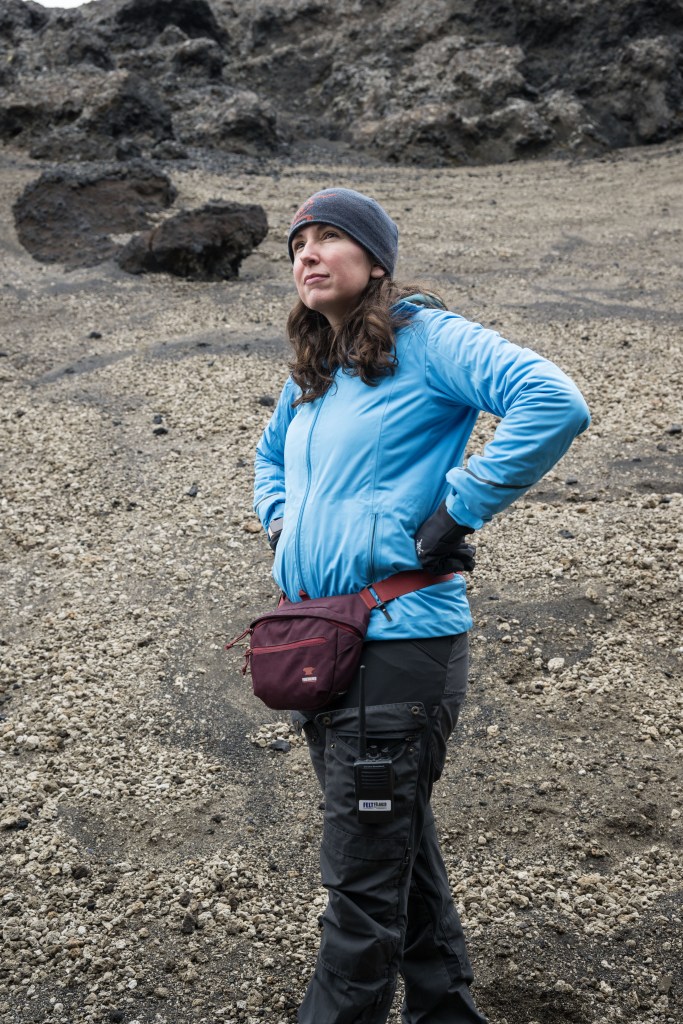
KELSEY YOUNG: When I was maybe 10 or 11, I was super fortunate to travel to Mount Vesuvius in Italy, and I got, like, at the, you know, little Visitor Center, like, got a little box of volcanic rocks. I think I still have it in my mom’s house.
CHRISTIAN: I just got stopped by TSA for trying to bring a rock back from Maine, so.
KELSEY: That happened to me a couple weeks ago. I was bringing rocks from an impact crater I recently did field work at down to the Johnson Space Center in Houston, and I also got stopped.
[MUSIC: “Mapped Out” by Christopher Mcguire”]
CHRISTIAN: Mine had no scientific importance.
KELSEY: But they all have scientific importance.
PADI: Although Moon rocks are especially important! The pristine rocks from the Moon that we’ve studied so far have helped us figure out fundamental information about the Earth-Moon system. For example, that it formed about four and a half billion years ago. And that the Moon itself probably formed in a cataclysmic collision in the early solar system that influenced not just the Moon, but also the Earth we live on today.
CHRISTIAN: In college Kelsey learned about something called planetary field geology — studying rocks that are literally out of this world.
KELSEY: When I heard the term planetary field geology, it like, blew my mind at first, and I didn’t quite, you know, understand the term. And of course, what that means is, like the Apollo astronauts, right? On the surface of the moon, doing geology.
CHRISTIAN: There really isn’t a field quite like this. You’re trying to find places on Earth that can stand in for other bodies in the solar system, like deserts or volcanos or craters.
PADI: In science language, these Moon-like field sites are called “analogs.” I know Kelsey’s spent lots of time traipsing around craters in places like Canada and Iceland.
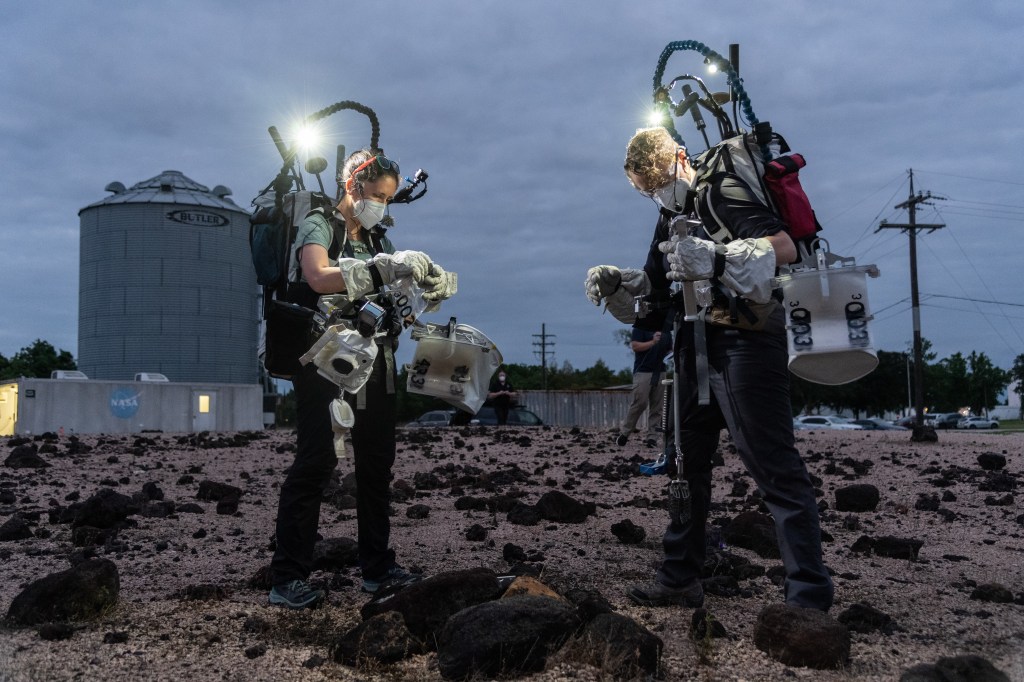
CHRISTIAN: And she’s even tested out tools in the field that astronauts could use on the Moon and Mars, like a handheld “X-Ray fluorescence spectrometer” to ID rocks. Padi, I know you’re a Star Trek fan.
KELSEY: It kind of looks like a Star Trek Phaser, or like, if you go to the grocery store, and there are those like price scanning guns. You hold it up to a rock, and in under a minute, it can tell you the composition of that rock.
PADI: [Laughs] Yeah, there’s so many examples of those folks using their phasers to heat up rocks and star warm in cold places.
CHRISTIAN: Now, the unfortunate reality about being a planetary field geologist? Chances are decent you won’t get to the Moon yourself. You have to settle for those analog environments.
KELSEY: The thing about analogs is that there’s no perfect analog, right? The lunar surface is the lunar surface, and there’s no place on Earth that looks and feels exactly like the lunar surface.
PADI: But Kelsey is in luck, because for the first time in decades, we’re going back to the Moon.
CHRISTIAN: Yes we are, and that means a lot of the work she’s doing now involves training NASA astronauts to be her geology research partners — to do the science she’s an expert in, while she guides them from here on the ground. This crew, Reid, Victor, Christina and Jeremy, she’s been working with them for years, preparing them for this very moment.
KELSEY: They are spectacular. We all feel so fortunate that these are our, you know, lunar science team members that are going to make these observations. They are just, you know, they’re inspired by it. And, you know, I worked with all of them when they were astronaut candidates, and that was true then. This is not just because they’re assigned a lunar mission, they have always been bought in on the science and the geology, and they’ve all been passionate about it in their own ways.
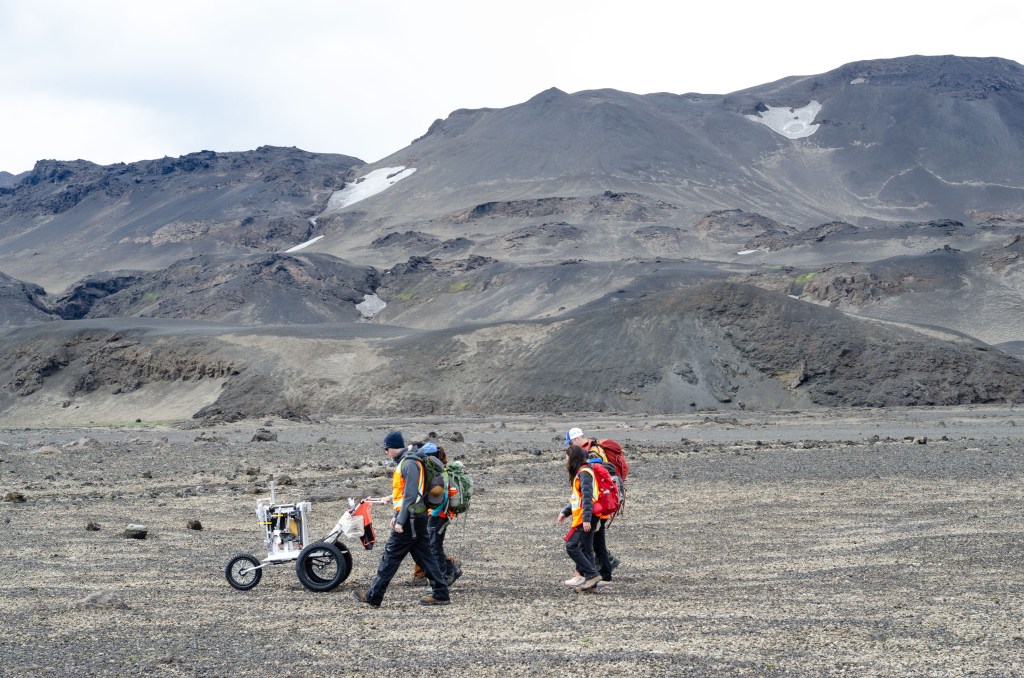
CHRISTIAN: Last summer, as part of that training, Kelsey and a team of NASA and U.S. Geological Survey scientists took the crew and their backups to a crater in Iceland to learn how to observe the Moon like scientists.
[MUSIC: “Praxis I” by Alexis Francois Georges Delong]
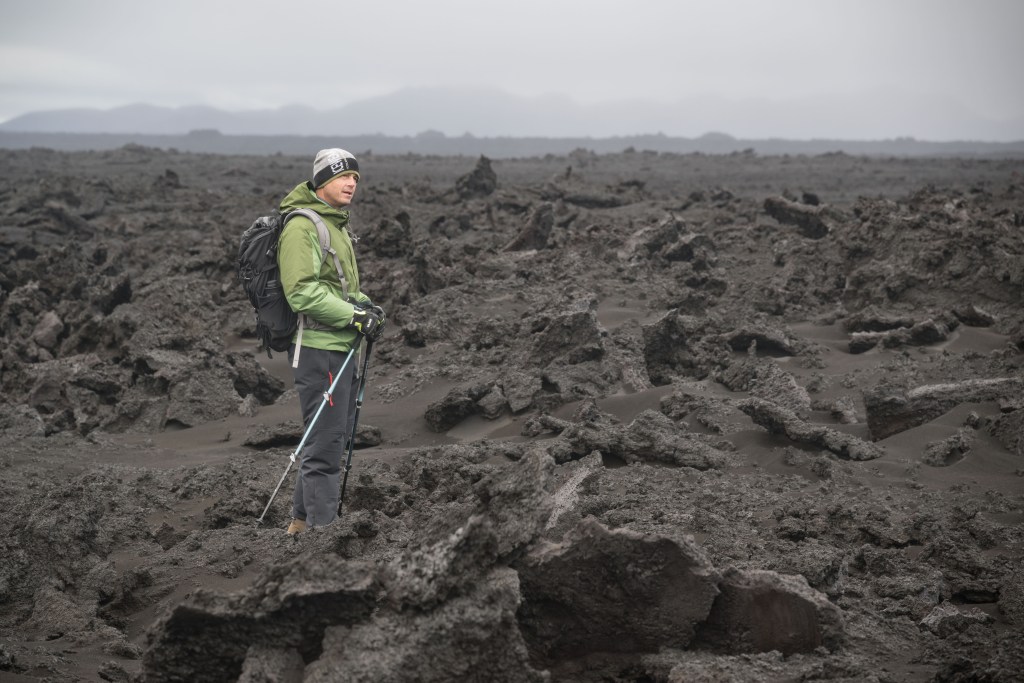
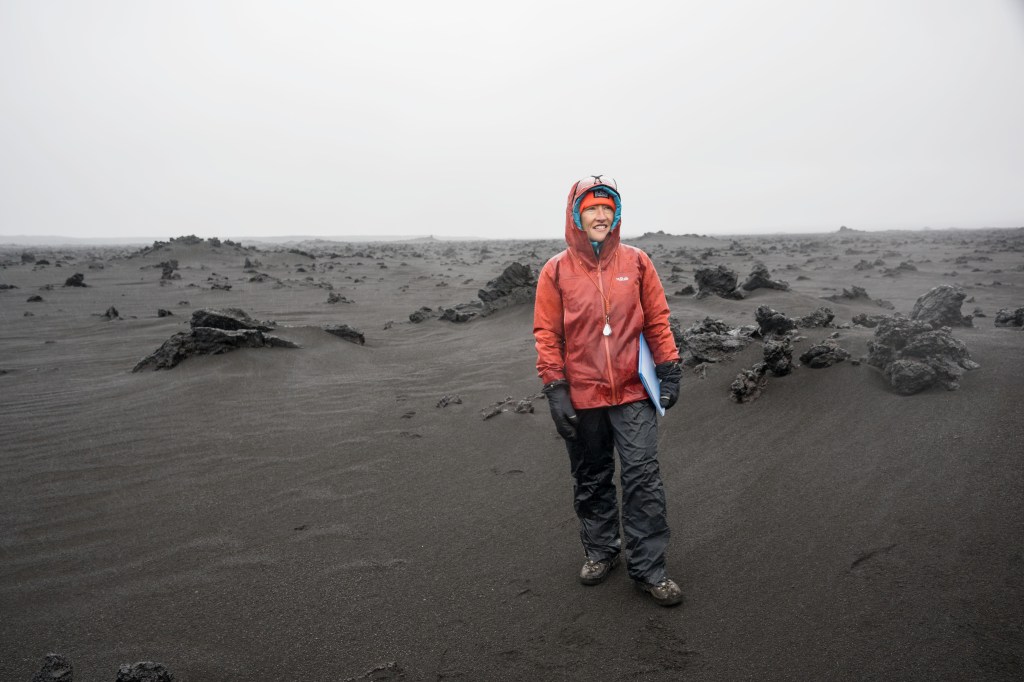
KELSEY: The terrain like it just has the feel of this, you know, unpopulated gray landscape that at first view can maybe look a little monotone, but to the well-trained eye, as soon as you start to make observations, all of these nuances and relationships and spatial relationships pop out at you. And it can help them start to make those observations and actually realize, as they start to explore that, oh, like this is an extremely diverse landscape with a lot of geologic history packed into it. And so it helps them feel lunar and turn on and exercise that field geology muscle.
CHRISTIAN: That muscle isn’t easy to train. Victor told us it was kind of like the foreign language training they do before flying to the International Space Station — putting in the hours in the classroom, and then full immersion trips abroad.
PADI: I love that analogy.
VICTOR: And like foreign language training, we have fantastic instructors. You know, there’s this concept synclines and inclines that they took a clay model and made these, almost like a jawbreaker, different colored layers in this sphere, and then took string and spoons and knives and just cut into it. And then you could see the way layers would form and the different shapes that it would create. But then you look up at, like the wall of the Grand Canyon, and you go, OK, that’s one of these processes.
CHRISTIAN: Behind the scenes, on top of all their training, and learning to fly the Orion spacecraft, this crew has spent the last two years summiting mountains, camping in the Canadian wilderness, learning geology on the tundra, and, something Christina remembers well, lugging tents and fending off biting flies on their head nets.
PADI: [Laughs] Talk about a team-building experience.
CHRISTINA: Going into the field, being asked to do observations, day in and day out, we’ve ran complete simulations of surface moonwalks, essentially, including Mission Control and making real time calls about where we sample what we’re seeing. So it’s been phenomenal. And it really, it took me several trips before it finally sunk in, but it’s been an amazing experience.
PADI: And that’s super important, because what these astronauts need to learn to do is really see the Moon, right?
CHRISTIAN: Yeah, I didn’t realize this, but Kelsey says there’s nothing quite like the human eye as a scientific instrument.
KELSEY: The human eye is capable of just amazing things, especially given it’s connected to a human brain that’s well trained and inspired by geology and lunar science.
PADI: The Artemis II astronauts are trained to make detailed observations of color — the Moon’s nuanced shades of gray — and albedo, or how much light it’s reflecting. They’ll also be on the lookout for impact flashes… the Moon is constantly getting hit by space rocks… which form fresh craters. A couple of Apollo missions spotted impacts right as they happened.
HARRISON SCHMITT (Apollo 17 Archival): Hey, I just saw a flash on the lunar surface
GORDON FULLERTON (Apollo 17 Archival): Oh yeah?
SCHMITT (Apollo 17 Archival): Just north of Grimaldi. You might see if you got anything on your seismometers.
CHRISTIAN: And those Apollo missions, they flew really close to the Moon — they only saw small swaths of the surface. They didn’t get to see the entire lunar disk. The Artemis II crew will be able to use those powerful human eyes to take it all in. For them, the Moon will appear to be about the size of a basketball, held at arm’s length.
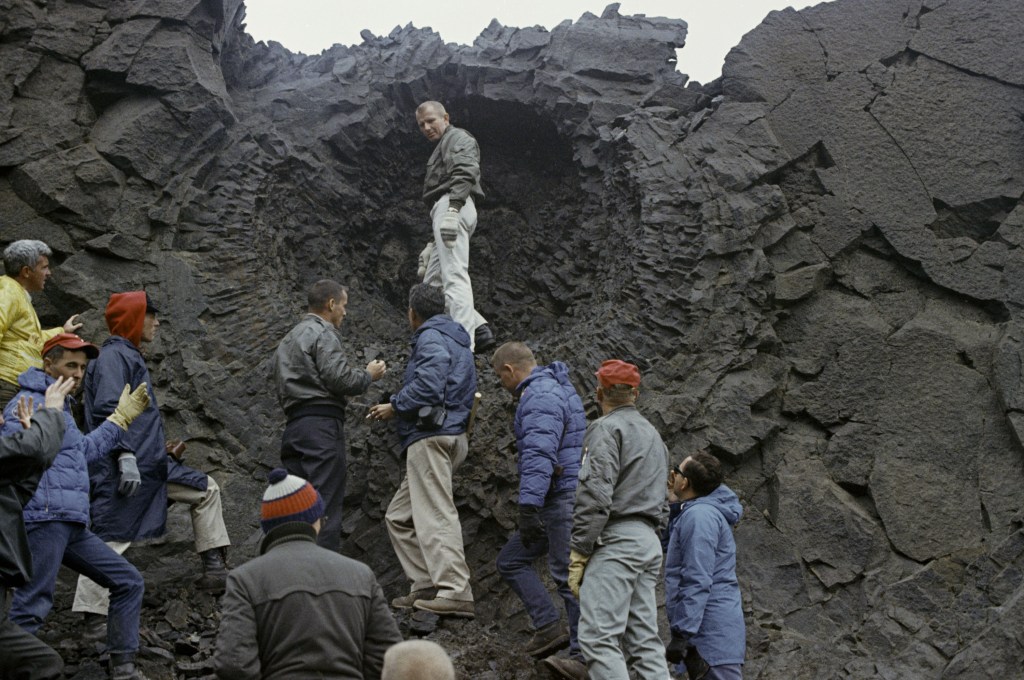
KELSEY: The Artemis II crew have the ability to make these sort of like, planetary-scale color and albedo observations that we have not gotten before of major chunks of the Moon on the far side.
CHRISTIAN: Yeah, I’m kind of imagining it’s like, you know, you see something really beautiful, and you take out your phone or your camera and take a picture, and you’re like, Oh, this is just not, it’s not captured exactly what I saw. [Laughs]
KELSEY: Exactly.
CHRISTIAN: When the astronauts learned that, Christina said it kind of blew their minds.
CHRISTINA: Anytime you put something real that you’re taking a picture through the digitization of remote sensing, it’s not the same as seeing it with human eyes, and that’s something that I never realized. But the geologists who are working with us are super pumped about it, and so they’ve gotten us excited.
PADI: If you’re a space nerd, you might be familiar with the Lunar Reconnaissance Orbiter. It’s been orbiting the Moon for more than a decade now, taking amazing pictures. But what’s unique about orbiting astronauts is they’re able to take in a lot more in a shorter amount of time. LRO only sees small swaths of the Moon at a time — like the Apollo astronauts did. The Artemis II astronauts will be able to see the same features over several hours of their flyby — which means they’ll observe them during changing lighting conditions. And all that means they’ll see in a few hours what could take a robotic spacecraft years to observe.
[MUSIC: “Final Layer” by Alexis Francois Georges Delong]
CHRISTIAN: And what you see on the Moon at a given moment depends a lot on the lighting conditions. In different areas, those are changing all the time as the Sun and Moon and Earth and the thing doing the looking — an orbiting satellite or the Orion space capsule —.
PADI: Or an astronaut.
CHRISTIAN: — or an astronaut, are all moving around.
KELSEY: For example, if the Sun is shining directly onto the lunar surface, you’re not going to see a lot of topography. You’re not going to see a lot of highs and lows on the lunar surface. You’re going to see color and albedo pop out. But if you take the exact same surface and the exact same astronaut, and you shine the Sun at a different angle, morphology will pop out. So like, how bumpy is the surface? How aggressive are those like, peaks and troughs on the lunar surface and the human brain and the human eye can actually start to pick out those details, whereas the you know, an orbiter, a camera on an orbiter, would potentially take years to line up that series of observations right, because they’d have to hit that spot at the exact right times, versus the angle of the Sun to the Moon to the spacecraft. And so Artemis II and future Artemis missions will have this unique ability to, you know, make those trained observations that are just really challenging to make with an orbiting spacecraft.
CHRISTIAN: And now this is really wild — the Artemis II crew could see parts of the Moon that no human has ever seen directly before. Learning that, that’s when how crazy this mission is sunk in for Reid.
REID WISEMAN: I think all of us had a bit of an epiphany when our geology training team was showing us a picture of the far side of the Moon, and they had overlaid these like lighter areas and darker areas. And I was wondering what that was like. A significant part of the far side of the Moon was in this darker shading. And they said the light areas were visible during Apollo, and the dark areas have never been seen by human eyes, aside from reconnaissance satellites.
PADI: Right, I’m also excited about that. It’s because the Apollo missions all landed on the near side of the Moon, the side that always faces Earth. So they orbited the Moon when that near side was lit up by the Sun, and the far side was in darkness.
KELSEY: And so there are large chunks of the far side and near the poles especially, that have never been seen before by human eyes. The trick for Artemis II is that it will depend on when they launch.
PADI: Depending on what phase the Moon is in when the crew launches, the light will be totally different when they arrive at the Moon, four days later. So certain parts of the Moon will be too dark to see anything, or the shadows could hide certain features and reveal others.
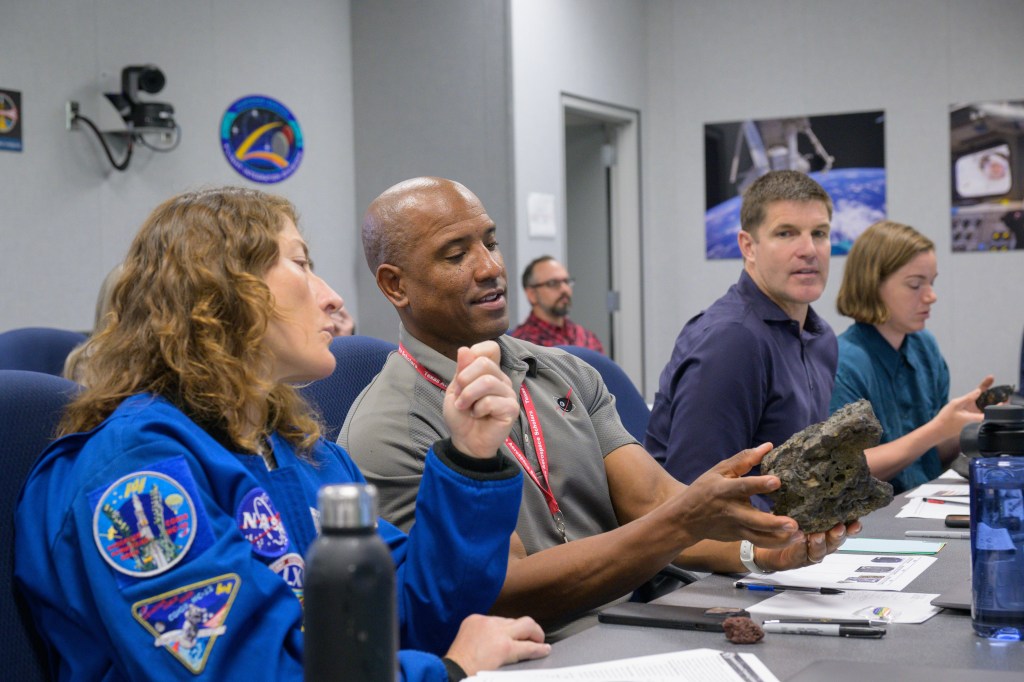
CHRISTIAN: The takeaway here is that makes planning science goals incredibly complicated. We’ve already heard the outlines of the Artemis II mission from other NASA experts, but I thought it might be helpful to have Kelsey walk us through the mission from the science team’s point of view, and what they’ve been working on to make sure it’s a success. So first I want you to picture the “front room” at Mission Control, at Johnson Space Center in Houston.
PADI: Got it.
KELSEY: That main room of Mission Control that you know, anybody who’s watched a space movie has seen, right?
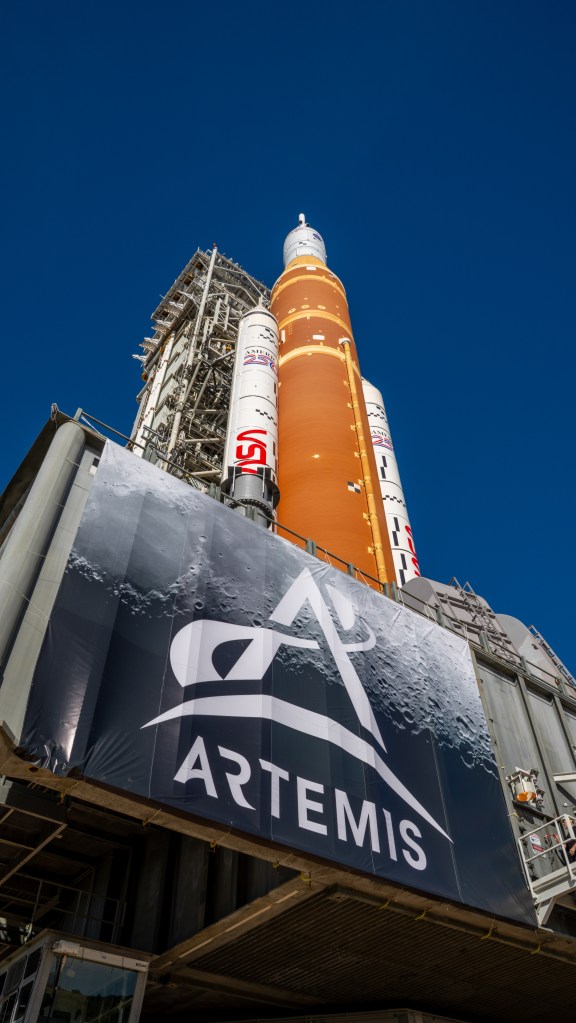
CHRISTIAN: You know, the one with all the computer consoles and screens and NASA flight controllers with their headsets on. Artemis II is on the launchpad, the crew are strapped into their seats in the Orion capsule, some 274 feet, about 84 meters, off the ground, perched on top of the SLS rocket. And Kelsey is sitting at a console labeled SCIENCE.
[MUSIC: “Always Onwards” by Peter Lavoz and Harry Collins]
PADI: That’s huge — lunar science hasn’t been part of NASA’s human spaceflight program since Apollo.
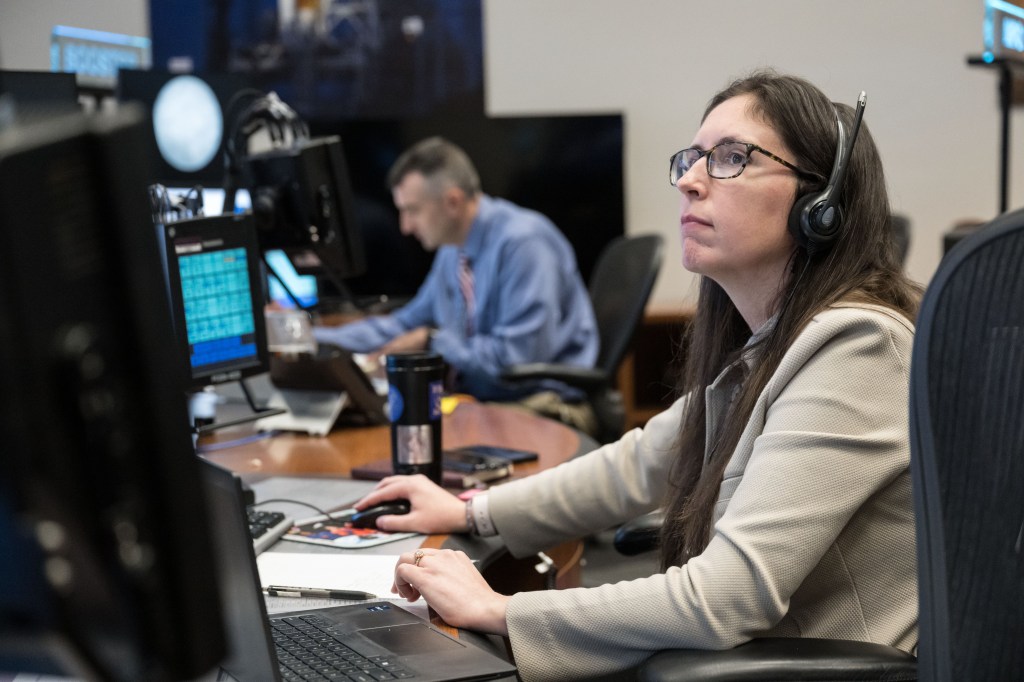
CHRISTIAN: Yeah, and Kelsey feels how big of a deal that is.
KELSEY: I will be honest. Every time I go through, you know, the doors of Mission Control, every time I walk in the flight control room, the front room, I get, you know, just an absolute like disbelieving shiver to myself. And I don’t know if that will ever go away.
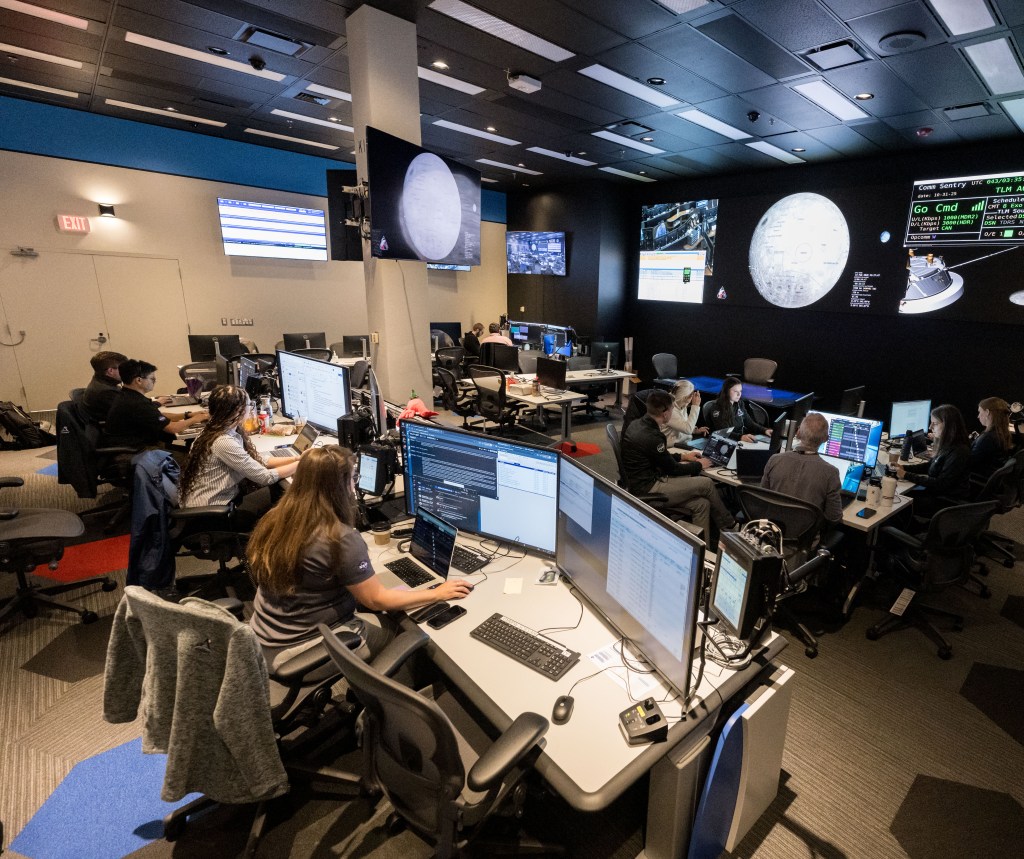
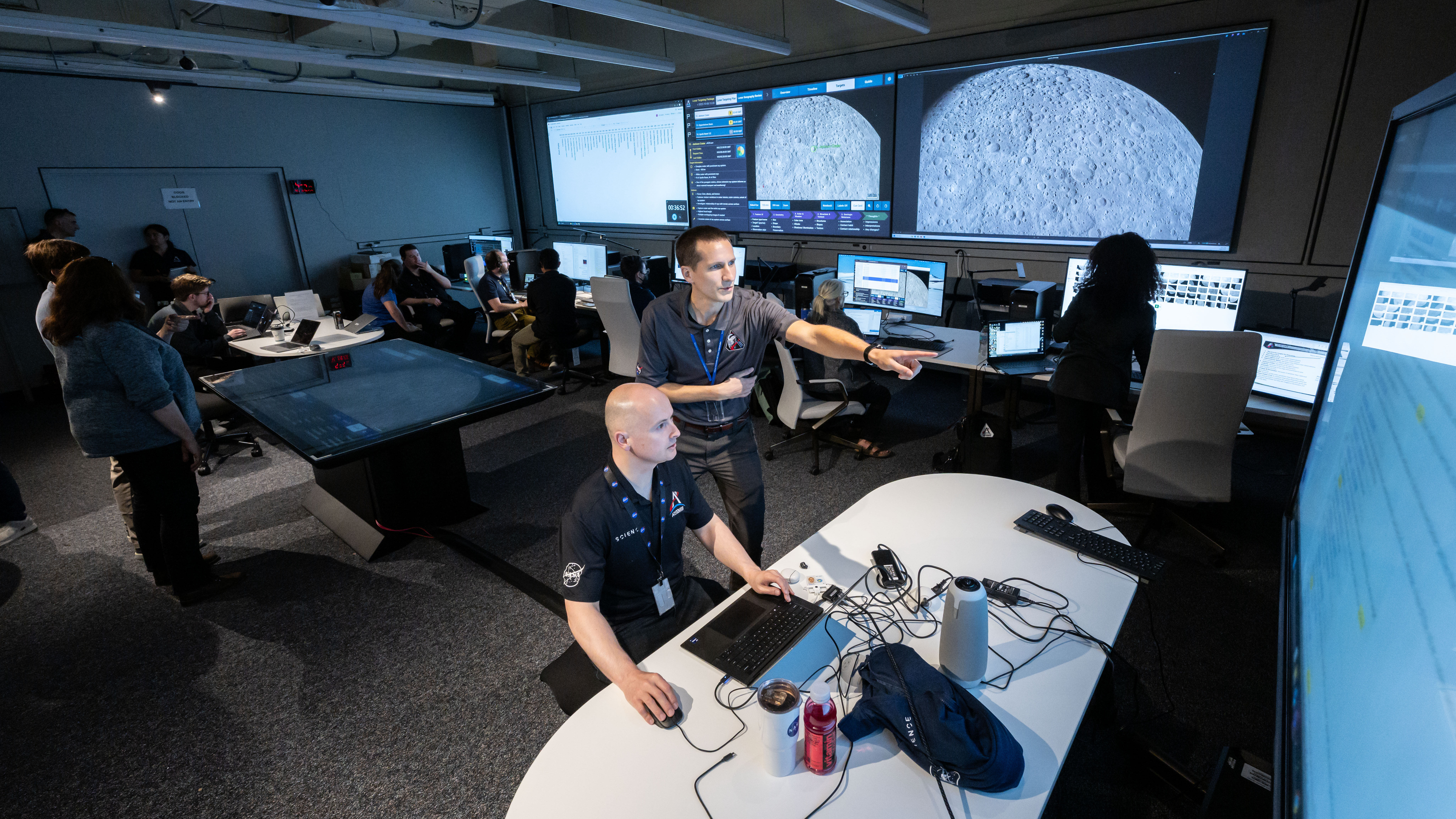
CHRISTIAN: Upstairs, a bunch of scientists will be gathered around tables covered in maps and surrounded by screens. That’s the Science Evaluation Room. These lunar scientists and cartographers and software developers have a huge list of features on the Moon that the astronauts might see, depending on when exactly the rocket launches. Then there’s a third room for coordinated data analysis called the Science Mission Operations Room, or the SMOR.
KELSEY: So we have our science officer in the front room, our SER, our science evaluation room, which is kind of like the brain trust of lunar scientists and geologists, and then the deliciously named SMOR that provides support.
CHRISTIAN: OK, are we ready for liftoff?
ARTEMIS I LAUNCH: Core stage engine start. 3, 2, 1.
PADI: So at this point, the science team will finally know exactly what the lighting conditions will be on the Moon when the Orion capsule arrives in lunar orbit.
CHRISTIAN: Yeah, which means the team in that science room has two days to narrow their target list of some 150 features to just the best ones.
PADI: Hmm, no pressure. That room will be intense I’m sure.
KELSEY: Oh yes, it’ll be buzzing. [Laughs]
CHRISTIAN: The ones that the crew will be able to see and that will best answer questions about the Moon for the entire global lunar science community.
KELSEY: Just know that when the crew launches, that science team is going to be in our science back room frantically, you know, just finalizing that list of targets to get up to them.
CHRISTIAN: This is something they’ve practiced over and over, simulating different launch days and practicing the art of compromise.
KELSEY: Suffice it to say, having sat through a whole bunch of these simulations over the last couple of years, the science team will be very excited during the mission. There will be a lot of excited voices. There will be a lot of excited, you know, pointing at screens. And we have a, you know, a Smart Touch table in the middle of the room. They’ll be hovering over that looking at lunar data. There will definitely be lunar maps on the wall. It will be a really exciting focal point of science discussion.
CHRISTIAN: And the astronauts have also been practicing and training for all this in incredibly detailed simulations. So, when the scientists decide on the target list, the astronauts will have to be ready to spot and study those features. And they’ll have to be able to do that no matter how they’re oriented. Remember, they could be, like, floating around in the capsule at any angle. So the team came up with what they call the “big 15” — 15 features on the Moon that the astronauts memorize and can use to orient themselves.
[MUSIC: “Ticks and Thoughts” by Laurent Dury]
KELSEY: And so, hey, crew, we know you’re not going to memorize hundreds of lunar features, memorize 15.
CHRISTIAN: Kelsey remembers one day in the lunar geography classroom particularly well. She was there with her fellow instructors and the crew, Reid, Victor, Christina and Jeremy.
KELSEY: And I’m sitting in the back of the room, coincidentally, just right behind Reid, and the instructor’s talking about one of the features, and I see him like rumbling in his pocket, and he pulls out this little piece of scrap paper. And I’m like, what is he doing? Is he, you know, like passing notes in class? But no, it was a flash card that he had made for himself to memorize the big 15. And it was clear he had used it right. Like, this is like a well-used piece of paper in his pocket, and I just was sitting at the back of the room, just like heart full, you know, right? Because he is just like, you know, I want to be able to locate myself and take good images and make good descriptions that are accurate. I will say that was great. We made him better flashcards moving forward.
CHRISTIAN: Like, great idea, but this is not up to NASA standards.
KELSEY: [Laughs] We were like, we can help with this.
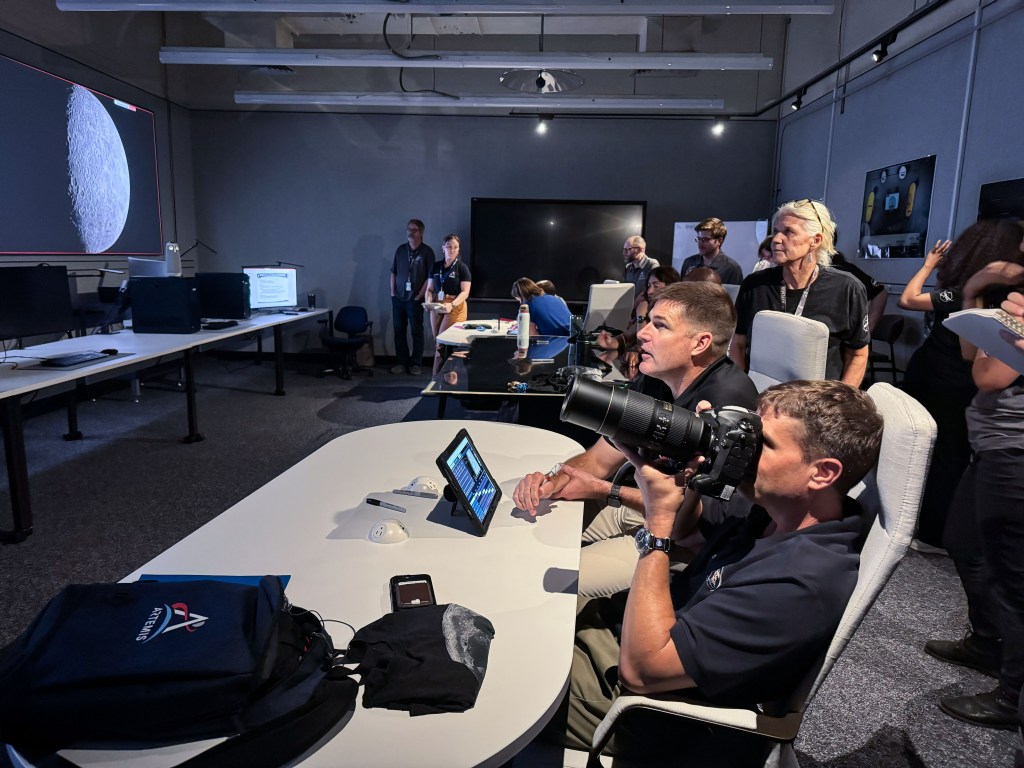
PADI: So all that prep. And then the moment of truth, when the astronauts orbit the Moon and have to put that study into practice.
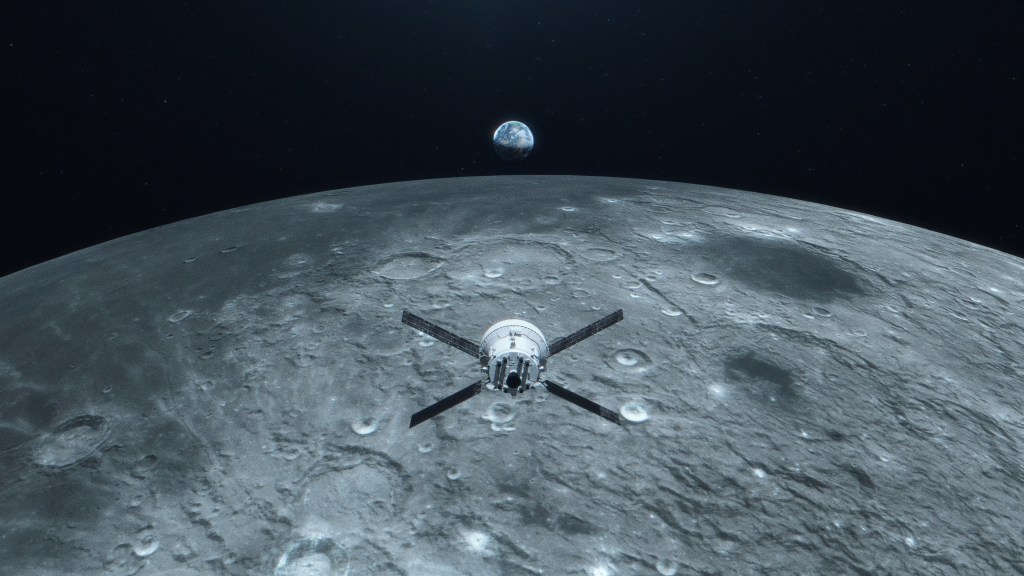
CHRISTIAN: The crew will have three or more hours dedicated to studying the Moon as they pass by it in Orion. And for some of that time, they’ll be all alone. With the Moon between Orion and Earth, the spacecraft will temporarily be out of communications range for Mission Control. For a brief time during that planned quiet period called “loss of signal,” it’ll just be these four humans, floating in their capsule, and the Moon. It’s a position that few other people have been in all of history.
CHRISTIAN: Do I have that right? And I guess in that time, they’re like, I guess they just have no distractions? They can just, like, enjoy the Moon?
KELSEY: [Laughs] Finally, some peace. So, the loss of signal time will be in the 45-minute range, and during that time, they’ll be executing their targeting plan. So, on their tablets that they each have on board will be the file that contains, you know, our prioritized targets that are listed out in a timeline. And so, they’ll just be executing the imaging and observations that are set to them in the targeting plan on their tablets, and they’ll be taking in the majesty that is the lunar far side.
PADI: I can’t imagine what it’s going to be like when they’re in just total silence and all they see is the Moon, up close. I think it’s going to be just spectacular. And I’m so happy for them.
CHRISTIAN: Then, the astronauts report back to Kelsey, filling the science team in on what they saw.
CHRISTIAN: Kind of imagining it like you’ve been preparing them for all this time, then you kind of have to go, OK, bye, go do it. Then you’re waiting for a call back when they dump all, all of the stuff that they’ve seen and debrief.
[MUSIC: “Eliza’s Daydream” by Tim Harvest and Zach Rowan]
KELSEY: That’s so true. And I mean, that’s why training is so important, right? Because having worked with these crew members for so many years. They’re in, you know, they are, they are so prepared to do this job as members of the science team. I’ve seen them in the field, I’ve seen them in the classroom. I’ve seen them in simulations. I’ve seen them work so, so hard to, you know, give us concise, good descriptions that really address the science questions we’re trying to answer. But it’s actually similar to, you know, when we look ahead to future Artemis missions, where we’ll have crew members in spacesuits doing space walks on the lunar surface. It’s definitely a philosophy that, you know you have to train them, but then you have to trust them to be the field geologists in the field. This fly by is, you know, a microcosm of what we can expect for future EVAs, where, even though we’ll have comm, we are still trusting them to follow the science plan, follow the sampling plan, follow the priorities, and be the field geologists in the field.
PADI: All this makes me think about how early Apollo missions made the first Moon landing possible, scouting ahead and helping the astronauts and mission control teams perfect everything.
CHRISTIAN: Kelsey told me she’s been reading a lot of reports from Apollo 8. That was the Apollo mission that orbited the Moon, and scouted out landing sites and practiced for Apollo 11, when Neil Armstrong and Buzz Aldrin took the first steps there. Kelsey even met with the scientist who trained the Apollo astronauts in geology and orbital observations.
KELSEY: That was one of the more inspiring hours I’ve spent over the last couple years, where he was sharing tips of how and why he trained the crew in specific ways for orbital observations that we’ve taken lessons learned from that as well.
CHRISTIAN: I asked her if Artemis II would do the same thing for Artemis III.
KELSEY: Oh, yes, I love this question. Apollo 8 is one of my favorite Apollo missions, of course. And as a field geologist, that might be shocking to hear, because they didn’t go to the surface, but I just think, I mean the first crew to go around the far side of the Moon, like how that must have felt. It’s just an incredible testament to human will and the ability to explore and the importance of exploration. So the idea that we are embarking on, you know, the same type of like, eye and door opening part of this journey to explore the Moon and Mars. I mean, I feel the weight of that, and I feel the inspiration from that.
CHRISTIAN: And Artemis II could literally scout ahead for Artemis III. The crew could have a chance to look at the place on the Moon’s South Pole where astronauts will land.
KELSEY: There are a number of candidate landing regions that have been proposed for Artemis III, and so if any of those are visible, again, based on illumination, they will certainly be on the target list for the Artemis II crew. And again, the fact that the Artemis II crew will have that, like, whole lunar disc view means that they’ll be able to, and I’m going to get a little science nerdy here, like, see the context of, like, where those Artemis III candidate landing regions fit in the global lunar picture. I’m really excited to see what the Artemis II crew can contribute to lunar science and to future Artemis missions.
[MUSIC: “Natural Time Cycles” by Laurent Dury]
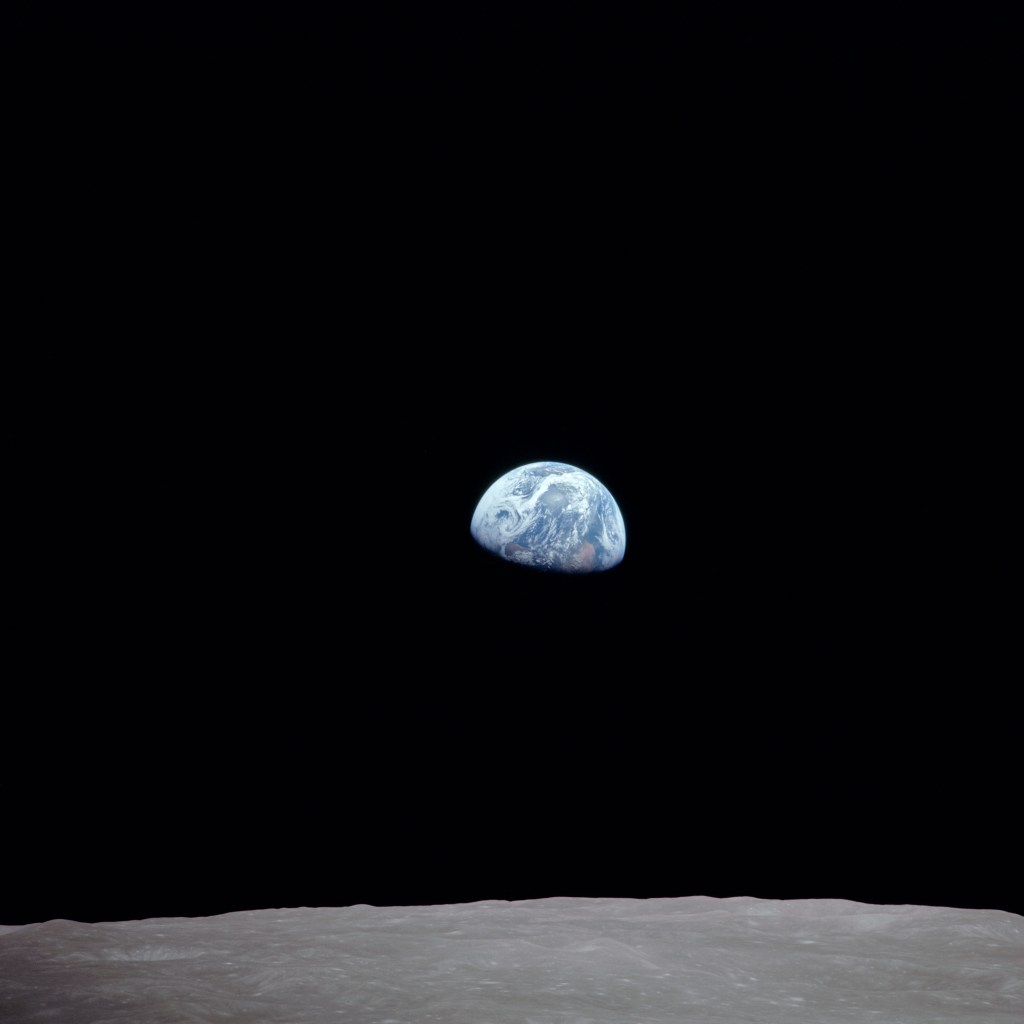
PADI And of course, Apollo 8 gave us Earthrise — that iconic photo of the blue Earth rising up over the grey lunar surface.
CHRISTIAN: Oh yeah, that is Kelsey’s favorite Apollo photo, and mine.
PADI: And mine, and everyone’s I think.
CHRISTIAN: [Laughs]
PADI: I mean, it changed everything.
CHRISTIAN: Yeah, I’m very excited to get an Earthrise 2.0.
KELSEY: Same. Don’t worry, it’s in the targeting plan.
CHRISTIAN: Oh, that’s great.
KELSEY: So is Earthset. Don’t worry.
CHRISTIAN: Christina had a poster of Earthrise up on her wall as a kid, years before she became an astronaut. Victor said they are all so excited for that moment.
VICTOR: We had a simulation in the one of the new science rooms, and they’ve got this great video wall, and they had the Moon up there, and it was moving. I mean, it’s a sim like this is imagery up on a wall. And Earth peeked out from behind the Moon. And all of us were like, wow, look at that. I mean, it was just, it was a neat moment that, you know, we live on this big rock, but you don’t see it from that far away. And even in the sim, it was pretty, pretty amazing.
REID: When we were in that sim and we saw Earthrise, we knew when it was coming. And even, even so I was, I was shocked how small the Earth looked coming up on the left or the west side of the Moon. It was tiny and crystal clear. So that was, as a human that was just inspiring.
CHRISTIAN: And we’ve talked about Apollo for a little bit here, but it is important to note that what NASA is doing with Artemis has never been done before. NASA is setting up a long-term presence on the Moon. This is new territory, and a new challenge.
KELSEY: We, of course, learned lessons from Apollo. We learned lessons from planetary missions that have flown since then, from ISS science operations. But what we are doing is new, and Artemis II is our first opportunity to, you know, in flight exercise this system. So, as the science operations lead for Artemis III, I am constantly, you know, making sure that what we’re doing on Artemis II will set our team and our crew, and therefore the mission up for success on Artemis III.
PADI: OK, I have one more question for you, Christian — is there a big lunar science question that Kelsey really wants an answer to? Like, a science mystery that Artemis II might help solve for her?
CHRISTIAN: I had the same question! And unfortunately, the answer will have to wait for Artemis III.
PADI: Mmm.
KELSEY: [Laughs] Yeah, so, I think every lunar scientist has, you know, of course, their favorite, you know, lunar science objective. Given that Artemis three is targeting the south pole of the Moon, the common answer is volatiles. I mean, these are compounds like water ice that could be used for exploration but are also of high scientific value in their own right.
[MUSIC: “Contemporary Art Daily” by Laurent Dury]
KELSEY: However, that’s not my answer.
CHRISTIAN: [Laughs]
KELSEY: My answer, you know, I have a background in impact cratering, and my answer is the South Pole-Aitken Basin. So South Pole-Aitken, SPA, for short, is the largest impact basin in the solar system. It’s over 1000 kilometers across. And we think that it is one of, if not the oldest, large impact basin in the solar system.
CHRISTIAN: Kelsey has always been into craters. And the thing about craters that is so important — they’re how we date the age of the surfaces of objects in the solar system.
PADI: Right, when we want to know how old a surface in space is, like a moon or a planet, we count how many craters it has. Typically, the higher density of craters, the older the surface is.
CHRISTIAN: And like Kelsey said, South Pole-Aitken might be the oldest crater in the solar system. Apollo missions didn’t land there. But Artemis III could.
KELSEY: South Pole-Aitken basin anchors the whole thing. It’s the oldest crater in the solar system. And if we can get an actual sample from SPA and figure out exactly how old it is, it could actually help us refine ages of planetary surfaces across the entire solar system. When I think about that, I just think that that is really inspiring, that we’re able to potentially do something with Artemis missions that could impact that much of our understanding of the solar system.
PADI: That could be huge! We’re talking about the possibility of changing our understanding of how planets evolved in the early solar system. And remember, we just can’t figure that out on Earth, since our planet’s surface transforms all the time with plate tectonics, oceans and other processes.
KELSEY: The thing that resonates to me most about the Moon is that it’s a witness plate for our whole solar system. So what the Moon has experienced, the Earth has experienced, what the Moon has experienced, other inner planets have experienced, and so we’re able to access things on the Moon that we can’t get anywhere else, including Earth.
CHRISTIAN: And before we move on — all of this science work leads, eventually, to humans on Mars!
KELSEY: The science questions we’re able to answer with a human on Mars, I mean, we’ve done amazing work with the rovers, especially on the surface of Mars. Having a human brain with human dexterity on the surface enables us to answer some pretty exciting science questions on the surface of Mars. So, I am absolutely inspired by the thought of, even in a tiny, tiny way, having, you know, participated in the development of ultimately being able to get boots on the ground on Mars.
CHRISTIAN: Now, we’ve talked about the astronaut crew as scientists, but they’re also the subjects of research projects on Artemis II.
PADI: Ever since NASA started sending humans into space, a bunch of physicians and psychologists and other scientists have been studying what space travel does to the human body.
CHRISTIAN: Yeah, astronauts face a lot of hazards in space — especially the farther from Earth they go, and the longer they spend going there. One of the best people to explain those hazards to us — and all the human experiments flying on Artemis II — is Jancy McPhee. She’s a neuroscientist, and an associate chief scientist for NASA’s Human Research Program.
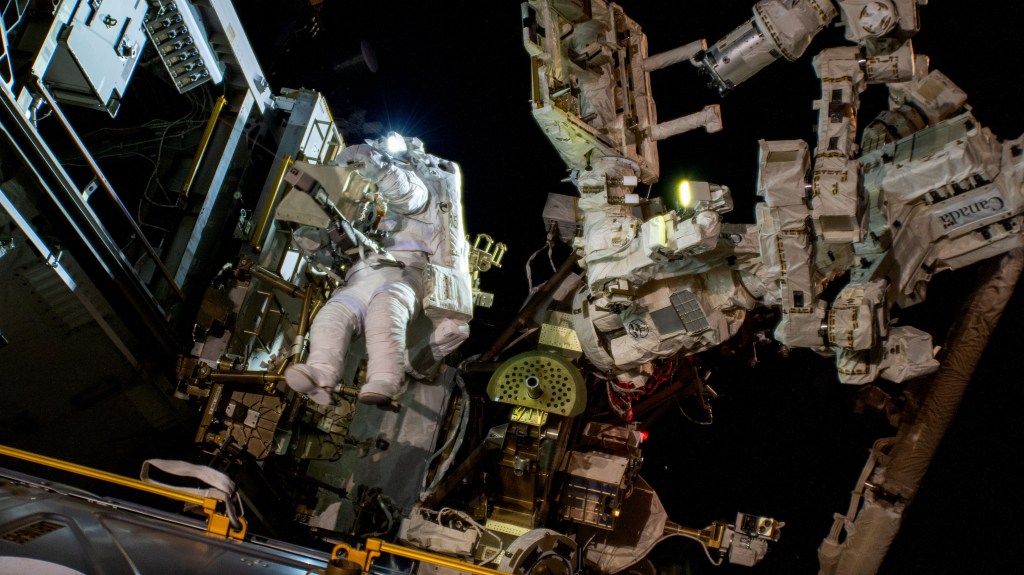
CHRISTIAN: So just to start off with a very basic question, is going to space bad for us?
JANCY MCPHEE: I’ve heard some people say it basically that space is out to kill us.
CHRISTIAN: [Laughs]
JANCY: And that’s because we learned we evolved and live and work under the conditions of Earth, but the conditions of space are really different from what we enjoy on Earth, and so we have to protect ourselves against the main hazards of the space flight environment.
PADI: The Human Research Program studies five main hazards. There’s an acronym for those, of course, because this is NASA. It’s called RIDGE… R-I-D-G-E.
[MUSIC: “Tesseract” by Cody Johnson and Gina Kouyoumdijan]
CHRISTIAN: The “R” is for radiation. That’s both solar radiation coming off of the Sun and cosmic microwave background radiation coming from deep space.
JANCY: And it is possible that that space radiation might lead to problems like increased risk of cancer for the long-term health of an astronaut, maybe possibly damage key organs in flight as well.
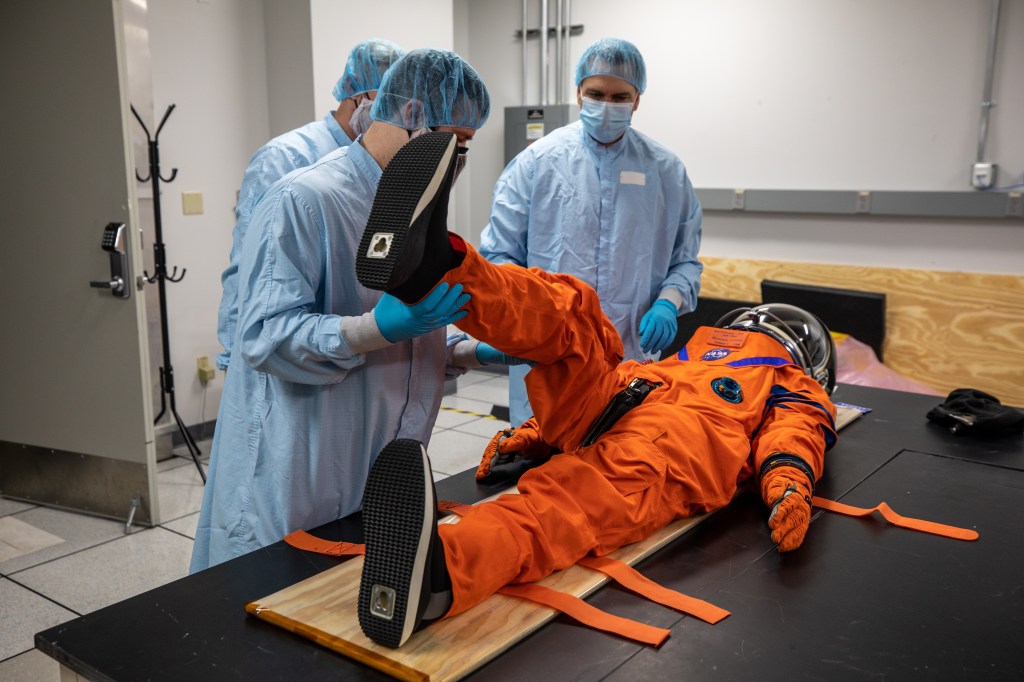
CHRISTIAN: The Orion capsule is covered with sensors to keep track of the astronauts’ radiation exposure. They also have a “storm shelter” area onboard they can use to hide from solar storms. Moving on in RIDGE — the “I” stands for isolation and confinement.
JANCY: You know, you can’t, you can’t go outside.
CHRISTIAN: Right.
JANCY: At least not without a suit. Things become very important when you’re in a stressful, strange environment, like sleep and your workload, and we need to be thinking very carefully about that and managing it, because we want to keep those astronauts mentally and emotionally at their best.
PADI: I think that’s something everyone can relate to. The stress of being someplace new, away from your friends and family.
CHRISTIAN: Yeah, that’s the isolation side of the coin. Then, there’s the confinement part — the Artemis II crew is going to be stuck in a very small capsule together for days.
JANCY: I know that my family can only handle an eight-day car trip before everybody needs a little time alone and on those eight-day car trips, we can actually get out of the car.
PADI: OK, now the “D” — that’s “distance from Earth.” It’s one thing to live on the International Space Station — if you need to get back quickly, you aren’t too far from home. Going to the Moon or Mars is another story.
JANCY: So, there’s going to be a lot more of these crews having to work on their own to solve problems or handle emergencies, whether they be technical or medical.
CHRISTIAN: Even basic stuff like communication gets tricker with distance. You’re waiting longer to get an answer back from Mission Control, because it takes time for signals to travel between Earth and your spacecraft.
JANCY: I think some of us can imagine how annoying it is when there’s just a little delay on our computer or our phone, even if it’s just a second and but depending on how far we go, it can be minutes.
PADI: Now onto the fourth letter: “G” — That’s gravity, or the lack thereof.
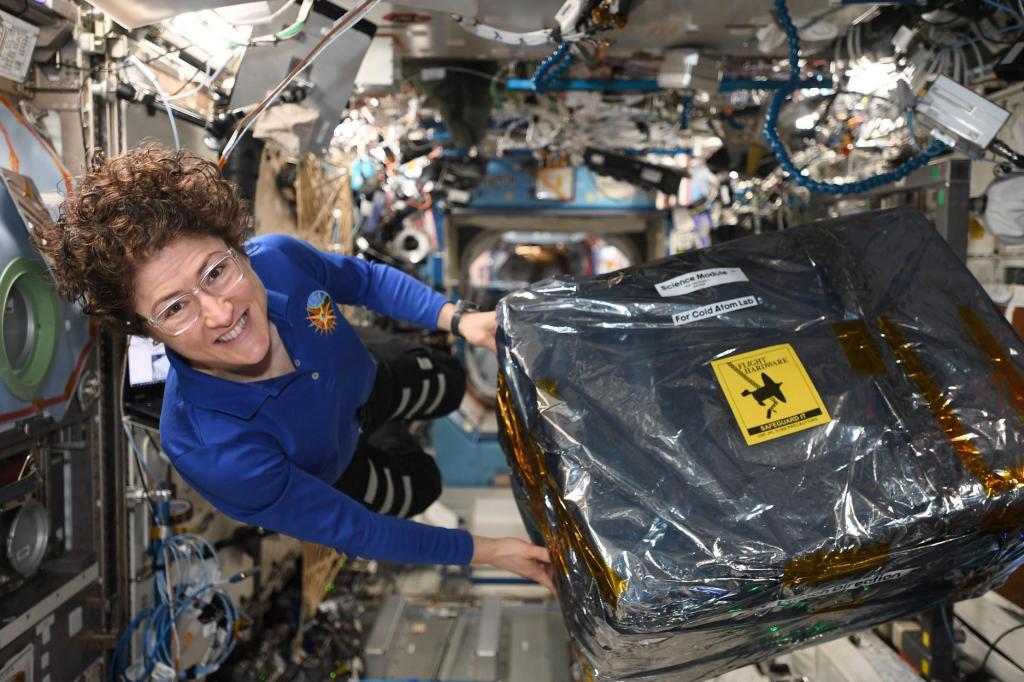
JANCY: When you’re traveling in space, you basically have no gravity. You’re basically weightless. And without the gravity, the fluids in our bodies move headward, and we take the weight off of our lower body so our muscles and bones would get weaker unless we did something to take care of that, and also our inner ear sense of balance can change as well, and that’s just what happens at zero G. And we have lots of experience from the International Space Station living and working in zero-G.
PADI: But with future Artemis missions, beyond Artemis II, astronauts will have to travel for days in zero-G to reach the Moon. Then, once they get there, they’ll have to work in ⅙ of Earth’s gravity on the Moon’s surface. And on a trip to Mars, that means a trip lasting several months in zero-G, and then time at ⅜ of Earth’s gravity on the planetary surface.
CHRISTIAN: Apollo astronauts didn’t spend very long on the Moon. So, we don’t have as much experience with this.
JANCY: And we really don’t have a good sense of how those partial gravities will affect the human body when we’re living and working there for a long time.
PADI: Then the last letter — E, for environment. This might be obvious by now, but space is very unlike Earth — so you have to bring Earth conditions with you to stay alive.
[MUSIC: “Argosy” by David Naroth, Arun Ganapathy and Victor Mercader]
JANCY: So, we have to bring our own air, our own water systems, our own food, of course, handle our waste. That’s always a favorite topic.
CHRISTIAN: Right. [Laughs]
JANCY: We always have to also control the temperature, the pressure, the noise of the environment, and that helps us to keep the astronaut healthy and able to perform well while they’re in space.
CHRISTIAN: That includes little details you might not think of, like lighting conditions. I don’t know about you, but daylight savings time really messes up my sleep. Imagine being in the black of space, without a normal day/night cycle.
JANCY: When you’re circling the Earth or further from the Earth on route to another planet, sleep becomes harder and your normal Earthly rhythm is disturbed. So, we’ve been doing a lot of research on how lighting inside the spacecraft can actually help us to feel better rested, despite the difference between all those patterns in space compared to Earth.
PADI: Jancy’s team even studies caffeine schedules — to make sure astronaut’s coffee habits don’t affect their sleep and performance.
JANCY: Because I love my coffee so much, I can’t imagine going to space without it. And I think I’m not alone.
CHRISTIAN: Astronauts love their coffee. Astronaut Don Pettit even designed a special cup so he could keep caffeinating on the space station.
PADI: Little Earth habits like coffee help astronauts maintain their mental health in space.
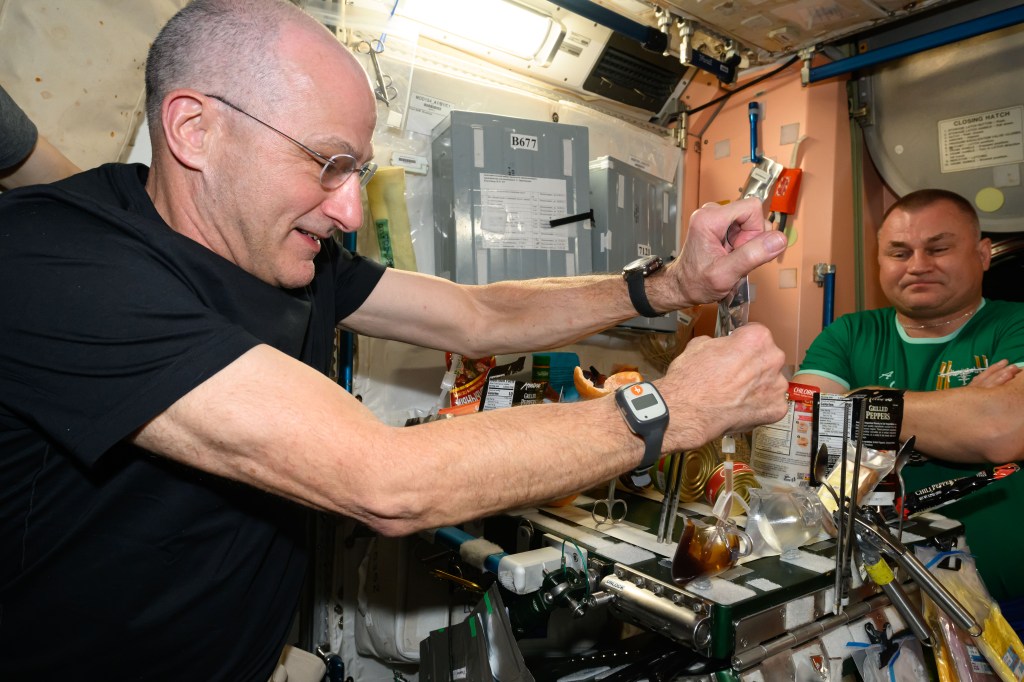
JANCY: Some of these small, little, nice rituals are important for space travelers.
PADI: NASA has a huge advantage now versus the Apollo days — 25 years of continuous human presence in orbit on the space station. 25 years to study the effects of space travel on human health and performance. That means a lot of lessons learned that have gone into Artemis.
CHRISTIAN: Just for an example, take exercise. NASA scientists perfected the exercise equipment astronauts use to maintain bone and muscle density and mental health in space. The International Space Station is the size of a football field — it’s got treadmills and weight machines — but Orion is about the size of two minivans. This is frontier, pioneer exploration stuff.
JANCY: In comparison to what we’re going to end up having, let’s say, for the Moon or Mars missions, the International Space Station has been a little bit like a luxury hotel.
CHRISTIAN: That means Jancy’s team has had to innovate. Instead of a full gym for example, Orion has a sort of compact rowing machine called a flywheel to keep astronauts healthy.
JANCY: Yeah, and I don’t know what your home gym looks like, but I’ve got a lot of heavy dumbbells. And you know, there’s no way we could just bring a full set of dumbbells.
CHRISTIAN: Yeah, I just have a rowing machine. So maybe, maybe I would be set actually
JANCY: Really? Oh, so you’re one of those people.
CHRISTIAN: Jancy is a runner.
PADI: I detected some disdain there.
[MUSIC: “Sunbeams” by Daniel Diaz]
CHRISTIAN: Hey, it just means I’m ready for my astronaut career. Anyway, the space station is great, but Human Research Program scientists are also preparing for longer-term space missions far from Earth using analogs on the ground. Kind of like how Kelsey’s craters in Iceland stand in for the lunar variety, Jancy and other NASA scientists focused on human health have Moon and Mars-like bases that volunteers live in for up to a year at a time here on Earth, to test how they live and work together.
PADI: We got a peek inside one of these, called CHAPEA, in a past episode. So the Human Research Program has learned a lot from the past. What are they hoping to learn from Artemis II?
CHRISTIAN: Well, the fact that this is the first crewed Artemis flight is a huge deal for this team. And they’ve got a few cool experiments planned, with our four favorite astronauts as the guinea pigs.
JANCY: And you know, if you think spacecraft are complicated, just think about how the human body works. It’s a pretty complicated organism, and there’s so much to learn, and we’re very excited about it.
CHRISTIAN: OK, so let’s dive into it. The first experiment is called Immune Biomarkers…
CHRISTIAN: I think I understand that this is the one that involves spit?
JANCY: Spit, it’s awesome. It turns out spit can tell you a lot about what’s happening inside the human body, and the astronauts are going to be spitting in space on these specialized little pieces of paper that they can treat and preserve their spit and bring it home for scientists to examine, and it lets us do studies like looking at their stress levels, and you know, their response to microbes that might be in the environment and any changes in their viral profile. So, yep, spitting in space, it’s a thing.
CHRISTIAN: Spitting in space. [Laughs]
JANCY: It’s awesome, yeah. How often do you actually get asked to spit? That’s great.
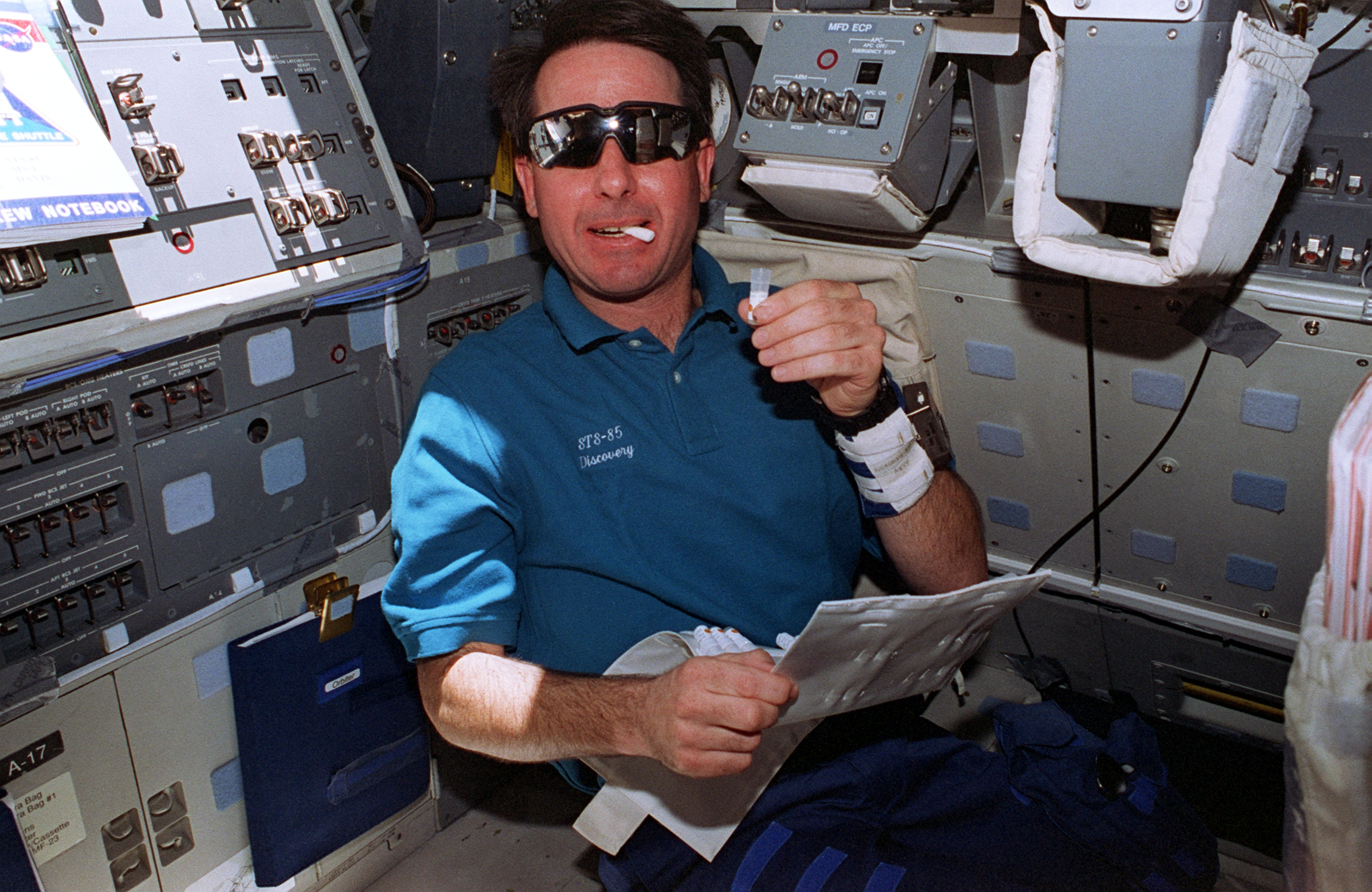
CHRISTIAN: Astronauts put paper in their mouths to collect the spit, so it’s not like there are droplets of spit just floating around.
JANCY: Yeah, well, you got to spit carefully. Spit with intention.
PADI: On the space station, astronaut spit gets refrigerated. But again, that’s luxury hotel conditions. This spit on Artemis II has to be dried out and stored in a binder.
CHRISTIAN: Space is a stressful place for the human body. You might be stressed. You’re also isolated, there’s more radiation than your body is used to, gravity is different. That can affect you mentally, but also physically.
CHRISTIAN: I think a lot of people are familiar with getting sick when they travel.
JANCY: Yes, imagine. And again, you know, in that small environment with four other people.
CHRISTIAN: There’s also an experiment called AVATAR. That’s an acronym for “A Virtual Astronaut Tissue Analog Response.” This one was developed by NASA’s Biological and Physical Sciences division. NASA scientists took blood samples from each of the astronauts and used their stem cells to develop bone marrow.

JANCY: The bone marrow is a very important part of the human, it’s where we produce different kinds of blood cells. And looking and seeing what happens to bone marrow is a great way to diagnose disease and see how a person’s immune system is doing.
PADI: Now, this is very sci-fi — those bone marrow cells have been installed on a little device the size of a thumb drive called an organ on a chip. You can think of them as little miniature versions of each of the astronauts. They’ll fly along on the mission with the crew.
[MUSIC: “Cell Division” by Carl David Harms]
JANCY: And then those organs will be brought back, and the scientists on Earth will explore stress markers, changes in the DNA, changes in inflammation and other markers, and they can compare those to cells that never flew in space.
CHRISTIAN: These chips will allow personalized medicine for astronauts. And it’s a technology that could be used to determine individual treatments for people on the ground too. Then there’s another study called ARCHER, and this one is also an acronym: “Artemis Research for Crew Health and Readiness.” The astronauts are going to wear these little smart watch fitness trackers called actigraphy devices to measure their sleep and activity. And they’ll also do these tests that measure their sensory motor perception, cognitive abilities, vision. And tests like these continue through something called Artemis II Standard Measures. This is a research project that’s been going on a long time with space station crews. It’s sort of an annual physical, but in way more detail.
JANCY: Think of it as kind of like the baseline measures that you get when you go to the doctor’s office. You know, no matter why you’ve gone to the doctor’s office, you know, they take your blood pressure, they measure your heart rate and they just compare those between trips. Well, this is a standardized list of measures that are similar, that include things like blood samples, saliva samples, psychological measures, they help us to just have kind of like this basic core understanding of what’s happening to the body in space flight.
CHRISTIAN: One of the standard measures tests is called capsule egress. Landing on Earth after being in space can be disorienting — your sense of balance gets messed up.
JANCY: That can make it kind of hard to do the things you have to do when you come back to Earth, or imagine coming back, you know, landing on the Moon or Mars. You know you need to know what you can and cannot accomplish.
CHRISTIAN: To test the crew’s adaptation to solid ground, they have to go through an obstacle course once they touch down.
JANCY: So right after they land, it sounds really simple, but they’re going to try to climb up a ladder. And climbing up a ladder takes a lot of coordination, and if space flight has affected your coordination, it’s going to get pretty well revealed.
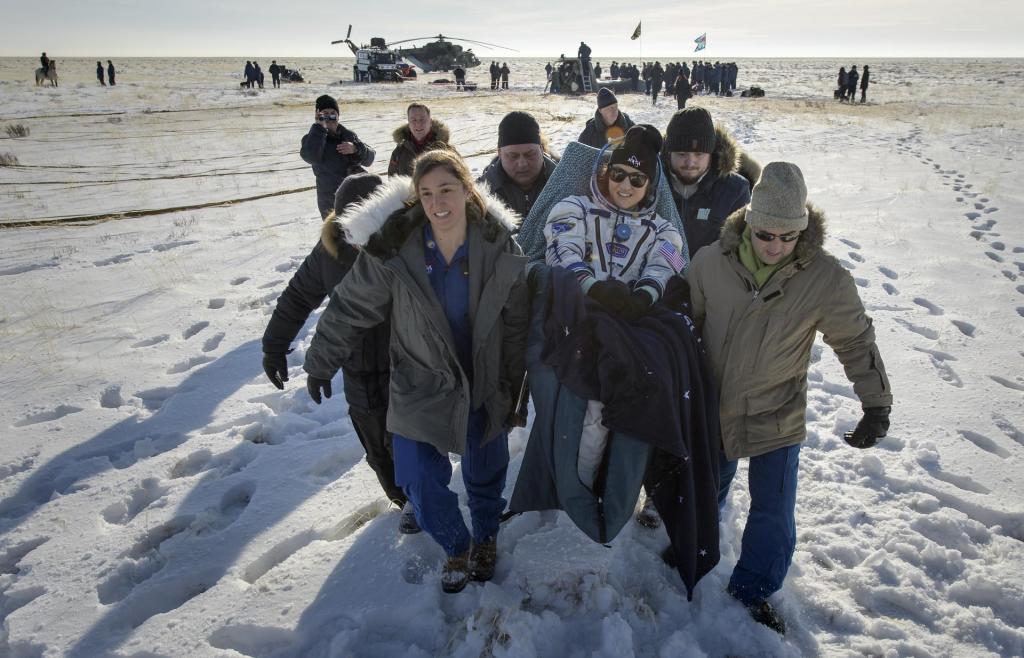
CHRISTIAN: Then, a day after they land, the astronauts will do a mock Moonwalk in this contraption called ARGOS, the “Active Response Gravity Offload System” that simulates lunar gravity.
JANCY: And now they’re gonna do a whole bunch of operational tests. They’re not just going to climb ladders, but they’re going to connect mock supply lines, move 30-pound objects and simulate what a crew might have to do when it actually lands on the surface of the Moon.
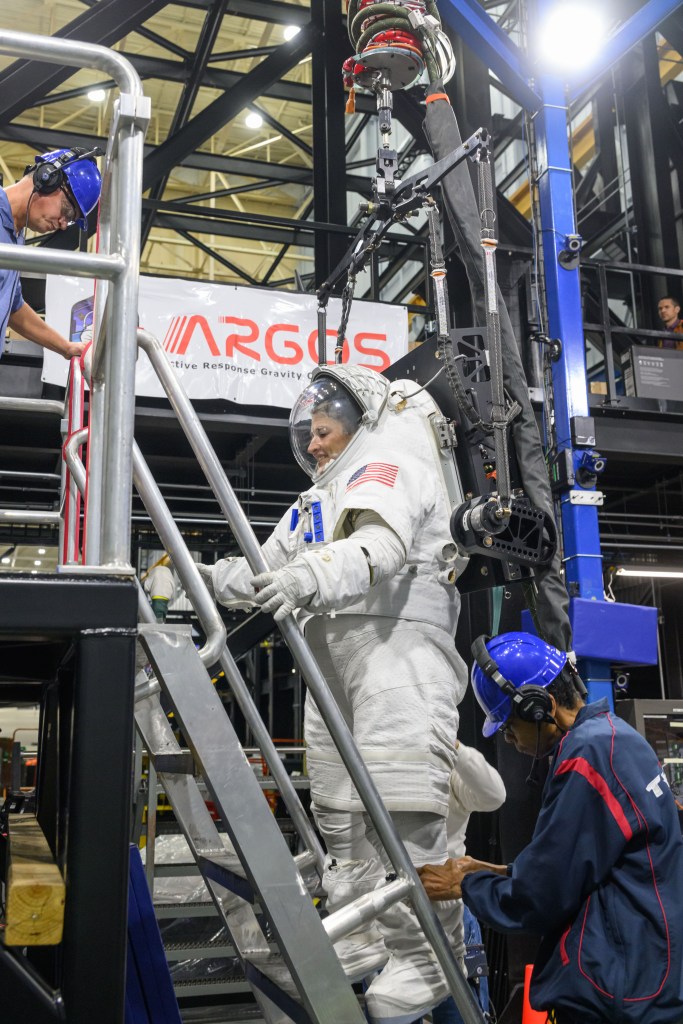
CHRISTIAN: Wow, I think people might think you land back on Earth, your mission is done. But no, you gotta immediately climb a ladder and then do a Moonwalk.
JANCY: Nope, your work is never done.
[MUSIC: “Perpetual” by Jonathan Slott, John Hunter Jr., Jason Zaffary and Brian Flores]
PADI: If this sounds like a lot, it is. These crews have a never-ending checklist of tasks — flying a spacecraft, testing equipment, communicating with mission control, conducting lunar science.
CHRISTIAN: I was curious what it’s like for them to be research subjects on top of everything else.
CHRISTIAN: What has their reaction been like to participating in all these studies and giving blood and all that? Have they been game for all of this?
JANCY: This is really an incredible crew. They are fully participating in the Standardized Measures, Immune Biomarkers and the AVATAR experiments that we mentioned, they are really enthusiastic about helping us to learn whatever we can from this mission, and we are incredibly grateful at just how helpful they have been.
CHRISTIAN: It’s important to say, all of this medical research is optional — the astronauts aren’t forced to participate. But they all do. Because they’re so dedicated to getting humans back to the Moon — and sending them to Mars.
JANCY: So, lots of work yet to be done. Very exciting to be moving on to the Moon and taking what we learned in low Earth orbit to enable that and then taking what we learn at the Moon to enable humans moving even further into space to Mars and beyond.
PADI: It’s very cool and it’s also very inspiring to see how much and how many different types of science can be stuffed into this brief opportunity.
CHRISTIAN: And there’s so much we didn’t even have time to get into today! Like, there are all these little CubeSats, tiny satellites, built by countries on three different continents that will ride into space on the SLS rocket. They’re carrying scientific instruments studying solar radiation, X-Rays, magnetic fields and more.
PADI: So we think about when NASA does big things like the Hubble Space Telescope, Apollo, Artemis, but it’s also really exciting to know we can do science at all scales, with little shoebox-size instruments, with people, with tissues on a chip. It’s such a great and amazing spectrum.
Hey Christian, thank you so much of being here with me to talk all things Artemis II science.
CHRISTIAN: Thank you, Padi. It was a lot of fun.
[MUSIC: “Inner Peace” by JC Lemay]
PADI: This is NASA’s Curious Universe — an official NASA podcast. Our Artemis II series was written and produced by Christian Elliott and Jacob Pinter. Our executive producer is Katie Konans. Wes Buchanan designed the show art for this series. Music for the series comes from Universal Production Music.
CHRISTIAN: We had support throughout this series from Rachel Kraft, Lisa Allen, Lora Bleacher, Brandi Dean, Amber Jacobson, Courtney Beasley, and Thalia Patrinos. Huge thanks to the subject matter experts you heard in this episode. We had additional support on this episode from Molly Wasser, Lonnie Shekhtman and Mohi Kumar. You can learn more about the science on Artemis II at nasa.gov/artemis. You can find transcripts for every episode of Curious Universe — and explore NASA’s other podcasts — at nasa.gov/podcasts. If you enjoyed this episode of NASA’s Curious Universe, let us know! Leave us a review wherever you’re listening right now. Why not send a link to one of your friends? And you can follow NASA’s Curious Universe in your favorite podcast app to get a notification each time we post a new episode.