














NASA Undergraduate Student Design Projects
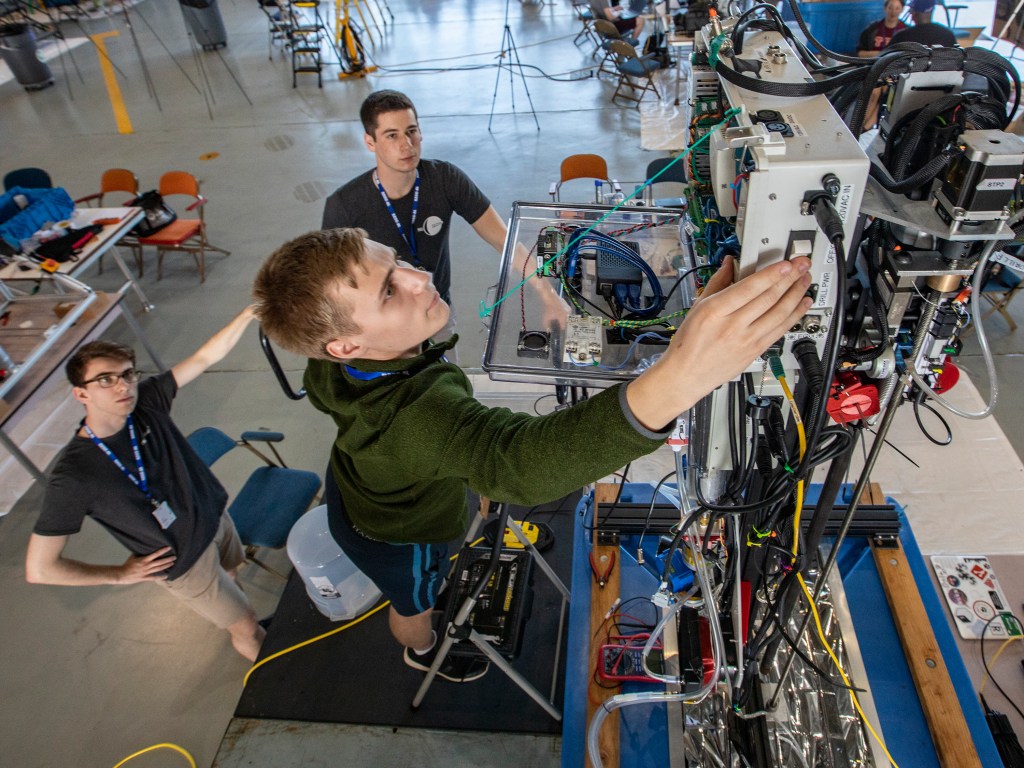
NASA is committed to strengthening the nation’s STEM workforce by engaging students directly in its mission. The Agency recognizes the importance of preparing future STEM professionals and seeks to establish collaborations with higher education institutions to better prepare undergraduate students for STEM careers. Through the Undergraduate Student Design Projects initiative, students engage in authentic research and design activities directly aligned with current NASA missions. These activities are essential to ensuring that the next generation of explorers has the technical skills needed to advance the nation’s work in aeronautics and space.
Event Dates
August 2026 – April 2027
Event Location
Virtual
Eligibility
Open to U.S. Students
grade levels
College and University
About the Initiative
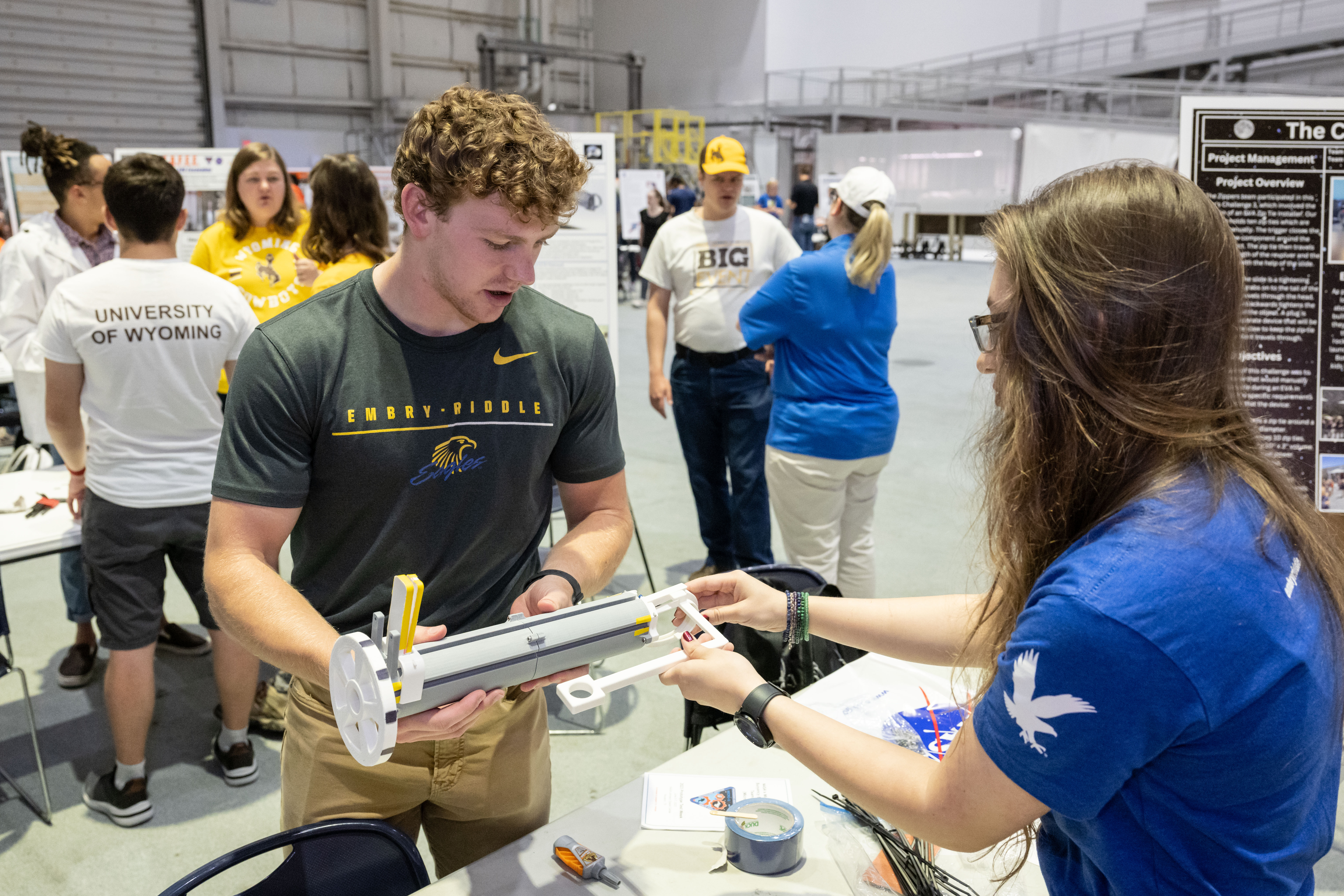
To support this goal, NASA will identify appropriate research areas, issues, and technical challenges for student teams to address. Selected student teams receive access to NASA’s scientific and technical expertise, relevant data sets, and structured mentorship to support the successful completion of their projects and the development of subject matter proficiency. Throughout the academic year, NASA specialists provide periodic guidance, while a designated faculty advisor offers ongoing day to day support. NASA will also provide access to publicly available data sets, imagery, and related information. Student teams may produce end products such as a prototype design, a computer simulation, an analytical report, or a presentation summarizing their findings.
In accordance with institutional requirements, participating students will earn academic credit for their work or apply their project contributions toward their broader academic coursework.
Funding will be provided to competitively selected higher education institutions to purchase materials required to complete the Undergraduate Student Design Project. The funding amount varies based on the project requirements.
Prototype Design or Development – Higher education institutions selected to complete projects that require teams to build a prototype will receive $5,000.
Computer Simulation Projects – Higher education institutions selected to complete projects that require teams to study/create a computer simulation will receive $3,000.
Theoretical Solution Projects – Higher education institutions selected to complete projects that require teams to produce a theoretical solution (i.e., analytical report and slide presentation only) do not include funding.
2026 – 2027 Timeline
All dates are subject to change.
- Aug. 17, 2026: Application Opens
- Sept. 14, 2026: Application Closes
- Sept. 25, 2026: Selections Announced
- Sept. 28-Oct. 31, 2026: Virtual Kickoff Meetings & Funds Distribution
- Jan. 11-Feb. 26, 2027: Virtual Mid-Point Design Reviews with NASA Subject Matter Expert
- Apr. 5-30, 2027: Virtual Final Design Reviews with NASA Subject Matter Expert
How to Apply
Applicants must be full-time faculty members (e.g., professor, associate professor, assistant professor, or similar rank) at an ABET accredited United States higher education institution (i.e., University, College, Community College). Applicants must be U.S. Citizens or Lawful Permanent Residents in the United States.
By applying for the Undergraduate Student Design Projects opportunity, the applicant (higher education faculty member) agrees to serve as the day-to-day advisor to the student team and provide appropriate lab or classroom space for the student team to complete their design project. The higher education institution shall provide any tools and equipment needed to complete the project beyond the NASA funding listed in the Funding Opportunity section.
Wolf Amendment Notice
NASA prohibits participation in NASA‑funded activities by any individual affiliated with Chinese institutions, including Chinese universities. Under the Wolf Amendment, NASA cannot fund work that involves bilateral participation, collaboration, or coordination with China or any Chinese‑owned entity, and individuals with such affiliations are ineligible to take part in NASA‑supported projects, regardless of nationality.
Undergraduate Student Design Projects applications for this announcement will appear as individual opportunity entries in NASA STEM Gateway. A direct link to each application is included in the project descriptions listed below.
To be considered for the Undergraduate Student Design Project, a higher education faculty member must apply to the appropriate Project listed below. When completing the submission process, you are required to upload your CV and a Statement of Interest. Do not proceed beyond the Upload Supporting Documents page without uploading the required documents. Your CV and Statement of Interest submissions must be provided electronically as unlocked PDF format via NASA STEM Gateway (https://www.stemgateway.nasa.gov). Applicants must be registered in NASA STEM Gateway.
Applicants new to NASA STEM Gateway are encouraged to visit and create an account early in the process. Submissions must be received no later than 11:59 pm Eastern time, on September 14, 2026. Applicants who consider their submission proprietary should indicate on their submission. NASA will treat submissions as proprietary and will use them only for evaluation purposes under this announcement.
To apply for an Undergraduate Student Design Project, a higher education faculty member must submit an application through the designated project entry in NASA STEM Gateway. Applicants are required to upload both a Curriculum Vitae (CV) and a Statement of Interest. Do not move beyond the “Upload Supporting Documents” page until these documents have been successfully uploaded. All documents must be submitted electronically as unlocked PDF files.
- Curriculum Vitae (CV) – The applicant (higher education faculty member) must provide a current CV.
- Statement of Interest (not to exceed two pages, no less than 11 point font and 1 inch margins) – The Statement of Interest must include the following:
- Institutional and Academic Program Alignment
- Explain how participation in NASA Undergraduate Student Design Projects aligns with your institution’s goals and academic programs.
- Describe how the selected project aligns with your areas of academic instruction, research interests, and/or expertise.
- Student Team Information
- Provide a description of the students expected to complete the project (e.g., anticipated number of students, academic level, and academic majors).
- Indicate whether students will participate through a credit‑bearing academic course or an extracurricular group. If applicable, specify the number of credit hours students will earn.
- Implementation Plan and Technical Approach
- Provide a brief plan describing how the design project will be implemented and how you will facilitate student participation.
- Describe the technical approach, innovations, and any unique facilities or expertise students will use.
- Identify the anticipated learning outcomes and skills students are expected to gain.
- Explain how you will monitor student progress and provide guidance to student teams.
- Project Completion Timeline
- Provide a schedule of measurable milestones for implementation and requested interaction points with NASA.
- Institutional and Academic Program Alignment
NASA evaluators will review the information provided in the Statement of Interest to make a determination as to how well it demonstrates an achievable plan to provide opportunities, leveraging NASA content to engage students. Successful plans will:
- Align to focus areas identified in the project description.
- Contain a schedule of milestones that is achievable and demonstrates alignment with the parameters of the project description.
- State and provide reasonable evidence to support the anticipated number of students participating in the program, and that these students represent appropriate academic disciplines.
- Clearly identified anticipated student work products (i.e., prototypes, reports, simulations, presentations).
- Proposed facilities, unique attributes or innovation have a reasonable likelihood of enhancing student efforts.
- Identify dedicated faculty member(s) to support student work and provide their qualifications.
- Provide a monitoring, evaluation, and reporting plan related to evaluating and guiding student work across the project timeline.
- Provide a reasonable strategy to meet program goals and monitor project progress and completion.
Each evaluation criteria are of equal weight. NASA evaluators will identify individual strengths and weaknesses for each application in accordance with the evaluation criteria contained above. Considering the attributes of each application, the evaluators will assign a final overall application rating. Applications that receive the highest rating will be more competitive than applications lower ratings.
Applicants are encouraged to limit the amount of Proprietary Data (defined below) included in their Statement of Interest and only include such information that is necessary to meet the application requirements listed in this announcement. Applicants must clearly mark any Proprietary Data in their Statement of Interest. For purposes of this announcement, “Proprietary Data” shall mean information set out in the Statement of Interest embodying trade secrets developed at private expense or commercial or financial information that is privileged or confidential, and that includes a clear restrictive notice, unless the information is (i) known or available from other sources without restriction, (ii) known, possessed, or developed independently, and without reference to such marked information in the Application, (iii) made available by the owners to others without restriction, or (iv) required by law or court order to be disclosed. With respect to such Proprietary Data, NASA shall:
- Use, disclose, or reproduce such Proprietary Data only as necessary to evaluate the Statement of Interest;
- Safeguard such Proprietary Data from unauthorized use and disclosure
- Allow access to such Proprietary Data only to its employees requiring access for purposes of evaluating the Statement of Interest;
- Except as otherwise indicated in c., preclude disclosure outside NASA;
- Notify its employees with access about their obligations under this announcement and ensure their compliance; and
- Dispose of such Proprietary Data after evaluation of the Statement of Interest has concluded.
Pre-screening: Applications will be pre-screened for compliance with program requirements, including page limitations, eligibility requirements, and format. Applications that do not conform to the standards outlined in this announcement may be declared non-compliant and rejected without further review.
NASA will evaluate each of the compliant applications using the evaluation criteria listed above. NASA will rank the applications according to an overall rating for each of the individual applications.
If NASA determines in its discretion that due diligence discussions with a partner are needed, such discussions will be conducted via teleconferences and/or email with invited respondents that were the most highly rated. Not all highly rated applications will require due diligence. If a teleconference is needed, the Applicant will be provided advance notice. NASA will provide the Applicant with a list of questions and/or obtain verbal clarification of information provided in their Application. Final application rating may be updated, if deemed necessary, based on the results of due diligence. At the conclusion of successful due diligence discussions, Applicants may be required to provide revised information. After completing due diligence, NASA will present the results of the application evaluation to a designated NASA Selection Official. The Selection Official will consider the results of the technical evaluation as well as programmatic considerations, such as portfolio balance and other programmatic considerations and either select or reject each of the individual applications received. NASA reserves the right to select all, some, or none of the applications received in response to this announcement. All Applicants will be notified of their selection status and provided feedback.
Design Project Descriptions
Application Link: https://stemgateway.nasa.gov/s/course-offering/a0BSJ000007qQlZ/
Category: Prototype Design or Development
NASA Mentor: Kerrigan Cain, Glenn Research Center
Research Area/Topic: Two-phase separation, lunar surface technology, power and energy storage.
Project Description: A regenerative fuel cell (RFC) is an energy storage solution that can enable a sustained human presence on the lunar surface by providing power during the lunar night. An RFC is a device that works similar to a rechargeable battery but uses a fuel cell to convert hydrogen and oxygen gases into liquid water and electricity and then an electrolyzer to convert the liquid water back into hydrogen and oxygen gases when electricity is provided to the system. One challenge in the system is separating the hydrogen and oxygen gases produced from the liquid water supplied to the electrolyzer. The gases need to be extremely dry in order to protect the storage vessels from extreme cold temperatures on the lunar surface. The goal of this project is to design and test a first-stage vapor-liquid separator for both the hydrogen and oxygen product streams in order to remove as much of the water as possible while meeting minimum performance requirements and system constraints. The water that is collected from both separators is then resupplied to the electrolyzer and the gases are sent downstream for further processing before being stored for later use by the fuel cell. Given that this system will be on the lunar surface, low mass and power solutions and conservation of every resource is vital.
Objectives: Design, assemble, and test oxygen-water and hydrogen-water vapor-liquid phase separators that meet minimum performance requirements and system constraints. Any testing shall be completed with gaseous helium and nitrogen as hydrogen and oxygen simulants, respectively.
Performance Requirements: Reduce the water concentration on the gas outlet at nominal operating conditions to at least saturation, with a goal of a dew point < 0 degrees Celsius.
System Design Requirements: Liquid water flow rate range is 0 – 3 liters per minute (lpm). Hydrogen gas flow rate is 0 – 26 grams per hour (g/h). Oxygen gas flow rate is 0 – 200 g/h. Operational pressure range is 15 – 2500 psia. Operational temperature range is 4 – 80 degrees Celsius. Nominal operating conditions are 1.5 lpm of water, 13 g/h hydrogen, 26 g/h oxygen, 1800 psia, and 60 degrees Celsius. Materials selected must be compatible with hydrogen gas, oxygen gas, and deionized water. The system will be on the lunar surface and subject to lunar gravity.
Considerations, Limitations, Restrictions: Since this system is designed to operate on the lunar surface, the solution should be low mass, low volume, and require little to no power.
Application Link: https://stemgateway.nasa.gov/s/course-offering/a0BSJ000007qQtd/
Category: Prototype Design or Development
NASA Mentor: Robert Howard, Johnson Space Center
Research Area/Topic: Space Medicine, Human Factors, and Human Centered Design
Project Description: As commercial human spaceflight matures, more independent providers and missions will emerge within the inner solar system, particularly in LEO, deep space, the Moon, and Mars. Recent on-orbit medical events on the International Space Station have demonstrated a need for medical evacuation, whether that is travel all the way back to Earth or simply from a spacecraft with lesser medical capability to one with greater. Yet, there is no system currently in the design space that can be used across these destinations and gravity regimes. Such a system can increase the survivability of human spaceflight missions for both government and civilian space crews.
Objectives: Develop a generic system to apply to medical care across the growing range of human spaceflight systems in Earth orbit, and those proposed for deep space, and the surfaces of the Moon and Mars, specifically enabling the concept of medical evacuation.
Performance Requirements:
- The system shall facilitate patient care in the best possible human spaceflight regime.
- The system shall enable surface to orbit and orbit to surface medical transportation.
System Design Requirements:
- The system shall accommodate a patient under lunar gravity, Martian gravity, terrestrial gravity, microgravity, ascent, and entry, descent, and landing, inclusive of both bodily restraint and autonomous medical care.
- The system shall function as a reconfigurable patient medical bed for basic, minimally invasive, experimental, austere, telerobotic, or autonomous medical or dental treatment.
- The system shall be capable of reconfiguring to support patient postures needed for medical or dental treatment.
- The system shall be capable of reconfiguring to support patient postures needed for high-thrust transfers between gravity regimes, including the bracing of any body parts that must be maintained at specific angles. This shall include, but not be limited to, supine and seated postures.
- The system shall provide a fluid transfer system to support fluid delivery to the patient during powered and unpowered flight.
- The system shall securely mount the following COTS medical devices: a handheld blood analyzer, a mini-X-ray, a vital signs monitor, an ultrasound, an aspirator, and a ventilator in such a manner as to enable unattended operation during ascent, cruise, entry, descent, and landing.
- The system shall support ascent, entry, descent, and landing loads for all patient postures.
- During dynamic flight, the system shall react to vehicle attitude changes to keep the acceleration vector through the chest, including during high-rate rotational motion (such as the Starship “belly flop” maneuver).
- The system shall prevent the escape of bodily fluids, medical supplies, and waste generated during treatment.
- The system shall be capable of self-propelled or human-assisted relocation from one pressure vessel or spacecraft to another in microgravity or terrestrial, lunar, or Martian surface environments, including both horizontal travel and vertical travel (e.g., between multiple levels or decks).
- The system shall at minimum accommodate the entire anthropometric range of the US astronaut population but ideally should accommodate the 3rd to 97th percentile range of the US civilian population.
Considerations, Limitations, Restrictions: Volume and mass are always a limitation in human spaceflight. Design solutions that minimize mass and volume are more likely to be capable of being incorporated into current and in-development space systems.
Application Link: https://stemgateway.nasa.gov/s/course-offering/a0BSJ000007qR9l/
Category: Prototype Design or Development
NASA Mentor: David Berger, NASA Headquarters
Research Area/Topic: Transform Airframes and Propulsion
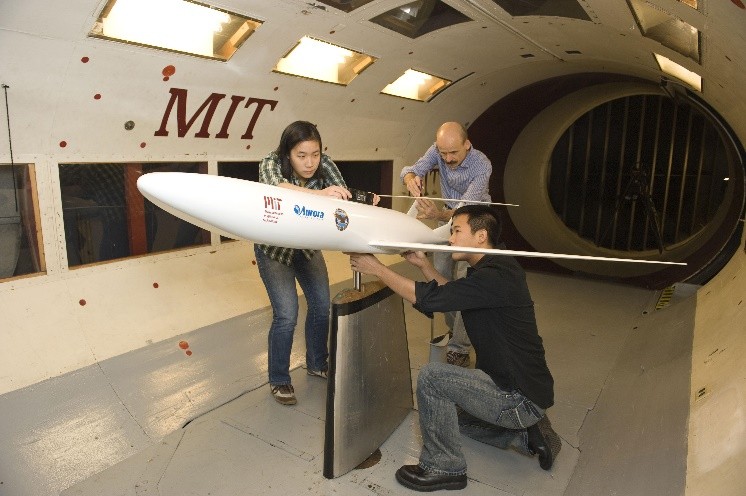
Project Description: This work begins with the validation of the 1933 Prandtl bell spanload. This spanload is proposed to be the minimum induced drag of a wing for a given structural weight with properties that eliminate adverse yaw. Aircraft using the Prandtl bell spanload were flown and investigated. The results of this research show that many previously held assumptions should be rethought, and the creation of aircraft using the Prandtl bell spanload will require considerable new techniques.
Possible areas of interest for capstone or senior design classes may include but are not limited to:
- Development of a traditional wing (elliptical lift distribution or other) and bell spanload wing for comparisons in induced drag, total drag, structural weight, and stability.
- Exploration of secondary effects of bell spanload wings using proverse yaw to design vehicles with reduced vertical surfaces and/or alternate yaw controls.
- Design of bell spanload wings for a particular mission or generic design tools.
- Developing higher fidelity structural and mass models to quantify potential performance benefits.
- Exploration of elliptical, bell, and other spanloads for AAM missions including accounting for mass and volume requirements for storage.
Application Link: https://stemgateway.nasa.gov/s/course-offering/a0BSJ000007l3EX/
Category: Computer Simulation
NASA Mentor: Max Yang, Glenn Research Center
Research Area/Topic: Mechanical Spring-Mass System
Project Description: While the Free-Piston Stirling convertor (FPSC) can provide efficient, long-duration power conversion for flight missions, its reciprocating piston and displacer motions introduce narrowband dynamic forces at the operating frequency and corresponding harmonics. In a flight system, these forces can couple into the spacecraft structure, disturb precision pointing, increase exported vibration to sensitive payloads, and cause fatigue concerns in mounts, harnesses, and nearby components. Although passive balancers have been explored in the past, the residual force is reduced enough for many flight projects. For this reason, an active balancer is required: a spring-mass actuator can be tuned near the dominant disturbance frequency and driven with controlled force to cancel the exported acceleration while using relatively little power near resonance. Therefore, in this project, students are expected to design a single-degree-of-freedom (DoF) balancer with an actuating motor to counteract the force induced from the FPSC. Furthermore, optionally, given the possibility that the FPSC may produce two adjacent frequency components at approximately 90Hz and 100Hz, a two DoF balancer may be studied analytically if time permits.
Objectives: Design an electro-mechanical system in computational software.
Performance Requirements: The system shall be capable of providing required counter-acting force against the FPSC, up to 500N.
System Design Requirements: 1) Resonance of the design shall match the FPSC’s operating frequency and 2) the magnet and coil design for the actuator shall meet requirements that will be provided by the NASA Mentor.
Considerations, Limitations, Restrictions: Planar and spiral springs to be used. Size and mass restrictions to be provided.
Application Link: https://stemgateway.nasa.gov/s/course-offering/a0BSJ000007qRGD/
Category: Computer Simulation
NASA Mentor: Luis Rodriguez, Glenn Research Center
Research Area/Topic: Nuclear Electric Propulsion and Fission Surface Power
Project Description: Developing and Optimizing Loss Models for Nuclear Closed Brayton Systems.
Objectives: Optimizing Brayton system to increase turbomachinery efficiency.
Performance Requirements: Develop a nuclear closed Brayton power system model that can be used to guide the design and build of power system for future SR-1 or LR-1 projects.
System Design Requirements: Mass, Volume, Power Output, Optimal Efficiency.
Application Link: https://stemgateway.nasa.gov/s/course-offering/a0BSJ000007qReP/
Category: Theoretical Solution
NASA Mentor: Mark Moussa, Goddard Space Flight Center
Research Area/Topic: Human Spaceflight Genetics
Project Description: Researchers have reported that spaceflight causes some tumor samples to reach a size in just ten days that would otherwise take almost ten years on Earth. This project focuses on identifying the underlying genes that affect serious medical conditions as influenced by spaceflight. In Phase 1, astronaut data accessed from NASA’s Open Science Data Repository was analyzed to classify thousands of genes as overexpressed, underexpressed, or with no change from spaceflight. This project (Phase 2) will build on these results to identify the most health critical genes, including those that affect cancer, compromised vision, and other medical conditions experienced during spaceflight. A follow-on project (Phase 3) will investigate potential mitigation strategies with subject matter experts.
Considerations, Limitations, Restrictions: Several genes have been implicated in prior studies. The exact role of many of these has not been established. However, Phase 1 data is sufficiently large to generate a meaningful set of genes with known functions.
Application Link: https://stemgateway.nasa.gov/s/course-offering/a0BSJ000007qRsv/
Category: Theoretical Solution
NASA Mentor: Douglas Wells, Langley Research Center
Research Area/Topic: Transform Airframes and Propulsion
Project Description: NASA’s Advanced Aircraft Concepts for Environmental Sustainability (AACES) 2050 finished this summer. (Reference: https://www.nasa.gov/reference/advanced-aircraft-concepts-for-environmental-sustainability-2050/) The results show multiple contractors found cryogenic fueled commercial transports as a promising and feasible advancement in aviation. NASA is interested in aircraft concept development of subsonic commercial transport designs with an entry-into-service (EIS) date of 2050. The project would be to select technologies compatible with a 2050 EIS and cryogenic fueled aircraft and then complete a conceptual design including trade studies that meet a set of requirements.
Objectives: Design a cryo fueled aircraft that can complete the design mission requirements.
Performance Requirements: 7,300nmi design range, 0.80 cruise Mach, 1,800nmi econ range, with the NASA reference mission segments in the AACES 2050 NRA.
System Design Requirements: cryogenically fueled 248 passenger aircraft.Considerations, Limitations, Restrictions: Design for minimum takeoff gross weight and certifiable under Code of Federal Regulations Part 25 rules for transport category airplanes.
Application Link: https://stemgateway.nasa.gov/s/course-offering/a0BSJ000007qRuX/
Category: Theoretical Solution
NASA Mentor: Douglas Wells, Langley Research Center
Research Area/Topic: Transform Airframes and Propulsion
Project Description: NASA’s Advanced Aircraft Concepts for Environmental Sustainability (AACES) 2050 finished this summer. (Reference: https://www.nasa.gov/reference/advanced-aircraft-concepts-for-environmental-sustainability-2050/) The results show multiple contractors used more electric energy onboard commercial transports than what is in service today. NASA is interested in aircraft concept development of subsonic commercial transport designs with an entry-into-service (EIS) date of 2050. The project would be to select technologies compatible with a 2050 EIS and using more electric energy and then complete a conceptual design including trade studies that meet a set of requirements.
Objectives: Design an aircraft that uses high-power electrical systems like a multi-Mega-Watt motor and can complete the design mission requirements.
Performance Requirements: 2,850nmi design range, 0.78 cruise Mach, 600nmi econ range, with the NASA reference mission segments in the AACES 2050 NRA.
System Design Requirements: 114 passenger aircraft, uses high-power electrical systems
Considerations, Limitations, Restrictions: Design for minimum takeoff gross weight and certifiable under Code of Federal Regulations Part 25 rules for transport category airplanes.
Join Artemis!
Authentic, hands-on learning experiences give students in middle school all the way through graduate school a chance to flex their design and engineering skills as they build and launch high-powered rockets, design robots capable of mining the Moon’s surface or traversing difficult lunar terrain, create human-powered rovers, and test technologies and tools to assist future astronauts working on the Moon.
Learn More about Join Artemis!
Contact Us
If you have any questions or would like more information about NASA Undergraduate Student Design Projects, please contact:
Catherine Graves, Ph.D.
NASA Office of STEM Engagement
NASA Glenn Research Center
Email: grc-universityseniorcapstones@mail.nasa.gov