

















Lunar Surface Propagation
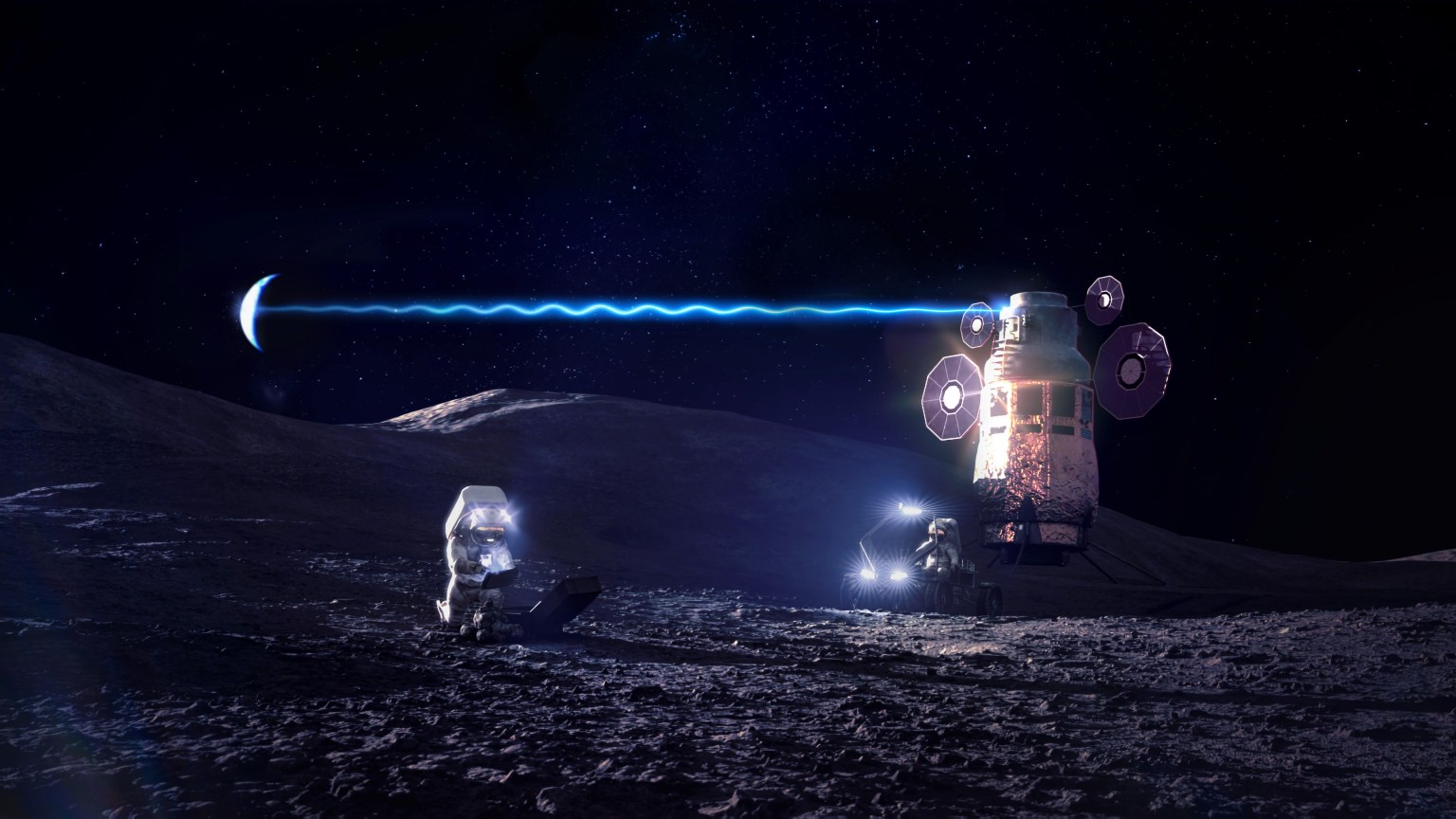
Exploring the lunar south pole presents a unique challenge for space communications. NASA is using real data from the lunar south pole to improve communications systems for future exploration, unlocking more data and more discoveries.
Unlocking Lunar Science
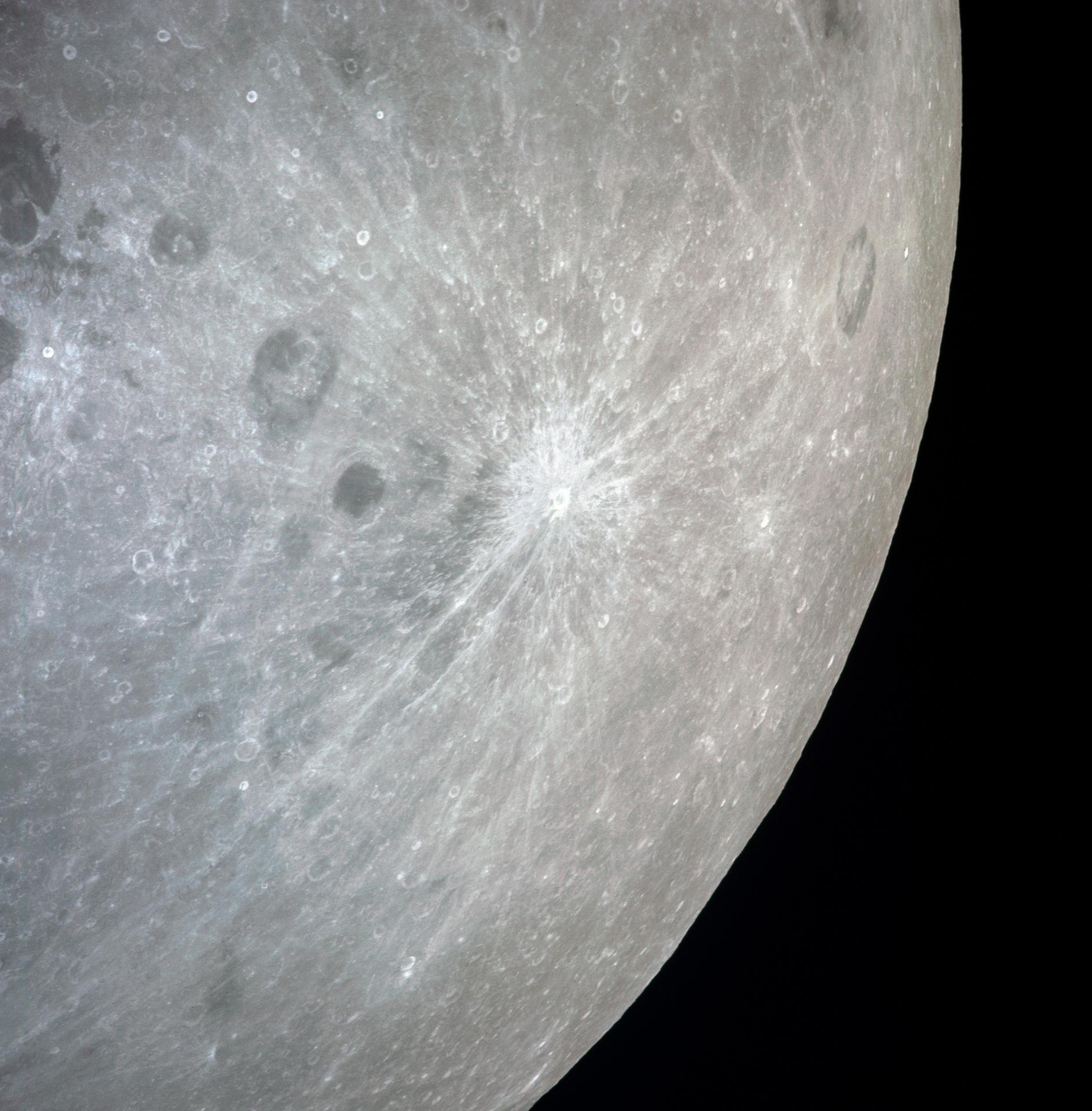
At the South Pole of the Moon, the Earth sits low on the horizon, sometimes out of sight all together, impacting the ability to have a direct-to-Earth communications link. As a result, radio frequency signals can reflect off the Moon’s rocky terrain before reaching Earth, increasing the possibility of interference and data loss. To help future missions overcome these obstacles, the Lunar Surface Propagation project uses real lunar data to develop mathematical models that predict how direct-to-Earth radio communications behave on the lunar surface.
Partnership Opportunities
NASA is seeking performance data from recent and upcoming missions to the lunar South Pole to improve accuracy of models and emulations. The data will help future missions design efficient, compact communications systems that can handle the unique conditions of the lunar surface.
For information on partnership opportunities, contact scan@nasa.gov
Communicating on the Moon
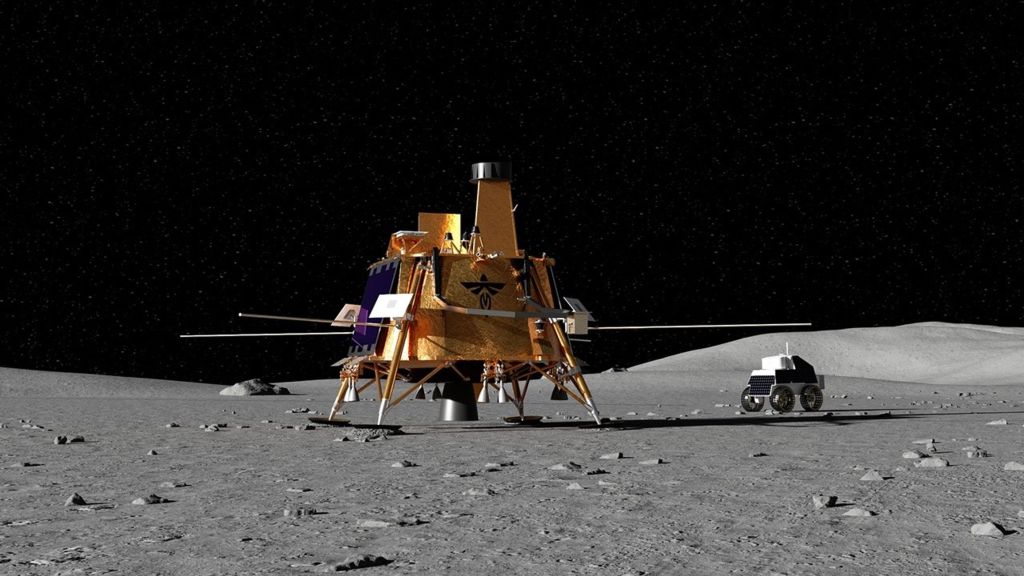
NASA’s SCaN (Space Communications and Navigation) Program is developing the innovative and critical systems needed to enable a new era of Moon to Mars exploration. Through SCaN, the agency is implementing cutting-edge technology, partnering with industry, forging global standards, and creating a resilient, interoperable future in space.
Sights Set on the Lunar South Pole
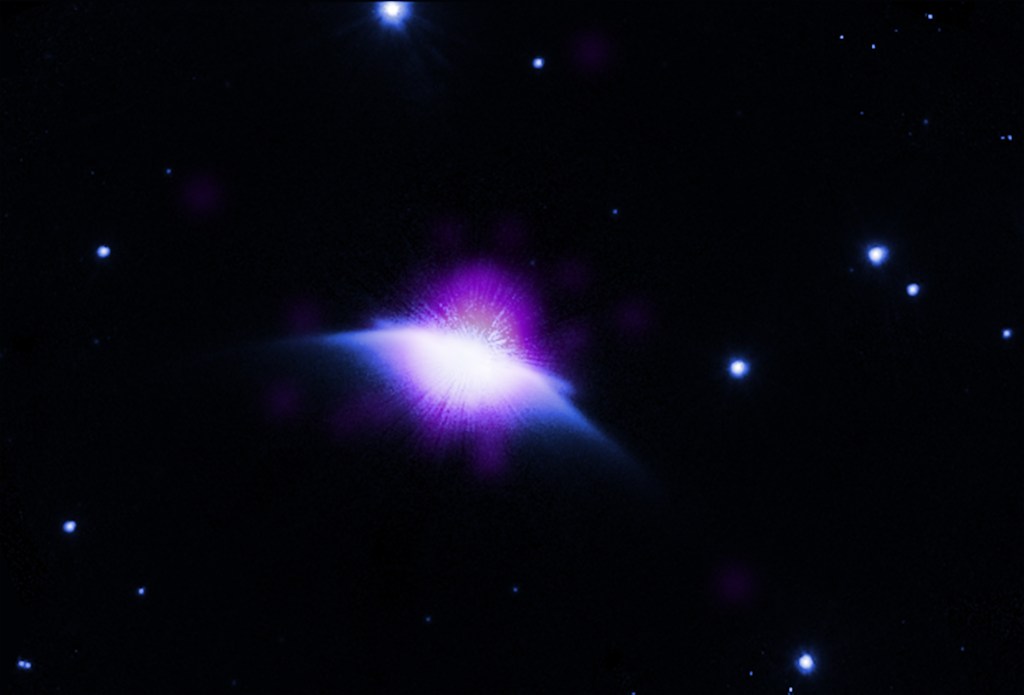
Much like Earth’s South Pole, the Lunar South Pole is a region of extreme conditions, with deep craters and mountainous terrain. Some of these deep craters have shadowed areas that haven’t seen the sun in billions of years – and scientists believe these areas might hold a building block for life: water.
Learn More