







Suggested Searches

Wallops Flight Facility

Launch updates from NASA's Wallops Flight Facility.

  • NASA’s HASP Scientific Balloon Launches from Fort Sumner

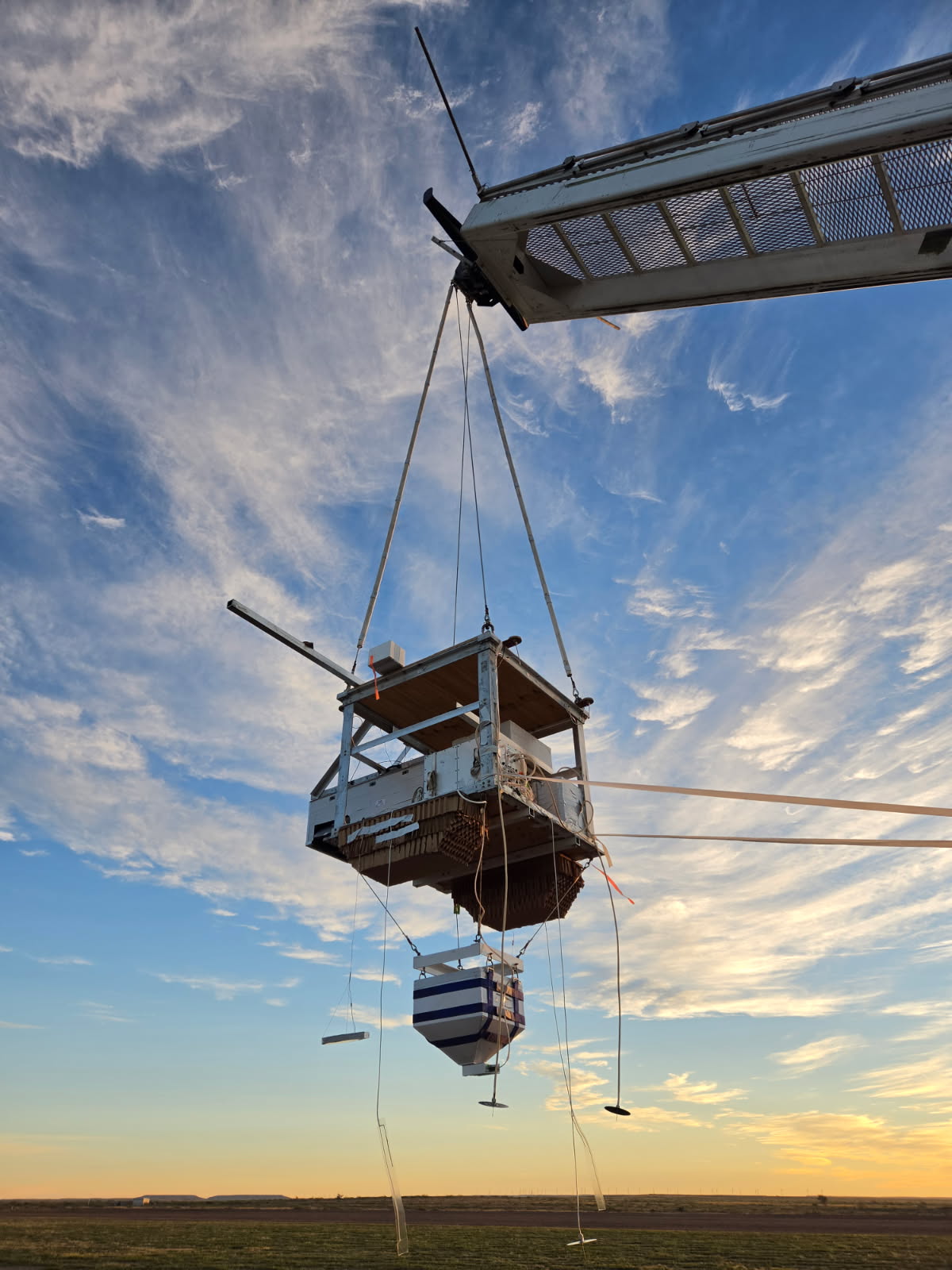
    The HASP mission was launched on a scientific balloon from NASA's launch facility in Fort Sumner, New Mexico, at 8:05 a.m. MDT (10:05 a.m. EDT). The balloon and payload reached a float altitude of around 122,000 feet and flew for a total of 6 hours, 45 minutes.

    This year’s campaign marks the 20th flight for the High-Altitude Student Platform carrying payloads developed by student teams. Over the course of two decades, more than 1,900 students from about 25 institutions across the United States have participated in flying experiments on the balloon platform.

    The High-Altitude Student Platform program is a partnership among the Louisiana Space Grant Consortium, the Astrophysics Division in the Science Mission Directorate at NASA Headquarters, and the agency’s Balloon Program Office and Columbia Scientific Balloon Facility in Palestine, Texas. 


  • Second NASA Balloon Mission Launches from Fort Sumner

    The CLIC 2 mission was hand launched on a scientific balloon from NASA's launch facility in Fort Sumner, New Mexico, at 7:16 a.m. MDT (9:16 a.m. EDT). The balloon is the second flight for the Compact Large-sensor Imaging Camera mission, carrying a small camera system that can process images in real-time to help determine safe landing spots for rovers for future Moon or Mars missions. The balloon and payload reached a float altitude of around 126,000 feet, and flew for a total of 3 hours, 41 minutes. 

  • NASA Launches First Scientific Balloon of Fort Sumner Campaign

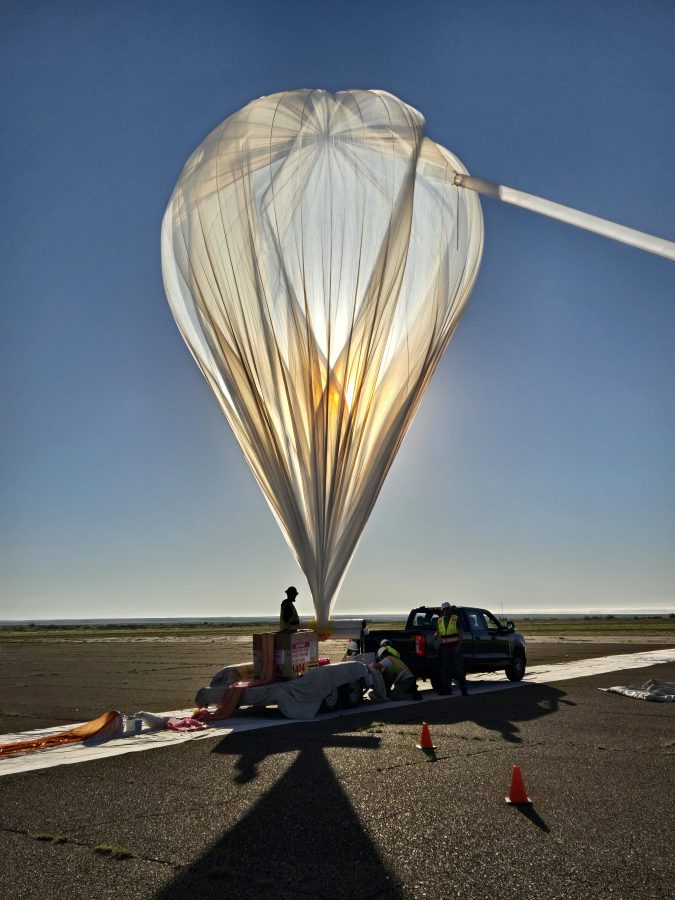
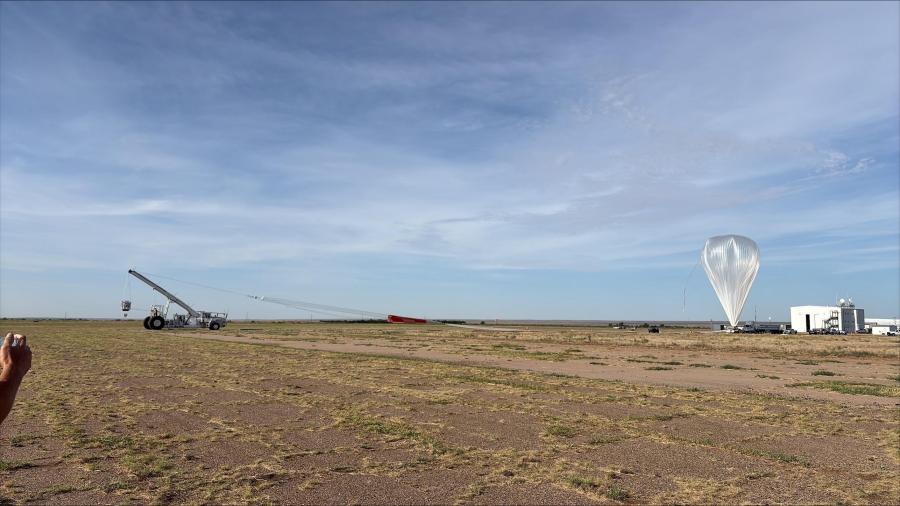
    A scientific balloon is partially inflated on the right with the mobile launch vehicle carrying a payload on the left.

    The Salter Test Flight launched at 8:31 a.m. MDT (10:31 a.m. EDT) Saturday, Aug. 22 from the agency’s balloon launch facility in Fort Sumner, marking the first successful scientific balloon flight of the campaign. The balloon and payload reached a float altitude of around 123,000 feet, and flew for a total of 4 hours, 8 […]

  • NASA Scientific Balloons Prepare for 2026 Fort Sumner Campaign 

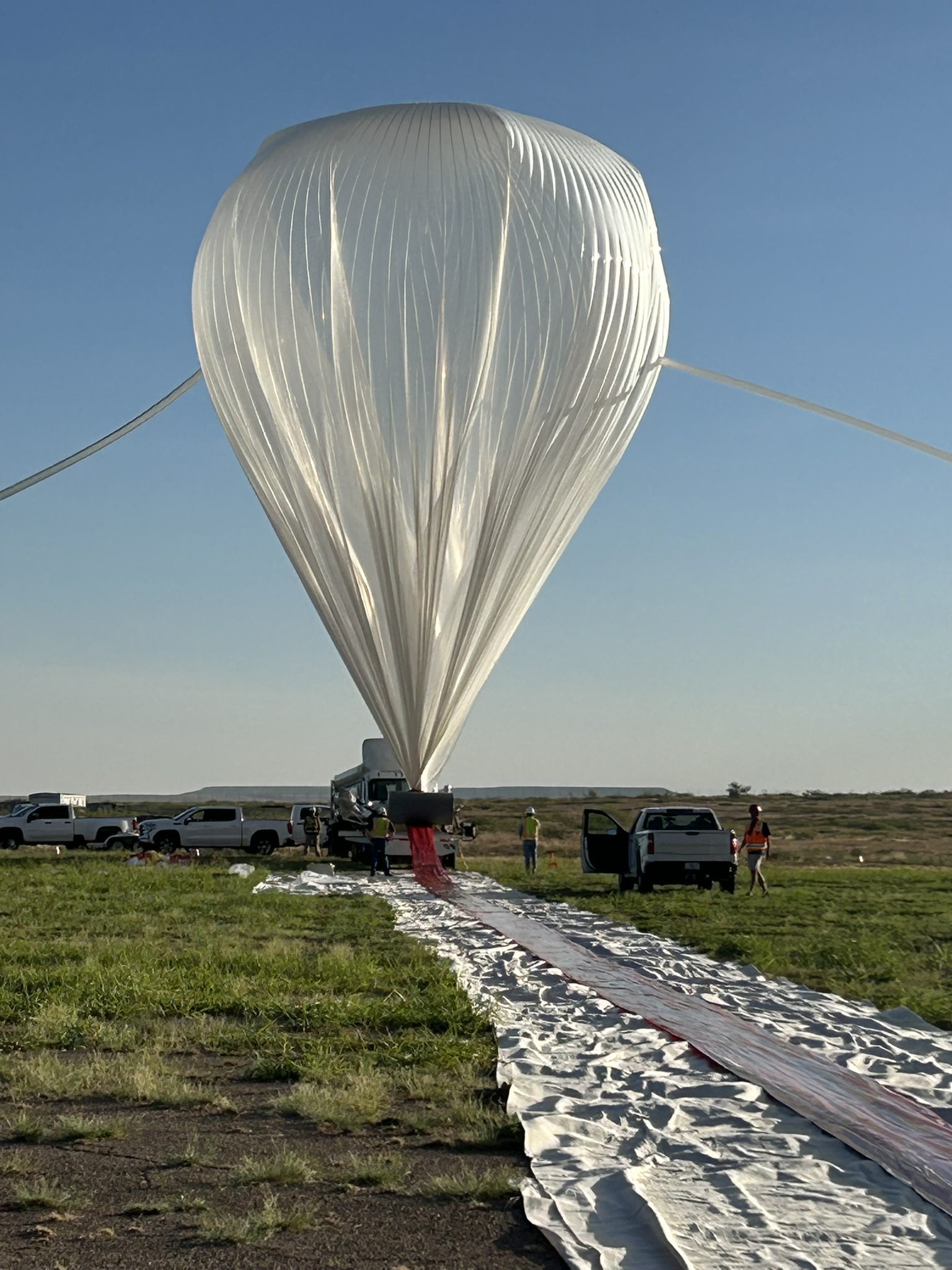
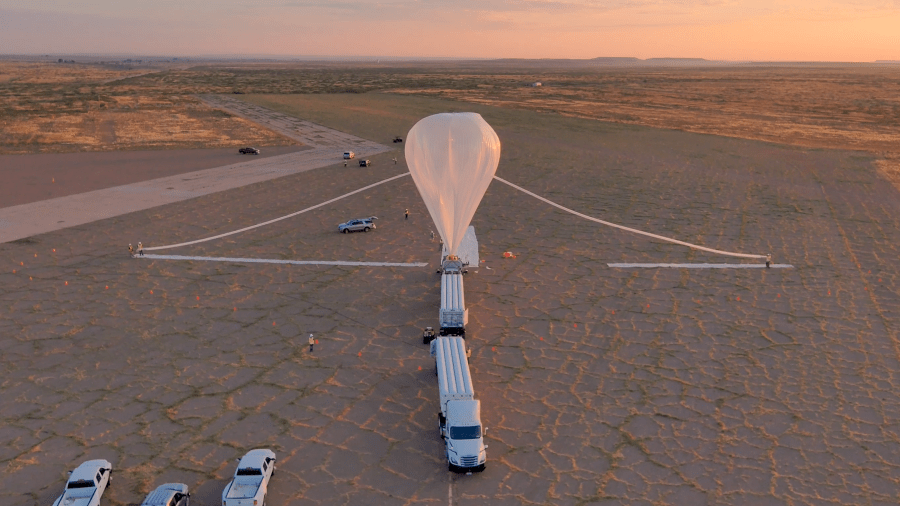
    Aerial view of a high-altitude scientific balloon launch preparation in a desert setting at sunset. The white balloon is partially inflated and tethered to a launch vehicle, with support vehicles and personnel positioned around the launch area on a cracked desert surface

    A NASA Scientific Balloon Program annual campaign is getting ready to take flight at the agency’s balloon launch facility in Fort Sumner, New Mexico. Six balloon flights carrying scientific experiments, technology demonstrations, and student payloads are scheduled to launch starting in mid-August.  This year’s campaign marks the 20th flight for the High-Altitude Student Platform carrying payloads developed by student teams. Over the course […]

  • NASA Wallops to Support Launch Beginning Late June

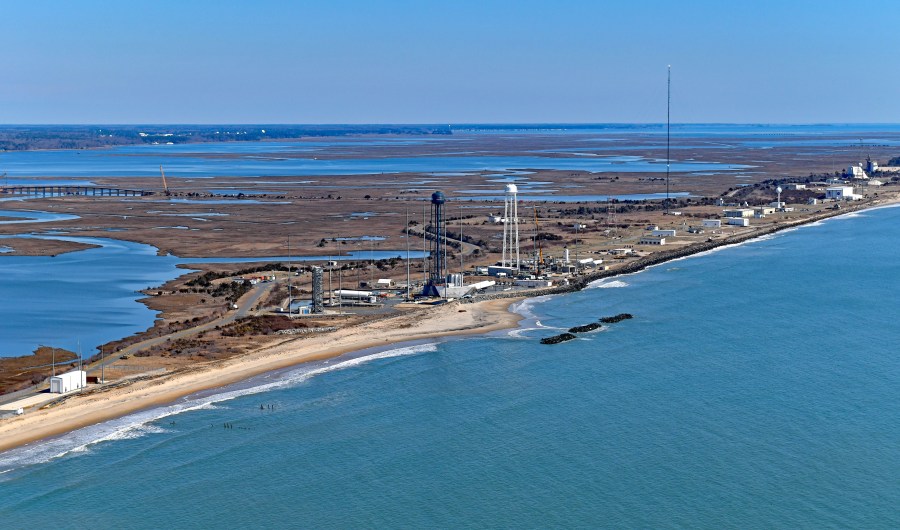
    Aerial view of NASA's Wallops Flight Facility's launch range structures along the coastline of Wallops Island, Virginia. Ocean, bay and marsh lands surround the range.

    NASA’s Wallops Flight Facility in Virginia is scheduled to support the launch of a suborbital sounding rocket for the Department of War during a launch window from June 26 to July 2, 2026.  The rocket launch may be visible from the Chesapeake Bay region. NASA Wallops provides services such as vehicle tracking, data telemetry, and range safety […]

  • NASA Wallops to Support June Rocket Launch

    Aerial view of NASA's Wallops Flight Facility's launch range structures along the coastline of Wallops Island, Virginia. Ocean, bay and marsh lands surround the range.

    A suborbital rocket is scheduled to launch from NASA’s Wallops Flight Facility in Virginia during a window extending from June 10 – 16, 2026. No real-time launch status updates or livestream will be available.   NASA Wallops provides services such as vehicle tracking, data telemetry, and range safety from NASA’s only owned and operated launch range to ensure successful missions […]

  • NASA Wallops to Support April Rocket Launch

    Aerial view of NASA's Wallops Flight Facility's launch range structures along the coastline of Wallops Island, Virginia. Ocean, bay and marsh lands surround the range.

    A suborbital rocket is scheduled to launch from NASA’s Wallops Flight Facility in Virginia during a window extending from April 20-28, 2026. No real-time launch status updates or livestream will be available.   NASA Wallops provides services such as vehicle tracking, data telemetry, and range safety from NASA’s only owned and operated launch range to ensure successful missions operations for […]

  • NASA Wallops to Support March Sounding Rocket Launches 

    Aerial view of NASA's Wallops Flight Facility's launch range structures along the coastline of Wallops Island, Virginia. Ocean, bay and marsh lands surround the range.

    Two sounding rockets are scheduled for liftoff between March 17 and March 23 from NASA’s Wallops Flight Facility launch range in Virginia. The launch window each day is from 8 p.m. to midnight EDT. No real-time launch status updates or livestream will be available.   NASA Wallops provides services such as vehicle tracking, data telemetry, and range safety from NASA’s only owned and operated launch […]

  • NASA Wallops to Support Rocket Lab Launch

    Rocket Lab suborbital rocket launches from Pad-0C (Launch Complex 2) on Wallops Island, Virginia, at 8 a.m. on Nov. 18, 2025. The mission was Rocket Lab's sixth launch of its HASTE rocket for the Defense Innovation Unit (DIU) and Missile Defense Agency (MDA). Led by MDA, the mission deployed a government-provided primary payload developed by the Johns Hopkins University Applied Physics Laboratory, and multiple secondary payloads by federal and industry partners, which tested key technologies for missle defense applications.

    Update Feb. 27: The Rocket Lab suborbital rocket successfully launched Feb. 27, at 7 p.m. EST. Update Feb. 26: The next launch attempt for Rocket Lab is scheduled for Friday, Feb. 27, 4-7 p.m. EST. Update Feb. 25: Rocket Lab is standing down from a launch attempt Wednesday, Feb. 25. The next launch attempt will […]

  • NASA Rocket to Conduct ‘CT Scan’ of Auroral Electricity

    On the left side of a snow-covered driveway, a life-size red and white rocket model is posed next to a Poker Flat Research Range sign. Snowy spruce trees line the driveway into the range, where an automated metal gate allows entry. In the distance is a hill, also covered in trees and snow, and sheer clouds filtering golden sunlight.

    UPDATE (Feb. 10, 2026): NASA’s Black and Diffuse Auroral Science Surveyor and Geophysical Non-Equilibrium Ionospheric System Science (GNEISS) sounding rocket missions have both successfully launched from Alaska. The Black and Diffuse Auroral Science Surveyor mission launched Feb. 9 at 3:29 a.m. AKST (7:29 a.m. EST), reaching a peak altitude of about 224 miles (360 kilometers). […]