








NASA CubeSat Begins Mission to Study Radio Waves in Space
Editor’s Note: This post was updated April 21, 2026, to reflect mission funding by the U.S. National Science Foundation.
NASA’s latest small satellite mission is now in orbit studying how natural and human-made radio waves travel from Earth’s surface into space, helping scientists better understand and predict changes in the near‑Earth space environment.
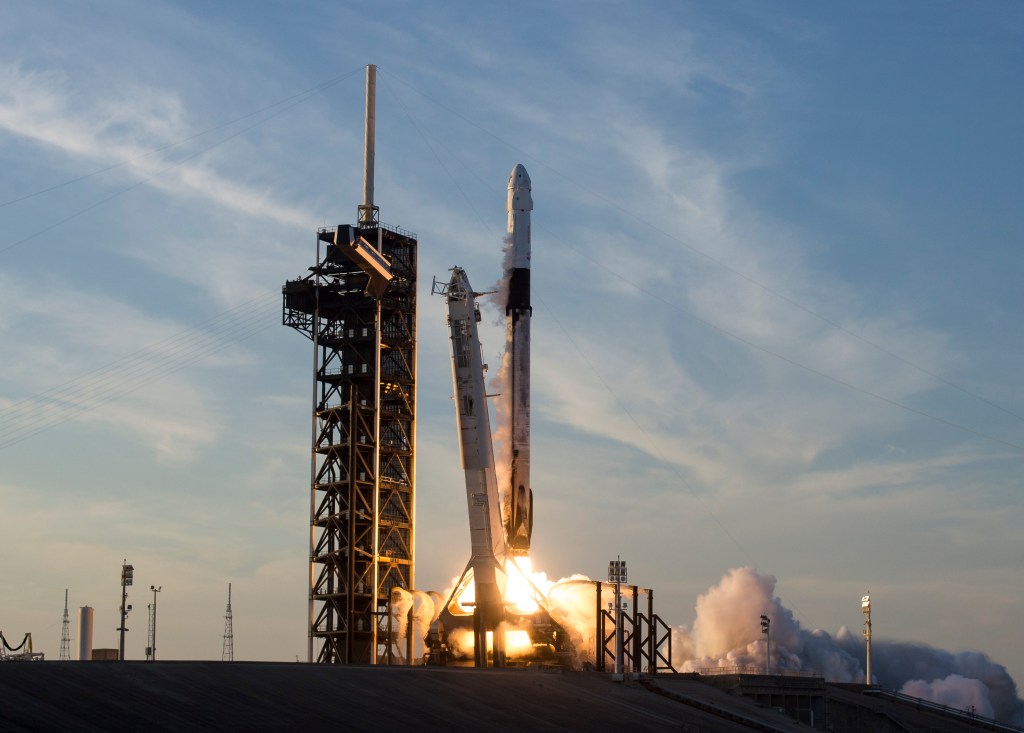
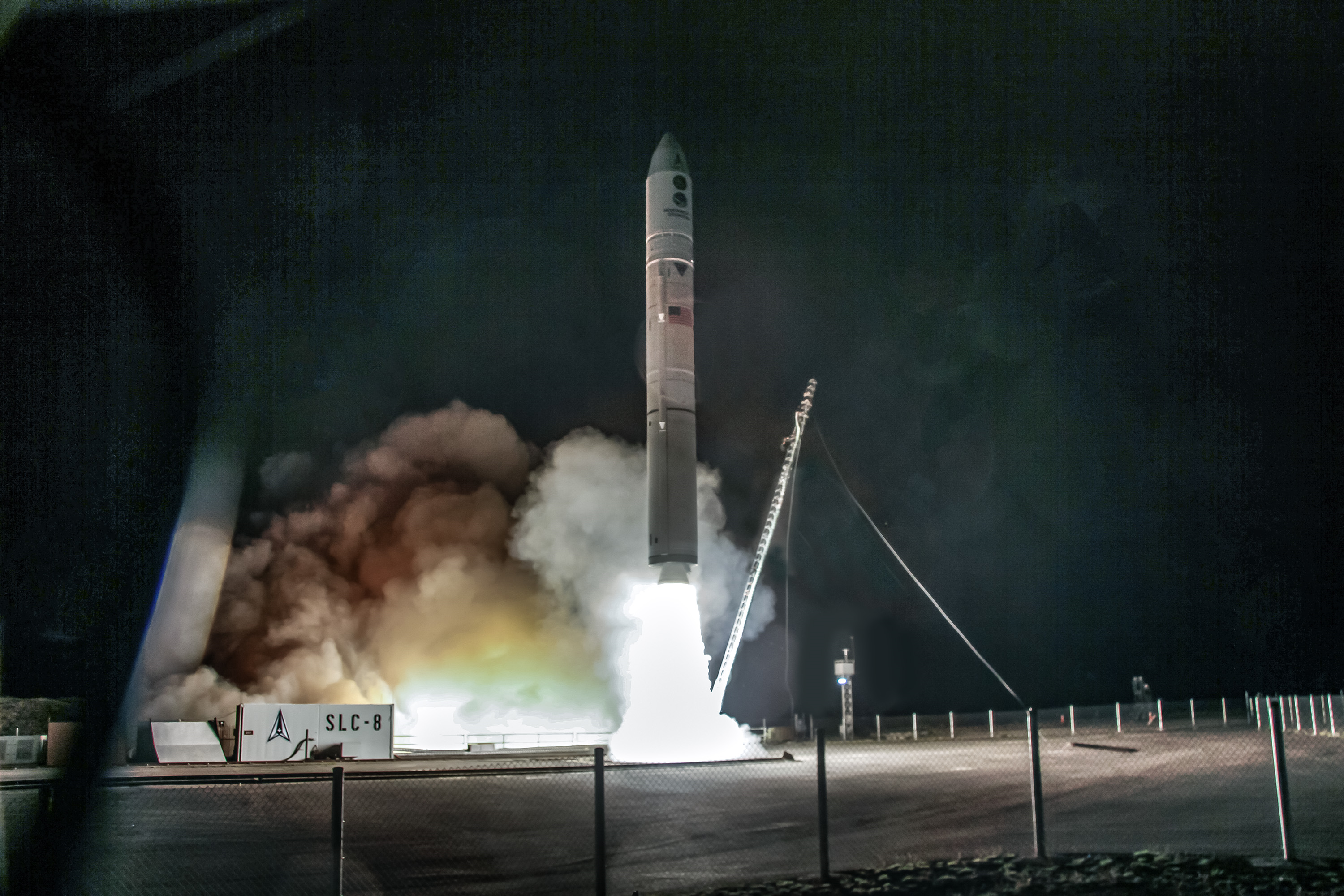
The Climatology of Anthropogenic and Natural VLF wave Activity in Space (CANVAS) mission launched April 7 aboard a Minotaur IV rocket from Space Launch Complex 8 at Vandenberg Space Force Base in California as part of the U.S. Department of War’s Space Test Program S29A (STP-S29A) mission.
NASA secured CANVAS a ride through the agency’s CubeSat Launch Initiative (CSLI). The CANVAS CubeSat is a small satellite designed to measure very low frequency radio waves (VLF) in low Earth orbit produced by lightning and ground-based transmitters. Its job is to measure how much of that ground-generated energy makes it through the ionosphere — the upper part of Earth’s atmosphere filled with electrically charged particles — and into the magnetosphere. By quantifying the VLF energy that penetrates upward, CANVAS provides a critical link between what scientists observe on the ground and what they can measure in space.
Very low frequency waves in the Earth’s magnetosphere can “nudge” the trajectory of trapped high-energy electrons, sometimes causing them to spill out of the radiation belts and into the atmosphere. Understanding how lightning and ground-based transmitters shape these electron populations helps improve space weather models. The CANVAS mission turns precise measurements of these waves into practical insight about the space environment, with applications including protecting infrastructure in space and on the ground, as well as informing spacecraft and crew operations.
Over the next year, CANVAS will use two instruments to conduct its science: a three-axis search coil magnetometer and two-axis AC electric field sensor. With these instruments, along with an onboard processor that analyzes the data collected, CANVAS will be able to determine the power and direction of lightning-generated VLF waves. By comparing the direction and timing of each lightning event with the World Wide Lightning Network, CANVAS will enable climatological studies of how lightning‑generated VLF waves propagate through the ionosphere. Work on CANVAS is funded by U.S. National Science Foundation under Grant No. 1841011.
NASA selected CANVAS, a 4U CubeSat developed by the University of Colorado, Boulder, in 2021 through CSLI to address aspects of the agency’s science, technology development, or education goals. The initiative provides launch opportunities for selected missions as a low-cost pathway to conduct scientific investigations and technology demonstrations in space, thus enabling students, teachers, and faculty to gain hands-on experience designing, developing, and building flight hardware.
NASA’s Launch Services Program, based at the agency’s Kennedy Space Center in Florida, manages CSLI and manifested CANVAS as a payload on STP-S29A as part of the Educational Launch of Nanosatellites (ELaNa) 55 launch grouping.