
















Latest NASA X-59 Flights Go Higher and Faster
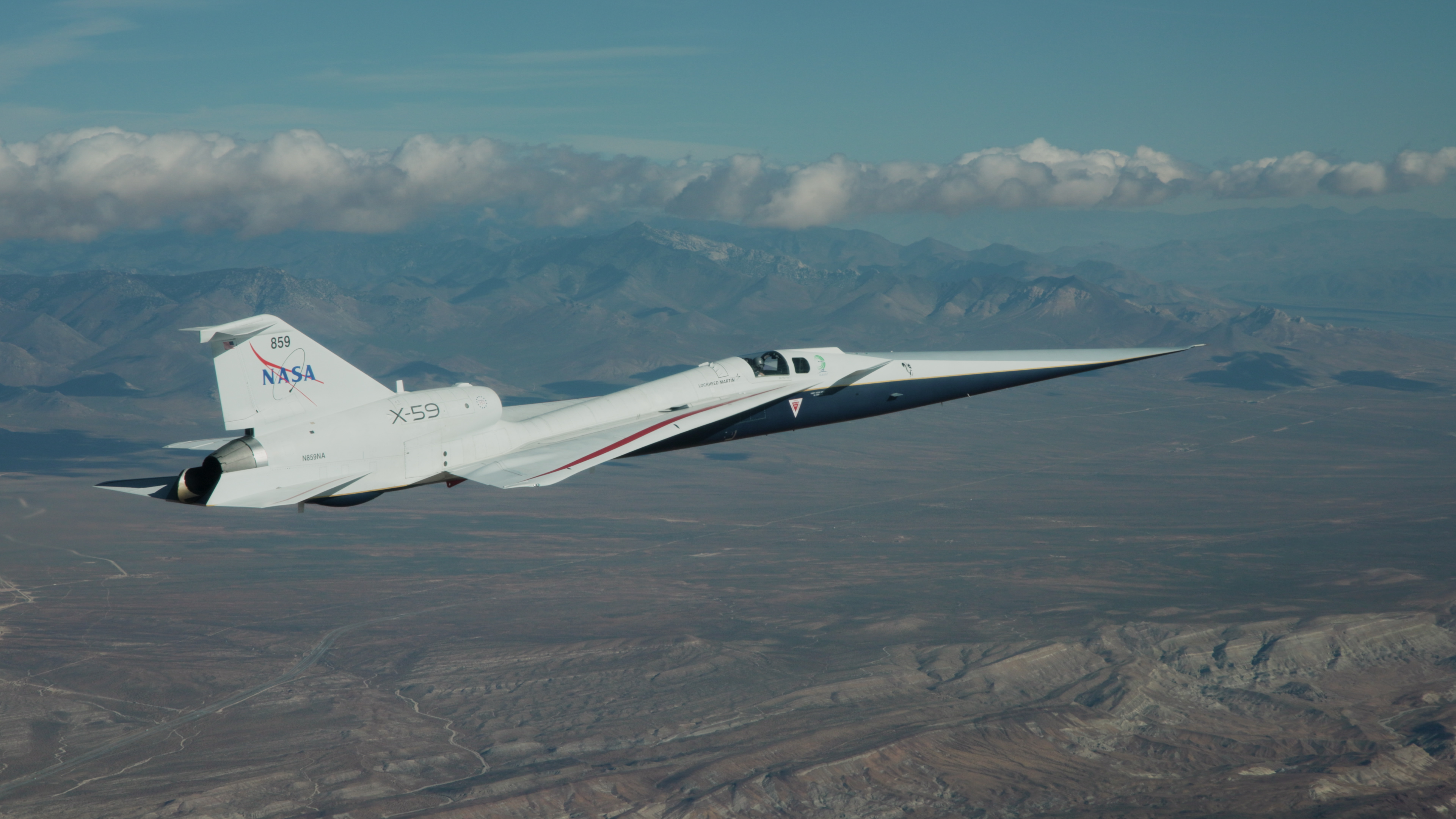
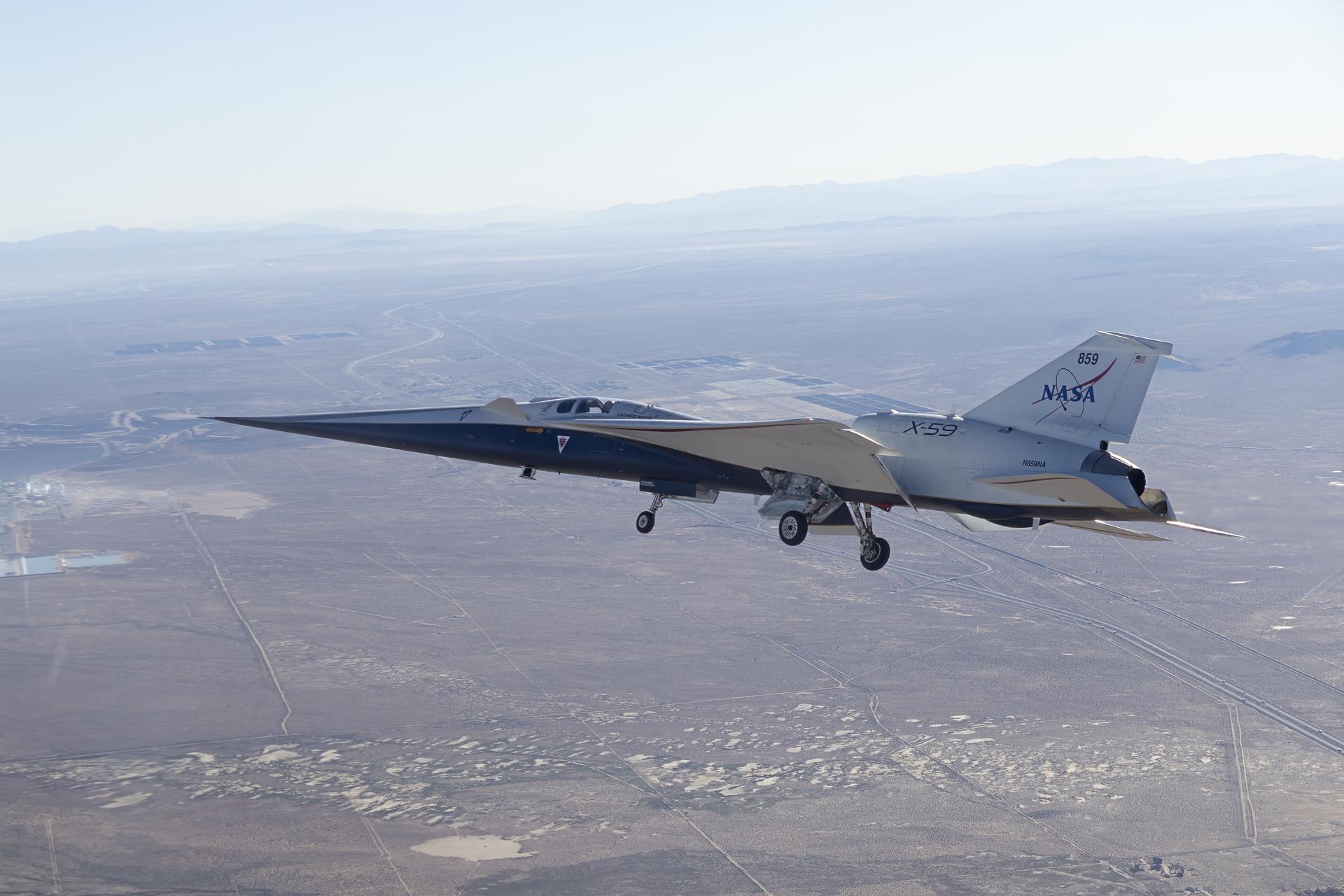
NASA’s X-59 experimental aircraft has made its highest and fastest flights so far, expanding its operational range and making progress toward supersonic flight.
In a pair of test flights on April 10 and April 14, the aircraft reached new altitudes and speeds, reaching 43,000 feet and 528 to 627 mph (approximately Mach 0.8 to 0.95 in those conditions). Those flights were the eighth and ninth overall for the X-59 and marked a jump from its previously reached altitude of 32,000 feet, attained on April 7.
The aircraft continues to make operational progress since its first flight at 230 mph at 12,000 feet – but its current phase of flight testing, known as envelope expansion, is about more than just speed and altitude.
In future flights, the team will also be looking at factors like the performance of its controls, loads and structural dynamics, and subsystems including hydraulics, fuel, avionics, landing gear, and more. They will also be monitoring the performance of the eXternal Vision System, the series of cameras located on the X-59 connected to a display in the cockpit. The system takes the place of a traditional forward windscreen.
Quesst
Quesst is the name of NASA Aeronautics' mission to help take the first step toward enabling commercial, faster-than-sound air travel over land. The centerpiece of the mission is NASA's X-59 research aircraft. The experimental supersonic jet is designed with technology that reduces the loudness of a sonic boom to a gentle thump. NASA will fly the X-59 over select U.S. communities and take surveys to record what people think of the quieter sonic thumps. The human response data will be delivered to U.S. and international regulators, who will consider setting new rules that allow supersonic flight over land.
Stay up to date at the Quesst mission page