





Suggested Searches

Blogs

    Station Orbiting Higher as Exercise Research and Maintenance Continue

    NASA astronaut and Expedition 73 Flight Engineer Zena Cardman installs research hardware inside the Destiny laboratory module’s Microgravity Science Glovebox. The equipment supports the Fluid Particles experiment, which helps researchers understand how particles in a liquid interface come together to form larger structures or clusters in microgravity. Results could advance fire suppression, lunar dust control, and plant growth in space. Earth benefits may include insights into pollen behavior, algae blooms, plastic pollution, and sea salt transfer during storms.

    The International Space Station is orbiting higher today after the Progress 93 cargo spacecraft, docked to the Zvezda service module’s aft port, fired its engines for over 14 minutes, 7 seconds at 8:04 a.m. EST on Wednesday. Back on the orbital outpost, the Expedition 73 crew focused its science activities on exercise research and fluid physics, both benefitting humans living on and off the Earth.

    Read Full Post

    NASA’S STEREO Observes Interstellar Comet 3I/ATLAS

    NASA’s STEREO (Solar Terrestrial Relations Observatory) observed interstellar comet 3I/ATLAS from Sept. 11 to Oct. 2. The STEREO mission, designed to study the Sun’s activity and its influence across the solar system, is part of a fleet of NASA spacecraft observing this comet, together providing more information about its size, physical properties, and chemical makeup. […]

    Read Full Post

    NASA/ESA’s SOHO Observes Interstellar Comet 3I/ATLAS

    The ESA (European Space Agency) and NASA Solar and Heliospheric Observatory, or SOHO, spacecraft captured a glimpse of interstellar comet 3I/ATLAS on Oct. 15–26. During this time period, the spacecraft’s Large Angle and Spectrometric Coronagraph (LASCO) instrument suite spotted the comet crossing its field of view from approximately 222 million miles (358 million kilometers) away, […]

    Read Full Post

    NASA’s PUNCH Spies Interstellar Comet 3I/ATLAS

    NASA’s PUNCH (Polarimeter to Unify the Corona and Heliosphere) mission observed interstellar comet 3I/ATLAS during its passage through the inner solar system. The mission’s ability to observe areas of the sky near the Sun allowed PUNCH to track the comet as it passed close to our star, when few other observatories could. This image was created from multiple observations taken […]

    Read Full Post

    NASA’s Lucy Spacecraft Snaps Photos of Interstellar Comet 3I/ATLAS

    Lucy’s high-resolution, black-and-white imager, L’LORRI, captured a series of photos between Sept. 15–17, as the comet was zooming toward Mars. Lucy was 240 million miles away from 3I/ATLAS, well beyond the orbit of Mars, on its way to explore eight asteroids out of two swarms of asteroids that share an orbit with Jupiter, collectively known as the Jupiter Trojan asteroids.

    Read Full Post

    Heart Health, Stem Cells, and Physics Keep Crew Busy on Tuesday

    This tranquil view from the International Space Station captures the Kibo laboratory module with its Exposed Facility, a portion of the station’s main solar arrays (right), and part of the Canadarm2 robotic arm (left). The photograph was taken during an orbital sunset as the station soared 270 miles above a cloudy Atlantic Ocean off the coast of South Africa.

    Life science and physics topped the research schedule aboard the International Space Station on Tuesday as the Expedition 73 crew studied heart health, stem cells, fluid physics, and spacecraft fire safety. The orbital residents also completed work on a spacesuit and inspected ventilation and electrical systems while continuing other scientific operations.

    Read Full Post

    Monday’s Research Studies Ways to Protect Eyes and Lungs in Space

    Four Expedition 73 flight engineers pose for a playful portrait through a circular opening in a hatch thermal cover aboard the International Space Station. The cover provides micrometeoroid and orbital debris protection while maintaining cleanliness and pressure integrity in the vestibule between Northrop Grumman's Cygnus XL cargo spacecraft and the orbital outpost. The opening allows for visual inspection of hatch alignment, access to the hatch handle or pressure equalization valve, and visibility for sensors or cameras during berthing operations. Clockwise from left, are JAXA (Japan Aerospace Exploration Agency) astronaut Kimiya Yui and NASA astronauts Jonny Kim, Zena Cardman, and Mike Fincke.

    Expedition 73 kicked off the week exploring how to prevent space-caused vision problems and what happens to the respiratory system in microgravity. The International Space Station residents also worked on combustion research and Earth observation gear, organized food and cargo inventory, and serviced life support systems.

    Read Full Post

    Sentinel-6B Satellite Acquires Signal

    Mission controllers for Sentinel-6B received full acquisition of signal from the spacecraft at 1:54 a.m. EST Monday, Nov. 17. After cross-calibrating its data, Sentinel-6B will take over from Sentinel-6 Michael Freilich, launched Nov. 21, 2020, to monitor sea levels, measure wind and wave conditions, and improve both short and long-term weather predications. It is expected […]

    Read Full Post

    Sea-Level Monitoring Satellite Flying Solo

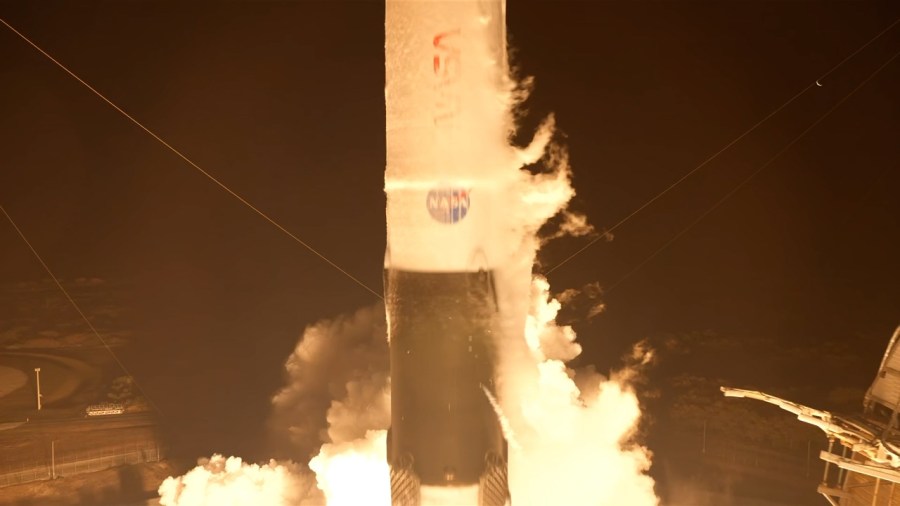
    The Sentinel-6B satellite is flying on its own after separating from the SpaceX Falcon 9 second stage. Satellite-6B, part of a mission led jointly by NASA, ESA (European Space Agency), EUMETSAT (the European Organisation for the Exploitation of Meteorological Satellites), and the National Oceanic and Atmospheric Administration (NOAA), with funding support from the European Commission […]

    Read Full Post

    First Stage Rocket Returns to Earth; Coast Phase Begins

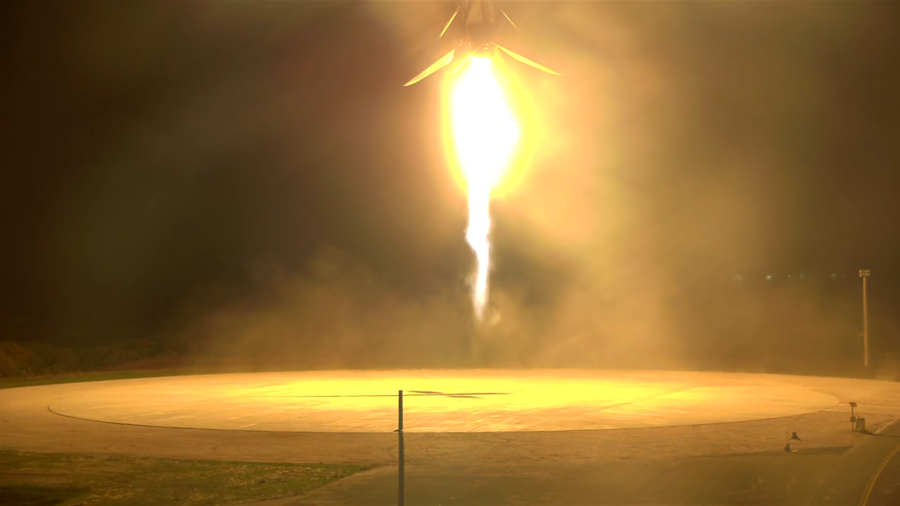
    The SpaceX Falcon 9 rocket’s first stage successfully touched down on Landing Zone 4 East at Vandenberg Space Force Base in California following launch of Sentinel-6B. The Falcon 9 second stage will continue to coast for approximately 45 minutes before igniting for a brief, one-minute burn to align its trajectory with its intended destination in […]

    Read Full Post